Loading EveryPlace content…
Assisted LivingActive license
The Heritage of Overland Park
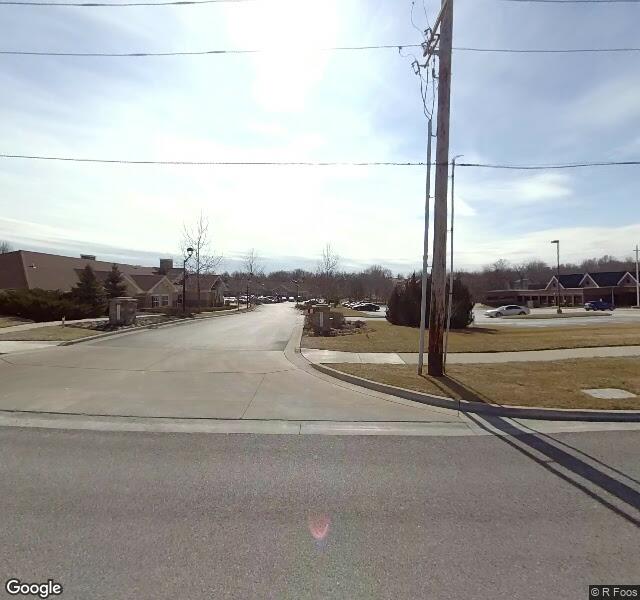
10101 W 127th St, Overland Park, KS 66213View map (opens in a new tab)
Overview and key essentials
State license
Active
KS KDADS
Google reviews
Not available
Public reviews not linked
Size & payment
Ask directly
Confirm pricing & payment
Public records for this community are limited. Use the checklist below when you call or visit to confirm pricing, services, and openings.
Cost, payment & care details
Updated Nov 28, 2026| Monthly cost | Not published | Ask for the full monthly cost, including care fees and one-time charges. |
|---|---|---|
| Payment options | Ask directly | Payment details are not confirmed in our records. Ask about private pay, long-term care insurance, veterans benefits, and Medicaid waivers. |
| Size & availability | Confirm directly | We don't publish live openings. Ask about current availability, waitlist length, and move-in timing. |
| Care & support | Assisted living | Usually offers housing and help with everyday tasks, such as bathing and dressing. What to confirm about care levelsThis describes the licensed category. Ask how care plans adjust if mobility, nursing, or memory needs change over time. Read the family care guide → |
State licensing
State inspection history
14inspections
19deficiencies listed
Sep 21, 2026Routine6 deficiencies reported6
6 deficiencies reported
View official state report (opens in a new tab)
The following represents the findings of a resurvey with attached complaints 199492, 199416, 199217, 198874, 198711, 198630, 198518, 198248, 197491, 197378, 197309, 197243, 197221, 197027, 196947, 196860, 196262, and 193695 at the above named assisted living conducted on 09/10/26, 09/14/26, 09/15/26, 09/16/26, 09/17/26, and 09/21/26. The facility reported a census of 53 residents. 16 residents were included in the sample.
moderateS 3102
Service Received (i) Each administrator or operator shall ensure that each resident receives services according to the provisions of that resident ' s negotiated service agreement This REQUIREMENT is not met as evidenced by: KAR 26-41-202(i) Based on interview and record review the facility failed to ensure Resident (R) 6 received visual checks every two to three hours to ensure he was in bed and breathing and that his bed alarm functioned appropriately as described in his "Negotiated Service Agreement" (NSA). During the night of 05/20/26 to 05/21/26 R6's bed alarm did not activate when he fell from his bed. R6 was last seen by facility staff at approximately 11:20 PM during a visual rounding check. He was next seen dead, face down on the floor at approximately 05:20 the next morning during a rounding check which was six hours since he was last seen. Findings included: - Record review for R6 revealed an admission date of 08/19/25 with diagnoses of dementia and insomnia. The 08/19/25 admission "Functional Capacity Screen" (FCS) identified R6 required supervision with transfers and physical assistance with walking/mobility. He had short-term memory, memory recall, and decision-making cognitive difficulties and was at risk for falls. The 02/26/26 "NSA" identified R6 received assistance from one staff for transfers and walking/mobility. He received cues and prompts from facility staff for cognitive difficulties. The "NSA" documented the following: In the "Safety/Call System" section: Safety precautions and close surveillance would be maintained by staff. R6 was unable to understand and how to pull the call cord intentionally to ask for help. Staff would make frequent checks throughout each shift and "in particular when he was alone" in his apartment. In the "Fall Risk" section: R6 had a history of falling and required staff involvement to ensure his safety. He had a pressure alarm on his bed and chair to alert staff when he began to move or attempt to stand up without help. Facility staff responded promptly when the alarm activated. Staff ensured the alarm was turned on and functioning when R6 was in bed. Staff reported any concerns with the pressure alarm to a licensed nurse or Administrative Staff A. In the "How to Assist with Transfers" section: R6's falls occur at bedtime when he got out of bed and attempted to walk. In the "How to Assist at Bedtime" section: R6 often got up in the middle of the night and attempted to walk and get dressed. Bed alarm was in place to alert staff when R6 attempted to get out of bed. R6 used oxygen with a nasal cannula at all times during the night which he often removed. Staff performed frequent checks to place oxygen back on. Staff checked R6 every two to three hours through the night to ensure he was in bed and breathing. The 05/21/26 at 05:47 AM late entry "Incident Note" progress note documented the nurse received a call from Certified Medication Aide (CMA) D reporting he found R6 laying face down in his apartment, bleeding from his nose and a laceration on his forehead, was not breathing and had no pulse. The 05/28/26 facility's "Investigation Report" documented CMA reported R6's bed alarm never activated during the night. Sometimes R6 unplugged the bed alarm. The 05/27/28 notarized "Witness Statement" by CMA D reported he worked the night shift with Certified Nurse Aide (CNA) H. During rounds at 05:20 AM he found R6 laying face down on the floor of his room bleeding from his nose and forehead and...
moderateS 3026
ANE (f)The administrator or operator shall ensure that all of the following requirements are met: (1) No resident shall be subjected to any of the following: (A) Verbal, mental, sexual, or physical abuse, including corporal punishment and involuntary seclusion; (B) neglect; or (C) exploitation. This REQUIREMENT is not met as evidenced by: K.A.R 26-41-101 (f)(1)(B) Based on observation, interview, and record review, the facility failed to protect Resident (R) 12 from neglect when facility staff shut off the northwest door alarm without looking to verify if a resident had not exited the building when the alarm sounded. On 09/13/25 at approximately 06:08 PM, R12 exited the building without staff knowledge, ambulated approximately 136 feet. Staff found R12 at 06:20 PM, on the ground, under a tree after a fall. R12 had not been seen by staff for approximately 15 minutes. Findings included: - R12 admitted on 01/23/25 with a diagnosis of Alzheimer's disease and required supervision. The 09/09/25, Functional Capacity Screen revealed R12 was independent with transfers and walking/mobility. She had short-term and long-term memory, memory/recall, and decision-making/ cognitive difficulties, a risk for falls and wandering. The 09/09/2, Negotiated Service Agreement revealed R12 ambulated independently without a device and received staff assistance with expressing needs and verbal cues as needed due to memory impairment. The facilities undated investigation dated 09/13/25 revealed staff reviewed the camera footage from facility. At approximately 05:37 PM, R12 exited the common area into the hallway and Certified Nurses Aide (CNA) N redirected R12 to sit in a chair in the commons area. At approximately 05:57 PM, R12 exited the common area again and entered a resident room. R12 immediately exited and walked to an exit door and began pulling on it, which caused the alarm to sound. Certified Medication Aide (CMA) E redirected R12 away from the door and entered the door code to turn off the alarm. At approximately 06:05 PM, R12 walked to the exit door and pulled on the door until it released. R12 can be seen entering the back hallway. At 06:05 PM, CMA E walked to the exit door, looked down both hallways, entered the code to clear the door alarm and returned to the medication cart. At 06:08 PM, R12 exited the unalarmed exit door to the outside area. At approximately 06:08 PM, CNA G can be heard asking CMA E where R12 was and began searching room to room and then exited the building at 06:18 PM. The 09/13/25 notarized Witness Statement" by CNA G reported after assisting another resident he noticed R12 was not in his line of vision. He asked CMA E if she had seen R12 and she responded she wasn't sure. CNA G searched other resident rooms. At 06:20 PM CNA G looked out a window and saw R12 lying on the ground under a tree. CNA G ran out of the building to assist her. Observation on 09/16/26 at approximately 11:46 AM revealed the alarmed northwest door would not open unless pulled on for 15 seconds and then the alarm would sound. The alarm door opened into a hallway which had an unalarmed door that led to the outside the exit door opened to a sidewalk and a grass area. The facility was lined with tree's next to the windows of the facility. The tree R12 was found under was approximately 136 feet from the exit door. The facility's undated "Missing Resident Policy" under 1 and 2 documented if an exit door is alarming staff should: 1. Immediately go to the...
STATE FORM6899
C1G111 STATE FORM C1G111 STATE FORM C1G111 STATE FORM C1G111 STATE FORM C1G111 STATE FORM C1G111 STATE FORM C1G111 STATE FORM C1G111 STATE FORM C1G111 STATE FORM C1G111 STATE FORM C1G111 STATE FORM C1G111 STATE FORM C1G111
moderateS 3320
(a) The assisted living facility or residential health care facility shall be designed, constructed, equipped and maintained to protect the health and safety of residents, personnel and the public. (b) All new construction, renovation, remodeling and changes in building use in existing buildings shall comply with building and fire codes, ordinances and regulations enforced by city, county, and state jurisdictions, including the state fire marshal. (c) New construction, modifications and equipment shall conform to the following codes and standards: (1) Title III of the Americans with disabilities act, 42 U.S.C. 12181, effective as of January 26, 1992; and (2) "Food Service Sanitation Manual," health, education, and welfare (HEW) publication no. FDA 78-2081, as in effect on July 1, 1981. This REQUIREMENT is not met as evidenced by: KAR 28-39-254(a) Based on observation and interview the facility failed to protect the health and safety of the residents and visitors by ensuring all chemicals were stored within locked areas. Findings included: - Observation on 09/10/26 at approximately 09:45 AM in House C's kitchen revealed a cabinet with a lock installed that was unlocked. The cabinet contained a gallon container of blue colored heavy duty de-limer liquid with a label that read "Warning! Causes serious eye irritation. Wear eye or face protection. . . Do not ingest." On 09/10/26 at approximately 09:45 AM Administrative Nurse B confirmed the gallon container of de-limer was stored in an unlocked area. Observation on 09/10/26 at approximately 11:04 AM in House A's kitchen revealed a cabinet with a lock installed that was unlocked. The cabinet contained a gallon container of blue colored dishwasher machine rinse aid liquid with a label that read "Keep out of reach of children." On 09/10/26 at approximately 11:04 AM Administrative Nurse B confirmed the gallon container of dishwasher machine rinse aid was stored in an unlocked area. The undated facility's "Chemical Storage and Safety Policy" documented all chemicals and hazardous substances would be stored in a manner to protect residents, staff, and visitors from accidental exposure, misuse, or injury. All chemicals would be kept in designated areas that were inaccessible to residents and unauthorized individuals. The facility failed to protect the health and safety of the residents and visitors by ensuring all chemicals were stored within locked areas.
moderateS 3171
Practice (i) All health care services shall be provided to residents by qualified staff in accordance with acceptable standards of practice. This REQUIREMENT is not met as evidenced by: K.A.R. 26-41-204 (i) Based on interview and record review, the facility failed to provide healthcare services for R9 in accordance with professional standards of practice when an unidentified Certified Medication Aide (CMA) took a telephone order for hydromorphone 1 milligram/ milliliter take 0.25 milliliter sublingually every hour as needed for shortness of breath or pain. Findings included: R9 diagnoses included Alzheimer's disease. The 10/15/25 Functional Capacity Screen revealed R9 was unable to perform management of medications. The 11/15/25 Negotiated Service Agreement (NSA) revealed facility staff were to administer medications R9 admitted on 10/15/25. The NSA dated 11/25/25 directed facility staff to prepare and administer R9's medications. Review of facility report revealed a typed in note that CMA E handed Administrative Nurse B a telephone order from the unidentified CMA who worked the previous shift. Review of Kansas Certified Medication Aide Curriculum under section titled "Legal Responsibilities" revealed the follow under a subsection titled "It is not legal for a medication aide: 1)To give medication by any route that involves puncturing the skin, such as intramuscular or subcutaneous injections or through intravenous lines. 2)To take phone order from a physician, physician's assistant, advance practice registered nurse (APRN), dentist, pharmacist." On 9/21/26 at approximately 02:08 PM, Administrative staff A confirmed an unidentified CMA took a telephone order. Administrative Staff A continued to confirm CMA's were not allowed to take a telephone order. The failure placed R9 at risk for a medication error.
moderateS 3200
Medications (d) Facility administration of resident ' s medications. If a facility is responsible for the administration of a resident ' s medications, the administrator or operator shall ensure that all medications and biologicals are administered to that resident in accordance with a medical care provider ' s written order, professional standards of practice, and each manufacturer ' s recommendations. The administrator or operator shall ensure that all of the following are met: (1) Only licensed nurses and medication aides shall administer and manage medications for which the facility has responsibility. (2) Medication aides shall not administer medication through the parenteral route. This REQUIREMENT is not met as evidenced by: KAR 26-41-205(d) Based on interview and record review the facility failed to administer medications to Resident (R) 9 and R14 in accordance with their medical care provider's orders. Findings included: - Record review for R9 revealed an admission date of 11/25/25 with a diagnosis of Alzheimer's disease. The 10/15/25 "Functional Capacity Screen" (FCS) identified R9 required was unable to perform management of medications. The 11/15/25 "Negotiated Service Agreement" (NSA) identified facility staff managed R9's medications. The 10/28/25 "Verbal Order" documented 1 milligram (mg)/1 milliliter (mL) hydromorphone (an opioid pain-relieving medication) oral liquid; administer 0.25 mL sublingually every hour as needed for shortness of breath. The 10/28/25 at 03:06 PM late entry "Progress Note" documented Certified Medication Aide (CMA) E administered two mL of hydromorphone twice that day instead of 0.25 mL as ordered. - Record review for R14 revealed an admission date of 11/09/20 with a diagnosis of dementia. The 05/18/26 "FCS" identified R14 was unable to perform management of medications. The undated "NSA" identified facility staff managed R14's medications. The 10/07/24 physician's order documented tramadol (an opioid pain-relieving medication) 50 mg one tablet every eight hours for pain. The 08/07/25 at 12:18 PM late entry "Progress Note" documented R14 received a double dose of tramadol 50 mg. On 09/17/26 at approximately 02:21 PM Administrative Staff A confirmed R9 and R14 received extra medication that was not according to physician's orders. The 03/11/25 facility's "Medication Administration" policy documented all medications would be administered by a licensed nurse or CMA in accordance with prescribed orders, facility policy, and all Federal and State laws and regulations. The facility failed to administer medications to R9 and R14 in accordance with their medical care provider's orders.
Feb 13, 2025Routine5 deficiencies reported5
5 deficiencies reported
View official state report (opens in a new tab)
The following represents the findings of a resurvey with attached complaints #191593, #191090, #189823, #188861, #188862, #187317, #185557, #184441, #184443, #184045, #183671, #183464, and #182522 at the above named assisted living conducted on 02/10/25 - 02/13/25.
moderateS 3028
Reporting (f) (3) Each allegation of abuse, neglect, or exploitation shall be reported to the administrator or operator of the facility as soon as staff is aware of the allegation and to the department within 24 hours. The administrator or operator shall ensure that all of the following requirements are met: (A) An investigation shall be started when the administrator or operator, or the designee, receives notification of an alleged violation. (B) Immediate measures shall be taken to prevent further potential abuse, neglect, or exploitation while the investigation is in progress. (C) Each alleged violation shall be thoroughly investigated within five working days of the initial report. Results of the investigation shall be reported to the administrator or operator. (D) Appropriate corrective action shall be taken if the alleged violation is verified. (E) The department ' s complaint investigation report shall be completed and submitted to the department within five working days of the initial report. (F) A written record shall be maintained of each investigation of reported abuse, neglect, or exploitation. This REQUIREMENT is not met as evidenced by: K.A.R. 26-41-101 (f)(3) The facility reported a census of 52 "Residents" (R)'s. Based on interview and record review the Operator failed to report to the department an allegation of neglect involving R14 within 24 hours as soon as she was made aware of the allegation. Findings included: - Review of the complaint to the department dated 10/26/23 revealed an allegation that the licensed nurse allowed a non-certified medication aide to administer insulin to R14. Record Review for R14 revealed an admission date of 03/13/23 with diagnoses of depression, hypertension, type 2 diabetes, syncope and collapse and atherosclerotic heart disease of native coronary artery without angina. Review of R14's "Functional Capacity Screen" (FCS) dated 03/13/24 revealed R14 lacked the ability to manage his own medications. Review of R14's "Negotiated Service Agreement" (NSA) dated 03/13/24 identified the facility would manage the administration of R14's medications. Review of R14's "Health Service Plan" (HSP) instructed facility staff to provide extensive assistance with R14's medications. Review of the undated facility policy titled "Medication Administration" revealed the following; 2. The administration of oral, ophthalmic, optic, inhalant, nasal, rectal, vaginal, topical, and injectable subcutaneous medications may be delegated by the Wellness Director/Licensed Nurse Designee to a Certified Medication Aide. Review of facility provided handwritten notes dated 10/30/23 from a conversation between Operator C and CMA A revealed the following; Operator C wrote that she asked CMA if she gave insulin to a resident on 10/21/23. Operator C wrote "This is against the "regs" (regulations) and not part of your license, why? Operator C wrote that CMA A responded "I was directed by the nurse to do it" Operator C then wrote that she told CMA A it was not in her scope of practice. You cannot do anything that involves needles. Operator C then wrote that she asked CMA C "why would you go against your certification?" Operator C wrote that CMA A responded that she had given insulin before and was trained. The note continued her Director of Nursing directed her to administer the insulin and CMA A understood her mistake, and she continued that she was following the direction of her supervisor. Review of the facility provided...
moderateS 3166
(e) A licensed nurse may delegate nursing procedures not included in the nurse aide or medication aide curriculums to nurse aides or medication aides, respectively, under the Kansas nurse practice act, K.S.A. 65-1124 and amendments thereto. This REQUIREMENT is not met as evidenced by: K.A.R. 26-41-204 (e) The facility reported a census of 52 "Residents" (R)'s. Based on interview and record review the Operator failed to ensure the "Licensed Nurse" delegated duties not included in the "Certified Medication Aide" Curriculum, respectively, under the Kansas Nurse Practice Act K.S.A. 65-1124 and amendments there to for the administration of insulin. Findings included: - Review of the complaint to the department dated 10/26/23 revealed an allegation that the licensed nurse allowed a non-certified medication aide to administer insulin to R14. Record Review for R14 revealed an admission date of 03/13/23 with diagnoses of depression, hypertension, type 2 diabetes, syncope and collapse and atherosclerotic heart disease of native coronary artery without angina. Review of R14's "Functional Capacity Screen" (FCS) dated 03/13/24 revealed R14 lacked the ability to manage his own medications. Review of R14's "Negotiated Service Agreement" (NSA) dated 03/13/24 identified the facility would manage the administration of R14's medications. Review of R14's "Health Service Plan" (HSP) instructed facility staff to provide extensive assistance with R14's medications. Review of the undated facility policy titled "Medication Administration" revealed the following; 2. The administration of oral, ophthalmic, optic, inhalant, nasal, rectal, vaginal, topical, and injectable subcutaneous medications may be delegated by the Wellness Director/Licensed Nurse Designee to a Certified Medication Aide. Review of facility provided handwritten notes dated 10/30/23 from a conversation between Operator C and CMA A revealed the following; Operator C wrote that she asked CMA if she gave insulin to a resident on 10/21/23. Operator C wrote "This is against the "regs" (regulations) and not part of your license, why? Operator C wrote that CMA A responded "I was directed by the nurse to do it" Operator C then wrote that she told CMA A it was not in her scope of practice. You cannot do anything that involves needles. Operator C then wrote that she asked CMA C "why would you go against your certification?" Operator C wrote that CMA A responded that she had given insulin before and was trained. The note continued her Director of Nursing directed her to do administer the insulin and CMA A understood her mistake, and she continued that she was following the direction of her supervision. Review of the facility provided document titled "Employee Counseling Form" dated 11/20/23 revealed Licensed Nurse (LN) B had on 10/21/24 directed a CMA to give insulin to a resident and gave the same CMA permission to pass medications on her shift. Record review of CMA A 's employee file revealed she began employment on 12/17/21. Review of the document titled "Nurse Aide Registry Conformation Notice" dated 12/17/21 revealed CMA A's certification expired on 08/24/23. Interview on 02/12/24 at approximately 01:55 PM with Operator C and CMA A confirmed they new the CMA's certification had expired at the time and Operator C confirmed she had taken CMA A off of the medication cart. CMA A confirmed that at her other place of employment the nurse trained the CMA's to hold the pen and the resident had to "push"...
moderateS 3298
(d) Food preparation. Food shall be prepared using safe methods that conserve the nutritive value, flavor, and appearance and shall be served at the proper temperature. (1) Food used by facility staff to serve to the residents, including donated food, shall meet all applicable federal, state, and local laws and regulations. (2) Food in cans that have significant defects, including swelling, leakage, punctures, holes, fractures, pitted rust, or denting severe enough to prevent normal stacking or opening with a manual, wheel-type can opener, shall not be used. (3) Food provided by a resident ' s family or friends for individual residents shall not be required to meet federal, state, and local laws and regulations. This REQUIREMENT is not met as evidenced by: KAR 26-41-206(d) The facility reported a census of 52 residents. The facility had a main kitchen where dietary staff stored, prepared, and served food and three satellite kitchens where staff stored and served food. Based on interview and record review, the operator failed to ensure dietary staff served food at the proper temperature to avoid bacterial growth in House 2. Findings included: - Review of the facility's "Weekly Meal Temps" Log from 02/01/25 to 02/10/25 revealed the log was blank on the following dates: 02/02/25 - breakfast, lunch, and dinner 02/03/25 - breakfast and lunch 02/05/25 - breakfast, lunch, and dinner 02/07/25 - breakfast, lunch, and dinner 02/08/25 - breakfast, lunch, and dinner 02/09/25 - breakfast, lunch, and dinner 02/10/25 - breakfast The log lacked food temperatures for 18 out of 27 meals. On 02/10/24 at approximately 12:48 PM Operator C confirmed the food temperature log for House 2 lacked evidence of documentation of food temperatures for all three meals daily. The facility's undated "Food Temperature Requirements" policy documented dining services staff would monito food temperatures to ensure foods were served in compliance with established temperature guidelines and regulatory requirements. The Kansas Department of Agriculture's "Focus on Food Safety" booklet documented "minimum hot holding temperature is 135 degrees Fahrenheit (F)." and "maximum cold holding temperature is 41 degrees F. The operator failed to ensure dietary staff served food at the proper temperature to avoid bacterial growth.
STATE FORM6899
5P0C11 STATE FORM 5P0C11 STATE FORM 5P0C11 STATE FORM 5P0C11 STATE FORM 5P0C11 STATE FORM 5P0C11 STATE FORM 5P0C11 STATE FORM 5P0C11 STATE FORM 5P0C11 STATE FORM 5P0C11 STATE FORM 5P0C11
moderateS 3299
(e) Food storage. Facility staff shall store all food under safe and sanitary conditions. (1) Containers of poisonous compounds and cleaning supplies shall not be stored in the areas used for food storage, preparation, or serving. This REQUIREMENT is not met as evidenced by: KAR 26-41-206(e) The facility reported a census of 52 residents. The facility had a main kitchen where dietary staff stored, prepared, and served food and three satellite kitchens where staff stored and served food. Based on observation and interview the operator failed to ensure designated staff stored food items under safe conditions. Findings included: - Observation on 02/10/25 at 12:34 PM of House 1 revealed a satellite kitchen with a refrigerator and freezer containing food items for the residents. Facility staff failed to document refrigerator and freezer temperatures to ensure safe storage of food items. Observation on 02/10/25 at 12:48 PM of House 2 revealed a satellite kitchen with a refrigerator and freezer containing food items for the residents. Facility staff failed to document refrigerator and freezer temperatures to ensure safe storage of food items. Observation on 02/10/25 at 01:02 PM of House 3 revealed a satellite kitchen with a refrigerator and freezer containing food items for the residents. Facility staff failed to document refrigerator and freezer temperatures to ensure safe storage of food items. On 02/10/25 at approximately 12:48 PM Operator C confirmed Houses 1, 2, and 3 satellite kitchens did not have a refrigerator temperature log. The undated facility's "Refrigerator Temperatures" policy documented staff would check and log all refrigerator and freezer temperatures twice daily. The operator failed to ensure designated staff stored food items under safe conditions.
Jul 19, 2023Routine8 deficiencies reported8
8 deficiencies reported
View official state report (opens in a new tab)
The following citations represent the findings of a Re-Licensure Survey for the above named Assisted Living Facility with complaint investigations 169927, 170885, 173292, 173805, 175705, 175779, 176281, 176395, 177644, and 181260 conducted on 07/18/23 and 07/19/23.
moderateS 3026
ANE (f)The administrator or operator shall ensure that all of the following requirements are met: (1) No resident shall be subjected to any of the following: (A) Verbal, mental, sexual, or physical abuse, including corporal punishment and involuntary seclusion; (B) neglect; or (C) exploitation. This REQUIREMENT is not met as evidenced by: KAR 26-41-101(f)(1)(B) The facility reported a census of 53 residents (R). The sample included three residents and five focused record reviews. Based on interview, and record review for one (R8) of five focused reviews the executive director failed to ensure staff responded promptly when notified a resident had left the facility unsupervised to be with the resident to ensure his safety. Findings included: - Review of R8's medical record revealed he moved into the facility on 07.08/22 with diagnosis of dementia. R8's "Functional Capacity Screen" dated 08/19/22 revealed the resident was independent with transfers and mobility. He also had significantly impaired cognition, communication difficulties, was at risk for falls, had inappropriate behaviors as well as wandering behaviors. On 07/18/23 at 03:42 PM Administrative Licensed Nurse B stated the "Negotiated Service Agreement" and the "Health Care Service Plan" were one document (NSA/HCSP). R8's NSA/HCSP dated 08/19/22 directed staff to provide redirection, cueing, reminders, validate when looking for wife, and allow time for him to find his words while providing cares. I identified the resident wandered occasionally and indiscriminately often looking for his wife. Staff needed to engage resident in activities to help reduce boredom and wandering. Review of R8's nursing notes revealed on 11/24/22 Certified Medication Aide (CMA) D worked in House 3 and heard the alarm go off for House 3 and R8 stood outside. CMA D notified the licensed nurse and then escorted the resident back to House 2. Review of the facility report revealed Administration reviewed the wander guard system and the door to House 2 was opened at 1232. A maintenance tech observed the resident walking in the parking lot but was not for sure if he was a resident. He went into House 2 and staff were not at the front wellness center or dining room, so he went to the receptionist in House 1 and told her he thought a resident was outside walking in the parking lot. At that point the receptionist told maintenance staff to report it to the manager on duty, which he did. Neither the maintenance staff nor the receptionist went to stay with the resident to ensure his safety. All staff in House 2 denied hearing the wanderguard alarm go off so it was determined that CMA E accidently allowed the resident to go out of the facility when she put in the code for visiting family members to leave. Observation on 07/18/23 at 01:45 PM resident had family visiting in the room with him. At 02:15 PM he walked out the main front living room area with family and sat on the couch. When his family started to leave, and he got up from the couch wanting to go with them. Staff intervened and had him wave to family and reassured him his wife would be back tomorrow. Observation on 07/19/23 at 11:00 AM surveyor came out of another resident room and R8 stood at the side exit door pushing on the bar with the alarm sounding. CMA F walked down the hall toward the resident and called out to him asking what he was doing. The resident turned around and headed toward the CMA. The CMA turned off the alarm and the resident walked...
moderateS 3310
(b) (5) prohibiting any employee with a communicable disease or any infected skin lesions from coming in direct contact with any resident, any resident ' s food, or resident care equipment until the condition is no longer infectious; (6) providing orientation to new employees and employee in-service education at least annually on the control of infections in a health care setting; and (c) Each administrator or operator shall ensure the facility ' s compliance with the department ' s tuberculosis guidelines for adult care homes adopted by reference in K.A.R. 26-39-105 This REQUIREMENT is not met as evidenced by: KAR 26-41-207(c) The facility reported a census of 53 residents. Based on interview and record review the administrator failed to ensure the facility remained in compliance with the department's tuberculosis (TB) guidelines for adult care homes adopted by reference in KAR 26-39-105 for two of five newly hired staff. Findings included: - Certified Medication Aide (CMA) H's employee record revealed a hire date of 05/01/23. The employee record revealed she completed a TB symptom screen on 05/16/23, 15 days after hire date. She also received her first TB skin test 15 days after hire date. CMA I's employee record revealed a hire date of 03/22/23 with a start date of 04/05/23. The employee record revealed she did not receive her first TB skin test until 05/07/23, 32 days after her hired date. The department's June 2013 "Tuberculosis (TB) Guidelines for Adult Care Homes" documented "Each new employee shall have an initial TB symptom screen. . . within seven days of employment. . . Each new employee shall receive a two-step TST. . . within seven days of residency or employment." On 07/18/23 at 12:16 PM Administrative Licensed Nurse B stated she knew some did not get done right away because they work nights or something and they tried to get them done within the first two week of employment. The administrator failed to ensure the facility remained in compliance with the department's tuberculosis guidelines for adult care homes adopted by reference in KAR 26-39-105.
moderateS 3270
(b) Each administrator or operator shall ensure the development of a detailed written emergency management plan to manage potential emergencies and disasters, including the following: (1) Fire; (2) flood; (3) severe weather; (4) tornado; (5) explosion; (6) natural gas leak; (7) lack of electrical or water service; (8) missing residents; and (9) any other potential emergency situations. This REQUIREMENT is not met as evidenced by: KAR 26-41-104(b)(2)(5) The facility reported a census of 53 residents in assisted living. Based on interview and record review the executive director failed to ensure the development of a detailed written emergency management plan to manage potential emergencies and disasters that include a plan for flood or explosion. Findings included: - Review of the emergency management plan notebook in House 3 lacked an emergency plan for potential of floods - or explosion. On 07/18/23 at 12:54 PM Administrative Staff A looked through the emergency plan notebook and questioned if it was complete. On 07/19/23 at 01:05 PM Administrative staff acknowledged the facility's emergency management plan did not include explosion or flood. The executive director failed to ensure the development of detailed written Emergency Management Plan that included what to do incase of a flood or explosion.
moderateS 3298
(d) Food preparation. Food shall be prepared using safe methods that conserve the nutritive value, flavor, and appearance and shall be served at the proper temperature. (1) Food used by facility staff to serve to the residents, including donated food, shall meet all applicable federal, state, and local laws and regulations. (2) Food in cans that have significant defects, including swelling, leakage, punctures, holes, fractures, pitted rust, or denting severe enough to prevent normal stacking or opening with a manual, wheel-type can opener, shall not be used. (3) Food provided by a resident ' s family or friends for individual residents shall not be required to meet federal, state, and local laws and regulations. This REQUIREMENT is not met as evidenced by: KAR 26-41-206(d) The facility reported a census of 53 residents. Based on record review and interview, the executive director failed to ensure staff prepared and served food at the proper temperature. Findings included: - During initial tour on 07/18/23 at 9:24 AM Dietary Staff I reported all the food is prepared in the main kitchen in house 2 and then transported to the houses in a hot cart and put on the steam table. During initial tour of each house on 07/18/23 revealed the following: House 1: The food temperature log had multiple days in April, May, June, and July without food temperatures taken. House 2: The food temperature log had multiple holes in the months of April, May, and June. The last date a food temperature was taken was 06/15/23. House 3: The food temp log had multiple days for April and May without food temperatures taken. The month of June had one meal food temperature and July had one day written down but it did not include food temperatures. On 07/18/23 at 10:57 AM Dietary staff J reported after the food is taken to each house and is located on the steam table. The staff are supposed to check the temperature of each hot item to ensure it is served at the proper temperature. Review of the "Monitoring Food Temperatures for Meal Service" policy and procedure revealed staff were to take the temperature of all hot and cold foods prior to serving to ensure proper serving temperatures. The executive director failed to ensure dietary staff monitored food cooking and serving temperatures to ensure it was prepared and served at the proper temperature.
moderateS 3280
Preparedness (d) Each administrator or operator shall ensure disaster and emergency preparedness by ensuring the performance of the following: (1) Orientation of new employees at the time of employment to the facility ' s emergency management plan; (2) education of each resident upon admission to the facility regarding emergency procedures; (3) quarterly review of the facility ' s emergency management plan with employees and residents; and (4) an emergency drill, which shall be conducted at least annually with staff and residents. This drill shall include evacuation of the residents to a secure location. This REQUIREMENT is not met as evidenced by: KAR 26-41-104(d)(3) The facility reported a census of 53 residents. Based on interview and record review the executive director failed to provide disaster preparedness by the failure to complete quarterly reviews of the facility's emergency management plan with staff and residents. Findings included: - On 07/18/23 at 11:41 AM, review of the staff in-services provided by Administrative Staff A included an in-service with part of the agenda "facility emergency plan" review that was done in February, May, and November of 2022 and in May of 2023. The information lacked what was reviewed and it was not reviewed quarterly as required. On 07/18/23 at 12:45 PM Administrative Staff A reported they emergency plan is supposed to be reviewed quarterly during in-services. She reviewed the in-services provided and said she would look to see if there were additional information for staff in-services. No additional information was provided. On 07/18/23 at 01:05 PM Administrative Staff A stated she could not find the resident council book and that is were information would have been regarding the review of the emergency plan with residents. Review of the undated "Disaster Policy Review" revealed the staff will know and practice disaster procedures through regular drills and review. Residents will be informed of disaster procedures quarterly to ensure they are knowledgeable on the protocols related to disasters. The Executive Director failed to conduct quarterly reviews of the facility's emergency management plan with staff and residents.
STATE FORM6899
UCKY11 STATE FORM UCKY11 STATE FORM UCKY11 STATE FORM UCKY11 STATE FORM UCKY11 STATE FORM UCKY11 STATE FORM UCKY11 STATE FORM UCKY11 STATE FORM UCKY11 STATE FORM UCKY11 STATE FORM UCKY11 STATE FORM UCKY11 STATE FORM UCKY11 STATE FORM UCKY11 STATE FORM UCKY11 STATE FORM UCKY11
moderateS 3211
DRUGS (3) A licensed nurse or medication aide may accept over-the-counter medication only in its original, unbroken manufacturer ' s package. A licensed pharmacist or licensed nurse shall place the full name of the resident on the package. If the original manufacturer ' s package of an over-the-counter medication contains a medication in a container, bottle, or tube that can be removed from the original package, the licensed pharmacist or a licensed nurse shall place the full name of the resident on both the original manufacturer ' s medication package and the medication container. This REQUIREMENT is not met as evidenced by: KAR 26-41-205 (g)(3) The facility reported a census of 53 residents. Based on observation and interview, the executive director failed to ensure all over-the-counter medications were labeled with the resident's full name. This includes the need for the resident's full name to be on the original manufacturer's medication package and the medication container/insert. Findings included: - During initial tour of the facility on 07/18/23 at 09:05 AM Certified Medication Aide (CMA) C opened the Memory for House A (one) which revealed the following over-the -counter medications without a residents full name on them: generic gas relief tablets, Vitamin D3, Dry eye relief dropps, gold bond medicated powder. On 07/18/23 at 9:06 AM CMA C acknowledged some of the over-the-counter medications did not have the residnets full name on the container. On 09:09 AM Administrative Staff A acknowledged over-the-counter medications needed to have the residents full name on the continer. The executive director failed to ensure all over-the-counter medications included the full name of the resident they belonged to and included the name on the original manufacturer's medication package and the medication container.
moderateS 3085
(a) The administrator or operator of each assisted living facility or residential health care facility shall ensure the development of a written negotiated service agreement for each resident, based on the resident ' s functional capacity screening, service needs, and preferences, in collaboration with the resident or the resident ' s legal representative, the case manager, and, if agreed to by the resident or the resident ' s legal representative, the resident ' s family. The negotiated service agreement shall provide the following information: (1) A description of the services the resident will receive; (2) identification of the provider of each service; and (3) identification of each party responsible for payment if outside resources provide a service. This REQUIREMENT is not met as evidenced by: KAR 26-41-202(a)(1) The facility reported a census of 53 resident (R)s. The sample included three residents and five focused record reviews. Based on interview and record review for all residents identified at risk for elopement, including two (R3 and R4) of three sampled residents and one (R8) of five focused reviews, the executive director failed to ensure the Negotiated Service Agreement contained a description of the health care services of wearing a wanderguard to be provided related to risk for elopement. Findings included: - On 07/18/23 Administrative Licensed Nurse provided a list of all residents identified as risk for elopement. The list included 33 residents and Administrative Licensed Nurse stated all residents at risk for elopement wore some type of wanderguard, either on their wrist or ankle. Review of R3's medical record revealed she moved into the facility on 01/04/21 with diagnosis of Alzheimer's disease. R3's "Functional Capacity Screen" dated 01/04/23 revealed the resident had impaired cognition, impaired decision making and wandering behaviors. On 07/18/23 at 03:42 PM Administrative Licensed Nurse B reported the "negotiated Service Agreement" and the "Health Care Service Plan" are one document (NSA/HCSP). Review of R3's NSA/HCSP identified the resident had impaired cognition and wandered throughout the facility but failed to include the use of a wanderguard to help prevent elopement. On 07/18/23 at 04:12 PM Administrative Licensed Nurse B stated she did not include the wanderguards in any of the residents NSA/HCSP who wore them. The Executive director failed to ensure the NSA/HCSP included the use of a wanderguard to help prevent risk of elopement. - Review of R4's medical record revealed he moved into the facility on 10/26/22 with diagnosis of Alzheimer's Dementia. R4's "Functional Capacity Screen" dated 04/24/23 revealed the resident had impaired cognition, impaired decision making and wandering behaviors. On 07/18/23 at 03:42 PM Administrative Licensed Nurse B reported the "negotiated Service Agreement" and the "Health Care Service Plan" are one document (NSA/HCSP). Review of R4's NSA/HCSP identified the resident had impaired cognition and wandered throughout the facility but failed to include the use of a wanderguard to help prevent elopement. On 07/18/23 at 04:12 PM Administrative Licensed Nurse B stated she did not include the wanderguards in any of the residents NSA/HCSP who wore them The Executive director failed to ensure the NSA/HCSP included the use of a wanderguard to help prevent risk of elopement. - Review of R8's medical record revealed he moved into the facility on 07/08/22 with diagnoses of...
Feb 1, 2022RoutineNo deficiencies reportedNone
No deficiencies reported
View official state report (opens in a new tab)
The Heratige of OP 02-01-22 RS CP 2567 OUXH11
May 28, 2019RoutineNo deficiencies reportedNone
Show all 14 inspections
Nov 1, 2018RoutineNo deficiencies reportedNone
Jan 11, 2018RoutineNo deficiencies reportedNone
No deficiencies reported
View official state report (opens in a new tab)
the heritage of overland park 1 11 2018
Mar 21, 2016RoutineNo deficiencies reportedNone
No deficiencies reported
View official state report (opens in a new tab)
the heritage of overland park 3 21 2016
Jan 14, 2015RoutineNo deficiencies reportedNone
No deficiencies reported
View official state report (opens in a new tab)
The Heritage Of Overland Park 011415
Aug 22, 2013RoutineNo deficiencies reportedNone
Jan 31, 2013RoutineNo deficiencies reportedNone
Jul 5, 2012RoutineNo deficiencies reportedNone
May 1, 2012RoutineNo deficiencies reportedNone
Feb 22, 2012RoutineNo deficiencies reportedNone
Neighborhood & resident support
Emergency access, hazards & advocacy
Nearest hospital
Menorah Medical Center
2.9 mi · Overland Park, KS · Medicare 3/5 ★
Emergency room
FEMA hazard risk
Relatively HighJohnson County, KS
- Winter Weather
- Tornado
- Hail
Free resident advocacy
Kansas Office of the State Long-Term Care Ombudsman
More neighborhood context (specialists, VA, dialysis, air & affordability)
VA & dialysis access
Kansas City VA Medical Center
15.0 mi · Kansas City, MO · VA 4/5 ★
Pure Life Renal of Overland Park LLC
2.0 mi · 2/5 ★
Specialists within 15 mi
- Geriatricians
- 40
- Neurologists
- 246
- Palliative care
- 58
- PM&R rehab
- 122
Environment & mobility
- EPA Air (2025)
- 69% good days · AQI 44
- EPA Walkability
- 10.3/20 (Below Average)
- USDA Grocery Access
- High Grocery Access
- Primary care access
- HRSA Shortage Area
County demographics
- Age 65+ median income
- $76,388/yr
- Rent-burdened households
- 41%
- Cognitive disability (2023)
- 11.5%
- Mobility disability
- 8.7%
Call & tour checklist
Questions to ask The Heritage of Overland Park
Check off questions as you call or tour. Your progress stays private in this browser.
Show 3 more suggested questions
Verification & public records
Official records & sources
Licensing & contact
- License #
- N046082
- Status
- active
- Phone
- (913) 912-7800
- Federal OIG LEIE
- Clear (2026-11-27)
Original public sources
Verify licensing, ratings, and inspection reports directly with each official source.
- KS KDADS official record (opens in a new tab)Kansas Dept. for Aging & Disability Services
- Google Maps (opens in a new tab)Directions, photos & neighborhood
- Google Reviews (opens in a new tab)Read public reviews
EveryPlace is an independent research directory. Information is compiled from public Medicare.gov, state licensing, Google Places, and street-level imagery sources. Some summaries, suggested questions, and pricing notes are AI-generated or AI-assisted and may contain errors or omissions. We do not accept payment for placement. Confirm all details directly with the community and official sources. Research Policy.
Keep exploring
Nearby communities to compare
- Medicare 4/5Home Health< 1 miHca Midwest Healthcare at HomeOverland Park, KS
- MedicaidHospice Care< 1 miAcg HospiceOverland Park, KS
- Inpatient Rehab< 1 miSaint Lukes South HospitalOverland Park, KS
- Assisted Living< 1 miAntioch Valley Senior LivingOverland Park, KS
- Memory Care1.2 miStratford Commons Memory Care CommunityOverland Park, KS
- Medicare 3/54.8(86)60 bedsMedicaidNursing Home1.2 miStratford Commons Rehab & Health Care CenterOverland Park, KS