Loading EveryPlace content…
Assisted LivingActive licenseMemory care certified
St Andrew's Village
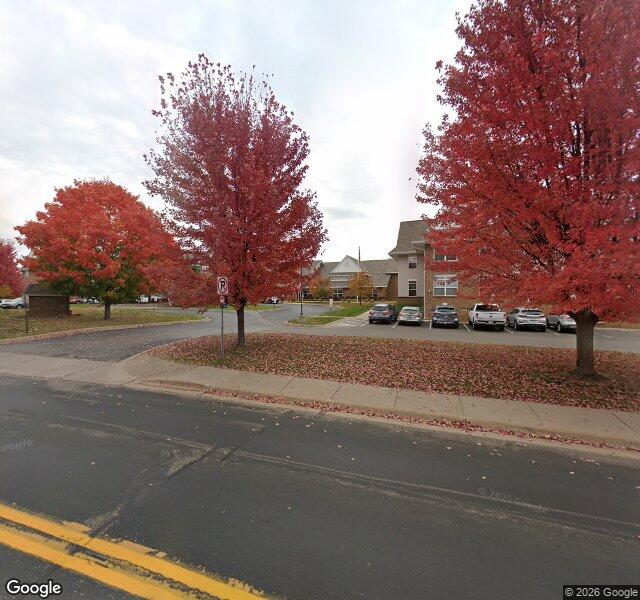
220 East Avenue, Mahtomedi, MN 55115View map (opens in a new tab)
Overview and key essentials
State license
Active
MN MDH
Google reviews
4.4/ 5
10 reviews
Size & payment
Ask directly
Confirm pricing & payment
Strong public signals
Rated 4.4/5 across 10 public Google reviews. Visit in person to confirm daily care and pricing.
Cost, payment & care details
Updated Nov 28, 2026| Monthly cost | Not published | Ask for the full monthly cost, including care fees and one-time charges. |
|---|---|---|
| Payment options | Ask directly | Payment details are not confirmed in our records. Ask about private pay, long-term care insurance, veterans benefits, and Medicaid waivers. |
| Size & availability | Confirm directly | We don't publish live openings. Ask about current availability, waitlist length, and move-in timing. |
| Care & support | Assisted livingMemory care certified | Usually offers housing and help with everyday tasks, such as bathing and dressing. What to confirm about care levelsThis describes the licensed category. Ask how care plans adjust if mobility, nursing, or memory needs change over time. Read the family care guide → |
State licensing
State inspection history
2inspections
8deficiencies listed
May 15, 2025Routine4 deficiencies reported4
4 deficiencies reported
View official state report (opens in a new tab)
144G.10 Subdivision 1 License required0100
SS=F 0 100 (a)(1)Beginning August 1, 2021, no assisted living STATE FORM This MN Requirement is not met as evidenced by: Based on observation and interview, the licensee failed to manage, control, and operate the entire building as an assisted living facility when the licensee shared the building for mixed use with non-assisted living occupants. This had the potential to affect all residents, staff, and visitors. This practice resulted in a level two violation (a violation that did not harm a resident's health or safety but had the potential to have harmed a resident's health or safety, but was not likely to cause serious injury, impairment, or death), and was issued at a widespread scope (when problems are pervasive or represent a systemic failure that has affected or has potential to affect a large portion or all of the residents). The findings include: The licensee's address at 220 East Avenue, Mahtomedi, was licensed as an assisted living facility with dementia care (ALFDC). The address at 220 East Avenue address was physically connected to 240 East Avenue, which was an independent living facility, and 260 East Avenue, which housed a childcare center physically located in the basement of the ALFDC. On May 12, 2025, at 11:06 a.m. licensed assisted living director (LALD)-B stated the childcare center in the basement of the facility was owned by the licensee but leased out to the operating entity. Additionally, LALD-B stated that residents residing in the independent living and ALFDC both utilized the dining room situated in the independent living section of the facility, and there STATE FORM
144G.45 Subd. 2 (b-f) Fire protection and0810
SS=F physical environment (b) Each assisted living facility shall develop and maintain fire safety and evacuation plans. The plans shall include but are not limited to: (1) location and number of resident sleeping rooms; (2) staff actions to be taken in the event of a fire or similar emergency; (3) fire protection procedures necessary for residents; and (4) procedures for resident movement, evacuation, or relocation during a fire or similar emergency including the identification of unique or unusual resident needs for movement or STATE FORM
144G.41 Subdivision 1 Subd. 1a (a-b) Minimum0480
SS=F requirements; required food services (a) Except as provided in paragraph (b), food must be prepared and served according to the Minnesota Food Code, Minnesota Rules, chapter 4626. (b) For an assisted living facility with a licensed capacity of ten or fewer residents: (1) notwithstanding Minnesota Rules, part 4626.0033, item A, the facility may share a certified food protection manager (CFPM) with one other facility located within a 60-mile radius and under common management provided the CFPM is present at each facility frequently enough to effectively administer, manage, and supervise each facility's food service operation; (2) notwithstanding Minnesota Rules, part 4626.0545, item A, kick plates that are not removable or cannot be rotated open are allowed unless the facility has been issued repeated STATE FORM This practice resulted in a level two violation (a violation that did not harm a resident's health or safety but had the potential to have harmed a resident's health or safety, but was not likely to cause serious injury, impairment, or death), and is issued at a widespread scope (when problems are pervasive or represent a systemic failure that has affected or has the potential to affect a large portion or all of the residents). The findings include: Please refer to the document titled, Food and Beverage Establishment Inspection Report (FBEIR) dated May 13, 2025, for the specific Minnesota Food Code violations. The Inspection Report was provided to the licensee within 24 hours of the inspection. TIME PERIOD FOR CORRECTION: Please refer to the FBEIR for any compliance dates.
PE95116899
facility may operate in Minnesota unless it is licensed under this chapter. (2) No facility or building on a campus may provide assisted living services until obtaining the required license under paragraphs (c) to (e). (b)The licensee is legally responsible for the management, control, and operation of the facility, regardless of the existence of a management agreement or subcontract. Nothing in this chapter shall in any way affect the rights and remedies available under other law. (c) Upon approving an application for an assisted living facility license, the commissioner shall issue a single license for each building that is operated by the licensee as an assisted living facility and is located at a separate address, except as provided under paragraph (d) or (e). (d) Upon approving an application for an assisted living facility license, the commissioner may issue a single license for two or more buildings on a campus that are operated by the same licensee as an assisted living facility. An assisted living facility license for a campus must identify the address and licensed resident capacity of each building located on the campus in which assisted living services are provided. (e) Upon approving an application for an assisted living facility license, the commissioner may: (1) issue a single license for two or more buildings on a campus that are operated by the same licensee as an assisted living facility with dementia care, provided the assisted living facility for dementia care license for a campus identifies the buildings operating as assisted living facilities with dementia care; or (2) issue a separate assisted living facility with dementia care license for a building that is on a campus and that is operating as an assisted living facility with dementia care. STATE FORM PE9511 PE9511 were no additional kitchens or dining areas within the ALFDC. On May 14, 2025, at 3:11 p.m., LALD-B stated the childcare center located in the basement of the ALFDC, and had a separate entrance addressed as 260 East Avenue. LALD-B stated there was only one entrance into the ALFDC,which was part of the independent living facility addressed 240 East Avenue. LALD-B stated there was a secondary side entrance for the independent living side of the facility. No further information was provided. TIME PERIOD FOR CORRECTION: Seven (7) days PE9511 correction orders for violations of Minnesota Rules, part 4626.1565 or 4626.1570; (3) notwithstanding Minnesota Rules, part 4626.0685, item A, the facility is not required to provide integral drainboards, utensil racks, or tables large enough to accommodate soiled and clean items that may accumulate during hours of operation provided soiled items do not contaminate clean items, surfaces, or food, and clean equipment and dishes are air dried in a manner that prevents contamination before storage; (4) notwithstanding Minnesota Rules, part 4626.1070, item A, the facility is not required to install a dedicated handwashing sink in its existing kitchen provided it designates one well of a two-compartment sink for use only as a handwashing sink; (5) notwithstanding Minnesota Rules, parts 4626.1325, 4626.1335, and 4626.1360, item A, existing floor, wall, and ceiling finishes are allowed provided the facility keeps them clean and in good condition; (6) notwithstanding Minnesota Rules, part 4626.1375, shielded or shatter-resistant lightbulbs are not required, but if a light bulb breaks, the facility must discard all exposed...
May 19, 2023Routine4 deficiencies reported4
4 deficiencies reported
View official state report (opens in a new tab)
minor0970
The contract must not include a waiver of facility liability for the health and safety or personal property of a resident. The contract must not include any provision that the facility knows or should know to be deceptive, unlawful, or unenforceable under state or federal law, nor include any provision that requires or implies a lesser standard of care or responsibility than is required by law. This MN Requirement is not met as evidenced by: Based on interview and record review, the licensee failed to ensure the assisted living contract did not include language that waived the licensee's liability for the health, safety, or personal property of a resident. This had the potential to affect all residents. This practice resulted in a level one violation (a violation that has no potential to cause more than a minimal impact on the resident and does not affect health or safety) and was issued at a widespread scope (when problems are pervasive or represent a systemic failure that has affected or has potential to affect a large portion or all of the residents). The findings include: On May 15, 2023, at approximately 11:00 a.m., licensed assisted living director (LALD)-C provided licensee's current Residency Agreement with revised date October 1, 2022, and identified the document as licensee's assisted living contract. Page three (3) of the assisted living contract indicated by signing the assisted living contract, the resident acknowledges they received and reviewed the Resident Handbook. The licensee's Resident Handbook dated August 2021, on page 37 Wheelchairs/Walkers/Motorized Carts section read, "The community is not liable for damage or injury associated with the operation of the vehicle." On May 17, 2023, at approximately 12:00 p.m., LALD-E stated licensee would adjust the liability waiver language currently in the contract. LALD-E stated the corporate office would be notified of the liability waiver and address it. No further information provided. TIME PERIOD FOR CORRECTION: Twenty-one (21) days 01470 SS=D 144G.63 Subd. 2 Content of required orientation (a) The orientation must contain the following topics: (1) an overview of this chapter; (2) an introduction and review of the facility's policies and procedures related to the provision
moderate0510
(a) All assisted living facilities must establish and maintain an infection control program that complies with accepted health care, medical, and nursing standards for infection control. (b)The facility's infection control program must be consistent with current guidelines from the national Centers for Disease Control and Prevention (CDC) for infection prevention and control in long-term care facilities and, as applicable, for infection prevention and control in assisted living facilities. (c) The facility must maintain written evidence of compliance with this subdivision. This MN Requirement is not met as evidenced by: Based on observation, interview, and record review, the licensee failed to establish and maintain an infection control (IC) program that complies with accepted health care, medical and nursing standards for infection control. The deficient practice had the potential to affect residents, employees, and visitors. This practice resulted in a level two violation (a violation that did not harm a resident's health or safety but had the potential to have harmed a resident's health or safety, but was not likely to cause serious injury, impairment, or death), and was issued at an isolated scope (when one or a limited number of residents are affected or one or a limited number of staff are involved or the situation has occurred only occasionally). The findings include: R5 was admitted on February 13, 2020, with diagnosis including diabetes mellitus type 2 (DM II), congestive heart failure, obstructive sleep apnea, obesity, and atrial fibrillation. R5's Physician Orders signed February 2, 2023, indicated R5 had a right heel ulcer related to R5's DM II and obesity diagnoses. R5's Assessment As Of Date completed on May 2, 2023, indicated under Skin area, R5's left heel wound measured 1.0 x 1.1 x 0.1 centimeters (cm) and had an additional wound on the top of the left foot measuring 3 x 3.5 x 0.1 cm. R5's diagnosis of DM II and open wound placed R5 at an increased risk of contraction of an infection. On May 16, 2023, at approximately 7:00 a.m., the surveyor observed R5's private room. In R5's bathroom an over the toilet commode chair (also referred to as a raised toilet seat or commode) was in place. The commode had multiple layers of gray duct tape wrapped around the front center and slightly to right on the seated area. The duct tape appeared to have been in place for an extended period of time as evidenced by the edges of the tape appeared frayed, multiple layers in place, and some edges of the tape was peeled back. Many areas of the tape were stained brown and areas where the tape had peeled back exposing the adhesive side contained urine and fecal matter. On May 17, 2023, at approximately 9:15 a.m., clinical nurse supervisor (CNS)-D stated they were responsible for the development and implementation of licensee's IC program and R5's commode would be an IC concern for R5. CNS-D stated the licensee would need to complete an assessment related to the commode and put a cleaning routine in place to ensure IC procedures are maintained and implemented to prevent possible spread of an infection to R5 or staff who work in the area. The licensee's Infection Prevention and Control Manual dated 2020, indicated the licensee would develop an IC program which would include, "A system for preventing, identifying, reporting, investigating, and controlling infections and communicable diseases for all residents, staff, volunteers, visitors, and...
STATE FORM6899
795K11 STATE FORM 795K11 STATE FORM 795K11 STATE FORM 795K11 STATE FORM 795K11 STATE FORM 795K11 01470 01470 of assisted living services by the individual staff person; (3) handling of emergencies and use of emergency services; (4) compliance with and reporting of the maltreatment of vulnerable adults under section 626.557 to the Minnesota Adult Abuse Reporting Center (MAARC); (5) the assisted living bill of rights and staff responsibilities related to ensuring the exercise and protection of those rights; (6) the principles of person-centered planning and service delivery and how they apply to direct support services provided by the staff person; (7) handling of residents' complaints, reporting of complaints, and where to report complaints, including information on the Office of Health Facility Complaints; (8) consumer advocacy services of the Office of Ombudsman for Long-Term Care, Office of Ombudsman for Mental Health and Developmental Disabilities, Managed Care Ombudsman at the Department of Human Services, county-managed care advocates, or other relevant advocacy services; and (9) a review of the types of assisted living services the employee will be providing and the facility's category of licensure. (b) In addition to the topics in paragraph (a), orientation may also contain training on providing services to residents with hearing loss. Any training on hearing loss provided under this subdivision must be high quality and research based, may include online training, and must include training on one or more of the following topics: (1) an explanation of age-related hearing loss and how it manifests itself, its prevalence, and the challenges it poses to communication; STATE FORM 795K11 01470 01470 (2) health impacts related to untreated age-related hearing loss, such as increased incidence of dementia, falls, hospitalizations, isolation, and depression; or (3) information about strategies and technology that may enhance communication and involvement, including communication strategies, assistive listening devices, hearing aids, visual and tactile alerting devices, communication access in real time, and closed captions. This MN Requirement is not met as evidenced by: Based on observation, interview, and record review, the licensee failed to provide orientation to assisted living licensing requirements and regulations prior to providing services for one of two employees (unlicensed personnel (ULP)-B). This practice resulted in a level two violation (a violation that did not harm a resident's health or safety but had the potential to have harmed a resident's health or safety, but was not likely to cause serious injury, impairment, or death), and was issued at an isolated scope (when one or a limited number of residents are affected or one or a limited number of staff are involved or the situation has occurred only occasionally). The findings include: ULP-B was hired March 8, 2021. On May 15, 2023, at approximately 12:00 p.m., licensed assisted living director (LALD)-C provided ULP-B's undated Relias (online training platform) Transcript and stated document would contain all orientation training ULP-B had completed. STATE FORM 795K11 01470 01470 ULP-B's orientation training record lacked evidence ULP-B had completed the following required orientation: - Overview of assisted living statutes; - A review of licensee's policies and procedures; - Handling emergencies; - Handling and reporting resident complaints; - Review of licensee's...
moderate0480
requirements 0 480 (13) offer to provide or make available at least the following services to residents: (B) food must be prepared and served according to the Minnesota Food Code, Minnesota Rules, chapter 4626; and This MN Requirement is not met as evidenced by: Based on observation, interview and record review, the licensee failed to ensure food was prepared and served according to the Minnesota Food Code. This practice resulted in a level two violation (a violation that did not harm a resident's health or safety but had the potential to have harmed a resident's health or safety) and was issued at a widespread scope (when problems are pervasive or represent a systemic failure that has affected or has the potential to affect a large portion or all the residents). The findings include: Please refer to the included document titled, Food and Beverage Establishment Inspection Report dated May 15, 2023, for the specific Minnesota Food Code deficiencies. TIME PERIOD FOR CORRECTION: Twenty-one (21) days
Neighborhood & resident support
Emergency access, hazards & advocacy
Nearest hospital
Healtheast St Johns Hospital
4.9 mi · St Paul, MN · Medicare 5/5 ★
Emergency room
FEMA hazard risk
Relatively ModerateWashington County, MN
- Strong Wind
- Hail
- Tornado
Free resident advocacy
Minnesota Office of Ombudsman for Long-Term Care
More neighborhood context (specialists, VA, dialysis, air & affordability)
VA & dialysis access
Minneapolis VA Medical Center
16.8 mi · Minneapolis, MN · VA 5/5 ★
Fmc - Maplewood Heights
5.1 mi · 3/5 ★
Specialists within 15 mi
- Geriatricians
- 27
- Neurologists
- 170
- Palliative care
- 30
- PM&R rehab
- 111
Environment & mobility
- EPA Air (2025)
- 95% good days · AQI 34
- EPA Walkability
- 8.5/20 (Below Average)
- USDA Grocery Access
- High Grocery Access
- Primary care access
- HRSA Shortage Area
County demographics
- Age 65+ median income
- $75,013/yr
- Rent-burdened households
- 50%
- Cognitive disability (2023)
- 11.3%
- Mobility disability
- 8.1%
Call & tour checklist
Questions to ask St Andrew's Village
Check off questions as you call or tour. Your progress stays private in this browser.
Show 3 more suggested questions
Verification & public records
Official records & sources
Licensing & contact
- License #
- 21177
- Status
- active
- Phone
- (651) 762-4100
- Federal OIG LEIE
- Clear (2026-11-27)
Original public sources
Verify licensing, ratings, and inspection reports directly with each official source.
- MN MDH official record (opens in a new tab)MN Dept. of Health
- Google Maps (opens in a new tab)Directions, photos & neighborhood
- Google Reviews (opens in a new tab)10 public reviews
EveryPlace is an independent research directory. Information is compiled from public Medicare.gov, state licensing, Google Places, and street-level imagery sources. Some summaries, suggested questions, and pricing notes are AI-generated or AI-assisted and may contain errors or omissions. We do not accept payment for placement. Confirm all details directly with the community and official sources. Research Policy.
Keep exploring
Nearby communities to compare
- 4.8(19)Assisted Living< 1 miNew Perspective - MahtomediMahtomedi, MN
- 3.7(9)Assisted Living< 1 miEncore at MahtomediMahtomedi, MN
- Cap. 79HUD Senior Housing< 1 miPiccadilly SquareMahtomedi, MN
- Cap. 61HUD Senior Housing1.9 miEast Shore PlaceMahtomedi, MN
- Cap. 39HUD Senior Housing3.1 miCypress Senior Living at Red Oak PreserveOakdale, MN
- Assisted Living3.1 miPeople's Choice Home Care ServOakdale, MN