Loading EveryPlace content…
Assisted LivingActive licenseMemory care certified
South Shore House
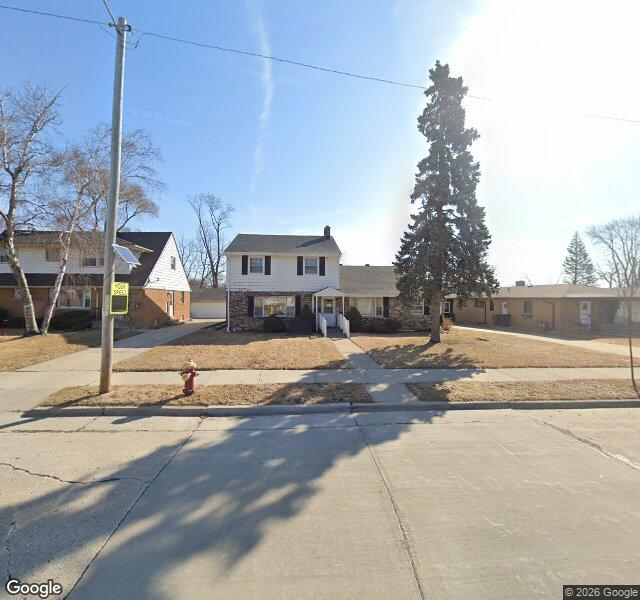
6168 S Swift Avenue, Cudahy, WI 53110View map (opens in a new tab)
Overview and key essentials
State license
Active
WI DHS
Google reviews
5.0/ 5
1 reviews
Monthly cost
$3,500–$4,500/ mo
AI-assisted estimate
Cost, payment & care details
Updated Nov 28, 2026| Monthly cost | $3,500–$4,500AI-assisted estimate | Research may contain errors. Request a current quote from the provider. Source: AI-assisted online research, Nov 2026. |
|---|---|---|
| Payment options | Medicaid | Participation is reported in our source data. Confirm eligibility, covered services, and any private-pay costs. Verified Medicaid waiver: Wisconsin Family Care / IRIS Medicaid Waiver (WI Dept. of Health Services (DHS DQA)). |
| Size & availability | Confirm directly | We don't publish live openings. Ask about current availability, waitlist length, and move-in timing. |
| Care & support | Assisted livingMemory care certified | Usually offers housing and help with everyday tasks, such as bathing and dressing. What to confirm about care levelsThis describes the licensed category. Ask how care plans adjust if mobility, nursing, or memory needs change over time. Read the family care guide → |
Safety screening & compliance
State licensing depth & federal screening
HHS OIG LEIE: Clear (2026-11-27)OIG database ↗ (opens in a new tab)
WI DHS directory details (CBRF)
Class: CLASS AS (SEMIAMBULATORY)Public Funding (Family Care / IRIS)HCBS CompliantDementia approvedWI DHS rates: $3,500–$4,500/mo
State licensing
State inspection history
4inspections
9deficiencies listed
May 13, 2024EnforcementEnforcement actionPenalty
Enforcement action
View official state report (opens in a new tab)
No deficiencies are reported in this inspection record.
May 13, 2024Follow-up1 deficiency reported1
1 deficiency reported
View official state report (opens in a new tab)
STATE FORM6899
5WFX12 {N 223} {N 223} This is a repeat deficiency. See SOD 5SWX11, dated 03/08/2024. Findings include: On 05/13/2024 at 4:10 p.m., Surveyor received Caregiver D's and Caregiver C's complete file from Licensee A via email. On 05/16/2024, at 9:35 a.m., Surveyor reviewed employee records and identified the following: Caregiver D was hired 10/23/2023. Caregiver D's record did not include documentation of orientation training, resident rights training, dietary training, and health screening for communicable disease, including TB. Caregiver C was hired on 07/19/2023. Caregiver C's record did not include documentation of orientation training, resident rights training, and dietary training. On 05/10/2024, at 11:05 a.m., Surveyor interviewed Licensee A regarding caregiver trainings and TB skin tests. Licensee A stated, "Nothing has been done. The entire training has not been completed." On 05/16/2024, at approximately 10:10 a.m., Surveyor reviewed email from Licensee A. Licensee A reported s/he provided House Manager (HM) B with a master copy of the orientation checklist so s/he could make sure each employee has one. Licensee A stated s/he was in the process of reviewing and preparing the additional trainings to make sure all staff were presented the materials and would document once training was complete. STATE FORM 5WFX12 {N 223} {N 223} As of 05/16/2024, at 10:30 a.m., Surveyor had not received any additional documentation. {N 481} 83.43(1) Environment safe, clean, and comfortable Environment. The CBRF shall provide a living environment that is safe, clean, comfortable, and homelike. All common dining and living areas shall contain furnishings appropriate to the intended use of the room. This Rule is not met as evidenced by: Based on observation and interview, the provider did not ensure the living environment was safe, residents residing in the home. The living room furniture was worn and disintegrating. Two transition areas of the floor were rising and covered with ripped yellow tape. The carpet on the landing from the stairs was loose and buckling. The wall, next to the shower in the 1st floor southwest bathroom contained an area of rotting wood, flaking paint, and exposed metal corner bead. This is a repeat deficiency. See SOD 5SWX11, dated 03/08/2024. Findings include: On 05/13/2024, between 9:45 a.m. and 10:30 a.m., Surveyor toured the facility and observed the following: Carpet: STATE FORM 5WFX12 {N 481} {N 481} The carpet on the landing of the stairway to the second floor, was worn and buckling near the edge of the landing leading to the floor and a potential trip hazard. Living Room: The dark, leather-like couch and loveseat cushion covers had disintegrated, exposing the light-colored cushion underneath. The arms of the cushions were worn off. 1st floor bathroom on southwest side: -The wall, next to the shower in the 1st floor southwest bathroom, contained an area of rotting wood, flaking paint, and exposed metal corner bead. -The ceiling contained scattered dark orange spots and peeling paint. Hallway flooring: -The doorway between the hallway (near stairs) and the kitchen contained flooring which was rising and taped down with yellow tape. Half the area was missing the tape. -The doorway between the sunroom and hallway to resident's bedrooms contained an area of the floor rising and taped down with yellow tape. On 05/10/2024, at 11:05 a.m., Surveyor interviewed Licensee A regarding the observations. Licensee A confirmed there...
Mar 8, 2024EnforcementEnforcement actionPenalty
Enforcement action
View official state report (opens in a new tab)
No deficiencies are reported in this inspection record.
Mar 8, 2024Routine8 deficiencies reported8
8 deficiencies reported
View official state report (opens in a new tab)
On 03/07/2024, with information gathered through 03/08/2024, Surveyor conducted a standard survey at South Shore Home. As a result, 7 deficiencies were identified. Census: 7
STATE FORM6899
5WFX11 STATE FORM 5WFX11 STATE FORM 5WFX11 STATE FORM 5WFX11 STATE FORM 5WFX11 STATE FORM 5WFX11 STATE FORM 5WFX11 STATE FORM 5WFX11 STATE FORM 5WFX11 STATE FORM 5WFX11 STATE FORM 5WFX11
83.45(3) Toxic substances.N 499
Toxic substances. The CBRF shall ensure that cleaning compounds, polishes, insecticides and toxic substances are labeled and stored in a secure area. This Rule is not met as evidenced by: Based on observation and interview, the provider did not ensure cleaning compounds and toxic substances were securely stored. This had the potential to negatively affect 7 of 7 residents. Cleaning supplies and toxic substances were unsecured in a closet, under the kitchen sink, and in bathroom cabinet. Findings include: On 07/19/2023, the provider was issued a probationary license to care for 8 residents in the client groups of irreversible dementia/Alzheimer's, advanced age, developmentally disabled, and physically disabled. On 03/07/2024, between 8:55 AM and 9:30 AM, Surveyor observed the following unsecured cleaning supplies which included labels to keep out of reach of children and warnings keeping the substance out of contact with eyes: -Stored in an unsecured storage closet in the kitchen contained 2 Clorox disinfecting spray cans, foaming bathroom cleaner and glass cleaner. -Stored in an unsecured kitchen cabinet, under the sink, was a bottle of Pine Sol and glass cleaner spray. -Stored in an unsecured cabinet in the full bathroom of the east hall on the first floor, was a spray bottle of Renuzit disinfectant spray and a can of Glade spray. Residents were observed moving freely throughout the facility. On 03/07/2024, at 11:30 AM, Surveyor interviewed Licensee A regarding the unsecured cleaning supplies. Licensee A reported s/he was aware of the code requirement to secure all toxic substances. Licensee A reported s/he was unaware the chemicals were not locked. Licensee A reported s/he would provide reminders to staff to make sure the cleaning compounds and toxic substances were always secured.
83.59(1)(a) Class AS, ANA, CS, CNA 2 gradeN 631
level exits All habitable floors shall have at least 2 exits providing unobstructed travel to the outside. Small class AA CBRFs licensed on or before the effective date of this section with no more than 2 habitable floors may have one exit from the second floor. Class AS, class ANA, class CS and class CNA CBRFs shall have at least 2 grade level or ramped exits to grade. This Rule is not met as evidenced by: Based on observations, interview, and record review, the provider did not ensure there were at least 2 exits to grade level. There was an internal step within the facility which led to the east hall where the 2nd ramped exit was located. Residents were required to step down 5 inches to access the rear ramped exit. Findings include: On 07/19/2023, the provider was issued a probationary license as a Class AS semi-ambulatory community based residential facility (CBRF). On 03/07/2024, at 9:10 AM, Surveyor toured the facility. The facility was a two story, 8 bed capacity CBRF. The first floor contained 4 exits and 2 were ramped. The ramped exit in the east hall contained a 5-inch step to the hallway leading to the exit. The 2nd ramped exit was not to grade. The other 2 exits on the 1st floor contained a step down to the attached patio and additional 3 steps to the ground level. Surveyor observed a mechanical chair lift installed on the stairs. On 03/08/2024, at 11:00 AM, Surveyor observed Resident 1 ambulate within the home. Resident 1 utilized a wheeled walker, gait belt, and hands on assistance from staff to navigate the step to the east hallway where her/his bedroom was. On 03/08/2024, at 11:10 AM, Surveyor interviewed House Manager (HM) B and Caregiver F. HM B reported Resident 1 required hands-on assistance from staff to ambulate within the home. HM B reported Resident 2 utilized a walker within the home and staff provided stand by assistance for her/him. Caregiver F reported Resident 2 was able to navigate the stairs independently. Caregiver F reported Resident 2's bedroom was on the second floor. Surveyor asked if Resident 2 was able to operate the chair lift independently. HM B reported s/he was not able to operate the chair lift. HM B reported the facility had "been like this" for the previous owner. Surveyor asked HM B and Caregiver F to identify the facility's 2 exits to grade. HM B and Caregiver F reported they could not. On 03/08/2024, at 2:00 PM, Surveyor reviewed resident records and identified the following: -Resident 1 was admitted on 07/19/2023. Resident 1's individual service plan (ISP), dated 11/06/2023, indicated Resident 1 "would be able to evacuate the facility in an emergency with an assist of one." -Resident 2 was admitted on 07/19/2023. Resident 2's ISP, dated 08/23/2023, indicated Resident 2 "walks upstairs to [her/his] bedroom daily and uses the chair lift to come down stairs [sic] daily. [Resident 2] requires assistance from staff to use the chair lift."
83.37(3)(c) Medication storage: locked cabinet.N 419
Administered by facility. The CBRF shall keep medicine cabinets locked and the key available only to personnel identified by the CBRF. This Rule is not met as evidenced by: Based on observation and interview, the provider did not ensure medications were securely stored. residents. Resident 3's afternoon dose of Carbidopa/Levodopa 25-100 milligrams was placed in clear plastic storage bag and taped to the outside of the kitchen cabinet where the medications were stored, accessible to residents and visitors. Findings include: On 07/19/2023, the provider was issued a probationary license to care for 8 residents in the client groups of irreversible dementia/Alzheimer's, advanced age, developmentally disabled, and physically disabled. On 03/08/2024, between 10:40 AM and 11:05 AM, Surveyor observed the following: -A clear, plastic bag with 2 doses of Carbidopa/Levodopa 25-100 milligrams, was taped to the kitchen cabinet where medications were stored. -Four residents were sitting in the adjoining dining room and living room and moving around freely. -Caregiver E was in the sunroom getting Resident 3 ready for her/his outing, followed by entering other rooms leaving the medications unattended. -At 11:05 AM, Resident 3's visitor picked up Resident 3. Caregiver E removed the bag from the cabinet and handed it to her/his visitor. On 03/08/2024, at 11:55 AM, Surveyor interviewed House Manager (HM) B. HM B reported s/he was aware of the code to keep the medications in a locked cabinet, and it was policy to keep medications locked up. HM B reported s/he would speak to Caregiver E. HM B stated, "[S/He] knows. I'll speak with [her/him]."
83.55(6)(b) Bath and toilet areas: waterN 617
temperature The CBRF shall set the temperature of all water heaters connected to sinks, showers and tubs used by residents at a temperature of at least 140°F. The temperature of water at fixtures used by residents shall be automatically regulated by valves and may not exceed 115°F, except for CBRFs serving residents recovering from alcohol or drug dependency or clients of a government correctional agency. This Rule is not met as evidenced by: Based on observation and interview, the provider did not ensure 4 of 4 bath and toilet areas had safe water temperatures. The water temperatures of 3 of 3 first floor bathroom sink faucets tested at 119° Fahrenheit (F). The second-floor bathroom sink faucet tested at 124° F. Findings include: On 07/19/2023, the provider was issued a probationary license to care for 8 residents in the client groups of irreversible dementia/Alzheimer's, advanced age, developmentally disabled, and physically disabled. On 03/07/2024, at 9:55 AM, Surveyor tested the water temperature at 4 resident's bathroom faucet. The temperature readings were between 119°F and 124°F. The 1st floor contained 3 bathrooms. Three of 3 bathrooms water temperatures tested at the faucet were 119°F. The 2nd floor contained 1 bathroom. The water temperature tested at the faucet was 124°F. On 03/07/2024, at 10:50 AM, Surveyor interviewed Licensee A regarding the hot water temperature. Surveyor asked Licensee A if s/he was aware of the code requirement. Licensee A reported s/he thought the temperature could not exceed 120°F. Licensee A reported 2nd shift was responsible to check water temperatures. Licensee A reported s/he would have the water temperature decreased.
83.59(2)(a) One-hand, one-motion door operationN 639
All doors shall have latching hardware to permit opening from the inside with a one-hand, one-motion operation without the use of a key or special tool. This Rule is not met as evidenced by: Based on observation and interview, the provider did not ensure 2 of 3 exterior doors were able to be opened from the inside with a one-hand, one-motion (1H1M) operation without having to turn the locks on the doors to disengage the lock, affecting 7 of 7 residents residing in the facility. Findings include: On 03/07/2024, at 9:00 AM, Surveyor observed the round door handle on the southwest exit contained a round door handle with a lock button and a deadbolt lock above it. Surveyor engaged the locks and attempted to open the door with one motion. Surveyor had to disengage the deadbolt lock and then turn the lock button before the door would open. The door was not 1H1M operation. The west exit (front entrance) contained a round handle with a lock button. Surveyor engaged the lock button to lock the door. Surveyor turned the handle to open, and the lock did not disengage. Surveyor had to disengage the lock button before the door would open. The door was not 1H1M operation. On 03/07/2024, at AM, Surveyor interviewed Licensee A. Licensee A confirmed the doors did not contain a 1H1M operation. Licensee A reported s/he would obtain new locks/handles.
83.18(1) Employee records maintained andN 223
current. A separate record for each employee shall be maintained, kept current, and at a minimum, include: (a) Written job description including duties, responsibilities and qualifications required for the employee; (b) Beginning date of employment; (c) Educational qualifications for administrators; (d) Completed caregiver background check following procedures under s. 50.065, Stats., and ch. HFS 12; (e) Documentation of training, or exemption verification. This Rule is not met as evidenced by: Based on record review and interview, the provider did not ensure all employee records were maintained and current for 2 of 2 employees reviewed. Caregiver C's and Caregiver D's records did not include documentation of training for orientation, resident rights, and dietary training. Caregiver C's record did not contain documentation of her/his health screening for communicable disease, including tuberculosis (TB). Findings include: On 03/07/2024, at 10:30 AM, Surveyor reviewed employee records and identified the following: Caregiver D was hired 10/23/2023. Caregiver D's record did not include documentation of orientation training, resident rights training, dietary training, and health screening for communicable disease, including TB. Caregiver C was hired on 07/19/2023. Caregiver C's record did not include documentation of orientation training, resident rights training, and dietary training. On 03/07/2024, at approximately 11:00 AM, Surveyor interviewed Licensee A. Licensee A reported s/he was responsible for hiring and ensuring the records were complete and current. Licensee A reported s/he had documentation at home s/he needed to file. Licensee A reported s/he would send over documentation of requested items. As of 03/08/2024, at 2:00 PM, Surveyor had not received any additional documentation.
83.43(1) Environment safe, clean, andN 481
comfortable Environment. The CBRF shall provide a living environment that is safe, clean, comfortable, and homelike. All common dining and living areas shall contain furnishings appropriate to the intended use of the room. This Rule is not met as evidenced by: Based on observation and interview, the provider did not ensure the living environment was safe, residents residing in the home. The living room furniture was worn and disintegrating. Two transition areas of the floor were rising and covered with ripped yellow tape. The carpet on the landing from the stairs was loose and buckling. The white kitchen cabinets were dirty and worn. The wall, next to the shower in the 1st floor southwest bathroom, contained an area of rotting wood, flaking paint and exposed metal corner bead. Findings include: On 03/07/2024, between 9:00 AM and 10:15 AM., Surveyor toured the facility and observed the following: Carpet: The carpet on the landing of the stairway to the second floor, was worn and buckling near the edge of the landing leading to the floor and a potential trip hazard. (Photo 02) The tan carpet in the vacant room, located in the east hallway, contained an area with a black stain in the middle of the room and scattered black spots upon entering the room. (Photo 03) Living Room: The dark, leather like couch and loveseat cushion covers had disintegrated, exposing the light-colored cushion underneath. The arms of the cushions were worn off too. 1st floor bathroom on southwest side: -The wall, next to the shower in the 1st floor southwest bathroom, contained an area of rotting wood, flaking paint and exposed metal corner bead. -The ceiling contained scattered dark orange spots and peeling paint. Hallway flooring: The doorway between the hallway (near stairs) and the kitchen contained flooring which was rising and taped down with yellow tape. Half the area was missing the tape. (Photo 05) The doorway between the sunroom and hallway to resident's bedrooms contained an area of the floor rising and taped down with yellow tape. Kitchen: The white kitchen cabinets appeared worn and around the handles was dark areas consistent with built up dirt. On 03/07/2024, at 12:00 PM, Surveyor interviewed Licensee A regarding the observations. Licensee A confirmed there were some repairs to be completed and s/he would develop a plan.
Neighborhood & resident support
Emergency access, hazards & advocacy
Nearest hospital
Aurora St Lukes Med Ctr South Shore
0.4 mi · Cudahy, WI
Emergency room
FEMA hazard risk
Relatively HighMilwaukee County, WI
- Cold Wave
- Heat Wave
- Tornado
Free resident advocacy
Wisconsin Board on Aging & Long Term Care Ombudsman
More neighborhood context (specialists, VA, dialysis, air & affordability)
VA & dialysis access
Milwaukee VA Medical Center
8.5 mi · Milwaukee, WI · VA 3/5 ★
Fresenius Medical Care Midwest Lakeshore
2.9 mi · 3/5 ★ · Home dialysis
Specialists within 15 mi
- Geriatricians
- 54
- Neurologists
- 190
- Palliative care
- 29
- PM&R rehab
- 80
Environment & mobility
- EPA Walkability
- 13.4/20 (Above Average)
- Primary care access
- HRSA Shortage Area
County demographics
- Age 65+ median income
- $49,195/yr
- Rent-burdened households
- 48%
- Cognitive disability (2023)
- 14.5%
- Mobility disability
- 14.2%
Call & tour checklist
Questions to ask South Shore House
Check off questions as you call or tour. Your progress stays private in this browser.
Show 3 more suggested questions
Verification & public records
Official records & sources
Licensing & contact
- License #
- 19494
- Status
- active
Original public sources
Verify licensing, ratings, and inspection reports directly with each official source.
- WI DHS official record (opens in a new tab)WI Dept. of Health Services
- Google Maps (opens in a new tab)Directions, photos & neighborhood
- Google Reviews (opens in a new tab)1 public reviews
EveryPlace is an independent research directory. Information is compiled from public Medicare.gov, state licensing, Google Places, and street-level imagery sources. Some summaries, suggested questions, and pricing notes are AI-generated or AI-assisted and may contain errors or omissions. We do not accept payment for placement. Confirm all details directly with the community and official sources. Research Policy.
Keep exploring
Nearby communities to compare
- Cap. 105HUD Senior Housing< 1 miEvergreen Square of CudahyCudahy, WI
- 3.9(19)Assisted Living< 1 miSylvan Crossings at Creekside EstatesCudahy, WI
- Cap. 22HUD Senior Housing< 1 miCifaldi SquareCudahy, WI
- 4.5(32)Assisted Living< 1 miRamsey Woods ResidenceCudahy, WI
- MedicaidAssisted Living1.2 miHammond HouseCudahy, WI
- 5.0(13)Assisted Living1.4 miSt Marys ManorSouth Milwaukee, WI