Loading EveryPlace content…
Memory CareActive license
Royalton Place Memory Care
5555 Se King Rd, Lewelling, Milwaukie, OR 97222View map (opens in a new tab)
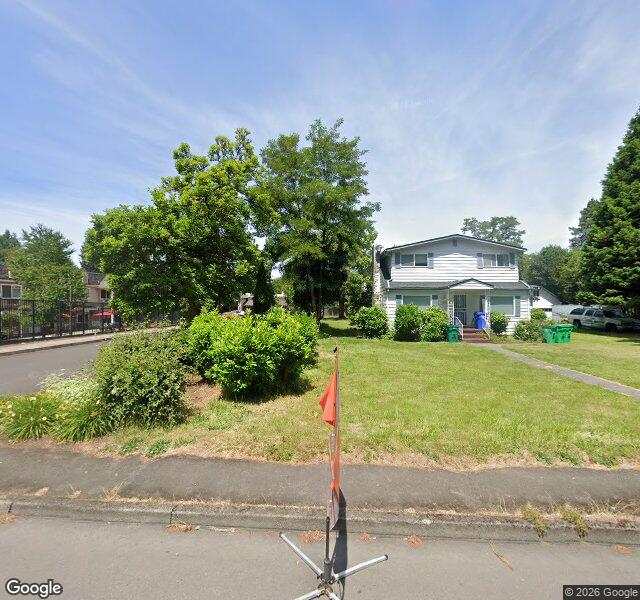
Overview and key essentials
State license
Active
OR ODHS
Google reviews
4.1/ 5
41 reviews
Size & payment
28 residents
Confirm pricing & payment
Strong public signals
Rated 4.1/5 across 41 public Google reviews. Visit in person to confirm daily care and pricing.
Cost, payment & care details
Updated Nov 28, 2026| Monthly cost | Not published | Ask for the full monthly cost, including care fees and one-time charges. |
|---|---|---|
| Payment options | Ask directly | Payment details are not confirmed in our records. Ask about private pay, long-term care insurance, veterans benefits, and Medicaid waivers. |
| Size & availability | 28 residents | We don't publish live openings. Ask about current availability, waitlist length, and move-in timing. |
| Care & support | Memory care | Designed for people living with dementia who need a supported daily routine. What to confirm about care levelsThis describes the licensed category. Ask how care plans adjust if mobility, nursing, or memory needs change over time. Read the family care guide → |
State licensing
State inspection history
8inspections
32deficiencies listed
May 27, 2026Inspection2 deficiencies reported2
2 deficiencies reported
View official state report (opens in a new tab)
Kitchen
moderateC0240
OAR 411-054-0030 (1)(a) Resident Services Meals, Food Sanitation Rule (1) The residential care or assisted living facility must provide a minimum scope of services as follows: (a) Three daily nutritious, palatable meals with snacks available seven days a week, in accordance with the recommended dietary allowances found in the United States Department of Agriculture (USDA) guidelines, including seasonal fresh fruit and fresh vegetables; (A) Modified special diets that are appropriate to residents' needs and choices. The facility must encourage residents' involvement in developing menus. (B) Menus must be prepared at least one week in advance, and must be made available to all residents. Meal substitutions must be of similar nutritional value if a resident refuses a food that is served. Residents must be informed in advance of menu changes. (C) Food must be prepared and served in accordance with OAR 333-150-0000 (Food Sanitation Rules). This Rule is not met as evidenced by: Based on observation and interview, it was determined the facility failed to ensure kitchen practices and protocols were in accordance with the Food Sanitation Rules OARs 333-150-0000. Findings include, but are not limited to: On 05/27/26 at 10:40 am, the facility kitchen was observed to need cleaning in the following areas: * Floor stand mixer – splatters/food debris; * Ice maker interior – build up of black matter; * Exterior doors of stainless steel refrigeration units – smears/spills; * Top and exterior of dishwashing machine – build up of white matter; * Flooring underneath two and three sink counters, behind and under food bins, prep counters – significant build up of dried food/debris/black and white matter; * Exterior of food bins – food debris; * Windowsill above ice maker, stand mixer – dust build up; * Pan on lower shelf beneath slicer storing variety of equipment – debris/dust; * Shelf above slice and three sink counter – debris/dust; and * Operating fan on counter across from open pan of food – dusty/grease/debris build up. Improper food storage included: * Two door freezer – opened undated meat product; * Two door refrigerator – undated individual salad dressing and bowl of salad, unwrapped onion, uncovered pitcher of ice water; * Dry storage area – open items undated included pasta, gravy mix, cake mix, jello, crispy onions; * Food bins in dry storage area without secured lid, potential for cross contamination or pest infestation; and * Walk in refrigerator – cart with two trays of uncovered bowls of pudding. Other concerns included: * Slice and stand mixer not covered when not in use. * Lack of hair restraint by staff on service line and while dishwashing. The areas of concern were discussed with Staff 1 (Dining Services Director), Staff 2 (Interim Administrator) and Staff 3 (Regional Vice President) on 05/27/26. The findings were acknowledged at 12:50 pm.
moderateZ0142
OAR 411-057-0140(2) Administration Compliance (2) The licensee of a memory care community must comply with both the licensing rules for the facility and Chapter 411, Division 57. This Rule is not met as evidenced by: Based on observation and interview, it was determined the facility failed to follow licensing rules for Residential Care and Assisted Living Facilities. Findings include, but are not limited to: Refer to C240.
Jun 25, 2025Inspection2 deficiencies reported2
2 deficiencies reported
View official state report (opens in a new tab)
Kitchen
moderateC0240
OAR 411-054-0030 (1)(a) Resident Services Meals, Food Sanitation Rule (1) The residential care or assisted living facility must provide a minimum scope of services as follows: (a) Three daily nutritious, palatable meals with snacks available seven days a week, in accordance with the recommended dietary allowances found in the United States Department of Agriculture (USDA) guidelines, including seasonal fresh fruit and fresh vegetables; (A) Modified special diets that are appropriate to residents' needs and choices. The facility must encourage residents' involvement in developing menus. (B) Menus must be prepared at least one week in advance, and must be made available to all residents. Meal substitutions must be of similar nutritional value if a resident refuses a food that is served. Residents must be informed in advance of menu changes. (C) Food must be prepared and served in accordance with OAR 333-150-0000 (Food Sanitation Rules). This Rule is not met as evidenced by:
moderateZ0142
OAR 411-057-0140(2) Administration Compliance (2) The licensee of a memory care community must comply with both the licensing rules for the facility and Chapter 411, Division 57. This Rule is not met as evidenced by:
Apr 1, 2025Complaint2 deficiencies reported2
2 deficiencies reported
View official state report (opens in a new tab)
Complaint Investig.
moderateC0363
Based on observation, interview, and record review, conducted during a site visit on 04/01/25, the facility's failure to maintain and implement an Acuity-Based Staffing Tool (ABST) was substantiated. Findings include, but are not limited to: The facility's posted staffing plan indicated the following: * Day: one med tech and three caregivers; * Evening: one med tech and three caregivers; and * Night: one med tech and one caregiver. A review of the facility's staff schedule, dated 03/25/25 to 04/01/25, revealed the facility was not consistently staffing to their posted staffing plan. Additionally, in an observation of day shift, only two caregivers were working. A review of the facility's ABST revealed multiple residents' profiles had not been updated in the last quarter. The findings were reviewed with and acknowledged by Staff 1 (Memory Care Administrator), Staff 2 (Assisted Living Administrator), and Staff 3 (Wellness Director). The facility's failure to maintain and implement an Acuity-Based Staffing Tool (ABST) was substantiated.
moderateC0360
Based on observation, interview, and record review, conducted during a site visit on 04/01/25, the facility's failure to maintain and implement an Acuity-Based Staffing Tool (ABST) was substantiated. Findings include, but are not limited to: The facility's posted staffing plan indicated the following: * Day: one med tech and three caregivers; * Evening: one med tech and three caregivers; and * Night: one med tech and one caregiver. A review of the facility's staff schedule, dated 03/25/25 to 04/01/25, revealed the facility was not consistently staffing to their posted staffing plan. Additionally, in an observation of day shift, only two caregivers were working. A review of the facility's ABST revealed multiple residents' profiles had not been updated in the last quarter. The findings were reviewed with and acknowledged by Staff 1 (Memory Care Administrator), Staff 2 (Assisted Living Administrator), and Staff 3 (Wellness Director). The facility's failure to maintain and implement an Acuity-Based Staffing Tool (ABST) was substantiated.
Oct 31, 2024Routine16 deficiencies reported16
16 deficiencies reported
View official state report (opens in a new tab)
Re-Licensure
severeC0270
OAR 411-054-0040 (1-2) Change of Condition and Monitoring (1) CHANGE OF CONDITION. These rules define a resident's change of condition as either short term or significant with the following meanings: (a) Short term change of condition means a change in the resident's health or functioning that is expected to resolve or be reversed with minimal intervention or is an established, predictable, cyclical pattern associated with a previously diagnosed condition. (b) Significant change of condition means a major deviation from the most recent evaluation that may affect multiple areas of functioning or health that is not expected to be short term and imposes significant risk to the resident.(c) If a resident experiences a significant change of condition that is a major deviation in the resident's health or functional abilities, the facility must evaluate the resident, refer to the facility nurse, document the change, and update the service plan as needed. (d) If a resident experiences a short-term change of condition that is expected to resolve or reverse with minimal intervention, the facility must determine and document what action or intervention is needed for the resident. (A) The determined action or intervention must be communicated to staff on each shift. (B) The documentation of staff instructions or interventions must be resident specific and made part of the resident record with weekly progress noted until the condition resolves. (2) MONITORING. The facility must have written policies to ensure a resident monitoring and reporting system is implemented 24-hours a day. The policies must specify staff responsibilities and identify criteria for notifying the administrator, registered nurse, or healthcare provider. The facility must: (a) Monitor each resident consistent with his or her evaluated needs and service plan; (b) Train staff to identify changes in the resident's physical, emotional and mental functioning and document and report on the resident's changes of condition; (c) Have a reporting protocol with access to a designated staff person, 24-hours a day, seven days a week, who can determine if a change in the resident's condition requires further action; and (d) Provide written communication of a resident's change of condition, and any required interventions, for caregivers on each shift. This Rule is not met as evidenced by: Based on observation, interview, and record review, it was determined the facility failed to ensure residents who had changes of condition had resident-specific instructions or interventions developed and reviewed for effectiveness, and/or weekly progress was documented until resolution for 1 of 3 sampled residents (#1) who experienced changes of condition. Resident 1 experienced severe weight loss. Findings include, but are not limited to: Resident 1 was admitted to the facility in 06/2022 with diagnoses including vascular dementia, mixed anxiety disorder, and major depressive disorder. The resident’s 10/18/24 service plan, 08/05/24 through 10/28/24 progress notes, Temporary Service Plans (TSPs), alert charting documentation, and 08/05/24 through 10/29/24 weight records were reviewed. Observations were made, staff and the resident were interviewed. The following was identified: a. Resident 1 was identified to have had a 9.8 pound weight loss, or 5.6% loss of his/her total body weight between 08/02/24 to 09/03/24. This constituted severe weight loss and a significant change of condition. A 09/04/24 TSP...
moderateZ0142
OAR 411-057-0140(2) Administration Compliance (2) The licensee of a memory care community must comply with both the licensing rules for the facility and Chapter 411, Division 57. This Rule is not met as evidenced by: Based on observation, interview, and record review, it was determined the facility failed to follow licensing rules for Residential Care and Assisted Living Facilities. Findings include, but are not limited to: Refer to C200, C420, C422, C510, C513, and C530.
moderateC0422
OAR 411-054-0090 (5) Fire and Life Safety: Training for Residents (5) TRAINING FOR RESIDENTS. Residents must be instructed about the facility's fire and life safety procedures per OFC. (a) Each resident must be instructed within 24 hours of admission and re-instructed, at least annually, in general safety procedures, evacuation methods, responsibilities during fire drills, and designated meeting places outside the building or within the fire safe area in the event of an actual fire. This requirement does not apply to residents whose mental capability does not allow for following such instruction. (b) A written record of fire safety training, including content of the training sessions and the residents attending, must be kept. This Rule is not met as evidenced by: Based on interview and record review, it was determined the facility failed to instruct each resident within 24 hours of admission and re-instruct residents at least annually in general safety procedures, evacuation methods, responsibilities during fire drills, and designated meeting places outside the building or within the fire safe area in the event of an actual fire. Findings include, but are not limited to: Fire and life safety records for 05/2024 through 10/2024 were reviewed and lacked the following components: * There was no documented evidence residents were instructed in general safety procedures, evacuation methods, responsibilities during fire drills, and designated meeting places outside the building or within the fire safe area in the event of an actual fire within 24 hours of admission. * There was no documented evidence residents, whose mental capability allowed, received instruction in fire and life safety expectations, at least annually, in general safety procedures, evacuation methods, responsibilities during fire drills, and designated meeting places outside the building or within the fire safe area in the event of an actual fire. On 10/30/24 at 10:12 am, Staff 4 (Resident Services Director) reported there used to be a system in place to instruct residents regarding fire and life safety within 24 hours of admission and for the re-instruction of residents at least annually. The need to ensure residents were instructed in general safety procedures, evacuation methods, responsibilities during fire drills, and designated meeting places outside the building or within the fire safe area in the event of an actual fire within 24 hours of admission and residents whose mental capability allowed for following such instruction were re-instructed at least annually was discussed with Staff 1 (MC Administrator/LPN) on 10/31/24 at 12:01 pm. She acknowledged the findings.
moderateH1517
OAR411-004-0020(2)(d) Individual Privacy: Own Unit (2) Provider owned, controlled, or operated residential settings must have all of the following qualities: (d) Each individual has privacy in his or her own unit. This Rule is not met as evidenced by: Based on observation and interview, it was determined the facility failed to provide each individual privacy in his or her own unit for multiple sampled and unsampled residents who resided in shared units. Findings include, but are not limited to: During the acuity interview on 10/28/24, the survey team was provided with a resident roster which indicated there were nine double occupancy rooms in the facility. Six of the double occupancy rooms had two residents sharing one unit. Staff 1 (MC Administrator/LPN), Staff 3 (Executive Director), and a surveyor toured the double occupancy rooms on 10/30/24 at 1:25 pm. One-bedroom apartments that were shared between two people had no means to provide privacy for one of the two residents when the unit was entered, when ADL cares were provided outside of the bathroom, or when a resident walked to the bathroom. Large studio-like rooms that were shared between two residents had a curtain to offer privacy. However, the privacy curtain did not meet the wall which exposed the resident’s bed and/or other parts of the resident’s bedroom. The tour of the double occupancy rooms also revealed the bathroom doors did not have a lock to allow privacy. The need to ensure residents’ right to be afforded privacy was discussed with Staff 1 on 10/31/24 at 10:54 am. She acknowledged the findings.
moderateC0295
OAR 411-054-0050(1-5) Infection Prevention & Control (Amended 03/18/2022)(1) Facilities must establish and maintain infection prevention and control protocols to provide a safe, sanitary and comfortable environment. This includes protocols to prevent the development and transmission of communicable diseases.(2) Each facility must designate an individual to be the facility ' s "Infection Control Specialist" responsible for carrying out the infection prevention and control protocols and serving as the primary point of contact for the Department regarding disease outbreaks. The Infection Control Specialist must:(a) Be qualified by education, training and experience or certification; and(b) Complete specialized training in infection prevention and control protocols within three months of being designated under this paragraph, unless the designee has received the specialized training within the 24-month period prior to the time of the designation. The Department will describe trainings that will be acceptable to meet the specialized training requirement in rule, by January 1, 2022.(3) Each facility must establish infection prevention and control protocols and have an Infection Control Specialist, trained as required in this rule, by July 1, 2022.(4) Facilities must comply with masking requirements as prescribed in OAR 333-019-1011 or, if applicable, OAR 437-001-0744, to control the spread of COVID-19.(5) Facilities must comply with vaccination requirements for COVID-19 as prescribed in OAR 333-019-1010.Stat. Auth.: ORS 410.070, 443.004, 443.012, 443.450Stats. Implemented: ORS 443.004, 443.400-443.455, 443.991 This Rule is not met as evidenced by: Based on observation and interview, it was determined the facility failed to establish and maintain effective infection prevention and control protocols to provide a safe and sanitary environment during meal service and nursing care for multiple sampled and unsampled residents and while performing ADL care for 1 of 1 sampled resident (#1). Findings include, but are not limited to: 1. Lunch service was observed on 10/28/24 through 10/30/24. Staff were observed setting tables with napkins and silverware, cutting and touching resident’s food, serving meals and beverages, touching residents, and removing dirty dishes without changing their gloves or performing hand washing. 2. On 10/30/24 during the lunch service, Staff 7 (Care Associate/MT) was observed to perform vitals (measurement of body temperature, blood pressure and pulse/respirations) on four unsampled residents in the dining room. Staff 7 was observed touching residents, did not disinfect the instruments (blood pressure cuff, oximeter, and ear thermometer) before use on the next resident and did not perform hand washing in between services. 3. On 10/30/24 at 9:31 am Staff 1 (MC Administrator/LPN) entered the dining room to assist an unsampled resident with his/her oxygen concentrator. Staff 1 removed the resident’s nasal cannula from the resident’s nose, pressed the nasal cannula to Staff 1’s hand, and then replaced the nasal cannula in the resident’s nose. Staff 1 was not wearing gloves, and hand hygiene was not visualized during this nursing task. 4. On 10/29/24 at 9:16 am, during incontinent, care Staff 15 (Care Associate) and Staff 16 (Care Associate) did not change gloves between touching soiled incontinent supplies and the resident’s clean clothes. Staff 15 and Staff 16 did not complete hand hygiene after incontinent care and before...
moderateZ0164
OAR 411-057-0160(2d) Activities (d) Meaningful activities that promote or help sustain the physical and emotional well-being of residents. The activities must be person centered and available during residents ' waking hours. (A) Each resident must be evaluated for activities according to the licensing rules of the facility. In addition, the evaluation must address the following: (i) Past and current interests; (ii) Current abilities and skills; (iii) Emotional and social needs and patterns; (iv) Physical abilities and limitations; (v) Adaptations necessary for the resident to participate; and (vi) Identification of activities for behavioral interventions. (B) An individualized activity plan must be developed for each resident based on their activity evaluation. The plan must reflect the resident ' s activity preferences and needs. (C) A selection of daily structured and non-structured activities must be provided and included on the resident ' s activity service or care plan as appropriate. Daily activity options based on resident evaluation may include but are not limited to: (i) Occupation or chore related tasks; (ii) Scheduled and planned events (e.g. entertainment, outings); (iii) Spontaneous activities for enjoyment or those that may help diffuse a behavior; (iv) One to one activities that encourage positive relationships between residents and staff (e.g. life story, reminiscing, music); (v) Spiritual, creative, and intellectual activities; (vi) Sensory stimulation activities; (vii) Physical activities that enhance or maintain a resident ' s ability to ambulate or move; and (viii) Outdoor activities. This Rule is not met as evidenced by: Based on interview and record review, it was determined the facility failed to evaluate residents for activities and develop an individualized activity plan based on the evaluation for 1 of 3 sampled residents (#3) whose records were reviewed. Findings include, but are not limited to: Resident 3 moved into the memory care community in 10/2024 with diagnoses including dementia. a. Resident 3’s initial evaluation dated 09/26/24, service plan dated 10/01/24, “My Life Story” form and “Current Individualized Activity Evaluation Form” dated 09/26/24 were reviewed. Although there was some information around the resident’s activity interests, the facility had not fully evaluated the resident’s: * Emotional and social needs and patterns; * Adaptations necessary for the resident to participate; and * Identification of activities for behavioral interventions. b. There was no individualized activity plan developed based on the evaluation that reflected the resident’s activity preferences and needs for Resident 3. The need to ensure the facility evaluated each resident for activities and developed an individualized activity plan based on the evaluation was discussed with Staff 1 (MC Administrator/LPN) on 10/31/24 at 10:54 am. She acknowledged the findings.
moderateC0513
OAR 411-054-0200 (4)(d-i) Doors, Walls, Elevators, Odors (d) INTERIOR DOORS. Lever-type door handles must be provided on all doors used by residents.(e) EXIT DOORS. Exit doors may not include locks that delay evacuation except as specified by the building codes. Such locks may not be installed except with written approval of the Department.(A) Exit doors may not include locks that prevent evacuation.(B) If an electronic code must be entered to use an exit door that code must be clearly posted for residents, visitors, and staff use.(f) WALLS AND CEILINGS. Walls and ceilings must be cleanable in kitchen, laundry, and bathing areas. Kitchen walls must be finished smooth per OAR 333-150-0000 (Food Sanitation Rules).(g) ELEVATORS. A RCF with residents on more than one floor must provide at least one elevator that meets Oregon Elevator Specialty Code (OESC) requirements.(h) The interior of the facility must be free from unpleasant odors.(i) All interior and exterior materials and surfaces (e.g., floors, walls, roofs, ceilings, windows, and furniture) and all equipment necessary for the health, safety, and comfort of the resident will be kept clean and in good repair. This Rule is not met as evidenced by: Based on observation and interview, it was determined the facility failed to ensure interior materials and surfaces were kept clean and in good repair. Findings include, but are not limited to: The interior of the memory care community was toured on 10/28/24. The following areas were observed to need cleaning and/or repair: * Doors and door frames throughout the memory care had scuffs and scrapes or gouges which exposed bare wood; * Walls throughout the memory care had scuffs and scrapes; * Exterior surfaces of the kitchenette cabinets and drawers were sticky to touch, had peeling laminate, and/or had a large patch of white residue; * Interior surfaces of the kitchenette cabinets and drawers had build-up of debris and stains; and * Floors and walls throughout the laundry room had build-up of lint, debris and garbage. The environment was toured, and findings were discussed with Staff 1 (MC Administrator/LPN) on 10/31/24 at 11:02 am. She acknowledged the above areas needed to be cleaned and repaired.
moderateC0530
OAR 411-054-0200 (7)(b-d) Housekeeping and Laundry (b) HOUSEKEEPING AND SANITATION.(A) A RCF must have a secured janitor closet for storing supplies and equipment, with a floor or service sink.(B) The wall base shall be continuous and coved with the floor, tightly sealed to the wall, and constructed without voids that can harbor insects or moisture.(c) LAUNDRY FACILITIES. Laundry facilities may be located to allow for both resident and staff use, when a time schedule for resident-use is provided and equipment is of residential type. When the primary laundry is not in the building or suitable for resident-use, a RCF must provide separate resident-use laundry facilities. A CF is not required to provide resident-use laundry services.(A) Laundry facilities must be operable and at no additional cost to the resident.(B) Laundry facilities must have space and equipment to handle laundry-processing needs. Laundry facilities must be separate from food preparation and other resident-use areas.(C) On-site laundry facilities, used by staff for facility and resident laundry, must have capacity for locked storage of chemicals and equipment.(D) The wall base shall be continuous and coved with the floor, tightly sealed to the wall, and constructed without voids that can harbor insects or moisture.(d) SOILED LINEN PROCESSING. For the purpose of this rule, "soiled linens and soiled clothing," means linens or clothing contaminated by an individual's bodily fluids (for example, urine, feces, or blood).(A) There must be a separate area with closed containers that ensure the separate storage and handling of soiled linens and soiled clothing. There must be space and equipment to handle soiled linen and soiled clothing processing needs that is separate from regular linens and clothing.(B) Arrangement must provide a one-way flow of soiled linens and soiled clothing from the soiled area to the clean area and preclude potential for contamination of clean linens and clothing.(C) The soiled linen room or area, must include a flushing rim clinical sink with a handheld rinsing device and a hand wash sink or lavatory.(D) When washing soiled linens and soiled clothing, washers must have a minimum rinse temperature of 140 degrees Fahrenheit unless a chemical disinfectant is used.(E) Personnel handling soiled laundry must be provided with waterproof gloves.(F) Covered or enclosed clean linen storage must be provided and may be on shelves or carts. Clean linens may be stored in closets outside the laundry area.(G) The wall base shall be continuous and coved with the floor, tightly sealed to the wall, and constructed without voids that can harbor insects or moisture. This Rule is not met as evidenced by: Based on observation and interview, it was determined the facility failed to ensure washers for soiled laundry had a minimum rinse temperature of 140 degrees Fahrenheit unless a chemical disinfectant was used. Findings include, but are not limited to: A tour of the memory care community laundry room and interviews with staff between 10/28/24 and 10/31/24 were completed and revealed the following: The memory care community had a single laundry room where all linens were washed. The laundry room included a flushing rim sink, a utility sink, an industrial washer and dryer, and a residential washer and dryer. On 10/28/24 at 11:40 am, Staff 11 (Care Associate) described the process for washing soiled linens which included rinsing the linens in the utility sink and washing...
moderateH1510
OAR411-004-0020(1)(c) Individual Rights Settings: Privacy, Dignity (1) Residential and non-residential HCB settings must have all of the following qualities: (c) The setting ensures individual rights of privacy, dignity, respect, and freedom from coercion and restraint. This Rule is not met as evidenced by: Based on observation and interview, it was determined the facility failed to have a setting that ensured individual rights of privacy, dignity, and respect. Findings include, but are not limited to: Refer to C200.
moderateC0200
OAR 411-054-0027 (1) Resident Rights and Protection - General (1) GENERAL RIGHTS. The facility must implement a residents' Bill of Rights. Each resident and the resident's designated representative, if appropriate, must be given a copy of the resident's rights and responsibilities before moving into the facility. The Bill of Rights must state that residents have the right: (a) To be treated with dignity and respect. (b) To be given informed choice and opportunity to select or refuse service and to accept responsibility for the consequences. (c) To be given informed consent before any nontherapeutic examination, observation or treatment is provided. (d) To participate in the development of their initial service plan and any revisions or updates at the time those changes are made. (e) To receive information about the method for evaluating their service needs and assessing costs for the services provided. (f) To exercise individual rights that do not infringe upon the rights or safety of others. (g) To be free from neglect, financial exploitation, verbal, mental, physical, or sexual abuse. (h) To receive services in a manner that protects privacy and dignity. (i) To have prompt access to review all of their records and to purchase photocopies. Photocopied records must be promptly provided, but in no case require more than two business days (excluding Saturday, Sunday, and holidays). (j) To have medical and other records kept confidential except as otherwise provided by law. (k) To associate and communicate privately with any individual of choice, to send and receive personal mail unopened, and to have reasonable access to the private use of a telephone. (l) To be free from physical restraints and inappropriate use of psychoactive medications. (m) To manage personal financial affairs unless legally restricted. (n) To have access to, and participate in, social activities. (o) To be encouraged and assisted to exercise rights as a citizen. (p) To be free of any written contract or agreement language with the facility that purports to waive their rights or the facility's liability for negligence. (q) To voice grievances and suggest changes in policies and services to either staff or outside representatives without fear of retaliation. (r) To be free of retaliation after they have exercised their rights provided by law or rule. (s) To have a safe and homelike environment. (t) To be free of discrimination in regard to race, color, national origin, gender, sexual orientation, or religion. (u) To receive proper notification if requested to move-out of the facility, and to be required to move-out only for reasons stated in OAR 411-054-0080 (Involuntary Move-out Criteria) and have the opportunity for an administrative hearing, if applicable. This Rule is not met as evidenced by: Based on observation and interview, it was determined the facility failed to ensure residents received services in a manner that promoted privacy, respect, and dignity in a homelike environment for 1 of 3 sampled residents (#1) who received ADL assistance. Findings include, but are not limited to: Resident 1 was admitted to the facility in 06/2022 with diagnoses including vascular dementia, mixed anxiety disorder, and major depressive disorder. a. On 10/28/24 at 2:51 pm, Staff 1 (Memory Care Administrator/LPN) was asked to assist staff with Resident 1’s incontinent care over two-way radios. From 2:51 pm through 3:47 pm, Staff 8 (MT), Staff 12 (Care Associate), and Staff...
moderateC0260
OAR 411-054-0036 (1-4) Service Plan: General (1) If the resident has a Person-Centered Service Plan pursuant to 411- 004-0030, the facility must incorporate all elements identified in the person centered service plan into the resident's service plan. (2) SERVICE PLAN. The service plan must reflect the resident's needs as identified in the evaluation and include resident preferences that support the principles of dignity, privacy, choice, individuality, and independence. (a) The service plan must be completed: (A) Before resident move-in, with updates and changes as appropriate within the first 30-days; and (B) Following quarterly evaluations. (b) The service plan must be readily available to staff and provide clear direction regarding the delivery of services. (c) The service plan must include a written description of who shall provide the services and what, when, how, and how often the services shall be provided. (d) Changes and entries made to the service plan must be dated and initialed. (e) When the resident experiences a significant change of condition the service plan must be reviewed and updated as needed. (f) A copy of the service plan, including each update, must be offered to the resident or to the resident's legal representative. (g) The facility administrator is responsible for ensuring the implementation of services. (h) Changes to the service plan, including updates due to a significant change of condition and quarterly updates must be reflected in the facility’s ABST care elements. (3) SERVICE PLAN REQUIREMENTS BEFORE MOVE-IN. (a) Based on the resident evaluation performed before move-in, an initial service plan must be developed before move-in that reflects the identified needs and preferences of the resident. (b) The initial service plan must be reviewed within 30-days of movein to ensure that any changes made to the plan during the initial 30- days, accurately reflect the resident's needs and preferences. (c) Staff must document and date adjustments or changes as applicable. (4) QUARTERLY SERVICE PLAN REQUIREMENTS. (a) Service plans must be completed quarterly after the resident moves into the facility. (b) The quarterly evaluation is the basis of the resident's quarterly service plan. (c) If the resident's service plan is revised and updated at the quarterly review, changes must be dated and initialed, and prior historical information must be maintained. This Rule is not met as evidenced by: Based on observation, interview, and record review, it was determined the facility failed to ensure service plans provided clear direction regarding the delivery of services or were implemented for 2 of 3 sampled residents (#s 1 and 3) whose service plans were reviewed. Findings include, but are not limited to: 1. Resident 1 was admitted to the facility in 06/2022 with diagnoses including vascular dementia, mixed anxiety disorder, and major depressive disorder. Observations were made of the resident's care from 10/28/24 through 10/31/24. Interviews with the resident and facility staff were conducted. The current service plan dated 10/18/24 was reviewed and the following was identified: Resident 1's service plan lacked clear instruction and/or was not implemented in the following areas: * Safety and monitoring instruction regarding assistive devices including side rails, gait belt, and foam wedge; * Frequency of toileting, incontinent care, hydration and snack prompting and cueing; * Staff to keep frequently used items within...
moderateC0510
OAR 411-054-0200 (3) General Building Exterior (3) GENERAL BUILDING EXTERIOR.(a) All exterior pathways and accesses to the RCF common-use areas, entrance, and exit ways must be made of hard, smooth material, be accessible, and maintained in good repair.(b) A RCF must take measures to prevent the entry of rodents, flies, mosquitoes, and other insects. There must be locked storage for all poisons, chemicals, rodenticides, and other toxic materials. All materials must be properly labeled.(c) RCF grounds must be kept orderly and free of litter and refuse. Garbage must be stored in covered refuse containers.(d) As described in OAR 411, division 057, memory care communities licensed as a RCF must be located on the ground floor. A CF cannot be endorsed as a memory care community.(e) A RCF must provide storage for all maintenance equipment, including yard maintenance tools, if not provided by a third-party contract.(f) A RCF must provide an accessible outdoor recreation area. The outdoor recreation area must be available to all residents. Lighting must be equal to a minimum of five foot candles. Memory Care Communities must provide residents with direct access to a secure outdoor recreation area as described in OAR chapter 411, division 057.(g) Outdoor perimeter fencing may not be secured to prevent exit unless the RCF has written approval from the Department for an exception or the RCF is in compliance with OAR chapter 411, division 057 (Memory Care Communities) or OAR 309-019-0100 through 309-019-0220.(h) A RCF must have an entry and exit drive to and from the main building entrance that allows for a vehicle to pick up and drop off residents and mail deliveries without the need for vehicles to back up. This Rule is not met as evidenced by: Based on observation and interview, it was determined the facility failed to ensure exterior pathways were maintained in good repair and to ensure all poisons, chemicals, and other toxic materials were stored in locked storage. Findings include, but are not limited to: The memory care community was toured on 10/28/24 at 10:11 am. The following was identified: 1. The community had a secured outdoor area which included a large lawn and a paved patio. Between the patio and the lawn there was a drop-off of approximately 2.75”. The drop-off created a potential tripping hazard for resident’s who used the outdoor area independently. 2. The community’s janitorial closet was located in the facility’s dining room area. This closet included cleaning products and was observed to be unlocked over multiple observations. Additionally, a spray bottle of stain remover, two spray bottles of disinfectant, and a spray bottle of all-purpose cleanser were observed to be stored in an unlocked cabinet in the community’s kitchenette. The kitchenette was accessible to residents. On 10/28/24 at 11:15 am, Staff 1 (MC Administrator/LPN) was asked to ensure all toxic materials were stored in a secured location. On 10/28/24 and 10/29/24 at 3:32 pm and 8:19 am, respectively, the janitorial closet was unlocked and accessible to residents. At that time, Staff 1 was informed of the additional findings and asked to ensure the janitorial closet remained locked at all times. The janitorial closet was locked on all additional observations. The need to ensure exterior pathways were maintained in good repair and all poisons, chemicals, and other toxic materials were stored in locked storage was discussed with Staff 1 on 10/31/24 at 11:02 am....
moderateH1518
OAR411-004-0020(2)(e) Individual Door Locks: Key Access (2) Provider owned, controlled, or operated residential settings must have all of the following qualities: (e) Units must have entrance doors lockable by the individual, with the individual and only appropriate staff having a key to access the unit. This Rule is not met as evidenced by: Based on observation and interview, it was determined the facility failed to ensure residents who lived in the facility were provided a key to their units for 1 of 3 sampled residents (#1) and multiple unsampled residents. Findings include, but are not limited to: Resident 1’s service plan dated 10/18/24, was reviewed and revealed the resident was not given a key to his/her unit. Whereas, on 10/28/24 at 1:52 pm, Resident 3 was observed wearing a spiral coil keychain with a key on his/her wrist. On 10/28/24 at 11:25 am, Resident 1 approached a surveyor and reported s/he wanted to go into his/her room but did not have a key and it was locked. In an interview with Staff 1 (MC Administrator/LPN) and Staff 3 (Executive Director) on 10/30/24 at 12:04 pm, Staff 1 stated residents who requested a key or were cognitively intact enough to use a key had one. She also acknowledged most residents who resided in double occupancy rooms were not given keys. The facility failed to ensure all residents were given keys to their unit. The need to ensure all residents were provided keys to their units was discussed with Staff 1 on 10/31/24 at 10:54 am. She acknowledged the findings.
moderateZ0176
OAR 411-057-0170(9) Resident Rooms (9) RESIDENT ROOMS. (a) Residents may not be locked out of or inside of their rooms at any time. (b) Residents must be encouraged to decorate and furnish their rooms with personal items and furnishings based on the resident's needs, preferences, and appropriateness. (c) The memory care community must individually identify residents' rooms to assist residents in recognizing their room. This Rule is not met as evidenced by: Based on observation and interview, it was determined the facility failed to ensure residents were not locked out of or inside their rooms. Findings include, but are not limited to: During observations between 10/28/24 through 10/31/24, multiple residents were observed to be unable to enter their rooms without locating staff and asking to be let in. On 10/30/24 at 9:09 am, an unsampled resident approached this surveyor and said, “can you unlock my door so I can go to the bathroom?” On 10/28/24 at 11:25 am, Resident 1 approached a surveyor and reported s/he wanted to go into his/her room but did not have a key and it was locked. On 10/29/24 at 4:35 pm, Resident 1’s room was observed closed and locked. At 4:36 pm this surveyor asked Staff 13 (Care Associate) if Resident 1 was in his/her room and his/her room was closed and locked. Staff 13 stated the resident was in his/her room, but the door should not be closed and locked. On 10/30/24 at 10:20 am, Staff 15 (Care Associate) was visualized unlocking a resident’s door and was asked why resident doors were locked. S/he stated the community used to have residents who wandered into other resident’s rooms, and it had become a habit to lock the doors. This was confirmed with Staff 1 (MC Administrator/LPN) on 10/30/24 at 12:04 pm who reported there were a lot of residents in the community who wander, and doors were locked because this made certain residents mad. The need to ensure residents were not locked out of or inside their rooms was discussed with Staff 1 on 10/31/24 at 10:54 am. She acknowledged the findings.
moderateC0420
OAR 411-054-0090 (1-2) Fire and Life Safety: Safety (1) FIRE DRILLS. All fire drills shall be conducted according to the Oregon Fire Code (OFC). (a) Unannounced fire drills must be conducted and recorded every other month at different times of the day, evening, and night shifts. (b) Fire and life safety instruction to staff must be provided on alternate months. (c) The Fire Authority may develop an alternative fire drill plan for the facility. Any such plan must be submitted to the Department. (d) A written fire drill record must be kept to document fire drills that include: (A) Date and time of day; (B) Location of simulated fire origin; (C) The escape route used; (D) Problems encountered and comments relating to residents who resisted or failed to participate in the drills; (E) Evacuation time period needed; (F) Staff members on duty and participating; and (G) Number of occupants evacuated. (e) Alternate exit routes must be used during fire drills to react to varying potential fire origin points. (f) The evacuation capability of the residents and staff is a function of both the ability of the residents to evacuate and the assistance provided by the staff. (g) Staff must provide fire evacuation assistance to residents from the building to a designated point of safety as determined by the Fire Authority having jurisdiction. Points of safety may include, outside the building, through a horizontal exit, or other areas as determined by the Fire Authority having jurisdiction. (h) The fire alarm system shall be activated during each fire drill, unless otherwise directed by the Fire Authority having jurisdiction. (2) If the facility is unable to meet the applicable evacuation level, the facility must make an immediate effort to make changes to ensure the evacuation standard is met. Changes must include, but not be limited to: (a) Increasing staff levels, (b) Changing staff assignments, (c) Requesting change in resident rooms, and (d) Arranging for special equipment. After making necessary changes, if the facility fails to meet the applicable evacuation level, the facility must issue an involuntary move-out notice to the residents in accordance with OAR 411-054-0080. This Rule is not met as evidenced by: Based on interview and record review, it was determined the facility failed to conduct fire drills in accordance with the Oregon Fire Code (OFC). Findings include, but are not limited to: Fire and life safety records for 05/2024 through 10/2024 were reviewed and lacked the following components: * There was no documented evidence fire drills were conducted every other month. * There was no documented evidence fire and life safety training was consistently provided to staff on alternating months of fire drills. The need to ensure fire drills were conducted in accordance with the Oregon Fire Code and the facility provided fire and life safety instruction to staff on alternate months of fire drills was discussed with Staff 1 (MC Administrator/LPN) on 10/31/24 at 12:01 pm. She acknowledged the findings.
severeZ0162
OAR 411-057-0160(2b) Compliance with Rules Health Care (b) Health care services provided in accordance with the licensing rules of the facility. This Rule is not met as evidenced by: Based on observation, interview, and record review, it was determined the facility failed to provide health care services in accordance with the licensing rules for Residential Care and Assisted Living Facilities. Findings include, but are not limited to: Refer to C260, C270, and C295.
Jan 3, 2024Inspection3 deficiencies reported3
3 deficiencies reported
View official state report (opens in a new tab)
State Licensure
moderateZ0142Corrected Mar 3, 2024
There are no detail notes for this visit.
CommentC0000
The findings of the re-visit to the kitchen inspection of 01/03/24, conducted on 06/24/24, are documented in this report. The facility was found in substantial compliance with the OARs 411-054-0030 for Residential Care and Assisted Living Facilities for Resident Services- Meals, and Oregon Health Service Food Sanitation Rules OARs 333-150-0000.
moderateC0240Corrected Mar 3, 2024
There are no detail notes for this visit.
Show all 8 inspections
Oct 12, 2022Inspection3 deficiencies reported3
3 deficiencies reported
View official state report (opens in a new tab)
State Licensure
moderateC0240Corrected Dec 11, 2022
There are no detail notes for this visit.
moderateZ0142Corrected Dec 11, 2022
There are no detail notes for this visit.
CommentC0000
The findings of the first revisit to the kitchen inspection of 10/12/22, conducted 01/04/23, are documented in this report. It was determined the facility was in substantial compliance with the OARs 411-054-0030 for Residential Care and Assisted Living Facilities for Resident Services - Meals and Oregon Health Service Food Sanitation Rules OARs 333-150-0000.
Aug 18, 2022Complaint1 deficiency reported1
1 deficiency reported
View official state report (opens in a new tab)
Complaint Investig.
moderateC0361
Based on interview and record review it was confirmed that the facility failed to fully adopt and implement an Acuity Based Staffing Tool (ABST) to determine appropriate staffing levels for the facility. Findings include, but not limited to: During an unannounced site visit on 8/18/2022, the facility was unable to produce a cumulative record of resident needs produced by their ABST. A review of Resident #1's (R1) ABST profile revealed it is incomplete. During interview, Staff #1 and Staff #3 (S1 and S3) stated that they have begun entering residents into their elected ABST, however do not yet have all residents entered. Findings reviewed with and acknowledged by S1 and S3 on 8/24/2022.
Aug 11, 2022Complaint3 deficiencies reported3
3 deficiencies reported
View official state report (opens in a new tab)
Complaint Investig.
moderateC0010
Licensing Complaint Investigation
moderateC0330
Based on interview and record review it was confirmed that the facility failed to identify the specific reasons for the use of the psychotropic medication for that resident prior to administration. Findings include, but not limited to: During an interview Staff #1 (S1) stated that they had not yet input specific parameters for the use of Resident #1's (R1) psychotropic medications. S1 stated they had been offered previously but that R1 had spit them out. A review of R1's Medication Administration Report (MAR) for July and August 2022 lacks specific reasons for use of psychotropics. These findings were reviewed with S1 on 8/11/2022. Facility POC: S1 to input parameters for use of psychotropic medication by end of day 8/11/2022
moderateC0260
Based on observation, interview and record review it was confirmed that the facility failed to have a service plan be reflective of the resident's needs. Findings include, but not limited to: During an unannounced site visit on 8/11/2022, Compliance Specialist (CS) observed Staff #1 and Staff #2 (S1 and S2) provide Resident #1 (R1) with two person assistance in transferring. In separate interviews both S1 and S2 reported that resident requires two person assistance for transfers. A review of R1's service plan initiated on 7/21/2022, taken from the binder available to care staff indicated that R1 requires "one-person assistance with transfers- ALL transfers." No temporary service plans with updated transfer status were available. Findings were reviewed with S1 on 8/11/2022. Facility POC: S1 to update service plan and assessment by end of day 8/11/2022.
Neighborhood & resident support
Emergency access, hazards & advocacy
Nearest hospital
Kaiser Sunnyside Medical Center
2.5 mi · Clackamas, OR · Medicare 4/5 ★
Emergency room
FEMA hazard risk
Relatively HighClackamas County, OR
- Earthquake
- Landslide
- Heat Wave
Free resident advocacy
Oregon Office of the Long-Term Care Ombudsman
More neighborhood context (specialists, VA, dialysis, air & affordability)
VA & dialysis access
Portland VA Medical Center
5.1 mi · Portland, OR · VA 5/5 ★
DaVita Lake Road Dialysis
2.8 mi · 3/5 ★
Specialists within 15 mi
- Geriatricians
- 38
- Neurologists
- 416
- Palliative care
- 53
- PM&R rehab
- 78
Environment & mobility
- EPA Air (2025)
- 88% good days · AQI 31
- EPA Walkability
- 11.1/20 (Above Average)
- USDA Grocery Access
- High Grocery Access
- Primary care access
- HRSA Shortage Area
County demographics
- Age 65+ median income
- $72,151/yr
- Rent-burdened households
- 55%
- Cognitive disability (2023)
- 13.4%
- Mobility disability
- 9.8%
Call & tour checklist
Questions to ask Royalton Place Memory Care
Check off questions as you call or tour. Your progress stays private in this browser.
Show 3 more suggested questions
Verification & public records
Official records & sources
Licensing & contact
- License #
- 50R383
- Status
- active
- Phone
- (503) 653-1854
- Federal OIG LEIE
- Clear (2026-11-27)
Original public sources
Verify licensing, ratings, and inspection reports directly with each official source.
- OR ODHS official record (opens in a new tab)OR Dept. of Human Services
- Google Maps (opens in a new tab)Directions, photos & neighborhood
- Google Reviews (opens in a new tab)41 public reviews
EveryPlace is an independent research directory. Information is compiled from public Medicare.gov, state licensing, Google Places, and street-level imagery sources. Some summaries, suggested questions, and pricing notes are AI-generated or AI-assisted and may contain errors or omissions. We do not accept payment for placement. Confirm all details directly with the community and official sources. Research Policy.
Keep exploring
Nearby communities to compare
- 4.2(40)Cap. 64Assisted Living< 1 miRoyalton Place Assisted LivingMilwaukie, OR
- Cap. 62HUD Senior Housing< 1 miCascade MeadowsMilwaukie, OR
- MedicaidHospice Care< 1 miAgeright HospiceMilwaukie, OR
- Medicare 2/5Home Health< 1 miAgeright Care at HomeMilwaukie, OR
- Medicare 3/54.1(31)96 bedsMedicaidNursing Home< 1 miStanley Post AcuteMilwaukie, OR
- Cap. 10MedicaidMemory Care< 1 miAutumn Garden Memory RcfPortland, OR