Loading EveryPlace content…
Assisted LivingActive license
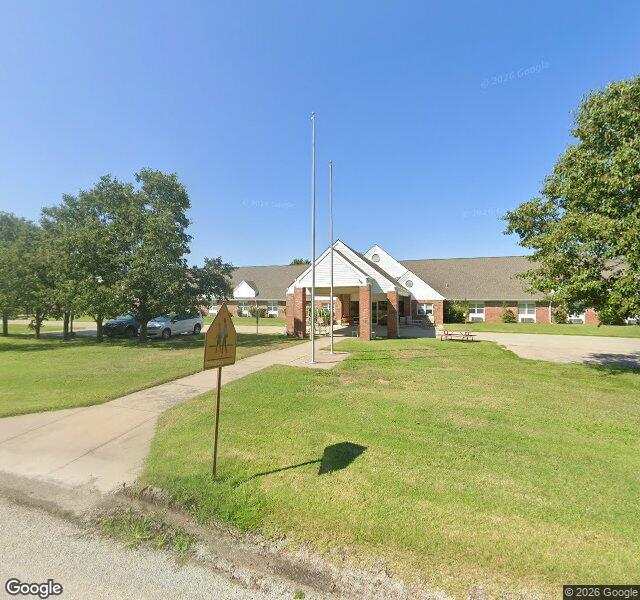
Prairie Mission Retirement Village
242 Carroll Street, Saint Paul, KS 66771View map (opens in a new tab)
Overview and key essentials
State license
Active
KS KDADS
Google reviews
Not available
Public reviews not linked
Size & payment
Ask directly
Confirm pricing & payment
Public records for this community are limited. Use the checklist below when you call or visit to confirm pricing, services, and openings.
Cost, payment & care details
Updated Nov 28, 2026| Monthly cost | Not published | Ask for the full monthly cost, including care fees and one-time charges. |
|---|---|---|
| Payment options | Ask directly | Payment details are not confirmed in our records. Ask about private pay, long-term care insurance, veterans benefits, and Medicaid waivers. |
| Size & availability | Confirm directly | We don't publish live openings. Ask about current availability, waitlist length, and move-in timing. |
| Care & support | Assisted living | Usually offers housing and help with everyday tasks, such as bathing and dressing. What to confirm about care levelsThis describes the licensed category. Ask how care plans adjust if mobility, nursing, or memory needs change over time. Read the family care guide → |
State licensing
State inspection history
15inspections
18deficiencies listed
Nov 5, 2025RoutineNo deficiencies reportedNone
No deficiencies reported
View official state report (opens in a new tab)
prairie mission rs 11-5-25 st2567
Mar 13, 2025Routine9 deficiencies reported9
9 deficiencies reported
View official state report (opens in a new tab)
INITIAL COMMENTS The following citations represent the findings of a Health Resurvey.
Pharmacy Srvcs/Procedures/Pharmacist/RecordsF 755
CFR(s): 483.45(a)(b)(1)-(3) SS=D §483.45 Pharmacy Services The facility must provide routine and emergency drugs and biologicals to its residents, or obtain them under an agreement described in §483.70(f). The facility may permit unlicensed UNCS11 personnel to administer drugs if State law permits, but only under the general supervision of a licensed nurse. §483.45(a) Procedures. A facility must provide pharmaceutical services (including procedures that assure the accurate acquiring, receiving, dispensing, and administering of all drugs and biologicals) to meet the needs of each resident. §483.45(b) Service Consultation. The facility must employ or obtain the services of a licensed pharmacist who- §483.45(b)(1) Provides consultation on all aspects of the provision of pharmacy services in the facility. §483.45(b)(2) Establishes a system of records of receipt and disposition of all controlled drugs in sufficient detail to enable an accurate reconciliation; and §483.45(b)(3) Determines that drug records are in order and that an account of all controlled drugs is maintained and periodically reconciled. This REQUIREMENT is not met as evidenced by: The facility identified a census of 26 residents with 12 residents sampled, including six residents reviewed for unnecessary medications. Based on interview, record review, and observation, the facility failed to follow physician's orders for one of the six sampled residents, Resident (R)13, regarding administration of Ativan (an anti-anxiety medication that calms and relaxes people). Findings included: UNCS11 - Review of Resident (R)13's electronic medical record (EMR) revealed a diagnosis of anxiety (mental or emotional reaction characterized by apprehension, uncertainty and irrational fear). The "Annual Minimum Data Set" (MDS), dated 10/24/24, documented the resident had a Brief Interview for Mental Status (BIMS) score of three, indicating severe cognitive impairment. She received antianxiety medication (medication that calms and relaxes people) during the assessment period. The "Psychotropic Drug Care Area Assessment" (CAA), dated 10/24/24, documented the resident received antianxiety medication and was followed by a mental health specialist. The "Quarterly MDS," dated 01/16/25, documented the resident had a BIMS score of four, indicating severe cognitive impairment. She received antianxiety medication during the assessment period. The "Care Plan", revised 01/30/25, instructed staff the resident would become anxious in the evenings and received an antianxiety medication. Review of the resident's EMR revealed the following physician's orders: Ativan (an anti-anxiety medication that calms and relaxes people), 0.25 milligrams (mg), by mouth (po), twice daily (BID), for a diagnosis of anxiety, ordered 01/11/24. Ativan, 0.5 mg, po, in the evening, for a diagnosis of anxiety, ordered 01/11/24. UNCS11 Review of the resident's EMR revealed Licensed Nurse (LN) I administered Ativan 0.5 mg po on 03/07/25 at 08:00 PM, on 03/08/25 at 04:00 AM and on 03/08/25 at 08:00 PM, instead of the ordered dose of 0.25 mg. Documentation revealed the resident had no adverse effects from the incorrect dose of medication being administered. The resident's family and physician were notified, with no new orders received. On 03/12/25 at 12:17 PM, LN I stated she did not notice the medication error until 03/09/25. She then notified Administrative Nurse D, the resident's family, and her physician. On 03/12/25 at 12:30 PM,...
Resident Rights/Exercise of RightsF 550
CFR(s): 483.10(a)(1)(2)(b)(1)(2) SS=D §483.10(a) Resident Rights. The resident has a right to a dignified existence, self-determination, and communication with and access to persons and services inside and outside the facility, including those specified in this section. §483.10(a)(1) A facility must treat each resident with respect and dignity and care for each resident in a manner and in an environment that promotes maintenance or enhancement of his or her quality of life, recognizing each resident's individuality. The facility must protect and promote the rights of the resident. §483.10(a)(2) The facility must provide equal access to quality care regardless of diagnosis, severity of condition, or payment source. A facility must establish and maintain identical policies and practices regarding transfer, discharge, and the provision of services under the State plan for all residents regardless of payment source. §483.10(b) Exercise of Rights. The resident has the right to exercise his or her rights as a resident of the facility and as a citizen or resident of the United States. §483.10(b)(1) The facility must ensure that the resident can exercise his or her rights without interference, coercion, discrimination, or reprisal from the facility. §483.10(b)(2) The resident has the right to be free of interference, coercion, discrimination, and reprisal from the facility in exercising his or her rights and to be supported by the facility in the exercise of his or her rights as required under this subpart. This REQUIREMENT is not met as evidenced by: The facility reported a census of 26 residents with 12 residents sampled, including two residents reviewed for dignity. Based on observation, interview and record review, the facility failed to show respect and dignity to two Residents (R)13 and R 11, regarding wearing dirty clothes to the dining room. Findings included: - Review of Resident (R)13's electronic medical record (EMR) revealed a diagnosis of dementia (progressive mental disorder characterized by failing memory, confusion). Review of the "Annual Minimum Data Set" (MDS), dated 10/24/24, documented the resident had a Brief Interview for Mental Status (BIMS) score of three, indicating severe cognitive impairment. She required substantial to maximal staff assistance with dressing the top half of her body. The "Functional Abilities Care Area Assessment" (CAA), dated 10/24/24, did not trigger. The "Quarterly MDS," dated 01/16/25, documented the resident had a BIMS score of four, indicating severe cognitive impairment. She required substantial to maximal staff assistance UNCS11 with dressing the top half of her body. The "Care Plan", revised 01/30/25, instructed staff the resident required assistance with dressing. Review of the resident's EMR, from 02/11/25 through 03/11/25, revealed she required substantial/maximal to dependence on staff assistance with dressing of her upper body. On 03/10/25 at 12:07 PM, the resident sat with a peer at the dining room table in the dining room. The resident's shirt had a large area of dried on food and liquid on the front. On 03/10/25 at 03:05 PM, the resident continued to wear the soiled shirt while in the front commons area with her peers. On 03/10/25 at 04:17 PM, the resident sat with a peer at the dining room table in the dining room. She continued to wear the same soiled shirt. On 03/11/25 at 08:11 AM, Certified Nurse Aide (CNA) M stated the resident required staff assistance with dressing. On...
DialysisF 698
CFR(s): 483.25(l) SS=D §483.25(l) Dialysis. The facility must ensure that residents who require dialysis receive such services, consistent with professional standards of practice, the comprehensive person-centered care plan, and the residents' goals and preferences. UNCS11 This REQUIREMENT is not met as evidenced by: The facility identified a census of 26 residents with 12 sampled. Based on observation, interview, and record review, the facility failed to provide dialysis post care and services to Resident (R) 6. This deficient practice had the potential to negatively affect the resident's physical well-being. Findings included: - The Electronic Health Record (EHR) revealed the following diagnoses for R6 end-stage renal disease (ESRD-a terminal disease of the kidneys), dependence on dialysis (procedure where impurities or wastes were removed from the blood), Down's syndrome (chromosomal abnormality characterized by varying degrees of mental retardation and multiple defects), and dementia (progressive mental disorder characterized by failing memory, confusion). The 04/25/24 "Annual Minimum Data Set" (MDS) documented a Brief Interview for Mental Status (BIMS) of two, indicating severely impaired cognition. The 04/25/24 "Cognitive Loss / Dementia Care Area Assessment" (CAA) documented R6 had a BIMS score of two and is aware of his dialysis days. He has as ESRD managed by going to dialysis three times a week. The 01/02/25 "Quarterly MDS" documented a BIMS score of 5, indicating severely impaired cognition. R6 required set up assistance with eating, he was independent with walking, and required supervision with dressing. UNCS11 The Electronic Health Records (EHR) "Physician Orders" instructed staff to: Measure the resident's blood pressure on dialysis days, prior to leaving in the morning, and write it on the dialysis flow sheet, which started on 01/17/22. Feel for the thrill (palpable vibration on the skin over the area of turbulent blood flow) of the resident's vein on left arm two times a day, which started on 05/04/19. Provide the residnet a regular diet, regular texture, regular consistency, and fortify foods to help increase calories related to ESRD, which started on 11/15/16. Review of the "Dialysis Forms" revealed staff documented medication given prior to dialysis, blood pressures, and weights, noted they felt the thrill prior to dialysis, medications sent, and diet order of reg diet with extra protein snack were noted. The dialysis center documented wet weight (weight before dialysis), dry weight (weight after dialysis), labs if drawn, medications given, any complications, registered dietician recommendations, and upcoming appointments. The facility failed to document anything on the form when the resident returned from dialysis. Review of the "Progress Notes" revealed the facility documented R6 was out to dialysis and returned from dialysis with no blood pressure or assessment. During an observation on 03/10/24, R6 returned from dialysis and went to the dining area to play Bingo. During an observation on 03/12/25 at 08:26 AM, UNCS11 R6 sat at the table. Certified Medication Aide (CMA) R got him from the table walked with him to the scale and weighed him. The resident weighed 121.2 lbs. Staff took his blood pressure, which measured 113/71 millimeters of mercury (mm Hg). Licensed Nurse (LN) H got the dialysis book out and wrote down the information she obtained, CMA R gave the medications to go with him to the nurse, who placed...
Accuracy of AssessmentsF 641
CFR(s): 483.20(g) SS=D §483.20(g) Accuracy of Assessments. The assessment must accurately reflect the resident's status. This REQUIREMENT is not met as evidenced by: The facility reported a census of 26 residents with 12 residents sampled. Based on observation, interview, and record review the UNCS11 facility failed to complete an accurate "Minimum Data Set" (MDS) for two Residents (R)16, regarding limited range of motion (ROM) and R9, regarding eating assistance. Findings included: - Review of Resident (R)16's electronic medical record (EMR) revealed diagnoses which included: dementia (progressive mental disorder characterized by failing memory, confusion), anxiety (mental or emotional reaction characterized by apprehension, uncertainty and irrational fear) and weakness. The "Annual Minimum Data Set" (MDS), dated 12/12/24, documented the resident had a Brief Interview for Mental Status (BIMS) score of 15, indicating intact cognition. She used a wheelchair for mobility and was independent with wheeling the wheelchair 150 feet in the corridor. The "Functional Abilities Care Area Assessment" (CAA), dated 12/12/24, documented the resident was independent with locomotion. The "Medicare 5-Day MDS," dated 10/11/24, documented the resident had a BIMS score of 12, indicating moderately impaired cognition. She was dependent on staff to wheel her in her wheelchair, 150 feet in the corridor. The "Care Plan", revised 12/15/24, instructed staff the resident had an unsteady gait (a person's manner of walking) and had a limited range of motion (ROM) in her lower extremities (LE). Review of the resident's EMR revealed the UNCS11 resident used a wheelchair for mobility in the facility with partial to moderate to dependent on staff for assistance. On 03/12/25 at 09:33 AM, Administrative Nurse E stated the MDS, dated 12/12/24, was inaccurate as the resident did have a limitation in ROM. On 03/12/25 at 09:41 AM, Administrative Nurse D stated it was the expectation for the MDSs to be completed correctly. The facility utilized the Resident Assessment Instrument (RAI) manual for accurate completion of the MDSs. The facility failed to complete an accurate MDS for this resident with a limitation in ROM.
Quality of CareF 684
CFR(s): 483.25 SS=D § 483.25 Quality of care Quality of care is a fundamental principle that applies to all treatment and care provided to facility residents. Based on the comprehensive assessment of a resident, the facility must ensure that residents receive treatment and care in accordance with professional standards of practice, the comprehensive person-centered care plan, and the residents' choices. This REQUIREMENT is not met as evidenced by: The facility reported a census of 26 residents with 12 residents selected for review. Based on observation, interview, and record review, the facility failed to assess and address proper positioning in accordance with professional standards of practice for Resident (R) 5. This UNCS11 deficient practice had the potential to place R5 at an increased risk for development of increased pain and additional medical problems. Findings included: - Review of the "Electronic Medical Record" (EMR) included diagnoses of dementia (progressive mental disorder characterized by failing memory, confusion), restlessness and agitation, chronic pain, neuropathy (weakness, numbness and pain from nerve damage, usually in the hands and feet), arthritis (inflammation of a joint characterized by pain, swelling, redness and limitation of movement), and low back pain. The 07/16/24 "Admission Minimum Data Set" (MDS) documented a "Brief Interview for Mental Status" (BIMS) of 0, indicating severely impaired cognition. R5 had a total mood severity score of 0, indicating no depression. The MDS documented behaviors of rejection of care and wandering on one to three days out of the 7 prior to 07/16/24. R5's wandering affected others. The resident required substantial to maximum assistance from staff to transfer. R5 required supervision or touching assistance to walk 50 feet and make two turns. R5 required supervision or touching assistance for mobility 50 ft in a wheelchair. The 01/02/25 "Quarterly MDS" documented R5 was unable to complete the BIMS. Staff interview for cognition documented R5 as severely impaired. She rarely or never understands or was understood others. R5 did not know staff, where her room was, the season, or that she was in a nursing home. Her mood score was zero indicating no depression. R5 required substantial UNCS11 to maximal assist with wheel walking and was dependent on staff for mobility in her wheelchair. The resident's "Care Plan" revealed the following: Staff would know R5 was unsteady on her feet, required assistance, and R5 used a Broda chair (specialized wheelchair with the ability to tilt and recline) to get around. After standing she could walk with staff standing by her. Some of the concerns that affect her mobility were arthritis (inflammation of a joint characterized by pain, swelling, redness and limitation of movement), low back pain, fatigue, chronic pain, and muscle weakness. On 07/11/24, staff would know they were to push R5 in her wheelchair. On 01/09/25 staff would know R5 required two staff assistance with walking and transfers. During an observation on 03/10/25 at 02:20 PM, R5 sat leaning to in an uncomfortable position in her Broda Chair. There was no footrest and her feet were dangling about one to two inches off the floor. During an observation on 03/11/25 at 10:25 AM, Certified Nurse Aide (CNA) P pushed R 5 in the Broda chair with no foot pedals. R5's feet were dragging on the floor. CNA P turned the chair and her foot touched the wheel but did not go under the wheel. This...
Drug Regimen is Free from Unnecessary DrugsF 757
CFR(s): 483.45(d)(1)-(6) SS=D §483.45(d) Unnecessary Drugs-General. Each resident's drug regimen must be free from unnecessary drugs. An unnecessary drug is any drug when used- UNCS11 §483.45(d)(1) In excessive dose (including duplicate drug therapy); or §483.45(d)(2) For excessive duration; or §483.45(d)(3) Without adequate monitoring; or §483.45(d)(4) Without adequate indications for its use; or §483.45(d)(5) In the presence of adverse consequences which indicate the dose should be reduced or discontinued; or §483.45(d)(6) Any combinations of the reasons stated in paragraphs (d)(1) through (5) of this section. This REQUIREMENT is not met as evidenced by: The facility reported a census of 26 residents with 12 residents sampled, including six residents reviewed for unnecessary medications. Based on interview and record review, the facility failed to ensure one Resident (R) 27 remained free from unnecessary medications related to failure to discontinue (DC) an as needed (PRN) hypertensive medication (medications used to lower blood pressure). Findings included: - Review of Resident (R)27's electronic medical record (EMR) revealed a diagnosis of hypertension (HTN-elevated blood pressure). The "Admission Minimum Data Set" (MDS), dated 10/03/24, documented the resident had a Brief Interview for Mental Status (BIMS) score was three, indicating severe cognitive impairment UNCS11 and had a diagnosis of HTN. The "Psychotropic Drug Care Area Assessment" (CAA), dated 10/03/24, documented the resident took antihypertensive medications (medications used to lower blood pressure (BP)) for a diagnosis of HTN. The "Quarterly MDS," dated 12/26/24, documented the resident had a BIMS score of one, indicating severe cognitive impairment and had a diagnosis of HTN. The "Care Plan", revised 01/01/25, instructed staff to obtain the resident's BP weekly. Review of the resident's EMR revealed the following physician's order: Clonidine (a hypertensive medication used to lower BP), 0.1 milligrams (mg), by mouth (po), every (Q) four hours, as needed (PRN) for systolic blood pressure (SBP) greater than 170, ordered 10/24/24. Review of the resident's EMR revealed the PRN medication had not been used from 10/24/24 through 03/11/25. Review of the resident's EMR revealed the resident's BP was taken weekly. The resident's SBP was not greater than 170 on the documented weekly BPs. On 03/11/25 at 02:41 PM, Administrative Nurse D stated the facility had not administered the PRN medication to the resident since the medication was ordered. Administrative Nurse D stated the PRN medication should have been DC'd after 30 UNCS11 days due to non-use but had not been. The facility policy for "PRN Blood Pressure Medication Administration", revised 05/03/17, included: Blood pressure medications not used after 30 days or more shall be discontinued unless otherwise instructed by the resident's physician. The facility failed to DC an unnecessary PRN medication for this dependent resident.
Free from Unnec Psychotropic Meds/PRN UseF 758
CFR(s): 483.45(c)(3)(e)(1)-(5) SS=D §483.45(e) Psychotropic Drugs. §483.45(c)(3) A psychotropic drug is any drug that affects brain activities associated with mental processes and behavior. These drugs include, but are not limited to, drugs in the following categories: (i) Anti-psychotic; (ii) Anti-depressant; (iii) Anti-anxiety; and (iv) Hypnotic Based on a comprehensive assessment of a resident, the facility must ensure that--- §483.45(e)(1) Residents who have not used psychotropic drugs are not given these drugs unless the medication is necessary to treat a specific condition as diagnosed and documented in the clinical record; §483.45(e)(2) Residents who use psychotropic drugs receive gradual dose reductions, and behavioral interventions, unless clinically contraindicated, in an effort to discontinue these UNCS11 drugs; §483.45(e)(3) Residents do not receive psychotropic drugs pursuant to a PRN order unless that medication is necessary to treat a diagnosed specific condition that is documented in the clinical record; and §483.45(e)(4) PRN orders for psychotropic drugs are limited to 14 days. Except as provided in §483.45(e)(5), if the attending physician or prescribing practitioner believes that it is appropriate for the PRN order to be extended beyond 14 days, he or she should document their rationale in the resident's medical record and indicate the duration for the PRN order. §483.45(e)(5) PRN orders for anti-psychotic drugs are limited to 14 days and cannot be renewed unless the attending physician or prescribing practitioner evaluates the resident for the appropriateness of that medication. This REQUIREMENT is not met as evidenced by: The facility reported a census of 26 residents with 12 residents sampled including six residents reviewed for unnecessary medications. Based on observation, record review and interview, the facility failed to ensure the six Residents (R)1, R 27, R 14, R 16, R5, and R10 remained free from unnecessary psychotropic medications (any drug that affects behavior, mood, thoughts, or perception), regarding the facility's failure to obtain psychotropic medication consents. Findings included: - Review of Resident (R)1's electronic medical record (EMR) revealed a diagnosis of major UNCS11 depressive disorder (MDD-major mood disorder which causes persistent feelings pf sadness), bipolar disorder (major mental illness that caused people to have episodes of severe high and low moods) and delusional disorder (untrue persistent belief or perception held by a person although evidence shows it was untrue). The "Annual Minimum Data Set" (MDS), dated 11/21/24, documented the resident had a Brief Interview for Mental Status (BIMS) score of seven, indiccating severe cognitive impairment. He received antipsychotic (drugs primarily used to manage psychosis, including symptoms like delusions, hallucinations, and disorganized thinking) and antidepressant (prescription medicines to treat depression) medication during the assessment period. The "Psychotropic (any drug that affects behavior, mood, thoughts, or perception) Drug Care Area Assessment" (CAA), dated 11/21/24, documented the resident took antidepressant and antipschotic medications. The "Quarterly MDS," dated 02/13/25, documented the resident had a BIMS score of nine, indicating moderately impaired cognition. He received antipsychotic and antidepressant medication during the assessment period. The "Care Plan", revised 02/20/25, instructed staff the resident...
Treatment/Svcs to Prevent/Heal Pressure UlcerF 686
CFR(s): 483.25(b)(1)(i)(ii) SS=D §483.25(b) Skin Integrity §483.25(b)(1) Pressure ulcers. Based on the comprehensive assessment of a resident, the facility must ensure that- (i) A resident receives care, consistent with professional standards of practice, to prevent pressure ulcers and does not develop pressure ulcers unless the individual's clinical condition demonstrates that they were unavoidable; and (ii) A resident with pressure ulcers receives UNCS11 necessary treatment and services, consistent with professional standards of practice, to promote healing, prevent infection and prevent new ulcers from developing. This REQUIREMENT is not met as evidenced by: The facility reported a census of 26 residents with 12 residents sampled, including one resident reviewed for pressure ulcers (PU). Based on observation, interview, and record review the facility failed to notify the Registered Dietician (RD) of the development of a facility acquired stage II (partial thickness skin loss) PU for one Resident (R)13. Findings included: - Review of Resident (R)13's electronic medical record (EMR) revealed a diagnosis of (progressive mental disorder characterized by failing memory, confusion). The "Annual Minimum Data Set" (MDS), dated 10/24/24, documented the resident had a Brief Interview for Mental Status (BIMS) score of three, indicating severe cognitive impairment. She required substantial to maximal staff assistance to roll left to right and was dependent on staff for going from sitting to lying, lying to sitting, and chair to bed to chair transfers. She was at risk for the development of pressure ulcers (PU) but had no unhealed PUs at the time of the assessment. The "Pressure Ulcer Care Area Assessment" (CAA), dated 10/24/24, documented the resident had a pressure reduction mattress for her bed and a cushion for her wheelchair. The "Quarterly MDS," dated 01/16/25, UNCS11 documented the resident had a BIMS score of four, indicating severe cognitive impairment. She required substantial to maximal staff assistance to roll left to right and was dependent on staff for going from sitting to lying, lying to sitting and chair to bed to chair transfers. She was at risk for the development of PU with no unhealed PUs at the time of the assessment. The "Care Plan", revised 01/30/25, instructed staff the resident had a stage II PU to her right gluteal (muscles which make up the buttocks) proximal (nearer to the center of the body) to her sacrum (tailbone). Review of the resident's EMR revealed a "Wound Assessment and Treatment Flowsheet", dated 02/27/25, which included: Stage II PU to resident's right gluteal proximal to her sacrum, measuring 1.0 centimeters (cm) in length (L), 1.0 cm in width (W) and 0.1 cm in depth (D). The wound bed was 100% red/pink and had no odor or exudate (drainage). Review of the resident's EMR revealed a "Wound Assessment and Treatment Flowsheet", dated 02/27/25, which included: 1.0 cm in L, 1.0 cm in W and 0.1 cm in D. The wound bed had no odor or exudate. Review of the resident's EMR revealed the Registered Dietician (RD) had not been notified of the resident's new stage II PU. Review of the resident's EMR revealed the following physician's orders: Multivitamin (MVI), 1 tablet, by mouth (po), every morning (QAM), for a diagnosis of vitamin UNCS11 supplement, ordered 07/30/20. Review of the resident's EMR revealed the medication was administered, as ordered. Vitamin C, 500 milligrams (mg), po, QAM, for a diagnosis of wound...
Free of Accident Hazards/Supervision/DevicesF 689
CFR(s): 483.25(d)(1)(2) SS=E §483.25(d) Accidents. The facility must ensure that - §483.25(d)(1) The resident environment remains as free of accident hazards as is possible; and UNCS11 §483.25(d)(2)Each resident receives adequate supervision and assistance devices to prevent accidents. This REQUIREMENT is not met as evidenced by: The facility reported a census of 26 residents with 12 residents sampled, including nine residents reviewed for accidents. Based on observation, interview, and record review, the facility failed to provide appropriate, safe transfers for one Resident (R) 27, failed to ensure safe transport for two residents R16 and R5 while in their wheelchair, R 6, regarding leaving medications in his room and R 11, regarding inappropriate interventions following a fall. Findings included: - Review of Resident (R)16's electronic medical record (EMR) revealed a diagnosis of dementia (progressive mental disorder characterized by failing memory, confusion). The "Annual Minimum Data Set" (MDS) dated 12/12/24, documented the resident had a Brief Interview for Mental Status (BIMS) score of 15, indicating intact cognition. She was independent with her wheelchair for 150 feet in the corridor. The "Functional Abilities Care Area Assessment" (CAA), dated 12/12/24, documented the resident was independent with locomotion. The "Medicare 5-Day MDS," dated 10/11/24, documented the resident had a BIMS score of 12, indicating moderately impaired cognition. She used a wheelchair for locomotion and was dependent on staff for mobility. UNCS11 The care plan, revised 12/15/24, lacked staff instruction regarding the resident's need for staff assistance with propelling her wheelchair and the need for footrests on her wheelchair while staff propelled her in the facility. Review of the resident's EMR, from 02/01/25 through 03/10/25, revealed the resident required partial/moderate assistance to dependence on staff for mobility in her wheelchair. On 03/10/25 at 04:11 PM, Certified Nurse Aide (CNA) N propelled the resident in her wheelchair. The resident's shoed feet were pulled back underneath the wheelchair seat and skimmed the floor during transport. On 03/11/25 at 07:29 AM, CNA M propelled the resident in her wheelchair to the shower room. The resident's shoed feet were pulled back underneath the wheelchair seat and skimmed the floor during transport. On 03/11/25 at 07:41, Certified Medication Aide (CMA) R propelled the resident in her wheelchair from the front commons area to the dining room. The resident's shoed feet were pulled back underneath the wheelchair seat and skimmed the floor during transport. On 03/10/25 at 04:11 PM, CNA N stated the resident did not have footrests on her wheelchair because she was able to propel herself at times. On 03/11/25 at 07:41, CMA R stated the resident did not have footrests for her wheelchair because she would propel herself at times. UNCS11 On 03/11/25 at 01:49 PM, Licensed Nurse (LN) H stated the resident did not have footrests on her wheelchair. Staff did not put footrests on the wheelchair while propelling her. On 03/12/25 at 07:25 AM, LN G stated staff should use footrests while propelling residents in their wheelchairs. On 03/12/25 at 09:41 AM, Administrative Nurse D stated it was the expectation for staff to utilize footrests while propelling residents in their wheelchairs. The facility policy for "Footrest Plan for Wheelchair Mobility Policy", dated 03/11/25, included: Apply footrests prior to...
Nov 20, 2024Follow-up2 deficiencies reported2
2 deficiencies reported
View official state report (opens in a new tab)
The following citation represents the findings of a Re-Licensure Survey for the above named Assisted Living Facility conducted on 11/20/24.
STATE FORM6899
2F6611 STATE FORM 2F6611
moderateS 3248
Records (d) The employee records and agency staff records shall contain the following documentation: (1) Evidence of licensure, registration, certification, or a certificate of successful completion of a training course for each employee performing a function that requires specialized education or training; (2) supporting documentation for criminal background checks of facility staff and contract staff, excluding any staff licensed or registered by a state agency, pursuant to K.S.A. 39-970 and amendments thereto; (3) supporting documentation from the Kansas nurse aide registry that the individual does not have a finding of having abused, neglected, or exploited a resident in an adult care home; and (4) supporting documentation that the individual does not have a finding of having abused, neglected, or exploited any resident in an adult care home, from the nurse aide registry in each state in which the individual has been known to have worked as a certified nurse aide. This REQUIREMENT is not met as evidenced by: KAR 26-41-102(d)(1)(2) The facility reported a census of five residents. Based on interview and record review of five newly hired employees, the administrator failed to have evidence the facility completed a criminal background check upon hire by the required state agency, pursuant to K.S.A.39-970 and amendments thereto for all five employees. The findings included: - On 11/20/24, review of the five newly hired employee records provided by Administrative Staff A, revealed the following concerns: 1. Receptionist C, hired on 08/07/24 did not have evidence of completion of a criminal background check upon hire. 2. Certified Medication Aide D, hired on 06/10/24 did not have evidence of completion of a criminal background check upon hire. 3. Certified Nurse Aide E, hired on 08/20/24 did not have evidence of completion of a criminal background check upon hire. 4. Certified Medication Aide F, hired on 08/11/23 did not have evidence of completion of a criminal background check upon hire. 5. Laundry staff G hired on 06/21/24 did not have evidence of completion of a criminal background check upon hire. Interview on 11/20/24 at 03:34 PM Administrative Staff H reported she did not get the criminal background checks for the above listed employees completed when they were hired. The administrator failed to ensure designated staff completed criminal background checks through KDADS upon hire as required.
Jun 21, 2023Routine4 deficiencies reported4
4 deficiencies reported
View official state report (opens in a new tab)
INITIAL COMMENTS The following citations represent the findings of a Health Resurvey. This 2567 was electronically sent to the facility on 6/26/23.
Free of Accident Hazards/Supervision/DevicesF 689
CFR(s): 483.25(d)(1)(2) SS=D §483.25(d) Accidents. The facility must ensure that - §483.25(d)(1) The resident environment remains as free of accident hazards as is possible; and §483.25(d)(2)Each resident receives adequate supervision and assistance devices to prevent accidents. This REQUIREMENT is not met as evidenced by: The facility reported a census of 24 residents with 14 residents sampled, including two residents reviewed for accidents. Based on observation, interview and record review, the facility failed to provide one of the two sampled, Resident (R)17 adequate supervision to prevent a non-injury fall. Findings included: - Review of Resident (R)17's "Physician Order Sheet" (POS), dated 06/01/23, documented the resident had a diagnosis of Alzheimer's disease (progressive mental deterioration characterized by confusion and memory failure). The annual "Minimum Data Set" (MDS), dated 11/25/22, documented the resident had a Brief Interview for Mental Status (BIMS) score of zero, indicating severe cognitive impairment. She required limited assistance of two staff for BOUD11 ambulation in her room and extensive assistance of two staff for toileting and dressing. Her balance was not steady, and she was only able to stabilize with staff assistance. She had not had any falls since the prior assessment. The "Fall Care Area Assessment" (CAA), dated 11/25/22, documented the resident had poor balance, weakness, and poor coordination. The quarterly "MDS," dated 05/11/23, documented the staff assessment for cognition revealed severe impairment. She required extensive assistance of one staff for walking in her room and extensive assistance of two staff for dressing and toileting. The care plan for bowel and bladder, revised 05/16/23, instructed staff the resident required assistance to toilet. The care plan for safety, revised 05/16/23, instructed staff the resident was impulsive and had poor safety awareness due to severe cognitive impairment. Review of the resident's electronic medical record "EMR", revealed fall assessments, dated 06/15/23, 06/03/23, 04/18/23, 12/20/22 and 12/04/22, which placed the resident at a high risk for falls. Review of the resident's "Incident Report Check Sheet", dated 06/15/23, provided by the facility, documented on 06/15/23 at 05:30 PM, Certified Nurse Aide (CNA) M walked with resident to her room to get ready for bed. CNA M walked with the resident into her bathroom when CNA M noticed she had forgotten the resident's pajamas. BOUD11 CNA M instructed the resident to stay in the bathroom, standing by the door, while she got the resident's pajamas. CNA M turned her back on the resident to get her pajamas from her dresser when the resident attempted to sit down and fell to the floor on her buttocks. The resident did not receive an injury from the fall. Observation on 06/20/23 at 10:22 AM, revealed CNA Q and CNA N assisted the resident to toilet. Staff walked with the resident from the side of the resident's bed to the toilet. The resident required prompting and cueing from staff to stay sitting on the toilet during the task as the resident attempted twice to stand up, unattended, from the toilet. The resident cooperated with the staff without difficulty. Following toileting, staff assisted the resident to ambulate to the dining room, with staff assist of two, for lunch. On 06/20/23 at 10:22 AM, CNA N stated the resident required extensive assistance to complete activities of daily living (ADL). CNA N stated the...
Food Procurement,Store/Prepare/Serve-SanitaryF 812
CFR(s): 483.60(i)(1)(2) SS=F §483.60(i) Food safety requirements. The facility must - §483.60(i)(1) - Procure food from sources approved or considered satisfactory by federal, state or local authorities. (i) This may include food items obtained directly BOUD11 from local producers, subject to applicable State and local laws or regulations. (ii) This provision does not prohibit or prevent facilities from using produce grown in facility gardens, subject to compliance with applicable safe growing and food-handling practices. (iii) This provision does not preclude residents from consuming foods not procured by the facility. §483.60(i)(2) - Store, prepare, distribute and serve food in accordance with professional standards for food service safety. This REQUIREMENT is not met as evidenced by: The facility reported a census of 24 residents. Based on observation, interview and record review, the facility failed to store, prepare, and serve food under sanitary conditions to prevent the spread of food borne illnesses to the residents of the facility. Findings included: - An environmental tour of the kitchen on 06/19/23 at 08:37 AM, revealed the following concerns: 1. The dry storage room had a box of eight loaves of bread resting directly on the floor. 2. One reach-in refrigerator contained food debris across on the bottom shelf. 3. One reach-in freezer contained food debris across on the bottom shelf. On 06/20/23 at 01:20 PM, Dietary staff BB confirmed the reach-in refrigerator and reach-in freezer contained food debris on the bottom BOUD11 shelves. Dietary staff BB stated staff were to clean the reach-ins on a weekly basis. Dietary staff BB stated no boxes should be stored directly on the floor. The facility policy for "Food Storage (Dry, Refrigerated, and Frozen", undated, included: Food shall be stored on shelves in a clean, dry area, free from contaminates. Store dry food six inches off the floor to allow for proper sanitation. The facility policy for "Cleaning Instructions: Reach-In Refrigerator and Freezer", undated, included: The reach-in refrigerator and freezer will be cleaned and sanitized on a regular basis. Staff will wipe out the refrigerator and freezer with a clean cloth and warm water with detergent then rinse with clean, warm water. The facility failed to store, prepare, and serve food under sanitary conditions to prevent the spread of food borne illnesses to the residents of the facility. The facility failed to store, prepare, and serve food under sanitary conditions to prevent the spread of food borne illnesses to the residents of the facility.
Infection Prevention & ControlF 880
CFR(s): 483.80(a)(1)(2)(4)(e)(f) SS=D §483.80 Infection Control The facility must establish and maintain an infection prevention and control program designed to provide a safe, sanitary and comfortable environment and to help prevent the development and transmission of communicable diseases and infections. §483.80(a) Infection prevention and control BOUD11 program. The facility must establish an infection prevention and control program (IPCP) that must include, at a minimum, the following elements: §483.80(a)(1) A system for preventing, identifying, reporting, investigating, and controlling infections and communicable diseases for all residents, staff, volunteers, visitors, and other individuals providing services under a contractual arrangement based upon the facility assessment conducted according to §483.70(e) and following accepted national standards; §483.80(a)(2) Written standards, policies, and procedures for the program, which must include, but are not limited to: (i) A system of surveillance designed to identify possible communicable diseases or infections before they can spread to other persons in the facility; (ii) When and to whom possible incidents of communicable disease or infections should be reported; (iii) Standard and transmission-based precautions to be followed to prevent spread of infections; (iv)When and how isolation should be used for a resident; including but not limited to: (A) The type and duration of the isolation, depending upon the infectious agent or organism involved, and (B) A requirement that the isolation should be the least restrictive possible for the resident under the circumstances. (v) The circumstances under which the facility must prohibit employees with a communicable disease or infected skin lesions from direct contact with residents or their food, if direct BOUD11 contact will transmit the disease; and (vi)The hand hygiene procedures to be followed by staff involved in direct resident contact. §483.80(a)(4) A system for recording incidents identified under the facility's IPCP and the corrective actions taken by the facility. §483.80(e) Linens. Personnel must handle, store, process, and transport linens so as to prevent the spread of infection. §483.80(f) Annual review. The facility will conduct an annual review of its IPCP and update their program, as necessary. This REQUIREMENT is not met as evidenced by: The facility reported a census of 24 residents with 14 residents sampled, including one resident reviewed for Urinary Catheter/Urinary Tract Infection (UTI). Based on observation, interview and record review, the facility failed to maintain an effective infection control program when they failed to provide safe and sanitary care for the one Resident (R)16, regarding the suprapubic urinary catheter (urinary bladder catheter inserted through the skin). Findings included: - Review of Resident (R)16's electronic medical record (EMR) revealed a diagnosis of neuromuscular dysfunction of the bladder (dysfunction of the urinary bladder caused by a lesion of the nervous system). The admission "Minimum Data Set" (MDS), dated 04/06/23, documented the resident had a Brief BOUD11 Interview for Mental Status (BIMS) score of 14, indicating intact cognition. He required extensive assistance of two staff for toileting and had an indwelling urinary catheter (urinary bladder catheter inserted through the skin). The "Urinary Incontinence and Indwelling Catheter Care Area Assessment" (CAA), dated 04/06/23,...
Comprehensive Assessment After Signifcant ChgF 637
CFR(s): 483.20(b)(2)(ii) SS=D §483.20(b)(2)(ii) Within 14 days after the facility determines, or should have determined, that there has been a significant change in the resident's physical or mental condition. (For purpose of this section, a "significant change" means a major decline or improvement in the resident's status that will not normally resolve itself without further intervention by staff or by implementing standard disease-related clinical interventions, that has an impact on more than one area of the resident's health status, and requires interdisciplinary review or revision of the care plan, or both.) This REQUIREMENT is not met as evidenced by: The facility reported a census of 24 residents with 14 sampled. Based on observation, interview, and record review the facility failed to complete multiple triggered "Care Area Assessment" (CAA), for one sampled Resident (R)5. Findings included: - Review of Resident (R)5's electronic medical record (EMR), revealed a diagnosis of pain, spondylolisthesis (spinal condition that affects the lower vertebrae), dissociative identity disorder (mental disorders that involve experiencing a disconnection and lack of continuity between thoughts, memories, surroundings, actions and identity), major depressive disorder (major mood disorder), dementia (progressive mental disorder characterized by failing memory, confusion), anxiety (mental or emotional reaction characterized by apprehension, uncertainty and irrational fear) and panic disorder (sudden feelings or terror when there is no real danger). The significant change "Minimum Data Set" (MDS), dated 10/11/22, documented the resident had a Brief Interview for Mental Status (BIMS) score of zero, indicating severe cognitive impairment. She had disorganized thinking continuously with hallucinations (perceptual experiences in the absence of real external sensory stimuli) and delusions (misconceptions or beliefs that are firmly held, contrary to reality). She had verbal and physical behaviors which placed the resident at risk for illness or injury and significantly interfered with her care and social interactions. She required extensive assistance of two staff for bed mobility, transfers, walking in her room, dressing and toilet use. She had limited range of motion (ROM) on one side of her lower extremity (LE) and used a wheelchair for locomotion on and off the unit. She received an antipsychotic (medication used to treat psychosis) six days, an antianxiety (medication used to treat anxiety), antidepressant (medication used to treat depression), a diuretic (medication which promotes diuresis) five days and an opioid (medication used to reduce pain) seven days of the seven-day assessment period. The "Cognitive Loss/Dementia, Urinary Incontinence and Indwelling Catheter, Activities, Falls, Dental Care, Behavioral Symptoms, BOUD11 Psychosocial Well-Being, Psychotropic Drug Use, Nutritional Status, Mood State and Pressure Ulcer/Injury Care Area Assessments" (CAA)s all triggered but lacked an analysis of findings. The quarterly "MDS," dated 03/23/23, documented the resident had a BIMS score of 14, indicating intact cognition. The resident had no delirium or psychosis and no behavioral symptoms. She required extensive assistance of two staff for bed mobility, transfers, dressing, and toilet use and extensive assistance of one staff for locomotion on and off the unit with her wheelchair. She had limited ROM on one side of her LE. She received an...
May 18, 2023Routine3 deficiencies reported3
3 deficiencies reported
View official state report (opens in a new tab)
The following represent the findings of a resurvey for the above named Assisted Living facility conducted on 05/17/23 and 05/18/23.
moderateS 3248
Records (d) The employee records and agency staff records shall contain the following documentation: (1) Evidence of licensure, registration, certification, or a certificate of successful completion of a training course for each employee performing a function that requires specialized education or training; (2) supporting documentation for criminal background checks of facility staff and contract staff, excluding any staff licensed or registered by a state agency, pursuant to K.S.A. 39-970 and amendments thereto; (3) supporting documentation from the Kansas nurse aide registry that the individual does not have a finding of having abused, neglected, or exploited a resident in an adult care home; and (4) supporting documentation that the individual does not have a finding of having abused, neglected, or exploited any resident in an adult care home, from the nurse aide registry in each state in which the individual has been known to have worked as a certified nurse aide. This REQUIREMENT is not met as evidenced by: KAR 26-41-102(d)(4) The facility reported a census of seven residents. Based on interview and record review, the operator failed to ensure two of five newly hired employees records included evidence of timely verification for background checks were completed. Findings included: - Review of employee files conducted on 05/17/23 revealed the following: Certified Nurse Aide (CNA) D hired on 12/21/22. A confirmation notice for a background check was dated as being completed on 02/24/23. CNA E hired on 03/01/23. A criminal background check was not requested until 05/17/23. Interview on 05/18/23 at 07:59 AM Administrative Staff A stated she expected criminal background checks to be completed upon hire. The operator failed to ensure timely verifications of criminal background checks were completed for newly hired staff.
STATE FORM6899
OR9Q11 STATE FORM OR9Q11 STATE FORM OR9Q11 STATE FORM OR9Q11
moderateS 3310
(b) (5) prohibiting any employee with a communicable disease or any infected skin lesions from coming in direct contact with any resident, any resident ' s food, or resident care equipment until the condition is no longer infectious; (6) providing orientation to new employees and employee in-service education at least annually on the control of infections in a health care setting; and (c) Each administrator or operator shall ensure the facility ' s compliance with the department ' s tuberculosis guidelines for adult care homes adopted by reference in K.A.R. 26-39-105 This REQUIREMENT is not met as evidenced by: KAR 26-41-207(c) The facility reported a census of seven residents. Based on record review and interview the operator failed to ensure the facility was in compliance with the department's tuberculosis (TB) guidelines for adult care homes adopted by reference in K.A.R. 26-39-105. Findings include: - Review of five newly hired staff records revealed the following: Certified Nurse Aide (CNA) C hired 02/01/23 did not have a TB symptom screening questionnaire completed and did not have a TB skin test (TST) administered until 03/06/23. CNA D hired on 12/21/22 did not have a TB symptom screening questionnaire completed and did not have a TB skin test (TST) administered until 03/06/23. CNA F hired on 12/26/21 did not have a TB skin test (TST) administered until 03/06/23. On 05/18/23 at 07:59 AM Administrative Staff A stated she expected the TB screening questionnaire and the TST be completed upon hire. The June 2013 "Tuberculosis (TB) Guidelines for Adult Care Homes" documented, "Each new ...employee shall have an initial TB symptom screen that includes the components of the TB symptom questionnaire within 7 days of ...employment...Each new ...employee shall receive a ...TST ...within 7 days of ...employment ..." The operator failed to ensure the compliance with the department's tuberculosis guidelines for adult care homes adopted by reference in K.A.R. 26-39-105.
Show all 15 inspections
Jan 26, 2022RoutineNo deficiencies reportedNone
No deficiencies reported
View official state report (opens in a new tab)
9F3711. PRAIRIE MISSION RETIREMENT VILLAGE. RS. 1.26.22
Aug 19, 2021RoutineNo deficiencies reportedNone
No deficiencies reported
View official state report (opens in a new tab)
prairie mission retirement villge alf 08.19.2021
Mar 31, 2021RoutineNo deficiencies reportedNone
No deficiencies reported
View official state report (opens in a new tab)
o94k11. PRAIRIE MISSION. CP. 3.3.1.21
Feb 10, 2021RoutineNo deficiencies reportedNone
No deficiencies reported
View official state report (opens in a new tab)
B7O511 PRAIRIE MISSION CP 2.10.21
Nov 12, 2020Follow-upNo deficiencies reportedNone
No deficiencies reported
View official state report (opens in a new tab)
YL2M11 PRAIRIE MISSION COVID SURVEY 11.12.2020
Jun 23, 2020RoutineNo deficiencies reportedNone
No deficiencies reported
View official state report (opens in a new tab)
prairie mission retirement village alf 6.23.2020
Jun 16, 2020RoutineNo deficiencies reportedNone
Mar 3, 2020RoutineNo deficiencies reportedNone
No deficiencies reported
View official state report (opens in a new tab)
KQ7N11 PRAIRIE MISSION RS 3.3.2020
Dec 3, 2019RoutineNo deficiencies reportedNone
No deficiencies reported
View official state report (opens in a new tab)
MZWV11 PRAIRIE MISSION CP 12.3.19
Oct 22, 2018RoutineNo deficiencies reportedNone
Neighborhood & resident support
Emergency access, hazards & advocacy
Nearest hospital
Parsons State Hospital
13.1 mi · Parsons, KS · Medicare 3/5 ★
Emergency room
FEMA hazard risk
Very LowNeosho County, KS
- Ice Storm
- Drought
- Winter Weather
Free resident advocacy
Kansas Office of the State Long-Term Care Ombudsman
More neighborhood context (specialists, VA, dialysis, air & affordability)
VA & dialysis access
VA Eastern Kansas Healthcare System
108.8 mi · Topeka, KS · VA 4/5 ★
DaVita Parsons Dialysis Center
13.3 mi · 5/5 ★ · Home dialysis
Environment & mobility
- EPA Air (2025)
- 64% good days · AQI 44
- EPA Walkability
- 6.9/20 (Below Average)
- USDA Grocery Access
- Moderate Grocery Access
- Primary care access
- HRSA Shortage Area
County demographics
- Age 65+ median income
- $43,826/yr
- Rent-burdened households
- 52%
- Cognitive disability (2023)
- 16.6%
- Mobility disability
- 13.4%
Call & tour checklist
Questions to ask Prairie Mission Retirement Village
Check off questions as you call or tour. Your progress stays private in this browser.
Show 3 more suggested questions
Verification & public records
Official records & sources
Licensing & contact
- License #
- N067007
- Status
- active
- Phone
- (620) 449-2400
- Federal OIG LEIE
- Clear (2026-11-27)
Original public sources
Verify licensing, ratings, and inspection reports directly with each official source.
- KS KDADS official record (opens in a new tab)Kansas Dept. for Aging & Disability Services
- Google Maps (opens in a new tab)Directions, photos & neighborhood
- Google Reviews (opens in a new tab)Read public reviews
EveryPlace is an independent research directory. Information is compiled from public Medicare.gov, state licensing, Google Places, and street-level imagery sources. Some summaries, suggested questions, and pricing notes are AI-generated or AI-assisted and may contain errors or omissions. We do not accept payment for placement. Confirm all details directly with the community and official sources. Research Policy.
Keep exploring