Loading EveryPlace content…
Memory CareActive license
Pacific Living Centers of Medford at Brookhurst
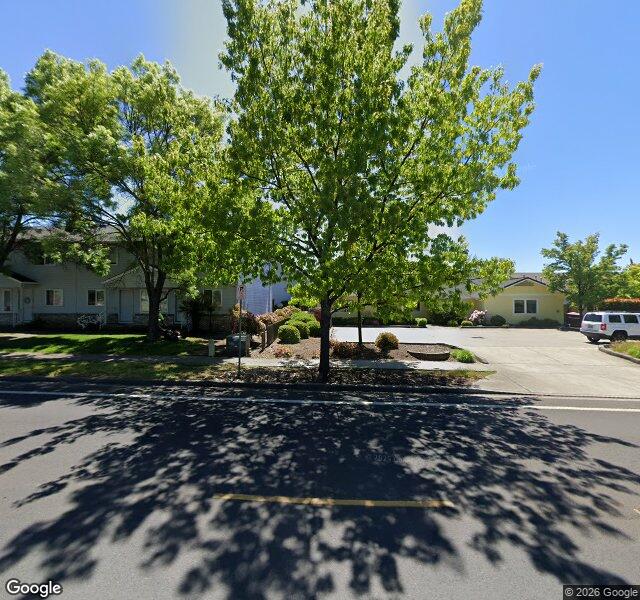
2146 Brookhurst St, Medford, OR 97504View map (opens in a new tab)
Overview and key essentials
State license
Active
OR ODHS
Google reviews
3.6/ 5
17 reviews
Size & payment
14 residents
Medicaid listed
Mixed signals — tour closely
Public Google reviews reflect mixed experiences (3.6/5). Compare recent reviews and tour in person.
Cost, payment & care details
Updated Nov 28, 2026| Monthly cost | Not published | Ask for the full monthly cost, including care fees and one-time charges. |
|---|---|---|
| Payment options | Medicaid | Participation is reported in our source data. Confirm eligibility, covered services, and any private-pay costs. Verified Medicaid waiver: Oregon Medicaid APD Long-Term Services (Oregon Dept. of Human Services (ODHS)). |
| Size & availability | 14 residents | We don't publish live openings. Ask about current availability, waitlist length, and move-in timing. |
| Care & support | Memory care | Designed for people living with dementia who need a supported daily routine. What to confirm about care levelsThis describes the licensed category. Ask how care plans adjust if mobility, nursing, or memory needs change over time. Read the family care guide → |
State licensing
State inspection history
4inspections
22deficiencies listed
Nov 7, 2024Inspection9 deficiencies reported9
9 deficiencies reported
View official state report (opens in a new tab)
Change of Owner
moderateC0420
OAR 411-054-0090 (1-2) Fire and Life Safety: Safety (1) FIRE DRILLS. All fire drills shall be conducted according to the Oregon Fire Code (OFC). (a) Unannounced fire drills must be conducted and recorded every other month at different times of the day, evening, and night shifts. (b) Fire and life safety instruction to staff must be provided on alternate months. (c) The Fire Authority may develop an alternative fire drill plan for the facility. Any such plan must be submitted to the Department. (d) A written fire drill record must be kept to document fire drills that include: (A) Date and time of day; (B) Location of simulated fire origin; (C) The escape route used; (D) Problems encountered and comments relating to residents who resisted or failed to participate in the drills; (E) Evacuation time period needed; (F) Staff members on duty and participating; and (G) Number of occupants evacuated. (e) Alternate exit routes must be used during fire drills to react to varying potential fire origin points. (f) The evacuation capability of the residents and staff is a function of both the ability of the residents to evacuate and the assistance provided by the staff. (g) Staff must provide fire evacuation assistance to residents from the building to a designated point of safety as determined by the Fire Authority having jurisdiction. Points of safety may include, outside the building, through a horizontal exit, or other areas as determined by the Fire Authority having jurisdiction. (h) The fire alarm system shall be activated during each fire drill, unless otherwise directed by the Fire Authority having jurisdiction. (2) If the facility is unable to meet the applicable evacuation level, the facility must make an immediate effort to make changes to ensure the evacuation standard is met. Changes must include, but not be limited to: (a) Increasing staff levels, (b) Changing staff assignments, (c) Requesting change in resident rooms, and (d) Arranging for special equipment. After making necessary changes, if the facility fails to meet the applicable evacuation level, the facility must issue an involuntary move-out notice to the residents in accordance with OAR 411-054-0080. This Rule is not met as evidenced by:
moderateZ0173
OAR 411-057-0170(6) Secure Outdoor Recreation Area (6) SECURE OUTDOOR RECREATION AREA. The memory care community must comply with facility licensing requirements for outdoor recreation areas as well as the following standards. These requirements apply to newly endorsed, constructed, or remodeled communities which have construction documents approved on or after November 1, 2010 with the exception of subsections (d) and (e) of this section. (a) The space must be a minimum of 600 square feet or 15 square feet per resident, whichever is greater and is exclusive of normal walkways and landscaping. The space must have a minimum dimension of 15 feet in any direction; (b) Fences surrounding the perimeter of the outdoor recreation area must be no less than six feet in height, constructed to reduce the risk of resident elopement, and maintained in functional condition; (c) Walkways must meet the accessibility requirements of the Oregon Structural Specialty Code. Walkway surfaces must be a medium to dark reflectance value to prevent glare from reflected sunlight; (d) Outdoor furniture must be sufficient weight, stability, design, and be maintained to prevent resident injury or aid in elopement; and (e) Doors to the outdoor recreation area may be locked during nighttime hours or during severe weather per facility policy. This Rule is not met as evidenced by:
moderateZ0162
OAR 411-057-0160(2b) Compliance with Rules Health Care (b) Health care services provided in accordance with the licensing rules of the facility. This Rule is not met as evidenced by:
moderateC0362
OAR 411-054-0037 (1)(b-g) Acuity Based Staffing Tool - ABST Time (1) DEVELOP AND MAINTAIN ACUITY-BASED STAFFING (b) Accurately capture care time and care elements that staff are providing to each resident as outlined in each individual service plan. Established care time must be resident specific, rather than a predetermined average. (c) Develop a staffing plan for each shift, that meets the scheduled and unscheduled needs of all residents. (d) Develop ABST reports and posted staffing plans that reflect distinct and segregated areas as outlined in OAR 411-054-0070(1). (e) If applicable, determine ABST time for residents on a Specific Needs Settings Contract and residents not on a Specific Needs Setting Contract to build posted staffing plan as outlined in this rule. (f) Develop written policies and procedures to accurately and consistently implement the ABST. The policy must explain how a facility evaluates and accounts for both scheduled and unscheduled resident needs. (g) Provide the relevant ABST information for a specific resident if requested by the Department, that specific resident, that specific resident’s legal representative, or the Long-Term Care Ombudsman. This Rule is not met as evidenced by:
moderateZ0142
OAR 411-057-0140(2) Administration Compliance (2) The licensee of a memory care community must comply with both the licensing rules for the facility and Chapter 411, Division 57. This Rule is not met as evidenced by:
moderateC0513
OAR 411-054-0200 (4)(d-i) Doors, Walls, Elevators, Odors (d) INTERIOR DOORS. Lever-type door handles must be provided on all doors used by residents.(e) EXIT DOORS. Exit doors may not include locks that delay evacuation except as specified by the building codes. Such locks may not be installed except with written approval of the Department.(A) Exit doors may not include locks that prevent evacuation.(B) If an electronic code must be entered to use an exit door that code must be clearly posted for residents, visitors, and staff use.(f) WALLS AND CEILINGS. Walls and ceilings must be cleanable in kitchen, laundry, and bathing areas. Kitchen walls must be finished smooth per OAR 333-150-0000 (Food Sanitation Rules).(g) ELEVATORS. A RCF with residents on more than one floor must provide at least one elevator that meets Oregon Elevator Specialty Code (OESC) requirements.(h) The interior of the facility must be free from unpleasant odors.(i) All interior and exterior materials and surfaces (e.g., floors, walls, roofs, ceilings, windows, and furniture) and all equipment necessary for the health, safety, and comfort of the resident will be kept clean and in good repair. This Rule is not met as evidenced by:
moderateC0455
OAR 411-054-0105 (2-4) Inspections and Investigation: Insp Interval (Amended 12/15/21)(2) The facility shall not interfere with a good faith disclosure of information by an employee or volunteer concerning abuse or other action affecting a resident's safety or welfare, as described in OAR 411-054-0028(4).(3) Staff of the Department shall visit and inspect every facility at least but not limited to once every two years for a full in-person survey to determine whether the facility is maintained and operated in accordance with these rules.(a) For each year during which a facility does not have a full survey, the Department shall conduct an in-person inspection of the kitchen and other areas where food is prepared for residents.(b) Subsection (a) will not go into effect until July 1, 2022.(c) Facilities not in compliance with these rules must submit, within ten days of receipt of the inspection report, a plan of correction that satisfies the Department.(d) The Department may impose sanctions for failure to comply with these rules.(4) Department staff may consult with and advise the facility administrator concerning methods of care, records, housing, equipment, and other areas of operation. This Rule is not met as evidenced by:
moderateC0270
OAR 411-054-0040 (1-2) Change of Condition and Monitoring (1) CHANGE OF CONDITION. These rules define a resident's change of condition as either short term or significant with the following meanings: (a) Short term change of condition means a change in the resident's health or functioning that is expected to resolve or be reversed with minimal intervention or is an established, predictable, cyclical pattern associated with a previously diagnosed condition. (b) Significant change of condition means a major deviation from the most recent evaluation that may affect multiple areas of functioning or health that is not expected to be short term and imposes significant risk to the resident.(c) If a resident experiences a significant change of condition that is a major deviation in the resident's health or functional abilities, the facility must evaluate the resident, refer to the facility nurse, document the change, and update the service plan as needed. (d) If a resident experiences a short-term change of condition that is expected to resolve or reverse with minimal intervention, the facility must determine and document what action or intervention is needed for the resident. (A) The determined action or intervention must be communicated to staff on each shift. (B) The documentation of staff instructions or interventions must be resident specific and made part of the resident record with weekly progress noted until the condition resolves. (2) MONITORING. The facility must have written policies to ensure a resident monitoring and reporting system is implemented 24-hours a day. The policies must specify staff responsibilities and identify criteria for notifying the administrator, registered nurse, or healthcare provider. The facility must: (a) Monitor each resident consistent with his or her evaluated needs and service plan; (b) Train staff to identify changes in the resident's physical, emotional and mental functioning and document and report on the resident's changes of condition; (c) Have a reporting protocol with access to a designated staff person, 24-hours a day, seven days a week, who can determine if a change in the resident's condition requires further action; and (d) Provide written communication of a resident's change of condition, and any required interventions, for caregivers on each shift. This Rule is not met as evidenced by:
moderateC0280
OAR 411-054-0045 (1)(a-f)(A)(C-F) Resident Health Services Resident Health Services (1) RESIDENT HEALTH SERVICES. The facility must provide health services and have systems in place to respond to the 24-hour care needs of residents. The system must:(a) Include written policies and procedures on medical emergency response for all shifts.(b) Include an Oregon licensed nurse who is regularly scheduled for onsite duties at the facility and who is available for phone consultation.(c) Assure an adequate number of nursing hours relevant to the census and acuity of the resident population. IICs must meet contract requirements concerning nursing hours.(d) Ensure that the facility RN is notified of nursing needs as identified in OAR 411-054-0034 (Resident Move-In and Evaluation) or OAR 411-054-0036 (Service Plan - General).(e) Define the duties, responsibilities and limitations of the facility nurse in policy and procedures, admission, and disclosure material.(f) Licensed nurses must deliver the following nursing services:(A) Registered nurse (RN) assessment in accordance with facility policy and resident condition. At minimum, the RN must assess all residents with a significant change of condition. The assessment may be a full or problem focused assessment as determined by the RN. A chart review or phone consultation may be performed as part of this assessment. The RN must document findings, resident status, and interventions made as a result of this assessment. The assessment must be timely, but is not required prior to emergency response in acute situations.(C) Monitoring of Resident Condition. The facility must specify the role of the licensed nurse in the facility's monitoring and reporting system.(D) Participation on Service Planning Team. If the resident experiences a significant change of condition and the service plan is updated, the licensed nurse must participate on the Service Planning Team, or must review the service plan with date and signature within 48 hours.(E) Health Care Teaching and Counseling. A licensed nurse must provide individual and group education activities as required by individual service plans and facility policies.(F) Intermittent Direct Nursing Services. If a resident requires nursing services that are not available through hospice, home health, a third-party referral, or the task cannot be delegated to facility staff, the facility must arrange to have such services provided on an intermittent or temporary basis. Such services may be of a temporary nature as defined in facility policy, admission agreements and disclosure information. This Rule is not met as evidenced by:
Oct 23, 2024Inspection3 deficiencies reported3
3 deficiencies reported
View official state report (opens in a new tab)
Kitchen
moderateC0240
OAR 411-054-0030 (1)(a) Resident Services Meals, Food Sanitation Rule (1) The residential care or assisted living facility must provide a minimum scope of services as follows: (a) Three daily nutritious, palatable meals with snacks available seven days a week, in accordance with the recommended dietary allowances found in the United States Department of Agriculture (USDA) guidelines, including seasonal fresh fruit and fresh vegetables; (A) Modified special diets that are appropriate to residents' needs and choices. The facility must encourage residents' involvement in developing menus. (B) Menus must be prepared at least one week in advance, and must be made available to all residents. Meal substitutions must be of similar nutritional value if a resident refuses a food that is served. Residents must be informed in advance of menu changes. (C) Food must be prepared and served in accordance with OAR 333-150-0000 (Food Sanitation Rules). This Rule is not met as evidenced by:
moderateC0455
OAR 411-054-0105 (2-4) Inspections and Investigation: Insp Interval (Amended 12/15/21)(2) The facility shall not interfere with a good faith disclosure of information by an employee or volunteer concerning abuse or other action affecting a resident's safety or welfare, as described in OAR 411-054-0028(4).(3) Staff of the Department shall visit and inspect every facility at least but not limited to once every two years for a full in-person survey to determine whether the facility is maintained and operated in accordance with these rules.(a) For each year during which a facility does not have a full survey, the Department shall conduct an in-person inspection of the kitchen and other areas where food is prepared for residents.(b) Subsection (a) will not go into effect until July 1, 2022.(c) Facilities not in compliance with these rules must submit, within ten days of receipt of the inspection report, a plan of correction that satisfies the Department.(d) The Department may impose sanctions for failure to comply with these rules.(4) Department staff may consult with and advise the facility administrator concerning methods of care, records, housing, equipment, and other areas of operation. This Rule is not met as evidenced by:
moderateZ0142
OAR 411-057-0140(2) Administration Compliance (2) The licensee of a memory care community must comply with both the licensing rules for the facility and Chapter 411, Division 57. This Rule is not met as evidenced by:
Dec 28, 2023InspectionNo deficiencies reportedNone
Feb 16, 2022Inspection10 deficiencies reported10
10 deficiencies reported
View official state report (opens in a new tab)
Validation
moderateC0160Corrected Apr 1, 2022
Based on observation and interview, it was determined the facility failed to exercise reasonable precautions against any condition that could threaten the health, safety or welfare of residents. Findings include, but are not limited to: Oregon Department of Human Services infection control guidelines, which were established to protect the facility staff and residents from the spread of COVID-19 and made available to all facilities, were reviewed upon entering the facility on 02/16/22. The following deficiencies were identified: Multiple staff were observed wearing cloth face masks or face coverings rather than the required medical-grade face masks. The facility was immediately instructed by the survey team to resume using medical-grade face masks. The facility began to implement proper use of Personal Protective Equipment (PPE) on 02/16/22. The need to ensure the facility exercise reasonable precautions against any condition that could threaten the health, safety and welfare of residents was discussed with Staff 1 (Administrator) on 02/16/22. He acknowledged the findings.
moderateC0372Corrected Apr 1, 2022
Based on interview and record review, it was determined the facility failed to ensure 2 of 2 newly hired staff (#s 4 and 6) received training in abdominal thrust within 30 days of hire. Findings include, but are not limited to: The facility's training records were reviewed on 02/17/22 and revealed Staff 4 and 6 (Caregivers), hired 05/28/21 and 01/13/22 respectively, lacked documented evidence of receiving abdominal thrust training within 30 days of hire. The need to ensure all newly hired staff were trained in abdominal thrust within 30 days of hire was discussed with Staff 1 (Administrator) on 02/17/21. He acknowledged the findings.
moderateC0252Corrected Apr 1, 2022
Based on interview and record review, it was determined the facility failed to ensure initial move-in evaluations included all required elements, for 1 of 1 sampled resident (# 2). Findings include, but are not limited to: Resident 2's move-in evaluation, dated 12/27/21, lacked information regarding the following required elements: * Customary Routines including sleeping, eating and bathing; * Interests, hobbies, social, and leisure activities; * List of current diagnosis; * List of medications and PRN use; * Visits to health practitioners, ER, hospital or NF in the past year; * Vital signs if indicated by dx, health problems, or medications; * Personality including how the person copes with change or challenging situations; * Pain: pharmaceutical and non-pharmaceutical interventions, including how the person copes with pain; * History of dehydration or unexplained weight loss or gain; * Recent losses; * Unsuccessful prior placements; * Elopement risks; * Alcohol or drug use; and * Environmental factors that impact behavior including but not limited to noise, lighting and room temperature. The need to ensure initial move-in evaluation include all required elements was discussed with Staff 1 (Administrator) on 02/16/22. He acknowledged the findings.
moderateC0303Corrected Apr 1, 2022
Based on interview and record review, it was determined the facility failed to ensure signed physician's orders were kept in the facility for 2 of 2 sampled residents (#s 1 and 2). Findings include, but are not limited to: Resident 1 and 2's 02/01/22 through 02/15/22 MARs were reviewed and physician's orders were requested on 02/17/22. On 02/17/22 at 1:30 PM, Staff 1 (Administrator) and Staff 2 (RN) reported they did not know signed physician's orders needed to be kept on site and in the resident's medical chart. There was no documented evidence Resident 1 and 2's medications were being administered as ordered. The surveyor requested the facility obtain signed physicians orders on 02/17/22. On 02/18/22, the facility obtained signed orders for Resident 1 and 2. The need to ensure signed physician's orders are kept in the facility was discussed with Staff 1 and Staff 2 on 02/17/22. They acknowledged the findings.
moderateC0370Corrected Apr 1, 2022
Based on interview and record review, it was determined the facility failed to ensure all pre-service dementia training was completed prior to beginning job duties for 2 of 2 newly hired direct care staff (#s 4 and 6) whose training records were reviewed. Findings include, but are not limited to: The facility's training records were reviewed on 02/17/22 and revealed Staff 4 and 6 (Caregivers), hired 05/28/21 and 01/13/22 respectively, lacked documented evidence all components of the pre-service dementia training were completed prior to beginning their job duties. The need to ensure staff completed all components of the pre-service dementia training was discussed with Staff 1 (Administrator) and Staff 2 (RN) on 02/17/22. No additional information was provided.
moderateC0260Corrected Apr 1, 2022
Based on interview and record review, it was determined the facility failed to ensure service plans were reflective of resident's current health status and care needs and lacked clear direction to staff for 1 of 2 sampled residents (#1) whose service plans were reviewed. Findings include, but are not limited to: Resident 1 was admitted to the facility in 06/2021 with a diagnosis of diabetes and chronic pain. Resident 1's service plan was not reflective and/or lacked clear direction to staff in the following areas: * Meal assistance; * Transfer ability; * Bed mobility; * Ambulation; and * Customary routines such as dressing and grooming and bathing. The need to ensure service plans were reflective of resident's current health status and care needs and provided clear direction to staff was discussed with Staff 1 (Administrator) and Staff 2 (RN) on 02/17/22. They acknowledged the findings.
CommentC0000
The findings of the first re-visit to the re-licensure survey of 02/18/22, conducted 07/13/22, are documented in this report. The survey was conducted to determine compliance with the OARs 411 Division 54 for Residential Care and Assisted Living Facilities and OARs 411 Division 004 Home and Community Based Services Regulations. It was determined the facility was in substantial compliance.
moderateC0555Corrected Apr 1, 2022
Based on observation and interview, it was determined the facility failed to ensure all exit doors were equipped with an alarming device or other acceptable system to provide security and to alert staff when residents exited the building. Findings include, but are not limited to: Observations on 02/16/22 showed all exit doors did not have an operational alarm or other acceptable system to alert staff when residents exited the building. During a tour of the facility on 02/16/22 with Staff 1 (Administrator), he verified exit doors alarms were not operational. The need to ensure exit doors were equipped with an alarming device or other acceptable system was discussed with Staff 1 on 02/17/22. He acknowledged the findings.
moderateC0270Corrected Apr 1, 2022
Based on interview and record review, it was determined the facility failed to ensure short-term changes of condition were evaluated and monitored to resolution and failed to determine and document actions or interventions and communicate those to staff for 2 of 2 sampled residents (#s 1 and 2) who experienced changes of condition. Findings include, but are not limited to: 1. Resident 1 was admitted to the facility in 06/2021 with a diagnosis of diabetes, chronic pain and osteoarthritis. Progress notes dated 12/10/21 through 02/08/22 were reviewed and showed the resident experienced the following changes of condition: * 11/22/21 - RN identified a bi-lateral yeast infection under both breasts; * 12/09/21 - Staff transferred Resident 1 to the ER for flu like symptoms; * 12/21/21 - Return from a hospital stay; * 01/18/22 - Fall resulting in neck/back pain and sent to ER; * 01/19/22 - Positive COVID -19 diagnosis; * 01/22/22 - Return from hospital stay and diagnosed with a UTI; and * 01/26/22 - Resident was too weak to get out of bed and was now bed bound. Resident 1 experienced changes of condition that were not evaluated to include development of actions or interventions nor evidence of monitoring through resolution. 2. Resident 2 was admitted to the facility in 12/2021 with a diagnosis of chronic pain. Progress notes dated 12/27/21 through 02/15/22 were reviewed and showed the resident experienced the following changes of condition: * 12/27/21 - Resident moved into the facility; and * 01/23/22 - Resident 2 tested positive for COVID - 19. Resident 2 experienced changes of condition that were not evaluated to include development of actions or interventions nor evidence of monitoring through resolution. Resident 1 and 2's changes of condition was discussed with Staff 1 (Administrator) and Staff 2 (RN) on 02/18/22. They acknowledged the findings.
moderateC0420Corrected Apr 1, 2022
Based on interview and record review, it was determined the facility failed to provide documentation that fire drills included all required components. Findings include, but are not limited to: Fire and life safety records for June 2021- January 2022 were reviewed and lacked the following components: *Number of residents evacuated; and *Evacuation time period needed for fire drills. The need to ensure the facility was in compliance with all required fire drill components was discussed with Staff 1 (Administrator) on 02/16/22. He acknowledged the findings.
Neighborhood & resident support
Emergency access, hazards & advocacy
Nearest hospital
Providence Medford Medical Center
0.7 mi · Medford, OR · Medicare 2/5 ★
Emergency roomTrauma Level Iii
FEMA hazard risk
Relatively ModerateJackson County, OR
- Wildfire
- Earthquake
- Winter Weather
Free resident advocacy
Oregon Office of the Long-Term Care Ombudsman
More neighborhood context (specialists, VA, dialysis, air & affordability)
VA & dialysis access
VA Roseburg Healthcare System
66.3 mi · Roseburg, OR
DaVita Rogue Valley Dialysis
3.1 mi · 3/5 ★ · Home dialysis
Specialists within 15 mi
- Geriatricians
- 0
- Neurologists
- 29
- Palliative care
- 14
- PM&R rehab
- 14
Environment & mobility
- EPA Air (2025)
- 66% good days · AQI 43
- EPA Walkability
- 10.8/20 (Above Average)
- USDA Grocery Access
- Moderate Grocery Access
- Primary care access
- HRSA Shortage Area
County demographics
- Age 65+ median income
- $55,219/yr
- Rent-burdened households
- 54%
- Cognitive disability (2023)
- 15.8%
- Mobility disability
- 11.7%
Call & tour checklist
Questions to ask Pacific Living Centers of Medford at Brookhurst
Check off questions as you call or tour. Your progress stays private in this browser.
Show 3 more suggested questions
Verification & public records
Official records & sources
Licensing & contact
- License #
- 5MA246
- Status
- active
- Phone
- (541) 618-9050
- Federal OIG LEIE
- Clear (2026-11-27)
Original public sources
Verify licensing, ratings, and inspection reports directly with each official source.
- OR ODHS official record (opens in a new tab)OR Dept. of Human Services
- Google Maps (opens in a new tab)Directions, photos & neighborhood
- Google Reviews (opens in a new tab)17 public reviews
EveryPlace is an independent research directory. Information is compiled from public Medicare.gov, state licensing, Google Places, and street-level imagery sources. Some summaries, suggested questions, and pricing notes are AI-generated or AI-assisted and may contain errors or omissions. We do not accept payment for placement. Confirm all details directly with the community and official sources. Research Policy.
Keep exploring
Nearby communities to compare
- 5.0(4)Cap. 13MedicaidMemory Care< 1 miMeadowlark Memory CareMedford, OR
- 4.6(5)Cap. 16MedicaidMemory Care< 1 miRoxy Ann Memory CommunityMedford, OR
- 3.7(67)Cap. 69Assisted Living< 1 miBonaventure of Medford Assisted LivingMedford, OR
- 3.7(69)Cap. 25Memory Care< 1 miBonaventure of Medford Memory CareMedford, OR
- 4.1(14)Cap. 18Assisted Living< 1 miHorton PlazaMedford, OR
- 4.4(7)Cap. 19Assisted Living< 1 miFountain PlazaMedford, OR