Loading EveryPlace content…
Assisted LivingActive licenseMemory care certified
Our House Chippewa Falls Memory Care
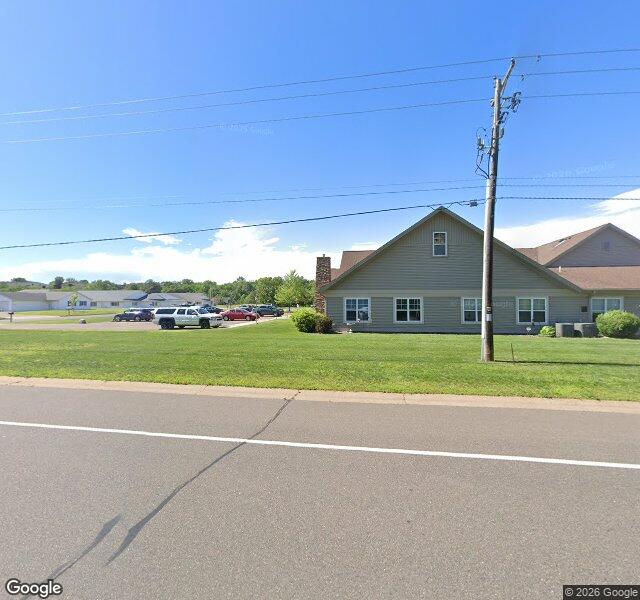
105 Marrs St, Chippewa Falls, WI 54729View map (opens in a new tab)
Overview and key essentials
State license
Active
WI DHS
Monthly cost
$6,280–$6,380/ mo
AI-assisted estimate
Strong public signals
Rated 5.0/5 across 21 public Google reviews. Visit in person to confirm daily care and pricing.
Families praise: Compassionate and attentive staff
Cost, payment & care details
Updated Nov 28, 2026| Monthly cost | $6,280–$6,380AI-assisted estimate | Research may contain errors. Request a current quote from the provider. Source: AI-assisted online research, Nov 2026. |
|---|---|---|
| Payment options | Medicaid | Participation is reported in our source data. Confirm eligibility, covered services, and any private-pay costs. Verified Medicaid waiver: Wisconsin Family Care / IRIS Medicaid Waiver (WI Dept. of Health Services (DHS DQA)). |
| Size & availability | Confirm directly | We don't publish live openings. Ask about current availability, waitlist length, and move-in timing. |
| Care & support | Assisted livingMemory care certified | Usually offers housing and help with everyday tasks, such as bathing and dressing. What to confirm about care levelsThis describes the licensed category. Ask how care plans adjust if mobility, nursing, or memory needs change over time. Read the family care guide → |
Safety screening & compliance
State licensing depth & federal screening
HHS OIG LEIE: Clear (2026-11-27)OIG database ↗ (opens in a new tab)
WI DHS directory details (CBRF)
Class: CLASS CNA (NONAMBULATORY)Public Funding (Family Care / IRIS)HCBS CompliantDementia approvedWI DHS rates: $6,280–$6,380/mo
Public Google reviews
What families say
Families considering Our House Chippewa Falls can expect a highly caring environment where staff members are frequently described as treating residents like family. Reviewers consistently praise the cleanliness of the facility, the spaciousness of the rooms, and the variety of engaging daily activities provided.
What families praise
- Compassionate and attentive staff
- Clean and well-maintained facility
- Engaging daily activities
- Spacious and well-kept resident rooms
- Home-like and welcoming atmosphere
Topics families mention
0–10 review sentiment · tap to readStaff warmth & care10.0
Multiple reviewers across several years describe the staff as loving, professional, and attentive.
Communication8.0
The administration and directors are described as awesome to work with and accommodating.
Cleanliness10.0
Almost every review that mentions the facility specifically highlights how clean it is.
Food & dining5.0
One reviewer noted meals look great and another mentioned fresh cooked meals.
Daily activities9.0
Reviewers frequently mention that residents participate in many fun and engaging daily activities.
Memory care10.0
Reviewers specifically highlight the dignity and specialized care provided to memory care residents.
Star breakdown
21 analyzed5 stars21 (100%)
4 stars0 (0%)
3 stars0 (0%)
2 stars0 (0%)
1 star0 (0%)
State licensing
State inspection history
3inspections
4deficiencies listed
Aug 5, 2025Follow-up1 deficiency reported1
Jan 27, 2025EnforcementEnforcement actionPenalty
Enforcement action
View official state report (opens in a new tab)
No deficiencies are reported in this inspection record.
Jan 27, 2025Complaint3 deficiencies reported3
3 deficiencies reported
View official state report (opens in a new tab)
On 01/22/2025, Surveyor conducted an abbreviated licensure and complaint survey at Our House Chippewa Falls Memory Care. Data was reviewed through 01/27/2025. The complaint was unsubstantiated. Two deficiencies were identified. Census: 21
83.55(6)(b) Bath and toilet areas: waterN 617
temperature The CBRF shall set the temperature of all water heaters connected to sinks, showers and tubs used by residents at a temperature of at least 140°F. The temperature of water at fixtures used by residents shall be automatically regulated by valves and may not exceed 115°F, except for CBRFs serving residents recovering from alcohol or drug dependency or clients of a government correctional agency. This Rule is not met as evidenced by: Based on observation and interview, the provider did not ensure the temperature of water fixtures used by residents did not exceed 115° degrees Fahrenheit (F). Findings include: The provider is licensed to care for up to 24 residents in the client groups of advanced aged and irreversible dementia/Alzheimer's disease. Exposure to hot water is a potential environmental danger for residents. Elderly residents and residents with mental and physical disabilities may have neurological conditions that prevent instant recoil from hot water. Because these individuals do not instantly react to dangerous temperature levels, they are at particular risk for injury. Hot water can cause scalding, e.g., second and third degree burns in which the skin blisters and swells. In such instances, skin does not return to normal and forms scar tissue upon healing. These burns may lead to permanent disability. (DQA Publication-01942, Hot Water Temperatures in Adult Family Homes, August 2017.) On 01/22/2025, at approximately 11:05 a.m., Surveyor checked the water temperature at the faucet in the shared resident bathroom with the tub. The hot water reached a temperature of 129°F. On 01/22/2025 at 11:22 a.m., Surveyor checked the water temperature at the faucet in the shared resident bathroom with the walk in shower. The hot water temperature reached a temperature of 128.8° F. On 01/22/2025 at approximately 2:20 p.m., Surveyor interviewed Assistant Director (AD) B. AD B told Surveyor s/he checked the hot water temperatures weekly. Surveyor asked AD B to check the water temperatures in the tub and shower rooms using the provider's thermometer. Surveyor observed AD B check the hot water temperature at the faucet in the tub room, which reached 130° F. Surveyor observed AD B check the hot water temperature at the faucet in the shower room, which reached 129° F. AD B told Surveyor s/he typically allows the hot water to run for approximately 10 seconds and then holds the thermometer under the running water for approximately 10 seconds. Surveyor advised s/he should continue taking the temperature until the thermometer stops increasing. AD B told Surveyor s/he would notify maintenance to have them adjust the water temperature.
STATE FORM6899
MU0G11 STATE FORM MU0G11 STATE FORM MU0G11 STATE FORM MU0G11 STATE FORM MU0G11
83.32(3)(h) Rights of Residents: ReceiveN 352
medication In addition to the rights under s. 50.09, Stats., each resident shall have all of the following rights: Receive medication. Receive all prescribed medications in the dosage and at intervals prescribed by a practitioner. The resident has the right to refuse medication unless the medication is court ordered. This Rule is not met as evidenced by: Based on observation, interview, and record review, the provider did not ensure Resident 1 received all medications in the dosage and intervals prescribed by his/her practitioner. Resident 1 did not have his/her PRN (as needed) olanzapine when s/he became agitated, and staff were unable to redirect him/her. Findings include: On 01/22/2025 at approximately 11:45 a.m., Surveyor made observations of the medication storage system with Caregiver D, who was responsible for administering medications. Surveyor observed Caregiver C ask Caregiver D if Resident 1 had a PRN medication as s/he was not accepting redirection from staff and was becoming more agitated. Caregiver D reviewed Resident 1's electronic record and indicated Resident 1 did have an order for PRN olanzapine. Caregiver D could not locate the medication in the medication cart. Caregiver D told Surveyor s/he notified Administrator A and the pharmacy. Caregiver D said the medication should arrive later that same day. On 01/22/2025 at approximately 12:15 p.m., Surveyor observed Resident 1 on the floor near the dining room. Caregiver D told Surveyor Resident 1 was agitated and s/he got up from his/her wheelchair and fell. On 01/22/2025 at approximately 1:10 p.m., Surveyor interviewed Administrator A and Assistant Director (AD) B. Administrator A told Surveyor Resident 1 was new to the facility and previously resided at home with his/her spouse. Administrator A said Resident 1's spouse brought Resident 1's medications to the facility from home. Administrator A told Surveyor they received Resident 1's scheduled olanzapine but not his/her PRN olanzapine. On 01/22/2025 at approximately 2:30 p.m., Surveyor interviewed Registered Nurse (RN) E. RN E told Surveyor that when Resident 1 was admitted to the facility, his/her home medications should have been sent to the pharmacy to repackage or s/he should have been notified to come and package Resident 1's medications into bubble packs to ensure all medications were accounted for. On 01/22/2025, Surveyor reviewed Resident 1's record. Resident 1 was admitted to the facility on 01/14/2025 with diagnoses of major neurocognitive disorder without behavioral disturbances, generalized anxiety disorder, and a history of falling. Resident 1's individual service plan (ISP), signed 01/14/2025, read, in part: "Resident takes medication Olanzapine [sic] for anxiety. Resident may become anxious when [s/he] thinks people are talking about [him/her] or not listening to [him/her]. Resident will become quiet sometimes when [s/he] is having anxiety. Team members to visit with resident one on one, offer to call [spouse], offer resident a snack or offer activity. Resident does have PRN Olanzapine [sic] that can be given if interventions are not successful." Resident 1's medication orders indicated an order for olanzapine 5 milligrams, give 1/2 tablet once daily in the afternoon as needed. The provider did not ensure Resident 1 received all prescribed medications when s/he did not have his/her PRN olanzapine available after staff were unable to redirect Resident 1.
Neighborhood & resident support
Emergency access, hazards & advocacy
Nearest hospital
St Josephs Hsptl
1.0 mi · Chippewa Falls, WI
Emergency room
FEMA hazard risk
Relatively LowChippewa County, WI
- Cold Wave
- Strong Wind
- Hail
Free resident advocacy
Wisconsin Board on Aging & Long Term Care Ombudsman
More neighborhood context (specialists, VA, dialysis, air & affordability)
VA & dialysis access
Tomah VA Medical Center
77.8 mi · Tomah, WI
DaVita Lake Hallie Dialysis
0.9 mi · 3/5 ★ · Home dialysis
Specialists within 15 mi
- Geriatricians
- 3
- Neurologists
- 18
- Palliative care
- 8
- PM&R rehab
- 9
Environment & mobility
- EPA Walkability
- 6.6/20 (Below Average)
- Primary care access
- HRSA Shortage Area
County demographics
- Age 65+ median income
- $52,041/yr
- Rent-burdened households
- 41%
- Cognitive disability (2023)
- 14.4%
- Mobility disability
- 11.4%
Call & tour checklist
Questions to ask Our House Chippewa Falls Memory Care
Check off questions as you call or tour. Your progress stays private in this browser.
Show 3 more suggested questions
Verification & public records
Official records & sources
Licensing & contact
- License #
- 13435
- Status
- active
Original public sources
Verify licensing, ratings, and inspection reports directly with each official source.
- WI DHS official record (opens in a new tab)WI Dept. of Health Services
- Google Maps (opens in a new tab)Directions, photos & neighborhood
- Google Reviews (opens in a new tab)21 public reviews
EveryPlace is an independent research directory. Information is compiled from public Medicare.gov, state licensing, Google Places, and street-level imagery sources. Some summaries, suggested questions, and pricing notes are AI-generated or AI-assisted and may contain errors or omissions. We do not accept payment for placement. Confirm all details directly with the community and official sources. Research Policy.
Keep exploring
Nearby communities to compare
- 5.0(40)MedicaidAssisted Living< 1 miOur House Chippewa Falls Assisted CareChippewa Falls, WI
- 4.8(20)MedicaidAssisted Living< 1 miComforts of Home Chippewa Falls RcacChippewa Falls, WI
- 5.0(2)MedicaidAssisted Living< 1 miChippewa Valley Group HomeChippewa Falls, WI
- Cap. 18HUD Senior Housing< 1 miGrace Parkside AptChippewa Falls, WI
- Cap. 61HUD Senior Housing< 1 miMillstream IIChippewa Falls, WI
- Cap. 108HUD Senior Housing< 1 miRomeis Millstream Apartments 1Chippewa Falls, WI