Loading EveryPlace content…
Assisted LivingActive licenseMemory care certified
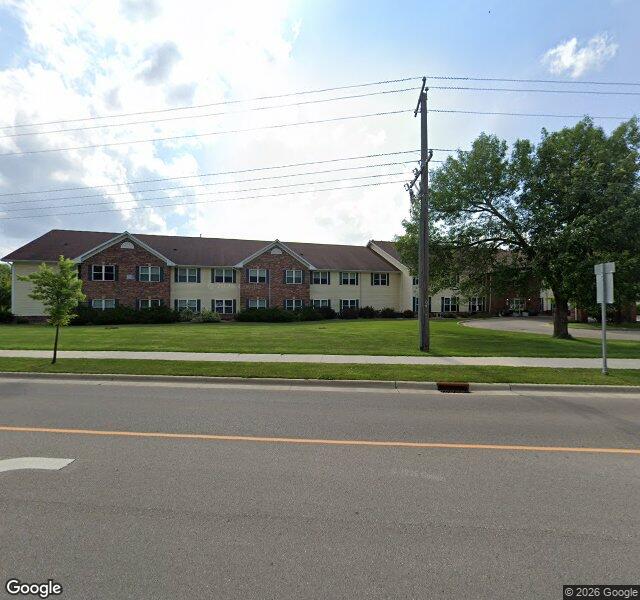
Oak Park Place of Albert Lea
1615 Bridge Avenue, Albert Lea, MN 56007View map (opens in a new tab)
Overview and key essentials
State license
Active
MN MDH
Google reviews
4.9/ 5
51 reviews
Size & payment
Ask directly
Confirm pricing & payment
Strong public signals
Rated 4.9/5 across 51 public Google reviews. Visit in person to confirm daily care and pricing.
Cost, payment & care details
Updated Nov 28, 2026| Monthly cost | Not published | Ask for the full monthly cost, including care fees and one-time charges. |
|---|---|---|
| Payment options | Ask directly | Payment details are not confirmed in our records. Ask about private pay, long-term care insurance, veterans benefits, and Medicaid waivers. |
| Size & availability | Confirm directly | We don't publish live openings. Ask about current availability, waitlist length, and move-in timing. |
| Care & support | Assisted livingMemory care certified | Usually offers housing and help with everyday tasks, such as bathing and dressing. What to confirm about care levelsThis describes the licensed category. Ask how care plans adjust if mobility, nursing, or memory needs change over time. Read the family care guide → |
State licensing
State inspection history
4inspections
39deficiencies listed
Dec 19, 2025Routine12 deficiencies reported12
12 deficiencies reported
View official state report (opens in a new tab)
144G. 42 Subd. 2 Quality management0580
SS= F The facility shall engage in quality management appropriate to the size of the facility and relevant to the type of services provided. "Quality management activity" means evaluating the quality of care by periodically reviewing resident services, complaints made, and other issues that have occurred and determining whether changes in services, staffing, or other procedures need to be made in order to ensure safe and competent services to residents. Documentation about quality management activity must be available for two years. Information about quality management must be available to the commissioner at the time of the survey, investigation, or renewal. This MN Requirement is not met as evidenced by: Based on interview and record review, the STATE FORM
144G. 41 Subdivision 1 Subd. 1a (a-b) Minimum0480
SS= F requirements; required food services (a) Except as provided in paragraph (b), food must be prepared and served according to the Minnesota Food Code, Minnesota Rules, chapter 4626. (b) For an assisted living facility with a licensed capacity of ten or fewer residents: (1) notwithstanding Minnesota Rules, part 4626. 0033, item A, the facility may share a certified food protection manager (CFPM) with STATE FORM
144G. 43 Subd. 3 Contents of resident record0730
SS= F Contents of a resident record include the following for each resident: (1) identifying information, including the resident' s name, date of birth, address, and telephone number; (2) the name, address, and telephone number of the resident' s emergency contact, legal representatives, and designated representative; (3) names, addresses, and telephone numbers of the resident' s health and medical service providers, if known; (4) health information, including medical history, allergies, and when the provider is managing medications, treatments or therapies that require documentation, and other relevant health records; (5) the resident' s advance directives, if any; (6) copies of any health care directives, guardianships, powers of attorney, or conservatorships; (7) the facility's current and previous STATE FORM
144G. 45 Subd. 2. (a) Fire protection and physical0775
SS= F environment Each assisted living facility must comply with the State Fire Code in Minnesota Rules, chapter 7511, and: STATE FORM
144G. 45 Subd. 2 (b-f) Fire protection and0810
SS= F physical environment (b) Each assisted living facility shall develop and maintain fire safety and evacuation plans. The plans shall include but are not limited to: STATE FORM
144G. 41 Subdivision 1.a (a) Minimum0485
SS= C requirements; required food services (a) All assisted living facilities must offer to provide or make available at least three nutritious STATE FORM
144G. 42 Subd. 9 Tuberculosis prevention and0660
SS= F control (a) The facility must establish and maintain a comprehensive tuberculosis infection control program according to the most current tuberculosis infection control guidelines issued by the United States Centers for Disease Control and Prevention (CDC), Division of Tuberculosis Elimination, as published in the CDC's Morbidity and Mortality Weekly Report. The program must include a tuberculosis infection control plan that covers all paid and unpaid employees, contractors, students, and regularly scheduled volunteers. The commissioner shall provide technical assistance regarding implementation of the guidelines. (b) The facility must maintain written evidence of compliance with this subdivision. This MN Requirement is not met as evidenced by: Based on interview and record review, the licensee failed to establish and maintain a tuberculosis (TB) prevention program, based on the most current guidelines issued by the Centers for Disease Control and Prevention (CDC) which included documentation of a completed health history and symptom screening, including completion of a two-step TST (tuberculin skin test) or other evidence of TB screening such as a blood test, for two of two employees (unlicensed personnel (ULP)-F, ULP-H). This had the potential to affect all residents, staff, and visitors. This practice resulted in a level two violation (a violation that did not harm a resident' s health or safety but had the potential to have harmed a resident' s health or safety, but was not likely to STATE FORM
TDTX116899
The facility is directly responsible to the resident for all housing and service- related matters provided, irrespective of a management contract. Housing and service- related matters include but are not limited to the handling of complaints, the provision of notices, and the initiation of any adverse action against the resident involving housing or services provided by the facility. This MN Requirement is not met as evidenced by: Based on observation, interview, and record review, the licensee failed to provide sufficient management, control, and operation of the housing and services provided by the facility. This had the potential to affect all residents. This practice resulted in a level two violation (a violation that did not harm a resident' s health or safety but had the potential to have harmed a resident' s health or safety, but was not likely to cause serious injury, impairment, or death) , and is issued at a widespread scope (when problems are pervasive or represent a systemic failure that has affected or has the potential to affect a large portion or all of the residents) . The findings include: The licensee had an Assisted Living with Dementia Care license effective May 1, 2025. The licensee' s "Application for Assisted Living License" , section titled "Official Verification of Owner or Authorized Agent", (page five and six of the application) , identified an affirmative checkmark next to the statement, "I declare that, as the owner or authorized agent, I attest that I have read Minn. Stat. chapter 144G, and Minnesota Rules, chapter 4659, governing the STATE FORM TDTX11 provision of assisted living facilities, and understand as the licensee I am legally responsible for the management, control, and operation of the facility, regardless of the existence of a management agreement or subcontract. " Another checkmark was noted at the statement, "I have examined this application and all attachments, and checked the above boxes indicating my review and understanding of Minnesota Statutes, Rules, and requirements related to assisted living licensure. To the best of my knowledge and believe, this information is true, correct and complete. I will notify MDH, in writing, of any changes to this information as required. " Page six was electronically signed by the authorized agent on February 26, 2025. As a result of this survey, the following orders were issued under 0470, 0480, 0485, 0580, 0660, 0730, 0775, 0800, 0810, 1460, 1620, 1640, 1790, 1820, 1890, 1910, 1940, 2040, 2110, 2140, and 2170, which indicated the licensee' s understanding of the Minnesota statutes were limited, or not evident for compliance with Minnesota Statutes, section 144G. 01 to 144G. 95. TIME PERIOD FOR CORRECTION: Twenty-one (21) days TDTX11 a large portion or all of the residents) . The findings include: The licensee held an Assisted Living with Dementia Care license for a bed capacity of 62 residents. At the time of the survey, there were 49 residents; 49 receiving services under the Assisted Living Facility with Dementia Care license. On December 19, 2025, at 12:27 p.m., assisted living director in residence (ALDIR)-A provided the licensee' s staffing plan and metrics. ALDIR-A stated she was newly employed and unable to locate evidence the staffing plan had been reviewed twice yearly as required. The licensee' s undated, Direct Care Staffing Plan, noted the staffing plan would be reviewed, at a minimum, two times each year. No further information was...
Bridge Ave1615
Albert Lea, MN 56007 Freeborn County Parcel: License Info License: HFID 30707 Risk: License: Expires on: CFPM: CFPM #: ; Exp: Phone: 507- 373- 5600 New Order: 2-100 Supervision 2-102. 12AMN Priority Level: Priority 3 CFP# : 2 MN Rule 4626. 0033A Employ a certified food protection manager (CFPM) for the establishment. COMMENT: Results not submitted to MDH. Comply By: 06/17/2027 Originally Issued On: 12/17/2025 ! New Order: 3-500A Microbial Control: cooling 3-501. 14A Priority Level: Priority 1 CFP# : 20 MN Rule 4626. 0385A Cool cooked TCS food: 1. within 2 hours from 135 degrees F (57 degrees C) to 70 degrees F (21 degrees C); and 2. within a total of 6 hours from 135 degrees F (57 degrees C) to 41 degrees F (5 degrees C) or less. COMMENT: Chicken in upright cooler cooled on 12/16 measured at 45 degrees F. Chicken was cooled in an ice bath initially, but did not reach the required 41 degrees F within 6 hours. Chicken moved to shallow pan to rapidly cool while on site. Comply By: 12/17/2025 Originally Issued On: 12/17/2025 ! New Order: 3-500B Microbial Control: hot and cold holding 3-501. 16A2 Priority Level: Priority 1 CFP# : 22 MN Rule 4626. 0395A2 Maintain all cold, TCS foods at 41 degrees F (5 degrees C) or below under mechanical refrigeration. COMMENT: Upright cooler in memory care holding TCS foods above 41 degrees F. Scalloped potatoes discarded while on site. Comply By: 12/17/2025 Originally Issued On: 12/17/2025 Food & Beverage General Comment HRD inspection conducted with nurse evaluator Susan Kalis. Inspection report reviewed on site with Sherri Johannsen. NOTE: All new food equipment must meet the applicable standards of the American National Standards Institute (ANSI). Plans and specifications must be submitted for review and approval prior to new construction, remodeling or alterations. I acknowledge receipt of the Rochester District Office inspection report number F8044251299 from 12/17/2025 Project No: SL30707016-0 Facility Name: OAK PARK PLACE OF ALBERT LEA Facility Address: 1615 BRIDGE AVE, ALBERT LEA, MN, 56007 TAG IDENTIFICATION: 0775 SCOPE/ SEVERITY: Level 2; Widespread TIME PERIOD OF CORRECTION: Seven (7) days 1. Each assisted living facility must comply with the provisions of the Minnesota State Fire Code (MSFC) in Minnesota Rules chapter 7511. [Minn. Stat. 144G.45 subd. 2] 2. Controlled egress locking systems shall have the capability of being unlocked from the fire command center, a nursing station, or other approved location. [Minn. Stat. 144G.45 subd. 2; MSFC 1010.1.9.7] Comments: The controlled egress system was not equipped with a separate de-activate signal or switch to unlock the system. 3. Gates used as a component in a means of egress shall meet the same requirements for doors. [Minn. Stat. 144G.45 subd. 2; MSFC 1010.1.9.8.1] Comments: The facility had 3 controlled exit doors in the memory care area that open to a patio with one gate, that was secured shut with a chain and padlock. 4. The means of egress shall be maintained free of obstructions or impediments to full instant use in case of fire or other emergency. [Minn. Stat. 144G.45 subd. 2; MSFC 1031.2] Comments: The memory care area egress exit doors leading to the patio where obstructed by snow and ice. There was not a clear path from the exit door to the patio gate. Comments: The hard-wired smoke alarms in multiple resident rooms, were over 10 years past the manufacturer date. All smoke alarms shall be replaced with smoke alarms having the same...
144G. 45 Subd. 2 (a) (4) Fire protection and0800
SS= D physical environment (4) keep the physical environment, including walls, floors, ceiling, all furnishings, grounds, systems, and equipment in a continuous state of good repair and operation with regard to the health, safety, comfort, and well-being of the residents in accordance with a maintenance and repair program. STATE FORM This MN Requirement is not met as evidenced by: Based on observation, interview, and record review, the licensee failed to ensure the physical environment of the facility was maintained in compliance with the requirements of Minnesota Statute 144G. This practice resulted in a level two violation (a violation that did not harm a resident' s health or safety but had the potential to have harmed a resident' s health or safety, but was not likely to cause serious injury, impairment, or death) and was issued at an isolated scope (when one or a limited number of residents are affected or one or a limited number of staff are involved, or the situation has occurred only occasionally) . The findings include: Please refer to the document titled, Physical Environment Inspection Report (PEIR) dated December 17, 2025 for the specific violations related the physical environment under Minnesota Statute 144G. TIME PERIOD FOR CORRECTION: Seven (7) days
144G. 40 Subdivision 1 Responsibility for housing0420
SS= F and services STATE FORM
144G. 41 Subdivision 1 Minimum requirements0470
SS= F (11) develop and implement a staffing plan for determining its staffing level that: (i) includes an evaluation, to be conducted at least twice a year, of the appropriateness of STATE FORM staffing levels in the facility; (ii) ensures sufficient staffing at all times to meet the scheduled and reasonably foreseeable unscheduled needs of each resident as required by the residents' assessments and service plans on a 24-hour per day basis; and (iii) ensures that the facility can respond promptly and effectively to individual resident emergencies and to emergency, life safety, and disaster situations affecting staff or residents in the facility; (12) ensure that one or more persons are available 24 hours per day, seven days per week, who are responsible for responding to the requests of residents for assistance with health or safety needs. Such persons must be: (i) awake; (ii) located in the same building, in an attached building, or on a contiguous campus with the facility in order to respond within a reasonable amount of time; (iii) capable of communicating with residents; (iv) capable of providing or summoning the appropriate assistance; and (v) capable of following directions; This MN Requirement is not met as evidenced by: Based on observation, interview, and record review, the licensee failed to ensure the staffing plan was reviewed twice per year. This had the potential to affect all residents, staff, and visitors. This practice resulted in a level two violation (a violation that did not harm a resident' s health or safety but had the potential to have harmed a resident' s health or safety, but was not likely to cause serious injury, impairment, or death) , and was issued at a widespread scope (when problems are pervasive or represent a systemic failure that has affected or has potential to affect STATE FORM
Oct 23, 2025ComplaintNo deficiencies reportedNone
No deficiencies reported
View official state report (opens in a new tab)
Not Substantiated. The alleged perpetrators (AP#1 and AP#2) abused the resident when AP#1 was yelling at the resident and AP#2 threatened to hit the resident
Jul 11, 2025ComplaintNo deficiencies reportedNone
No deficiencies reported
View official state report (opens in a new tab)
Not Substantiated. The facility neglected the resident when he left the facility one night. The resident was found lying in the street and found by a citizen
Mar 16, 2023Routine27 deficiencies reported27
27 deficiencies reported
View official state report (opens in a new tab)
144G. 50 Subd. 2 (d-e; 1-4) Contract information0930
SS= C (d) The contract must include a description of the facility's complaint resolution process available to residents, including the name and contact information of the person representing the facility who is designated to handle and resolve complaints. (e) The contract must include a clear and conspicuous notice of: (1) the right under section 144G. 54 to appeal the termination of an assisted living contract; (2) the facility's policy regarding transfer of residents within the facility, under what circumstances a transfer may occur, and the circumstances under which resident consent is required for a transfer; (3) contact information for the Office of Ombudsman for Long-Term Care, the Ombudsman for Mental Health and Developmental Disabilities, and the Office of Health Facility Complaints; STATE FORM
144G. 42 Subd. 2 Quality management0580
SS= F The facility shall engage in quality management appropriate to the size of the facility and relevant to the type of services provided. "Quality management activity" means evaluating the quality of care by periodically reviewing resident services, complaints made, and other issues that have occurred and determining whether changes in services, staffing, or other procedures need to be made in order to ensure safe and competent services to residents. Documentation about quality management activity must be available for two years. Information about quality management must be available to the commissioner at the time of the survey, investigation, or renewal. This MN Requirement is not met as evidenced STATE FORM No further information was provided. TIME PERIOD FOR CORRECTION: Twenty-One (21) days
49KY126899
following services to residents: (B) food must be prepared and served according to the Minnesota Food Code, Minnesota Rules, chapter 4626; and This MN Requirement is not met as evidenced by: No further action required {0 630} 144G. 42 Subd. 6 (b) Compliance with SS= E requirements for reporting ma (b) The facility must develop and implement an individual abuse prevention plan for each vulnerable adult. The plan shall contain an individualized review or assessment of the person' s susceptibility to abuse by another individual, including other vulnerable adults; the person' s risk of abusing other vulnerable adults; and statements of the specific measures to be taken to minimize the risk of abuse to that person and other vulnerable adults. For purposes of the abuse prevention plan, abuse includes self-abuse. This MN Requirement is not met as evidenced by: Based on interview and record review, the licensee failed to ensure an individual abuse prevention plan was developed to include the required content for three of six residents (R1, R2, R19) . This practice resulted in a level two violation (a violation that did not harm a resident' s health or safety but had the potential to have harmed a resident' s health or safety, but was not likely to cause serious injury, impairment, or death) and was issued at a pattern scope (when more than a STATE FORM 49KY12 limited number of residents are affected, more than a limited number of staff are involved, or the situation has occurred repeatedly; but is not found to be pervasive) . The findings include: R1 R1's diagnoses included Parkinson' s disease and Alzheimer' s disease. R1 was admitted to the facility under the comprehensive license on June 15, 2021, and on August 1, 2021, under the assisted living with dementia care (ALFDC) license. R1's Individual Abuse Prevention Plan dated June 25, 2023, identified R1 had vulnerabilities due to chronic disease of dementia, and R1 was unable to manage his finances. However, it identified that R1 was not at risk for abuse from others. In addition, R1's Individual Abuse Prevention Plan failed to identify specific measures to be taken to minimize the risk of abuse to that person and other vulnerable adults. R2 R2's diagnoses included diabetes mellitus type 2 and mild cognitive impairment. R2 was admitted to the facility under the ALFDC license on August 13, 2021. R2's Individual Abuse Prevention Plan dated June 25, 2023, identified R2 had vulnerabilities due to chronic disease of diabetes mellitus type 2 and "mild MR" [mental retardation] and R2 was unable to manage his finances. However, it STATE FORM 49KY12 identified that R2 was not at risk for abuse from others. In addition, R2's Individual Prevention plan failed to identify specific measures to be taken to minimize the risk of abuse to that person and other vulnerable adults. R19 R19' s diagnoses included diabetes mellitus (inability to regulate blood sugar) , hypertension (high blood pressure) , hemiplegia (weakness or inability to effectively use half of the body), and anxiety. R19 was admitted to the facility under the ALFDC license on April 10, 2023. R19' s Individual Abuse Prevention plan dated June 26, 2023, identified R19 had vulnerabilities due to chronic conditions, pain, illness, and disability. However, it identified that R19 was not at risk for abuse from others. On July 19, 2023, at 12:05 p.m. registered nurse (RN)-Q stated all residents in the facility were considered vulnerable adults...
144G. 50 Subd. 3 Designation of representative0950
SS= C (a) Before or at the time of execution of an assisted living contract, an assisted living facility must offer the resident the opportunity to identify a designated representative in writing in the contract and must provide the following verbatim notice on a document separate from the contract: "RIGHT TO DESIGNATE A REPRESENTATIVE FOR CERTAIN PURPOSES. You have the right to name anyone as your "Designated Representative. " A Designated Representative can assist you, receive certain information and notices about you, including some information related to your health care, and advocate on your behalf. A Designated Representative does not take the place of your guardian, conservator, power of attorney ("attorney- in-fact"), or health care power of attorney ("health care agent" ), if applicable. " STATE FORM
144G. 42 Subd. 8 Employee records0650
SS= A (a) The facility must maintain current records of each paid employee, each regularly scheduled volunteer providing services, and each individual contractor providing services. The records must include the following information: (1) evidence of current professional licensure, registration, or certification if licensure, registration, or certification is required by this chapter or rules; (2) records of orientation, required annual training and infection control training, and competency evaluations; (3) current job description, including qualifications, responsibilities, and identification of staff persons providing supervision; (4) documentation of annual performance reviews that identify areas of improvement needed and training needs; (5) for individuals providing assisted living services, verification that required health screenings under subdivision 9 have taken place and the dates of those screenings; and (6) documentation of the background study as required under section 144. 057. This MN Requirement is not met as evidenced by: Based on observation, interview, and record STATE FORM
144G. 50 Subd. 2 (a-b) Contract information0910
SS= C (a) The contract must include in a conspicuous place and manner on the contract the legal name and the health facility identification of the facility. (b) The contract must include the name, telephone number, and physical mailing address, which may not be a public or private post office box, of: (1) the facility and contracted service provider STATE FORM
144G. 41 Subdivision 1 Minimum requirements0470
SS= F (11) develop and implement a staffing plan for determining its staffing level that: (i) includes an evaluation, to be conducted at least twice a year, of the appropriateness of staffing levels in the facility; (ii) ensures sufficient staffing at all times to meet the scheduled and reasonably foreseeable unscheduled needs of each resident as required by the residents' assessments and service plans on a 24-hour per day basis; and (iii) ensures that the facility can respond promptly and effectively to individual resident emergencies and to emergency, life safety, and disaster situations affecting staff or residents in the facility; (12) ensure that one or more persons are available 24 hours per day, seven days per week, who are responsible for responding to the requests of residents for assistance with health or safety needs. Such persons must be: (i) awake; (ii) located in the same building, in an attached building, or on a contiguous campus with the facility in order to respond within a reasonable amount of time; (iii) capable of communicating with residents; (iv) capable of providing or summoning the appropriate assistance; and (v) capable of following directions; This MN Requirement is not met as evidenced by: Based on observation, interview, and record review, the licensee failed to ensure the staffing plan contained the required content and a 24 hour staff schedule was posted as required. This had the potential to affect all residents, staff, and visitors. STATE FORM On March 7, 2023, at 10:00 a.m. LALD-A indicated the licensee had not developed a staffing plan. No further information was provided. TIME PERIOD FOR CORRECTION: Twenty-One (21) days
144G. 45 Subd. 2 (b)-(f) Fire protection and0810
SS= F physical environment (b) Each assisted living facility shall develop and maintain fire safety and evacuation plans. The plans shall include but are not limited to: (1) location and number of resident sleeping rooms; (2) employee actions to be taken in the event of a fire or similar emergency; (3) fire protection procedures necessary for residents; and (4) procedures for resident movement, evacuation, or relocation during a fire or similar emergency including the identification of unique or unusual resident needs for movement or evacuation. (c) Employees of assisted living facilities shall STATE FORM
144G. 41 Subd 1 (13) (i) (B) Minimum0480
SS= F requirements (13) offer to provide or make available at least the following services to residents: (B) food must be prepared and served according to the Minnesota Food Code, Minnesota Rules, chapter 4626; and This MN Requirement is not met as evidenced by: Based on observation, interview and record review, the licensee failed to ensure food was prepared and served according to the Minnesota Food Code. This practice resulted in a level two violation (a violation that did not harm a resident' s health or safety but had the potential to have harmed a resident' s health or safety) and was issued at a widespread scope (when problems are pervasive or represent a systemic failure that has affected or has the potential to affect a large portion or all the residents) . The findings include: Please refer to the included document titled, Food and Beverage Establishment Inspection Report STATE FORM
144G. 40 Subd. 2 Uniform checklist disclosure of0430
SS= C services (a) All assisted living facilities must provide to prospective residents: (1) a disclosure of the categories of assisted living licenses available and the category of license held by the facility; (2) a written checklist listing all services permitted under the facility's license, identifying all services the facility offers to provide under the assisted living facility contract, and identifying all services allowed under the license that the facility does not provide; and (3) an oral explanation of the services offered under the contract. (b) The requirements of paragraph (a) must be completed prior to the execution of the assisted living contract. (c) The commissioner must, in consultation with all interested stakeholders, design the uniform checklist disclosure form for use as provided under paragraph (a). This MN Requirement is not met as evidenced by: Based on interview and record review, the licensee failed to have a Uniform Disclosure of Assisted Living Service and Amenities (UDALSA) as required. This had the potential to affect all 45 residents living in the facility. This practice resulted in a level one violation (a STATE FORM
144G. 50 Subd. 2 (c) Contract information0920
SS= C (c) The contract must include: (1) a disclosure of the category of assisted living facility license held by the facility and, if the facility STATE FORM
144G. 50 Subdivision 1 Contract required0900
SS= C (a) An assisted living facility may not offer or provide housing or assisted living services to any individual unless it has executed a written contract with the resident. (b) The contract must contain all the terms concerning the provision of: (1) housing; (2) assisted living services, whether provided directly by the facility or by management agreement or other agreement; and (3) the resident' s service plan, if applicable. (c) A facility must: (1) offer to prospective residents and provide to the Office of Ombudsman for Long-Term Care a complete unsigned copy of its contract; and (2) give a complete copy of any signed contract and any addendums, and all supporting documents and attachments, to the resident promptly after a contract and any addendum has been signed. (d) A contract under this section is a consumer contract under sections 325G. 29 to 325G. 37. STATE FORM
144G. 42 Subd. 9 Tuberculosis prevention and0660
SS= F control (a) The facility must establish and maintain a comprehensive tuberculosis infection control program according to the most current tuberculosis infection control guidelines issued by the United States Centers for Disease Control and Prevention (CDC), Division of Tuberculosis Elimination, as published in the CDC's Morbidity and Mortality Weekly Report. The program must include a tuberculosis infection control plan that covers all paid and unpaid employees, contractors, students, and regularly scheduled volunteers. The commissioner shall provide technical assistance regarding implementation of the guidelines. (b) The facility must maintain written evidence of compliance with this subdivision. This MN Requirement is not met as evidenced by: Based on interview and record review, the licensee failed to establish and maintain a tuberculosis (TB) prevention program, based on the most current guidelines issued by the Centers for Disease Control and Prevention (CDC) which included a facility TB risk assessment, documentation of a completed health history and symptom screening, including completion of a two-step TST (tuberculin skin test) or other evidence of TB screening such as a blood test for one of four employees (director of health care services- registered nurse (DHCS/RN-B) and failed to provide TB training to employees. This practice resulted in a level two violation (a STATE FORM
144G. 50 Subd. 2 (e; 5-7) Contract information0940
SS= C (5) a description of the facility's policies related to medical assistance waivers under chapter 256S STATE FORM R6's Assisted Living Residency Agreement dated October 16, 2022, failed to have the above noted required content. On March 7, 2023, at 11:09 a.m. licensed assisted living director (LALD)-A confirmed the contract lacked the above required content. LALD-A verified the licensee contract would lack the same for all residents. No further information was provided. TIME PERIOD FOR CORRECTION: Twenty-one (21) days
144G. 42 Subd. 7 Posting information for0640
SS= F reporting suspected c The facility shall support protection and safety through access to the state' s systems for reporting suspected criminal activity and suspected vulnerable adult maltreatment by: (1) posting the 911 emergency number in common areas and near telephones provided by the assisted living facility; (2) posting information and the reporting number STATE FORM
144G. 50 Subd. 5 Waivers of liability prohibited0970
SS= C The contract must not include a waiver of facility liability for the health and safety or personal property of a resident. The contract must not include any provision that the facility knows or should know to be deceptive, unlawful, or unenforceable under state or federal law, nor include any provision that requires or implies a lesser standard of care or responsibility than is required by law. This MN Requirement is not met as evidenced by: Based on interview and record review, the licensee failed to ensure the assisted living contract did not include language waiving the facility's liability for health, safety, or personal property of a resident for four of four residents (R1, R2, R5, R6). This practice resulted in a level one violation (a violation that has no potential to cause more than a minimal impact on the resident and does not affect health or safety) , and was issued at a widespread scope (when problems are pervasive or represent a systemic failure that has affected or has potential to affect a large portion or all of the residents) . The findings include: R1, R2, R5, and R6's Assisted Living Residency Agreements all contained the following clause: "INDEMNITY: Resident agrees not to make claims against Alternative Continuum of Care and not to hold Alternative Continuum of Care responsible for any harm or injury to Resident, or the Resident' s guests, unless caused by Alternative Continuum of Care' s negligence. STATE FORM
144G. 43 Subdivision 1 Resident record0690
SS= F STATE FORM (a) Assisted living facilities must maintain records for each resident for whom it is providing services. Entries in the resident records must be current, legible, permanently recorded, dated, and authenticated with the name and title of the person making the entry. This MN Requirement is not met as evidenced by: Based on interview and record review, the licensee failed to ensure entries in the resident' s records were authenticated by the name and title of the person making the entry for four of four residents (R1, R2, R5, R6). This practice resulted in a level two violation (a violation that did not harm a resident' s health or safety but had the potential to have harmed a resident' s health or safety) and was issued at a widespread scope (when problems are pervasive or represent a systemic failure that has affected or has the potential to affect a large portion or all the residents) . The findings include: R1 On March 7, 2023, at 8:15 a. m. unlicensed personnel (ULP)-D administered eye drops to R1. R1's medication administration record (MAR) for March 1, 2023, through March 7, 2023, included a charting legend on the last page. The legend was to include staff initials, full name, and title. The MAR identified seven staff had administered medications to R1, including ULP-D. The legend failed to identify any information for the seven staff. R1's task record dated March 1, 2023, through STATE FORM
144G. 41 Subd. 3 Infection control program0510
SS= F (a) All assisted living facilities must establish and maintain an infection control program that complies with accepted health care, medical, and nursing standards for infection control. (b)The facility's infection control program must be consistent with current guidelines from the national Centers for Disease Control and Prevention (CDC) for infection prevention and control in long-term care facilities and, as applicable, for infection prevention and control in assisted living facilities. (c) The facility must maintain written evidence of compliance with this subdivision. This MN Requirement is not met as evidenced by: Based on observation, interview, and record review, the licensee failed to establish and maintain an infection control program that complies with accepted health care, medical and nursing standards for infection control when they failed to properly disinfect shared blood glucose meters between residents. This had the potential to affect all residents who received blood glucose monitoring. This practice resulted in a level two violation (a violation that did not harm a resident' s health or safety but had the potential to have harmed a resident' s health or safety, but was not likely to cause serious injury, impairment, or death) , and STATE FORM The licensee' s Disinfecting Reusable Equipment and Environmental Surfaces Policy undated, identified "Reusable equipment and environmental surfaces will be properly disinfected after use. Whenever possible, clients will have their own reusable equipment and the equipment will not be shared with other clients or residents. " "Glucometers must be cleaned after each use following the manufacturer' s instructions. " Centers for Disease Control (CDC)'s Frequently Asked Questions (FAQs) regarding Assisted Blood Glucose Monitoring and Insulin Administration dated March 2, 2011, identified the following: - Infectious agents, such as HBV [hepatitis B virus], can be transmitted through indirect contact transmission, even in the absence of visible blood. If blood is transferred from the patient to the meter, and the meter is not cleaned and disinfected after use, subsequent patients can be exposed to this blood when the meter is used on them. Indirect contact transmission can also occur even if the patient never directly contacts the meter. Healthcare personnel hands can become contaminated with blood at various points while performing assisted blood glucose monitoring including pricking the patient ' s finger or handling the test strip. Blood can then be transferred to the meter when healthcare personnel handle the meter to obtain the reading. If the meter is not cleaned and disinfected after use, the blood remaining on the meter can be transferred to subsequent patients via healthcare personnel hands when they handle the meter and then assist with fingerstick procedures. Numerous outbreaks have implicated this mechanism in the spread of HBV infections. STATE FORM
144G. 45 Subd. 2 (a) (2)-(3) Fire protection and0790
SS= F physical environment (2) install and maintain portable fire extinguishers in accordance with the State Fire Code; (3) install portable fire extinguishers having a minimum 2-A:10-B:C rating within Group R-3 occupancies, as defined by the State Fire Code, located so that the travel distance to the nearest fire extinguisher does not exceed 75 feet, and maintained in accordance with the State Fire Code; and This MN Requirement is not met as evidenced by: Based on observation and interview the licensee failed to ensure installation and maintenance of portable fire extinguishers at the facility. This had potential to directly affect all residents, staff, and visitors. This practice resulted in a level two violation ( a violation that did not harm a resident' s health or safety but had the potential to have harmed a resident' s health or safety) and was issued at a widespread scope ( when problems re pervasive STATE FORM
evaluations were requested.2023
Comprehensive Assessments dated March 10, 2023, and June 29, 2023, were provided. The June 29, 2023, assessment was 111 days from the previous assessment date, exceeding 90 calendar days. R5 R5 began receiving services under the licensee' s comprehensive license on December 15, 2015, and later under the licensee' s assisted living with dementia care license since August 1, 2021. R5's unsigned and undated, Service Plan (Addendum A) indicated R5 received services to include dressing, grooming, shower assistance, and medication administration. R5's Comprehensive Assessments since March 2023, were requested. Assessments dated March 10, 2023, and June 14, 2023, were provided. The June 14, 2023, assessment was 96 days after the previous assessment date, exceeding 90 calendar days. On July 19, 2023, at 12:30 p.m. registered nurse (RN)-P stated the assessments provided were all she was able to find and would be accurate. The licensee' s Assessments, Reviews and Monitoring policy dated April 13, 2023, indicated the ongoing resident reassessment and STATE FORM There was no corresponding documentation to identify if these medications were administered or why the medications were not administered. R1's MAR dated March 1, 2023, through March 7, 2023, identified the following: - Amlodipine (blood pressure) was not administered on March 2, 3, and 6, 2023 - Atorvastatin (cholesterol) was not administered on March 6, 2023 - eplerenone was not administered on March 4, - potassium was not administered on March 1, - Cholchicine (gout) was not administered on March 4, 2023 There was no corresponding documentation to identify if these medications were administrated, or why the medications were not administered. R2 STATE FORM - Dulera was not administered on March 4, 5, 6, 7, 2023 - Metformin was not administered March 4 or March 5, 2023 There was no corresponding documentation to identify if these medications were administered, or why the medications were not administered. On March 13, 2023, at 1:20 p.m. director of health care services/ registered nurse (DHCS/ RN)-B stated she was unaware whether the medications were administered or not to the STATE FORM
Bridge Avenue1615
Albert Lea, MN56007 Freeborn County, 24 License Categories: Operator: Expires on: / / Phone #: 5073735600 ID #: The violations listed in this report include any previously issued orders and deficiencies identified during this inspection. Compliance dates are shown for each item. The following orders were issued during this inspection. 5-200B Plumbing: cross connections 5-203.14E ** Priority 1 ** MN Rule 4626.1085A Mount the spray arm so it cannot hang below the spill rim of a sink or provide an approved backflow prevention device on the faucet. Spray hanging below spill rim of prep sink. Either shorten the hose or re-attach the spring so it does not hang below the spill rim. Comply By: 03/21/23 6-200 Physical Facility Design and Construction 6-201.13A MN Rule 4626.1345A Properly cove and seal the wall/floor junctures to no larger than 1/32 inch (1 millimeter). No coved base in memory care food service area. Remove wooden baseboards and replace with a rubber base cove. Comply By: 05/07/23 6-300 Physical Facility Numbers and Capacities 6-301.14A Surface and Equipment Sanitizers Quaternary Ammonia: = 400 ppm at Degrees Fahrenheit Location: Dispenser Violation Issued: No Chlorine: = 100 ppm at Degrees Fahrenheit Location: Dishwasher Violation Issued: No Food and Equipment Temperatures Process/Item: Cold Holding Temperature: 40.1 Degrees Fahrenheit - Location: Cut tomatoes in upright 1 Violation Issued: No Process/Item: Cold Holding Temperature: 38.7 Degrees Fahrenheit - Location: Ham in upright 1 Violation Issued: No Process/Item: Cold Holding Temperature: 40.0 Degrees Fahrenheit - Location: Upright 1 Violation Issued: No Process/Item: Hot Holding Temperature: 135.4 Degrees Fahrenheit - Location: Oatmeal Violation Issued: No Process/Item: Cold Holding Temperature: 40.2 Degrees Fahrenheit - Location: Milk in upright 2 Violation Issued: No Process/Item: Cold Holding Temperature: 41.0 Degrees Fahrenheit - Location: Upright 2 Violation Issued: No Total Orders In This Report Priority 1 1 HRD inspection conducted with lead evaluator Deb Jacobson and Stacy Haag. Inspection report reviewed on site with Director of Food Sevice Sherri Johanessen. number 8044231081 of 03/07/23. Certified Food Protection Manager: Certification Number: Expires: / / Signed: Inspector signed for Sherri
144G. 41 Subd. 7 Resident grievances; reporting0550
SS= F maltreatment All facilities must post in a conspicuous place information about the facilities' grievance procedure, and the name, telephone number, and email contact information for the individuals who are responsible for handling resident grievances. The notice must also have the contact information for the Office of Ombudsman for Long-Term Care and the Office of Ombudsman for Mental Health and Developmental Disabilities and must have information for reporting suspected maltreatment to the Minnesota Adult Abuse Reporting Center. The notice must also state that if an individual has a complaint about the facility or person providing services, the individual may contact the Office of Health Facility Complaints at the Minnesota Department of Health. STATE FORM This MN Requirement is not met as evidenced by: Based on observation, interview, and record review, the licensee failed to post the required information related to the grievance procedure as well as the required information related to the contact information for the state and applicable regional Office of Ombudsman for Long-Term Care and the Office of Ombudsman for Mental Health and Developmental Disabilities. This had the potential to affect all residents, staff, and visitors. This practice resulted in a level two violation (a violation that did not harm a resident' s health or safety but had the potential to have harmed a resident' s health or safety, but was not likely to cause serious injury, impairment, or death) , and is issued at a widespread scope (when problems are pervasive or represent a systemic failure that has affected or has the potential to affect a large portion or all of the residents) . The findings include: On March 6, 2023, at 1:30 p.m. the surveyor toured the facility with licensed assisted living director (LALD)-A. There was a posting in a plastic file holder the facility foyer by the community mailbox area which included the numbers for the regional Office of Ombudsman for Long-Term Care and for the Office of Facility Health Complaints (OFHC) at the Minnesota The licensee failed to post the required information about the facilities' grievance procedure, and the name, telephone number, and email contact information for the individuals who STATE FORM
144G. 20 Subdivision 1 Conditions0250
SS= F (a) The commissioner may refuse to grant a provisional license, refuse to grant a license as a result of a change in ownership, refuse to renew a license, suspend or revoke a license, or impose a conditional license if the owner, controlling individual, or employee of an assisted living facility: (1) is in violation of, or during the term of the license has violated, any of the requirements in this chapter or adopted rules; (2) permits, aids, or abets the commission of any illegal act in the provision of assisted living services; (3) performs any act detrimental to the health, safety, and welfare of a resident; (4) obtains the license by fraud or misrepresentation; (5) knowingly makes a false statement of a material fact in the application for a license or in STATE FORM
144G. 30 Subd. 8 Notice of noncompliance0350
SS= I If the commissioner finds that the applicant or a facility has not corrected violations by the date specified in the correction order or conditional license resulting from a survey or complaint investigation, the commissioner shall provide a notice of noncompliance with a correction order by e-mailing the notice of noncompliance to the facility. The noncompliance notice must list the violations not corrected. This MN Requirement is not met as evidenced by: Based on observation, interview, and record review the licensee failed to comply with the plan of correction from an immediate order issued on STATE FORM
144G. 42 Subd. 10 Disaster planning and0680
SS= F emergency preparedness (a) The facility must meet the following requirements: STATE FORM (1) have a written emergency disaster plan that contains a plan for evacuation, addresses elements of sheltering in place, identifies temporary relocation sites, and details staff assignments in the event of a disaster or an emergency; (2) post an emergency disaster plan prominently; (3) provide building emergency exit diagrams to all residents; (4) post emergency exit diagrams on each floor; and (5) have a written policy and procedure regarding missing residents. (b) The facility must provide emergency and disaster training to all staff during the initial staff orientation and annually thereafter and must make emergency and disaster training annually available to all residents. Staff who have not received emergency and disaster training are allowed to work only when trained staff are also working on site. (c) The facility must meet any additional requirements adopted in rule. This MN Requirement is not met as evidenced by: Based on observation, interview, and record review the licensee failed to develop an all-hazards risk assessment emergency preparedness program and plan to include Appendix Z required elements and failed to post the plan prominently. In addition, the licensee failed to post clearly written emergency exit diagrams. This had the potential to affect all residents, staff, and visitors. This practice resulted in a level two violation (a violation that did not harm a resident' s health or safety but had the potential to have harmed a resident' s health or safety, but was not likely to STATE FORM absence of the administrator; - a process for cooperation and collaboration with local, tribal, regional, State and Federal EP to maintain integrated response; - policy and procedure based on the EP risk assessment and communication plan; - policy and procedure addressing whether evacuated or shelter in place for staff/residents for food, water, medical supplies, pharmaceutical supplies; - policy and procedure addressing alternate sources of energy to maintain temperatures to protect resident health/ safety, safe and sanitary storage of provisions emergency lighting and sewage and waste disposal; - policy and procedure for a system to track the location of on duty staff and sheltered residents and if on duty staff and sheltered residents are relocated, the facility must document the specific name/ location of the receiving facility or other location; - policy and procedure addressing safe evacuation form facility, including care and treatment needs of evacuees; staff responsibilities; primary/ alternate communication means with external sources of assistance; - policy and procedure to shelter in place for residents, staff, and volunteers who remain in the facility; - policy and procedure addressing system of medical documentation that preserves resident information, protects confidentiality, and secures/ maintains availability of records; - policy and procedure addressing use of volunteers, including the process/ role for integration; - policy and procedures addressing development of arrangements with other facilities/providers to receive residents in the event of limitations/ cessation of operations to maintain the STATE FORM continuity of services to residents; - policy and procedure addressing the role of facility under waiver declared by the Secretary in accordance with section 1135 of the ACT; - develop a written communication...
144G. 43 Subd. 3 Contents of resident record0730
SS= F Contents of a resident record include the following for each resident: (1) identifying information, including the resident' s name, date of birth, address, and telephone number; (2) the name, address, and telephone number of the resident' s emergency contact, legal representatives, and designated representative; (3) names, addresses, and telephone numbers of the resident' s health and medical service providers, if known; (4) health information, including medical history, allergies, and when the provider is managing medications, treatments or therapies that require documentation, and other relevant health records; (5) the resident' s advance directives, if any; (6) copies of any health care directives, guardianships, powers of attorney, or conservatorships; (7) the facility's current and previous assessments and service plans; (8) all records of communications pertinent to the resident' s services; (9) documentation of significant changes in the resident' s status and actions taken in response to STATE FORM Plan indicated R1 received services to include assistance with dressing, bathing, grooming, toileting, medication administration, and every two hour checks. On March 7, 2023, between 7:48 - 8:15 a.m. the surveyor observed unlicensed personnel (ULP)-D putting on R1's TED (thrombo- embolic deterrent) stockings (used to reduce swelling and prevent blood clots) and administer eye drops. R1's Task documentation dated February 1 2023, through February 24, 2023, indicated missing documentation of services provided on various dates/ times for every two hour checks, meal attendance, snacks/ fluids/hydration pass, bathing, dressing, and grooming. R2 R2's diagnoses included mild cognitive impairment and type 2 diabetes mellitus. R2's undated and unsigned Service Plan/ Care Plan indicated R2 received services including housekeeping, laundry, and assistance with finances. On March 7, 2023, at 7:16 a. m. ULP-E checked blood glucose, administered insulin, and administered oral medications to R2. R2's Task documentation dated March 1 2023, through March 9, 2023, indicated missing documentation of services provided on various dates/ times for safety checks every shift, meal attendance, and snacks/ fluids/hydration pass. On March 13, 2023, at 2:45 p.m. director of health care services (DHCS/ RN)-B confirmed the missing task documentation. STATE FORM DISCHARGE SUMMARY R14 R14 was admitted to the facility on December 1, 2015, under the facility's comprehensive license and then on August 1, 2021, under the facility's assisted living with dementia care (ALFDC) license. R14' s undated and unsigned Service Plan/ Care Plan indicated R14 received services to include medication administration, shower assistance, and meal reminders. R14' s progress note dated February 23, 2023, written by RN-C indicated R14 "was sent to the emergency room on February 21, 2023, for a fall. She was admitted with fracture to the left foot, she will go to [long term care facility name] after discharge from the hospital. " R14' s record lacked a discharge summary to include: - diagnoses; - course of illness; - allergies; - treatments and therapies; - pertinent lab, radiology, and consultation results; and - a final summary of the resident' s status from the latest assessment or review including baseline and current mental, behavioral, and functional status. On March 9, 2023, at 2:05 p.m. RN-C stated after R14 was sent to the hospital and then discharged to a skilled nursing...
144G. 42 Subd. 6 (b) Compliance with0630
SS= F requirements for reporting ma (b) The facility must develop and implement an individual abuse prevention plan for each vulnerable adult. The plan shall contain an individualized review or assessment of the person' s susceptibility to abuse by another individual, including other vulnerable adults; the person' s risk of abusing other vulnerable adults; and statements of the specific measures to be taken to minimize the risk of abuse to that person and other vulnerable adults. For purposes of the abuse prevention plan, abuse includes self-abuse. This MN Requirement is not met as evidenced by: Based on observation, interview, and record review, the licensee failed to ensure an individual abuse prevention plan was developed to include the required content for four of four residents (R1, R2, R5, R6). This practice resulted in a level two violation (a violation that did not harm a resident' s health or safety but had the potential to have harmed a resident' s health or safety, but was not likely to cause serious injury, impairment, or death) , and was issued at a widespread scope (when problems are pervasive or represent a systemic failure that has affected or has potential to affect a large portion or all of the residents) . STATE FORM The findings include: R1 R1's diagnoses included Parkinson' s disease and Alzheimer' s disease. R1 was admitted to the facility under the comprehensive license on June 15, 2021, and on August 1, 2021, under the assisted living with dementia care (ALFDC) license. On March 7, 2023, between 7:48 - 8:15 a.m. the surveyor observed unlicensed personnel (ULP)-D putting on TED (thrombo- embolic deterrent) stockings (used to reduce swelling and prevent blood clots) and administer eye drops to R1. R1's Vulnerability Assessment/ Abuse Prevention Plan dated March 4, 2023, identified R1 had vulnerabilities due to chronic disease of dementia, and R1 was unable to manage his finances. However, it identified that R1 was not at risk for abuse from others. R1's undated, Service Plan/ Care Plan failed to identify specific measures to be taken to minimize the risk of abuse to that person and other vulnerable adults. R2 R2's diagnoses included diabetes mellitus type 2 and mild cognitive impairment. R2 was admitted to the facility under the ALFDC license on August 13, 2021. On March 17, 2023, at 7:16 a.m. the surveyor observed ULP-E check R2's blood glucose, STATE FORM the Vulnerability Assessment] , but I understand all residents are vulnerable to abuse by others, including other residents. " The licensee' s undated, Vulnerable Adult Policy read Under MN Statute §626. 5572, Subd. 21, any person 18 years of age or older who is a home care client is categorically defined as a vulnerable adult. This section of law includes a functional definition of a vulnerable adult: a person who "regardless of residence or whether any type of service is received, possesses a physical or mental infirmity or other physical, mental, or emotional dysfunction: -that impairs the individual's ability to provide adequately for the individual's own care without assistance, including the provision of food, shelter, clothing, health care, or supervision; and -because of the dysfunction or infirmity and the need for care or services, the individual has an impaired ability to protect the individual's self from maltreatment. " No further information was provided. TIME PERIOD FOR CORRECTION: Twenty-one (21) days
Neighborhood & resident support
Emergency access, hazards & advocacy
Nearest hospital
Mayo Clinic Health Sys Albt Le
1.1 mi · Albert Lea, MN · Medicare 5/5 ★
Emergency room
FEMA hazard risk
Relatively LowFreeborn County, MN
- Drought
- Strong Wind
- Tornado
Free resident advocacy
Minnesota Office of Ombudsman for Long-Term Care
More neighborhood context (specialists, VA, dialysis, air & affordability)
VA & dialysis access
Minneapolis VA Medical Center
85.8 mi · Minneapolis, MN · VA 5/5 ★
Mayo Dialysis - Albert Lea
1.8 mi · 2/5 ★ · Home dialysis
Specialists within 15 mi
- Geriatricians
- 1
- Neurologists
- 3
- Palliative care
- 0
- PM&R rehab
- 2
Environment & mobility
- EPA Walkability
- 6.5/20 (Below Average)
- USDA Grocery Access
- Moderate Grocery Access
- Primary care access
- HRSA Shortage Area
County demographics
- Age 65+ median income
- $46,526/yr
- Rent-burdened households
- 44%
- Cognitive disability (2023)
- 15.3%
- Mobility disability
- 11.8%
Call & tour checklist
Questions to ask Oak Park Place of Albert Lea
Check off questions as you call or tour. Your progress stays private in this browser.
Show 3 more suggested questions
Verification & public records
Official records & sources
Licensing & contact
- License #
- 30707
- Status
- active
- Phone
- (507) 373-5600
- Federal OIG LEIE
- Clear (2026-11-27)
Original public sources
Verify licensing, ratings, and inspection reports directly with each official source.
- MN MDH official record (opens in a new tab)MN Dept. of Health
- Google Maps (opens in a new tab)Directions, photos & neighborhood
- Google Reviews (opens in a new tab)51 public reviews
EveryPlace is an independent research directory. Information is compiled from public Medicare.gov, state licensing, Google Places, and street-level imagery sources. Some summaries, suggested questions, and pricing notes are AI-generated or AI-assisted and may contain errors or omissions. We do not accept payment for placement. Confirm all details directly with the community and official sources. Research Policy.
Keep exploring
Nearby communities to compare
- Medicare 1/54.5(35)52 bedsMedicaidNursing Home< 1 miThorne Crest Retirement CenterAlbert Lea, MN
- 4.5(35)Assisted Living< 1 miThorne Crest Retirement CenterAlbert Lea, MN
- Cap. 110HUD Senior Housing< 1 miTrailside ApartmentsAlbert Lea, MN
- Cap. 23HUD Senior Housing1.5 miAlbert Lea Senior HousingAlbert Lea, MN
- Medicare 3/54.5(44)84 bedsMedicaidNursing Home1.6 miSt Johns on Fountain LakeAlbert Lea, MN
- 4.5(44)Assisted Living1.6 miThe MeadowsAlbert Lea, MN