Loading EveryPlace content…
Assisted LivingActive licenseMemory care certified
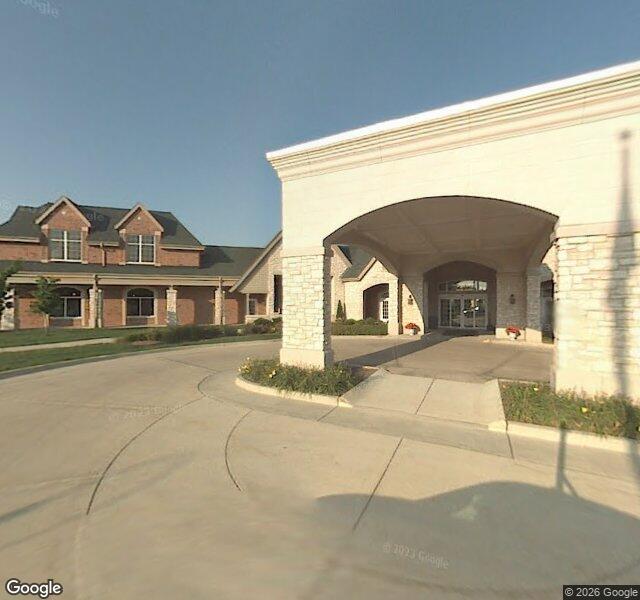
Newcastle Place
12600 N Port Washington Rd, Mequon, WI 53092View map (opens in a new tab)
Overview and key essentials
State license
Active
WI DHS
Google reviews
4.3/ 5
71 reviews
Monthly cost
$7,700/ mo
AI-assisted estimate
Strong public signals
Rated 4.3/5 across 71 public Google reviews. Visit in person to confirm daily care and pricing.
Cost, payment & care details
Updated Nov 28, 2026| Monthly cost | $7,700AI-assisted estimate | Research may contain errors. Request a current quote from the provider. Source: AI-assisted online research, Nov 2026. |
|---|---|---|
| Payment options | Ask directly | Payment details are not confirmed in our records. Ask about private pay, long-term care insurance, veterans benefits, and Medicaid waivers. |
| Size & availability | Confirm directly | We don't publish live openings. Ask about current availability, waitlist length, and move-in timing. |
| Care & support | Assisted livingMemory care certified | Usually offers housing and help with everyday tasks, such as bathing and dressing. What to confirm about care levelsThis describes the licensed category. Ask how care plans adjust if mobility, nursing, or memory needs change over time. Read the family care guide → |
Safety screening & compliance
State licensing depth & federal screening
HHS OIG LEIE: Clear (2026-11-27)OIG database ↗ (opens in a new tab)
WI DHS directory details (CBRF)
Class: CLASS CNA (NONAMBULATORY)Dementia approvedWI DHS rates: $7,700–$7,700/mo
State licensing
State inspection history
6inspections
13deficiencies listed
May 28, 2026EnforcementEnforcement actionPenalty
Enforcement action
View official state report (opens in a new tab)
No deficiencies are reported in this inspection record.
May 28, 2026Complaint8 deficiencies reported8
8 deficiencies reported
View official state report (opens in a new tab)
On 05/26/2026, Surveyor conducted a standard survey and one (1) complaint investigation at Newcastle Place CBRF. Additional information was gathered through 05/28/2026. As a result of the survey, seven (7) deficiencies were identified, 1 complaint was unsubstantiated. Census: 15
83.47(2)(e) Other evacuation drills.N 526
Other evacuation drills. Tornado, flooding, or other emergency or disaster evacuation drills shall be conducted at least semi-annually. This Rule is not met as evidenced by: Based on record review and interview, the provider did not ensure evacuation drills, such as tornadoes, flooding or other emergency or disasters, were completed for 2024 and 2025. Findings include: The provider is licensed to provide care and services to residents within the client groups of irreversible dementia/Alzheimer's. On 05/26/2026 at approximately 11:00 AM, Surveyor requested the other drills that had been completed for 2024 and 2025 from Administrator A and RN B. There was no documentation provided that other drills were conducted. Administrator A and RN B acknowledged they will work on completing the other drills. The provider did not ensure evacuation drills, such as tornadoes, flooding or other emergency or disasters, were completed for 2024 and 2025.
STATE FORM6899
03GO11 STATE FORM 03GO11 STATE FORM 03GO11 STATE FORM 03GO11 STATE FORM 03GO11 STATE FORM 03GO11 STATE FORM 03GO11 STATE FORM 03GO11 STATE FORM 03GO11 STATE FORM 03GO11 STATE FORM 03GO11 STATE FORM 03GO11
83.21(1)-(3) All employee training.N 243
The CBRF shall provide, obtain or otherwise ensure adequate training for all employees in all of the following: Resident rights. Training shall include general rights of residents including rights as specified under s. DHS 83.32(3). Training shall be provided as applicable under ss. 50.09 and 51.61 and chs. 54, 55, and 304, Stats., and ch. DHS 94, depending on the legal status of the resident or service the resident is receiving. Specific training topics shall include house rules, coercion, retaliation, confidentiality, restraints, self-determination, and the CBRF ' s complaint and grievance procedures. Residents ' rights training shall be completed within 90 days after starting employment. Client Group. Training shall be specific to the client group served and shall include the physical, social and mental health needs of the client group. Specific training topics shall include, as applicable: characteristics of the client group served, activities, safety risks, environmental considerations, disease processes, communication skills, nutritional needs, and vocational abilities. Client group specific training shall be completed within 90 days after starting employment. Client Group. In a CBRF serving more than one client group, employees shall receive training for each client group. Recognizing, preventing, managing, and responding to challenging behaviors. Specific training topics shall include, as applicable: elopement, aggressive behaviors, destruction of property, suicide prevention, self-injurious behavior, resident supervision, and changes in condition. Challenging behaviors training shall be completed within 90 days after starting employment. This Rule is not met as evidenced by: Based on record review and interview, the provider did not ensure 2 of 2 employees reviewed, obtained training as required within 90 days after starting employment. Findings include: The provider is licensed to provide care and services to residents within the client groups of irreversible dementia/Alzheimer's. On 05/26/2026 at approximately 11:30 AM, Surveyor requested Caregiver C and Caregiver D's employee record from Administrator A and RN B. Caregiver C was hired on 04/30/2024. Caregiver C's record did not contain evidence of training or evidence of meeting an exemption for training in recognizing, preventing, managing and responding to challenging behaviors; and client groups. Caregiver D was hired on 07/08/2025. Caregiver D's record did not contain evidence of training or evidence of meeting an exemption for training in recognizing, preventing, managing and responding to challenging behaviors. On 05/26/2026 at approximately 4:00 PM, Surveyor interviewed Administrator A. Administrator A acknowledged s/he did not have all employee training for Caregiver C and Caregiver D. Administrator A stated the prior administrator was no longer there and s/he was unable to find the paper records. Administrator A stated s/he believed prior administrator tossed information prior to his/her departure. Administrator A acknowledged s/he would work on ensuring staff records were accurate and work on a plan to correct the deficiency. The provider did not ensure 2 of 2 employees reviewed, obtained training as required within 90 days after starting employment.
83.47(2)(d) Fire drills.N 525
Fire drills. 1. Fire evacuation drills shall be conducted at least quarterly with both employees and residents. Drills shall be limited to the employees scheduled to work at that time. Documentation shall include the date and time of the drill and the CBRF ' s total evacuation time. The CBRF shall record residents having an evacuation time greater than the time allowed under s. HFS 83.35(5) and the type of assistance needed for evacuation. Fire evacuation drills may be announced in advance. 2. At least one fire evacuation drill shall be held annually that simulates the conditions during usual sleeping hours. Fire evacuation drills may be announced in advance. Drills shall be limited to the employees scheduled to work during the residents ' normal sleeping hours. This Rule is not met as evidenced by: Based on record review and interview, the provider did not ensure quarterly fire drills were conducted with both employees and residents including holding one fire evacuation drill annually that simulates the conditions during usual sleeping hours in calendar years 2024 and 2025. Findings include: The provider is licensed to provide care and services to residents within the client groups of irreversible dementia/Alzheimer's. On 05/26/2026 at approximately 11:00 AM, Surveyor requested the fire drills that had been completed for 2024 and 2025 from Administrator A and RN B. Surveyor observed fire drills were completed in 2024 and 2025, but there was no documentation with resident names and evacuation times. Administrator A and RN B confirmed the drills were completed on all shifts with staff, drills were not conducted with residents. The provider did not ensure quarterly fire drills were conducted with both employees and residents.
83.28(4)(a) Resident health screening andN 302
documentation Resident health screening. 1. Within 90 days before or 7 days after admission, a physician, physician assistant, clinical nurse practitioner or a licensed registered nurse shall screen each person admitted to the CBRF for clinically apparent communicable disease, including tuberculosis, and document the results of the screening. 2. Screening for tuberculosis and all immunizations shall be conducted using centers for disease control and prevention standards. 3. The CBRF shall maintain the screening documentation in each resident ' s record. This Rule is not met as evidenced by: Based on record review and interview, the provider did not ensure residents were screened within 90 days before or 7 days after admission by a physician, physician assistant, clinical nurse practitioner or a licensed registered nurse for clinically apparent communicable disease. Findings Include: On 05/26/2026, at approximately 12:00 PM, Surveyor requested Resident 1 and Resident 2's resident record from RN B. Resident 1 was admitted on 09/12/2025, there was no evidence in Resident 1's record s/he was screened for clinically apparent communicable disease. Resident 2 was admitted on 05/15/2026, there was no evidence in Resident 2's record s/he was screened for clinically apparent communicable disease. On 05/26/2026 at approximately 4:00 PM, Surveyor interviewed RN B. RN B stated s/he was unaware Resident 1 and Resident 2 did not have the communicable disease screening. RN B reviewed a blank free of communicable disease screening form with Surveyor. On 05/26/2026 at 4:10 PM, Administrator A stated they will work on a plan to ensure residents are screened for communicable disease. The provider did not ensure residents were screened within 90 days before or 7 days after admission for clinically apparent communicable disease.
83.19 OrientationN 230
Before an employee performs any job duties, the CBRF shall provide each employee with orientation training which shall include all of the following: (1) Job responsibilities; (2) Prevention and reporting of resident abuse, neglect and misappropriation of resident property; (3) Information regarding assessed needs and individual services for each resident for whom the employee is responsible; (4) Emergency and disaster plan and evacuation procedures under s. HFS 83.47(2); (5) CBRF policies and procedures; (6) Recognizing and responding to resident changes of condition. This Rule is not met as evidenced by: Based on record review and interview, the provider did not ensure 2 of 2 employees obtained orientation training which shall include the following: Job Responsibilities; Prevention and reporting of resident abuse, neglect and misappropriation of resident property; information regarding assessed needs and individual services for each resident for whom the employee is responsible; emergency and disaster plan and evacuation procedures under s. HFS 83.47(2); CBRF (Community Based Residential Facility) policies and procedures; and recognizing and responding to resident changes of condition. Findings include: On 05/26/2026 at approximately 11:30 AM, Surveyor requested Caregiver C and Caregiver D's orientation from Administrator A and RN B. Caregiver C was hired on 04/30/2024. Caregiver C's record did not have documentation s/he had completed job responsibilities; prevention and reporting of resident abuse, neglect and misappropriation of resident property; information regarding assessed needs and individual services for each resident for whom the employee is responsible; emergency and disaster plan and evacuation procedures under s. HFS 83.47(2); CBRF policies and procedures; and recognizing and responding to resident changes of condition. Caregiver D was hired on 07/08/2025. Caregiver D's record did not have documentation s/he had completed job responsibilities; information regarding assessed needs and individual services for each resident for whom the employee is responsible; emergency and disaster plan and evacuation procedures under s. HFS 83.47(2); CBRF policies and procedures; and recognizing and responding to resident changes of condition. On 05/26/2026 at approximately 4:00 PM, Surveyor interviewed Administrator A. Administrator A stated the prior administrator was no longer there and s/he was unable to find the paper records. Administrator A stated s/he believed prior administrator tossed information prior to his/her departure. Administrator A acknowledged s/he would work on ensuring staff records were accurate and work on a plan to correct the deficiency. The provider did not ensure employees obtained orientation training before performing any job duties.
83.25 Continuing educationN 277
The administrator and resident care staff shall receive at least 15 hours per calendar year of continuing education beginning with the first full calendar year of employment. Continuing education shall be relevant to the job responsibilities and shall include, at a minimum, all of the following: (1) Standard precautions; (2) Client group related training; (3) Medications; (4) Resident rights; (5) Prevention and reporting of abuse, neglect and misappropriation; (6) Fire safety and emergency procedures, including first aid. This Rule is not met as evidenced by: Based on record review and staff interviews, 1 of 1 employee record reviewed did not have the required 15 hours of continuing education training including Fire Safety/1st Aid and Medications. Findings include: On 05/26/2026 at approximately 11:30 AM, Surveyor requested Caregiver C's employee record from Administrator A and RN B. Caregiver C was hired on 04/30/2024. Caregiver C's record did not contain evidence of continuing education training in Fire Safety/1st Aid and Medications. The Learning History did not reflect the hours Caregiver C had in continuing education. On 05/26/2026 at approximately 4:00 PM, Surveyor interviewed Administrator A. Administrator A stated prior administrator was no longer there and s/he was unable to find the paper records. Administrator A stated s/he believed prior administrator tossed information prior to his/her departure. Administrator A acknowledged s/he would work on ensuring staff records were accurate and work on a plan to correct the deficiency. The provider did not ensure staff received required continuing education and/or including 15 hours.
83.17(2)(a) Employees screened forN 220
communicable disease. The CBRF shall obtain documentation from a physician, physician assistant, clinical nurse practitioner or a licensed registered nurse indicating all employees have been screened for clinically apparent communicable disease including tuberculosis. Screening for tuberculosis shall be conducted using centers for disease control and prevention standards. The screening and documentation shall be completed within 90 days before the start of employment. The CBRF shall keep screening documentation confidential, except the department shall have access to the screening documentation for verification purposes. This Rule is not met as evidenced by: Based on record review and interview, the provider did not ensure 2 of 2 caregivers reviewed were screened for clinically apparent communicable disease, within 90 days before the start of employment. Findings include: On 05/26/2026 at approximately 11:30 AM, Surveyor requested Caregiver C and Caregiver D's employee record from Administrator A and RN B. Caregiver C was hired on 04/30/2024. Caregiver C's record did not have documentation s/he was screened for clinically apparent communicable disease. Caregiver D was hired on 07/08/2025. Caregiver D's record did not have documentation s/he was screened for clinically apparent communicable disease. On 05/26/2026 at approximately 4:00 PM, Surveyor interviewed Administrator A. Administrator A stated the prior administrator was no longer there and s/he was unable to find the paper records. Administrator A stated s/he believed prior administrator tossed information prior to his/her departure. Administrator A acknowledged s/he would work on ensuring staff records were accurate and work on a plan to correct the deficiency. The provider did not ensure that caregivers reviewed were screened for clinically apparent communicable disease, within 90 days before the start of employment.
Aug 27, 2025Complaint1 deficiency reported1
1 deficiency reported
View official state report (opens in a new tab)
On 08/27/2025, Surveyor conducted one (1) complaint investigation at Newcastle Place, Community Based Residential Facility. As a result of the survey 1 complaint is unsubstantiated, no deficiencies identified. Census: 15
STATE FORM6899
B7B611
Jul 30, 2024Complaint1 deficiency reported1
1 deficiency reported
View official state report (opens in a new tab)
On 07/30/2024, Surveyor conducted a complaint investigation at Newcastle Place. No deficiencies were identified. Complaint was unsubstantiated. Census: 14
STATE FORM6899
N5OG11
Jan 24, 2024Complaint3 deficiencies reported3
3 deficiencies reported
View official state report (opens in a new tab)
83.35(1)(a) Pre-admission and ongoingN 381
assessments. Scope. The CBRF shall assess each resident ' s needs, abilities, and physical and mental condition before admitting the person to the CBRF, when there is a change in needs, abilities or condition, and at least annually. The assessment shall include all areas listed under par. (c). This requirement includes individuals receiving respite care in the CBRF. For emergency admissions the CBRF shall conduct the assessment within 5 days after admission. This Rule is not met as evidenced by: Based on observation, record review and resident's needs were re-assessed when there was a change in needs, abilities, or condition. Resident 3's record did not include an assessment for the use of adaptive equipment to aid in transferring in and out of bed. Findings include: On 01/18/2024, at approximately 10:20 AM, Surveyor toured the facility and observed Resident 3's bed which contained a full side bedrail. On 01/18/2024, Surveyor reviewed Resident 3's record. Resident 3 was admitted to the facility, 06/28/2022. Resident 3's current, undated, individual service plan documented: "Cognition: Displays deficits in judgement." "Mobility: Mobile with assistive device wheelchair. Resident may require hands on assistance by staff member(s) due to confusion." "Transferring: Resident requires assistance with transfer and or positioning with verbal prompts/cues." "Emergency and Evacuation: Resident requires supervision and/or verbal cueing to evacuate residence or to request emergency assistance." The record did not contain any assessment for the use of adaptive equipment to aid in transferring in and out of bed. On 01/18/2024, Surveyor requested Resident 3's bedrail assessment from Director E. On 01/19/2024 at 3:50 PM, Director E emailed Surveyor and stated that s/he did not have a bedrail assessment for Resident 3 as s/he had one grab bar that s/he used to position his/herself in bed. According to the U.S. Food & Drug Administration's Hospital Bed Safety Workgroup, "... Strangling, suffocating, bodily injury, or death can occur when patients or parts of their bodies are caught between rails or between the bed rails and mattresses ... Regardless of the purpose for which bed rails are being used or considered, a decision to utilize or remove those in current use should occur within the framework of an individual patient assessment. 2. Because individuals may differ in their sleeping and nighttime habits, creation of a safe bed environment that takes into account patients medical needs, comfort, and freedom of movement should be based on individualized patient assessment by an interdisciplinary team... 3. Use of bed rails should be based on patients assessed medical needs and should be documented clearly ... Bed rail effectiveness should be reviewed on a regular basis...The patient's chart should include a risk-benefit assessment that identifies why other care interventions are not appropriate or not effective if they were previously attempted and determined not to be the treatment of choice for the patient. 4. Bed rail use for treatment of a medical symptom or condition should be accompanied by a care plan (treatment program) designed for that symptom or condition. The plan should present clear directions for further investigation of less restrictive care interventions. The documentation should describe the attempts to use less restrictive care interventions and, if indicated, their failure to meet patients assessed needs. 5. Bed rail use for...
83.41(3)(b) Food safety.N 452
Food safety. Whether food is prepared at the CBRF or off-site, the CBRF shall store, prepare, distribute and serve food under sanitary conditions for the prevention of food borne illnesses, including food prepared off-site, according to all of the following: 1. The CBRF shall refrigerate all foods requiring refrigeration at or below 40°F. Food shall be covered and stored in a sanitary manner. 2. The CBRF shall maintain freezing units at 0°F or below. Frozen foods shall be packaged, labeled and dated. 3. The CBRF shall hold hot foods at 140°F or above and shall hold cold foods at 40°F or below until serving. This Rule is not met as evidenced by: Based on observation and interview, the provider did not store food under sanitary conditions. Surveyor found food items in the refrigerator and prepping stations where food was not properly sealed to avoid contamination. The provider did not implement a system to identify when opened food was to be discarded for the prevention of food borne illnesses. Findings include: On 01/18/2024, at approximately 10:00 AM, Surveyor toured the facility kitchen where meals were prepared and observed the following: Refrigerator: -A large silver serving container holding fresh broccoli florets that was not sealed or dated. -A large silver serving container of what appeared to be coleslaw. Saran wrap had been placed over the container but did not properly cover the food. The food was not dated. -(5) individual size Styrofoam bowls of mixed fruit. Saran wrap had been placed over the bowls but did not properly cover the food. The food was not dated. -(6) individual plastic to-go containers of mixed fruit that were not dated. -(4) hamburger patties that were in a silver serving tray that were not dated. -A serving tray of prepared sandwiches that were not sealed or dated. -A large silver serving container of what appeared to be a sandwich spread. Saran wrap had been placed over the container but did not properly cover the food. The food was not dated. -(3) trays of what appeared to be fruit based individual pie slices. Saran wrap had been placed over the trays but did not properly cover the food. The food was not dated. Freezer: -A 3-gallon container of sherbet where the lid was not securely placed. -A 3-gallon container of chocolate ice cream where the lid was not securely placed. On the containers it was printed by the manufacturer: "Remember, keep the ice cream covered when not dipping and handle the product as little as possible." Kitchenette - Serving Area: -(2) pieces of cheesecake sitting on saucers that were not securely sealed or dated. - The microwave interior was covered in what appeared to be burnt on food Kitchen holding cart: (6) trays of what appeared to be left over bread that were not properly sealed. (2) trays of what appeared to be a green vegetable cut up into chunks that were not properly sealed. "Time/temperature control for safety (TCS) guidelines indicate food prepared in a food establishment and held longer than a 24-hour period shall be marked to indicate the date or day by which the food is to be consumed on the premises, sold, or discarded when held at a temperature of 5°C (41°F) or less for a maximum of 7 days. The day of preparation shall be counted as Day 1. Refrigerated, RTE (ready-to-eat)/TCS food prepared and packaged by a food processing plant shall be clearly marked, at the time the original container is opened in a food establishment and if the food is held for more than 24...
STATE FORM6899
T04212 STATE FORM T04212 STATE FORM T04212 STATE FORM T04212 STATE FORM T04212 STATE FORM T04212 STATE FORM T04212
Show all 6 inspections
Jan 24, 2024EnforcementEnforcement actionPenalty
Enforcement action
View official state report (opens in a new tab)
No deficiencies are reported in this inspection record.
Neighborhood & resident support
Emergency access, hazards & advocacy
Nearest hospital
Columbia St Marys Hospital Ozaukee
0.6 mi · Mequon, WI
Emergency room
FEMA hazard risk
Relatively LowOzaukee County, WI
- Cold Wave
- Hail
- Tornado
Free resident advocacy
Wisconsin Board on Aging & Long Term Care Ombudsman
More neighborhood context (specialists, VA, dialysis, air & affordability)
VA & dialysis access
Milwaukee VA Medical Center
16.0 mi · Milwaukee, WI · VA 3/5 ★
Fresenius Medical Care Midwest Good Hope
6.9 mi · 1/5 ★ · Home dialysis
Specialists within 15 mi
- Geriatricians
- 44
- Neurologists
- 156
- Palliative care
- 27
- PM&R rehab
- 57
Environment & mobility
- EPA Walkability
- 7.5/20 (Below Average)
County demographics
- Age 65+ median income
- $61,230/yr
- Rent-burdened households
- 38%
- Cognitive disability (2023)
- 11.0%
- Mobility disability
- 8.8%
Call & tour checklist
Questions to ask Newcastle Place
Check off questions as you call or tour. Your progress stays private in this browser.
Show 3 more suggested questions
Verification & public records
Official records & sources
Licensing & contact
- License #
- 18618
- Status
- active
Original public sources
Verify licensing, ratings, and inspection reports directly with each official source.
- WI DHS official record (opens in a new tab)WI Dept. of Health Services
- Google Maps (opens in a new tab)Directions, photos & neighborhood
- Google Reviews (opens in a new tab)71 public reviews
EveryPlace is an independent research directory. Information is compiled from public Medicare.gov, state licensing, Google Places, and street-level imagery sources. Some summaries, suggested questions, and pricing notes are AI-generated or AI-assisted and may contain errors or omissions. We do not accept payment for placement. Confirm all details directly with the community and official sources. Research Policy.
Keep exploring
Nearby communities to compare
- 4.3(71)Assisted Living< 1 miNewcastle PlaceMequon, WI
- 4.2(22)Assisted Living2.1 miTerova Senior Living of MequonMequon, WI
- 4.2(22)Assisted Living2.1 miSarah Chudnow CampusMequon, WI
- 4.2(22)Assisted Living2.1 miSarah Chudnow CampusMequon, WI
- 4.2(22)Assisted Living2.1 miTerova Senior Living of MequonMequon, WI
- Cap. 41HUD Senior Housing2.3 miOakwood ApartmentsMequon, WI