Loading EveryPlace content…
Assisted LivingActive license
Moose Lake Village Assisted Li
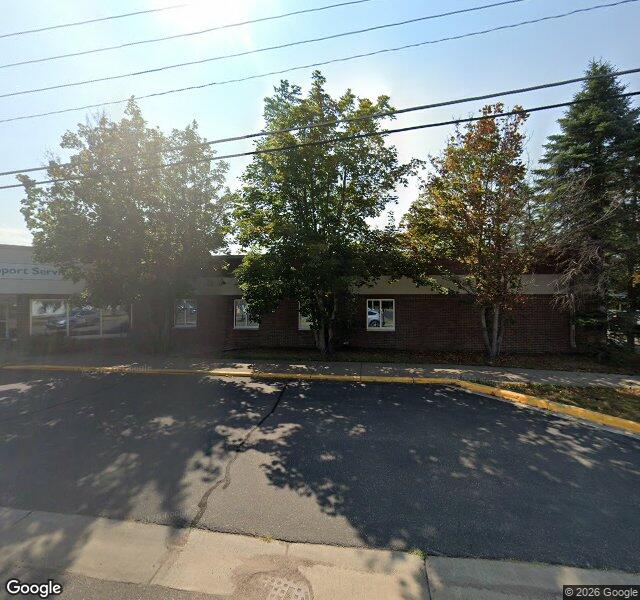
4560 County Highway 61, Moose Lake, MN 55767View map (opens in a new tab)
Overview and key essentials
State license
Active
MN MDH
Google reviews
3.2/ 5
6 reviews
Size & payment
Ask directly
Confirm pricing & payment
Mixed signals — tour closely
Public Google reviews reflect mixed experiences (3.2/5). Compare recent reviews and tour in person.
Cost, payment & care details
Updated Nov 28, 2026| Monthly cost | Not published | Ask for the full monthly cost, including care fees and one-time charges. |
|---|---|---|
| Payment options | Ask directly | Payment details are not confirmed in our records. Ask about private pay, long-term care insurance, veterans benefits, and Medicaid waivers. |
| Size & availability | Confirm directly | We don't publish live openings. Ask about current availability, waitlist length, and move-in timing. |
| Care & support | Assisted living | Usually offers housing and help with everyday tasks, such as bathing and dressing. What to confirm about care levelsThis describes the licensed category. Ask how care plans adjust if mobility, nursing, or memory needs change over time. Read the family care guide → |
State licensing
State inspection history
2inspections
13deficiencies listed
Mar 18, 2025Routine7 deficiencies reported7
7 deficiencies reported
View official state report (opens in a new tab)
144G.41 Subdivision 1 Subd. 1a (a-b) Minimum0480
SS=F requirements; required food services 0 480 STATE FORM
144G.45 Subd. 2 (a) (4) Fire protection and0800
SS=D physical environment (4) keep the physical environment, including walls, floors, ceiling, all furnishings, grounds, systems, and equipment in a continuous state of good repair and operation with regard to the health, safety, comfort, and well-being of the residents in accordance with a maintenance and repair program. This MN Requirement is not met as evidenced by: Based on observation and interview, the licensee STATE FORM
County Highway 614560
Moose Lake, MN55767 Carlton County, 09 License Categories: Operator: Expires on: / / Phone #: 2183519415 ID #: The violations listed in this report include any previously issued orders and deficiencies identified during this inspection. Compliance dates are shown for each item. The following orders were issued during this inspection. 4-300 Equipment Numbers and Capacities 4-302.13B ** Priority 2 ** MN Rule 4626.0710B Provide a readily accessible, irreversible registering temperature indicator for measuring the utensil surface temperature in mechanical hot water warewashing operations. AT TIME OF INSPECTION THE THERMOMETER USED FOR MEASURING DISH MACHINE HOT WATER TEMPERATURE WAS NOT WORKING. REPLACE BATTERIES IN THERMOMETER OR REPLACE THERMOMETER. Comply By: 04/01/25 4-300 Equipment Numbers and Capacities 4-302.14 ** Priority 2 ** MN Rule 4626.0715 Provide an appropriate test kit to accurately measure sanitizing solutions. AT TIME OF INSPECTION THERE WERE NO TEST STRIPS FOR MEASURING QUATERNARY AMMONIA SANITIZER IN RECEIVING KITCHEN. Comply By: 04/01/25 Surface and Equipment Sanitizers Hot Water: = at 173 Degrees Fahrenheit Location: DISH MACHINE Violation Issued: No Process/Item: Upright Cooler Temperature: 36 Degrees Fahrenheit - Location: THERMOMETER Violation Issued: No Process/Item: Upright Cooler Temperature: 39 Degrees Fahrenheit - Location: MILK Violation Issued: No Total Orders In This Report Priority 1 0 KITCHEN IS ONLY USED AS A RECEIVING KITCHEN. ALL FOOD IS PREPARED IN HOSPITAL KITCHEN THAT IS IN ADJACENT BUILDING AND INSPECTED BY ANOTHER UNIT. DISCUSSED EMPLOYEE ILLNESS AND EXCLUSIONS, REQUIRED SANITIZER STRENGTHS, AND AVOIDING BARE HAND CONTACT WITH READY TO EAT FOODS. NOTE: Plans and specifications must be submitted for review and approval prior to new construction, remodeling or alterations. 1027251039 of 03/18/25. Certified Food Protection Manager:JAY PITTMAN Certification Number: FM81832 Expires: 08/20/27 Inspection report reviewed with person in charge and emailed. Signed: THERESA HEAVIRLAND MANAGER FOODBORNE ILLNESS RISK FACTORS AND PUBLIC HEALTH INTERVENTIONS Circle designated compliance status (IN, OUT, N/O, N/A) for each numbered item Mark "X" in appropriate box for COS and/or R IN= in compliance OUT= not in compliance N/O= not observed N/A= not applicable COS=corrected on-site during inspection R= repeat violation Compliance Status COS R Surpervision PIC knowledgeable; duties & oversight Certified food protection manager, duties 1 IN OUT 2 IN OUT N/A Employee Health 3 IN OUT 4 IN OUT Mgmt/Staff;knowledge,responsibilities&reporting Proper use of reporting, restriction & exclusion Procedures for responding to vomiting & diarrheal events 5 IN OUT Good Hygenic Practices N/O Proper eating, tasting, drinking, or tobacco use 6 IN OUT 7 IN OUT N/O No discharge from eyes, nose, & mouth Preventing Contamination by Hands 8 IN OUT N/O Hands clean & properly washed 9 IN No bare hand contact with RTE foods or pre-approved OUT N/A N/O alternate pprocedure properly followed 10 IN OUT Adequate handwashing sinks supplied/accessible Approved Source Food obtained from approved source 11 IN OUT 12 IN OUT N/A N/O Food received at proper temperature 13 IN OUT Food in good condition, safe, & unadulterated 14 Required records available; shellstock tags, IN OUT N/A N/O parasite destruction Protection from Contamination 15 IN OUT N/A N/O Food separated and protected 16 IN OUT N/A Food contact surfaces: cleaned & sanitized Proper...
144G.45 Subd. 2. (a) Fire protection and physical0775
SS=F environment Each assisted living facility must comply with the State Fire Code in Minnesota Rules, chapter 7511, and: This MN Requirement is not met as evidenced by: Based on observation and interview, the licensee STATE FORM
81SQ116899
(a) Except as provided in paragraph (b), food must be prepared and served according to the Minnesota Food Code, Minnesota Rules, chapter 4626. (b) For an assisted living facility with a licensed capacity of ten or fewer residents: (1) notwithstanding Minnesota Rules, part 4626.0033, item A, the facility may share a certified food protection manager (CFPM) with one other facility located within a 60-mile radius and under common management provided the CFPM is present at each facility frequently enough to effectively administer, manage, and supervise each facility's food service operation; (2) notwithstanding Minnesota Rules, part 4626.0545, item A, kick plates that are not removable or cannot be rotated open are allowed unless the facility has been issued repeated correction orders for violations of Minnesota Rules, part 4626.1565 or 4626.1570; (3) notwithstanding Minnesota Rules, part 4626.0685, item A, the facility is not required to provide integral drainboards, utensil racks, or tables large enough to accommodate soiled and clean items that may accumulate during hours of operation provided soiled items do not contaminate clean items, surfaces, or food, and clean equipment and dishes are air dried in a manner that prevents contamination before storage; (4) notwithstanding Minnesota Rules, part 4626.1070, item A, the facility is not required to install a dedicated handwashing sink in its existing kitchen provided it designates one well of a two-compartment sink for use only as a handwashing sink; (5) notwithstanding Minnesota Rules, parts 4626.1325, 4626.1335, and 4626.1360, item A, existing floor, wall, and ceiling finishes are STATE FORM 81SQ11 allowed provided the facility keeps them clean and in good condition; (6) notwithstanding Minnesota Rules, part 4626.1375, shielded or shatter-resistant lightbulbs are not required, but if a light bulb breaks, the facility must discard all exposed food and fully clean all equipment, dishes, and surfaces to remove any glass particles; and (7) notwithstanding Minnesota Rules, part 4626.1390, toilet rooms are not required to be provided with a self-closing door. This MN Requirement is not met as evidenced by: Based on observation, interview, and record review, the licensee failed to ensure food was prepared and served according to the Minnesota Food Code. This practice resulted in a level two violation (a violation that did not harm a resident's health or safety but had the potential to have harmed a resident's health or safety, but was not likely to cause serious injury, impairment, or death), and is issued at a widespread scope (when problems are pervasive or represent a systemic failure that has affected or has the potential to affect a large portion or all of the residents). The findings include: Please refer to the document titled, Food and Beverage Establishment Inspection Report (FBEIR) dated March 18, 2025, for the specific Minnesota Food Code violations. The Inspection Report was provided to the licensee within 24 hours of the inspection. TIME PERIOD FOR CORRECTION: Please refer STATE FORM 81SQ11 to the FBEIR for any compliance dates. 81SQ11 2025, at 9:59 a.m., licensed assisted living director/clinical nurse supervisor (LALD/CNS)-A stated they were familiar with the assisted living requirements. R2 R2's diagnoses included depressive disorder, type two diabetes, hemiplegia (paralysis on one side of the body) and hemiparesis (weakness on one side of the body). R2's Service Plan dated...
144G.42 Subd. 6 (b) Compliance with0630
SS=E requirements for reporting ma (b) The facility must develop and implement an individual abuse prevention plan for each vulnerable adult. The plan shall contain an individualized review or assessment of the person's susceptibility to abuse by another individual, including other vulnerable adults; the person's risk of abusing other vulnerable adults; and statements of the specific measures to be taken to minimize the risk of abuse to that person and other vulnerable adults. For purposes of the abuse prevention plan, abuse includes self-abuse. This MN Requirement is not met as evidenced by: Based on observation, interview, and record review, the licensee failed to ensure an individual abuse prevention plan (IAPP) was developed to include the required content for two of two residents (R2, R3). This practice resulted in a level two violation (a violation that did not harm a resident's health or safety but had the potential to have harmed a resident's health or safety, but was not likely to cause serious injury, impairment, or death), and was issued at a widespread scope (when problems are pervasive or represent a systemic failure that has affected or has potential to affect a large portion or all of the residents). The findings include: During the entrance conference on March 17, STATE FORM On March 18, 2025, at 1:14 p.m., LALD/CNS-A reviewed R2 and R3's IAPP assessments and stated R2 and R3's assessments did not directly address a resident's susceptibility of self-abuse. LALD/CNS-A stated they would look into expanding the licensee's IAPP assessment to address the review of self-abuse. The licensee's Individual Abuse Prevention Plan-AL MN policy dated December 13, 2024, indicated an individual abuse prevention plan would be developed for each assisted living resident to include: -individualized review or assessment of the resident's susceptibility to be abused by another individual, including other vulnerable adults; -the resident's risk of abusing other vulnerable adults -specific measures to minimize the risk of abuse to that person and other vulnerable adults; and -measure to minimize the risk of self-abuse, if applicable. No further information was provided. TIME PERIOD FOR CORRECTION: Seven (7) days
144G.45 Subd. 2 (b-f) Fire protection and0810
SS=F physical environment (b) Each assisted living facility shall develop and maintain fire safety and evacuation plans. The plans shall include but are not limited to: (1) location and number of resident sleeping rooms; (2) staff actions to be taken in the event of a fire STATE FORM
May 11, 2022Routine6 deficiencies reported6
6 deficiencies reported
View official state report (opens in a new tab)
moderate0810
physical environment (b) Each assisted living facility shall develop and maintain fire safety and evacuation plans. The plans shall include but are not limited to: (1) location and number of resident sleeping rooms; (2) employee actions to be taken in the event of a fire or similar emergency; (3) fire protection procedures necessary for residents; and (4) procedures for resident movement, evacuation, or relocation during a fire or similar emergency including the identification of unique or unusual resident needs for movement or evacuation. (c) Employees of assisted living facilities shall receive training on the fire safety and evacuation plans upon hiring and at least twice per year thereafter. (d) Fire safety and evacuation plans shall be readily available at all times within the facility. (e) Residents who are capable of assisting in their own evacuation shall be trained on the proper actions to take in the event of a fire to include movement, evacuation, or relocation. The training shall be made available to residents at least once per year. (f) Evacuation drills are required for employees twice per year per shift with at least one evacuation drill every other month. Evacuation of the residents is not required. Fire alarm system activation is not required to initiate the evacuation drill. This MN Requirement is not met as evidenced by: Based on observation, document review, and interview, the licensee failed to develop and maintain plans for fire safety and evacuation. This had the potential to directly affect all residents and staff. This practice resulted in a level two violation (a violation that did not harm a resident's health or safety but had the potential to have harmed a resident's health or safety) and was issued at a widespread scope (when problems are pervasive or represent a systemic failure that has affected or has the potential to affect a large portion or all of the residents). The findings include: On May 10, 2022, between 10:00 a.m. and 11:00 a.m., survey staff toured the facility with maintenance (M)-B. During the facility tour, it was observed that the number and location of resident sleeping rooms were not legible on the evacuation maps posted in the facility. In an interview with the licensed assisted living director (LALD)-A, at approximately 12:45 p.m., they confirmed that the resident rooms needed to be more clearly identified on the evacuation maps. On May 10, 2022, at approximately 10:00 a.m., the LALD-A provided documents for review. Documents were reviewed by survey staff on May 10, 2022, between 11:00 a.m. and 12:15 p.m. The Fire Plan dated 07-01-2021 had not been developed and maintained for the facility location. 1. The plan references evacuation by stairs, which the facility does not have. 2. The fire alarm annunciator panel location was blank within the plan. 3. The number and location of resident sleeping rooms were not legible on the evacuation map included with the plan. 4. Identification of unique or unusual resident needs for movement or evacuation was not included in the plan. 4. The plan failed to outline the required employee training frequency. The plan states that all employees shall be trained in fire safety and evacuation procedures upon hire and annually. On May 10, 2022, at approximately 12:15 p.m., the LALD-A provided copies of employee training records for review. The records showed that employees were trained on fire safety and evacuation plans upon hire with two...
STATE FORM6899
JEZB11 STATE FORM JEZB11 STATE FORM JEZB11 STATE FORM JEZB11 STATE FORM JEZB11 STATE FORM JEZB11 STATE FORM JEZB11 STATE FORM JEZB11 STATE FORM JEZB11 STATE FORM JEZB11 01640 01640 (a) No later than 14 calendar days after the date that services are first provided, an assisted living facility shall finalize a current written service plan. (b) The service plan and any revisions must include a signature or other authentication by the facility and by the resident documenting agreement on the services to be provided. The service plan must be revised, if needed, based on resident reassessment under subdivision 2. The facility must provide information to the resident about changes to the facility's fee for services and how to contact the Office of Ombudsman for Long-Term Care. (c) The facility must implement and provide all services required by the current service plan. (d) The service plan and the revised service plan must be entered into the resident record, including notice of a change in a resident's fees when applicable. (e) Staff providing services must be informed of the current written service plan. This MN Requirement is not met as evidenced by: Based on observation, interview and record review, the licensee failed to ensure service plans were revised to reflect the current services provided for two of three residents (R3, R5), with records reviewed. This practice resulted in a level two violation (a violation that did not harm a resident's health or safety but had the potential to have harmed a resident's health or safety, but was not likely to cause serious injury, impairment, or death), and was issued at a pattern scope (when more than a limited number of residents are affected, more STATE FORM JEZB11 01640 01640 than a limited number of staff are involved, or the situation has occurred repeatedly; but is not found to be pervasive). The findings include: On May 9, 2022, at 9:00 a.m., during entrance conference, licensed assisted living director (LALD)-A stated the licensee's service plan was used for all residents. R3 R3's diagnoses included diabetes with other circulatory complications, hypertensive heart disease (a condition caused by high blood pressure over a length a time), and congestive heart failure (a condition that develops when the heart doesn't pump enough blood for the body's needs). R3's signed prescriber orders dated April 28, 2022, included Skin Prep (a liquid film that works as a skin barrier to protect the skin) twice a day to right heel blister. On May 10, 2022, at 6:43 a.m., unlicensed personnel (ULP)-D was observed applying Skin Prep to R3's right heel blister. R3's signed service plan dated February 10, 2022, lacked R3's treatment of applying Skin Prep twice a day to R3's right heel blister. R5 R5's diagnoses included cerebral infarction (stroke), hypertension (high blood pressure), anxiety, and disorders of bone density and structure. R5's signed service plan dated May 10, 2022, did STATE FORM JEZB11 01640 01640 not indicate R5 received medication management services. R5's prescriber order dated May 7, 2022, included an order to crush medications unless otherwise indicated, and put in applesauce or pudding twice a day. On May 10, 2022, at 7:55 a.m., ULP-D was observed administering R5's morning medications which had been previously setup in a weekly medication planner (a plastic medication box with designated compartments for days and times). On May 10, 2022, at 1:57 p.m., licensed assisted living...
County Highway 614560
Moose Lake, MN55767 Carlton County, 09 License Categories: Operator: Expires on: / / The violations listed in this report include any previously issued orders and deficiencies identified during this inspection. Compliance dates are shown for each item. The following orders were issued during this inspection. 4-300 Equipment Numbers and Capacities 4-302.14 ** Priority 2 ** MN Rule 4626.0715 Provide an appropriate test kit to accurately measure sanitizing solutions. THERE WERE NO TEST STRIPS FOR MEASURING QUATERNARY AMMONIA SANITIZER IN RECEIVING KITCHEN AT TIME OF INSPECTION. MANAGER PROVIDED TEST STRIPS FROM HOSPITAL KITCHEN. COS Corrected on Site Surface and Equipment Sanitizers Quaternary Ammonia: = 400PPM at Degrees Fahrenheit Location: SPRAY BOTTLE Violation Issued: No Food and Equipment Temperatures Process/Item: Upright Cooler Temperature: 39 Degrees Fahrenheit - Location: MILK Violation Issued: No Process/Item: Walk-In Cooler Temperature: 39 Degrees Fahrenheit - Location: COTTAGE CHEESE Violation Issued: No KITCHEN IS ONLY USED AS A RECEIVING KITCHEN. ALL FOOD IS PREPARED IN HOSPITAL KITCHEN THAT IS IN ADJACENT BUILDING AND INSPECTED BY ANOTHER UNIT. DISCUSSED COOK TEMPS, SANITIZER STRENGTHS, EMPLOYEE ILLNESS AND EXCLUSIONS, AND GLOVE AND UTENSIL USE TO AVOID BARE HAND CONTACT WITH READY TO EAT FOODS WITH MANAGER. MANAGER STATED ALL FOODS ARE COOKED TO THE REQUIRED TEMPERATURE AND ALL EGGS THAT ARE USED ARE PASTEURIZED. DISH MACHINE IN RECEIVING KITCHEN WAS OUT OF ORDER AT TIME OF INSPECTION. MANAGER STATED THAT ALL DISHES WERE BEING DONE IN DISH MACHINE OF HOSPITAL KITCHEN. NOTE: Plans and specifications must be submitted for review and approval prior to new construction, remodeling or alterations. 1027221050 of 05/10/22. Certified Food Protection Manager: MARK CARDINAL FM107261 08/05/24 Certification Number: Expires: Inspection report reviewed with person in charge and emailed. Signed: Signed: MARK CARDINAL MANAGER FOODBORNE ILLNESS RISK FACTORS AND PUBLIC HEALTH INTERVENTIONS Circle designated compliance status (IN, OUT, N/O, N/A) for each numbered item IN= OUT= N/O= COS= R= in compliance not in compliance not observed corrected on-site during inspection repeat violation N/A= not applicable Compliance Status COS R Surpervision 1 IN OUT PIC knowledgeable; duties & oversight N/A Certified food protection manager, duties 2 IN OUT Employee Health 3 IN OUT Mgmt/Staff;knowledge,responsibilities&reporting Proper use of reporting, restriction & exclusion 4 IN OUT Procedures for responding to vomiting & diarrheal events OUT IN 5 Good Hygenic Practices 6 IN OUT N/O Proper eating, tasting, drinking, or tobacco use No discharge from eyes, nose, & mouth 7 IN OUT N/O Preventing Contamination by Hands 8 IN OUT N/O Hands clean & properly washed No bare hand contact with RTE foods or pre-approved alternate pprocedure properly followed 9 IN OUT N/A N/O 10 IN OUT Adequate handwashing sinks supplied/accessible Approved Source IN OUT Food obtained from approved source 11 Food received at proper temperature 12 IN OUT N/A N/O 13 IN OUT Food in good condition, safe, & unadulterated Required records available; shellstock tags, parasite destruction 14 IN OUT N/A N/O Protection from Contamination 15 IN OUT N/A N/O Food separated and protected 16 IN OUT N/A Food contact surfaces: cleaned & sanitized Proper disposition of returned, previously served, reconditioned, & unsafe food 17 IN OUT GOOD RETAIL PRACTICES are preventative measures to control the...
minor0970
The contract must not include a waiver of facility liability for the health and safety or personal property of a resident. The contract must not include any provision that the facility knows or should know to be deceptive, unlawful, or unenforceable under state or federal law, nor include any provision that requires or implies a lesser standard of care or responsibility than is required by law. This MN Requirement is not met as evidenced by: Based on interview and record review, the licensee failed to ensure the assisted living contract did not include language waiving the facility's liability for health, safety, or personal property of a resident. This had the potential to affect all 11 residents. This practice resulted in a level one violation (a violation that has no potential to cause more than a minimal impact on the resident and does not affect health or safety), and was issued at a widespread scope (when problems are pervasive or represent a systemic failure that has affected or has potential to affect a large portion or all of the residents). The findings include: On May 9, 2022, at 9:00 a.m., during the entrance conference, a copy of the licensee's assisted living contract was requested and provided. The assisted living contract included three clauses that indicated the resident would waive the facility's liability for health, safety, or personal property of the resident. Page 9, section 17. of the contract indicated the resident agreed the provider was not responsible for any loss or damage to resident's personal property due to any reason or cause, including theft, other than provider's own negligence. Page 11, section 22. of the contract indicated as an occupant of the community, resident assumed the risk for resident's own safety. The resident would indemnify and hold harmless provider, its employees, officers, managers, owners, and agents from and against any and all claims, actions, damages, and liability and expense in connection with loss of life, personal injury or damage to property, arising from or out of, or caused wholly or in part by, an act or omission of resident or resident's guests or agents. Page 11, section 24. of the contract indicated the provider was not liable to resident for any injury, death or property damage occurring in the apartment or provider's premises unless such injury, death or property damage occurs as the result of provider's own negligent acts or omissions, or those of its employees, officers, managers, owners, or agents. Provider is also not liable for any injury, death, or damage occurring as the result of resident's receipt of health-related, supportive, or other services from third-party providers. Unless caused by one of the aforementioned excepted reasons, resident agrees to hold provider harmless from any and all claims for injuries, property damage or any other loss resulting from an accident or other occurrence in the apartment or on provider's premises. On May 11, 2022, at 9:58 a.m., licensed assisted living director (LALD)-A and registered nurse (RN)-F confirmed the same assisted living contract was used for all residents at the facility. No further information was provided. TIME PERIOD FOR CORRECTION: Twenty-One (21) days 01640 SS=E 144G.70 Subd. 4 (a-e) Service plan, implementation and revisions to 01640
moderate0550
maltreatment All facilities must post in a conspicuous place information about the facilities' grievance procedure, and the name, telephone number, and e-mail contact information for the individuals who are responsible for handling resident grievances. The notice must also have the contact information for the state and applicable regional Office of Ombudsman for Long-Term Care and the Office of Ombudsman for Mental Health and Developmental Disabilities, and must have information for reporting suspected maltreatment to the Minnesota Adult Abuse Reporting Center. This MN Requirement is not met as evidenced by: Based on observation and interview, the licensee failed to post the required information related to the grievance procedure. This had the potential to affect all current residents, staff, and visitors. This practice resulted in a level two violation (a violation that did not harm a resident's health or safety but had the potential to have harmed a resident's health or safety) and was issued at a widespread scope (when problems are pervasive or represent a systemic failure that has affected or has the potential to affect a large portion or all of the residents). The findings include: During a facility tour on May 9, 2022, at 9:50 a.m., the surveyor observed, with licensed assisted living director (LALD)-A, the main entrance and/or common areas lacked the required posting of the grievance procedure to include the name, telephone number, and e-mail contact information for the individuals who are responsible for handling resident grievances. On May 9, 2022, at 9:56 a.m., LALD-A confirmed the licensee's grievance procedure was not posted as required. No further information was provided. TIME PERIOD FOR CORRECTION: Twenty-One (21) days
moderate0510
(a) All assisted living facilities must establish and maintain an infection control program that complies with accepted health care, medical, and nursing standards for infection control. (b)The facility's infection control program must be consistent with current guidelines from the national Centers for Disease Control and Prevention (CDC) for infection prevention and control in long-term care facilities and, as applicable, for infection prevention and control in assisted living facilities. (c) The facility must maintain written evidence of compliance with this subdivision. This MN Requirement is not met as evidenced by: Based on observation, interview, and record review, the licensee failed to ensure infection control standards were followed for one of one unlicensed personnel (ULP-D) during personal cares for R3. This practice resulted in a level two violation (a violation that did not harm a resident's health or safety but had the potential to have harmed a resident's health or safety) and was issued at an isolated scope (when one or a limited number of residents are affected or one or a limited number of staff are involved, or the situation has occurred only occasionally). The findings include: R3's diagnoses included diabetes with other circulatory complications, hypertensive heart disease (a condition caused by high blood pressure over a length a time), and congestive heart failure (a condition that develops when the heart doesn't pump enough blood for the body's needs), retention of urine, and benign prostatic hyperplasia (prostate gland enlargement that can cause urination difficulty). On May 10, 2022, at 6:43 a.m., the surveyor observed ULP-D assist R3 with personal cares. ULP-D donned (put on) gloves, gathered graduate and alcohol prep wipe, released the clamp on the urinary drainage bag tubing, emptied the urine into the graduate, re-clamp the drainage bag tube, wiped the end of the tubing with an alcohol prep wipe, secured drainage tube into the holder, placed the urinary drainage bag directly onto the floor and emptied the graduate of urine into the toilet. ULP-D doffed (removed) gloves, without performing hand hygiene in between glove changes, donned gloves, applied Skin prep to R3's right heel blister. ULP-D doffed and donned gloves, without performing hand hygiene, assisted in applying R3's compression stocking to right leg. ULP-D doffed and donned gloves, without performing hand hygiene, applied sleeve to R3's left stump, and assisted with dressing R3's lower body with pants, and shoes. ULP-C doffed and donned gloves, without performing hand hygiene, handed R3 his dentures. R3 stood up and R3's urinary drainage tubing detached and ULP-D reconnected tubing without disinfecting connection ends with an alcohol prep wipe. ULP-D doffed and donned gloves, without performing hand hygiene, assisted R3 with his shirt and transferred R3 into his electric wheelchair and attached urinary drainage catheter bag into the cover attached to the wheelchair. ULP-D doffed and donned gloves and removed garbage's from R3's room and disposed the garbage in the soiled utility room. ULP-D doffed gloves and washed hands at the kitchen sink. ULP-D confirmed she did not perform hand hygiene in between glove changes, or disinfected urinary drainage tube when the drainage tubing was reconnected. ULP-D confirmed she placed the urinary drainage bag directly on the floor and either should have placed it on a towel or hung it on the frame of the...
Neighborhood & resident support
Emergency access, hazards & advocacy
Nearest hospital
Mercy Hospital
0.0 mi · Moose Lake, MN
Emergency roomTrauma Iv
FEMA hazard risk
Relatively LowCarlton County, MN
- Cold Wave
- Lightning
- Inland Flooding
Free resident advocacy
Minnesota Office of Ombudsman for Long-Term Care
More neighborhood context (specialists, VA, dialysis, air & affordability)
VA & dialysis access
St Cloud VA Medical Center
91.6 mi · St. Cloud, MN
Fresenius Medical Care - Cloquet
24.2 mi · 2/5 ★
Environment & mobility
- EPA Air (2025)
- 83% good days · AQI 33
- EPA Walkability
- 5.9/20 (Below Average)
- USDA Grocery Access
- Limited Grocery Access
- Primary care access
- HRSA Shortage Area
County demographics
- Age 65+ median income
- $51,103/yr
- Rent-burdened households
- 43%
- Cognitive disability (2023)
- 14.6%
- Mobility disability
- 11.4%
Call & tour checklist
Questions to ask Moose Lake Village Assisted Li
Check off questions as you call or tour. Your progress stays private in this browser.
Show 3 more suggested questions
Verification & public records
Official records & sources
Licensing & contact
- License #
- 20329
- Status
- active
- Phone
- (218) 351-9415
- Federal OIG LEIE
- Clear (2026-11-27)
Original public sources
Verify licensing, ratings, and inspection reports directly with each official source.
- MN MDH official record (opens in a new tab)MN Dept. of Health
- Google Maps (opens in a new tab)Directions, photos & neighborhood
- Google Reviews (opens in a new tab)6 public reviews
EveryPlace is an independent research directory. Information is compiled from public Medicare.gov, state licensing, Google Places, and street-level imagery sources. Some summaries, suggested questions, and pricing notes are AI-generated or AI-assisted and may contain errors or omissions. We do not accept payment for placement. Confirm all details directly with the community and official sources. Research Policy.
Keep exploring
Nearby communities to compare
- 3.2(6)Assisted Living< 1 miMoose Lake Village Assisted LiMoose Lake, MN
- 3.2(6)Assisted Living< 1 miMoose Lake Village Assisted LiMoose Lake, MN
- Medicare 4/53.2(6)60 bedsMedicaidNursing Home< 1 miMoose Lake VillageMoose Lake, MN
- Medicare 3/5Home Health< 1 miEssentia Health Moose Lake Home CareMoose Lake, MN
- Hospice Care< 1 miSt Croix HospiceMoose Lake, MN
- Cap. 41HUD Senior Housing< 1 miHillside Manor EastMoose Lake, MN