Loading EveryPlace content…
Assisted LivingActive licenseMemory care certified
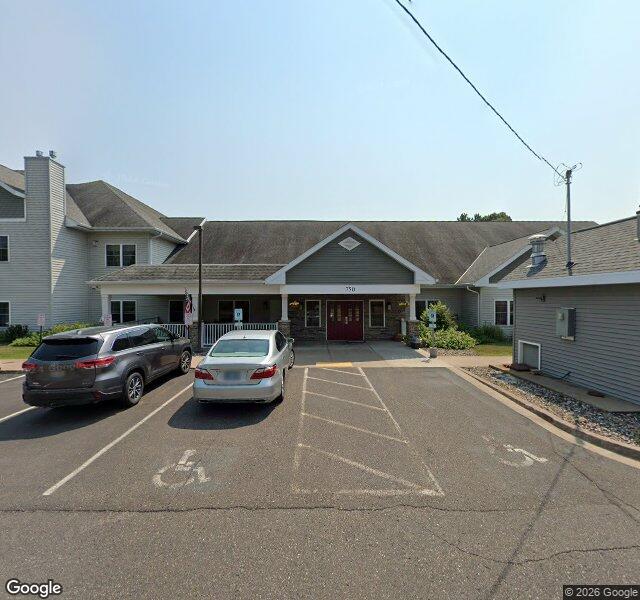
Milestone Senior Living Elm Cbrf
750 Elm St, Woodruff, WI 54568View map (opens in a new tab)
Overview and key essentials
State license
Active
WI DHS
Google reviews
4.5/ 5
6 reviews
Monthly cost
$6,720–$6,930/ mo
AI-assisted estimate
Strong public signals
Rated 4.5/5 across 6 public Google reviews. Visit in person to confirm daily care and pricing.
Cost, payment & care details
Updated Nov 28, 2026| Monthly cost | $6,720–$6,930AI-assisted estimate | Research may contain errors. Request a current quote from the provider. Source: AI-assisted online research, Nov 2026. |
|---|---|---|
| Payment options | Medicaid | Participation is reported in our source data. Confirm eligibility, covered services, and any private-pay costs. Verified Medicaid waiver: Wisconsin Family Care / IRIS Medicaid Waiver (WI Dept. of Health Services (DHS DQA)). |
| Size & availability | Confirm directly | We don't publish live openings. Ask about current availability, waitlist length, and move-in timing. |
| Care & support | Assisted livingMemory care certified | Usually offers housing and help with everyday tasks, such as bathing and dressing. What to confirm about care levelsThis describes the licensed category. Ask how care plans adjust if mobility, nursing, or memory needs change over time. Read the family care guide → |
Safety screening & compliance
State licensing depth & federal screening
HHS OIG LEIE: Clear (2026-11-27)OIG database ↗ (opens in a new tab)
WI DHS directory details (CBRF)
Class: CLASS CNA (NONAMBULATORY)HCBS CompliantDementia approvedWI DHS rates: $6,720–$6,930/mo
State licensing
State inspection history
8inspections
10deficiencies listed
Jul 2, 2026Follow-up1 deficiency reported1
Feb 17, 2026EnforcementEnforcement actionPenalty
Enforcement action
View official state report (opens in a new tab)
No deficiencies are reported in this inspection record.
Feb 17, 2026Complaint4 deficiencies reported4
4 deficiencies reported
View official state report (opens in a new tab)
fire drills had been provided to Surveyor.2025
The provider did not conduct quarterly fire evacuation drills in 2025.
83.47(2)(d) Fire drills.N 525
Fire drills. 1. Fire evacuation drills shall be conducted at least quarterly with both employees and residents. Drills shall be limited to the employees scheduled to work at that time. Documentation shall include the date and time of the drill and the CBRF ' s total evacuation time. The CBRF shall record residents having an evacuation time greater than the time allowed under s. HFS 83.35(5) and the type of assistance needed for evacuation. Fire evacuation drills may be announced in advance. 2. At least one fire evacuation drill shall be held annually that simulates the conditions during usual sleeping hours. Fire evacuation drills may be announced in advance. Drills shall be limited to the employees scheduled to work during the residents ' normal sleeping hours. This Rule is not met as evidenced by: Based on record review and interview, the provider did not conduct quarterly fire evacuation drills during 2025. Findings include: The facility serves up to 20 residents in the client groups of advanced age and irreversible dementia/Alzheimer's disease. On 02/16/2026, Surveyor conducted a review of the provider's fire evacuation drills for 2025. A fire drill was conducted and documented on the following days in 2025: 07/01/2025 & 12/12/2025. On 02/17/2026 at approximately 3:00 PM, Surveyor interviewed Executive Director (ED) A and Regional Director of Operations (RDO) B via telephone. Surveyor asked about fire drills in 2025. ED A verified the completion of a fire drill on 07/01/2025 and 12/12/2025. Both ED A and ADO B confirmed that all records pertaining to
83.21(1)-(3) All employee training.N 243
The CBRF shall provide, obtain or otherwise ensure adequate training for all employees in all of the following: Resident rights. Training shall include general rights of residents including rights as specified under s. DHS 83.32(3). Training shall be provided as applicable under ss. 50.09 and 51.61 and chs. 54, 55, and 304, Stats., and ch. DHS 94, depending on the legal status of the resident or service the resident is receiving. Specific training topics shall include house rules, coercion, retaliation, confidentiality, restraints, self-determination, and the CBRF ' s complaint and grievance procedures. Residents ' rights training shall be completed within 90 days after starting employment. Client Group. Training shall be specific to the client group served and shall include the physical, social and mental health needs of the client group. Specific training topics shall include, as applicable: characteristics of the client group served, activities, safety risks, environmental considerations, disease processes, communication skills, nutritional needs, and vocational abilities. Client group specific training shall be completed within 90 days after starting employment. Client Group. In a CBRF serving more than one client group, employees shall receive training for each client group. Recognizing, preventing, managing, and responding to challenging behaviors. Specific training topics shall include, as applicable: elopement, aggressive behaviors, destruction of property, suicide prevention, self-injurious behavior, resident supervision, and changes in condition. Challenging behaviors training shall be completed within 90 days after starting employment. This Rule is not met as evidenced by: Based on record review and interview, the provider did not ensure 2 of 4 caregivers reviewed obtained all training as required within 90 days after starting employment. Caregiver C did not have training in resident rights within 90 days after starting employment. Caregiver D did not have training in resident rights within 90 days after starting employment. Caregiver D did not have training in recognizing, preventing, managing and responding to challenging behaviors within 90 days after starting employment. Caregiver D did not have training in required client groups within 90 days after starting employment. Findings include: The facility serves up to 20 residents in the client groups of advanced age and irreversible dementia/Alzheimer's disease. On 02/17/2026, Surveyor conducted a review of Caregiver C's and Caregiver D's record to verify compliance will all employee training requirements. Surveyor requested training records from Executive Director (ED) A. Resident Rights The record for Caregiver C, hired on 09/24/2025, did not contain evidence of training or evidence of meeting an exemption for resident rights. On 02/17/2026, at approximately 12:57 PM, ED A confirmed via e-mail that the provider did not have evidence Caregiver C completed or met an exemption for resident rights training. The record for Caregiver D, hired on 11/12/2025, did not contain evidence of training or evidence of meeting an exemption for resident rights. On 02/17/2026, at approximately 1:33 PM, ED A confirmed via e-mail that the provider did not have evidence Caregiver D completed or met an exemption for resident rights training. Recognizing, Preventing, Managing and Responding to Challenging Behaviors The record for Caregiver D, hired on 11/12/2025, did not contain evidence of...
STATE FORM6899
NZ0V12 STATE FORM NZ0V12 STATE FORM NZ0V12 STATE FORM NZ0V12 STATE FORM NZ0V12 STATE FORM NZ0V12
Oct 15, 2025Complaint2 deficiencies reported2
2 deficiencies reported
View official state report (opens in a new tab)
On 10/13/2025, Surveyor conducted a complaint CBRF. Data collection continued through 10/14/2025. Three of 4 complaints were substantiated. One deficiency was identified. Census: 19
STATE FORM6899
NZ0V11 STATE FORM NZ0V11 STATE FORM NZ0V11 STATE FORM NZ0V11 STATE FORM NZ0V11 STATE FORM NZ0V11
83.38(1)(a) Personal care.N 425
As appropriate, the CBRF shall teach residents the necessary skills to achieve and maintain the resident's highest level of functioning. In addition to the assessed needs as determined under s. DHS 83.35(1), the CBRF shall provide or arrange services adequate to meet the needs of the residents in all of the following areas: Personal care. Personal care services shall be designed and provided to allow a resident to increase or maintain independence. This Rule is not met as evidenced by: Based on interview and record review, the provider did not ensure services adequate to meet the needs of Resident 1's personal care. Findings include: The facility is licensed to serve up to 20 residents in the client groups advanced aged and irreversible dementia/Alzheimer's disease. Between 07/23/2025 and 09/21/2025, the Department received four complaints alleging staffing concerns and resident neglect. On 10/13/2025 at approximately 10:00 AM, Surveyor interviewed Family Member (FM) B. Surveyor asked FM B about Resident 1's cares and staffing. FM B stated that Resident 1 had Alzheimer's disease and was admitted two years ago. FM B reported the following: FM B visits Resident 1 several times a week. Resident 1 has been soaked with urine during visits and Resident 1's bedding has been soaked with urine and not changed on many occasions. FM B stated that Resident 1 was supposed to be toileted every two hours and FM B would strip and change Resident 1's bedding. FM B stated, "There is a lot of agency staff and turnover; I don't trust [s/he] (Resident 1) will be taken care of during the night." FM B stated that Resident 1's mattress was saturated with urine and had to be thrown away in September 2025. On 10/13/2025 at approximately 1:30 PM, Surveyor interviewed Caregiver C. Surveyor asked Caregiver C about resident care and staffing. Caregiver C stated, "Agency staff don't follow careplans [sic]." Caregiver C reported that Caregiver C had worked at the facility for three years and worked the AM shift. Caregiver C stated that two caregivers worked per shift. Caregiver C indicated that when Caregiver C worked, Caregiver C would often find Resident 1 soaked with urine and Resident 1's bed soaked with urine all the way down to the mattress. Caregiver C reported, "Everyone is on a 2-hour toilet schedule (and) not all are getting checked." Caregiver C commented that it was difficult completing weekly showers with two staff per shift. Surveyor asked Caregiver C about staff responding to resident call pendants. Caregiver C stated, "Call times are terrible." On 10/13/2025 at approximately 3:45 PM, Surveyor interviewed Caregiver D. Surveyor asked Caregiver D about resident care and staffing. Caregiver D reported that agency staff do not follow care plans. Caregiver D stated that over the past few months, Resident 1 had been found soaked with urine ("dark yellow urine") on several occasions. Caregiver D commented, "Staff are not checking on [Resident 1] because [his/her] bed has been soaked with urine a lot." On 10/14/2025, Surveyor reviewed the provider's call pendant response times for the following dates: 09/10/2025, 09/30/2025 and 10/05/2025. According to the provider's "Detailed Event Report," dated 09/10/2025, the following response times 10 minutes or greater were reported: Call pendant activated: Call pendant response time: Total minutes: 03:58 AM 04:11 AM 12 07:35 AM 07:51 AM 15 07:44 AM 08:02 AM 18 11:32 AM 11:48 AM 16 1:07 PM 1:30 PM 23 1:34 PM 1:46...
Oct 15, 2025EnforcementEnforcement actionPenalty
Enforcement action
View official state report (opens in a new tab)
No deficiencies are reported in this inspection record.
Show all 8 inspections
Dec 4, 2024EnforcementEnforcement actionPenalty
Enforcement action
View official state report (opens in a new tab)
No deficiencies are reported in this inspection record.
Dec 4, 2024Complaint2 deficiencies reported2
2 deficiencies reported
View official state report (opens in a new tab)
On 12/02/2024, Surveyor conducted a complaint CBRF. Data collection continued through 12/04/2024. One of 4 complaints was substantiated. One deficiency was identified. Census: 15
STATE FORM6899
ULKY11 STATE FORM ULKY11 STATE FORM ULKY11 STATE FORM ULKY11
83.38(1)(h) Medication administration.N 432
As appropriate, the CBRF shall teach residents the necessary skills to achieve and maintain the resident ' s highest level of functioning. In addition to the assessed needs as determined under s. DHS 83.35(1), the CBRF shall provide or arrange services adequate to meet the needs of the residents in all of the following areas: Medication administration. The CBRF shall provide medication administration appropriate to the resident ' s needs. This Rule is not met as evidenced by: Based on record review and interview, the provider did not ensure Resident 1 was provided with medication administration appropriate to his/her needs on 08/25/2024. Findings include: The facility is licensed to serve up to 16 residents in the client groups advanced aged, irreversible dementia/Alzheimer's disease, and terminally ill. On 09/05/2024, the Department received a complaint alleging a resident received a nebulizer treatment shortly after medication was administered and the caregiver did not ensure the resident swallowed the medication prior to placing a nebulizer mask over the resident's mouth. On 12/02/2024, Surveyor reviewed Resident 1's record. Resident 1 was admitted on 01/10/2024. On 05/09/2024, Resident 1 started receiving nebulizer treatments four times per day until the treatments were discharged on 08/26/2024. Resident 1's record did not contain an order to self-administer nebulizer treatments. Resident 1 discharged from the facility on 09/26/2024. On 12/02/2024 at approximately 3:00 PM, Surveyor interviewed Director A. Surveyor requested internal investigations involving medication administration. Director A confirmed that in August 2024, Resident 1 received a nebulizer treatment after medication administration and the caregiver did not ensure Resident 1 swallowed his/her medications prior to administering the nebulizer treatment. Director A provided Surveyor with an internal investigation, date of incident: 08/25/2024, involving Caregiver B administering a nebulizer treatment and medication to Resident 1 on 08/25/2024. On 12/02/2024, Surveyor reviewed an internal investigation, date of incident: 08/25/2024. The investigation noted, "Summary of Investigative Findings: Employee attempted to administer a medication that had already been administered by the previous shift. This is because the medication administration was not documented. This may have been due to a lack of understanding on how to change filters to chart medications due on the next shift. The employee who administered the medication by accident felt that the resident had swallowed the medication based on movement of the throat. The staff member ([Caregiver B]) then placed resident's nebulizer mask over the resident's face. Approximately 5 minutes later, the resident spit out the medication in the presence of the [daughter/son]. The resident did not swallow the medication and therefore was not double dosed. "Summary of Investigation Conclusions: Education is needed for staff on verifying that medications have been swallowed prior to placing a nebulizer on residents. Education is needed for staff on changing filters with the EMAR (electronic medication administration record) to show future shift administration. No harm was done to the resident as a result of the incident." On 12/02/2024, at approximately 3:40 PM, Surveyor interviewed Caregiver B. Caregiver B reported that sometime in August 2024 (08/25/2024), Caregiver B gave Resident 1 his/her medication and then administered...
Feb 15, 2024Routine1 deficiency reported1
1 deficiency reported
View official state report (opens in a new tab)
On 02/15/2024, Surveyor conducted a standard licensure survey at Milestone Senior Living Elm CBRF. No deficiencies were identified. Census: 17
STATE FORM6899
EVY711
Neighborhood & resident support
Emergency access, hazards & advocacy
Nearest hospital
Howard Young Med Ctr
0.4 mi · Woodruff, WI · Medicare 4/5 ★
Emergency room
FEMA hazard risk
Relatively LowOneida County, WI
- Cold Wave
- Winter Weather
- Lightning
Free resident advocacy
Wisconsin Board on Aging & Long Term Care Ombudsman
More neighborhood context (specialists, VA, dialysis, air & affordability)
VA & dialysis access
Iron Mountain MI VA Medical Center
78.8 mi · Iron Mountain, MI
DaVita Northern Star Dialysis
4.5 mi · 3/5 ★ · Home dialysis
Specialists within 15 mi
- Geriatricians
- 0
- Neurologists
- 24
- Palliative care
- 1
- PM&R rehab
- 5
Environment & mobility
- EPA Walkability
- 6.5/20 (Below Average)
- Primary care access
- HRSA Shortage Area
County demographics
- Age 65+ median income
- $52,829/yr
- Rent-burdened households
- 43%
- Cognitive disability (2023)
- 13.5%
- Mobility disability
- 11.3%
Call & tour checklist
Questions to ask Milestone Senior Living Elm Cbrf
Check off questions as you call or tour. Your progress stays private in this browser.
Show 3 more suggested questions
Verification & public records
Official records & sources
Licensing & contact
- License #
- 17060
- Status
- active
Original public sources
Verify licensing, ratings, and inspection reports directly with each official source.
- WI DHS official record (opens in a new tab)WI Dept. of Health Services
- Google Maps (opens in a new tab)Directions, photos & neighborhood
- Google Reviews (opens in a new tab)6 public reviews
EveryPlace is an independent research directory. Information is compiled from public Medicare.gov, state licensing, Google Places, and street-level imagery sources. Some summaries, suggested questions, and pricing notes are AI-generated or AI-assisted and may contain errors or omissions. We do not accept payment for placement. Confirm all details directly with the community and official sources. Research Policy.
Keep exploring
Nearby communities to compare
- 4.5(6)MedicaidAssisted Living< 1 miMilestone Senior Living ElmWoodruff, WI
- Cap. 22HUD Senior Housing< 1 miWoodland Lake EstatesWoodruff, WI
- Cap. 20HUD Senior Housing< 1 miWood Court ApartmentsWoodruff, WI
- Cap. 20HUD Senior Housing< 1 miMary John Vanderloop VillaMinocqua, WI
- 5.0(1)MedicaidAssisted Living< 1 miCountry Terrace Minocqua IMinocqua, WI
- 5.0(1)MedicaidAssisted Living< 1 miCountry Terrace Minocqua IIMinocqua, WI