Loading EveryPlace content…
Assisted LivingActive licenseMemory care certified
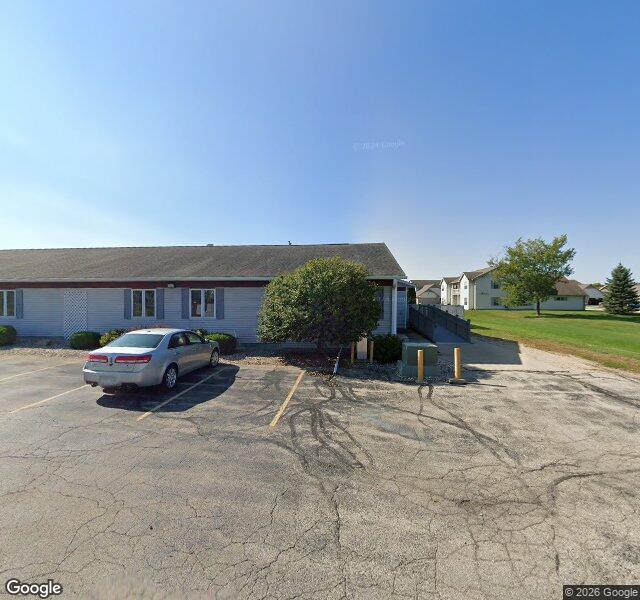
Larson House South
550 River Rd, Columbus, WI 53925View map (opens in a new tab)
Overview and key essentials
State license
Active
WI DHS
Google reviews
4.9/ 5
12 reviews
Monthly cost
$4,500–$7,500/ mo
AI-assisted estimate
Strong public signals
Rated 4.9/5 across 12 public Google reviews. Visit in person to confirm daily care and pricing.
Cost, payment & care details
Updated Nov 28, 2026| Monthly cost | $4,500–$7,500AI-assisted estimate | Research may contain errors. Request a current quote from the provider. Source: AI-assisted online research, Nov 2026. |
|---|---|---|
| Payment options | Medicaid | Participation is reported in our source data. Confirm eligibility, covered services, and any private-pay costs. Verified Medicaid waiver: Wisconsin Family Care / IRIS Medicaid Waiver (WI Dept. of Health Services (DHS DQA)). |
| Size & availability | Confirm directly | We don't publish live openings. Ask about current availability, waitlist length, and move-in timing. |
| Care & support | Assisted livingMemory care certified | Usually offers housing and help with everyday tasks, such as bathing and dressing. What to confirm about care levelsThis describes the licensed category. Ask how care plans adjust if mobility, nursing, or memory needs change over time. Read the family care guide → |
Safety screening & compliance
State licensing depth & federal screening
HHS OIG LEIE: Clear (2026-11-27)OIG database ↗ (opens in a new tab)
WI DHS directory details (CBRF)
Class: CLASS CNA (NONAMBULATORY)Public Funding (Family Care / IRIS)HCBS CompliantDementia approvedWI DHS rates: $4,500–$7,500/mo
State licensing
State inspection history
6inspections
12deficiencies listed
Jul 21, 2026Complaint8 deficiencies reported8
8 deficiencies reported
View official state report (opens in a new tab)
On 07/21/2026, Surveyor conducted a complaint investigation and standard survey at Larson House South, a CBRF in Columbus. Seven deficiencies were identified. The complaint was substantiated. Census: 23
83.47(2)(d) Fire drills.N 525
Fire drills. 1. Fire evacuation drills shall be conducted at least quarterly with both employees and residents. Drills shall be limited to the employees scheduled to work at that time. Documentation shall include the date and time of the drill and the CBRF ' s total evacuation time. The CBRF shall record residents having an evacuation time greater than the time allowed under s. HFS 83.35(5) and the type of assistance needed for evacuation. Fire evacuation drills may be announced in advance. 2. At least one fire evacuation drill shall be held annually that simulates the conditions during usual sleeping hours. Fire evacuation drills may be announced in advance. Drills shall be limited to the employees scheduled to work during the residents ' normal sleeping hours. This Rule is not met as evidenced by: Based on record review and interview, the provider did not ensure at least 1 fire drill that simulated conditions during usual sleeping hours was conducted annually. The provider did not conduct a fire drill that simulated sleeping hours from 01/01/2025 to 07/21/2026. Findings include: On 07/21/2026 at 8:45 a.m., Surveyor reviewed the provider's environmental documentation, dated 01/01/2025 to 07/21/2026, provided by RN B. Documentation included the following fire drills: - 01/15/2025 11:30 a.m. - 02/04/2026 1:15 p.m. - 06/02/2026 10:30 a.m. On 07/21/2026 at 1:45 p.m., Surveyor interviewed Administrator A and shared that the environmental binder included only 3 fire drills, none of which simulated nighttime hours, from 01/01/2025 to 06/02/2026. Administrator A stated s/he was certain additional fire drills were completed. Administrator A checked his/her "virtual state binder," which is reportedly electronic records, and was unable to locate additional fire drills. On 07/21/2026 at 5:49 p.m., Surveyor received an email from Administrator A that stated s/he had located additional fire drills and provided documentation of fire drills completed on the following dates and times: - 04/16/2025 11:15 a.m. - 08/25/2025 2:40 p.m. - 12/30/2025 10:45 a.m. From 01/01/2025 to 07/21/2026, the provider had not completed a fire drill that simulated sleeping hours.
83.38(1)(h) Medication administration.N 432
As appropriate, the CBRF shall teach residents the necessary skills to achieve and maintain the resident ' s highest level of functioning. In addition to the assessed needs as determined under s. DHS 83.35(1), the CBRF shall provide or arrange services adequate to meet the needs of the residents in all of the following areas: Medication administration. The CBRF shall provide medication administration appropriate to the resident ' s needs. This Rule is not met as evidenced by: Based on observation, interview and record review, the provider did not ensure medication administration services were provided to meet the needs of 3 of 5 residents reviewed. Resident 1 did not receive his/her bisacdoyl suppository on 2 occasions when s/he was constipated. Resident 1 did not receive his/her PRN Morphine when exhibiting pain. Resident 2 did not receive hydrocortisone cream to his/her hemorrhoids. Resident 3 received expired Refresh Liquigel 1 eye drops from 07/13/2026 through 07/20/2026. Findings include: On 07/21/2026, Surveyor conducted a complaint investigation alleging medication administration concerns at the provider's facility. The following concerns with medication administration were identified: Example 1 - Resident 1's Bisacodyl Suppository: On 07/21/2026 at 10:40 a.m., Surveyor reviewed Resident 1's record. Resident 1 resided at the provider's facility from 06/30/2025 to 01/03/2026. Resident 1's diagnoses included dementia. Resident 1's progress notes documented the following: - 12/12/2025 12:45 a.m. Staff reordered resident's suppository because s/he was impacted a great amount. Staff was having a hard time helping resident, so staff called coworker over. Staff assisted resident to his/her side to try to help pass bowel movement but was only able to get out a small amount. Still very much impacted. Wanted to administer suppository but needed to reorder it. Gave prune juice. - 12/12/2025 5:45 a.m. Resident screaming in pain because of extra large bowel movement. It took multiple caregivers to help relieve the pain and pass the bowel movement. Resident 1's hospice record, obtained by surveyor, included a 12/26/2026 7:18 a.m. note that stated a caregiver reported Resident 1 had not had a substantial bowel movement in several days. The caregiver had reported Resident 1 was on the toilet calling out in pain due to constipation. Resident 1 was given PRN milk of magnesia and miralax earlier in the morning without results. Resident 1 had an order for bisacodyl suppositories but there was not a nurse at the provider's facility to administer a suppository, and caregiver was unsure if s/he could administer a suppository. Resident 1's MAR, dated 12/01/2026 to 12/31/2026, did not document any administrations of his/her bisacodyl suppository. On 07/21/2026 at 12:18 p.m., Surveyor interviewed Administrator A and RN B regarding Resident 1 receiving suppositories. Administrator A stated bisacdoyl suppositories were reordered on 12/12/2025. Administrator A stated the prior delivery of bisacodyl suppositories was 07/26/2025 and s/he was unable to confirm if that supply was depleted or why bisacodyl suppositories were unavailable for administration on 12/12/2025. Administrator A stated the caregiver working on 12/26/2026 was delegated to administer suppositories and would have been able to do so. Example 2 - Resident 1's Pain Management: Resident 1's hospice record, obtained by surveyor, documented the following concerns with Resident 1's pain...
83.38(1)(a) Personal care.N 425
As appropriate, the CBRF shall teach residents the necessary skills to achieve and maintain the resident's highest level of functioning. In addition to the assessed needs as determined under s. DHS 83.35(1), the CBRF shall provide or arrange services adequate to meet the needs of the residents in all of the following areas: Personal care. Personal care services shall be designed and provided to allow a resident to increase or maintain independence. This Rule is not met as evidenced by: Based on observation and interview, the provider did not ensure personal care services provided by staff were adequate to meet resident needs. Resident 2 did not receive catheter cares appropriate to his/her needs. Findings include: On 07/21/2026 at 8:00 a.m., Surveyor observed Resident 2 in his/her bed with the head of the bed raised. Surveyor observed Resident 2's catheter bag attached to a bedrail at the head of the bed, resulting in the catheter bag being higher than the tubing. Surveyor observed a sign above Resident 2's bed instructing caregivers where to clip Resident 2's catheter bag to ensure proper drainage. On 07/21/2026 at 10:30 a.m., Surveyor reviewed Resident 2's record. Resident 2 was admitted to the provider's facility on 11/15/2021. Resident 2's individual service plan (ISP), dated 11/21/2025, documented that caregivers were to assist Resident 2 with personal cares, including transfers, dressing, incontinence cares and positioning. On 07/21/2026 at 1:30 p.m., Surveyor observed Caregiver C escort Resident 2 to activities in his/her wheelchair. Surveyor observed Resident 2's catheter bag exposed with the tubing dragging on the ground. On 07/21/2026 at 1:36 p.m., Surveyor observed Resident 2 playing Bingo in the common area with his/her catheter bag exposed and tubing resting on the ground. On 07/21/2026 at approximately 2:00 p.m., Surveyor reviewed catheter care concerns with Administrator A and RN B. Administrator A stated s/he would order a bag to hold Resident 2's catheter bag and ensure the bag was off the ground. RN B stated s/he would complete education with caregivers.
83.41(3)(b) Food safety.N 452
Food safety. Whether food is prepared at the CBRF or off-site, the CBRF shall store, prepare, distribute and serve food under sanitary conditions for the prevention of food borne illnesses, including food prepared off-site, according to all of the following: 1. The CBRF shall refrigerate all foods requiring refrigeration at or below 40°F. Food shall be covered and stored in a sanitary manner. 2. The CBRF shall maintain freezing units at 0°F or below. Frozen foods shall be packaged, labeled and dated. 3. The CBRF shall hold hot foods at 140°F or above and shall hold cold foods at 40°F or below until serving. This Rule is not met as evidenced by: Based on observation and interview, the provider did not ensure food was stored and served in sanitary conditions. The provider's ovens were observed with burnt food on the interior surface, a freezer had frozen liquid on the bottom, pudding was stored without a date and food that was stored on the ground. Findings include: On 07/21/2026 at 9:00 a.m., Surveyor toured the provider's memory care unit of the facility. Surveyor observed a kitchen that was used for warming and serving food that was prepared at the affiliated facility next door. Surveyor observed the interior surface of the oven, used to warm food prior to serving, was covered in burnt food, black and white in color. On 07/21/2026 at 9:05 a.m., Surveyor toured the provider's food storage area. Surveyor observed an open box of individually bagged coffee grounds stored on the ground. On 07/21/2026 at 12:58 p.m., Surveyor toured the provider's kitchen in the assisted living unit of the facility. Surveyor observed the freezer's interior surface was covered in frozen liquid that was gray, brown and clear. Surveyor observed the interior surface of the oven, used to warm food prior to serving, was covered in burnt food, black and white in color. Surveyor also observed to 2 large strawberry yogurt containers that were filled with chocolate pudding and butterscotch pudding. Surveyor asked Caregiver C when the puddings were made. Caregiver C stated s/he was unsure and would throw the puddings away. "Date marking is a way to control the growth of a bacteria called Listeria, which grows under refrigeration and is the third leading cause of death from foodborne illness in the United States." (Source: Wisconsin Food Code Fact Sheet, Date Marking of Ready-to-Eat Time-Temperature Control for Safety Foods, April 2022). On 07/21/2026 at approximately 2:15 p.m., Surveyor interviewed Administrator A and RN B. Surveyor discussed food safety concerns. Administrator A took note of Surveyor's concern and stated s/he would follow up.
STATE FORM6899
YTVQ11 STATE FORM YTVQ11 STATE FORM YTVQ11 STATE FORM YTVQ11 STATE FORM YTVQ11 STATE FORM YTVQ11 STATE FORM YTVQ11 STATE FORM YTVQ11 STATE FORM YTVQ11 STATE FORM YTVQ11 STATE FORM YTVQ11 STATE FORM YTVQ11 STATE FORM YTVQ11 STATE FORM YTVQ11 STATE FORM YTVQ11 STATE FORM YTVQ11 STATE FORM YTVQ11 STATE FORM YTVQ11 STATE FORM YTVQ11 STATE FORM YTVQ11
83.44(1)(c) Clothes dryers enclosed and ventedN 488
Clothes dryers. The CBRF shall enclose any clothes dryer having a rated capacity of more than 37,000 Btu/hour in a one-hour fire resistive rated enclosure. If the clothes dryer requires a vent, the CBRF shall use dryer vent tubing that is of rigid material with a fire rating that exceeds the temperature rating of the dryer. The dryer vent tubing shall be clean and maintained. This Rule is not met as evidenced by: Based on record review and interview, the provider did not ensure 2 of 4 dryers had vent tubing made of rigid material. The dryers located on the memory care unit of the facility had semi-rigid vents. Findings include: On 07/21/2026 at approximately 9:10 a.m., Surveyor observed the laundry room located in the provider's memory care unit. Surveyor observed 2 of 2 dryer vents were vented with semi-rigid material. "Flexible vents can twist, allowing lint to build up and catch on fire if it comes in contact with a sufficient amount of heat. If a fire starts beneath the dryer when the motor overheats, then the drafts from the dryer can pull the fire up into the duct, allowing a house fire to develop." ("Clothes Dryer Fires in Residential Buildings (2008-2010)", Topical Fire Report Series, Volume 13, Issue 7, August 2012, Page 7). On 07/21/2026 at 1:16 p.m., Surveyor interviewed Administrator A and RN B. Surveyor discussed concern that 2 of 4 dryers in the facility were vented with semi-rigid material. Administrator A responded, "Are you serious," and explained s/he thought the provider had recently checked the dryer vents in all their buildings.
83.32(3)(h) Rights of Residents: ReceiveN 352
medication In addition to the rights under s. 50.09, Stats., each resident shall have all of the following rights: Receive medication. Receive all prescribed medications in the dosage and at intervals prescribed by a practitioner. The resident has the right to refuse medication unless the medication is court ordered. This Rule is not met as evidenced by: Based on record review and interview, the provider did not ensure 2 of 5 residents reviewed receiving their medications as prescribed. Resident 1 admitted to the provider's facility on 06/30/2026 with an order for Buprenorphine patch weekly but did not receive the Buprenorphine patch until 07/11/2026. Resident 4 did not receive his/her Latanoprost .005% eye drops on 9 dates in February 2026. Findings include: On 07/21/2026, Surveyor conducted a complaint investigation alleging medication administration concerns at the facility. Surveyor identified the following concerns: Example 1 - Resident 1's Buprenorphine Patch: On 07/21/2026 at 10:40 a.m., Surveyor reviewed Resident 1's record. Resident 1 resided at the provider's facility from 06/30/2025 to 01/03/2026. Resident 1's diagnoses included dementia. Resident 1's admission physician orders, dated 06/30/2026, included Buprenorphine 10 mcg/HR weekly patch - Apply 1 patch weekly. Resident 1's medication administration record (MAR), dated 06/30/2026 to 07/31/2026, indicated Resident 1 received his/her first Buprenorphine 10 mcg/HR patch at the provider's facility on 07/11/2026. Resident 1's progress notes included the following documentation: - 07/10/2026 12:45 p.m. Power of Attorney for Health Care (POAHC) called to check on resident and stated s/he got a pain patch once weekly. Writer advised the medication was not in the facility's system to give. Writer contacted primary care physician who will send order to pharmacy and facility for Buprenorphine 10 mcg. - 07/10/2026 2:00 p.m. Received order for Buprenorphine 10 mcg/HR weekly. On 07/21/2026 at 12:16 p.m., Surveyor interviewed Administrator A regarding the Buprenorphine patch. Administrator A stated the facility was unaware the patch was ordered until Resident 1's POAHC called on 07/10/2026. Administrator A stated the provider was going off Resident 1's MAR, completed by pharmacy, which only listed medications the pharmacy had supplied. Surveyor shared observation that the provider had received Resident 1's admission orders, allowing the provider to identify the discrepancy between the orders and the MAR. Administrator A stated the missing patches should have been caught by the provider while reviewing orders. Administrator A stated s/he was unsure if Resident 1 was admitted wearing a patch. Example 2 - Resident 4's Eye Drops: On 07/21/2026 at 12:55 p.m., Surveyor interviewed Resident 4. Resident 4 expressed concern that a few months back a caregiver had accidentally taken Resident 4's eye drops home on 2 separate occasions. Resident 4 stated the caregiver wouldn't drive back to return the eye drops, so s/he had to go without eye drops for several days. Resident 4 stated s/he resolved the situation by reaching out to his/her doctor and requesting permission to administer the eye drops him/herself. On 07/21/2026 at 1:05 p.m., Surveyor interviewed Caregiver C. Caregiver C stated s/he recalled a time when Resident 4's eye drops were unavailable but couldn't recall the date. On 07/21/2026 at approximately 1:30 p.m., Surveyor interviewed Administrator A and asked if there was a time...
83.12(4)(b) Reporting when law enforcement isN 164
called. A CBRF shall send a written report to the department within 3 working days after any of the following occurs: Any time law enforcement personnel are called to the CBRF as a result of an incident that jeopardizes the health, safety, or welfare of residents or employees. The CBRF ' s report to the department shall provide a description of the circumstances requiring the law enforcement intervention. This reporting requirement does not apply to residents under the jurisdiction of government correctional agencies. This Rule is not met as evidenced by: Based on observation and interview, the provider did not submit a written report to the department within 3 working days when law enforcement personnel were called to the facility as a result of an incident that jeopardized the health, safety, or welfare of residents or employees. The provider did not submit a report to the department when law enforcement was called to the provider's facility due to the behavior of Resident 1's Power of Attorney for Health Care (POAHC). Findings include: On 07/21/2026 at 7:00 a.m., Surveyor reviewed the department's self-report records for the facility. Records did not include a self-report related to law enforcement presence at the facility in 2026. On 07/21/2026 at 10:40 a.m., Surveyor reviewed Resident 1's record. Resident 1 resided at the provider's facility from 06/30/2025 to 01/03/2026. Resident 1's progress notes included the following: - 12/25/2025 5:15 p.m. While assisting Resident 1 to the bathroom, there was a knock on the door by local law enforcement. After Resident 1 was done with the bathroom, Resident 1's POAHC invited local law enforcement into Resident 1's room. - 12/25/20206 8:30 p.m. Administrator A received multiple calls from facility today regarding concerns with Resident 1's POAHC and PRN pain medication. During conversation, Resident 1's POAHC became very verbally aggressive with staff as well ad dusting profanity at staff in front of other residents. Staff were instructed to call law enforcement if behavior continued. On 07/21/2026 at approximately 11:00 a.m., Surveyor asked Administrator A if the 12/25/2026 law enforcement presence at the facility was reported to the department. Administrator A stated s/he would check his/her records. On 07/21/2026 at approximately 2:15 p.m., Surveyor interviewed Administrator A and RN B. Administrator A stated s/he was unable to locate a self-report. RN B provided Surveyor with an email from the provider's regional director, dated 07/21/2026, that stated, "The facility did not complete a self-report regarding the involvement of law enforcement with an intoxicated family member because the incident did not involve suspected abuse, neglect, exploitation, mistreatment, or injury to a resident. Staff contacted law enforcement as a proactive measure to prevent potential escalation and to ensure the safety of a resident, family member, staff and others present."
Jul 21, 2026EnforcementEnforcement actionPenalty
Enforcement action
View official state report (opens in a new tab)
No deficiencies are reported in this inspection record.
Aug 28, 2025Complaint1 deficiency reported1
1 deficiency reported
View official state report (opens in a new tab)
On 08/28/2025, Surveyor conducted a complaint investigation at Larson House South, a CBRF in Columbus. No deficiencies were identified. The complaint was unsubstantiated. Census: 23
STATE FORM6899
R7T911
Jan 14, 2025Follow-upNo deficiencies reportedNone
No deficiencies reported
View official state report (opens in a new tab)
No deficiencies are reported in this inspection record.
Oct 2, 2024Routine3 deficiencies reported3
3 deficiencies reported
View official state report (opens in a new tab)
On 10/01/2024, with information gathered through 10/02/2024, Surveyors conducted a probationary licensing survey at Larson House South. Two deficiencies were identified. Census: 24
83.35(3)(d) Service plans updated annually or onN 389
changes Individual service plan review. Annually or when there is a change in a resident ' s needs, abilities or physical or mental condition, the individual service plan shall be reviewed and revised based on the assessment under sub. (1). All reviews of the individual service plan shall include input from the resident or legal representative, case manager, resident care staff, and other service providers as appropriate. The resident or resident ' s legal representative shall sign the individual service plan, acknowledging their involvement in, understanding of and agreement with the individual service plan. This Rule is not met as evidenced by: Based on observation, interviews, and record review, the individual service plan (ISP) was not updated for 2 of 2 residents reviewed when there was a change in resident needs and abilities. Resident 1's ISP was not updated to include a change in mobility. Resident 2's ISP was not updated to include new and ongoing fall interventions, behavior of placing him/herself on the floor, and the use of bed rails. Findings include: Example 1- Resident 1 On 10/01/2024 at 12:20 PM, Surveyor observed Resident 1 independently ambulating with the use of a walker from the dining room to his/her room. On 10/01/2024 at 12:22 PM, Surveyor interviewed Resident 1 in his/her room. Resident 1 stated s/he had issues with falling and previously used a wheelchair after an injury but was back to walking again. On 10/01/2024 at 5:05 PM, Surveyor interviewed Caregiver C. Caregiver C stated Resident 1 used a walker for ambulation and that s/he would ask for help if needed. Caregiver C stated Resident 1 did not require supervision for mobility but s/he still checked in on Resident 1. Caregiver C stated Resident 1 previously used a wheelchair but asked for help if s/he needed anything. Surveyor reviewed Resident 1's record. The following was documented: Resident 1 admitted to the facility on 05/25/2022 with diagnosis including type 1 diabetes. Surveyor reviewed Resident 1's most recent ISP, dated 06/04/2024, which documented: "Ambulation and Transferring- [Resident 1] uses a standard wheelchair for mobility and transferring. [Resident 1] is able to self-propel independently." Surveyor reviewed Resident 1's progress notes which documented: "07/09/2024- 2:30 PM- SSM Health at Home here to restart services for PT. They will see [Resident 1] twice a week to start with. [Resident 1] is encouraged to walk to meals with four wheeled walker and staff to accompany [him/her]. 07/17/2024- 4:30 PM- SSM Health at Home here to see [Resident 1] for PT. [Resident 1] doing well but they reminded to slow down and make sure [s/he] is using walker for any walking. Will be back next week. 08/05/2024- 1:45 PM- PT final visit with [Resident 1] today. [Resident 1] is back to baseline with ambulation with 4 wheeled walker. SSM home health PT discharged today. No concerns at this time." Example 2- Resident 2 On 10/01/2024 at 10:09 AM, Surveyor toured the memory care unit. Surveyor observed double bed rails on Resident 2's bed. Surveyor reviewed Resident 2's record. The following was documented: Resident 2 admitted to the facility on 04/24/2024 with diagnosis including type 2 diabetes, dementia, legal blindness, and difficulty walking. Surveyor reviewed Resident 2's ISP, dated 05/29/2024, which documented: "Ambulation and Transferring- [Resident 2] ambulates with a wheelchair for long distances and a 4 wheeled walker for short distances. [Resident...
83.43(1) Environment safe, clean, andN 481
comfortable Environment. The CBRF shall provide a living environment that is safe, clean, comfortable, and homelike. All common dining and living areas shall contain furnishings appropriate to the intended use of the room. This Rule is not met as evidenced by: Based on observation and interview, the provider did not ensure the living environment was clean and homelike. Findings include: On 10/01/2024 at 9:55 AM through 12:10 PM, Surveyor toured various parts of the facility and observed the following: - Water damage to the sunroom's ceiling in memory care, evidenced by substantial discoloration and staining. - Resident 3's room had damaged dry wall behind recliner chair, consistent with repetitive motion of the chair scraping the wall as it reclined. - Resident 4's bathroom fan had a thick layer of dust build up. - Both kitchenettes in the facility contained microwaves that had rust-like spots inside the appliances. - Both kitchenettes in the facility contained hood fans over the stoves. Each fan had a thick buildup of dust. On 10/01/2024 at 6:17 PM, Surveyor interviewed Administrator A and Regional Nurse B regarding environmental concerns above. Administrator A and Regional Nurse B said the water damage to the ceiling of the sunroom in memory care had been that way since earlier in the year. Administrator A and Regional Nurse B stated they were not aware the extent of the damage of Resident 3's drywall and discussed repairs and solutions to prevent continued damage. Administrator A stated s/he was not aware of the condition of the microwaves, and that the provider would go purchase new ones right away. Surveyor asked about the dust build up on the hood fans and in Resident 4's bathroom. Administrator A explained there is a newer maintenance employee and that s/he would add to their monthly check list to check and clean all fans.
STATE FORM6899
GU1N11 STATE FORM GU1N11 STATE FORM GU1N11 STATE FORM GU1N11 STATE FORM GU1N11 STATE FORM GU1N11 STATE FORM GU1N11
Show all 6 inspections
Oct 2, 2024EnforcementEnforcement actionPenalty
Enforcement action
View official state report (opens in a new tab)
No deficiencies are reported in this inspection record.
Neighborhood & resident support
Emergency access, hazards & advocacy
Nearest hospital
Columbus Com Hsptl
1.3 mi · Columbus, WI · Medicare 4/5 ★
Emergency room
FEMA hazard risk
Relatively ModerateColumbia County, WI
- Hail
- Cold Wave
- Heat Wave
Free resident advocacy
Wisconsin Board on Aging & Long Term Care Ombudsman
More neighborhood context (specialists, VA, dialysis, air & affordability)
VA & dialysis access
Madison VA Medical Center
27.5 mi · Madison, WI · VA 5/5 ★
Beaver Dam Dialysis
12.0 mi · 4/5 ★
Specialists within 15 mi
- Geriatricians
- 1
- Neurologists
- 2
- Palliative care
- 0
- PM&R rehab
- 0
Environment & mobility
- EPA Walkability
- 6.0/20 (Below Average)
- Primary care access
- HRSA Shortage Area
County demographics
- Age 65+ median income
- $56,166/yr
- Rent-burdened households
- 32%
- Cognitive disability (2023)
- 13.6%
- Mobility disability
- 11.0%
Call & tour checklist
Questions to ask Larson House South
Check off questions as you call or tour. Your progress stays private in this browser.
Show 3 more suggested questions
Verification & public records
Official records & sources
Licensing & contact
- License #
- 19950
- Status
- active
Original public sources
Verify licensing, ratings, and inspection reports directly with each official source.
- WI DHS official record (opens in a new tab)WI Dept. of Health Services
- Google Maps (opens in a new tab)Directions, photos & neighborhood
- Google Reviews (opens in a new tab)12 public reviews
EveryPlace is an independent research directory. Information is compiled from public Medicare.gov, state licensing, Google Places, and street-level imagery sources. Some summaries, suggested questions, and pricing notes are AI-generated or AI-assisted and may contain errors or omissions. We do not accept payment for placement. Confirm all details directly with the community and official sources. Research Policy.
Keep exploring
Nearby communities to compare
- 4.9(12)MedicaidAssisted Living< 1 miLarson HouseColumbus, WI
- 4.7(3)MedicaidAssisted Living< 1 miAt Home Again Columbus Memory CareColumbus, WI
- 4.7(3)MedicaidAssisted Living< 1 miAt Home Again Columbus LLCColumbus, WI
- Medicare 2/54.7(11)50 bedsMedicaidNursing Home1.1 miColumbus Health and RehabColumbus, WI
- 4.6(46)MedicaidAssisted Living4.8 miMeadows of Fall River (the)Fall River, WI
- 4.6(46)MedicaidAssisted Living4.8 miMeadows of Fall River Cbrf (the)Fall River, WI