Loading EveryPlace content…
Assisted LivingActive license
Kubra Residential Living INC
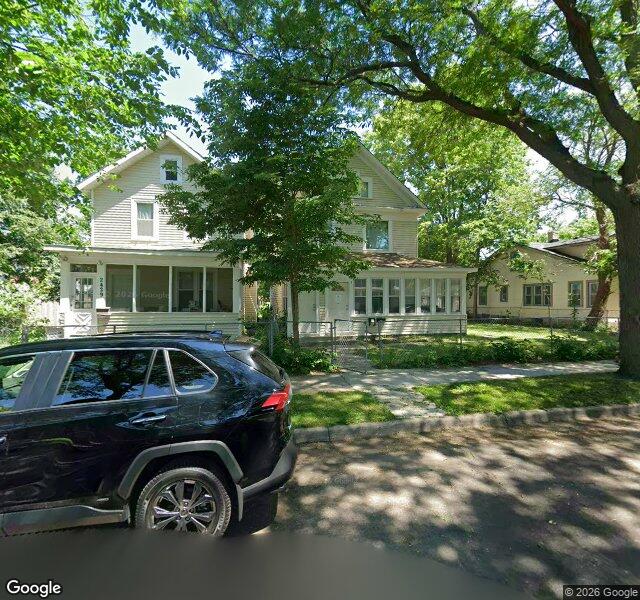
2437 15th Avenue South, Phillips, Minneapolis, MN 55404View map (opens in a new tab)
Overview and key essentials
State license
Active
MN MDH
Google reviews
1.0/ 5
1 reviews
Size & payment
Ask directly
Confirm pricing & payment
Cost, payment & care details
Updated Nov 28, 2026| Monthly cost | Not published | Ask for the full monthly cost, including care fees and one-time charges. |
|---|---|---|
| Payment options | Ask directly | Payment details are not confirmed in our records. Ask about private pay, long-term care insurance, veterans benefits, and Medicaid waivers. |
| Size & availability | Confirm directly | We don't publish live openings. Ask about current availability, waitlist length, and move-in timing. |
| Care & support | Assisted living | Usually offers housing and help with everyday tasks, such as bathing and dressing. What to confirm about care levelsThis describes the licensed category. Ask how care plans adjust if mobility, nursing, or memory needs change over time. Read the family care guide → |
State licensing
State inspection history
3inspections
20deficiencies listed
Jul 20, 2026ComplaintNo deficiencies reportedNone
No deficiencies reported
View official state report (opens in a new tab)
No deficiencies are reported in this inspection record.
Feb 5, 2026Routine8 deficiencies reported8
8 deficiencies reported
View official state report (opens in a new tab)
4R2H126899
{0 480} (a) Except as provided in paragraph (b), food must be prepared and served according to the Minnesota Food Code, Minnesota Rules, chapter 4626. (b) For an assisted living facility with a licensed capacity of ten or fewer residents: (1) notwithstanding Minnesota Rules, part 4626. 0033, item A, the facility may share a certified food protection manager (CFPM) with one other facility located within a 60-mile radius and under common management provided the CFPM is present at each facility frequently enough to effectively administer, manage, and supervise each facility's food service operation; (2) notwithstanding Minnesota Rules, part 4626. 0545, item A, kick plates that are not removable or cannot be rotated open are allowed unless the facility has been issued repeated correction orders for violations of Minnesota Rules, part 4626. 1565 or 4626. 1570; (3) notwithstanding Minnesota Rules, part 4626. 0685, item A, the facility is not required to provide integral drainboards, utensil racks, or tables large enough to accommodate soiled and clean items that may accumulate during hours of operation provided soiled items do not contaminate clean items, surfaces, or food, and clean equipment and dishes are air dried in a manner that prevents contamination before storage; (4) notwithstanding Minnesota Rules, part 4626. 1070, item A, the facility is not required to install a dedicated handwashing sink in its existing kitchen provided it designates one well of a two-compartment sink for use only as a handwashing sink; (5) notwithstanding Minnesota Rules, parts 4626. 1325, 4626. 1335, and 4626. 1360, item A, existing floor, wall, and ceiling finishes are STATE FORM 4R2H12 allowed provided the facility keeps them clean and in good condition; (6) notwithstanding Minnesota Rules, part 4626. 1375, shielded or shatter- resistant lightbulbs are not required, but if a light bulb breaks, the facility must discard all exposed food and fully clean all equipment, dishes, and surfaces to remove any glass particles; and (7) notwithstanding Minnesota Rules, part 4626. 1390, toilet rooms are not required to be provided with a self-closing door. This MN Requirement is not met as evidenced by: {0 680} 144G. 42 Subd. 10 Disaster planning and SS= F emergency preparedness (a) The facility must meet the following requirements: (1) have a written emergency disaster plan that contains a plan for evacuation, addresses elements of sheltering in place, identifies temporary relocation sites, and details staff assignments in the event of a disaster or an emergency; (2) post an emergency disaster plan prominently; (3) provide building emergency exit diagrams to all residents; (4) post emergency exit diagrams on each floor; and (5) have a written policy and procedure regarding missing residents. (b) The facility must provide emergency and disaster training to all staff during the initial staff orientation and annually thereafter and must STATE FORM 4R2H12 make emergency and disaster training annually available to all residents. Staff who have not received emergency and disaster training are allowed to work only when trained staff are also working on site. (c) The facility must meet any additional requirements adopted in rule. This MN Requirement is not met as evidenced by: {0 775} 144G. 45 Subd. 2. (a) Fire protection and physical {0 775} SS= E environment Each assisted living facility must comply with the State Fire Code in Minnesota Rules, chapter 7511, and: This MN...
144G. 45 Subd. 2. (a) Fire protection and physical0775
SS= I environment Each assisted living facility must comply with the State Fire Code in Minnesota Rules, chapter 7511, and: This MN Requirement is not met as evidenced by: Based on observation, interview, and record review, the licensee failed to ensure the physical environment of the facility was maintained in compliance with the requirements of Minnesota Statute 144G. This practice resulted in a level three violation (a violation that harmed a resident' s health or safety, or a violation that had the potential to cause more than minimal harm to the resident) and was issued at a widespread scope (when problems are pervasive or represent a systemic failure that has affected or has potential to affect a large portion or all of the residents) . The findings include: Please refer to the document titled, Physical Environment Inspection Report (PEIR) dated February 5, 2026, for the specific violations related the physical environment under Minnesota STATE FORM
144G. 41 Subdivision 1 Subd. 1a (a-b) Minimum0480
SS= F requirements; required food services 0 480 STATE FORM
144G. 45 Subd. 2 (b-f) Fire protection and0810
SS= I physical environment (b) Each assisted living facility shall develop and maintain fire safety and evacuation plans. The plans shall include but are not limited to: (1) location and number of resident sleeping rooms; (2) staff actions to be taken in the event of a fire or similar emergency; (3) fire protection procedures necessary for residents; and STATE FORM
15th Avenue South2437
Minneapolis, MN 55404 Hennepin County Parcel: License Info License: HFID 33123 Risk: License: Expires on: CFPM: Muna Jama CFPM #: 119238; Exp: 9/12/2026 Phone: New Order: 4-300 Equipment Numbers and Capacities 4-302.12B Priority Level: Priority 2 CFP#: 36 MN Rule 4626.0705B Provide a readily accessible food temperature measuring device with a small diameter probe to measure the temperature in thin foods such as meat patties and fish fillets. COMMENT: Provide a thin-type food thermometer for observing food temperatures in the kitchens. Comply By: 2/6/2026 Originally Issued On: 2/2/2026 New Order: 4-300 Equipment Numbers and Capacities 4-302.13B Priority Level: Priority 2 CFP#: 48 MN Rule 4626.0710B Provide a readily accessible, irreversible registering temperature indicator for measuring the utensil surface temperature in mechanical hot water warewashing operations. COMMENT: Provide a means of testing the interior temperature in the dishwashers. Comply By: 2/6/2026 Originally Issued On: 2/2/2026 Food & Beverage General Comment Facility smoothed down the ceilings and installed 2 dishwashers in both kitchens. It was reported most residents cook independently and one resident eats meals provided by staff. Upstairs duplex oven to be removed. Dishwasher model searched and spec sheet lists NSF Residential 184 standard (interior logo does not include it). Discuss running the dishwashers only with the sanitize cycle and providing a means of testing the interior temperature to ensure it reaches above 150 deg F (although a heat/steam dry might skew the temperature, test without these features on). Provide a probe food thermometer, ideally for both kitchens to be used by residents and staff - for frozen meals prepared by residents in the air fryer, ensure that if the label indicates they be cooked to 165 deg F that they are cooked fully for safety. Discussed handwashing, MN 4626.0506 for cook/serve food, pest control, recalls, food cook temperatures, separation of personal items, date marking, food contact surfaces, sanitizing during a power outage. Note: when thawing fish stored in vacuum sealed plastic in the refrigerator, put the product in a container to contain spills and poke/cut the plastic open to allow air in. This is to reduce the risk of botulism. Temperature Observations/Recordings Page: 1 Establishment Info Kubra Home Care Inc Minneapolis County/Group: Hennepin County Food Temperature: Product/Item/Unit: Mayo; Temperature Process: Cold holding Location: Upstairs refrigerator at 36 Degrees F. Comment: Violation Issued?: No Food Temperature: Product/Item/Unit: Noodles (personal item); Temperature Process: Cold holding Location: Main level refrigerator at 40 Degrees F. Comment: Violation Issued?: No Project No: SL33123016-0 Facility Name: Kubra Home Care Facility Address: 2437 15th Avenue S., Minneapolis, MN 55404 TAG IDENTIFICATION: 0775 SCOPE/ SEVERITY: Level 3; Widespread TIME PERIOD OF CORRECTION: Seven (7) days 1. Each assisted living facility must comply with the provisions of the Minnesota State Fire Code (MSFC) in Minnesota Rules chapter 7511. [Minn. Stat. 144G.45 subd. 2] 2. Lighted matches, cigarettes, cigars or other burning objects shall not be discarded in such a manner that could cause ignition of other combustible material. [Minn. Stat. 144G.45 subd. 2; MSFC 310.7] Comments: Upstairs bedroom one had ashes and burned cigarette butts on a table and the floor. There were ashes on the windowsill and the roof outside of...
144G. 42 Subd. 10 Disaster planning and0680
SS= F emergency preparedness (a) The facility must meet the following requirements: (1) have a written emergency disaster plan that contains a plan for evacuation, addresses elements of sheltering in place, identifies temporary relocation sites, and details staff assignments in the event of a disaster or an emergency; (2) post an emergency disaster plan prominently; (3) provide building emergency exit diagrams to all residents; (4) post emergency exit diagrams on each floor; and (5) have a written policy and procedure regarding missing residents. (b) The facility must provide emergency and disaster training to all staff during the initial staff orientation and annually thereafter and must make emergency and disaster training annually available to all residents. Staff who have not received emergency and disaster training are allowed to work only when trained staff are also working on site. (c) The facility must meet any additional requirements adopted in rule. This MN Requirement is not met as evidenced by: Based on interview and record review, the licensee failed to have a written emergency preparedness plan (EPP) with all the required content. This had the potential to affect all residents receiving services under the assisted STATE FORM
144G. 50 Subd. 5 Waivers of liability prohibited0970
SS= C The contract must not include a waiver of facility liability for the health and safety or personal property of a resident. The contract must not include any provision that the facility knows or should know to be deceptive, unlawful, or unenforceable under state or federal law, nor include any provision that requires or implies a lesser standard of care or responsibility than is required by law. This MN Requirement is not met as evidenced by: Based on interview and record review, the licensee failed to ensure the assisted living contract did not include language waiving the licensee' s liability for health, safety, or personal property of a resident. This practice resulted in a level one violation (a violation that will cause only minimal impact on the resident and does not affect health or safety) and was issued at a widespread scope (when problems are pervasive or represent a systemic failure that has affected or has potential to affect STATE FORM
144G. 45 Subd. 2 (a) (1) Fire protection and0780
SS= F physical environment (a) Each assisted living facility must comply with the State Fire Code in Minnesota Rules, chapter 7511, and: (1) for dwellings or sleeping units, as defined in the State Fire Code: (i) provide smoke alarms in each room used for sleeping purposes; (ii) provide smoke alarms outside each separate sleeping area in the immediate vicinity of bedrooms; (iii) provide smoke alarms on each story within a dwelling unit, including basements, but not including crawl spaces and unoccupied attics; (iv) where more than one smoke alarm is required within an individual dwelling unit or sleeping unit, interconnect all smoke alarms so that actuation of one alarm causes all alarms in the individual dwelling unit or sleeping unit to operate; and (v) ensure the power supply for existing smoke alarms complies with the State Fire Code, except that newly introduced smoke alarms in existing buildings may be battery operated; This MN Requirement is not met as evidenced by: STATE FORM
Feb 7, 2024Routine12 deficiencies reported12
12 deficiencies reported
View official state report (opens in a new tab)
ELM7126899
(c) Upon approving an application for an assisted living facility license, the commissioner shall issue a single license for each building that is operated by the licensee as an assisted living facility and is located at a separate address, except as provided under paragraph (d) or (e). (d) Upon approving an application for an assisted living facility license, the commissioner may issue a single license for two or more buildings on a campus that are operated by the same licensee as an assisted living facility. An assisted living facility license for a campus must identify the address and licensed resident capacity of each building located on the campus in which assisted living services are provided. (e) Upon approving an application for an assisted living facility license, the commissioner may: (1) issue a single license for two or more buildings on a campus that are operated by the same licensee as an assisted living facility with dementia care, provided the assisted living facility for dementia care license for a campus identifies the buildings operating as assisted living facilities with dementia care; or (2) issue a separate assisted living facility with dementia care license for a building that is on a campus and that is operating as an assisted living facility with dementia care. This MN Requirement is not met as evidenced by: Based on observation, interview, and record review, the licensee failed to obtain accurate licensure when the licensee applied for two licensures despite having a single building sharing one roof without having an approved two-hour fire barrier. This practice resulted in a level two violation (a STATE FORM ELM712 violation that did not harm a resident's health or safety but had the potential to have harmed a resident's health or safety, but was not likely to cause serious injury, impairment, or death), and was issued at a widespread scope (when problems are pervasive or represent a systemic failure that has affected or has potential to affect a large portion or all of the residents). The findings include: The licensee's health facility identification (HFID) 33123 was located at 2437 15TH AVE S, Minneapolis, MN 55404, the upper level of the building, with 2435 15TH AVE S, Minneapolis, MN 55404 (HFID 33122) occupying the lower level of the building. On April 24, 2024, at 10:30 a.m., survey staff toured the facility with licensed assisted living director (LALD)-B. During the tour, survey staff observed the assisted living licensed facility was located in a building with two connected dwelling units, sharing the same roof, with separate entrances and separate addresses. The assisted living license requires a 2-hour fire barrier wall to separate the licensed assisted living facility from the other unit in the duplex. During an interview on April 24, 2024, at 12:30 p.m. LALD-B stated she did not know anything about a 2-hour fire barrier between the second and third levels of the building. No further information was provided. TIME PERIOD FOR CORRECTION: Seven (7) days STATE FORM ELM712 {0 110} {0 110} 144G.10 Subdivision 1a Assisted living director SS=C license required Each assisted living facility must employ an assisted living director licensed or permitted by the Board of Executives for Long Term Services and Supports. This MN Requirement is not met as evidenced by: No further action required. {0 480} 144G.41 Subd 1 (13) (i) (B) Minimum SS=F requirements (13) offer to provide or make available at least...
indicates fire extinguishers are required to7511
be mounted at least 4 inches off the floor and not higher than 60 inches from the floor to the top of the extinguisher. During interview on February 6, 2024, survey staff explained to LALD-B that the portable fire extinguishers must be provided annual STATE FORM
144G.45 Subd. 2 (a) (2)-(3) Fire protection and0790
SS=F physical environment (2) install and maintain portable fire extinguishers in accordance with the State Fire Code; (3) install portable fire extinguishers having a minimum 2-A:10-B:C rating within Group R-3 occupancies, as defined by the State Fire Code, located so that the travel distance to the nearest fire extinguisher does not exceed 75 feet, and maintained in accordance with the State Fire Code; and This MN Requirement is not met as evidenced by: STATE FORM
144G.45 Subd. 2 (a) (4) Fire protection and0800
SS=F physical environment (4) keep the physical environment, including walls, floors, ceiling, all furnishings, grounds, systems, and equipment in a continuous state of good repair and operation with regard to the health, safety, comfort, and well-being of the residents in accordance with a maintenance and repair program. This MN Requirement is not met as evidenced by: Based on observation and interview, the licensee failed to maintain the physical environment, including walls, floors, ceiling, all furnishings, grounds, systems, and equipment in a continuous state of good repair and operation with regard to the health, safety, comfort, and well-being of the residents. This deficient condition had the potential to affect all staff, residents, and visitors. This practice resulted in a level two violation (a violation that did not harm a resident's health or safety but had the potential to have harmed a STATE FORM It was observed on the upper level that the ceiling in the kitchen/office work area was damaged and sagging in two locations. It appeared that someone had attempted a patch and paint solution, but did not address the issue that caused the ceiling to sag. LALD-B stated she did not know what was causing the ceiling to sag and that the damage was there when they moved in. LALD-B visually verified these deficient findings at the time of discovery. No further information was provided. TIME PERIOD FOR CORRECTION: Seven (7) days.
144G.45 Subd. 2 (b)-(f) Fire protection and0810
SS=F physical environment (b) Each assisted living facility shall develop and maintain fire safety and evacuation plans. The plans shall include but are not limited to: (1) location and number of resident sleeping rooms; (2) employee actions to be taken in the event of a fire or similar emergency; (3) fire protection procedures necessary for residents; and (4) procedures for resident movement, evacuation, or relocation during a fire or similar emergency including the identification of unique or unusual resident needs for movement or evacuation. (c) Employees of assisted living facilities shall receive training on the fire safety and evacuation plans upon hiring and at least twice per year thereafter. STATE FORM On February 6, 2024, licensed assisted living director (LALD)-B provided documents on the fire safety and evacuation plan (FSEP), fire safety and evacuation training, and evacuation drills for the facility. FIRE SAFETY AND EVACUATION PLAN The licensee's FSEP, titled "Fire Safety", dated March, 28, 2022, failed to include the following: The FSEP included standard employee procedures but failed to provide specific employee actions to take in the event of a fire or similar emergency relative to the facility's building layout and environmental risks. The provided FSEP was from a third-party provider and had not been updated to the specific facility. The FSEP did not identify specific fire protection actions for residents. There was no section in the policy that addressed the responsibilities or basic evacuation procedures that residents should follow in case of a fire or similar emergency. The FSEP included standard resident evacuation procedures but failed to provide specific procedures for resident movement and evacuation or relocation during a fire or similar emergency including individualized unique needs of residents. The plan included instructions to evacuate residents but did not include any procedures for assisting residents during evacuation nor did it include instructions for staff to follow in case of relocation. During an interview on February 8, 2024, at 10:00 a.m., LALD-B stated they had not had an opportunity to update the policy to make it site-specific. The policy reviewed was an STATE FORM
144G.41 Subd 1 (13) (i) (B) Minimum0480
SS=F requirements (13) offer to provide or make available at least the following services to residents: (B) food must be prepared and served according to the Minnesota Food Code, Minnesota Rules, chapter 4626; and This MN Requirement is not met as evidenced by: Based on observation, interview and record review, the licensee failed to ensure food was prepared and served according to the Minnesota Food Code. This practice resulted in a level two violation (a violation that did not harm a resident's health or safety but had the potential to have harmed a resident's health or safety) and was issued at a widespread scope (when problems are pervasive or represent a systemic failure that has affected or has the potential to affect a large portion or all the residents). STATE FORM The findings include: Please refer to the included document titled, Food and Beverage Establishment Inspection Report dated February 5, 2024, for the specific Minnesota Food Code deficiencies. TIME PERIOD FOR CORRECTION: Please refer to the FBEIR for any compliance dates.
144G.42 Subd. 10 Disaster planning and0680
SS=F emergency preparedness (a) The facility must meet the following requirements: (1) have a written emergency disaster plan that contains a plan for evacuation, addresses STATE FORM
144G.10 Subdivision 1 License required0100
SS=F (a)(1)Beginning August 1, 2021, no assisted living facility may operate in Minnesota unless it is licensed under this chapter. (2) No facility or building on a campus may provide assisted living services until obtaining the required license under paragraphs (c) to (e). (b)The licensee is legally responsible for the management, control, and operation of the facility, regardless of the existence of a management agreement or subcontract. Nothing in this chapter shall in any way affect the rights and remedies available under other law. STATE FORM
144G.45 Subd. 2 (a) (1) Fire protection and0780
SS=F physical environment (a) Each assisted living facility must comply with the State Fire Code in Minnesota Rules, chapter 7511, and: (1) for dwellings or sleeping units, as defined in the State Fire Code: (i) provide smoke alarms in each room used for sleeping purposes; (ii) provide smoke alarms outside each separate sleeping area in the immediate vicinity of bedrooms; (iii) provide smoke alarms on each story STATE FORM
144G.10 Subdivision 1a Assisted living director0110
SS=C license required 0 110 Each assisted living facility must employ an assisted living director licensed or permitted by the Board of Executives for Long Term Services STATE FORM
144G.50 Subd. 5 Waivers of liability prohibited0970
SS=C The contract must not include a waiver of facility liability for the health and safety or personal property of a resident. The contract must not include any provision that the facility knows or should know to be deceptive, unlawful, or unenforceable under state or federal law, nor include any provision that requires or implies a lesser standard of care or responsibility than is required by law. STATE FORM This MN Requirement is not met as evidenced by: Based on interview and record review, the licensee failed to ensure the assisted living contract did not include language that waived the licensee's liability for the health, safety, or personal property of a resident. This had the potential to affect all residents. This practice resulted in a level one violation (a violation that has no potential to cause more than a minimal impact on the resident and does not affect health or safety) and was issued at a widespread scope (when problems are pervasive or represent a systemic failure that has affected or has potential to affect a large portion or all the residents). The findings include: On February 6, 2024, at 9:20 a.m., licensed assisted living director (LALD)-B provided the licensee's blank assisted living contract and stated the contract was used for all residents who lived at the facility. The licensee's assisted living contract included, under section Indemnification: "[Licensee] shall not be liable for any damage or injury to the resident, or any other person, or to the property, occurring on the premises, or any part thereof, or in common areas thereof, and the resident agrees to hold [licensee] harmless for any claims or damages unless caused solely by negligence of [licensee]." On February 7, 2024, at 2:30 p.m., LALD-B stated the licensee was not aware the contract could not include a waiver of liability. LALD-B STATE FORM
144G.42 Subd. 2 Quality management0580
SS=C The facility shall engage in quality management appropriate to the size of the facility and relevant to the type of services provided. "Quality management activity" means evaluating the quality of care by periodically reviewing resident services, complaints made, and other issues that have occurred and determining whether changes in services, staffing, or other procedures need to be made in order to ensure safe and competent services to residents. Documentation about quality management activity must be available for two years. Information about quality management must be available to the commissioner at the time of the survey, investigation, or renewal. This MN Requirement is not met as evidenced by: Based on interview and record review, the licensee failed to implement and maintain a quality management program (QMP) appropriate to the size of the facility and relevant to the type of services provided. This had the potential to affect all current residents, staff, and visitors. This practice resulted in a level one violation (a violation that has no potential to cause more than STATE FORM
Neighborhood & resident support
Emergency access, hazards & advocacy
Nearest hospital
Childrens Hosp & Clinics Minne
0.4 mi · Minneapolis, MN
Emergency roomTrauma I Pediatric
FEMA hazard risk
Relatively HighHennepin County, MN
- Cold Wave
- Tornado
- Hail
Free resident advocacy
Minnesota Office of Ombudsman for Long-Term Care
More neighborhood context (specialists, VA, dialysis, air & affordability)
VA & dialysis access
Minneapolis VA Medical Center
4.6 mi · Minneapolis, MN · VA 5/5 ★
DaVita Minneapolis Dialysis Unit
0.5 mi · 2/5 ★ · Home dialysis
Specialists within 15 mi
- Geriatricians
- 85
- Neurologists
- 515
- Palliative care
- 87
- PM&R rehab
- 241
Environment & mobility
- EPA Air (2025)
- 58% good days · AQI 45
- EPA Walkability
- 12.2/20 (Above Average)
- USDA Grocery Access
- High Grocery Access
- Primary care access
- HRSA Shortage Area
County demographics
- Age 65+ median income
- $67,362/yr
- Rent-burdened households
- 46%
- Cognitive disability (2023)
- 12.6%
- Mobility disability
- 8.9%
Call & tour checklist
Questions to ask Kubra Residential Living INC
Check off questions as you call or tour. Your progress stays private in this browser.
Show 3 more suggested questions
Verification & public records
Official records & sources
Licensing & contact
- License #
- 33123
- Status
- active
- Phone
- (612) 224-4343
- Federal OIG LEIE
- Clear (2026-11-27)
Original public sources
Verify licensing, ratings, and inspection reports directly with each official source.
- MN MDH official record (opens in a new tab)MN Dept. of Health
- Google Maps (opens in a new tab)Directions, photos & neighborhood
- Google Reviews (opens in a new tab)1 public reviews
EveryPlace is an independent research directory. Information is compiled from public Medicare.gov, state licensing, Google Places, and street-level imagery sources. Some summaries, suggested questions, and pricing notes are AI-generated or AI-assisted and may contain errors or omissions. We do not accept payment for placement. Confirm all details directly with the community and official sources. Research Policy.
Keep exploring
Nearby communities to compare
- Cap. 47HUD Senior Housing< 1 miBii Di Gain Dash Anwebi Elder HousingMinneapolis, MN
- Assisted Living< 1 miComfort Living INCMinneapolis, MN
- 4.3(6)Assisted Living< 1 miA Helping Hand Senior Care SerMinneapolis, MN
- 4.3(6)Assisted Living< 1 miA Helping Hand Senior Care SerMinneapolis, MN
- Assisted Living< 1 miUniversal Care Homes LLCMinneapolis, MN
- Assisted Living< 1 miCure Home Health INCMinneapolis, MN