Loading EveryPlace content…
Assisted LivingActive licenseMemory care certified
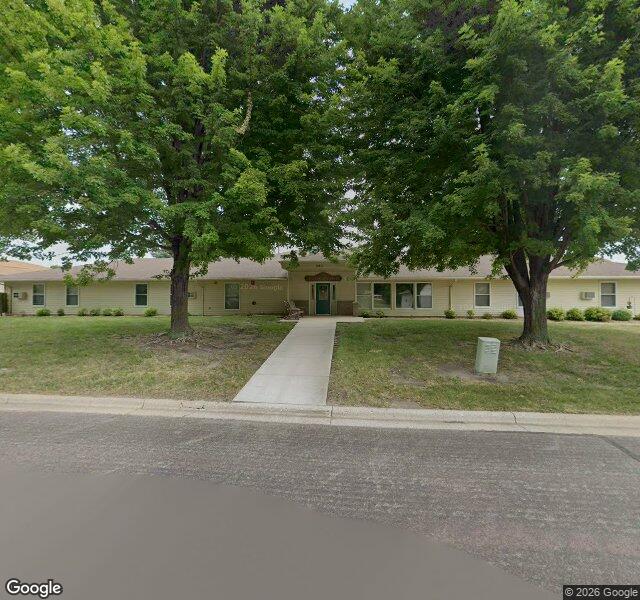
Ingleside
2811 Roland Avenue, Fairmont, MN 56031View map (opens in a new tab)
Overview and key essentials
State license
Active
MN MDH
Google reviews
2.3/ 5
6 reviews
Size & payment
Ask directly
Confirm pricing & payment
Important items to verify
Public Google reviews average 2.3/5 — read critical comments closely and tour unannounced if possible.
Cost, payment & care details
Updated Nov 28, 2026| Monthly cost | Not published | Ask for the full monthly cost, including care fees and one-time charges. |
|---|---|---|
| Payment options | Ask directly | Payment details are not confirmed in our records. Ask about private pay, long-term care insurance, veterans benefits, and Medicaid waivers. |
| Size & availability | Confirm directly | We don't publish live openings. Ask about current availability, waitlist length, and move-in timing. |
| Care & support | Assisted livingMemory care certified | Usually offers housing and help with everyday tasks, such as bathing and dressing. What to confirm about care levelsThis describes the licensed category. Ask how care plans adjust if mobility, nursing, or memory needs change over time. Read the family care guide → |
State licensing
State inspection history
4inspections
15deficiencies listed
Apr 23, 2025Routine6 deficiencies reported6
6 deficiencies reported
View official state report (opens in a new tab)
144G.45 Subd. 2 (a) (2-3) Fire protection and0790
SS=F physical environment (2) install and maintain portable fire extinguishers in accordance with the State Fire Code; (3) install portable fire extinguishers having a minimum 2-A:10-B:C rating within Group R-3 occupancies, as defined by the State Fire Code, located so that the travel distance to the nearest fire extinguisher does not exceed 75 feet, and maintained in accordance with the State Fire Code; and This MN Requirement is not met as evidenced by: Based on observation and interview, the licensee STATE FORM
Roland Avenue2811
Fairmont, MN56031 Martin County, 46 License Categories: Expires on: / / Phone #: 5072389654 ID #: The violations listed in this report include any previously issued orders and deficiencies identified during this inspection. Compliance dates are shown for each item. The following orders were issued during this inspection. 3-700 Contaminated Food: discarded 3-701.11A ** Priority 1 ** MN Rule 4626.0445A Discard or recondition food that is unsafe, adulterated or not honestly presented. ORANGE WITH A MOLD-LIKE SUBSTANCE WAS FOUND IN DRY STORAGE. ORANGE WAS THROWN AWAY DURING INSPECTION. Corrected on Site 4-500 Equipment Maintenance and Operation 4-501.114C1 ** Priority 1 ** MN Rule 4626.0805C1 Provide and maintain an approved chlorine chemical sanitizer solution that has a minimum concentration of 50 ppm and a minimum temperature of 75 degrees F (24 degrees C) for water with a pH of 8 or less or a minimum temperature of 100 degrees F (38 degrees C) for water with a pH of 8.1 to 10. CHLORINE IN DISHWASHER IN MAIN KITCHEN TESTED AT 10 PPM. SHOULD TEST 50-100 PPM. PIC CALLED SERVICE COMPANY DURING INSPECTION AND WILL USE MEMORY CARE DISHWASHER TO ALL WASH DISHES UNTIL IT IS FIXED. Comply By: 04/22/25 4-300 Equipment Numbers and Capacities 4-302.14 ** Priority 2 ** MN Rule 4626.0033D Post the certified food protection manager certificate. A COPY OF RACHEL'S CFPM CERTIFICATE WAS POSTED. POST THE ORIGINAL CERTIFICATE. Comply By: 05/09/25 6-500 Physical Facility Maintenance/ Operation and Pest Control 6-501.11 MN Rule 4626.1515 Maintain the physical facilities in good repair. REPAIR THE FLOOR IN THE MAIN KITCHEN BY THE ENTRANCE. Comply By: 07/31/25 Surface and Equipment Sanitizers Chlorine: = 10 at Degrees Fahrenheit Location: Main Kitchen Dishwasher Violation Issued: Yes Chlorine: = 50 at Degrees Fahrenheit Location: Memory Care Dishwasher Violation Issued: No Quaternary Ammonia: = 400 at Degrees Fahrenheit Location: Dispenser Violation Issued: No Quaternary Ammonia: = 200 at Degrees Fahrenheit Location: Sani Bucket Violation Issued: No Food and Equipment Temperatures Process/Item: Cooking Temperature: 175 Degrees Fahrenheit - Location: Mashed Potatoes Violation Issued: No Process/Item: Cooking Temperature: 180 Degrees Fahrenheit - Location: Mashed Potatoes Violation Issued: No Process/Item: Walk-In Cooler Temperature: 39.1 Degrees Fahrenheit - Location: Spinach Pasta Violation Issued: No Total Orders In This Report Priority 1 2 Discussed the need to test dishwashers more frequently than just when the servicer comes to check them. PIC stated they would begin checking them once a day. Discussed cooling procedures. NOTE: Plans and specifications must be submitted for review and approval prior to new construction, remodeling or alterations. number 1034251071 of 04/22/25. Certified Food Protection Manager:Rachel D Ragan Certification Number: FM92953 Expires: 03/07/27 Inspection report reviewed with person in charge and emailed. Signed: cworke@colonycourtmn.com
144G.45 Subd. 2 (b-f) Fire protection and0810
SS=F physical environment (b) Each assisted living facility shall develop and maintain fire safety and evacuation plans. The plans shall include but are not limited to: (1) location and number of resident sleeping rooms; (2) staff actions to be taken in the event of a fire or similar emergency; (3) fire protection procedures necessary for residents; and (4) procedures for resident movement, evacuation, or relocation during a fire or similar emergency including the identification of unique or unusual resident needs for movement or evacuation. (c) Staff of assisted living facilities shall receive training on the fire safety and evacuation plans upon hiring and at least twice per year thereafter. (d) Fire safety and evacuation plans shall be readily available at all times within the facility. (e) Residents who are capable of assisting in their own evacuation shall be trained on the proper actions to take in the event of a fire to include movement, evacuation, or relocation. The STATE FORM The FSEP included standard resident evacuation procedures but lacked specific procedures for resident movement and evacuation or relocation during a fire or similar emergency including individualized unique needs of residents. The plan included instructions to evacuate residents but did not include any procedures for assisting residents during evacuation. During an interview on April 21, 2025, at 2:03 p.m., LALD-A stated that the resident needs were in resident care plans that are stored electronically. LALD-A stated that all staff have access to the care plans on computers or other devices. The FSEP lacked instructions for staff on how to access the care plan information. LALD-A and HD-C stated they understood the areas of the plan that needed to be updated. TIME PERIOD FOR CORRECTION: Twenty-one (21) days. 01060 144G.52 Subd. 9 Emergency relocation SS=F (a) A facility may remove a resident from the facility in an emergency if necessary due to a resident's urgent medical needs or an imminent risk the resident poses to the health or safety of another facility resident or facility staff member. An emergency relocation is not a termination. (b) In the event of an emergency relocation, the facility must provide a written notice that contains, at a minimum: (1) the reason for the relocation; (2) the name and contact information for the location to which the resident has been relocated and any new service provider; (3) contact information for the Office of STATE FORM
KBCC116899
(a) Except as provided in paragraph (b), food must be prepared and served according to the Minnesota Food Code, Minnesota Rules, chapter 4626. (b) For an assisted living facility with a licensed capacity of ten or fewer residents: (1) notwithstanding Minnesota Rules, part 4626.0033, item A, the facility may share a certified food protection manager (CFPM) with one other facility located within a 60-mile radius and under common management provided the CFPM is present at each facility frequently enough to effectively administer, manage, and supervise each facility's food service operation; (2) notwithstanding Minnesota Rules, part 4626.0545, item A, kick plates that are not removable or cannot be rotated open are allowed unless the facility has been issued repeated correction orders for violations of Minnesota Rules, part 4626.1565 or 4626.1570; (3) notwithstanding Minnesota Rules, part 4626.0685, item A, the facility is not required to provide integral drainboards, utensil racks, or tables large enough to accommodate soiled and clean items that may accumulate during hours of operation provided soiled items do not contaminate clean items, surfaces, or food, and clean equipment and dishes are air dried in a manner that prevents contamination before storage; (4) notwithstanding Minnesota Rules, part 4626.1070, item A, the facility is not required to install a dedicated handwashing sink in its existing kitchen provided it designates one well of a two-compartment sink for use only as a handwashing sink; (5) notwithstanding Minnesota Rules, parts 4626.1325, 4626.1335, and 4626.1360, item A, existing floor, wall, and ceiling finishes are STATE FORM KBCC11 allowed provided the facility keeps them clean and in good condition; (6) notwithstanding Minnesota Rules, part 4626.1375, shielded or shatter-resistant lightbulbs are not required, but if a light bulb breaks, the facility must discard all exposed food and fully clean all equipment, dishes, and surfaces to remove any glass particles; and (7) notwithstanding Minnesota Rules, part 4626.1390, toilet rooms are not required to be provided with a self-closing door. This MN Requirement is not met as evidenced by: Based on observation, interview, and record review, the licensee failed to ensure food was prepared and served according to the Minnesota Food Code. This practice resulted in a level two violation (a violation that did not harm a resident's health or safety but had the potential to have harmed a resident's health or safety, but was not likely to cause serious injury, impairment, or death), and is issued at a widespread scope (when problems are pervasive or represent a systemic failure that has affected or has the potential to affect a large portion or all of the residents). The findings include: Please refer to the document titled, Food and Beverage Establishment Inspection Report (FBEIR) dated April 22, 2025, for the specific Minnesota Food Code violations. The Inspection Report was provided to the licensee within 24 hours of the inspection. TIME PERIOD FOR CORRECTION: Please refer STATE FORM KBCC11 to the FBEIR for any compliance dates. KBCC11 KBCC11 failed to maintain the portable fire extinguishers. This deficient condition had the potential to affect all staff, residents, and visitors. This practice resulted in a level two violation (a violation that did not harm a resident's health or safety but had the potential to have harmed a resident's health or safety) and was issued at...
144G.42 Subd. 7 Posting information for0640
SS=F reporting suspected c The facility shall support protection and safety through access to the state's systems for reporting suspected criminal activity and suspected vulnerable adult maltreatment by: (1) posting the 911 emergency number in common areas and near telephones provided by the assisted living facility; (2) posting information and the reporting number for the Minnesota Adult Abuse Reporting Center to report suspected maltreatment of a vulnerable adult under section 626.557; and (3) providing reasonable accommodations with information and notices in plain language. This MN Requirement is not met as evidenced by: Based on observation, interview, and record review, the licensee failed to support protection and safety by not posting information and 911 emergency phone number as required. This had the potential to affect all residents, staff, and visitors. This practice resulted in a level two violation (a violation that did not harm a resident's health or safety but had the potential to have harmed a resident's health or safety, but was not likely to cause serious injury, impairment, or death), and is issued at a widespread scope (when problems are pervasive or represent a systemic failure that has affected or has the potential to affect a large portion or all of the residents). The findings include: STATE FORM The licensee failed to: - post the 911 emergency number in common areas and near telephones provided by the assisted living facility. During the facility tour on April 21, 2025, at 10:30 a.m. the surveyor observed the common areas within the facility and noted there was no posting of the 911 emergency number as required. On April 21, 2025, at 10:45 a.m., housing director (HD)-C stated the 911 emergency number was not posted in common areas or near facility telephones. No further information was provided. TIME PERIOD FOR CORRECTION: Twenty-One (21) days
144G.41 Subdivision 1 Subd. 1a (a-b) Minimum0480
SS=F requirements; required food services 0 480 STATE FORM
Oct 18, 2024Complaint1 deficiency reported1
1 deficiency reported
View official state report (opens in a new tab)
Substantiated, facility and individual responsibility. The alleged perpetrator (AP), an unlicensed personnel (ULP), abused the resident when the AP slapped the resident. The facility neglected the resident when they failed to investigate reports of abuse and did not suspend the AP
severeHL302453100M
The alleged perpetrator (AP), an unlicensed personnel (ULP), abused the resident when the AP slapped the resident. The facility neglected the resident when they failed to investigate reports of abuse and did not suspend the AP. The Minnesota Department of Health determined abuse was substantiated. The AP was responsible for the maltreatment. Video footage identified that the AP slapped the resident. In addition, the Minnesota Department of Health determined neglect was substantiated. The facility was responsible for the maltreatment. Facility policies and procedures were not followed by facility management staff after suspected abuse was reported and no immediate action was taken to protect resident safety. Page 2 of 5 The investigator conducted interviews with facility staff members, including administrative staff, nursing staff, and unlicensed staff. The investigation included review of the resident record, facility documentation, personnel files, staff schedules, a law enforcement report, video footage, and related facility policies and procedures. Also, the investigator observed resident cares. The resident resided in an assisted living memory care unit. The resident’s diagnoses included dementia. The resident’s assessment and service plan indicated the resident required assistance with all activities of daily living and medication administration. The resident also had a history of being verbally and physically aggressive with staff. The resident’s individual abuse prevention plan indicated the resident was not able to provide accurate information. Facility documents indicated unlicensed personnel (ULP) contacted facility management when they witnessed another unlicensed personnel (ULP)/alleged perpetrator (AP) slap a resident after administering the resident’s medications. No immediate action was taken by facility management and the AP remained working the remainder of the evening. The resident’s medication administration record (MAR) identified the AP administered an anti-anxiety medication at 4:44 p.m. for anxiety, restlessness, and agitation. The resident’s medical record included no documentation of the incident and no assessment of the resident. Two days later, management staff interviewed the AP. The AP stated during her evening medication pass she administered the resident’s medications and the resident spit them back at her. The AP reported she used her hand to move the resident’s face to prevent the resident from spitting on her again and walked away from the resident. The AP was provided verbal retraining on interactions with residents. The AP was informed more formal disciplinary action may be taken after the outcome of the...
Oct 18, 2024Complaint1 deficiency reported1
1 deficiency reported
View official state report (opens in a new tab)
Substantiated, facility responsibility. The facility abused the resident when staff restrained the resident with a gait belt in her wheelchair over a two-hour period
severeHL302453002M
The facility abused the resident when staff restrained the resident with a gait belt in her wheelchair over a two-hour period. The Minnesota Department of Health determined abuse was substantiated. The facility was responsible for the maltreatment. Facility staff unreasonably confined the resident when a transfer belt was used to secure the resident to a wheelchair for over two hours. The incident was not thoroughly investigated by management staff and no action was taken to prevent further occurrence. The investigator conducted interviews with facility staff members, including administrative staff, nursing staff, and unlicensed staff. The investigation included review of the resident record, facility documentation, personnel files, staff schedules, video footage, and related facility Page 2 of 4 policies and procedures. Also, the investigator observed resident cares at the time of the onsite visit. The resident resided in an assisted living memory care unit. The resident’s diagnoses included dementia, anxiety, and history of a stroke. The resident’s service plan indicated the resident was independent with transfers, required assistance with walking and wheelchair mobility. The resident’s assessment indicated the resident was cognitively impaired and was at risk for abuse. A facility report indicated the resident fell and was restrained to her wheelchair in the dining room. Facility management documented they were not initially aware of the fall or the use of a restraint, but initiated an internal investigation when they became aware of the incident during a review of video surveillance footage. A facility investigation of the incident identified that the resident fell at 3:47 p.m. and staff assisted the resident off the floor and into her wheelchair. Video footage indicated that at 3:50 p.m., a staff member wrapped a transfer belt around the resident’s waist and wheelchair and fastened the belt on the back of the wheelchair. The internal investigation indicated the resident remained restrained in the wheelchair until after 6:30 p.m., when staff assisted her with evening cares. The investigation included no documentation of interviews with staff who worked at the time of the incident. The resident’s medical record included no documentation of the fall or the use of the restraint and no documentation of assessment or monitoring of the resident following the incident. Video surveillance footage showed the resident sitting in the dining room attempting to remove the transfer belt and unlock the wheelchair brakes; staff present in the area made no attempt...
Oct 13, 2022Routine7 deficiencies reported7
7 deficiencies reported
View official state report (opens in a new tab)
moderate0550
maltreatment All facilities must post in a conspicuous place information about the facilities' grievance procedure, and the name, telephone number, and e-mail contact information for the individuals who are responsible for handling resident grievances. The notice must also have the contact information for the state and applicable regional Office of Ombudsman for Long-Term Care and the Office of Ombudsman for Mental Health and Developmental Disabilities, and must have information for reporting suspected maltreatment to the Minnesota Adult Abuse Reporting Center. This MN Requirement is not met as evidenced by: Based on observation, interview, and record review the licensee failed to post in a conspicuous place, information about the facility's grievance procedure with the required content as well as the required information related to the contact information for the state and applicable regional Office of Ombudsman for Long-Term Care and the Office of Ombudsman for Mental Health and Developmental Disabilities. This had the potential to affect all residents, staff, and visitors. This practice resulted in a level two violation (a violation that did not harm a resident's health or safety but had the potential to have harmed a resident's health or safety, but was not likely to cause serious injury, impairment, or death), and is issued at a widespread scope (when problems are pervasive or represent a systemic failure that has affected or has the potential to affect a large portion or all of the residents). The findings include: The licensee lacked a posting of the grievance procedure to include the name, telephone number, and e-mail contact information for the individuals who are responsible for handling resident grievances. In addition, the notice lacked the contact information for the state and applicable regional Office of Ombudsman for Long-Term Care and the Office of Ombudsman for Mental Health And Developmental Disabilities, and information for reporting suspected maltreatment to the Minnesota Adult Abuse Reporting Center. On October 10, 2022, at approximately 10:00 a.m. the surveyor observed the licensee's grievance procedure posted at the main entrance. However, the posted information lacked the above content as required. On October 10, 2022, at 1:10 p.m. licensed assisted living director (LALD)-A confirmed the content noted above was not posted as required and was not aware it was missing from the posted grievance procedure. The licensee's Complaint/Grievance policy dated October 5, 2021, noted the written notice would include: - the name and contact information of the person representing the facility designated to handle and resolve complaints - the contact information for the Office of Ombudsman for Long-term Care, the Ombudsman for Mental Health and Developmental Disabilities, and the Office of Health Facility Complaints. No further information was provided. TIME PERIOD FOR CORRECTION: Twenty-one (21) days
moderate0480
requirements (13) offer to provide or make available at least the following services to residents: (i) at least three nutritious meals daily with snacks available seven days per week, according to the recommended dietary allowances in the United States Department of Agriculture (USDA) guidelines, including seasonal fresh fruit and fresh vegetables. The following apply: (B) food must be prepared and served according to the Minnesota Food Code, Minnesota Rules, chapter 4626; and This MN Requirement is not met as evidenced by: Based on observation, interview and record review, the licensee failed to ensure food was prepared and served according to the Minnesota Food Code. This had the potential to affect all 37 current residents of the facility. This practice resulted in a level two violation (a violation that did not harm a resident's health or safety but had the potential to have harmed a resident's health or safety) and was issued at a widespread scope (when problems are pervasive or represent a systemic failure that has affected or has the potential to affect a large portion or all the residents). The findings include: Please refer to the included document titled, Food and Beverage Establishment Inspection Report dated October 11, 2022, for the specific Minnesota Food Code deficiencies. TIME PERIOD FOR CORRECTION: Twenty-one (21) days
Roland Avenue2811
Fairmont, MN56031 Martin County, 46 License Categories: Operator: Expires on: / / The violations listed in this report include any previously issued orders and deficiencies identified during this inspection. Compliance dates are shown for each item. The following orders were issued during this inspection. 4-300 Equipment Numbers and Capacities 4-302.14 ** Priority 2 ** MN Rule 4626.0715 Provide an appropriate test kit to accurately measure sanitizing solutions. CHLORINE TEST STRIPS ARE EXPIRED. PURCHASE NEW CHLORINE TEST STRIPS FOR BOTH THE MAIN KITCHEN AND MEMORY CARE KITCHEN. USE AT LEAST 2 TIMES WEEKLY. Comply By: 10/25/22 6-500 Physical Facility Maintenance/Operation and Pest Control 6-501.11 MN Rule 4626.1515 Maintain the physical facilities in good repair. 1) PART OF LAMINATE COUNTERTOP IN MAIN KITCHEN IS BROKEN; REPAIR. 2) LAMINATE SURFACE IS SEPARATING AND SHOWING WEAR ON THE FRONTS OF DOORS UNDER 2 BAY SINK IN THE MAIN KITCHEN; REPAIR. 3) BROKEN HANDLES ON CABINETS IN MAIN KITCHEN; REPLACE. Comply By: 01/11/23 Surface and Equipment Sanitizers Chlorine: = 50 PPM at Degrees Fahrenheit Location: MAIN KITCHEN DISHWASHER Violation Issued: No Temperature: 180 Degrees Fahrenheit - Location: LASAGNA - STEAM TABLE, MAIN KITCHEN Violation Issued: No Process/Item: Cold Holding Temperature: <0 Degrees Fahrenheit - Location: FOODS FIRM - WALK-IN FREEZER, MAIN KITCHEN Violation Issued: No Process/Item: Cold Holding Temperature: 38 Degrees Fahrenheit - Location: TOMATO SOUP - WALK-IN COOLER, MAIN KITCHEN Violation Issued: No Process/Item: Cold Holding Temperature: <0 Degrees Fahrenheit - Location: FOODS FIRM - UPRIGHT FREEZER, MEMORY CARE KITCHEN Violation Issued: No Process/Item: Cold Holding Temperature: 40 Degrees Fahrenheit - Location: BUTTER - UPRIGHT COOLER, MEMORY CARE KITCHEN Violation Issued: No Priority 1 Priority 3 0 1 1 Priority 2 Total Orders In This Report GENERAL COMMENTS: DISCUSSED EMPLOYEE ILLNESS POLICIES AND PROCEDURES. ILLNESS REPORTING REQUIREMENTS FACT SHEET AND EMPLOYEE ILLNESS LOG PROVIDED WITH THE REPORT. ALL FOOD IS PREPARED IN THE MAIN KITCHEN AND BROUGHT OVER TO MEMORY CARE BY CARTS. LEFTOVERS ARE NOT SAVED FOR LATER USE BY RESIDENTS AND ARE DISCARDED. NOTE: Plans and specifications must be submitted for review and approval prior to new construction, remodeling or alterations. number 1020221128 of 10/11/22. Certified Food Protection Manager: Melanie E. Anderson FM105463 02/02/24 Certification Number: Expires: Inspection report reviewed with person in charge and emailed. Full 0038478 FOODBORNE ILLNESS RISK FACTORS AND PUBLIC HEALTH INTERVENTIONS Circle designated compliance status (IN, OUT, N/O, N/A) for each numbered item IN= OUT= N/O= COS= R= in compliance not in compliance not observed corrected on-site during inspection repeat violation N/A= not applicable Compliance Status COS R Surpervision 1 IN OUT PIC knowledgeable; duties & oversight N/A Certified food protection manager, duties 2 IN OUT Employee Health 3 IN OUT Mgmt/Staff;knowledge,responsibilities&reporting Proper use of reporting, restriction & exclusion 4 IN OUT Procedures for responding to vomiting & diarrheal events OUT IN 5 Good Hygenic Practices 6 IN OUT N/O Proper eating, tasting, drinking, or tobacco use 7 IN OUT N/O No discharge from eyes, nose, & mouth Preventing Contamination by Hands 8 IN OUT N/O Hands clean & properly washed No bare hand contact with RTE foods or pre-approved alternate pprocedure properly followed 9 IN OUT N/A...
moderate0620
requirements for reporting ma 144G.42 Subd. 6. Compliance with requirements for reporting maltreatment of vulnerable adults; abuse prevention plan. (a) The assisted living facility must comply with the requirements for the reporting of maltreatment of vulnerable adults in section 626.557. The facility must establish and implement a written procedure to ensure that all cases of suspected maltreatment are reported. This MN Requirement is not met as evidenced by: Based on interview and record review, the licensee failed to immediately report to the Minnesota Adult Abuse Reporting Center (MAARC) suspected maltreatment for one of one resident (R5). This practice resulted in a level two violation (a violation that did not harm a resident's health or safety but had the potential to have harmed a resident's health or safety, but was not likely to cause serious injury, impairment, or death), and was issued at an isolated scope (when one or a limited number of residents are affected or one or a limited number of staff are involved or the situation has occurred only occasionally). The findings include: R5's diagnoses included dementia without behavioral disturbance, psychotic disturbance, mood disturbance, and anxiety. R5's Individualized Abuse Prevention Plan dated September 30, 2022, indicated the resident used a walker for ambulation and had a history of falling. R5's progress note dated October 2, 2022, at 10:23 a.m. indicated staff called writer at 3:30 a.m. and reported they had received a phone call stating the R5 was down the street and unable to figure out how to get back to the building. The caller reported that R5 did not have her walker with her and seemed very confused. The staff picked R5 up and brought her back to the building, assisted in finding her walker and changing her clothes. The staff assisted R5 into bed. The writer contacted [family member] this morning and notified her of the incident. The writer also added one-hour checks for R5's safety. During the entrance conference on October 10, 2022, at 12:37 p.m. licensed assistant living director (LALD)-A indicated approximately one week prior, they had a resident (R5) randomly walk out of the building. LALD-A stated they were having a meeting with the family at 1:30 p.m. today to create a corrective action plan and further stated they had already implemented interventions to keep the resident safe. When asked if the licensee had reported the incident to MAARC, LALD-A stated, "No, should I have?" The licensee's Vulnerable Adult Maltreatment Policy revised October 11, 2021, indicated: 4. Reporting Maltreatment a. Any staff person who witnesses or suspects maltreatment of a vulnerable adult will report the incident medicate to their Assisted Living Director and that person will complete an incident report. a. If the incident appears to be suspected abuse, neglect, or financial exploitation, assisted living director/Registered Nurse will immediately make a report to the CEP (Common Entry Point). "Immediately" means as soon as possible, but no longer than 24 hours from the time the assisted living director/Registered Nurse received initial knowledge that the incident occurred. No further information was provided. TIME PERIOD FOR CORRECTION: Seven (7) days
STATE FORM6899
G9FB11 STATE FORM G9FB11 STATE FORM G9FB11 STATE FORM G9FB11 STATE FORM G9FB11 STATE FORM G9FB11 STATE FORM G9FB11 STATE FORM G9FB11 STATE FORM G9FB11 STATE FORM G9FB11 STATE FORM G9FB11 01060 01060 provide housing or services after a relocation, the resident has the right to appeal under section 144G.54. The facility must provide contact information for the agency to which the resident may submit an appeal. (c) The notice required under paragraph (b) must be delivered as soon as practicable to: (1) the resident, legal representative, and designated representative; (2) for residents who receive home and community-based waiver services under chapter 256S and section 256B.49, the resident's case manager; and (3) the Office of Ombudsman for Long-Term Care if the resident has been relocated and has not returned to the facility within four days. (d) Following an emergency relocation, a facility's refusal to provide housing or services constitutes a termination and triggers the termination process in this section. This MN Requirement is not met as evidenced by: Based on interview and record review, the licensee failed to provide a written notice with required content for an emergency relocation and failed to notify the Office of Ombudsman for Long-Term Care of the emergency relocation for one of one resident (R2). This practice resulted in a level two violation (a violation that did not harm a resident's health or safety but had the potential to have harmed a resident's health or safety) and was issued at a widespread scope (when problems are pervasive or represent a systemic failure that has affected or has the potential to affect a large portion or all the residents). The findings include: STATE FORM G9FB11 01060 01060 R2 was admitted to assisted living services on October 28, 2021. R2's Service Plan dated February 10, 2022, indicated R2 received the following services: medication administration, urinary catheter care, assistance with toileting, transfers, mobility, bathing, dressing, hygiene/grooming, housekeeping, and laundry. R2's progress notes dated September 3, 2022, at 5:19 p.m. indicated staff had called on-call registered nurse (RN) to report R2 had temperature of 100.6 Fahrenheit, shaking and red fluid in Foley (urinary catheter) bag. RN instructed staff to call 911 and have him sent to the emergency room. Progress notes dated September 3, 2022, at 8:32 p.m. indicated R2 had been transferred to a nearby hospital for admission. R2 returned to the facility on September 12, 2022, after his stay at the hospital. R2's record lacked a written notice that contained, at a minimum: - the reason for the relocation; - the name and contact information for the location to which the resident has been relocated and any new service provider; - contact information for the Office of Ombudsman for Long-Term Care; - if known and applicable, the approximate date or range of dates within which the resident is expected to return to the facility, or a statement that a return date is not currently known; - a statement that, if the facility refuses to provide housing or services after a relocation, the resident has the right to appeal under section 144G.54. The facility must provide contact information for the agency to which the resident STATE FORM G9FB11 01060 01060 may submit an appeal. In addition, R2's record lacked notification to the Office of Ombudsman for Long-Term Care the resident had been relocated and had not returned to the facility...
moderate0810
physical environment (b) Each assisted living facility shall develop and maintain fire safety and evacuation plans. The plans shall include but are not limited to: (1) location and number of resident sleeping rooms; (2) employee actions to be taken in the event of a fire or similar emergency; (3) fire protection procedures necessary for residents; and (4) procedures for resident movement, evacuation, or relocation during a fire or similar emergency including the identification of unique or unusual resident needs for movement or evacuation. (c) Employees of assisted living facilities shall receive training on the fire safety and evacuation plans upon hiring and at least twice per year thereafter. (d) Fire safety and evacuation plans shall be readily available at all times within the facility. (e) Residents who are capable of assisting in their own evacuation shall be trained on the proper actions to take in the event of a fire to include movement, evacuation, or relocation. The training shall be made available to residents at least once per year. (f) Evacuation drills are required for employees twice per year per shift with at least one evacuation drill every other month. Evacuation of the residents is not required. Fire alarm system activation is not required to initiate the evacuation drill. This MN Requirement is not met as evidenced by: Based on a record review and interview, the licensee failed to develop a fire safety and evacuation plan with required elements and failed to provide required employee and resident training on fire safety and evacuation. This had the potential to affect all staff, residents, and visitors. This practice resulted in a level two violation (a violation that did not harm a resident's health or safety but had the potential to have harmed a resident 's health or safety, but was not likely to cause serious injury, impairment, or death), and was issued at a widespread scope (when problems are pervasive or represent a systemic failure that has affected or has potential to affect a large portion or all of the residents). Findings include: A record review and interview were conducted on October 12, 2022, at approximately 10:20 a.m. with Licensed Assisted Living Director (LALD)-A and Operations Manager (OM)-F on the fire safety and evacuation plan, fire safety and evacuation training, and evacuation drills for the facility. Record review of the available documentation indicated that the licensee did not have employee actions to be taken in the event of a fire or similar emergency. During interview, LALD-A and OM-F verified that the fire safety and evacuation plan for the facility lacked these provisions. Record review of the available documentation indicated that the licensee did not have fire protection procedures necessary for residents included in the fire safety and evacuation plan. During interview, LALD-A and OM-F verified that the fire safety and evacuation plan for the facility lacked these provisions. Record review of available documentation indicated that the licensee did not provide employee training on the fire safety and evacuation plan twice per year after the training it initial hire. During interview, LALD-A and OM-F stated that training was provided annually per policy to employees after orientation. Record review of the available documentation indicated that the licensee did not provide annual training to residents who can assist in their own evacuation on the proper actions to take in...
moderate0110
license required 0 110 Each assisted living facility must employ an assisted living director licensed or permitted by the Board of Executives for Long Term Services and Supports. This MN Requirement is not met as evidenced by: Based on interview and record review, the licensee failed to ensure licensed assisted living director (LALD)-A was listed as the Director of Record for the licensee. This had the potential to affect all the licensee's residents, staff, and visitors. This practice resulted in a level two violation (a violation that did not harm a resident's health or safety but had the potential to have harmed a resident's health or safety) and was issued at a widespread scope (when problems are pervasive or represent a systemic failure that has affected or has the potential to affect a large portion or all the residents). The findings include: On October 10, 2022, at 10:30 a.m. the Minnesota Board of Executives for Long-Term Services and Support (BELTSS) website indicated LALD-A currently held a LALD license effective through October 31, 2023; however, LALD-A's license lacked an organization listed as the Director of Record for the licensee. On October 11, 2022, at 2:49 p.m. LALD-A reviewed the BELTSS website and confirmed she was not listed as the director of record and further stated she hadn't realized she needed to add that. No further information was provided. TIME PERIOD FOR CORRECTION: Two (2) days
Neighborhood & resident support
Emergency access, hazards & advocacy
Nearest hospital
Mayo Clinic Health Sys Fairmnt
1.8 mi · Fairmont, MN · Medicare 5/5 ★
Emergency room
FEMA hazard risk
Relatively LowMartin County, MN
- Winter Weather
- Hail
- Drought
Free resident advocacy
Minnesota Office of Ombudsman for Long-Term Care
More neighborhood context (specialists, VA, dialysis, air & affordability)
VA & dialysis access
Minneapolis VA Medical Center
108.6 mi · Minneapolis, MN · VA 5/5 ★
Mayo Dialysis - Fairmont
1.0 mi · 2/5 ★
Specialists within 15 mi
- Geriatricians
- 0
- Neurologists
- 1
- Palliative care
- 0
- PM&R rehab
- 0
Environment & mobility
- EPA Walkability
- 6.9/20 (Below Average)
- USDA Grocery Access
- Limited Grocery Access
- Primary care access
- HRSA Shortage Area
County demographics
- Age 65+ median income
- $44,844/yr
- Rent-burdened households
- 48%
- Cognitive disability (2023)
- 14.7%
- Mobility disability
- 11.4%
Call & tour checklist
Questions to ask Ingleside
Check off questions as you call or tour. Your progress stays private in this browser.
Show 3 more suggested questions
Verification & public records
Official records & sources
Licensing & contact
- License #
- 30245
- Status
- active
- Phone
- (507) 238-9654
- Federal OIG LEIE
- Clear (2026-11-27)
Original public sources
Verify licensing, ratings, and inspection reports directly with each official source.
- MN MDH official record (opens in a new tab)MN Dept. of Health
- Google Maps (opens in a new tab)Directions, photos & neighborhood
- Google Reviews (opens in a new tab)6 public reviews
EveryPlace is an independent research directory. Information is compiled from public Medicare.gov, state licensing, Google Places, and street-level imagery sources. Some summaries, suggested questions, and pricing notes are AI-generated or AI-assisted and may contain errors or omissions. We do not accept payment for placement. Confirm all details directly with the community and official sources. Research Policy.
Keep exploring
Nearby communities to compare
- Medicare 2/5Cap. 12Dialysis Center< 1 miMayo Dialysis - FairmontFairmont, MN
- 4.4(13)Assisted Living1.3 miVista Prairie at Goldfinch EstFairmont, MN
- 4.0(1)Assisted Living2.3 miWoodland ManorFairmont, MN
- Medicare 5/54.0(10)72 bedsMedicaidNursing Home2.3 miLakeview Methodist Health Care CenterFairmont, MN