Loading EveryPlace content…
Assisted LivingActive license
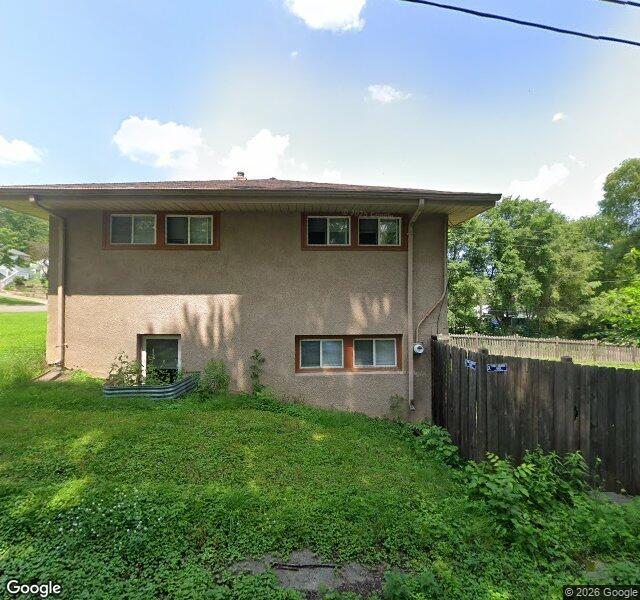
Highview Assisted Living LLC
1460 Farrington Street, North of Maryland, St Paul, MN 55117View map (opens in a new tab)
Overview and key essentials
State license
Active
MN MDH
Google reviews
5.0/ 5
2 reviews
Size & payment
Ask directly
Confirm pricing & payment
Cost, payment & care details
Updated Nov 28, 2026| Monthly cost | Not published | Ask for the full monthly cost, including care fees and one-time charges. |
|---|---|---|
| Payment options | Ask directly | Payment details are not confirmed in our records. Ask about private pay, long-term care insurance, veterans benefits, and Medicaid waivers. |
| Size & availability | Confirm directly | We don't publish live openings. Ask about current availability, waitlist length, and move-in timing. |
| Care & support | Assisted living | Usually offers housing and help with everyday tasks, such as bathing and dressing. What to confirm about care levelsThis describes the licensed category. Ask how care plans adjust if mobility, nursing, or memory needs change over time. Read the family care guide → |
State licensing
State inspection history
2inspections
18deficiencies listed
Jul 14, 2025Routine9 deficiencies reported9
9 deficiencies reported
View official state report (opens in a new tab)
144G.42 Subd. 10 Disaster planning and0680
SS=F emergency preparedness (a) The facility must meet the following requirements: (1) have a written emergency disaster plan that contains a plan for evacuation, addresses elements of sheltering in place, identifies STATE FORM
144G.50 Subd. 3 Designation of representative0950
SS=F (a) Before or at the time of execution of an assisted living contract, an assisted living facility must offer the resident the opportunity to identify a designated representative in writing in the contract and must provide the following verbatim notice on a document separate from the contract: "RIGHT TO DESIGNATE A REPRESENTATIVE FOR CERTAIN PURPOSES. You have the right to name anyone as your "Designated Representative." A Designated Representative can assist you, receive certain information and notices about you, including some information related to your health care, and advocate on your behalf. A Designated Representative does not take the place of your guardian, conservator, power of attorney ("attorney-in-fact"), or health care power of attorney ("health care agent"), if applicable." (b) The contract must contain a page or space for the name and contact information of the designated representative and a box the resident must initial if the resident declines to name a designated representative. Notwithstanding subdivision 1, paragraph (f), the resident has the right at any time to add, remove, or change the name and contact information of the designated representative. This MN Requirement is not met as evidenced by: STATE FORM
144G.41 Subdivision 1 Subd. 1a (a-b) Minimum0480
SS=F requirements; required food services 0 480 (a) Except as provided in paragraph (b), food must be prepared and served according to the Minnesota Food Code, Minnesota Rules, chapter STATE FORM
144G.45 Subd. 2 (a) (4) Fire protection and0800
SS=A physical environment (4) keep the physical environment, including walls, floors, ceiling, all furnishings, grounds, systems, and equipment in a continuous state of good repair and operation with regard to the STATE FORM
144G.42 Subd. 9 Tuberculosis prevention and0660
SS=F control (a) The facility must establish and maintain a comprehensive tuberculosis infection control program according to the most current tuberculosis infection control guidelines issued by the United States Centers for Disease Control and Prevention (CDC), Division of Tuberculosis Elimination, as published in the CDC's Morbidity and Mortality Weekly Report. The program must include a tuberculosis infection control plan that covers all paid and unpaid employees, contractors, students, and regularly scheduled volunteers. The commissioner shall provide technical assistance regarding implementation of the guidelines. (b) The facility must maintain written evidence of compliance with this subdivision. This MN Requirement is not met as evidenced by: Based on interview and record review, the licensee failed to establish and maintain a tuberculosis (TB) prevention and control program based on the most current guidelines issued by the Centers for Disease Control and Prevention (CDC) which included baseline testing for one of two employees (unlicensed personnel (ULP)-C) STATE FORM
144G.45 Subd. 2 (b-f) Fire protection and0810
SS=F physical environment (b) Each assisted living facility shall develop and maintain fire safety and evacuation plans. The plans shall include but are not limited to: (1) location and number of resident sleeping rooms; (2) staff actions to be taken in the event of a fire or similar emergency; (3) fire protection procedures necessary for residents; and (4) procedures for resident movement, evacuation, or relocation during a fire or similar emergency including the identification of unique or unusual resident needs for movement or evacuation. (c) Staff of assisted living facilities shall receive training on the fire safety and evacuation plans upon hiring and at least twice per year thereafter. (d) Fire safety and evacuation plans shall be readily available at all times within the facility. (e) Residents who are capable of assisting in their own evacuation shall be trained on the proper actions to take in the event of a fire to include movement, evacuation, or relocation. The training shall be made available to residents at least once per year. (f) Evacuation drills are required for staff twice per year per shift with at least one evacuation drill every other month. Evacuation of the residents is not required. Fire alarm system activation is not required to initiate the evacuation drill. This MN Requirement is not met as evidenced by: Based on interview, and record review, the STATE FORM TIME PERIOD FOR CORRECTION: Twenty-one (21) days
144G.42 Subd. 6 (a) / 626.557, Subd. 30620
SS=D Compliance with requirements for reporting ma (a) The assisted living facility must comply with the requirements for the reporting of maltreatment of vulnerable adults in section 626.557. The facility must establish and implement a written procedure to ensure that all cases of suspected maltreatment are reported. The requirement in Minnesota Statute section 626.557, Subd. 3 is: (a) A mandated reporter who has reason to believe that a vulnerable adult is being or has been maltreated, or who has knowledge that a vulnerable adult has sustained a physical injury which is not reasonably explained shall immediately report the information to the common entry point. If an individual is a vulnerable adult solely because the individual is admitted to a facility, a mandated reporter is not required to report suspected maltreatment of the individual that occurred prior to admission, unless: (1) the individual was admitted to the facility from another facility and the reporter has reason to believe the vulnerable adult was maltreated in the previous facility; or (2) the reporter knows or has reason to believe that the individual is a vulnerable adult as defined in section 626.5572, subdivision 21, paragraph (a), clause (4). (b) A person not required to report under the provisions of this section may voluntarily report as described above. (c) Nothing in this section requires a report of known or suspected maltreatment, if the reporter knows or has reason to know that a report has been made to the common entry point. STATE FORM
LVHR116899
4626. (b) For an assisted living facility with a licensed capacity of ten or fewer residents: (1) notwithstanding Minnesota Rules, part 4626.0033, item A, the facility may share a certified food protection manager (CFPM) with one other facility located within a 60-mile radius and under common management provided the CFPM is present at each facility frequently enough to effectively administer, manage, and supervise each facility's food service operation; (2) notwithstanding Minnesota Rules, part 4626.0545, item A, kick plates that are not removable or cannot be rotated open are allowed unless the facility has been issued repeated correction orders for violations of Minnesota Rules, part 4626.1565 or 4626.1570; (3) notwithstanding Minnesota Rules, part 4626.0685, item A, the facility is not required to provide integral drainboards, utensil racks, or tables large enough to accommodate soiled and clean items that may accumulate during hours of operation provided soiled items do not contaminate clean items, surfaces, or food, and clean equipment and dishes are air dried in a manner that prevents contamination before storage; (4) notwithstanding Minnesota Rules, part 4626.1070, item A, the facility is not required to install a dedicated handwashing sink in its existing kitchen provided it designates one well of a two-compartment sink for use only as a handwashing sink; (5) notwithstanding Minnesota Rules, parts 4626.1325, 4626.1335, and 4626.1360, item A, existing floor, wall, and ceiling finishes are allowed provided the facility keeps them clean and in good condition; (6) notwithstanding Minnesota Rules, part STATE FORM LVHR11 4626.1375, shielded or shatter-resistant lightbulbs are not required, but if a light bulb breaks, the facility must discard all exposed food and fully clean all equipment, dishes, and surfaces to remove any glass particles; and (7) notwithstanding Minnesota Rules, part 4626.1390, toilet rooms are not required to be provided with a self-closing door. This MN Requirement is not met as evidenced by: Based on observation, interview, and record review, the licensee failed to ensure food was prepared and served according to the Minnesota Food Code. This practice resulted in a level two violation (a violation that did not harm a resident's health or safety but had the potential to have harmed a resident's health or safety, but was not likely to cause serious injury, impairment, or death), and is issued at a widespread scope (when problems are pervasive or represent a systemic failure that has affected or has the potential to affect a large portion or all of the residents). The findings include: Please refer to the document titled, Food and Beverage Establishment Inspection Report (FBEIR) dated, July 15, 2025, for the specific Minnesota Food Code violations. The Inspection Report was provided to the licensee within 24 hours of the inspection. TIME PERIOD FOR CORRECTION: Please refer to the FBEIR for any compliance dates. STATE FORM LVHR11 LVHR11 (d) Nothing in this section shall preclude a reporter from also reporting to a law enforcement agency. (e) A mandated reporter who knows or has reason to believe that an error under section 626.5572, subdivision 17, paragraph (c), clause (5), occurred must make a report under this subdivision. If the reporter or a facility, at any time believes that an investigation by a lead investigative agency will determine or should determine that the reported error was not neglect according...
144G.45 Subd. 2 (a) (1) Fire protection and0780
SS=F physical environment (a) Each assisted living facility must comply with the State Fire Code in Minnesota Rules, chapter 7511, and: (1) for dwellings or sleeping units, as defined in the State Fire Code: (i) provide smoke alarms in each room used for sleeping purposes; (ii) provide smoke alarms outside each separate sleeping area in the immediate vicinity of bedrooms; (iii) provide smoke alarms on each story within a dwelling unit, including basements, but not including crawl spaces and unoccupied attics; (iv) where more than one smoke alarm is required within an individual dwelling unit or sleeping unit, interconnect all smoke alarms so that actuation of one alarm causes all alarms in the individual dwelling unit or sleeping unit to operate; and (v) ensure the power supply for existing smoke alarms complies with the State Fire Code, except that newly introduced smoke alarms in existing buildings may be battery operated; This MN Requirement is not met as evidenced by: Based on observation and interview, the licensee failed to provide smoke alarms that functioned and were interconnected so that the actuation of one alarm caused all alarms in the dwelling unit to actuate. This deficient condition had the ability STATE FORM
Sep 13, 2023Routine9 deficiencies reported9
9 deficiencies reported
View official state report (opens in a new tab)
144G.43 Subdivision 1 Resident record0690
SS=C (a) Assisted living facilities must maintain records for each resident for whom it is providing services. Entries in the resident records must be current, legible, permanently recorded, dated, and authenticated with the name and title of the person making the entry. This MN Requirement is not met as evidenced by: Based on interview and record review, the licensee failed to ensure entries in one of one resident's record (R1) were authenticated by the title of the person making the entry. This practice resulted in a level one violation (a violation that has no potential to cause more than a minimal impact on the resident and does not affect health or safety) and was issued at a widespread scope (when problems are pervasive or represent a systemic failure that has affected or has potential to affect a large portion or all the residents). The findings include: R1 R1's Individual Abuse Prevention Plan dated September 5, 2023, included the registered STATE FORM
144G.45 Subd. 2 (b)-(f) Fire protection and0810
SS=F physical environment (b) Each assisted living facility shall develop and maintain fire safety and evacuation plans. The plans shall include but are not limited to: (1) location and number of resident sleeping rooms; (2) employee actions to be taken in the event of a fire or similar emergency; (3) fire protection procedures necessary for residents; and (4) procedures for resident movement, evacuation, or relocation during a fire or similar STATE FORM
Farrington Street1460
St Paul, MN55117 Ramsey County, 62 License Categories: Operator: Expires on: 12/31/23 Phone #: ID #: The violations listed in this report include any previously issued orders and deficiencies identified during this inspection. Compliance dates are shown for each item. No NEW orders were issued during this inspection. Total Orders In This Report Priority 1 0 ACTUAL INSPECTION TOOK PLACE 9/11/23 REPORT DATE IS THAT WHICH THE ESTABLISHMENT BECAME ACCESSIBLE TO REPORT WRITING PROGRAM HRD INSPECTIOR: DEB JACOBSON ESTABLISHMENT REP: AHMED ADAM RESIDENTIAL HOME WITH NON COMMERCIAL APPLIANCES AND FINISHES NOTE: Plans and specifications must be submitted for review and approval prior to new construction, remodeling or alterations. number 8058231227 of 09/26/23. Certified Food Protection Manager:AHMED ADAM Certification Number: 114287 Expires: 12/06/25 Inspection report reviewed with person in charge and emailed. Signed: Establishment Representative
144G.41 Subd. 3 Infection control program0510
SS=D 0 510 (a) All assisted living facilities must establish and maintain an infection control program that STATE FORM and placed two tablets into a medication cup. ULP-C gave R1 her oral medications and set up a paper towel on the kitchen table to provide a blood sugar check. ULP-C placed R1's glucometer (a machine used to test blood sugars) on the paper towel, prepared the test strip, lancet (used to poke R1's finger for a blood sample), and an alcohol wipe. ULP-C asked R1 which finger she wanted to draw blood from, R1 indicated her preference of the third finger of her left hand. ULP-C wiped the finger with an alcohol wipe, allowed it to dry for a few seconds, and then poked the finger with the lancet tool, drew blood and placed the glucometer strip against R1's finger to obtain a drop of blood. The glucometer indicated a blood sugar of 209. ULP-C placed the test strip and lancet in the sharps container. With the same gloved hands, ULP-C prepared R1's Novolog insulin pen by wiping the pen tip with an alcohol wipe, placed a new needle to the pen tip, primed the insulin pen with the designated two units of insulin, and dialed the pen to five units of insulin as per R1's insulin sliding scale. ULP-C assisted R1 with wiping her abdomen and handed the insulin pen to R1 who then self-administered the insulin. ULP-C took the insulin pen, removed and disposed of the needle, put supplies away in R1's medication drawer, and documented the blood sugar level and insulin given in the medications book. ULP-C then removed her gloves, disposed of them, and washed her hands. ULP-C failed to remove her gloves and sanitize her hands immediately following assisting R1 with a blood sugar check (where she may have been in contact with R1's blood) and touched several surfaces before she removed her gloves and sanitized her hands. On September 11, 2023, at 12:45 p.m. ULP-C STATE FORM
144G.42 Subd. 8 Employee records0650
SS=D (a) The facility must maintain current records of each paid employee, each regularly scheduled volunteer providing services, and each individual contractor providing services. The records must include the following information: (1) evidence of current professional licensure, registration, or certification if licensure, registration, or certification is required by this chapter or rules; (2) records of orientation, required annual training and infection control training, and competency evaluations; (3) current job description, including qualifications, responsibilities, and identification of staff persons providing supervision; STATE FORM ULP-C stated she was trained by the licensee's registered nurse (RN) and stated he had watched her perform/assist R1 with her insulin pen injection after she moved in. ULP-C's employee file contained medication administration training/competency records dated March 1, 2023, and signed by clinical nurse supervisor (CNS)-B. The medication competency included only oral medication administration and lacked signed competency as observed by the RN for insulin pen administration or other routes of medication administration. Wound Care competency On September 12, 2023, at 8:45 a.m. ULP-C was observed to provide wound care to R1. ULP-C removed a previous dressing, cleansed the wound with spray cleanser and gauze, and covered the wound with a clean adhesive edged dressing. ULP-C stated the licensee's RN had trained all staff, provided written instructions, and watched her complete wound care/dressing change with R1. ULP-C's employee record lacked evidence of training/competency by the licensee's RN. On September 13, 2023, at 10:30 a.m. clinical nurse supervisor (CNS)-B stated he had provided training to all staff regarding insulin pen injections and other routes of medication administration, and had trained and observed ULP perform wound care, stating, "I'm at the house very often and watch staff do everything." CNS-B stated he did not know if or where this was documented. The licensee's Employee Records policy dated December 1, 2022, indicated the employee STATE FORM
144G.45 Subd. 2 (a) (4) Fire protection and0800
SS=F physical environment (4) keep the physical environment, including walls, floors, ceiling, all furnishings, grounds, systems, and equipment in a continuous state of good repair and operation with regard to the health, safety, comfort, and well-being of the residents in accordance with a maintenance and repair program. This MN Requirement is not met as evidenced by: Based on observation and interview, the licensee failed to provide proper door locking arrangements that did not constitute a distinct hazard to life. This had the potential to directly affect all residents and staff. This practice resulted in a level two violation (a violation that harmed a resident's health or safety, not including serious injury, impairment, or death, or a violation that has the potential to lead to serious injury, impairment, or death), and was STATE FORM
144G.42 Subd. 6 (b) Compliance with0630
SS=F requirements for reporting ma (b) The facility must develop and implement an individual abuse prevention plan for each vulnerable adult. The plan shall contain an individualized review or assessment of the person's susceptibility to abuse by another individual, including other vulnerable adults; the person's risk of abusing other vulnerable adults; STATE FORM
5EFP126899
{01650} (1) a description of the services to be provided, the fees for services, and the frequency of each service, according to the resident's current assessment and resident preferences; (2) the identification of staff or categories of staff who will provide the services; (3) the schedule and methods of monitoring assessments of the resident; (4) the schedule and methods of monitoring staff providing services; and (5) a contingency plan that includes: (i) the action to be taken if the scheduled service cannot be provided; (ii) information and a method to contact the facility; (iii) the names and contact information of persons the resident wishes to have notified in an emergency or if there is a significant adverse change in the resident's condition, including identification of and information as to who has authority to sign for the resident in an emergency; and (iv) the circumstances in which emergency medical services are not to be summoned consistent with chapters 145B and 145C, and declarations made by the resident under those chapters. This MN Requirement is not met as evidenced by: Based on observation, interview, and record review, the licensee failed to ensure the service plan included all required content for three of three residents (R1, R2, R3). This practice resulted in a level two violation (a violation that did not harm a resident's health or safety but had the potential to have harmed a resident's health or safety) and was issued at a widespread scope (when problems are pervasive STATE FORM 5EFP12 or represent a systemic failure that has affected or has the potential to affect a large portion or all the residents). The findings include: On November 27, 2023, at 12:00 p.m. licensed assisted living director (LALD)-A and clinical nurse supervisor (CNS)-B stated they had worked with a consultant through Residex (their newly acquired electronic medical record system) and thought the Service Plans included all the required elements. R1 R1 was admitted to the facility under the facility's Assisted Living Facility (ALF) license on March 17, 2023. R1's diagnoses included type two diabetes (when the body no longer manages insulin production and blood sugar levels), long term use of insulin, chronic kidney disease, depression, and complex febrile (fever related) convulsions (seizures). R1's Service Plan dated November 27, 2023, indicated she received services of medication assistance/administration, insulin draws, bathing, grooming, wound care, toileting assistance, housekeeping and mental health management. On November 28, 2023, at 11:35 a.m. unlicensed personnel (ULP-C) was observed to complete a blood sugar check and administer insulin to R1. R1 was observed to have a wound vac unit (an electronic appliance which provides suction to a deep tissue wound to promote healing) in place. R1 stated the wound vac had much improved her buttock wound. STATE FORM 5EFP12 R2 R2 was admitted to the facility under the facility's ALF license on March 1, 2023. R2's diagnoses included type two diabetes (when the body cannot adequately manage insulin production and control blood sugar) and alcoholic hepatitis (liver disease associated with excess alcohol consumption). R2's Service Plan dated November 28, 2023, indicated R2 received services of medication administration, bathing, grooming, toileting, blood sugar checks and behavior management. R3 R3 was admitted to the facility under the facility's ALF license on April 17, 2023. R3's diagnoses...
144G.43 Subd. 3 Contents of resident record0730
SS=F Contents of a resident record include the following for each resident: (1) identifying information, including the resident's name, date of birth, address, and telephone number; (2) the name, address, and telephone number of STATE FORM
Neighborhood & resident support
Emergency access, hazards & advocacy
Nearest hospital
Gillette Childrens Spec Hosp
2.1 mi · St Paul, MN · Medicare 3/5 ★
Emergency roomTrauma I Pediatric
FEMA hazard risk
Relatively HighRamsey County, MN
- Cold Wave
- Hail
- Tornado
Free resident advocacy
Minnesota Office of Ombudsman for Long-Term Care
More neighborhood context (specialists, VA, dialysis, air & affordability)
VA & dialysis access
Minneapolis VA Medical Center
7.3 mi · Minneapolis, MN · VA 5/5 ★
St Paul Capitol at Home
1.5 mi · 4/5 ★ · Home dialysis
Specialists within 15 mi
- Geriatricians
- 74
- Neurologists
- 475
- Palliative care
- 80
- PM&R rehab
- 218
Environment & mobility
- EPA Air (2025)
- 70% good days · AQI 34
- EPA Walkability
- 13.0/20 (Above Average)
- USDA Grocery Access
- Moderate Grocery Access
- Primary care access
- HRSA Shortage Area
County demographics
- Age 65+ median income
- $61,775/yr
- Rent-burdened households
- 50%
- Cognitive disability (2023)
- 13.4%
- Mobility disability
- 11.0%
Call & tour checklist
Questions to ask Highview Assisted Living LLC
Check off questions as you call or tour. Your progress stays private in this browser.
Show 3 more suggested questions
Verification & public records
Official records & sources
Licensing & contact
- License #
- 39298
- Status
- active
- Phone
- (651) 808-2633
- Federal OIG LEIE
- Clear (2026-11-27)
Original public sources
Verify licensing, ratings, and inspection reports directly with each official source.
- MN MDH official record (opens in a new tab)MN Dept. of Health
- Google Maps (opens in a new tab)Directions, photos & neighborhood
- Google Reviews (opens in a new tab)2 public reviews
EveryPlace is an independent research directory. Information is compiled from public Medicare.gov, state licensing, Google Places, and street-level imagery sources. Some summaries, suggested questions, and pricing notes are AI-generated or AI-assisted and may contain errors or omissions. We do not accept payment for placement. Confirm all details directly with the community and official sources. Research Policy.
Keep exploring
Nearby communities to compare
- 5.0(1)Assisted Living< 1 miFamily Choice Assisted LivingSt Paul, MN
- Cap. 50HUD Senior Housing< 1 miArlington Garden ApartmentsSaint Paul, MN
- Cap. 47HUD Senior Housing< 1 miArbor Pointe ApartmentsSaint Paul, MN
- 5.0(1)Assisted Living< 1 miAurora Assisted Living LLCSt. Paul, MN
- Assisted Living< 1 miSunshine Group Home LLCSt. Paul, MN
- Assisted Living< 1 miHealing Homes Living ServicesSt. Paul, MN