Loading EveryPlace content…
Assisted LivingActive license
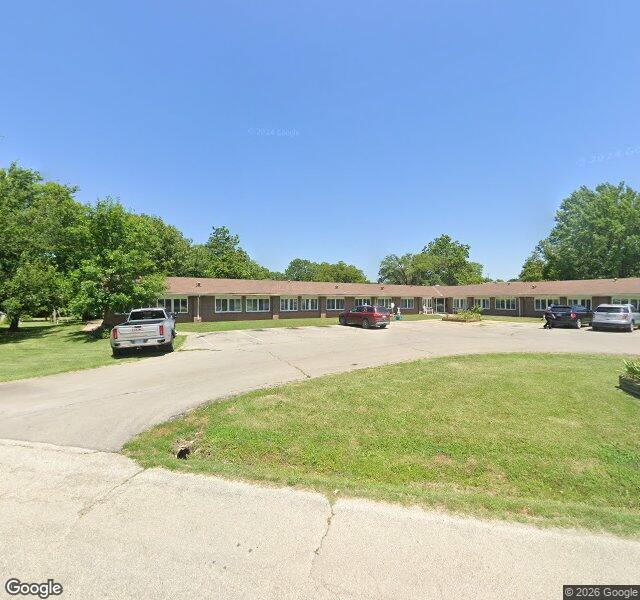
Guest Home Estates VI
737 Heylman Street, Fort Scott, KS 66701View map (opens in a new tab)
Overview and key essentials
State license
Active
KS KDADS
Google reviews
Not available
Public reviews not linked
Size & payment
Ask directly
Confirm pricing & payment
Public records for this community are limited. Use the checklist below when you call or visit to confirm pricing, services, and openings.
Cost, payment & care details
Updated Nov 28, 2026| Monthly cost | Not published | Ask for the full monthly cost, including care fees and one-time charges. |
|---|---|---|
| Payment options | Ask directly | Payment details are not confirmed in our records. Ask about private pay, long-term care insurance, veterans benefits, and Medicaid waivers. |
| Size & availability | Confirm directly | We don't publish live openings. Ask about current availability, waitlist length, and move-in timing. |
| Care & support | Assisted living | Usually offers housing and help with everyday tasks, such as bathing and dressing. What to confirm about care levelsThis describes the licensed category. Ask how care plans adjust if mobility, nursing, or memory needs change over time. Read the family care guide → |
State licensing
State inspection history
14inspections
51deficiencies listed
Feb 24, 2026Routine14 deficiencies reported14
14 deficiencies reported
View official state report (opens in a new tab)
The following citations represent the findings of a resurvey with complaints 197737, 197927, 197962, and 197979 at the above Residential Health Care Facility conducted on 02/19/26 and 02/24/26.
moderateS 3186
Medications (b) Administration of select medications. Any resident who self-administers medication may select some medications to be administered by a licensed nurse or medication aide. The negotiated service agreement shall reflect this service and identify who is responsible for the administration and management of selected medications. This REQUIREMENT is not met as evidenced by: The facility reported a census of 31 residents. The sample included three residents. Based on interview, and record review the operator failed to ensure the "Negotiated Service Agreement" (NSA) for resident (R)102 identified the responsible person for administration and management of selected medications. Findings included: - R102's medical record revealed she moved into the facility on 05/25/23 with a diagnosis of diabletes mellitus. The 05/25/25 FCS identified R102 required physical assistance with the management of her medications. The 05/25/25 NSA did not identify what services staff provided concerning the management of her insulin pump. On 02/24/26 at 03:23 PM R102 stated she had an insulin pump and the nurse and certified medication aides brought her the filled insulin cartridge to put into the insulin pump and she inserted the cartridge herself. On 02/24/26 at 11:24 AM "Licensed Nurse" (LN) B stated R102 had an insulin pump and required assistance to fill the cartridge for her insulin pump which the nurse or certified medication aide managed. LN B also confirmed that R102's NSA did not address the use of an insulin pump and what services staff provided for the management of the insulin pump. The operator failed to ensure the NSA identified who was responsible for administration and management of R102's insulin pump.
KAR 28-39-254 (a)3320
The facility reported a census of 31 residents. Based on observation and interview the operator failed to ensure staff secured all chemicals to maintain the safety of all residents and visitors. Findings included: - An observation during the initial tour on 02/19/26 at 10:42 AM revealed the following unlocked chemicals with a "KEEP OUT OF REACH OF CHILDREN" warning label: An unlocked "Utility Room" had a cleaning cart that contained one 9.7-ounce (oz.) spray can of Pledge furniture polish.
KAR 26-41-202(a)(1)3085
The facility reported a census of 31 residents with three residents included in the sample. Based on interview, and record review the
moderateS 3298
(d) Food preparation. Food shall be prepared using safe methods that conserve the nutritive value, flavor, and appearance and shall be served at the proper temperature. (1) Food used by facility staff to serve to the residents, including donated food, shall meet all applicable federal, state, and local laws and regulations. (2) Food in cans that have significant defects, including swelling, leakage, punctures, holes, fractures, pitted rust, or denting severe enough to prevent normal stacking or opening with a manual, wheel-type can opener, shall not be used. (3) Food provided by a resident ' s family or friends for individual residents shall not be required to meet federal, state, and local laws and regulations. This REQUIREMENT is not met as evidenced by: Findings included: - On 02/19/26 at 01:06 PM request for food temperature log sheets revealed no food temperature logs were available for review. On 02/19/26 at 01:06 PM Dietary Staff C stated that he has not logged any food temperatures since he hired on a couple of weeks ago and stated the previous dietary records were no longer available to current staff. The 2005 "Dietary Guidelines for Americans" documented in order to keep food out of the bacterial growth danger zone, cold food should be stored below 40 degrees Fahrenheit (F). Frozen food items should be kept at zero degrees Fahrenheit or below and these temperatures should be checked with an appliance thermometer. To keep food out of this danger zone, keep cold food cold (below 40°F) and hot food hot (above 140°F). The operator failed to ensure food items were served at the proper temperature.
moderateS 3220
(k) Clinical record. The administrator or operator, or the designee, shall ensure that the clinical record of each resident for whom the facility manages medication or prefills medication containers or syringes contains the following documentation: (1) A medical care provider ' s order for each medication; (2) the name of the pharmacy provider of the resident ' s choice; (3) any known medication allergies; and (4) the date and the 12-hour or 24-hour clock time any medication is administered to the resident. This REQUIREMENT is not met as evidenced by: - R103's medical record revealed he moved into the facility on 12/01/22 with a diagnosis of diabetes mellitus. The 12/01/25 "Functional Capacity Screen" (FCS) identified R103 required physical assistance with the management of his medications. The 12/01/25 NSA documented staff administered R103's medications. Review of R103's "Medication Administration Record" (MAR) revealed it did not identify his medication allergies to Zithromax, Dicloxacillin. On 02/24/26 at 11:37 AM Licensed Nurse B confirmed R103's MAR did not identify his medication allergies. The operator failed to ensure R103's medication administration records identified any known medication allergies.
KAR 26-41-104(d)(3)3280
The facility reported a census of 31 residents. Based on record review and interview for all residents and all facility employees, the operator failed to ensure disaster and emergency preparedness by ensuring performance of quarterly review of the facility's emergency management plan included all eight required items. Findings included: - On 02/19/26 a request for quarterly reviews of the emergency management plan with residents and staff was requested but none were provided. On 02/19/26 at 01:00 PM Administrative Staff A stated that she has not completed any quarterly reviews of the emergency management plan since she took over in September 2025 and did not have access to previous reviews completed. The operator failed to ensure disaster and
KAR 26-41-205(b)3186
KAR 26-41-205(b)
moderateS 3085
(a) The administrator or operator of each assisted living facility or residential health care facility shall ensure the development of a written negotiated service agreement for each resident, based on the resident ' s functional capacity screening, service needs, and preferences, in collaboration with the resident or the resident ' s legal representative, the case manager, and, if agreed to by the resident or the resident ' s legal representative, the resident ' s family. The negotiated service agreement shall provide the following information: (1) A description of the services the resident will receive; (2) identification of the provider of each service; and (3) identification of each party responsible for payment if outside resources provide a service. This REQUIREMENT is not met as evidenced by: operator failed to ensure the "Negotiated Service Agreement" (NSA) was fully developed based on the resident's "Functional Capacity Screen" (FCS), service needs, and preferences for Resident (R)101, and R102. Findings included: - R101's medical record revealed she moved into the facility on 06/25/21 with a diagnosis of Alcohol Dependence. The 06/25/25 FCS identified R101 had severely impaired cognition with short-term and long-term memory loss, memory/recall issues and impaired decision making abilities. The 06/25/25 NSA did not address what services staff provided R101 concerning her impaired cognition. On 02/24/26 at 11:21 AM "Licensed Nurse" (LN) B acknowledged that R101's NSA did not address what services staff provided her concerning her impaired cognition and stated physical assistance with transfers and was a risk for falling. The 05/25/25 NSA did not address what services staff provided R102 concerning transfers or for falls. On 02/24/26 at 11:24 AM LN B stated R102 required at least one person assist with transfers. LN B also stated R102's NSA did not address what services staff provided R102 concerning fall prevention. The operator failed to ensure R102's NSA was fully developed to include all items that triggered on the FCS, her service needs, and preferences.
STATE FORM6899
GH6011 STATE FORM GH6011 STATE FORM GH6011 STATE FORM GH6011 STATE FORM GH6011 STATE FORM GH6011 STATE FORM GH6011 STATE FORM GH6011 STATE FORM GH6011 STATE FORM GH6011 STATE FORM GH6011 STATE FORM GH6011
KAR 26-41-205(k)(3)3220
The facility reported a census of 31 residents. Based on record review and interview, the facility failed to ensure the clinical record of each resident for whom the facility manages medication contained documentation of any known medication allergies for Resident (R)103. Findings included:
KAR 26-41-206 (d)3298
The facility had a census of 31 residents. All 31 residents ate food prepared in the same kitchen. The operator failed to ensure food items were served at the proper temperature.
moderateS 3280
Preparedness (d) Each administrator or operator shall ensure disaster and emergency preparedness by ensuring the performance of the following: (1) Orientation of new employees at the time of employment to the facility ' s emergency management plan; (2) education of each resident upon admission to the facility regarding emergency procedures; (3) quarterly review of the facility ' s emergency management plan with employees and residents; and (4) an emergency drill, which shall be conducted at least annually with staff and residents. This drill shall include evacuation of the residents to a secure location. This REQUIREMENT is not met as evidenced by: emergency preparedness by failing to perform quarterly reviews of the emergency management plan with employees and residents that included all eight required topics.
moderateS 3320
(a) The assisted living facility or residential health care facility shall be designed, constructed, equipped and maintained to protect the health and safety of residents, personnel and the public. (b) All new construction, renovation, remodeling and changes in building use in existing buildings shall comply with building and fire codes, ordinances and regulations enforced by city, county, and state jurisdictions, including the state fire marshal. (c) New construction, modifications and equipment shall conform to the following codes and standards: (1) Title III of the Americans with disabilities act, 42 U.S.C. 12181, effective as of January 26, 1992; and (2) "Food Service Sanitation Manual," health, education, and welfare (HEW) publication no. FDA 78-2081, as in effect on July 1, 1981. This REQUIREMENT is not met as evidenced by: One 32 oz. bottle of Lysol Advanced Power Clinging Gel One 23 fluid (fl.) oz. Windex glass cleaner The under the sink cabinet in the utility room contained one 22 oz. spray bottle All Purpose Cleaner One 32 fl. oz. spray bottle Great Value Mold and Mildew Remover One 25.3 fl. oz. Swiffer Power Mop There were also multiple other chemicals stored in this utility room. On 02/19/26 at approximately 10:42 AM Administrative Staff A acknowledged there were unlocked chemicals located in the utility room. On 02/19/26 at 11:06 AM an observation of the North Hall "Utility Room" contained a one-gallon container of Clorox Bleach One 210 fl. oz. container of Fabuloso Multi-Purpose Cleaner One 3.78-quart container of Great Value Low-Splash Bleach One 15 oz. spray can of Brody Chemical Disinfectant Spray. On 02/24/26 a policy concerning chemical storage was requested from the operator, but none was provided. The operator failed to ensure staff kept chemicals locked for resident and visitor safety.
did not require reminders, redirection orR 101
cueing. The operator failed to ensure R101's NSA was fully developed to include all items that triggered on the FCS, her service needs, and preferences. - R102's medical record revealed she moved into the facility on 05/25/23 with a diagnosis of Type 2 Diabetes Mellitus. The 05/25/25 FCS identified R102 required
Jun 5, 2025ComplaintNo deficiencies reportedNone
No deficiencies reported
View official state report (opens in a new tab)
INITIAL COMMENTS The abbreviated survey for complaints #195231, 194842, 194811, 192431, 191886, 191913 conducted on 06/05/25 at the above named assisted living facility resulted in a finding of no deficiency citations. If deficiencies are cited, an approved plan of correction is requisite to continued program participation.
Oct 22, 2024Complaint2 deficiencies reported2
2 deficiencies reported
View official state report (opens in a new tab)
The following citations represent the findings of an abbreviated survey for complaints #'s 191372, 191325, 190778, and 181062, of the above named facility conducted on 10/22/24.
STATE FORM6899
JQDF11 STATE FORM JQDF11 STATE FORM JQDF11 STATE FORM JQDF11
moderateS 195
(f) The administrator or operator, or the designee, shall provide a notice of transfer or discharge in writing to the resident or resident ' s legal representative at least 30 days before the resident is transferred or discharged involuntarily, unless one of the following conditions is met: (1) The safety of other individuals in the adult care home would be endangered. (2) The resident's urgent medical needs require an immediate transfer to another health care facility. This REQUIREMENT is not met as evidenced by: K.A.R 26-39-102(f) The facility reported a census of 31 residents. The sample included 1 "Resident" (R)1. Based on interview and record review the operator failed to provide a notice in writing to R1 of involuntary discharge. Findings included: - Record review for R1 revealed an admission date of 02/19/2019 with diagnoses of diabetes, hypertensive chronic kidney disease and Alzheimer's disease. Review of R1's "Functional Capacity Screen" (FCS) dated 11/23/23 revealed R1 required supervision with bathing, dressing, and toileting. She was independent with transferring, walking/mobility, and eating. R2 required physical assistance with managing her medications and medical treatments. She was incontinent, and had impaired short-term memory, memory recall, and decision making. She was able to make herself understood and she understood others. R1 was marked as a risk for falls and impaired decision making. She used a walker mobility device. Review of R1's "Negotiated Service Agreement" (NSA) dated 11/23/23 identified the facility would provide R1 the following health services; supervision with bathing, dressing, and toileting. Fall interventions included nonskid footwear, no throw rugs and the room was to be free of clutter. Under the section titled "Cognition" the following were marked; "Alert", "Oriented" and "Poor Decision Making". The "Cognition" section of the NSA lacked identification of health services for "Poor Decision Making". Review of R1's "Nurse Notes" dated 09/26/24 to 10/21/24 revealed the following entry: On 09/27/24 (no time entered) was written that R1 claimed her insulin was out of date, and not working correctly. The expiration date on the pen was 2026. After R1 self-injected her insulin, she dialed the pen to "a few units and shot in air to make sure needles aren't faulty." "Toilet clogged", R1 frequently stuffs paper products down toilet when unhappy with staff. Review of R1's "Doctors Progress Notes" dated 07/09/24 to 10/08/24 revealed the following entry: On 10/08/24 at 01:15PM Provider D wrote that R1 had been non complaint with her self-administration of her insulin as noted by facility staff. R1 had been administering more insulin then needed. "Patient became angry with staff when confronted on this and flushed 2 briefs down the toilet clogging the system." She has been given a notice of eviction. Review of R1's signed admission agreement dated 02/19/19 revealed the following statement; "Routine maintenance and repairs of resident apartments or individual living units and common areas inside and outside the facility shall be provided. The client will be responsible for damage to the facility property above normal wear and usage. Interview on 10/22/24 at approximately 05:00 PM with Operator B and Licensed Nurse C confirmed that R1 had been given a "verbal" 30-day notice on 10/2/24. Operator B stated she could not find an official 30-day notice form. She continued to state when R1 gets upset with...
Sep 17, 2024Routine15 deficiencies reported15
15 deficiencies reported
View official state report (opens in a new tab)
The following citations represent the findings of the licensure resurvey with attached complaint numbers 189865, 1888874, 184748, and 182952, for the above named facility conducted on 09/16/24 and 09/17/24.
moderateS 3296
(c) (1) Menu plans shall be available to each resident on at least a weekly basis. This REQUIREMENT is not met as evidenced by: K.A.R. 26-41-206 (c)(1) The facility reported a census of 30 residents. Based on observation and interview the Operator failed to ensure the facility made the accurate menu plans available to each resident on a weekly basis. Findings included: - Observation on 09/16/24 at approximately 12:40 PM on the northeast wall of the dining room next to the entrance of the kitchen is a posting of daily menus. Interview on 09/16/24 at approximately 12:50 PM with Operator A confirmed the facility is not following the posted menus at this time. She stated that the dietary manager was recently terminated, and the facility had just hired a new dietician and a new dietary manager. Operator A further confirmed the accurate menus are not provided to the residents on a weekly basis. Interview on 09/17/24 at approximately 11:15 AM with "Residents'" (R)'s 1, 2, 3, and 4 confirmed they were not happy with the food served at the facility and they further confirmed they are not provided the accurate menus on a weekly basis. The Operator failed to ensure the facility made the accurate menu plans available to each resident on a weekly basis.
moderateS 3298
(d) Food preparation. Food shall be prepared using safe methods that conserve the nutritive value, flavor, and appearance and shall be served at the proper temperature. (1) Food used by facility staff to serve to the residents, including donated food, shall meet all applicable federal, state, and local laws and regulations. (2) Food in cans that have significant defects, including swelling, leakage, punctures, holes, fractures, pitted rust, or denting severe enough to prevent normal stacking or opening with a manual, wheel-type can opener, shall not be used. (3) Food provided by a resident ' s family or friends for individual residents shall not be required to meet federal, state, and local laws and regulations. This REQUIREMENT is not met as evidenced by: K.A.R. 26-41-206 (d) The facility reported a census of 30 residents. Based on observation and interview the Operator failed to ensure the food preparation included being served to the facility residents at the proper temperatures. Findings included: - Observation on 09/16/24 at approximately 12:40 PM during the facility tour, revealed the refrigerator temperature logs on a clip board located on the southeast side of the kitchen. The logs lacked documentation of food temperatures being obtained prior to serving to the facility residents. Observation on 09/16/24 at approxmately 12:40 PM during the facility tour revealed the steam table in the kitchen had a large uncovered pot of what appeared to be peas that were mushy, and a large flat uncovered steam table tray that contained a noodle and meat based dish. Interview on 09/16/24 with dietary staff E confirmed she did not obtain the temperatures from the food prior to serving. Interview on 09/16/24 at approximately 12:50 PM with Operator A confirmed the lack of documentation on food temperatures being obtained prior to serving to the facility residents. She stated that the dietary manager was recently terminated and there has been a new dietary manager hired. Interview on 09/17/24 at approximately 11:15 AM with "Residents'" (R)'s 1, 2, 3, and 4 confirmed they were not happy with the food served at the facility. The Operator failed to ensure the food preparation included being served to the facility residents at the proper temperatures.
moderateS 3280
Preparedness (d) Each administrator or operator shall ensure disaster and emergency preparedness by ensuring the performance of the following: (1) Orientation of new employees at the time of employment to the facility ' s emergency management plan; (2) education of each resident upon admission to the facility regarding emergency procedures; (3) quarterly review of the facility ' s emergency management plan with employees and residents; and (4) an emergency drill, which shall be conducted at least annually with staff and residents. This drill shall include evacuation of the residents to a secure location. This REQUIREMENT is not met as evidenced by: K.A.R. 26-41-104 (d) (1) (2) (3) (4) The facility reported a census of 30 residents. Based on record review and interview the Operator failed to ensure the facility's disaster and emergency preparedness by ensuring at the time of employment the new employees were provided the facility's emergency management plan, at the time of admission the new residents were provided the facility's emergency management plan, quarterly reviews of the facility's emergency management plan with employees and residents, and an emergency drill which included the evacuation of the residents to a secure location was performed at least annually. Findings included: - Record review of the facility provided document titled "Fire Drill" dated 01/10/23 revealed the facility participated in a drill that included evacuation of all residents "out of the new wing onto the south hall and closed the fire doors." Review of the facility provided document titled "Employee Signatures for Paychecks 07/15/24" had on the upper left corner hand printed "Disaster Preparedness". Interview on 09/16/24 at approximately 12:45 PM with Operator A revealed she began employment with the facility approximately "a month ago". Operator A confirmed she could not provide documentation of the emergency preparedness training to newly hired employees, newly admitted residents, quarterly training to the staff and residents, or a current annual evacuation drill. The Operator failed to ensure the facility's disaster and emergency preparedness by ensuring at the time of employment the new employees were provided the facility's emergency management plan, at the time of admission the new residents were provided the facility's emergency management plan, quarterly reviews of the facility's emergency management plan with employees and residents, and an emergency drill which included the evacuation of the residents to a secure location was performed at least annually.
moderateS 3297
in Menu (c) (2) A method shall be established to incorporate input by residents in the selection of food to be served and scheduling of meal service. This REQUIREMENT is not met as evidenced by: K.A.R. 26-41-206 (c)(2) The facility reported a census of 30 residents. Based on observation and interview the Operator failed to establish a method to incorporate input by the facility residents in the selection of food to be served, and scheduling of the meal services. Findings included: - Observation on 09/16/24 at approximately 12:40 PM on the northeast wall of the dining room next to the entrance of the kitchen is a posting of daily menus. Interview on 09/16/24 at approximately 12:50 PM with Operator A confirmed the facility is not following the posted menus at this time. She stated that the dietary manager was recently terminated, and the facility had just hired a new dietician and a new dietary manager. Operator A the residents have no input at this time on meal selections. She stated if the residents do not like what is being served, they are offered a different option of soup or a sandwich. Interview on 09/17/24 at approximately 11:15 AM with "Residents'" (R)'s 1, 2, 3, and 4, confirmed they were not happy with the food served at the facility and they further confirmed they are not involved in the menu planning. R1 and R2 confirmed they had been offered a soup or sandwich at times. The Operator failed to establish a method to incorporate input by the facility residents in the selection of food to be served, and scheduling of the meal services.
moderateS 3320
(a) The assisted living facility or residential health care facility shall be designed, constructed, equipped and maintained to protect the health and safety of residents, personnel and the public. (b) All new construction, renovation, remodeling and changes in building use in existing buildings shall comply with building and fire codes, ordinances and regulations enforced by city, county, and state jurisdictions, including the state fire marshal. (c) New construction, modifications and equipment shall conform to the following codes and standards: (1) Title III of the Americans with disabilities act, 42 U.S.C. 12181, effective as of January 26, 1992; and (2) "Food Service Sanitation Manual," health, education, and welfare (HEW) publication no. FDA 78-2081, as in effect on July 1, 1981. This REQUIREMENT is not met as evidenced by: K.A.R. 28-39-254 (a) The facility reported a census of 30 residents. Based on observation and interview the Operator failed to ensure the facility was maintained to protect the health and safety of residents, personnel, and the public. Findings included: - Observation on 09/16/24 at approximately 12:45 PM during the facility tour revealed the following: In the north shower room, there were dirty wet washcloths on the floor of the shower. In the utility room on the north hall there was a large flushable hopper that had a small white trash can smeared on the inside with fecal matter sitting on the back left side of the hopper. On the right rim of the hopper sat a small dirty brush. Sitting in the bowel of the hopper was very dirty water and there was a foul odor present. In the center of the bowel of the hopper there sat a small round plastic container that contained dirty water. On the south side of the dividing wall of the utility room sitting on top of a battery storage case sat a 1-31M225 dual purpose battery. There was corrosion on the black negative post and corrosion of the red positive clamp. In the kitchen sink attached to the facility dish washer with a garbage disposable attached, was a large amount of food which contained breakfast cereal and other food items. In the utility room on the west hall there was a foul odor and the large flushable hopper held black water. In the shower room, the shower head was leaking a small steady stream of water that had run out of the shower floor and out onto the floor next to the south wall. On the bottom of the south wall of the shower was a black, slimy film, and the floor of the shower was missing paint, showing bare concrete with an uneven surface and rust on the floor drain. The rubber baseboard on the southwest wall next to the shower was peeling away from the wall. Interview with the facility owner 09/16/24 at approximately 02:55 PM confirmed the hoppers on the north and west halls held foul smelling dirty water, the shower had a leaking shower head, the base board on the southwest wall in the shower room on the west hallway was peeling, the shower floor had missing paint and was showing bare concrete, and the black slimy film on the shower wall. He further confirmed the battery sitting on the battery case in the utility room on the north hall was for the flood lights in the hallway on the north hall in case of loss of power, he confirmed the corrosion on the battery post. Interview on 09/17/24 with Operator A at approximately 04:48 confirmed the owner had called in plumbers to remove the hoppers full of the dirty water due to the hoppers not...
moderateS 3026
ANE (f)The administrator or operator shall ensure that all of the following requirements are met: (1) No resident shall be subjected to any of the following: (A) Verbal, mental, sexual, or physical abuse, including corporal punishment and involuntary seclusion; (B) neglect; or (C) exploitation. This REQUIREMENT is not met as evidenced by: K.A.R. 26-41-101 (f) (1) (A) The owner failed to report an allegation of abuse by the operator (operator J) to the department, failed to investigate the allegations of abuse and further failed to protect the residents of the facility when he allowed the operator to continue to work with the residents after he witnessed Operator J speak aggressively to a resident and relieved Operator J from her position as an operator, to a position as a "Certified Medication Aide" (CMA), and she self-terminated her employment on 08/26/24. Findings included: - Review of the signed statement from the facility Owner D, revealed that on "4 or 5" occasions he had counselled Operator J and "Licensed Nurse" C on professional conduct in the workplace. Operator D wrote "on one occasion he was hanging pictures on a wall for a resident", when Operator J came in the room and exclaimed "Get your walker!" Owner D then continued in his statement to that he "dismissed" Operator J from the resident room taking her back to the business office, where he told her "Not to use that tone of voice with any resident". Owner D wrote that this event happened in early July of 2024. Interview with Owner D on 09/16/24 at approximately 04:55 PM confirmed he had received complaints before on Operator J from staff and that prior to Operator/CMA J self-terminating her employment he had been looking for approximately 6 to 7 months on someone to replace her. He stated that Operator J's last day as a manager was on 07/16/24 and that he allowed her to work in the facility as a CMA. Owner D stated that once Operator J no longer held a management position her personality changed for the better. Interview on 09/17/24 at approximately 10:50 AM with "Resident" (R) 5 confirmed Operator/CMA J "was not nice", R5 continued to state it was not always what she said, but how she said it. She stated that Operator/CMA J was snide, and her actions were cruel. R5 stated she was afraid to call the department or the Ombudsman. Interview on 09/17/24 at approximately 11:00 AM with R1 confirmed Operator/CMA J would "shout" at her, she was rude, snide, and would refer to the facility residents as "her kids". She stated she just tried to stay away from Operator/CMA J. Interview on 09/17/24 at approximately 11:10 AM with R3 confirmed if you did not have money, that Operator/CMA J would not treat you nicely. She continued to state that Operator/CMA J would tell her if she didn't like things that R3 could "get out". R3 stated that Operator /CMA J would "down grade" you if she did not like you, and if she did not like you, she would let it be known. Interview on 09/17/24 at approximately 11:20 AM with R6 confirmed that Operator/CMA J was "not nice" and that she "was mean". Interview 0n 09/16/24 at approximately at approximately 02:00PM with LN C revealed she had reported to Owner D by email on 06/26/23 her concerns about Operator/CMA J's treatment of residents and other concerns about the facility. Review of a text message dated 06/23 provided by LN C to Owner D revealed that LN C thought Operator/CMA J's treatment of one resident was cruel, Owner D's text message response was...
moderateS 3310
(b) (5) prohibiting any employee with a communicable disease or any infected skin lesions from coming in direct contact with any resident, any resident ' s food, or resident care equipment until the condition is no longer infectious; (6) providing orientation to new employees and employee in-service education at least annually on the control of infections in a health care setting; and (c) Each administrator or operator shall ensure the facility ' s compliance with the department ' s tuberculosis guidelines for adult care homes adopted by reference in K.A.R. 26-39-105 This REQUIREMENT is not met as evidenced by: K.A.R. 26-41-207 (c) The facility reported a census of 30 residents. The sample included 3 residents and 5 newly hired employees. Based on interview and record review the Operator failed to ensure the facility's compliance with the department's "Tuberculosis" (TB) guidelines for adult care homes adopted by reference in K.A.R. 26-39-105 for the newly hired facility cook G, and newly hired "Certified Nurse Aides'" (CNA)'s H and I. Findings included: - Record review for newly hired facility cook G revealed he began employment approximately 11/15/23. Facility cook G's personnel record lacked documentation of his actual hire date, and further lacked documentation of the required two step TB test being administered within 7 days of employment. Record review for newly hired CNA H revealed she began employment on approximately 12/20/22. The record contained documentation of CNA H having received the first step of the required two step TB skin test on 12/15/22 and being read on 12/18/22. CNA H's personnel record lacked documentation of the required second step being administered within one to three weeks of the completion of the first step, CNA H's personnel record further lacked documentation of her actual hire date. Record review for newly hired CNA I revealed she began employment on 05/22/23. CNA I's personnel record lacked documentation of the required two step TB test being administered within 7 days of employment. Interview on 09/17/24 with Operator A confirmed the Personnel Records for the newly hired facility cook G and newly hired CNA H lacked the required documentation of the required two step TB test being administered within 7 days of their employment, she further confirmed the Personnel Record for CNA I lacked documentation of the completion of the required second step of the TB test within one to three weeks of the completion of the fist step. The Operator failed to ensure the facility's compliance with the department's TB guidelines for adult care homes adopted by reference in K.A.R. 26-39-105 for the newly hired facility cook G, and newly hired CNA's H and I.
moderateS 3305
(a) The administrator or operator of each assisted living facility or residential health care facility shall ensure the provision of a safe, sanitary, and comfortable environment for residents. (b) Each administrator or operator shall ensure the development of policies and implementation of procedures to prevent the spread of infections. These policies and procedures shall include the following requirements: (1) Using universal precautions to prevent the spread of blood-borne pathogens; (2) techniques to ensure that hand hygiene meets professional health care standards; (3) techniques to ensure that the laundering and handling of soiled and clean linens meet professional health care standards; (4) providing sanitary conditions for food service; (5) prohibiting any employee with a communicable disease or any infected skin lesions from coming in direct contact with any resident, any resident ' s food, or resident care equipment until the condition is no longer infectious; (6) providing orientation to new employees and employee in-service education at least annually on the control of infections in a health care setting; and (7) transferring a resident with an infectious disease to an appropriate health care facility if the administrator or operator is unable to provide the isolation precautions necessary to protect the health of other residents. This REQUIREMENT is not met as evidenced by: K.A.R. 26-41-207 (b) (4) The facility reported a census of 30 residents. All 30 residents at food prepared in the same kitchen. Based on observation and interview, the Operator failed to ensure sanitary conditions for food service by not ensuring hot water and chemical strengths were tested and documented at least daily. Findings included: - Observation on 09/16/24 at approximately 12:40 PM during the facility tour, revealed the refrigerator temperature logs on a clip board located on the southeast side of the kitchen. The clip board lacked a log for the documentation for the temperature and chemical strength of the facility's dishwasher being performed daily. Interview on 09/16/24 with dietary staff E confirmed she did not obtain the hot water temperature of the perform the chemical strip testing the chemical strength prior to using the equipment. Interview on 09/16/24 at approximately 12:50 PM with Operator A confirmed the lack of documentation on the chemical sanitation strips and hot water temperature, she continued to state that there is a company that does come in monthly to check the dishwashing equipment. Operator A confirmed the dietary staff should be completing the chemical strip daily to ensure the chemical strengths were appropriate. The Operator failed to ensure sanitary conditions for food service by not ensuring hot water and chemical strengths were tested and documented at least daily.
moderateS 3295
(c) Menus. A dietetic services supervisor or licensed dietitian or, in any assisted living facility or residential health care facility with fewer than 11 residents, designated facility staff shall plan menus in advance and in accordance with the dietary guidelines adopted by referencein K.A.R. 26-39-105. This REQUIREMENT is not met as evidenced by: K.A.R. 26-41-206 (c) The facility reported a census of 30 residents. Based on observation and interview the Operator failed to ensure the facility planned menus in advance and in accordance with the dietary guidelines adopted by reference in K.A.R. 26-39-105. Findings included: - Observation on 09/16/24 at approximately 12:40 PM on the northeast wall of the dining room next to the entrance of the kitchen is a posting of daily menus. Interview on 09/16/24 at approximately 12:50 PM with Operator A confirmed the facility is not following the posted menus at this time. She stated that the dietary manager was recently terminated, and the facility had just hired a new dietician and a new dietary manager. Interview on 09/17/24 at approximately 11:15 AM with "Residents'" (R)'s 1, 2, 3, and 4 confirmed they were not happy with the food served at the facility and R1 confirmed she is unable to eat the facility noodles due to them not being cooked appropriately. The Operator failed to ensure the facility planned menus in advance and in accordance with the dietary guidelines adopted by reference in K.A.R. 26-39-105.
moderateS 225
(a) Each licensee, administrator, or operator shall develop written admission policies regarding the admission of residents. The admission policy shall meet the following requirements: (1) The administrator or operator shall ensure the admission of only those individuals whose physical, mental, and psychosocial needs can be met within the accommodations and services available in the adult care home. (A) Each resident in a nursing facility or nursing facility for mental health shall be admitted under the care of a physician licensed to practice in Kansas. (B) The administrator or operator shall ensure that no children under the age of 16 are admitted to the adult care home. (C) The administrator or operator shall allow the admission of an individual in need of specialized services for mental illness to the adult care home only if accommodations and treatment that will assist that individual to achieve and maintain the highest practicable level of physical, mental, and psychosocial functioning are available. (2) Before admission, the administrator or operator, or the designee, shall inform the prospective resident or the resident ' s legal representative in writing of the rates and charges for the adult care home's services and of the resident's obligations regarding payment. This information shall include the refund policy of the adult care home.(3) At the time of admission, the administrator or operator, or the designee, shall execute with the resident or the resident ' s legal representative a written agreement that describes in detail the services and goods the resident will receive and specifies the obligations that the resident has toward the adult care home. (4) An admission agreement shall not include a general waiver of liability for the health and safety of residents. (5) Each admission agreement shall be written in clear and unambiguous language and printed clearly in black type that is 12-point type or larger. This REQUIREMENT is not met as evidenced by: K.A.R. 26-39-102 (a) (3) The facility reported a census of 30 residents. The sample included 3 Residents (R)'s. The operator failed to ensure at the time of admission for R2 the execution of a written agreement that described in detail the services and goods R2 would receive and specified the obligations that R2 had toward the adult care home. Findings included: - Record review for R2 revealed an admission date of 07/28/21 with diagnoses of hypothyroidism and worsening of her memory. Review of the facility provided admission records for R2 revealed a document dated 08/06/21 and was titled "Residential Health Care Facility Agreement" and handwritten in the "Private Pay" blank was $3000, and under the section titled "Home and Community Based services was handwritten "Room and Board" was $350. The only signature on the agreement is from Operator/CMA J. Review of a letter in R2's admission record from an attorney stated; "the facility charges her $350 a month", and the purpose of the letter was to document the attorney's effort to make certain that R2 was paying what she was agreed to pay, and to not be billed at a future date for money that was determined to have been R2's obligation all along. The operator failed to ensure at the time of admission for R2 the execution of a written agreement that described in detail the services and goods R2 would receive and specified the obligations that R2 had toward the adult care home.
moderateS 3215
(h) Storage. Licensed nurses and medication aides shall ensure that all medications and biologicals are securely and properly stored in accordance with each manufacturer ' s recommendations or those of the pharmacy provider and with federal and state laws and regulations. (1) Licensed nurses or medication aides shall store non-controlled medications and biologicals managed by the facility in a locked medication room, cabinet, or medication cart. Licensed nurses and medication aides shall store controlled medications managed by the facility in separately locked compartments within a locked medication room, cabinet, or medication cart. Only licensed nurses and medication aides shall have access to the stored medications and biologicals. (2) Each resident managing and self-administering medication shall store medications in a place that is accessible only to the resident, licensed nurses, and medication aides. (3) Any resident who self-administers medication and is unable to provide proper storage as recommended by the manufacturer or pharmacy provider may request that the medication be stored by the facility. (4) A licensed nurse or medication aide shall not administer medication beyond the manufacturer ' s or pharmacy provider ' s recommended date of expiration. This REQUIREMENT is not met as evidenced by: K.A.R. 26-41-205 (h) (4) The facility reported a census of 30 "Residents'" (R)'s. Based on observation and interview the operator failed to ensure the facility's "Licensed Nurses'" (LN)'s and "Certified Medication Aides'" (CMA)'s did not administer medication beyond the manufacturer's or pharmacy provider's recommended date of expiration. Findings included: - Observation on 09/16/24 at approximately 01:30 PM CMA F unlocked the first medication cart on the west side of the south wall. In the top drawer was an Fiasp flex touch insulin pen labeled with R4's name. The pen lacked documentation of the beyond use date. Fiasp flex touch insulin pen manufacturer recommendation revealed the in-use pen could be stored at room temperature for a maximum of 4 weeks (28 days). Interview with LN C and CMA F on 09/16/24 at approximately 01:30 PM confirmed the in use Fiasp flex touch insulin pen lacked a beyond use date. Observation on 09/16/24 at approximately 01:45 PM CMA F unlocked the locked medication room and in the unlocked the small white refrigerator was an accessed vial of Tubersol solution dated 08/10. Tubersol manufacturer recommendations revealed "a vial of Tubersol which has been entered and in use for 30 days should be discarded." Interview on 09/16/24 at approximately 01:45 PM with LN C and CMA F confirmed the Tubersol bottle was dated 08/10 and lacked, and she further confirmed the date lacked the identification of the year. The operator failed to ensure the facility's LN's and CMA's did not administer medication beyond the manufacturer's or pharmacy provider's recommended date of expiration.
STATE FORM6899
4MQN11 STATE FORM 4MQN11 STATE FORM 4MQN11 STATE FORM 4MQN11 STATE FORM 4MQN11 STATE FORM 4MQN11 STATE FORM 4MQN11 STATE FORM 4MQN11 STATE FORM 4MQN11 STATE FORM 4MQN11 STATE FORM 4MQN11 STATE FORM 4MQN11 STATE FORM 4MQN11 STATE FORM 4MQN11 STATE FORM 4MQN11 STATE FORM 4MQN11 STATE FORM 4MQN11 STATE FORM 4MQN11 STATE FORM 4MQN11 STATE FORM 4MQN11 STATE FORM 4MQN11 STATE FORM 4MQN11 STATE FORM 4MQN11 STATE FORM 4MQN11 STATE FORM 4MQN11 STATE FORM 4MQN11 STATE FORM 4MQN11 STATE FORM 4MQN11
Final ObservationsS 9999
Kansas Statute 39-981. Authorized electronic monitoring; reasonable accommodations; notice; consent; use as evidence; prohibitions. (d) A resident, or such resident's guardian or legal representative, who wishes to conduct authorized electronic monitoring shall notify the adult care home on a form prescribed by the secretary for aging and disability services. (i) Each adult care home shall post a conspicuous notice at the entrance to the adult care home and each resident's room stating that the rooms of some residents may be monitored electronically by or on behalf of the room's resident or residents. This Requirement is not met as evidenced by: Scope and Severity of E. The facility reported a census of 30. The sample included 3 residents.Based on observation and interviews for all residents, the facility failed to post a conspicuous notice at the entrance to the adult care home and each resident's room stating that the rooms of some residents may be monitored electronically by or on behalf of the room's resident or residents. Findings included: - Record review for "Resident" (R) 3 revealed an admission date of 07/01/21 with diagnoses of back pain, memory loss, numbness and paresthesia, chronic obstructive pulmonary disease, type two diabetes, gait ataxia, peripheral vascular disease, falls, depression and memory impairment. Review of R3's "Functional Capacity Screen" (FCS) dated 01/13/24 revealed R3 was unable to perform bathing and toileting. She required physical assistance with dressing, transferring, mobility, and supervision with eating. She lacked the ability to manage her own medications and medical treatments. R3 was incontinent and had impaired: short- and long-term memory, memory recall, and decision making. She was able to make herself understood and she understood others. She was marked at risk for falls and impaired decision making and used a walker mobility device. Review of R3's "Negotiated Service Agreement" dated 01/13/24 identified the facility would provide the following health services: supervision with eating, total assistance with bathing and toileting. Facility staff would physically assist R3 with dressing, transferring, and mobility. The facility would manage her mediations. The facility "Certified Medication Aides'" (CMA's) would dial the insulin pen and R3 would self-inject her own insulin. Review of R3's "Health Service Plan" (HSP) instructed facility staff to provide total assistance with bathing twice a week, physical assistance with dressing every morning and evening, physical assistance of one staff member for transferring, and physical assistance with walking. Observation on 09/16/24 at approximately 02:00 PM A sign posted outside of the room stated video surveillance in progress. Interview on 09/16/24 with Operator A confirmed the resident had a family placed a video camera in the resident room. Observation on 09/16/24 at 12:40 PM revealed the main entrance to the facility lacked postings of video surveillance, there was only 1 resident rooms throughout the facility with posting of video surveillance in the building. For all residents, the facility failed to post a conspicuous notice at the entrance to the adult care home and each resident's room stating that the rooms of some residents may be monitored electronically by or on behalf of the room's resident or residents.
moderateS 3060
(a) The administrator or operator of each assisted living facility or residential health care facility shall ensure the facilitation of the organization of at least one resident council, each of which shall meet at least quarterly to provide residents with a forum to provide input into community governance. (b) Each administrator or operator shall ensure the accommodation of the council process by providing space for the meetings, posting notices of the meetings, and assisting residents who wish to attend the meetings. (c) In order to permit a free exchange of ideas and concerns, each administrator or operator shall ensure that all meetings are conducted without the presence of facility staff, unless allowed by the residents. (d) Each administrator or operator shall respond to each written idea and concern received from the council, in writing, within 30 days after the meeting at which the written ideas and concerns were collected. The administrator or operator shall ensure that a copy of each written idea or concern and each response is available to surveyors. This REQUIREMENT is not met as evidenced by: K.A.R. 26-41-106 (a) The facility reported a census of 30 residents. Based on interview the Operator failed to ensure the facilitation of the organization of least one resident council that met at least quarterly to provide the residents with a forum to provide input into community governance. Findings included: - Interview on 09/17/24 at approximately 11:15 AM with "Residents'" (R)'s 1, 2, 3, and 4 confirmed they had not attended any resident council meetings. Interview on 09/17/24 at approximately 04:48 PM with Operator A and Licensed Nurse B confirmed the facility lacked documentation of resident council meetings being held. The Operator failed to ensure the facilitation of the organization of least one resident council that met at least quarterly to provide the residents with a forum to provide input into community governance.
moderateS 3299
(e) Food storage. Facility staff shall store all food under safe and sanitary conditions. (1) Containers of poisonous compounds and cleaning supplies shall not be stored in the areas used for food storage, preparation, or serving. This REQUIREMENT is not met as evidenced by: K.A.R. 26-41-206 (e)(1) The facility reported a census of 30 residents. Based on observation and interview the Operator failed to ensure the dry food storage did not contain cleaning supplies, and the Operator further failed to ensure the facility food was stored in safe and sanitary conditions. Findings included: - Observation on 09/16/24 at approximately 01:00 PM revealed in the dry food storage area in the alcove on the north side of the kitchen, a used and dirty electric style carpet cleaner, an opened can of wall paint, and on the floor on the west side of the dry storage area a small container of painting supplies. In the refrigerator on the east wall behind the second door was a medium sized food storage container that lacked identification of what the container held, and further lacked a date of when it was placed in the refrigerator. Interview on 09/16/24 at approximately 01:00 PM with Operator A confirmed the carpet cleaner and painting supplies should not be stored in the dry food storage area, and Operator A further confirmed the lack of identification and date of the contents of the medium sized food storage container in the refrigerator on the east wall. Review of the document from the Department of Agriculture "Focus on Food Safety" dated 8/2017 stated on page 20; "Must be date marked if it is: prepared on site, or commercially processed, after the original container is opened and held under refrigeration, potentially hazardous, ready-to-eat, held form more than 24 hours." The Operator failed to ensure the dry food storage did not contain cleaning supplies, and the Operator further failed to ensure the facility food was stored in safe and sanitary conditions.
May 22, 2023Complaint1 deficiency reported1
1 deficiency reported
View official state report (opens in a new tab)
The following represent the findings of a complaint investigation for #180255, #177980, #177852, #177853, and #176657 at the above named assisted living conducted on 05/22/23 which resulted in no citations.
STATE FORM6899
X9F011
Show all 14 inspections
Nov 29, 2022Routine19 deficiencies reported19
19 deficiencies reported
View official state report (opens in a new tab)
The following citations represent the findings of a resurvey with a complaint (#175691, 175634, 170039, 165043, 164724, 164158, 163330, 161518, 169015, 173469 at the above named Residential Health Care Facility conducted on 11/21/22, 11/22/22, 11/28/22 and 11/29/22.
STATE FORM6899
KSSZ11 STATE FORM KSSZ11 STATE FORM KSSZ11 STATE FORM KSSZ11 STATE FORM KSSZ11 STATE FORM KSSZ11 STATE FORM KSSZ11 STATE FORM KSSZ11 STATE FORM KSSZ11 STATE FORM KSSZ11 STATE FORM KSSZ11 STATE FORM KSSZ11 STATE FORM KSSZ11 STATE FORM KSSZ11 STATE FORM KSSZ11 STATE FORM KSSZ11 STATE FORM KSSZ11 STATE FORM KSSZ11 STATE FORM KSSZ11 STATE FORM KSSZ11 STATE FORM KSSZ11 STATE FORM KSSZ11 STATE FORM KSSZ11 STATE FORM KSSZ11 STATE FORM KSSZ11 STATE FORM KSSZ11 STATE FORM KSSZ11 STATE FORM KSSZ11
moderateS 3270
(b) Each administrator or operator shall ensure the development of a detailed written emergency management plan to manage potential emergencies and disasters, including the following: (1) Fire; (2) flood; (3) severe weather; (4) tornado; (5) explosion; (6) natural gas leak; (7) lack of electrical or water service; (8) missing residents; and (9) any other potential emergency situations. This REQUIREMENT is not met as evidenced by: KAR 26-41-104(b)(3, 5, 6, 7) The facility reported a census of 37 residents. Based on record review and interview for all residents and all facility employees, the operator failed to ensure the disaster and emergency plan include all required items. Findings included: - On 11/29/22 review of documentation of the emergency management plan revealed it did not include information concerning severe weather, explosion, natural gas leak and lack of water service. On 11/29/22 at 12:20 PM Administrative Staff A acknowledged that after reviewing the state regulations that not all of the required items were included in the facility's emergency management plan. The operator failed to ensure the emergency management plan included all of the required items.
moderateS 3298
(d) Food preparation. Food shall be prepared using safe methods that conserve the nutritive value, flavor, and appearance and shall be served at the proper temperature. (1) Food used by facility staff to serve to the residents, including donated food, shall meet all applicable federal, state, and local laws and regulations. (2) Food in cans that have significant defects, including swelling, leakage, punctures, holes, fractures, pitted rust, or denting severe enough to prevent normal stacking or opening with a manual, wheel-type can opener, shall not be used. (3) Food provided by a resident ' s family or friends for individual residents shall not be required to meet federal, state, and local laws and regulations. This REQUIREMENT is not met as evidenced by: KAR 26-41-206(d) The facility had a census of 37 residents. All 37 residents ate food prepared in the same kitchen. The operator failed to ensure food items were served at the proper temperature. Findings included: - On 11/29/22 at 11:24 AM Dietary staff I stated staff obtained foods temperatures prior to serving to residents but stated staff did not always have the time to log these when they were busy. Review of food temperature logs provided by Dietary Staff I revealed that food temperatures were logged in the past, but they were not consistently filled out on a daily basis. According to the Kansas Department of Agriculture "Focus on Food Safety" revised August 2017, hot foods must be maintained at an internal temperature of 135 Fahrenheit (F) or higher and cold foods must be maintained at an internal temperature of 41 F or below. The operator failed to ensure food items were served at the proper temperature.
upon returning to the facility after beingR 105
hospitalized. The operator failed to ensure compliance with the department's tuberculosis guidelines for adult care homes adopted by reference in K.A.R. 26-39-105. - Review of five newly hired employee files revealed the following: Review of facility personnel records revealed: Certified Medication Aide (CMA) E was hired on 10/18/21 and lacked evidence a TB Symptom Screening Questionnaire was completed and did not have the first step of her TST administered until 12/08/21 which was 49 days late. CMA F was hired on 09/27/21 but did not have the first step of her TST administered until 12/08/21 which was 65 days late. CMA G was hired on 04/12/22 and lacked evidence a TB Symptom Screening Questionnaire was completed. Licensed Nurse (LN) B was hired on 12/08/21
moderateS 3215
(h) Storage. Licensed nurses and medication aides shall ensure that all medications and biologicals are securely and properly stored in accordance with each manufacturer ' s recommendations or those of the pharmacy provider and with federal and state laws and regulations. (1) Licensed nurses or medication aides shall store non-controlled medications and biologicals managed by the facility in a locked medication room, cabinet, or medication cart. Licensed nurses and medication aides shall store controlled medications managed by the facility in separately locked compartments within a locked medication room, cabinet, or medication cart. Only licensed nurses and medication aides shall have access to the stored medications and biologicals. (2) Each resident managing and self-administering medication shall store medications in a place that is accessible only to the resident, licensed nurses, and medication aides. (3) Any resident who self-administers medication and is unable to provide proper storage as recommended by the manufacturer or pharmacy provider may request that the medication be stored by the facility. (4) A licensed nurse or medication aide shall not administer medication beyond the manufacturer ' s or pharmacy provider ' s recommended date of expiration. This REQUIREMENT is not met as evidenced by: KAR 26-41-205-(h) The facility reported a census of 37 residents. Based on observation and interview, the operator failed to ensure resident medications were stored in accordance with each manufacturer's recommendations. Findings included: - Observation on 11/22/22 at 10:00 AM the facility's medication room had a refrigerator with an opened box with an unsealed vial of Tubersol (TB) that was not marked with the opened date. The box, product insert and the vial of Tubersol itself contained instructions that a vial of Tubersol which has been entered and in use for 30 days should be discarded. The medication room also contained an inhaler of Trelegy Ellipta (COPD) for R112 that did not have the date the product was opened marked on the inhaler packaging. The product insert documented the following: "Safely throw away Trelegy Ellipta in the trash 6 weeks after you open the tray or when the counter reads "0", whichever comes first. Write the date you open the tray on the label on the inhaler." On 11/22/22 at 10:04 AM after showing Licensed Nurse (LN) B the instructions for storage of the vial of Tubersol and inhaler of Trelegy Ellipta, LN B acknowledged these medications should have been dated when they were opened. The operator failed to ensure medications were stored in accordance with each manufacturer's recommendations.
for the year 2022.R 101
The operator failed to ensure designated staff completed a FCS for R101 at least once every 365 days.
moderateS 3186
Medications (b) Administration of select medications. Any resident who self-administers medication may select some medications to be administered by a licensed nurse or medication aide. The negotiated service agreement shall reflect this service and identify who is responsible for the administration and management of selected medications. This REQUIREMENT is not met as evidenced by: KAR 26-41-205(b) The facility reported a census of 37 residents. The sample included three residents and two focused record reviews. Based on interview, and record review the operator failed to ensure the Negotiated Service Agreement (NSA) identified the selected medication resident (R)101 administered herself. Findings included: - R101's medical record revealed the resident moved into the facility on 02/19/19 with a diagnosis of Alzheimer's Disease. The 03/19/21 Functional Capacity Screen (FCS) documented R101 required physical assistance with medication administration. The 03/19/21 NSA documented the facility administered all of R101's medications and did not identify R101 self-administered insulin or that staff primed and dialed the dose on her insulin flex pen prior to giving the pen to R101 to self-administer. On 11/28/22 at 12:56 PM R101 stated staff prepared her insulin and gave it to her to self-administer On 11/28/22 at 01:54 PM Certified Medication Aide (CMA) D stated CMA staff dialed-up the insulin pen and gave it to R101 to self-administer. 11/29/22 at 10:12 AM Licensed Nurse (LN) B stated the NSA should address R101 self-administered her insulin. The operator failed to ensure designated staff included select medications R101 self-administered in the NSA.
moderateS 3081
Reassessment (c) Designated facility staff shall conduct a screening to determine each resident ' s functional capacity according to the following requirements: (1) At least once every 365 days; (2) following any significant change in condition as defined in K.A.R. 26-39-100; and (3) at least quarterly if the resident receives assistance with eating from a paid nutrition assistant. This REQUIREMENT is not met as evidenced by: KAR 26-41-201(c)(1) The facility reported a census of 37 residents. The sample included three residents and two abbreviated record reviews. Based on interview, and record review the operator failed to ensure designated staff completed a "Functional Capacity Screen" (FCS) for resident (R)101 at least once every 365 days. Findings included: - R101's medical record revealed the resident moved into the facility on 02/19/19 with a diagnosis of Alzheimer's Disease. The most current FCS available in R101's medical records was dated 03/19/21 with no documentation to show a FCS was completed since this date. On 11/29/22 at 10:12 AM Licensed Nurse (LN) A stated an FCS should be completed annually or with a significant change in resident status. LN A stated she was not able to locate an FCS for
moderateS 3101
(h) Each individual involved in the development of the negotiated service agreement shall sign the agreement. The administrator or operator shall ensure that a copy of the initial agreement and any subsequent revisions are provided to the resident or the resident's legal representative. This REQUIREMENT is not met as evidenced by: KAR 26-41-202(h) The facility reported a census of 37 residents. The sample included three residents and two abbreviated record reviews. Based on interview, and record review the operator failed to ensure the "Negotiated Service Agreement" (NSA) for Resident (R)102, and R105 was signed by all individuals involved in the development of the NSA to include the nurse responsible for the development of the NSA. Findings included: - R102's medical record revealed the resident moved into the facility on 03/04/22 with a diagnosis of delirium. The 11/16/22 NSA lacked signatures for the resident's legal representative and the nurse who developed the NSA. On 11/29/22 at 09:36 AM Licensed Nurse (LN) B stated she was not aware she should have signed the NSA but after reviewing the state regulations acknowledged the NSA should be signed by all individuals involved in the development of the NSA. The operator failed to ensure R102's NSA was signed by all individuals involved in the development of the NSA. - R105's medical record revealed the resident moved into the facility on 06/25/21. The undated NSA documented signatures for the resident's guardian and the operator but was not signed by the nurse who developed the NSA. On 11/29/22 at 09:54 AM LN B stated she was not aware she should have signed the NSA but after reviewing the state regulations acknowledged the NSA should be signed by all individuals involved in the development of the NSA. The operator failed to ensure R105's NSA was signed by all individuals involved in the development of the NSA.
moderateS 3156
(b) If the functional capacity screening indicates that a resident is in need of health care services, a licensed nurse, in collaboration with the resident, the resident ' s legal representative, the case manager, and, if agreed to by the resident or resident ' s legal representative, the resident ' s family, shall develop a health care service plan to be included as part of the negotiated service agreement. This REQUIREMENT is not met as evidenced by: KAR 26-41-204(b) The facility reported a census of 37 residents. The sample included three residents and two abbreviated record reviews. Based on observation, record review and interview, the operator failed to ensure the "Negotiated Service Agreement" (NSA) contained a description of the health care services to be provided for Resident (R)102 and R104 concerning the use of a bed assistive device. Findings included: -R102's medical record documented he moved into the facility on 03/04/22 and had a diagnosis of delirium. R102's "Functional Capacity Screen" (FCS) dated 11/16/22 revealed he was unable to perform transfers. R102's NSA dated 11/16/22 did not record the use of a bed rails and there was no addendum that identified R102 used the devices. A "Siderail Assessment" was completed on 11/17/22. On 11/29/22 at 10:38 AM R102 slept in his room in a hospital bed with half side rails properly attached on each side of his bed that were within guidelines. On 11/29/22 at 10:52 AM Certified Medication Aide (CMA) stated R102 had bed rails in use to assist with staff rolling him over in bed. On 11/29/22 at 09:36 AM Licensed Nurse (LN) B stated R102 used bedrails as provided by hospice and stated R102 was able to get out of his bed with the bedrails in place if he wanted to. The facility failed to develop a health care service plan and NSA to include R102's use of bed rails. - R104's medical record documented she moved into the facility on 04/30/21with a diagnosis of osteoarthritis. R104's FCS dated 04/30/22 revealed she required physical assistance from staff for transfers. R104's NSA dated 04/30/22 and the Health Care Service Plan (HCSP) did not mention the use of a bed assistive device. Observation on 11/29/22 at 09:13 AM revealed a U-shaped bedrail on the right-hand side of the bed. On 11/29/22 at 10:52 AM CMA C stated R104 had a bed assist device on her bed which she used to help roll over in bed or to sit up. On 11/29/22 at 09:43 AM LN B stated the use of a bed assist device should be listed in the care plan. The facility failed to develop a health care service plan and NSA to include R104's use of bed assistive devices.
moderateS 3296
(c) (1) Menu plans shall be available to each resident on at least a weekly basis. This REQUIREMENT is not met as evidenced by: KAR 26-41-206(c)(1) The facility reported a census of 37 residents. Based on record review and interview the operator failed to ensure menu plans were available to each resident on at least a weekly basis which affected all residents. Findings included: - On 11/21/22 at 03:46 PM Administrative Staff A stated the meal plans were not posted on a weekly basis as they should be. The operator failed to menu plans were made available to each resident on at least a weekly basis.
moderateS 3310
(b) (5) prohibiting any employee with a communicable disease or any infected skin lesions from coming in direct contact with any resident, any resident ' s food, or resident care equipment until the condition is no longer infectious; (6) providing orientation to new employees and employee in-service education at least annually on the control of infections in a health care setting; and (c) Each administrator or operator shall ensure the facility ' s compliance with the department ' s tuberculosis guidelines for adult care homes adopted by reference in K.A.R. 26-39-105 This REQUIREMENT is not met as evidenced by: KAR 26-41-207(c) The facility reported a census of 37 residents. The sample included three residents and two abbreviated record reviews. Based on interview and record review for three residents and five new employee records, the operator failed to ensure the facility remained in compliance with the department's tuberculosis (TB) guidelines for adult care homes adopted by reference in K.A.R. 26-39-105. This failure effected all residents who lived in the assisted living facility. Findings included: - Resident (R)102 moved into the facility on 03/04/22 with a diagnosis of delirium. Review of R102's medical record revealed the first step of the two-step TB skin test (TST) was read on 03/07/22. The second step of the TST was administered on 03/11/22 which was three days too early. The 06/2013 "Tuberculosis (TB) Guidelines for Adult Care Homes" documented, "If the first TST is read as not positive, a second TST shall be administered within 1- 3 weeks." On 11/29/22 at 12:40 PM Licensed Nurse (LN) B acknowledged that after reviewing the "Tuberculosis (TB) Guidelines for Adult Care Homes" that the second step of the TST given to The 06/2013 "Tuberculosis (TB) Guidelines for Adult Care Homes" documented, "Each resident shall have a TB Symptom Screen Questionnaire completed upon return from a hospitalization ..." On 11/29/22 at 12:40 PM Licensed Nurse (LN) B acknowledged that after reviewing the "Tuberculosis (TB) Guidelines for Adult Care Homes" that a TB Symptom Screening Questionnaire should have been completed for and lacked evidence a TB Symptom Screening Questionnaire and a TST was completed. Certified Nurse Aide H was hired on 06/25/21 but lacked evidence a TB Symptom Screening Questionnaire was completed. She also had the first step of her TST administered on 07/09/21 which was seven days late. Her second step of the TST was administered on 07/16/21 which was three days too early. The 06/2013 "Tuberculosis (TB) Guidelines for Adult Care Homes" documented, "Each ...new employee shall have an initial TB symptom screen that includes the components of the Tuberculosis Symptom Screen Questionnaire within 7 days of ...employment ...Each new ...employee shall receive a two-step TST ...within 7 days of ...employment ...If the first TST is read as not positive, a second TST shall be administered within 1 to 3 weeks." For five of five newly hired employee records reviewed, the operator failed to ensure the facility remained in compliance with the department's tuberculosis guidelines for adult care homes adopted by reference in K.A.R. 26-39-105.
moderateS 3092
Revisions (d) Each administrator or operator shall ensure the review and, if necessary, revision of each negotiated service agreement according to the following requirements:(1) At least once every 365 days; (2) following any significant change in condition, as defined in K.A.R. 26-39-100; (3) at least quarterly, if the resident receives assistance with eating from a paid nutrition assistant; and (4) if requested by the resident or the resident ' s legal representative, facility staff, the case manager, or, if agreed to by the resident or the resident ' s legal representative, the resident ' s family. This REQUIREMENT is not met as evidenced by: KAR 26-41-202(d)(1) The facility reported a census of 37 residents. The sample included three residents and two abbreviated record reviews. Based on interview, and record review the operator failed to ensure designated staff completed a "Negotiated Service Agreement" (NSA) for resident (R)101 at least once every 365 days. Findings included: - R101's medical record revealed the resident moved into the facility on 02/19/19 with a diagnosis of Alzheimer's Disease. The most current NSA available in R101's medical records was dated 03/19/21 with no documentation to show an NSA was completed since this date. On 11/29/22 at 10:12 AM Licensed Nurse (LN) A stated an NSA should be completed annually or with a significant change in a resident's condition. LN A stated she was not able to locate an NSA for R101 for the year 2022. The operator failed to ensure designated staff completed an NSA for R101 at least once every 365 days.
moderateS 3211
DRUGS (3) A licensed nurse or medication aide may accept over-the-counter medication only in its original, unbroken manufacturer ' s package. A licensed pharmacist or licensed nurse shall place the full name of the resident on the package. If the original manufacturer ' s package of an over-the-counter medication contains a medication in a container, bottle, or tube that can be removed from the original package, the licensed pharmacist or a licensed nurse shall place the full name of the resident on both the original manufacturer ' s medication package and the medication container. This REQUIREMENT is not met as evidenced by: KAR 26-41-205 (g)(3) The facility reported a census of 37 residents. Based on observation and interview the operator failed to ensure a licensed pharmacist or licensed nurse placed the full name of the resident on the original package of over-the-counter (OTC) medications for seven residents. Findings included: - Observation on 11/11/22 at 09:22 AM revealed the facility's north hall medication cart contained the following OTC medications which were not labeled with a resident's full name: Resident (R)106: One bottle of Spring Valley Vitamin D3 One bottle of Spring Valley Vitamin B- Complex R107: One bottle of Aspirin 81 milligrams (mg) R108: One bottle of One A Day Multivitamin/Multimineral R109: One bottle of MiraLAX R110: One bottle of Spring Valley Saw Palmetto 450 mg One bottle of Spring Valley Omega-3 500 mg. One bottle of Nature Made D3 The north hall medication cart also contained one bottle of Acetaminophen 325 mg with no resident identification. The facility's south/west hall medication cart contained the following OTC medications which were not labeled with a resident's full name: R111: One bottle of Equate Clearlax The south/west hall medication cart also contained one bottle of Vitafusion Calcium and one bottle of Spring Valley Calcium 600 mg with no resident identification. The facility's medication room contained the following OTC medications which were not labeled with a resident's full name: R113: One box of Mucinex DM R110: One bottle of Spring Valley Omega-3, 500 mg Two boxes of Mucinex DM R112: One container of Trelegy Ellipta inhaler One bottle of fluticasone spray The medication room had numerous other OTC medications in resident bins that were not marked with the resident's full name. Interview on 11/22/22 at 10:04 AM Licensed Nurse B stated it was her understanding that resident medications should be marked with the resident's full name. The operator failed to ensure all OTC medications were labeled with the resident's full name.
moderateS 3248
Records (d) The employee records and agency staff records shall contain the following documentation: (1) Evidence of licensure, registration, certification, or a certificate of successful completion of a training course for each employee performing a function that requires specialized education or training; (2) supporting documentation for criminal background checks of facility staff and contract staff, excluding any staff licensed or registered by a state agency, pursuant to K.S.A. 39-970 and amendments thereto; (3) supporting documentation from the Kansas nurse aide registry that the individual does not have a finding of having abused, neglected, or exploited a resident in an adult care home; and (4) supporting documentation that the individual does not have a finding of having abused, neglected, or exploited any resident in an adult care home, from the nurse aide registry in each state in which the individual has been known to have worked as a certified nurse aide. This REQUIREMENT is not met as evidenced by: KAR 26-41-102(d)(1)(4) The facility reported a census of 37 residents. Based on interview and record review, the operator failed to ensure four of five newly hired employees records included evidence of timely verification with the nurse aide registry was completed and failed to ensure one of five newly hired employees had a criminal background check completed. Findings included: - Review of employee files conducted on 11/22/22 revealed the following: Certified Medication Aide (CMA) E hired on 10/18/21. The "Kansas Nurse Aide Registry Certification Verification Look Up" had a date of 11/02/21which was 15 days after CMA E was hired. CMA F hired on 09/27/21. The "Kansas Nurse Aide Registry Certification Verification Look Up" had a date of 11/02/21which was 36 days after CMA F was hired. CMA G hired on 04/12/22. The "Kansas Nurse Aide Registry Certification Verification Look Up" had a date of 05/30/22 which was 48 days after CMA G was hired. Certified Nurse Aide (CNA) H hired on 06/25/21. The "Nurse Aide Registry Confirmation Notice" did not have a date on which the registry was checked. On 11/22/22 at 11:30 AM Administrative Staff A stated she tried to get newly hired staff nurse aide registry checks completed upon hire. The operator failed to ensure timely verifications of the nurse aide registry checks were completed. - Review of employee files conducted on 11/22/22 revealed the following: CMA F hired on 09/27/21. There was no record of a criminal background check through the Kansas Bureau of Investigations completed. On 11/22/22 at 11:30 AM Administrative Staff A stated she tried to get newly hired staff criminal background checks completed upon hire. The operator failed to ensure criminal background checks were completed.
was too early.R 102
The operator failed to ensure compliance with the department's tuberculosis guidelines for adult care homes adopted by reference in K.A.R. 26-39-105. - R105 moved into the facility on 06/25/21. Review of R105's medical record lacked evidence the resident had a TB Screening Questionnaire completed upon returning to the facility on 10/16/22 after a four-day hospitalization.
moderateS 3280
Preparedness (d) Each administrator or operator shall ensure disaster and emergency preparedness by ensuring the performance of the following: (1) Orientation of new employees at the time of employment to the facility ' s emergency management plan; (2) education of each resident upon admission to the facility regarding emergency procedures; (3) quarterly review of the facility ' s emergency management plan with employees and residents; and (4) an emergency drill, which shall be conducted at least annually with staff and residents. This drill shall include evacuation of the residents to a secure location. This REQUIREMENT is not met as evidenced by: KAR 26-41-104(d)(3)(4) The facility reported a census of 37 residents. Based on record review and interview for all residents and all facility employees, the operator failed to ensure disaster and emergency preparedness by ensuring performance of quarterly review of the facility's emergency management plan with employees and residents. Findings included: - On 1130/22 Administrative Staff A provided documentation for emergency management plan reviews but this information failed to identify in-services with staff included information concerning the emergency management plan and were not completed on a quarterly basis. No documentation was provided concerning quarterly reviews with residents. On 11/30/22 at 11:55 AM, Administrative Staff A stated she has completed reviews of the emergency management plan with staff but the subject matter was limited to fire and tornado and she did not have staff sign they attended the reviews. Administrative Staff A stated she has not completed quarterly reviews of the emergency management plan with the residents. The operator failed to ensure the performance of quarterly reviews of the emergency management plan with employees and staff.
moderateS 3165
(d) The negotiated service agreement shall contain a description of the health care services to be provided and the name of the licensed nurse responsible for the implementation and supervision of the plan. This REQUIREMENT is not met as evidenced by: KAR 26-41-204(d) The facility reported a census of 37 residents with three residents included in the sample and two abbreviated record reviews. Based on interview and record review the operator failed to ensure the "Negotiated Service Agreement" (NSA) identified the licensed nurse responsible for the implementation and supervision of the health care service plan (HCSP) for Resident (R)102 and R104. Findings included: - R102's medical record revealed the resident moved into the facility on 03/04/22 and had a diagnosis of delirium. R102's most recent NSA was completed on 11/16/22 and did not identify the nurse responsible for the implementation and supervision of the HCSP. On 11/29/22 at 09:36 AM Licensed Nurse B stated there was a space on the NSA to identify the nurse responsible for the implementation of the HCSP and this should be filled out. The operator failed to ensure the NSA identified the licensed nurse responsible for the implementation and supervision of the health care services plan for R102. - R104's medical record revealed the resident moved into the facility on 04/30/21 with a diagnosis of osteoarthritis. R104's most recent NSA was completed on 04/30/22 and did not identify the nurse responsible for the implementation and supervision of the HCSP. On 11/29/22 at 09:43 AM LN B stated there was a space on the NSA to identify the nurse responsible for the implementation of the HCSP and this should be filled out. The operator failed to ensure the NSA identified the licensed nurse responsible for the implementation and supervision of the health care services plan for R104.
moderateS 3290
(a) Provision of dietary services. The administrator or operator of each assisted living facility or residential health care facility shall ensure the provision or coordination of dietary services to residents as identified in each resident ' s negotiated service agreement. If the administrator or operator of the facility establishes a contract with another entity to provide or coordinate the provision of dietary services to the residents, the administrator or operator shall ensure that entity ' s compliance with these regulations. (b) Staff. The supervisory responsibility for dietetic services shall be assigned to one employee. (1) A dietetic services supervisor or licensed dietician shall provide scheduled on-site supervision in each facility with 11 or more residents. (2) If a resident ' s negotiated service agreement includes the provision of a therapeutic diet, mechanically altered diet, or thickened consistency of liquids, a medical care provider ' s order shall be on file in the resident ' s clinical record, and the diet or liquids, or both, shall be prepared according to instructions from a medical care provider or licensed dietitian. This REQUIREMENT is not met as evidenced by: KAR 26-41-206(b)(1) The facility reported a census of 37 residents. Based on record review and interview the operator failed to ensure a dietetic services supervisor or licensed dietician provided scheduled on-site supervision for the dietary department of the facility. Findings included: - On 11/21/22 at 03:47 PM during the entrance conference meeting Administrative Staff A stated she has not had a licensed dietician for about six months and has not had any success in hiring a replacement. The operator failed to ensure a dietetic services supervisor or licensed dietician provided scheduled on-site supervision for the dietary department.
Nov 30, 2020RoutineNo deficiencies reportedNone
Nov 30, 2020ComplaintNo deficiencies reportedNone
No deficiencies reported
View official state report (opens in a new tab)
guest home estates vi abbr 11.30.2020
Oct 19, 2020RoutineNo deficiencies reportedNone
No deficiencies reported
View official state report (opens in a new tab)
guest home estates vi 10.19.2020
Jun 30, 2020RoutineNo deficiencies reportedNone
No deficiencies reported
View official state report (opens in a new tab)
guest home estates vi covid 6.30.2020
Sep 20, 2018RoutineNo deficiencies reportedNone
Apr 11, 2017RoutineNo deficiencies reportedNone
Mar 9, 2017RoutineNo deficiencies reportedNone
No deficiencies reported
View official state report (opens in a new tab)
guest home estates vi 3 9 2017
Nov 1, 2016ComplaintNo deficiencies reportedNone
No deficiencies reported
View official state report (opens in a new tab)
guest home vi abbrev 11 1 2016
Neighborhood & resident support
Emergency access, hazards & advocacy
Nearest hospital
Mercy Hospital Fort Scott
2.0 mi · Fort Scott, KS
Emergency room
FEMA hazard risk
Very LowBourbon County, KS
- Hail
- Drought
- Ice Storm
Free resident advocacy
Kansas Office of the State Long-Term Care Ombudsman
More neighborhood context (specialists, VA, dialysis, air & affordability)
VA & dialysis access
Kansas City VA Medical Center
85.9 mi · Kansas City, MO · VA 4/5 ★
Nevada Dialysis
21.0 mi · 3/5 ★ · Home dialysis
Specialists within 15 mi
- Geriatricians
- 1
- Neurologists
- 1
- Palliative care
- 0
- PM&R rehab
- 0
Environment & mobility
- EPA Walkability
- 6.4/20 (Below Average)
- USDA Grocery Access
- Limited Grocery Access
- Primary care access
- HRSA Shortage Area
County demographics
- Age 65+ median income
- $50,000/yr
- Rent-burdened households
- 36%
- Cognitive disability (2023)
- 16.8%
- Mobility disability
- 13.9%
Call & tour checklist
Questions to ask Guest Home Estates VI
Check off questions as you call or tour. Your progress stays private in this browser.
Show 3 more suggested questions
Verification & public records
Official records & sources
Licensing & contact
- License #
- N006001
- Status
- active
- Phone
- (620) 223-1620
- Federal OIG LEIE
- Clear (2026-11-27)
Original public sources
Verify licensing, ratings, and inspection reports directly with each official source.
- KS KDADS official record (opens in a new tab)Kansas Dept. for Aging & Disability Services
- Google Maps (opens in a new tab)Directions, photos & neighborhood
- Google Reviews (opens in a new tab)Read public reviews
EveryPlace is an independent research directory. Information is compiled from public Medicare.gov, state licensing, Google Places, and street-level imagery sources. Some summaries, suggested questions, and pricing notes are AI-generated or AI-assisted and may contain errors or omissions. We do not accept payment for placement. Confirm all details directly with the community and official sources. Research Policy.
Keep exploring
Nearby communities to compare
- Assisted Living< 1 miCredo Senior Living of Ft. ScottFort Scott, KS
- Memory Care< 1 miCredo Memory Care of Ft. ScottFort Scott, KS
- Medicare 3/54.4(38)45 bedsMedicaidNursing Home< 1 miMedicalodges Fort ScottFort Scott, KS
- Assisted Living< 1 miHorton HouseFort Scott, KS
- Assisted Living1.4 miFort Scott Presbyterian VillageFort Scott, KS
- Assisted Living1.5 miHillside Guest HomeFort Scott, KS