Loading EveryPlace content…
Assisted LivingActive license
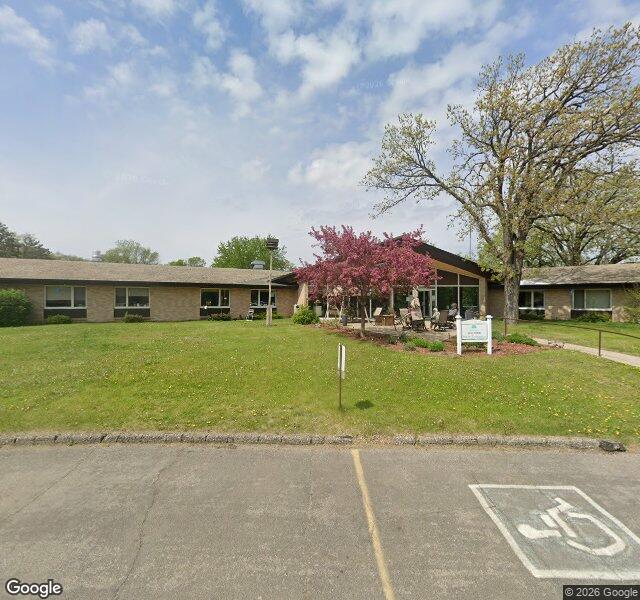
Glen Oaks Senior Living Campus
102 Glenoaks Drive, New London, MN 56273View map (opens in a new tab)
Overview and key essentials
State license
Active
MN MDH
Google reviews
3.5/ 5
13 reviews
Size & payment
Ask directly
Confirm pricing & payment
Mixed signals — tour closely
Public Google reviews reflect mixed experiences (3.5/5). Compare recent reviews and tour in person.
Cost, payment & care details
Updated Nov 28, 2026| Monthly cost | Not published | Ask for the full monthly cost, including care fees and one-time charges. |
|---|---|---|
| Payment options | Ask directly | Payment details are not confirmed in our records. Ask about private pay, long-term care insurance, veterans benefits, and Medicaid waivers. |
| Size & availability | Confirm directly | We don't publish live openings. Ask about current availability, waitlist length, and move-in timing. |
| Care & support | Assisted living | Usually offers housing and help with everyday tasks, such as bathing and dressing. What to confirm about care levelsThis describes the licensed category. Ask how care plans adjust if mobility, nursing, or memory needs change over time. Read the family care guide → |
State licensing
State inspection history
2inspections
10deficiencies listed
Oct 3, 2025Routine6 deficiencies reported6
6 deficiencies reported
View official state report (opens in a new tab)
144G.41 Subdivision 1 Minimum requirements0470
SS=F 0 470 STATE FORM
144G.42 Subd. 9 Tuberculosis prevention and0660
SS=D control (a) The facility must establish and maintain a comprehensive tuberculosis infection control program according to the most current tuberculosis infection control guidelines issued STATE FORM by the United States Centers for Disease Control and Prevention (CDC), Division of Tuberculosis Elimination, as published in the CDC's Morbidity and Mortality Weekly Report. The program must include a tuberculosis infection control plan that covers all paid and unpaid employees, contractors, students, and regularly scheduled volunteers. The commissioner shall provide technical assistance regarding implementation of the guidelines. (b) The facility must maintain written evidence of compliance with this subdivision. This MN Requirement is not met as evidenced by: Based on interview and record review, the licensee failed to establish and maintain a tuberculosis (TB) prevention and control program, based on the most current guidelines issued by the Centers for Disease Control and Prevention (CDC), which included a current two-step tuberculin skin test (TST) or other evidence of TB screening such as a blood test, for one of one employee (unlicensed personnel (ULP)-B). This practice resulted in a level two violation (a violation that did not harm a client's health or safety but had the potential to have harmed a client's health or safety, but was not likely to cause serious injury, impairment, or death), and was issued at an isolated scope (when one or a limited number of clients are affected or one or a limited number of staff are involved or the situation has occurred only occasionally). The findings include: The licensee's Facility TB Risk Assessment STATE FORM
144G.43 Subd. 3 Contents of resident record0730
SS=D Contents of a resident record include the following for each resident: (1) identifying information, including the resident's name, date of birth, address, and telephone number; (2) the name, address, and telephone number of the resident's emergency contact, legal representatives, and designated representative; (3) names, addresses, and telephone numbers of the resident's health and medical service providers, if known; (4) health information, including medical history, allergies, and when the provider is managing medications, treatments or therapies that require documentation, and other relevant health records; (5) the resident's advance directives, if any; (6) copies of any health care directives, guardianships, powers of attorney, or conservatorships; (7) the facility's current and previous assessments and service plans; (8) all records of communications pertinent to the resident's services; (9) documentation of significant changes in the resident's status and actions taken in response to the needs of the resident, including reporting to STATE FORM On September 29, 2025, at 12:06 p.m. licensed assisted living director/ clinical nurse supervisor (LALD/CNS)-A provided R3's discharge with all required content dated September 29, 2025, upon survey. On October 1, 2023, at 10:29 a.m. LALD/CNS-A stated that they did not complete R3's discharge summary prior to start of survey and had completed on September 29, 2025, after surveyor requested R3's information. Licensee's Discharge Summary and Plan policy dated October 2022, read "the discharge summary includes a recapitulation of the resident's stay at the facility and a final summary of the resident's status at the time of the discharge in accordance with established regulations governing release of resident information and as permitted by the resident." No further information was provided. TIME PERIOD FOR CORRECTIONS: Twenty-one (21) days 01530 144G.64 (a) (1-2) Training in Dementia, Mental SS=F Illness, and De- (a) All assisted living facilities must meet the following dementia care, mental illness, and de-escalation training requirements: (1) supervisors of direct-care staff must have at least eight hours of initial training on dementia topics specified under paragraph (b), clauses (1) to (5), and two hours of initial training on mental illness and de-escalation topics specified under paragraph (b), clauses (6) to (8), within 120 STATE FORM
144G.41 Subdivision 1 Subd. 1a (a-b) Minimum0480
SS=F requirements; required food services (a) Except as provided in paragraph (b), food must be prepared and served according to the Minnesota Food Code, Minnesota Rules, chapter 4626. (b) For an assisted living facility with a licensed capacity of ten or fewer residents: (1) notwithstanding Minnesota Rules, part 4626.0033, item A, the facility may share a certified food protection manager (CFPM) with one other facility located within a 60-mile radius and under common management provided the STATE FORM This MN Requirement is not met as evidenced by: Based on observation, interview, and record review, the licensee failed to ensure food was prepared and served according to the Minnesota Food Code. This practice resulted in a level two violation (a violation that did not harm a resident's health or safety but had the potential to have harmed a resident's health or safety, but was not likely to cause serious injury, impairment, or death), and is issued at a widespread scope (when problems are pervasive or represent a systemic failure that has affected or has the potential to affect a large portion or all of the residents). The findings include: Please refer to the document titled, Food and Beverage Establishment Inspection Report (FBEIR) dated September 29, 2025, for the specific Minnesota Food Code violations. The Inspection Report was provided to the licensee within 24 hours of the inspection. TIME PERIOD FOR CORRECTION: Please refer to the FBEIR for any compliance dates.
144G.42 Subd. 10 Disaster planning and0680
SS=F emergency preparedness (a) The facility must meet the following requirements: (1) have a written emergency disaster plan that contains a plan for evacuation, addresses elements of sheltering in place, identifies temporary relocation sites, and details staff assignments in the event of a disaster or an emergency; (2) post an emergency disaster plan prominently; (3) provide building emergency exit diagrams to all residents; (4) post emergency exit diagrams on each floor; and (5) have a written policy and procedure regarding missing residents. (b) The facility must provide emergency and disaster training to all staff during the initial staff orientation and annually thereafter and must make emergency and disaster training annually available to all residents. Staff who have not received emergency and disaster training are allowed to work only when trained staff are also working on site. (c) The facility must meet any additional requirements adopted in rule. This MN Requirement is not met as evidenced by: Based on interview and record review, the licensee failed to post an emergency disaster plan prominently and develop a written emergency preparedness plan (EPP) and failed to review the missing person policy quarterly. This had the potential to affect all residents, employees, and visitors to the facility. This practice resulted in a level two violation (a STATE FORM
VIDL116899
(11) develop and implement a staffing plan for determining its staffing level that: (i) includes an evaluation, to be conducted at least twice a year, of the appropriateness of staffing levels in the facility; (ii) ensures sufficient staffing at all times to meet the scheduled and reasonably foreseeable unscheduled needs of each resident as required by the residents' assessments and service plans on a 24-hour per day basis; and (iii) ensures that the facility can respond promptly and effectively to individual resident emergencies and to emergency, life safety, and disaster situations affecting staff or residents in the facility; (12) ensure that one or more persons are available 24 hours per day, seven days per week, who are responsible for responding to the requests of residents for assistance with health or safety needs. Such persons must be: (i) awake; (ii) located in the same building, in an attached building, or on a contiguous campus with the facility in order to respond within a reasonable amount of time; (iii) capable of communicating with residents; (iv) capable of providing or summoning the appropriate assistance; and (v) capable of following directions; This MN Requirement is not met as evidenced by: Based on interview, and record review, the licensee failed to ensure the clinical nurse supervisor (CNS) developed and implemented a staffing plan to determine staffing levels to meet the needs of all residents, which included reviewing the staffing plan at least twice per year. This had the potential to affect all residents, staff, STATE FORM VIDL11 and visitors. This practice resulted in a level two violation (a violation that did not harm a resident's health or safety but had the potential to have harmed a resident's health or safety, but was not likely to cause serious injury, impairment, or death), and was issued at a widespread scope (when problems are pervasive or represent a systemic failure that has affected or has potential to affect a large portion or all of the residents). The findings include: The licensee held an assisted living license and was licensed for a capacity of 24 residents, with a current census of 11 residents. During the entrance conference on September 29, 2025, at 9:06 a.m., licensed assisted living director/clinical nurse supervisor (LALD/CNS)-A stated they had developed the staffing plan. On September 29, 2025, at 12:10 p.m. LALD/CNS -A provided licensee's staffing plan dated April 4, 2025. The licensee's staffing plan lacked evidence a metric was used to determine staffing needs and being reviewed at least twice per year. On October 1, 2025, at 10:25 a.m., LALD/CNS-A stated they were not aware the staffing schedule review was required twice a year and thought it was annually. Per Assisted Living Facilities: Minnesota Rules Chapter 4659.0180, Subp. 3, effective October 2022, the CNS must develop and implement a STATE FORM VIDL11 written staffing plan that provides an adequate number of qualified direct-care staff to meet the residents' needs 24 hours a day, seven days a week. When developing a direct-care staffing plan, the CNS must ensure that staffing levels are adequate to address the following: (A) each resident's needs, as identified in the resident's service plan and assisted living contract; (B) each resident's acuity level, as determined by the most recent assessment or individualized review; (C) the ability of staff to timely met the residents' scheduled and reasonably...
Aug 24, 2023Routine4 deficiencies reported4
4 deficiencies reported
View official state report (opens in a new tab)
144G.41 Subd 1 (13) (i) (B) Minimum0480
SS=F requirements 0 480 STATE FORM
TLVH116899
(13) offer to provide or make available at least the following services to residents: (B) food must be prepared and served according to the Minnesota Food Code, Minnesota Rules, chapter 4626; and This MN Requirement is not met as evidenced by: Based on observation, interview, and record review, the licensee failed to ensure food was prepared and served according to the Minnesota Food Code. This practice resulted in a level two violation (a violation that did not harm a resident's health or safety but had the potential to have harmed a resident's health or safety, but was not likely to cause serious injury, impairmBased on observation, interview, and record review, the licensee failed to ensure food was prepared and served according to the Minnesota Food Code. This practice resulted in a level two violation (a violation that did not harm a resident's health or safety but had the potential to have harmed a resident's health or safety, but was not likely to cause serious injury, impairment, or death), and was issued at a widespread scope (when problems are pervasive or represent a systemic failure that has affected or has potential to affect a large portion or all of the residents). The findings include: Please refer to the included document titled, Food and Beverage Establishment Inspection Report dated August 21, 2023, for the specific Minnesota Food Code deficiencies. TIME PERIOD FOR CORRECTION: Twenty-one STATE FORM TLVH11 (21) daysent, or death), and was issued at a widespread scope (when problems are pervasive or represent a systemic failure that has affected or has potential to affect a large portion or all of the residents). The findings include: Please refer to the included document titled, Food and Beverage Establishment Inspection Report dated August 21, 2023, for the specific Minnesota Food Code deficiencies. TIME PERIOD FOR CORRECTION: Twenty-one (21) days TLVH11 unlicensed personnel ((ULP)-E) observed to perform blood glucose monitoring. This practice resulted in a level two violation (a violation that did not harm a resident's health or safety but had the potential to have harmed a resident's health or safety, but was not likely to cause serious injury, impairment, or death), and was issued at an isolated scope (when one or a limited number of residents are affected or one or a limited number of staff are involved or the situation has occurred only occasionally). The findings include: On August 23, 2023, at 11:15 a.m., the surveyor observed ULP-E perform a blood glucose check on R2 in her apartment. ULP-E donned clean gloves, wiped R2's middle finger on her right hand, poked the finger with a lancet, wiped the blood off and placed a sample of the blood on the test strip inserted in the glucometer. ULP-E then handed R2 a tissue to hold on her finger, grabbed the Humalog KwikPen, removed the cap, wiped the top with an alcohol wipe, placed a needle, primed the insulin pen, drew up 10 units, wiped R2's right upper thigh with an alcohol wipe, and administered the insulin. After ULP-E disposed of the needle in the sharps container on the counter, she removed her gloves and washed her hands in the bathroom. On August 23, 2023, at approximately 11:25 a.m., ULP-E stated she had been trained to perform the blood sugar and insulin this way, and had not been trained to perform hand hygiene or removed gloves between the procedures. On August 23, 2023, at 12:40 p.m., clinical nurse supervisor (CNS)-A stated she had not heard of STATE...
144G.41 Subd. 3 Infection control program0510
SS=D (a) All assisted living facilities must establish and maintain an infection control program that complies with accepted health care, medical, and nursing standards for infection control. (b)The facility's infection control program must be consistent with current guidelines from the national Centers for Disease Control and Prevention (CDC) for infection prevention and control in long-term care facilities and, as applicable, for infection prevention and control in assisted living facilities. (c) The facility must maintain written evidence of compliance with this subdivision. This MN Requirement is not met as evidenced by: Based on observation, interview, and record review, the licensee failed to establish and maintain an infection control program to comply with accepted health care, medical, and nursing standards for infection control for one of two STATE FORM
144G.42 Subd. 10 Disaster planning and0680
SS=F emergency preparedness (a) The facility must meet the following requirements: (1) have a written emergency disaster plan that contains a plan for evacuation, addresses elements of sheltering in place, identifies temporary relocation sites, and details staff assignments in the event of a disaster or an emergency; (2) post an emergency disaster plan prominently; (3) provide building emergency exit diagrams to all residents; (4) post emergency exit diagrams on each floor; and (5) have a written policy and procedure regarding missing residents. (b) The facility must provide emergency and disaster training to all staff during the initial staff orientation and annually thereafter and must make emergency and disaster training annually available to all residents. Staff who have not received emergency and disaster training are allowed to work only when trained staff are also STATE FORM
Neighborhood & resident support
Emergency access, hazards & advocacy
Nearest hospital
Centracare Health Paynesville
12.2 mi · Paynesville, MN
Emergency room
FEMA hazard risk
Relatively LowKandiyohi County, MN
- Strong Wind
- Hail
- Cold Wave
Free resident advocacy
Minnesota Office of Ombudsman for Long-Term Care
More neighborhood context (specialists, VA, dialysis, air & affordability)
VA & dialysis access
St Cloud VA Medical Center
40.0 mi · St. Cloud, MN
Fresenius Kidney Care Willmar
14.7 mi · 3/5 ★ · Home dialysis
Specialists within 15 mi
- Geriatricians
- 0
- Neurologists
- 3
- Palliative care
- 2
- PM&R rehab
- 1
Environment & mobility
- EPA Walkability
- 7.1/20 (Below Average)
- USDA Grocery Access
- Moderate Grocery Access
- Primary care access
- HRSA Shortage Area
County demographics
- Age 65+ median income
- $62,592/yr
- Rent-burdened households
- 36%
- Cognitive disability (2023)
- 14.3%
- Mobility disability
- 10.9%
Call & tour checklist
Questions to ask Glen Oaks Senior Living Campus
Check off questions as you call or tour. Your progress stays private in this browser.
Show 3 more suggested questions
Verification & public records
Official records & sources
Licensing & contact
- License #
- 20303
- Status
- active
- Phone
- (320) 354-6057
- Federal OIG LEIE
- Clear (2026-11-27)
Original public sources
Verify licensing, ratings, and inspection reports directly with each official source.
- MN MDH official record (opens in a new tab)MN Dept. of Health
- Google Maps (opens in a new tab)Directions, photos & neighborhood
- Google Reviews (opens in a new tab)13 public reviews
EveryPlace is an independent research directory. Information is compiled from public Medicare.gov, state licensing, Google Places, and street-level imagery sources. Some summaries, suggested questions, and pricing notes are AI-generated or AI-assisted and may contain errors or omissions. We do not accept payment for placement. Confirm all details directly with the community and official sources. Research Policy.
Keep exploring