Loading EveryPlace content…
Assisted LivingActive licenseMemory care certified
Glacial Trails Memory Care
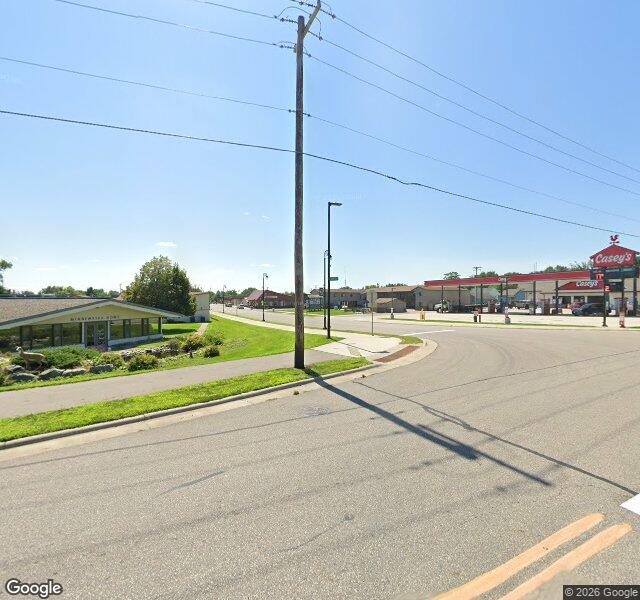
109 East 7th Street, Starbuck, MN 56381View map (opens in a new tab)
Overview and key essentials
State license
Active
MN MDH
Google reviews
Not available
Public reviews not linked
Size & payment
Ask directly
Confirm pricing & payment
Public records for this community are limited. Use the checklist below when you call or visit to confirm pricing, services, and openings.
Cost, payment & care details
Updated Nov 28, 2026| Monthly cost | Not published | Ask for the full monthly cost, including care fees and one-time charges. |
|---|---|---|
| Payment options | Ask directly | Payment details are not confirmed in our records. Ask about private pay, long-term care insurance, veterans benefits, and Medicaid waivers. |
| Size & availability | Confirm directly | We don't publish live openings. Ask about current availability, waitlist length, and move-in timing. |
| Care & support | Assisted livingMemory care certified | Usually offers housing and help with everyday tasks, such as bathing and dressing. What to confirm about care levelsThis describes the licensed category. Ask how care plans adjust if mobility, nursing, or memory needs change over time. Read the family care guide → |
State licensing
State inspection history
2inspections
10deficiencies listed
Jul 14, 2025Routine6 deficiencies reported6
6 deficiencies reported
View official state report (opens in a new tab)
144G.45 Subd. 2. (a) Fire protection and physical0775
SS=E environment Each assisted living facility must comply with the STATE FORM documents. Record review indicated the emergency plan did not include procedures to operate and unlock the controlled egress door locking system. During an interview on July 14, 2025, at 2:35 p.m., LALD-A verified these instructions had not been developed and were not included in the emergency plan. TIME PERIOD FOR CORRECTION: Seven (7) days
MTPD116899
(a) Except as provided in paragraph (b), food must be prepared and served according to the Minnesota Food Code, Minnesota Rules, chapter 4626. (b) For an assisted living facility with a licensed capacity of ten or fewer residents: (1) notwithstanding Minnesota Rules, part 4626.0033, item A, the facility may share a certified food protection manager (CFPM) with one other facility located within a 60-mile radius and under common management provided the CFPM is present at each facility frequently enough to effectively administer, manage, and supervise each facility's food service operation; (2) notwithstanding Minnesota Rules, part 4626.0545, item A, kick plates that are not removable or cannot be rotated open are allowed unless the facility has been issued repeated correction orders for violations of Minnesota Rules, part 4626.1565 or 4626.1570; (3) notwithstanding Minnesota Rules, part 4626.0685, item A, the facility is not required to provide integral drainboards, utensil racks, or tables large enough to accommodate soiled and clean items that may accumulate during hours of operation provided soiled items do not contaminate clean items, surfaces, or food, and clean equipment and dishes are air dried in a manner that prevents contamination before storage; (4) notwithstanding Minnesota Rules, part 4626.1070, item A, the facility is not required to install a dedicated handwashing sink in its existing kitchen provided it designates one well of a two-compartment sink for use only as a handwashing sink; (5) notwithstanding Minnesota Rules, parts 4626.1325, 4626.1335, and 4626.1360, item A, existing floor, wall, and ceiling finishes are STATE FORM MTPD11 allowed provided the facility keeps them clean and in good condition; (6) notwithstanding Minnesota Rules, part 4626.1375, shielded or shatter-resistant lightbulbs are not required, but if a light bulb breaks, the facility must discard all exposed food and fully clean all equipment, dishes, and surfaces to remove any glass particles; and (7) notwithstanding Minnesota Rules, part 4626.1390, toilet rooms are not required to be provided with a self-closing door. This MN Requirement is not met as evidenced by: Based on observation, interview, and record review, the licensee failed to ensure food was prepared and served according to the Minnesota Food Code. This practice resulted in a level two violation (a violation that did not harm a resident's health or safety but had the potential to have harmed a resident's health or safety) and was issued at a widespread scope (when problems are pervasive or represent a systemic failure that has affected or has the potential to affect a large portion or all the residents). The findings include: Please refer to the document titled, Food and Beverage Establishment Inspection Report (FBEIR) dated July 14, 2025, for the specific Minnesota Food Code violations. The Inspection Report was provided to the licensee within 24 hours of the inspection. TIME PERIOD FOR CORRECTION: Please refer STATE FORM MTPD11 to the FBEIR for any compliance dates. MTPD11 resident's health or safety, but was not likely to cause serious injury, impairment, or death), and was issued at an isolated scope (when one or a limited number of residents are affected or one or a limited number of staff are involved or the situation has occurred only occasionally). The findings include: The licensee's TB risk assessment dated March 6, 2025, indicated the licensee was a low risk. ULP-D was hired...
144G.41 Subdivision 1 Subd. 1a (a-b) Minimum0480
SS=F requirements; required food services 0 480 STATE FORM
144G.45 Subd. 2 (a) (1) Fire protection and0780
SS=E physical environment (a) Each assisted living facility must comply with the State Fire Code in Minnesota Rules, chapter 7511, and: (1) for dwellings or sleeping units, as defined in the State Fire Code: (i) provide smoke alarms in each room used for sleeping purposes; (ii) provide smoke alarms outside each separate sleeping area in the immediate vicinity of bedrooms; (iii) provide smoke alarms on each story within a dwelling unit, including basements, but not including crawl spaces and unoccupied attics; (iv) where more than one smoke alarm is required within an individual dwelling unit or sleeping unit, interconnect all smoke alarms so that actuation of one alarm causes all alarms in the individual dwelling unit or sleeping unit to operate; and (v) ensure the power supply for existing smoke alarms complies with the State Fire Code, except that newly introduced smoke alarms in existing buildings may be battery operated; STATE FORM This MN Requirement is not met as evidenced by: Based on observation and interview, the licensee failed to provide smoke alarms that complied with fire protection requirements. This practice resulted in a level two violation (a violation that did not harm a resident's health or safety but had the potential to have harmed a resident's health or safety, but was not likely to cause serious injury, impairment, or death) and was issued at a pattern scope (when more than a limited number of residents are affected, more than a limited number of staff are involved, or the situation has occurred repeatedly; but is not found to be pervasive). The findings include: On July 14, 2025, at 12:10 p.m., the surveyor toured the facility with environmental services director (ESD)-E. During the facility tour, the surveyor observed smoke alarms were not installed in resident sleeping rooms 125, 126, 127, 129, 132, and 133. Smoke detectors without sounder bases were installed in these resident rooms. During the facility tour interview, ESD-E verified the above listed smoke alarm and smoke detector observations. TIME PERIOD FOR CORRECTION: Seven (7) days
144G.45 Subd. 2 (b-f) Fire protection and0810
SS=E physical environment (b) Each assisted living facility shall develop and maintain fire safety and evacuation plans. The STATE FORM violation that did not harm a resident's health or safety but had the potential to have harmed a resident's health or safety, but was not likely to cause serious injury, impairment, or death) and was issued at a pattern scope (when more than a limited number of residents are affected, more than a limited number of staff are involved, or the situation has occurred repeatedly; but is not found to be pervasive). The findings include: On July 14, 2025, licensed assisted living director (LALD)-A and nursing consultant (NC)-C provided documents on the fire safety and evacuation plan (FSEP), fire safety and evacuation training, and evacuation drills for the facility. FIRE SAFETY AND EVACUATION PLAN All parts of the fire safety and evacuation plan (FSEP) were not located in a central location for all staff accessibility. LALD-A and NC-C stated during an interview on July 14, 2025, at 2:30 p.m., that the specific procedures for individualized unique needs of residents for evacuation during a fire or similar emergency were updated every 2 weeks and maintained electronically. These electronic records were accessible on the computer and using cell phones, even when there is no WiFi available. Printed hard copies of these procedures were not maintained as readily available. Additionally, the FSEP did not include instructions on how to access these individualized resident evacuation procedures. During an interview on July 14, 2025, at 2:35 p.m., LALD-A and NC-C verified printed copies of these procedures were not maintained. TRAINING Record review indicated the licensee failed to make fire safety and evacuation training available to residents at least once per year. The surveyor requested documentation for resident training on fire safety and evacuation offered in the past year STATE FORM
144G.42 Subd. 9 Tuberculosis prevention and0660
SS=D control (a) The facility must establish and maintain a comprehensive tuberculosis infection control program according to the most current tuberculosis infection control guidelines issued by the United States Centers for Disease Control and Prevention (CDC), Division of Tuberculosis Elimination, as published in the CDC's Morbidity and Mortality Weekly Report. The program must include a tuberculosis infection control plan that covers all paid and unpaid employees, contractors, students, and regularly scheduled volunteers. The commissioner shall provide technical assistance regarding implementation of the guidelines. (b) The facility must maintain written evidence of compliance with this subdivision. This MN Requirement is not met as evidenced by: Based on interview, and record review, the licensee failed to establish and maintain a tuberculosis (TB) prevention program, based on the most current guidelines issued by the Centers for Disease Control and Prevention (CDC) including documentation of completion of a two-step TST (tuberculin skin test) or other evidence of TB screening such as a blood test and documentation of a completed health history and symptom screen for one of one employee (unlicensed personnel (ULP)-D). This practice resulted in a level two violation (a violation that did not harm a resident's health or safety but had the potential to have harmed a STATE FORM
May 3, 2023Routine4 deficiencies reported4
4 deficiencies reported
View official state report (opens in a new tab)
moderate0480
requirements 0 480 (13) offer to provide or make available at least the following services to residents: (B) food must be prepared and served according to the Minnesota Food Code, Minnesota Rules, chapter 4626; and This MN Requirement is not met as evidenced by: Based on observation, interview and record review, the licensee failed to ensure food was prepared and served according to the Minnesota Food Code. This practice resulted in a level two violation (a violation that did not harm a resident's health or safety but had the potential to have harmed a resident's health or safety) and was issued at a widespread scope (when problems are pervasive or represent a systemic failure that has affected or has the potential to affect a large portion or all the residents). The findings include: Please refer to the included document titled, Food and Beverage Establishment Inspection Report dated May 2, 2023, for the specific Minnesota Food Code deficiencies. TIME PERIOD FOR CORRECTION: Twenty-one (21) days
STATE FORM6899
43VG11 STATE FORM 43VG11 STATE FORM 43VG11 STATE FORM 43VG11 STATE FORM 43VG11 STATE FORM 43VG11 STATE FORM 43VG11 01880 01880 During the entrance conference on May 1, 2023, at 10:20 a.m., registered nurse (RN)-B stated the licensee provided medication management services to the residents at the facility. During the entrance conference on May 1, 2023, at 10:26 a.m., licensed assisted living director (LALD)-A stated all resident medications were stored in the licensee's medication cart. On May 3, 2023, at 7:24 a.m., the surveyor observed unlicensed personnel (ULP)-E begin the medication administration process for R2 at the medication cart located in the resident dining room. ULP-E then took R2's medications down to the resident room located down a hallway with the medication cart no longer in site and did not lock the medication cart. ULP-E administered R2's morning medications and returned to the medication cart to document. ULP-E left the medication cart, went into the medication room to retrieve an ice pack, and returned to R2's room and applied the ice pack. On May 3, 2023, at 7:40 a.m., upon returning to the medication cart, ULP-E stated she forgot to lock the medication cart and should have when not present at the medication cart. On May 3, 2023, at 9:28 a.m., LALD-A and RN-F stated the medication cart should be locked when staff are not present at the medication cart. The licensee's storage of medications dated August 1, 2021, indicated the RN will determine the appropriate method to store resident's medications and whether secured storage is appropriate given the resident's functional and cognitive status. STATE FORM 43VG11 01880 01880 No further information was provided. TIME PERIOD FOR CORRECTION: Seven (7) days 01890 144G.71 Subd. 20 Prescription drugs SS=E A prescription drug, prior to being set up for immediate or later administration, must be kept in the original container in which it was dispensed by the pharmacy bearing the original prescription label with legible information including the expiration or beyond-use date of a time-dated drug. This MN Requirement is not met as evidenced by: Based on observation, interview and record review, the licensee failed to ensure medications were maintained with the original prescription label, including the expiration date for time sensitive medications, for one of one resident (R6). In addition, the licensee failed to monitor for expired medications for two of three residents (R2, R3). This practice resulted in a level two violation (a violation that did not harm a resident's health or safety but had the potential to have harmed a resident's health or safety) and was issued at a pattern scope (when more than a limited number of residents are affected, more than a limited number of staff are involved, or the situation has occurred repeatedly; but is not found to be pervasive). The findings include: During the entrance conference on May 1, 2023, STATE FORM 43VG11 01890 01890 at 10:20 a.m., registered nurse (RN)-B stated the licensee provided medication management services to the residents at the facility. ORIGINAL PRESCRIPTION LABEL INCLUDING DATING TIME SENSATIVE MEDICATIONS On May 1, 2023, at 11:08 a.m., the surveyor toured the facility with licensed assisted living director (LALD)-A, including a review of the medication refrigerator located in the medication room. The refrigerator contained one Lantus 100 units/milliliter (mL) pen (a multiple dose pen shaped injector device for...
moderate0700
(b) Resident records, whether written or electronic, must be protected against loss, tampering, or unauthorized disclosure in compliance with chapter 13 and other applicable relevant federal and state laws. The facility shall establish and implement written procedures to control use, storage, and security of resident records and establish criteria for release of resident information. This MN Requirement is not met as evidenced by: Based on observation and interview, the licensee failed to ensure resident's personal health and medical information was kept private. This had the potential to affect all 16 residents. This practice resulted in a level two violation (a violation that did not harm a resident's health or safety but had the potential to have harmed a resident's health or safety), and was issued at a widespread scope (when problems are pervasive or represent a systemic failure that has affected or has the potential to affect a large portion or all of the residents). The findings include: On May 3, 2023, from 7:20 a.m. through 8:09 a.m., the surveyor observed an open computer screen sitting on top of the medication cart in the resident dining room. The computer screen displayed resident names and medication information. There were residents present in the dining room seated at tables, and residents ambulating throughout the dining room. On May 3, 2023, at 8:09 a.m., unlicensed personnel (ULP)-E stated staff always leave the computer screen open when not present at the computer, however it should be minimized (an action to hide the resident information screen) or closed since resident information was displayed. On May 3, 2023, at 9:28 a.m., licensed assisted living director (LALD)-A and registered nurse (RN)-F stated the computer displays resident medical information and the computer should be closed when staff are not present at the computer. No further information was provided. TIME PERIOD FOR CORRECTION: Twenty-One (21) days 01880 144G.71 Subd. 19 Storage of medications SS=D An assisted living facility must store all prescription medications in securely locked and substantially constructed compartments according to the manufacturer's directions and permit only authorized personnel to have access. This MN Requirement is not met as evidenced by: Based on observation, interview and record review, the licensee failed to ensure medications were secure and permitted access to only authorized personnel for one of one medication cart. This had the potential to affect all 16 residents, staff, and visitors. This practice resulted in a level two violation (a violation that did not harm a resident's health or safety but had the potential to have harmed a resident's health or safety) and was issued at an isolated scope (when one or a limited number of residents are affected or one or a limited number of staff are involved, or the situation has occurred only occasionally). The findings include:
moderate0650
(a) The facility must maintain current records of each paid employee, each regularly scheduled volunteer providing services, and each individual contractor providing services. The records must include the following information: (1) evidence of current professional licensure, registration, or certification if licensure, registration, or certification is required by this chapter or rules; (2) records of orientation, required annual training and infection control training, and competency evaluations; (3) current job description, including qualifications, responsibilities, and identification of staff persons providing supervision; (4) documentation of annual performance reviews that identify areas of improvement needed and training needs; (5) for individuals providing assisted living services, verification that required health screenings under subdivision 9 have taken place and the dates of those screenings; and (6) documentation of the background study as required under section 144.057. This MN Requirement is not met as evidenced by: Based on observation, interview and record review, the licensee failed to ensure employee records contained the required content for one of one employee (unlicensed personnel (ULP)-E). This practice resulted in a level two violation (a violation that did not harm a resident's health or safety but had the potential to have harmed a resident's health or safety) and was issued at a widespread scope (when problems are pervasive or represent a systemic failure that has affected or has the potential to affect a large portion or all of the residents). The findings include: During the entrance conference on May 1, 2023, at 10:32 a.m., licensed assisted living director (LALD)-A stated the licensee was aware of the required contents of the employee records. ULP-E was hired on January 24, 2022, to provide assisted living services. On May 2, 2023, at 1:49 p.m., ULP-E stated training and competency testing was done by LALD-A, registered nurse (RN)-B and clinical nurse supervisor (CNS)-C. On May 3, 2023, at 7:24 a.m., the surveyor observed ULP-E provide medication administration for R2. ULP-E's record lacked the following competency evaluation documentation: -appropriate and safe techniques in personal hygiene and grooming, including: hair care and bathing; care of teeth, gums and oral prosthetic devices; care and use of hearing aids; and dressing and assisting with toileting; -standby assistance techniques and how to perform them; -reading and recording temperature, pulse, and respirations of the resident; -safe transfer techniques and ambulation; -range of motioning and positioning; and -administering medications or treatments as required. On May 3, 2023, at 10:34 a.m., RN-F stated the Memory Care Minnesota Orientation Checklist- Caregiver in ULP-E's file indicated ULP-E passed competency for the competencies listed above. RN-F stated they do not have a separate competency evaluation documentation for ULPs to indicate if the competency was passed or failed and the RN only would sign the Memory Care Minnesota Orientation Checklist-Caregiver if all the competencies are passed. The surveyor reviewed the Memory Care Minnesota Orientation Checklist-Caregiver and confirmed the following findings with RN-F: -ULP-E's record contained a three (3) page Memory Care Minnesota Orientation Checklist-Caregiver provided by the licensee's online training provider signed by LALD-A, registered nurse (RN)-F and ULP-E all dated February...
Neighborhood & resident support
Emergency access, hazards & advocacy
Nearest hospital
Glacial Ridge Hospital
7.2 mi · Glenwood, MN · Medicare 4/5 ★
Emergency room
FEMA hazard risk
Very LowPope County, MN
- Winter Weather
- Cold Wave
- Landslide
Free resident advocacy
Minnesota Office of Ombudsman for Long-Term Care
More neighborhood context (specialists, VA, dialysis, air & affordability)
VA & dialysis access
St Cloud VA Medical Center
63.7 mi · St. Cloud, MN
Fresenius Kidney Care Douglas County
18.7 mi · 5/5 ★
Specialists within 15 mi
- Geriatricians
- 0
- Neurologists
- 1
- Palliative care
- 0
- PM&R rehab
- 1
Environment & mobility
- EPA Walkability
- 5.7/20 (Least Walkable)
- USDA Grocery Access
- Moderate Grocery Access
- Primary care access
- HRSA Shortage Area
County demographics
- Age 65+ median income
- $52,696/yr
- Rent-burdened households
- 54%
- Cognitive disability (2023)
- 14.2%
- Mobility disability
- 10.5%
Call & tour checklist
Questions to ask Glacial Trails Memory Care
Check off questions as you call or tour. Your progress stays private in this browser.
Show 3 more suggested questions
Verification & public records
Official records & sources
Licensing & contact
- License #
- 32278
- Status
- active
- Phone
- (320) 239-7126
- Federal OIG LEIE
- Clear (2026-11-27)
Original public sources
Verify licensing, ratings, and inspection reports directly with each official source.
- MN MDH official record (opens in a new tab)MN Dept. of Health
- Google Maps (opens in a new tab)Directions, photos & neighborhood
- Google Reviews (opens in a new tab)Read public reviews
EveryPlace is an independent research directory. Information is compiled from public Medicare.gov, state licensing, Google Places, and street-level imagery sources. Some summaries, suggested questions, and pricing notes are AI-generated or AI-assisted and may contain errors or omissions. We do not accept payment for placement. Confirm all details directly with the community and official sources. Research Policy.
Keep exploring
Nearby communities to compare
- Medicare 3/52.3(3)39 bedsMedicaidNursing Home< 1 miMinnewaska Community Health ServicesStarbuck, MN
- 4.0(4)Assisted Living< 1 miHolly Ridge ManorStarbuck, MN
- Medicare 2/53.9(9)64 bedsMedicaidNursing Home7.3 miGlenwood Village Care CenterGlenwood, MN
- Assisted Living7.4 miParkview CourtGlenwood, MN
- 4.4(8)Assisted Living7.4 miGlenwood EstatesGlenwood, MN
- Cap. 48HUD Senior Housing7.6 miGlenview ApartmentsGlenwood, MN