Loading EveryPlace content…
Memory CareActive license
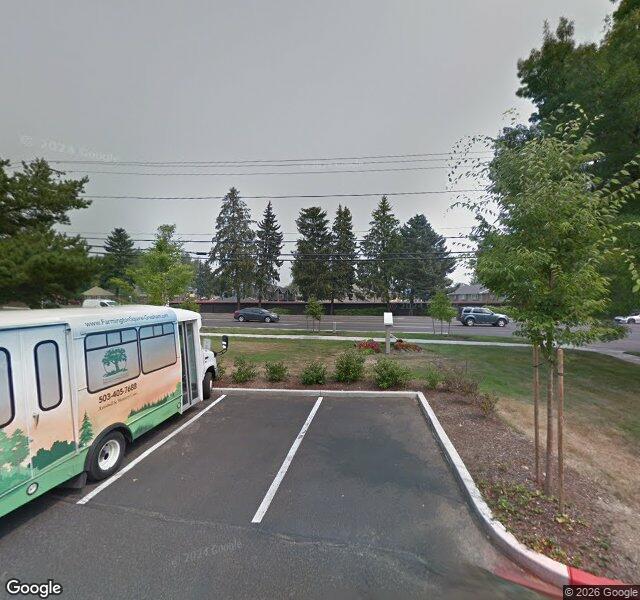
Farmington Square Gresham
1655 Ne 18th, North Central, Gresham, OR 97030View map (opens in a new tab)
Overview and key essentials
State license
Active
OR ODHS
Google reviews
4.1/ 5
45 reviews
Size & payment
102 residents
Medicaid listed
Strong public signals
Rated 4.1/5 across 45 public Google reviews. Visit in person to confirm daily care and pricing.
Cost, payment & care details
Updated Nov 28, 2026| Monthly cost | Not published | Ask for the full monthly cost, including care fees and one-time charges. |
|---|---|---|
| Payment options | Medicaid | Participation is reported in our source data. Confirm eligibility, covered services, and any private-pay costs. Verified Medicaid waiver: Oregon Medicaid APD Long-Term Services (Oregon Dept. of Human Services (ODHS)). |
| Size & availability | 102 residents | We don't publish live openings. Ask about current availability, waitlist length, and move-in timing. |
| Care & support | Memory care | Designed for people living with dementia who need a supported daily routine. What to confirm about care levelsThis describes the licensed category. Ask how care plans adjust if mobility, nursing, or memory needs change over time. Read the family care guide → |
State licensing
State inspection history
8inspections
34deficiencies listed
Mar 20, 2025Routine15 deficiencies reported15
15 deficiencies reported
View official state report (opens in a new tab)
Re-Licensure
moderateC0510
OAR 411-054-0200 (3) General Building Exterior (3) GENERAL BUILDING EXTERIOR.(a) All exterior pathways and accesses to the RCF common-use areas, entrance, and exit ways must be made of hard, smooth material, be accessible, and maintained in good repair.(b) A RCF must take measures to prevent the entry of rodents, flies, mosquitoes, and other insects. There must be locked storage for all poisons, chemicals, rodenticides, and other toxic materials. All materials must be properly labeled.(c) RCF grounds must be kept orderly and free of litter and refuse. Garbage must be stored in covered refuse containers.(d) As described in OAR 411, division 057, memory care communities licensed as a RCF must be located on the ground floor. A CF cannot be endorsed as a memory care community.(e) A RCF must provide storage for all maintenance equipment, including yard maintenance tools, if not provided by a third-party contract.(f) A RCF must provide an accessible outdoor recreation area. The outdoor recreation area must be available to all residents. Lighting must be equal to a minimum of five foot candles. Memory Care Communities must provide residents with direct access to a secure outdoor recreation area as described in OAR chapter 411, division 057.(g) Outdoor perimeter fencing may not be secured to prevent exit unless the RCF has written approval from the Department for an exception or the RCF is in compliance with OAR chapter 411, division 057 (Memory Care Communities) or OAR 309-019-0100 through 309-019-0220.(h) A RCF must have an entry and exit drive to and from the main building entrance that allows for a vehicle to pick up and drop off residents and mail deliveries without the need for vehicles to back up. This Rule is not met as evidenced by:
moderateC0420
OAR 411-054-0090 (1-2) Fire and Life Safety: Safety (1) FIRE DRILLS. All fire drills shall be conducted according to the Oregon Fire Code (OFC). (a) Unannounced fire drills must be conducted and recorded every other month at different times of the day, evening, and night shifts. (b) Fire and life safety instruction to staff must be provided on alternate months. (c) The Fire Authority may develop an alternative fire drill plan for the facility. Any such plan must be submitted to the Department. (d) A written fire drill record must be kept to document fire drills that include: (A) Date and time of day; (B) Location of simulated fire origin; (C) The escape route used; (D) Problems encountered and comments relating to residents who resisted or failed to participate in the drills; (E) Evacuation time period needed; (F) Staff members on duty and participating; and (G) Number of occupants evacuated. (e) Alternate exit routes must be used during fire drills to react to varying potential fire origin points. (f) The evacuation capability of the residents and staff is a function of both the ability of the residents to evacuate and the assistance provided by the staff. (g) Staff must provide fire evacuation assistance to residents from the building to a designated point of safety as determined by the Fire Authority having jurisdiction. Points of safety may include, outside the building, through a horizontal exit, or other areas as determined by the Fire Authority having jurisdiction. (h) The fire alarm system shall be activated during each fire drill, unless otherwise directed by the Fire Authority having jurisdiction. (2) If the facility is unable to meet the applicable evacuation level, the facility must make an immediate effort to make changes to ensure the evacuation standard is met. Changes must include, but not be limited to: (a) Increasing staff levels, (b) Changing staff assignments, (c) Requesting change in resident rooms, and (d) Arranging for special equipment. After making necessary changes, if the facility fails to meet the applicable evacuation level, the facility must issue an involuntary move-out notice to the residents in accordance with OAR 411-054-0080. This Rule is not met as evidenced by:
moderateC0513
OAR 411-054-0200 (4)(d-i) Doors, Walls, Elevators, Odors (d) INTERIOR DOORS. Lever-type door handles must be provided on all doors used by residents.(e) EXIT DOORS. Exit doors may not include locks that delay evacuation except as specified by the building codes. Such locks may not be installed except with written approval of the Department.(A) Exit doors may not include locks that prevent evacuation.(B) If an electronic code must be entered to use an exit door that code must be clearly posted for residents, visitors, and staff use.(f) WALLS AND CEILINGS. Walls and ceilings must be cleanable in kitchen, laundry, and bathing areas. Kitchen walls must be finished smooth per OAR 333-150-0000 (Food Sanitation Rules).(g) ELEVATORS. A RCF with residents on more than one floor must provide at least one elevator that meets Oregon Elevator Specialty Code (OESC) requirements.(h) The interior of the facility must be free from unpleasant odors.(i) All interior and exterior materials and surfaces (e.g., floors, walls, roofs, ceilings, windows, and furniture) and all equipment necessary for the health, safety, and comfort of the resident will be kept clean and in good repair. This Rule is not met as evidenced by:
moderateL0152
OAR 411-054-0025 (5)(f)(g) Facility Administration: Required Postings (5) REQUIRED POSTINGS. Required postings must be posted in a routinely accessible and conspicuous location to residents and visitors and must be available for inspection at all times. The licensee is responsible for posting the following: (f) Resident Rights and Protections, as described in OAR 411-054- 0027, including the LGBTQIA2S+ Rights and Protections. (g) The LGBTQIA2S+ Nondiscrimination Notice, as described in paragraph (7)(i) of this section, must be posted in all places and on all materials where that notice or those written materials are posted. This Rule is not met as evidenced by:
moderateC0295
OAR 411-054-0050(1-5) Infection Prevention & Control (Amended 03/18/2022)(1) Facilities must establish and maintain infection prevention and control protocols to provide a safe, sanitary and comfortable environment. This includes protocols to prevent the development and transmission of communicable diseases.(2) Each facility must designate an individual to be the facility ' s "Infection Control Specialist" responsible for carrying out the infection prevention and control protocols and serving as the primary point of contact for the Department regarding disease outbreaks. The Infection Control Specialist must:(a) Be qualified by education, training and experience or certification; and(b) Complete specialized training in infection prevention and control protocols within three months of being designated under this paragraph, unless the designee has received the specialized training within the 24-month period prior to the time of the designation. The Department will describe trainings that will be acceptable to meet the specialized training requirement in rule, by January 1, 2022.(3) Each facility must establish infection prevention and control protocols and have an Infection Control Specialist, trained as required in this rule, by July 1, 2022.(4) Facilities must comply with masking requirements as prescribed in OAR 333-019-1011 or, if applicable, OAR 437-001-0744, to control the spread of COVID-19.(5) Facilities must comply with vaccination requirements for COVID-19 as prescribed in OAR 333-019-1010.Stat. Auth.: ORS 410.070, 443.004, 443.012, 443.450Stats. Implemented: ORS 443.004, 443.400-443.455, 443.991 This Rule is not met as evidenced by:
moderateH1512
OAR411-004-0020(1)(e) Optimize Settings: Independence, Activities (1) Residential and non-residential HCB settings must have all of the following qualities: (e) The setting optimizes, but does not regiment, individual initiative, autonomy, self-direction and independence in making life choices including, but not limited to: daily activities, physical environment, and with whom the individual chooses to interact. This Rule is not met as evidenced by:
moderateH1518
OAR411-004-0020(2)(e) Individual Door Locks: Key Access (2) Provider owned, controlled, or operated residential settings must have all of the following qualities: (e) Units must have entrance doors lockable by the individual, with the individual and only appropriate staff having a key to access the unit. This Rule is not met as evidenced by:
moderateC0422
OAR 411-054-0090 (5) Fire and Life Safety: Training for Residents (5) TRAINING FOR RESIDENTS. Residents must be instructed about the facility's fire and life safety procedures per OFC. (a) Each resident must be instructed within 24 hours of admission and re-instructed, at least annually, in general safety procedures, evacuation methods, responsibilities during fire drills, and designated meeting places outside the building or within the fire safe area in the event of an actual fire. This requirement does not apply to residents whose mental capability does not allow for following such instruction. (b) A written record of fire safety training, including content of the training sessions and the residents attending, must be kept. This Rule is not met as evidenced by:
moderateZ0176
OAR 411-057-0170(9) Resident Rooms (9) RESIDENT ROOMS. (a) Residents may not be locked out of or inside of their rooms at any time. (b) Residents must be encouraged to decorate and furnish their rooms with personal items and furnishings based on the resident's needs, preferences, and appropriateness. (c) The memory care community must individually identify residents' rooms to assist residents in recognizing their room. This Rule is not met as evidenced by:
moderateH1510
OAR411-004-0020(1)(c) Individual Rights Settings: Privacy, Dignity (1) Residential and non-residential HCB settings must have all of the following qualities: (c) The setting ensures individual rights of privacy, dignity, respect, and freedom from coercion and restraint. This Rule is not met as evidenced by:
moderateH1515
OAR411-004-0020(2)(b) Physical Setting: Individual Accessible (2) Provider owned, controlled, or operated residential settings must have all of the following qualities: (b) The setting is physically accessible to an individual. This Rule is not met as evidenced by:
moderateH1517
OAR411-004-0020(2)(d) Individual Privacy: Own Unit (2) Provider owned, controlled, or operated residential settings must have all of the following qualities: (d) Each individual has privacy in his or her own unit. This Rule is not met as evidenced by:
moderateC0152
OAR 411-054-0025 (5) Facility Administration: Required Postings (5) REQUIRED POSTINGS. Required postings must be posted in a routinely accessible and conspicuous location to residents and visitors and must be available for inspection at all times. The licensee is responsible for posting the following: (a) Facility license. (b) The name of the administrator or designee in charge. The designee in charge must be posted by shift or whenever the administrator is out of the facility. (c) The current facility staffing plan. (d) A copy of the most recent re-licensure survey, including all revisits and plans of correction as applicable. (e) The Ombudsman Notification Poster. (f) Resident Rights and Protections, as described in OAR 411-054- 0027, including the LGBTQIA2S+ Rights and Protections. (g) The LGBTQIA2S+ Nondiscrimination Notice, as described in paragraph (7)(i) of this section, must be posted in all places and on all materials where that notice or those written materials are posted. (h) Other notices relevant to residents or visitors required by state or federal law. This Rule is not met as evidenced by:
moderateC0200
OAR 411-054-0027 (1) Resident Rights and Protection - General (1) GENERAL RIGHTS. The facility must implement a residents' Bill of Rights. Each resident and the resident's designated representative, if appropriate, must be given a copy of the resident's rights and responsibilities before moving into the facility. The Bill of Rights must state that residents have the right: (a) To be treated with dignity and respect. (b) To be given informed choice and opportunity to select or refuse service and to accept responsibility for the consequences. (c) To be given informed consent before any nontherapeutic examination, observation or treatment is provided. (d) To participate in the development of their initial service plan and any revisions or updates at the time those changes are made. (e) To receive information about the method for evaluating their service needs and assessing costs for the services provided. (f) To exercise individual rights that do not infringe upon the rights or safety of others. (g) To be free from neglect, financial exploitation, verbal, mental, physical, or sexual abuse. (h) To receive services in a manner that protects privacy and dignity. (i) To have prompt access to review all of their records and to purchase photocopies. Photocopied records must be promptly provided, but in no case require more than two business days (excluding Saturday, Sunday, and holidays). (j) To have medical and other records kept confidential except as otherwise provided by law. (k) To associate and communicate privately with any individual of choice, to send and receive personal mail unopened, and to have reasonable access to the private use of a telephone. (l) To be free from physical restraints and inappropriate use of psychoactive medications. (m) To manage personal financial affairs unless legally restricted. (n) To have access to, and participate in, social activities. (o) To be encouraged and assisted to exercise rights as a citizen. (p) To be free of any written contract or agreement language with the facility that purports to waive their rights or the facility's liability for negligence. (q) To voice grievances and suggest changes in policies and services to either staff or outside representatives without fear of retaliation. (r) To be free of retaliation after they have exercised their rights provided by law or rule. (s) To have a safe and homelike environment. (t) To be free of discrimination in regard to race, color, national origin, gender, sexual orientation, or religion. (u) To receive proper notification if requested to move-out of the facility, and to be required to move-out only for reasons stated in OAR 411-054-0080 (Involuntary Move-out Criteria) and have the opportunity for an administrative hearing, if applicable. This Rule is not met as evidenced by:
moderateZ0142
OAR 411-057-0140(2) Administration Compliance (2) The licensee of a memory care community must comply with both the licensing rules for the facility and Chapter 411, Division 57. This Rule is not met as evidenced by:
Feb 20, 2025Complaint4 deficiencies reported4
4 deficiencies reported
View official state report (opens in a new tab)
Complaint Investig.
moderateC0303
Based on interview and record review, conducted during a site visit on 02/20/25, the facility's failure to carry out medication and treatment orders as prescribed for 1 of 1 sampled Resident (# 4) was substantiated. Findings include, but are not limited to: Resident 4's service plan, dated 02/01/24, indicated Resident 4 required one to two medication passes per day and the facility was responsible for the service. Resident 4's Incident Report, dated 04/16/24 indicated Resident 4 was administered Resident 3's morning medications. Resident 4's Progress notes, dated 04/01/24 through 04/30/24, indicated s/he was placed on alert charting for the medication error and did not have an adverse reaction to the incorrect medication. The facility's self-report, dated 04/16/24, indicated Resident 4 had received his/her roommate's morning medications by mistake. Staff 1 (Executive Director) stated s/he recalled the medication error and Resident 4 received his/her roommate's medication by accident. Staff 1 further stated the staff member who administered the incorrect medication no longer works at the facility. Resident 4 was no longer in the building and could not be observed or interviewed. It was determined the facility's failure to carry out medication and treatment orders as prescribed for Resident 4. The findings of the investigation were reviewed with and acknowledged by Staff 1 and Staff 2 (General Manager). The facility's plan of correction: The facility provided the staff member additional training on proper medication administration and how to avoid medication errors in the future. The staff member who administered the incorrect medication no longer works at the facility. Based on interview and record review, conducted during a site visit on 02/20/25, the facility's failure to carry out medication and treatment orders as prescribed for 1 of 1 sampled resident (# 1) was substantiated. Findings include, but are not limited to: Resident 1's service plan, dated 06/30/24, indicated Resident 1 required three to four medication passes per day and the facility was responsible for the service. The facility's self-report, dated 07/09/24, indicated Resident 1 received his/her roommate's medications. Resident 1's primary care physician ordered Resident 1 to be sent to the hospital for monitoring. Resident 1's progress notes, dated 07/01/24 through 07/31/24, indicated Resident 1 was put on alert charting to monitor for any adverse reactions due to the medication error after s/he returned from the hospital. Staff 2 (Regional Manager) stated s/he was the former Executive Director of this facility and remembered the medication error with Resident 1. A staff member had given Resident 1 his/her roommate's medications. It was determined the facility's failure to carry out medication and treatment orders as prescribed for Resident 1 was substantiated. The findings of the investigation were reviewed with and acknowledged by Staff 1 (Executive Director) and Staff 2. The facility's plan of correction: The facility provided the staff member additional training on proper medication administration. The facility implemented for staff to take the resident's medication box with them when administering medications. The medication box has a photo of the resident on it. If the resident does not have a photo uploaded to their system, staff are not allowed to pre-pop or pour a resident's medication and must pop it right after verifying the resident's identity and...
moderateC0010
Assisted Living and Residential Care Facilities must operate and provide services in compliance with all applicable State and local laws, regulations and codes. This report reflects the findings of the complaint investigation conducted 02/20/25. The facility was evaluated for compliance with Oregon Administrative Rule 411, Division 54 and if applicable, Oregon Administrative Rule 411, Division 57. The following deficiencies were identified: Abbreviations possibly used in this document: ADL: activities of daily living CBG: capillary blood glucose or blood sugar CG: caregiver CS: Compliance Specialist cm: centimeter ED: Executive Director F: Fahrenheit HH: Home Health HS: Hours of sleep LPN: Licensed Practical Nurse MT: Medication Technician or Med Tech MAR: Medication Administration Record MCC: Memory Care Community OT: Occupational Therapist PT: Physical Therapist PRN: as needed RCC: Resident Care Coordinator RN: Registered Nurse SP: Service plan SPT: Service Planning Team TAR: Treatment Administration Record
moderateC0362
Based on observation, interview, and record review, conducted during a site visit on 02/20/25, the facility's failure to fully implement and update an Acuity-Based Staffing Tool (ABST) was substantiated for 6 of 9 sampled residents (#s 7, 8, 9, 10, 11, and 12). The facility utilized the ODHS ABST and had a census of 82. Five out of 82 residents (Residents 7, 8, 9, 10, and 11) were not updated in the ABST as outlined in OAR, and Resident 12 was missing from the tool. Staff 1 (Executive Director) stated s/he was responsible for updating the ABST and oversaw the facility's staffing plan. When staffing shortages happened, the facility's Wellness Directors assisted with care needs on the floor. Staff 1 further stated Resident 12 resided in the building. The facility's posted staffing schedule indicated on day shift, there were five Med Techs (MTs) and eight and ½ Caregivers (CGs) scheduled, on evening shift, there were five MTs and six CGs scheduled, and on night shift, five MTs and two CGs scheduled. On 02/20/25, there were 14 direct care staff observed working the floor on day shift. The facility's staff schedule, dated 02/01/25 through 02/28/25, indicated during 02/14/25 through 02/20/25, the facility was staffed to their posted staffing plan 100% of the time. On 02/20/25, resident needs were observed to be met. It was determined the facility's failure to fully implement and update an ABST was substantiated for Residents 7, 8, 9, 10, 11, and 12. The findings of the investigation were reviewed with and acknowledged by Staff 1 (Executive Director) and Staff 2 (General Manager). Based on observation, interview, and record review, conducted during a site visit on 02/20/25, the facility's failure to fully implement and update an Acuity-Based Staffing Tool (ABST) was substantiated for 6 of 9 sampled residents (#s 7, 8, 9, 10, 11, and 12). The facility utilized the ODHS ABST and had a census of 82. Five out of 82 residents (Residents 7, 8, 9, 10, and 11) were not updated in the ABST as outlined in OAR, and Resident 12 was missing from the tool. Staff 1 (Executive Director) stated s/he was responsible for updating the ABST and oversaw the facility's staffing plan. When staffing shortages happened, the facility's Wellness Directors assisted with care needs on the floor. Staff 1 further stated Resident 12 resided in the building. The facility's posted staffing schedule indicated on day shift, there were five Med Techs (MTs) and eight and ½ Caregivers (CGs) scheduled, on evening shift, there were five MTs and six CGs scheduled, and on night shift, five MTs and two CGs scheduled. On 02/20/25, there were 14 direct care staff observed working the floor on day shift. The facility's staff schedule, dated 02/01/25 through 02/28/25, indicated during 02/14/25 through 02/20/25, the facility was staffed to their posted staffing plan 100% of the time. On 02/20/25, resident needs were observed to be met. It was determined the facility's failure to fully implement and update an ABST was substantiated for Residents 7, 8, 9, 10, 11, and 12. The findings of the investigation were reviewed with and acknowledged by Staff 1 (Executive Director) and Staff 2 (General Manager). Based on observation, interview, and record review, conducted during a site visit on 02/20/25, the facility's failure to fully implement and update an Acuity-Based Staffing Tool (ABST) was substantiated for 6 of 9 sampled Residents (#s 7, 8, 9, 10, 11, and 12). The facility utilized the ODHS...
moderateC0363
Based on observation, interview, and record review, conducted during a site visit on 02/20/25, the facility's failure to fully implement and update an Acuity-Based Staffing Tool (ABST) was substantiated for 6 of 9 sampled residents (#s 7, 8, 9, 10, 11, and 12). The facility utilized the ODHS ABST and had a census of 82. Five out of 82 residents (Residents 7, 8, 9, 10, and 11) were not updated in the ABST as outlined in OAR, and Resident 12 was missing from the tool. Staff 1 (Executive Director) stated s/he was responsible for updating the ABST and oversaw the facility's staffing plan. When staffing shortages happened, the facility's Wellness Directors assisted with care needs on the floor. Staff 1 further stated Resident 12 resided in the building. The facility's posted staffing schedule indicated on day shift, there were five Med Techs (MTs) and eight and ½ Caregivers (CGs) scheduled, on evening shift, there were five MTs and six CGs scheduled, and on night shift, five MTs and two CGs scheduled. On 02/20/25, there were 14 direct care staff observed working the floor on day shift. The facility's staff schedule, dated 02/01/25 through 02/28/25, indicated during 02/14/25 through 02/20/25, the facility was staffed to their posted staffing plan 100% of the time. On 02/20/25, resident needs were observed to be met. It was determined the facility's failure to fully implement and update an ABST was substantiated for Residents 7, 8, 9, 10, 11, and 12. The findings of the investigation were reviewed with and acknowledged by Staff 1 (Executive Director) and Staff 2 (General Manager). Based on observation, interview, and record review, conducted during a site visit on 02/20/25, the facility's failure to fully implement and update an Acuity-Based Staffing Tool (ABST) was substantiated for 6 of 9 sampled residents (#s 7, 8, 9, 10, 11, and 12). The facility utilized the ODHS ABST and had a census of 82. Five out of 82 residents (Residents 7, 8, 9, 10, and 11) were not updated in the ABST as outlined in OAR, and Resident 12 was missing from the tool. Staff 1 (Executive Director) stated s/he was responsible for updating the ABST and oversaw the facility's staffing plan. When staffing shortages happened, the facility's Wellness Directors assisted with care needs on the floor. Staff 1 further stated Resident 12 resided in the building. The facility's posted staffing schedule indicated on day shift, there were five Med Techs (MTs) and eight and ½ Caregivers (CGs) scheduled, on evening shift, there were five MTs and six CGs scheduled, and on night shift, five MTs and two CGs scheduled. On 02/20/25, there were 14 direct care staff observed working the floor on day shift. The facility's staff schedule, dated 02/01/25 through 02/28/25, indicated during 02/14/25 through 02/20/25, the facility was staffed to their posted staffing plan 100% of the time. On 02/20/25, resident needs were observed to be met. It was determined the facility's failure to fully implement and update an ABST was substantiated for Residents 7, 8, 9, 10, 11, and 12. The findings of the investigation were reviewed with and acknowledged by Staff 1 (Executive Director) and Staff 2 (General Manager). Based on observation, interview, and record review, conducted during a site visit on 02/20/25, the facility's failure to fully implement and update an Acuity-Based Staffing Tool (ABST) was substantiated for 6 of 9 sampled Residents (#s 7, 8, 9, 10, 11, and 12). The facility utilized the ODHS...
Jan 15, 2025Inspection2 deficiencies reported2
2 deficiencies reported
View official state report (opens in a new tab)
Kitchen
moderateC0240
OAR 411-054-0030 (1)(a) Resident Services Meals, Food Sanitation Rule (1) The residential care or assisted living facility must provide a minimum scope of services as follows: (a) Three daily nutritious, palatable meals with snacks available seven days a week, in accordance with the recommended dietary allowances found in the United States Department of Agriculture (USDA) guidelines, including seasonal fresh fruit and fresh vegetables; (A) Modified special diets that are appropriate to residents' needs and choices. The facility must encourage residents' involvement in developing menus. (B) Menus must be prepared at least one week in advance, and must be made available to all residents. Meal substitutions must be of similar nutritional value if a resident refuses a food that is served. Residents must be informed in advance of menu changes. (C) Food must be prepared and served in accordance with OAR 333-150-0000 (Food Sanitation Rules). This Rule is not met as evidenced by:
moderateZ0142
OAR 411-057-0140(2) Administration Compliance (2) The licensee of a memory care community must comply with both the licensing rules for the facility and Chapter 411, Division 57. This Rule is not met as evidenced by:
Jan 2, 2024Complaint2 deficiencies reported2
2 deficiencies reported
View official state report (opens in a new tab)
Complaint Investig.
minorC0530
Based on observation and interview, conducted during a site visit on 01/02/24, it was confirmed the facility failed to have a secured janitor closet for storing supplies and equipment; and have the capacity for locked storage of chemicals and equipment. Findings include, but are not limited to the following: In a walkthrough of Emerald house at 11:05 am on 01/02/24, the laundry room 'Out' door was observed to be partially ajar. Laundry detergent, laundry chemicals and cleaning chemicals were observed in the unlocked laundry room. In a walkthrough of Astor house at 1:39 pm on 01/02/24, the housekeeping closet was observed to be unlocked with a housekeeping cart and multiple chemicals present. At 1:41 pm, the laundry room was observed to be unlocked with laundry detergent and chemicals present. In an interview on 01/02/24, Staff 7 (med tech) stated the laundry room door lock in Emerald house is broken and maintenance is supposed to come fix it. S/he stated chemicals that staff use for cleaning get stored in the janitors closed which is locked. The facility failed to have a secured janitor closet for storing supplies and equipment; and have the capacity for locked storage of chemicals and equipment. The findings of the investigation were reviewed with and acknowledged by Staff 1 (Administrator) and Staff 2 (Life Enrichment Director). Facility Verbal Plan of Correction: The administrator will ensure maintenance fixes the broken lock on the laundry room door by the end of the day and they will have an in service to ensure staff know to keep chemical storage locked.
minorC0370
Based on interview and record review, conducted during a site visit on 01/02/24, it was confirmed that the facility failed to ensure that prior to providing care to residents, all direct care staff must complete an approved pre-service dementia training for 3 of 3 sampled staff (#4, 5 & 6) staff whose training records were reviewed. Findings include, but are not limited to the following: In an interview on 01/02/24, Staff 1 (Administrator) stated staff complete dementia training as part of the facility's orientation program and the facility uses a Memory Care Orientation and Training Checklist. A review of Staff 4 (Med Tech), Staff 5 (Med Tech) and Staff 6s' (Caregiver) training records indicated 1 of 3 (# 6) staff did not have a completed Memory Care Orientation and Training Checklists. Training records for 3 of 3 staff lacked training in the following areas: * Education on the dementia disease process, including the progression of the disease, memory loss, and psychiatric and behavioral symptoms; * Techniques for understanding, communicating, and responding to distressful behavioral symptoms, including, but not limited to, reducing the use of antipsychotic medications for non-standard uses; * Strategies for addressing social needs of persons with dementia and engaging them with meaningful activities; and * Information concerning specific aspects of dementia care and ensuring the safety of residents with dementia, including, but not limited to, how to: · Identify and address pain; · Provide food and fluids; · Prevent wandering and elopement; and · Use a person-centered approach. In an email correspondence on 01/11/24, Staff 1 stated the facility primarily uses Relias for pre-orientation memory care training and the checklist is done in addition to the online training. The facility failed to ensure that prior to providing care to residents, all direct care staff must complete an approved pre-service dementia training. The findings of the investigation were reviewed with and acknowledged by Staff 1 (Administrator) and Staff 2 (Life Enrichment Director). Facility Verbal Plan of Correction: Administrator and life enrichment director will complete an audit of staff training records to determine if other staff are missing pre-service dementia training and review OAR to ensure staff and facility is complying with pre-service training requirements.
Oct 2, 2023Inspection4 deficiencies reported4
4 deficiencies reported
View official state report (opens in a new tab)
State Licensure
CommentC0000
The findings of the second revisit to the kitchen inspection of 10/02/23, conducted 01/24/24, are documented in this report. It was determined the facility was in substantial compliance with the OARs 411-054-0030 for Residential Care and Assisted Living Facilities for Resident Services- Meals, and Oregon Health Service Food Sanitation Rules OARs 333-150-0000.
moderateC0240Corrected Jan 20, 2024
There are no detail notes for this visit.
moderateZ0142Corrected Jan 20, 2024
There are no detail notes for this visit.
moderateC0455Corrected Jan 20, 2024
There are no detail notes for this visit.
Show all 8 inspections
Sep 21, 2023Complaint3 deficiencies reported3
3 deficiencies reported
View official state report (opens in a new tab)
Complaint Investig.
moderateC0260
Based on observation, interview and record review, conducted during a site visit on 09/21/23 and 09/22/23, it was confirmed the facility failed to ensure implementation of services for 1 of 1 sampled resident (# 6). Findings include, but are not limited to: On 09/21/23, Resident 6's room was observed resident recliner seat contained dark-brown staining. Resident 6's service plan, dated 09/05/23, indicated s/he required total assistance for toileting three to four times per day and housekeeping to be done two times weekly. Resident 6's service plan also indicated resident was a 2-person transfer with gait belt and s/he requires total assistance at all meals and adaptive utensils. During an interview on 09/22/23, Staff 8 (Housekeeping) stated housekeeping had not been done in "Emerald" house in at least a week, and s/he will find used incontinence briefs under resident beds or furniture. During an interview on 09/22/23, Staff 9 (Caregiver) stated how s/he and Staff 10 (Caregiver) transferred Resident 6 into his/her wheelchair. S/he stated each staff placed a hand in each armpit to lift resident out of bed. On 09/22/23 at 11:14 am, two staff were observed to enter resident 6's room, incontinence care was performed and resident was dressed and transferred into his/her wheelchair without the use of a gait belt. On 09/22/23 Resident 6 was observed in the dining room at 11:52 am with a plate of food and no adaptive utensils and no staff present providing assistance. On 09/22/23 at 12:13 pm Staff 9 was observed providing feeding assistance to Resident 6. It was determined the facility failed to ensure implementation of services. The findings of the investigation were reviewed with and acknowledged by Staff 1 (Executive Director) on 09/22/23. Verbal plan of correction: Staff 1 will review Resident 6's evaluation as s/he is a new admit to the facility and his/her initial assessment may no longer be accurate to his/her current care needs. Staff 1 will follow-up with staff regarding use of gait belt and ensure his/her service plan is updated and reflective of resident's needs. Based on interview and record review, conducted during a site visit on 09/21/23 and 09/22/23, it was confirmed the facility failed to ensure implementation of services for 1 of 1 sampled resident (# 2). Findings include, but are not limited to: Resident 2's service plan, dated 09/14/23, indicated s/he required total assistance for showers 3-4 times per week, and standby to total assistance for dressing. During an interview on 09/22/23, Staff 3 (Med Tech) stated Resident 2 was scheduled for and received showers two times per week. During an interview on 09/22/23, Staff 1 (Executive Director) stated Resident 2 should get two showers per week but is service planned for up to four a week if s/he asked for them. On 09/22/23 staff were observed to assist Resident 2 with his/her shower. When staff assisted Resident 2 to the dining room after his/her shower, s/he was observed to be in the same clothing that s/he was wearing prior to his/her shower. It was determined the facility failed to ensure implementation of services for bathing and dressing. The findings of the investigation were reviewed with and acknowledged by Staff 1 on 09/22/23. Verbal plan of correction: Staff 1 would adjust Resident 2's service plan to accurately reflect the services Resident 2 received and would work with the family to ensure changes were acceptable.
moderateC0010
The findings of the on-site investigation, conducted 09/21/23 through 09/22/23, are documented in this report. The investigation was conducted to determine compliance with the OARs 411 Division 54 for Residential Care and Assisted Living Facilities. Abbreviations possibly used in this document: ADL: activities of daily living CBG: capillary blood glucose or blood sugar CG: caregiver CS: Compliance Specialist cm: centimeter ED: Executive Director F: Fahrenheit HH: Home Health LPN: Licensed Practical Nurse MT: Medication Tech MAR: Medication Administration Record MCC: Memory Care Community OT: Occupational Therapist PT: Physical Therapist PRN: as needed RCC: Resident Care Coordinator RN: Registered Nurse
moderateC0361
Acuity-Based Staffing Tool
Sep 21, 2023Complaint1 deficiency reported1
1 deficiency reported
View official state report (opens in a new tab)
Complaint Investig.
moderateC0303
Based on interview and record review, conducted during a site visit on 01/02/24, it was confirmed the facility failed to carry out medication orders as prescribed for 2 of 2 sampled residents (#'s 3 and 7). Findings include the following: a. A review of Resident 3's MAR from April 2022 and his/her physician orders dated 01/02/24 which indicated resident was not administered Metoprolol 25 mg from 04/15/22 - 04/20/22 due to the medication not being available. From 04/04/22 - 04/06/22 resident did not receive Tamsulosin 0.4 mg due to medication not being available. In an interview on 01/02/24, Staff 1 (Executive Director) there had been issues with getting Resident 3's medications ordered and delivered timely years ago, but it has since been resolved. b. A review of Resident 7's MAR from May 2022 and his/her physician orders dated 05/31/22 indicated multiple medications not documented on from 05/07/22 - 05/08/22 with no indication if medications were given or not. The facility failed to carry out medication orders as prescribed. The findings of the investigation were reviewed with and acknowledged by Staff 1 on 01/02/24. Facility Verbal Plan of Correction: The Executive Director had already taken steps to correct medication ordering issues with Resident 3, Resident 7 was no longer a resident.
Aug 8, 2022Inspection3 deficiencies reported3
3 deficiencies reported
View official state report (opens in a new tab)
State Licensure
moderateZ0142Corrected Nov 7, 2022
There are no detail notes for this visit.
CommentC0000
The findings of the first revisit to the kitchen inspection survey of 08/08/22, conducted 12/29/22, are documented in this report. It was determined the facility was in substantial compliance with OARs 411 Division 54 for Residential Care and Assisted Living Facilities and OARs 411 Division 57 for Memory Care Communities.
moderateC0240Corrected Nov 7, 2022
There are no detail notes for this visit.
Neighborhood & resident support
Emergency access, hazards & advocacy
Nearest hospital
Legacy Mount Hood Medical Center
0.6 mi · Gresham, OR · Medicare 3/5 ★
Emergency room
FEMA hazard risk
Relatively HighMultnomah County, OR
- Earthquake
- Landslide
- Heat Wave
Free resident advocacy
Oregon Office of the Long-Term Care Ombudsman
More neighborhood context (specialists, VA, dialysis, air & affordability)
VA & dialysis access
Portland VA Medical Center
13.1 mi · Portland, OR · VA 5/5 ★
DaVita Gresham Station Dialysis
0.9 mi · 3/5 ★ · Home dialysis
Specialists within 15 mi
- Geriatricians
- 25
- Neurologists
- 283
- Palliative care
- 40
- PM&R rehab
- 52
Environment & mobility
- EPA Air (2025)
- 78% good days · AQI 37
- EPA Walkability
- 15.2/20 (Above Average)
- USDA Grocery Access
- High Grocery Access
- Primary care access
- HRSA Shortage Area
County demographics
- Age 65+ median income
- $63,812/yr
- Rent-burdened households
- 52%
- Cognitive disability (2023)
- 14.6%
- Mobility disability
- 10.3%
Call & tour checklist
Questions to ask Farmington Square Gresham
Check off questions as you call or tour. Your progress stays private in this browser.
Show 3 more suggested questions
Verification & public records
Official records & sources
Licensing & contact
- License #
- 5MA031
- Status
- active
- Phone
- (503) 665-1994
- Federal OIG LEIE
- Clear (2026-11-27)
Original public sources
Verify licensing, ratings, and inspection reports directly with each official source.
- OR ODHS official record (opens in a new tab)OR Dept. of Human Services
- Google Maps (opens in a new tab)Directions, photos & neighborhood
- Google Reviews (opens in a new tab)45 public reviews
EveryPlace is an independent research directory. Information is compiled from public Medicare.gov, state licensing, Google Places, and street-level imagery sources. Some summaries, suggested questions, and pricing notes are AI-generated or AI-assisted and may contain errors or omissions. We do not accept payment for placement. Confirm all details directly with the community and official sources. Research Policy.
Keep exploring
Nearby communities to compare
- 4.6(24)Cap. 75MedicaidAssisted Living< 1 miPrestige Senior Living Huntington TerraceGresham, OR
- Cap. 36HUD Senior Housing< 1 miMattie Younkin ManorGresham, OR
- 3.6(19)Cap. 60MedicaidAssisted Living< 1 miAdara Oaks LivingGresham, OR
- 2.8(14)Cap. 55MedicaidAssisted Living< 1 miLiberty PointeGresham, OR
- 4.3(20)Cap. 78MedicaidAssisted Living< 1 miAvamere at Chestnut LaneGresham, OR
- 4.6(24)Cap. 61MedicaidAssisted Living< 1 miKelly Gardens Residential CareGresham, OR