Loading EveryPlace content…
Assisted LivingActive licenseMemory care certified
Ely Carefree Living by Oxford
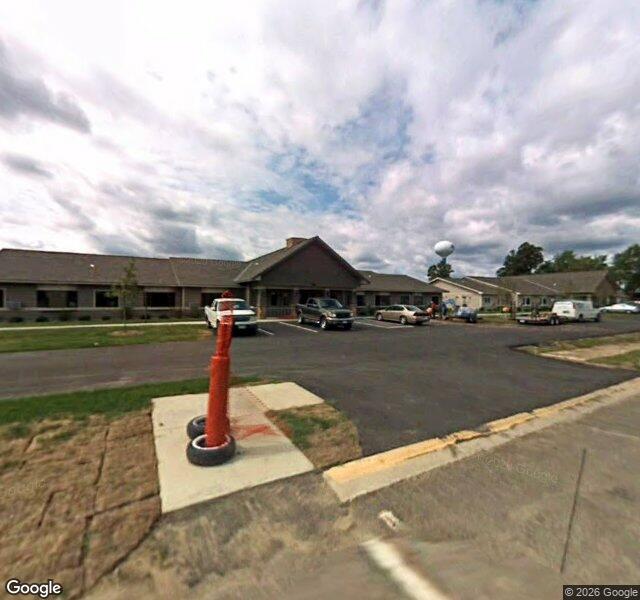
140 South 2nd Avenue West, Ely, MN 55731View map (opens in a new tab)
Overview and key essentials
State license
Active
MN MDH
Google reviews
Not available
Public reviews not linked
Size & payment
Ask directly
Confirm pricing & payment
Public records for this community are limited. Use the checklist below when you call or visit to confirm pricing, services, and openings.
Cost, payment & care details
Updated Nov 28, 2026| Monthly cost | Not published | Ask for the full monthly cost, including care fees and one-time charges. |
|---|---|---|
| Payment options | Ask directly | Payment details are not confirmed in our records. Ask about private pay, long-term care insurance, veterans benefits, and Medicaid waivers. |
| Size & availability | Confirm directly | We don't publish live openings. Ask about current availability, waitlist length, and move-in timing. |
| Care & support | Assisted livingMemory care certified | Usually offers housing and help with everyday tasks, such as bathing and dressing. What to confirm about care levelsThis describes the licensed category. Ask how care plans adjust if mobility, nursing, or memory needs change over time. Read the family care guide → |
State licensing
State inspection history
3inspections
14deficiencies listed
Jul 7, 2025Routine6 deficiencies reported6
6 deficiencies reported
View official state report (opens in a new tab)
144G.42 Subd. 10 Disaster planning and0680
SS=F emergency preparedness (a) The facility must meet the following requirements: (1) have a written emergency disaster plan that contains a plan for evacuation, addresses elements of sheltering in place, identifies temporary relocation sites, and details staff assignments in the event of a disaster or an emergency; (2) post an emergency disaster plan prominently; (3) provide building emergency exit diagrams to all residents; (4) post emergency exit diagrams on each floor; and (5) have a written policy and procedure regarding missing residents. (b) The facility must provide emergency and disaster training to all staff during the initial staff orientation and annually thereafter and must make emergency and disaster training annually available to all residents. Staff who have not received emergency and disaster training are allowed to work only when trained staff are also working on site. (c) The facility must meet any additional requirements adopted in rule. STATE FORM
144G.45 Subd. 2. (a) Fire protection and physical0775
SS=F environment Each assisted living facility must comply with the State Fire Code in Minnesota Rules, chapter 7511, and: This MN Requirement is not met as evidenced by: Based on observation and interview, the licensee failed to keep the facility in compliance with the Minnesota Fire Code. The deficient conditions have the ability to affect all staff and residents. This practice resulted in a level two violation (a violation that did not harm a resident's health or safety but had the potential to have harmed a resident's health or safety, but was not likely to cause serious injury, impairment, or death), and was issued at a widespread scope (when problems are pervasive or represent a systemic failure that has affected or has potential to affect a large portion or all of the residents). STATE FORM Findings include: On facility tour with director of maintenance (DM)-I on July 8, 2025, between 10:00 a.m. and 1:30 p.m. the following deficient conditions were observed: LOCKING: The surveyor observed there was a not a switch/key in the any of the 3 buildings (100, 140 or 200) that released all the doors. All three buildings are licensed for dementia care and are locked facilities. There shall be a key/switch that unlocks all the doors in an approved location within each building. The surveyor observed a bike type of lock on the outside gate of the dementia care 100 building. This was also observed during the last survey, on February 14, 2023. This gate shall remain unlocked or have the same locking hardware as the exit door from the building. SMOKE ALARMS: The surveyor had the DM-I take down a smoke alarm in a resident room. They were dated 2008. This was noted in all 3 buildings. All smoke alarms over 10 years old from date of manufacture shall be replaced with like type alarms and interconnected if required. Carbon monoxide alarms are allowed to be in combination with the smoke alarm. STATE FORM CARBON MONOXIDE: The surveyor observed that there was not code compliant carbon monoxide protection in all three buildings. Code complaint carbon monoxide protection shall be provided. Carbon monoxide alarms can be in combination with the smoke alarms in the resident rooms. SMOKE COMPARTMENT DOORS: The surveyor observed the doors to the resident room corridors in all three buildings did not close and latch when released from the magnetic hold opens connected to the fire alarm system. These doors shall close and latch under their own power. EXTENSION CORDS: The surveyor observed that there were extension cords powering the newly installed IT cabinets in all three buildings near the kitchen and that there was an orange extension cord powering a fan in the mechanical room in the 140 building. Extension cords shall not be used for permanent use and shall not be routed through walls/ceilings/doors. EMERGENCY LIGHT: The surveyor observed the emergency light by the mechanical room in the 140 building did not operate when push button tested. STATE FORM
1RP6116899
(a) Except as provided in paragraph (b), food must be prepared and served according to the Minnesota Food Code, Minnesota Rules, chapter 4626. (b) For an assisted living facility with a licensed capacity of ten or fewer residents: (1) notwithstanding Minnesota Rules, part 4626.0033, item A, the facility may share a certified food protection manager (CFPM) with one other facility located within a 60-mile radius and under common management provided the CFPM is present at each facility frequently enough to effectively administer, manage, and supervise each facility's food service operation; (2) notwithstanding Minnesota Rules, part 4626.0545, item A, kick plates that are not removable or cannot be rotated open are allowed unless the facility has been issued repeated correction orders for violations of Minnesota Rules, part 4626.1565 or 4626.1570; (3) notwithstanding Minnesota Rules, part 4626.0685, item A, the facility is not required to provide integral drainboards, utensil racks, or tables large enough to accommodate soiled and clean items that may accumulate during hours of operation provided soiled items do not contaminate clean items, surfaces, or food, and clean equipment and dishes are air dried in a manner that prevents contamination before storage; (4) notwithstanding Minnesota Rules, part 4626.1070, item A, the facility is not required to install a dedicated handwashing sink in its existing kitchen provided it designates one well of a two-compartment sink for use only as a handwashing sink; (5) notwithstanding Minnesota Rules, parts 4626.1325, 4626.1335, and 4626.1360, item A, existing floor, wall, and ceiling finishes are STATE FORM 1RP611 allowed provided the facility keeps them clean and in good condition; (6) notwithstanding Minnesota Rules, part 4626.1375, shielded or shatter-resistant lightbulbs are not required, but if a light bulb breaks, the facility must discard all exposed food and fully clean all equipment, dishes, and surfaces to remove any glass particles; and (7) notwithstanding Minnesota Rules, part 4626.1390, toilet rooms are not required to be provided with a self-closing door. This MN Requirement is not met as evidenced by: Based on observation, interview, and record review, the licensee failed to ensure food was prepared and served according to the Minnesota Food Code. This practice resulted in a level two violation (a violation that did not harm a resident's health or safety but had the potential to have harmed a resident's health or safety, but was not likely to cause serious injury, impairment, or death), and is issued at a widespread scope (when problems are pervasive or represent a systemic failure that has affected or has the potential to affect a large portion or all of the residents). The findings include: Please refer to the document titled, Food and Beverage Establishment Inspection Report (FBEIR) dated, July 7, 2025, for the specific Minnesota Food Code violations. The Inspection Report was provided to the licensee within 24 hours of the inspection. STATE FORM 1RP611 TIME PERIOD FOR CORRECTION: Please refer to the FBEIR for any compliance dates. 1RP611 The findings include: During the entrance conference on July 7, 2025, from 11:02 a.m. to 11:48 a.m., director of quality assurance (DQA)-G stated she was primary responsible for the infection control program along side the registered nurses (RN). Clinical nurse supervisor (CNS)-B stated staff receive infection control training upon hire,...
144G.41 Subd. 3 Infection control program0510
SS=F (a) All assisted living facilities must establish and maintain an infection control program that complies with accepted health care, medical, and nursing standards for infection control. (b)The facility's infection control program must be consistent with current guidelines from the national Centers for Disease Control and Prevention (CDC) for infection prevention and control in long-term care facilities and, as applicable, for infection prevention and control in assisted living facilities. (c) The facility must maintain written evidence of compliance with this subdivision. This MN Requirement is not met as evidenced by: Based on observation, interview, and record review, the licensee failed to establish and maintain an infection control program to comply with accepted health care, medical, and nursing standards for infection control for two of five employees (unlicensed personnel (ULP)-K, ULP-O). This practice resulted in a level two violation (a violation that did not harm a resident's health or safety but had the potential to have harmed a resident's health or safety, but was not likely to cause serious injury, impairment, or death), and was issued at a widespread scope (when problems are pervasive or represent a systemic failure that has affected or has potential to affect a large portion or all of the residents). STATE FORM On July 9, 2025, at 8:22 a.m., the surveyor observed ULP-K and ULP-O assist R2 with a bed bath. With gloved hands, ULP-O prepared a basin of soap and water, and ULP-K removed R2's night clothes and brief. ULP-K washed and rinsed R2's neck, chest, underarms, while ULP-O washed R2's lower legs, feet and genital area. Without changing gloves, ULP-O washed R2's abdomen and armpits using the same washcloth and basin of soap and water. ULP-K changed gloves, assisted and repositioned R2 on his side and ULP-O washed and dried R2's back and buttocks. With a new washcloth, ULP-O washed R2's face, then emptied the basin of soap and water, gathered the dirty laundry while ULP-K finished drying R2's body. ULP-K applied a skin protectant ointment to R2's buttocks area, and without changing gloves, ULP-K assisted ULP-O putting on a R2's clean brief, lotioned body and extremities, dressed R2 and assisted R2 into the Broda chair (specialized wheelchair) with the use of a Hoyer lift. ULP-O removed gloves, gathered garbage, dirty linen basket and exited R2's room and did not perform hand hygiene. Wearing the same pair of gloves, ULP-O assisted R2 with oral cares, removed gloves, did not perform hand hygiene, escorted R2 to the breakfast table then ULP-K washed hands in the kitchen sink. On July 9, 2025, at approximately 8:45 a.m., ULP-K stated they changed gloves through the process; however, did not perform hand hygiene in between glove changing. ULP-K stated ULP-K could not recall if gloves were changed after putting on R2's ointment to buttocks. ULP-O stated the basin of water should have been changed after completing perineal cares before proceeding with additional washing and should be washing clean to dirty. STATE FORM On July 9, 2025, at 11:49 a.m., CNS-B stated staff should be frequently changing gloves during a bed bath and assisting with personal cares and it was the expectation to perform hand hygiene between and after glove use. The licensee's Infection Control Precautions Including Standard, Contact, Droplet and Airborne policy dated May 4, 2020, directed to wear clean gloves when touching blood, bodily...
144G.41 Subdivision 1 Subd. 1a (a-b) Minimum0480
SS=F requirements; required food services 0 480 STATE FORM
144G.42 Subd. 8 (a) Staff records0650
SS=E (a) The facility must maintain current records of each paid staff member, each regularly scheduled volunteer providing services, and each individual contractor providing services. The records must include the following infomation: (1) evidence of current professional licensure, registration, or certification if licensure, registration, or certification is required by this chapter or rules; (2) records of orientation, required annual training and infection control training, and competency evaluations; (3) current job description, including qualifications, responsibilities, and identification of staff persons providing supervision; (4) documentation of annual performance reviews that identify areas of improvement needed and training needs; (5) for individuals providing assisted living services, verification that required health screenings under subdivision 9 have taken place and the dates of those screenings; and (6) documentation of the background study as required under section 144.057. This MN Requirement is not met as evidenced by: Based on observation, interview, and record review, the licensee failed to ensure employee records contained the required content for two of two employees (clinical nurse supervisor (CNS)-B, unlicensed personnel (ULP)-E). This practice resulted in a level two violation (a violation that did not harm a resident's health or STATE FORM lacked evidence ULP-E completed training on preparing medications for residents who leave the facility (planned and unplanned time away). In addition, ULP-E's employee record lacked a job description, including qualifications, responsibilities, and identification of staff person providing supervision. On July 8, 2025, at 1:38 p.m., director of quality assurance (DQA)-G sent the surveyor an emailed indicating ULP-E's employee record did not include a job description. On July 10, 2025, at 2:11 p.m., DQA-G emailed the surveyor and attached CNS-B's TB history and screening documentation and informed the surveyor, CNS-B had a TB blood test prior to employment by the licensee and provided the licensee with CNS-B's TB screening documentation to add to CNS-B's records. The licensee's TB Prevention and Control policy dated January 16, 2023, indicated all new employees that would have direct contact with residents would be screened for symptoms of TB and take a 2-step tuberculin skin test (TST). The licensee's Medication Management Services policy dated January 16, 2023, included a procedure for medication management for residents who will be away from home that indicated for unplanned time away when the licensed nurse is not available, the registered nurse may delegate this task to unlicensed personnel if: -the registered nurse has trained the unlicensed staff and determined the unlicensed staff is competent to follow the procedures for giving medications to residents. STATE FORM
Feb 15, 2023Routine7 deficiencies reported7
7 deficiencies reported
View official state report (opens in a new tab)
minor0930
(d) The contract must include a description of the facility's complaint resolution process available to residents, including the name and contact information of the person representing the facility who is designated to handle and resolve complaints. (e) The contract must include a clear and conspicuous notice of: (1) the right under section 144G.54 to appeal the termination of an assisted living contract; (2) the facility's policy regarding transfer of residents within the facility, under what circumstances a transfer may occur, and the circumstances under which resident consent is required for a transfer; (3) contact information for the Office of Ombudsman for Long-Term Care, the Ombudsman for Mental Health and Developmental Disabilities, and the Office of Health Facility Complaints; (4) the resident's right to obtain services from an unaffiliated service provider; This MN Requirement is not met as evidenced by: Based on observation, interview and record review, the licensee failed to execute a written assisted living contract with the required content for three of three residents (R1, R2, R5). This had the potential to affect all 39 residents. This practice resulted in a level one violation (a violation that has no potential to cause more than a minimal impact on the resident and does not affect health or safety), and was issued at a widespread scope (when problems are pervasive or represent a systemic failure that has affected or has potential to affect a large portion or all of the residents). The findings include: R1 R1's diagnoses included diabetes, hypertension (high blood pressure), mild cognitive impairment, hemiplegia (muscle weakness or partial paralysis) affecting left non-dominant side and tremor. R1's service plan dated April 26, 2022, indicated services included medication and insulin administration, housekeeping, and laundry. R2 R2's diagnoses included Lewy body dementia (progressive decline in mental abilities), osteoarthritis, and hyperlipidemia (elevated cholesterol in the blood). R2's service plan dated February 1, 2023, indicated services included medication administration, bathing, toileting, dressing and transfers. R5 R5's diagnoses included hypertension, idiopathic progressive neuropathy (damage of sensory and motor nerves), trigeminal neuralgia (chronic pain condition affecting the trigeminal nerve in the face), and osteoporosis (weak and brittle bones). R5's service plan dated November 15, 2022, indicated services included medication administration, assistance with dressing, grooming, catheter care, compression stockings, hearing aids, elevating extremities, transfers, housekeeping, and laundry. R1, R2 and R5's signed assisted living contracts dated April 26, 2022, February 1, 2023, and November 15, 2022, respectively, lacked the following content: -the facility's policy regarding transfer of residents within the facility, under what circumstances a transfer may occur, and the circumstances under which resident consent was required for a transfer. On February 15, 2023, at 10:17 a.m., registered nurse (RN)-K reviewed the licensee's contract with the evaluator and confirmed the licensee's resident contracts/resident agreements were a template and the same for all residents. RN-K confirmed the licensee's contract did not include the facility's policy regarding transfer of residents within the facility, under what circumstances a transfer may occur, and the circumstances under which resident consent was...
moderate0680
emergency preparedness (a) The facility must meet the following requirements: (1) have a written emergency disaster plan that contains a plan for evacuation, addresses elements of sheltering in place, identifies temporary relocation sites, and details staff assignments in the event of a disaster or an emergency; (2) post an emergency disaster plan prominently; (3) provide building emergency exit diagrams to all residents; (4) post emergency exit diagrams on each floor; and (5) have a written policy and procedure regarding missing residents. (b) The facility must provide emergency and disaster training to all staff during the initial staff orientation and annually thereafter and must make emergency and disaster training annually available to all residents. Staff who have not received emergency and disaster training are allowed to work only when trained staff are also working on site. (c) The facility must meet any additional requirements adopted in rule. This MN Requirement is not met as evidenced by: Based on observation, interview and record review, the licensee failed to develop a written emergency preparedness plan (EPP) with all the required content and post the EPP prominently. This had the potential to affect all residents, staff, and visitors of the facility. This practice resulted in a level two violation (a violation that did not harm a resident's health or safety but had the potential to have harmed a resident's health or safety), and was issued at a widespread scope (when problems are pervasive or represent a systemic failure that has affected or has the potential to affect a large portion or all of the residents). The findings include: On February 13, 2023, at 11:56 a.m., a facility tour was conducted with resident assisted living director (RALD)-A. The evaluator did not observe signage posted or information regarding the licensee's EPP in the common areas of the facility and RALD-A confirmed the findings. The licensee's EPP lacked the following content and/or policies and procedures to address: - a comprehensive program to include infectious diseases and pandemics; - a description of the population served by the licensee to identify at risk populations; - subsistence needs for staff and residents during an emergency to include (medical supplies, pharmacy supplies, sewer and waste disposal); - shelter in place to meet the needs of the residents; - the facility's role in providing care and treatment at alternative sites; - missing persons policy that was reviewed quarterly; - EP testing/annual requirements; and -written arrangements with other facilities or providers In addition, the licensee lacked a communication plan that included: - contact information for federal, state, tribal, local EP staff, ombudsman, state licensing and certification agencies; and - primary and alternative means for communicating with facility staff, federal, state, regional and local emergency management agencies On February 14, 2023, at 9:48 a.m., the evaluator reviewed the licensee's EPP with director of patient care and complaints/registered nurse (DPCC/RN)-B. DPCC/RN-B stated the licensee's EPP was still being developed with all required content and was not completed. No further information was provided. TIME PERIOD FOR CORRECTION: Twenty-One (21) days
moderate0510
(a) All assisted living facilities must establish and maintain an infection control program that complies with accepted health care, medical, and nursing standards for infection control. (b)The facility's infection control program must be consistent with current guidelines from the national Centers for Disease Control and Prevention (CDC) for infection prevention and control in long-term care facilities and, as applicable, for infection prevention and control in assisted living facilities. (c) The facility must maintain written evidence of compliance with this subdivision. This MN Requirement is not met as evidenced by: Based on observation, interview and record review, the licensee failed to ensure infection control standards were followed to disinfect reusable resident equipment by one of one employee (unlicensed personnel (ULP)-J). This practice resulted in a level two violation (a violation that did not harm a resident's health or safety but had the potential to have harmed a resident's health or safety), and was issued at a widespread scope (when problems are pervasive or represent a systemic failure that has affected or has the potential to affect a large portion or all of the residents). The findings include: On February 14, 2023, at 8:04 a.m., the evaluator observed ULP-J remove an Sp02 monitor (a noninvasive device that measure the oxygen saturation level of the blood), temporal thermometer, and blood pressure cuff from a basket sitting on the counter in the licensee's kitchen. ULP-J completed R9's vital signs with the above equipment and then placed the equipment back into the basket. ULP-J did not disinfect the SP02 monitor, temporal thermometer or blood pressure cuff prior to or after equipment use. ULP-J stated she did not disinfect the equipment before or after use and normally would use an alcohol wipe or disinfectant wipe. On February 14, 2023, at 9:50 a.m., director of patient care and complaints/registered nurse (DPCC/RN)-B stated it would be expected of the ULP's to clean vital sign equipment before and after use with a disinfectant wipe. The licensee's Training and Competency of Unlicensed Staff dated January 16, 2023, indicated training and evaluation for all ULP's must include basic infection control and maintenance of a clean and safe environment. No further information provided. TIME PERIOD FOR CORRECTION: Seven (7) days
moderate0810
physical environment (b) Each assisted living facility shall develop and maintain fire safety and evacuation plans. The plans shall include but are not limited to: (1) location and number of resident sleeping rooms; (2) employee actions to be taken in the event of a fire or similar emergency; (3) fire protection procedures necessary for residents; and (4) procedures for resident movement, evacuation, or relocation during a fire or similar emergency including the identification of unique or unusual resident needs for movement or evacuation. (c) Employees of assisted living facilities shall receive training on the fire safety and evacuation plans upon hiring and at least twice per year thereafter. (d) Fire safety and evacuation plans shall be readily available at all times within the facility. (e) Residents who are capable of assisting in their own evacuation shall be trained on the proper actions to take in the event of a fire to include movement, evacuation, or relocation. The training shall be made available to residents at least once per year. (f) Evacuation drills are required for employees twice per year per shift with at least one evacuation drill every other month. Evacuation of the residents is not required. Fire alarm system activation is not required to initiate the evacuation drill. This MN Requirement is not met as evidenced by: Based on a record review and interview, the licensee failed to develop a fire safety and evacuation plan with required elements, failed to provide required employee and resident training on fire safety and evacuation, and failed to conduct the required evacuation drills. This had the potential to affect all staff, residents, and visitors. This practice resulted in a level two violation (a violation that did not harm a resident's health or safety but had the potential to have harmed a resident 's health or safety, but was not likely to cause serious injury, impairment, or death), and was issued at a widespread scope (when problems are pervasive or represent a systemic failure that has affected or has potential to affect a large portion or all of the residents). A record review and interview were conducted on February 14, 2023, at approximately 11:30 a.m. of documents provided by resident assisted living director (RALD)-A and maintenance (M)-G on the fire safety and evacuation plan, fire safety and evacuation training, and evacuation drills for the facility. Findings include: Record review of the available documentation indicated that the licensee did not maintain the fire safety and evacuation plan for the facility as follows: Record review of the available documentation indicated that the licensee did not have fire protection procedures necessary for residents in the event of a fire or similar emergency. Record review of the available documentation indicated that the fire safety and evacuation plan did not include procedures for employees in regard to resident movement, evacuation, or relocation during a fire or similar emergency including the identification of unique or unusual resident needs for movement or evacuation. Record review of the available documentation indicated that employees did not receive training upon initial hire and twice per year thereafter on the facility fire safety and evacuation plan. Record review of the available documentation indicated that the licensee did not provide training to residents who are capable of self-evacuation on the proper actions to be taken in the...
moderate0800
physical environment (4) keep the physical environment, including walls, floors, ceiling, all furnishings, grounds, systems, and equipment in a continuous state of good repair and operation with regard to the health, safety, comfort, and well-being of the residents in accordance with a maintenance and repair program. This MN Requirement is not met as evidenced by: Based on observation and interview, the licensee failed to maintain the physical environment, including walls, floors, ceiling, all furnishings, grounds, systems, and equipment in a continuous state of good repair and operation with regard to the health, safety, comfort, and well-being of the residents. This deficient condition had the potential to affect all staff, residents, and visitors. This practice resulted in a level two violation (a violation that did not harm a resident's health or safety but had the potential to have harmed a resident's health or safety, but was not likely to cause serious injury, impairment, or death), and was issued at a widespread scope (when problems are pervasive or represent a systemic failure that has affected or has potential to affect a large portion or all of the residents). Findings include: On a facility tour on February 14, 2023, at approximately 10:30 a.m. with resident assisted living director (RALD)-A and maintenance (M)-G, it was observed that the lavatory sink in the Spa Room of the Assisted Living (south) building was not securely attached to the wall. On the same tour in the Assisted Living (south) building a hole in the interior drywall membrane near the sprinkler pipe above the door in the mechanical room was observed. The interior fire-resistant rated membrane of the mechanical room is required to be maintained as designed. It was also observed an electrical box cover was missing, exposing the electrical wires in the box in the mechanical room of the Assisted Living (south) building. A light fixture cover was observed missing, exposing the internal wires and electrical parts of the fixture in resident room 110 of the memory care (north) building. A wooden gate with lockable hardware was observed in the corridor leading to a marked exit near the kitchen and laundry room in the memory care (north) building. The corridor/ means of egress is required to be maintained without obstructions that effect its full and immediate use. An exterior gate was observed with lockable hardware on the outside of the gate in the secured exterior area for the memory care (north) building. Gates or doors in the exterior exit path to the public way are required to operate with hardware on the interior of the gate, the same as the building exterior exit doors. Exterior gates were observed with lockable hardware on the outside of the gate in the fenced area between the middle building and the memory care (north) building. Gates or doors in the exterior exit path to the public way are required to operate with hardware on the interior of the gate, the same as the building exterior exit doors. These deficient conditions were visually verified by RALD-A and M-G accompanying on the tour. TIME PERIOD FOR CORRECTION: Seven (7) days
STATE FORM6899
1BI011 STATE FORM 1BI011 STATE FORM 1BI011 STATE FORM 1BI011 STATE FORM 1BI011 STATE FORM 1BI011 STATE FORM 1BI011 STATE FORM 1BI011 STATE FORM 1BI011 STATE FORM 1BI011 STATE FORM 1BI011 STATE FORM 1BI011 STATE FORM 1BI011 STATE FORM 1BI011 STATE FORM 1BI011 01500 01500 behaviors, and how to communicate with residents who have dementia, Alzheimer's disease, or related disorders; (5) review of the facility's policies and procedures relating to the provision of assisted living services and how to implement those policies and procedures; and (6) the principles of person-centered planning and service delivery and how they apply to direct support services provided by the staff person. (b) In addition to the topics in paragraph (a), annual training may also contain training on providing services to residents with hearing loss. Any training on hearing loss provided under this subdivision must be high quality and research based, may include online training, and must include training on one or more of the following topics: (1) an explanation of age-related hearing loss and how it manifests itself, its prevalence, and challenges it poses to communication; (2) the health impacts related to untreated age-related hearing loss, such as increased incidence of dementia, falls, hospitalizations, isolation, and depression; or (3) information about strategies and technology that may enhance communication and involvement, including communication strategies, assistive listening devices, hearing aids, visual and tactile alerting devices, communication access in real time, and closed captions. This MN Requirement is not met as evidenced by: Based on interview and record review, the licensee failed to ensure an employee received all the required content for annual training for each 12 months of employment for one of one employee (registered nurse (RN)-K). STATE FORM 1BI011 01500 01500 This practice resulted in a level two violation (a violation that did not harm a resident's health or safety but had the potential to have harmed a resident's health or safety, but was not likely to cause serious injury, impairment, or death), and was issued at an isolated scope (when one or a limited number of residents are affected or one or a limited number of staff are involved or the situation has occurred only occasionally). The findings include: RN-K was hired on April 13, 2015, and began providing assisted living services on August 1, 2021. RN-K's employee record did not include the following required annual training: -training on reporting of maltreatment of vulnerable adults; and -review of the assisted living bill of rights and staff responsibilities related to ensuring the exercise and protection of those rights On February 15, 2023, at 9:58 a.m., RN-K reviewed her on-line training transcript and confirmed it did not include the above required topics. The licensee's Training and Competency of Unlicensed Staff policy dated January 16, 2023, indicated all staff performing direct care services will have annual training that includes reporting of maltreatment of vulnerable adults and review of the assisted living bill of rights and staff responsibilities related to ensuring the exercise and protection of those rights. No further information was provided. STATE FORM 1BI011 01500 01500 TIME PERIOD FOR CORRECTION: Twenty-One (21) days 01640 SS=D 144G.70 Subd. 4 (a-e) Service plan, implementation and revisions to (a) No later than 14 calendar days after the date that...
moderate0480
requirements 0 480 (13) offer to provide or make available at least the following services to residents: (B) food must be prepared and served according to the Minnesota Food Code, Minnesota Rules, chapter 4626; and This MN Requirement is not met as evidenced by: Based on observation, interview and record review, the licensee failed to ensure food was prepared and served according to the Minnesota Food Code. This practice resulted in a level two violation (a violation that did not harm a resident's health or safety but had the potential to have harmed a resident's health or safety) and was issued at a widespread scope (when problems are pervasive or represent a systemic failure that has affected or has the potential to affect a large portion or all the residents). The findings include: Please refer to the included document titled, Food and Beverage Establishment Inspection Report dated February 13, 2023, for the specific Minnesota Food Code deficiencies. TIME PERIOD FOR CORRECTION: Twenty-one (21) days
Nov 23, 2022Complaint1 deficiency reported1
1 deficiency reported
View official state report (opens in a new tab)
Substantiated, individual responsibility. The alleged perpetrator (AP) abused the resident when the AP stood over the resident and repeatedly yelled at the resident for several minutes, and then aggressively grabbed the resident’s wrists and threatened to break the resident’s hands
severeHL258911805M
The alleged perpetrator (AP) abused the resident when the AP stood over the resident and repeatedly yelled at the resident for several minutes, and then aggressively grabbed the resident’s wrists and threatened to break the resident’s hands. The Minnesota Department of Health determined abuse was substantiated. The AP was responsible for the maltreatment. Facility staff who witnessed the incident stated the AP lost his temper and stood over the resident and repeatedly yelled at him. The AP aggressively grabbed both of the resident’s wrists and threatened to break his hands. An audio recording of the incident was reviewed, and the AP was heard repeatedly yelling and threatening the resident, and acknowledged he scared the resident. The investigator conducted interviews with facility staff members, including administrative staff, nursing staff, and unlicensed staff. The investigator contacted the resident’s family member. Page 2 of 4 The investigation included review of the resident’s medical record including service agreement, progress notes, assessments, facility investigation, and audio recording. In addition, the investigator observed the residents in the facility. The resident resided in an assisted living facility memory care unit with diagnoses including Dementia with Lewy Bodies, causing behaviors including verbal aggression or outbursts, and poor decision-making skills. The resident’s service plan included assistance with dressing, bathing, toileting, and incontinence care. The resident’s assessment indicated he was cognitively impaired with sundowning behaviors (a state of increased confusion, agitation, and irritability occurring late afternoon into the night). The resident would yell out, and staff were instructed to use a calm approach, reminisce with the resident, distract with a 1:1 activity, and encourage the resident to assist with tasks like folding laundry to help keep him busy and reduce sundowning behaviors. The facility investigation indicated the AP lost his temper on the evening shift and grabbed the resident’s wrists in anger and yelled at the resident. The investigation indicated the incident was witnessed by two staff; and the resident was assessed with no injuries noted. When interviewed staff who witnessed the incident stated the AP was having a “off night” and was told to step away for a break but he refused. The staff stated the AP stood over the resident and began repeatedly yelling at the resident for four to five minutes. The AP aggressively grabbed the resident’s wrists in anger and forcefully shook them. A review of the audio recording of the incident indicated the AP was heard yelling at the resident and stated, “I will shove...
Neighborhood & resident support
Emergency access, hazards & advocacy
Nearest hospital
Ely Bloomenson Comm Hospital
0.1 mi · Ely, MN
Emergency room
FEMA hazard risk
Relatively ModerateSt. Louis County, MN
- Cold Wave
- Winter Weather
- Lightning
Free resident advocacy
Minnesota Office of Ombudsman for Long-Term Care
More neighborhood context (specialists, VA, dialysis, air & affordability)
VA & dialysis access
St Cloud VA Medical Center
195.4 mi · St. Cloud, MN
Fmc Dialysis - Eveleth
45.8 mi · 1/5 ★ · Home dialysis
Environment & mobility
- EPA Air (2025)
- 67% good days · AQI 42
- EPA Walkability
- 9.1/20 (Below Average)
- Primary care access
- HRSA Shortage Area
County demographics
- Age 65+ median income
- $53,378/yr
- Rent-burdened households
- 54%
- Cognitive disability (2023)
- 14.2%
- Mobility disability
- 11.3%
Call & tour checklist
Questions to ask Ely Carefree Living by Oxford
Check off questions as you call or tour. Your progress stays private in this browser.
Show 3 more suggested questions
Verification & public records
Official records & sources
Licensing & contact
- License #
- 25891
- Status
- active
- Phone
- (218) 365-2261
- Federal OIG LEIE
- Clear (2026-11-27)
Original public sources
Verify licensing, ratings, and inspection reports directly with each official source.
- MN MDH official record (opens in a new tab)MN Dept. of Health
- Google Maps (opens in a new tab)Directions, photos & neighborhood
- Google Reviews (opens in a new tab)Read public reviews
EveryPlace is an independent research directory. Information is compiled from public Medicare.gov, state licensing, Google Places, and street-level imagery sources. Some summaries, suggested questions, and pricing notes are AI-generated or AI-assisted and may contain errors or omissions. We do not accept payment for placement. Confirm all details directly with the community and official sources. Research Policy.
Keep exploring