Loading EveryPlace content…
Assisted LivingActive licenseMemory care certified
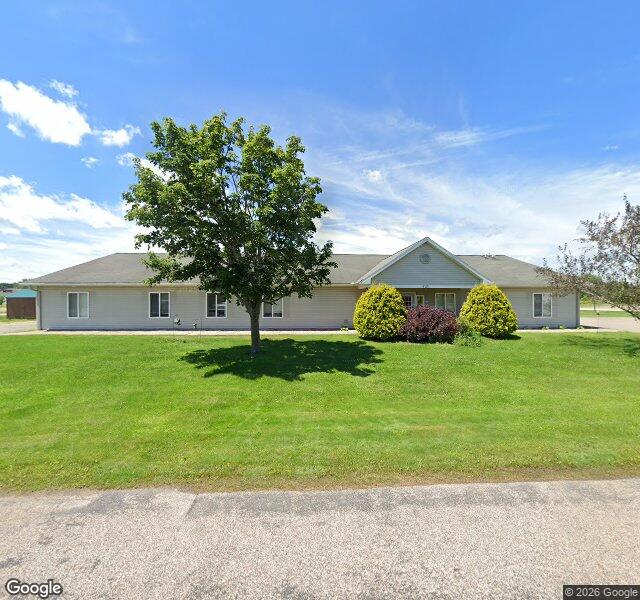
Cloverleaf Terrace LLC
401 Center St, Birnamwood, WI 54414View map (opens in a new tab)
Overview and key essentials
State license
Active
WI DHS
Google reviews
4.7/ 5
3 reviews
Monthly cost
$2,200–$4,500/ mo
AI-assisted estimate
Cost, payment & care details
Updated Nov 28, 2026| Monthly cost | $2,200–$4,500AI-assisted estimate | Research may contain errors. Request a current quote from the provider. Source: AI-assisted online research, Nov 2026. |
|---|---|---|
| Payment options | Medicaid | Participation is reported in our source data. Confirm eligibility, covered services, and any private-pay costs. Verified Medicaid waiver: Wisconsin Family Care / IRIS Medicaid Waiver (WI Dept. of Health Services (DHS DQA)). |
| Size & availability | Confirm directly | We don't publish live openings. Ask about current availability, waitlist length, and move-in timing. |
| Care & support | Assisted livingMemory care certified | Usually offers housing and help with everyday tasks, such as bathing and dressing. What to confirm about care levelsThis describes the licensed category. Ask how care plans adjust if mobility, nursing, or memory needs change over time. Read the family care guide → |
Safety screening & compliance
State licensing depth & federal screening
HHS OIG LEIE: Clear (2026-11-27)OIG database ↗ (opens in a new tab)
WI DHS directory details (CBRF)
Class: CLASS CNA (NONAMBULATORY)HCBS CompliantDementia approvedWI DHS rates: $2,200–$4,500/mo
State licensing
State inspection history
6inspections
34deficiencies listed
Oct 15, 2026Complaint1 deficiency reported1
Apr 23, 2026EnforcementEnforcement actionPenalty
Enforcement action
View official state report (opens in a new tab)
No deficiencies are reported in this inspection record.
Apr 23, 2026Complaint23 deficiencies reported23
23 deficiencies reported
View official state report (opens in a new tab)
On 04/14/2026 and 04/16/2026, Surveyor conducted 2 complaint investigations and a standard survey at Cloverleaf Terrace LLC. Additional information was gathered through 04/23/2026. Complaint # 50854 was substantiated and complaint # 50861 was unsubstantiated. As a result of the investigation and survey, 10 deficient practices were identified, including 2 repeat deficient practices. Census: 12
and s/he said no.2025
Cross Reference
83.48(3)(a) Fire detection systems inspectedN 538
annually. After the first year following installation, fire detection systems shall be inspected, cleaned and tested annually by certified or trained and qualified personnel in accordance with the specifications in NFPA 72 and the manufacturer ' s specifications and procedures. This Rule is not met as evidenced by: Based on record review and interview, the provider did not ensure fire detection systems were inspected and tested annually by certified personnel. Findings include: The facility is licensed as a Class C non-ambulatory (CNA). A class C non-ambulatory CBRF serves residents who are ambulatory, semi-ambulatory or non-ambulatory, but one or more of whom are not physically or mentally capable of responding to a fire alarm by exiting the CBRF without help or verbal or physical prompting. The provider is licensed to serve residents who may have diagnoses including, traumatic brain injury, developmentally disabled, advanced aged, terminally ill, physically disabled, and/or who have irreversible dementia or Alzheimer's disease. On 04/16/2026, Surveyor reviewed the provider's records for fire safety maintenance. There was no evidence of an annual inspection of the fire detection system for 2024 or 2025. On 04/16/2026 at 12:00 PM, Surveyor interviewed Administrator A. Administrator A confirmed no inspection of the fire detection system occurred in 2024 or 2025. Cross Reference
DHS 83.25 Continuing EducationN 0277
DHS 83.25 Continuing Education
DHS 83.48(3)(a) Fire Detection SystemN 0538
Inspected Annually
did not have RN delegation for passing2024
injectable medications to Resident 3 and 4. Administrator A was unable to provide a record for RN delegation training for Caregiver H (hired 06/17/2024,) Caregiver D (hired 12/05/2024,) Caregiver I (hired 04/13/2026,) or Caregiver J (hired 10/10/2025.) Cross Reference
83.47(2)(e) Other evacuation drills.N 526
Other evacuation drills. Tornado, flooding, or other emergency or disaster evacuation drills shall be conducted at least semi-annually. This Rule is not met as evidenced by: Based on record review and interview, the provider did not ensure emergency or disaster evacuation drills were conducted semi-annually in 2025. This is a repeat deficient practice. See Statement of Deficiency JZXY11 dated 07/19/2024. Findings include: The facility is licensed as a Class C non-ambulatory (CNA). A class C non-ambulatory CBRF serves residents who are ambulatory, semi-ambulatory or non-ambulatory, but one or more of whom are not physically or mentally capable of responding to a fire alarm by exiting the CBRF without help or verbal or physical prompting. The provider is licensed to serve residents who may have diagnoses including, traumatic brain injury, developmentally disabled, advanced aged, terminally ill, physically disabled, and/or who have irreversible dementia or Alzheimer's disease. At the time of the survey the census was 12. On 04/16/2026, Surveyor reviewed the provider's records for emergency drills at the facility. There was no evidence of emergency or disaster drills being completed in 2025. On 04/16/2026 at 11:30 AM, Surveyor interviewed Administrator A. Administrator A confirmed there were no emergency or disaster drills completed in 2025. Cross Reference
DHS 83.37(2)(e) Other AdministrationN 0416
Given Or Delegated By RN
DHS 83.38(1)(b) SupervisionN 0426
DHS 83.38(1)(b) Supervision
DHS 83.15(3)(a) Administrator ShallN 0214
Supervise Daily Operation DHS 83.15(3)(a) Administrator Shall Supervise Daily Operation DHS 83.15(3)(a) Administrator Shall Supervise Daily Operation DHS 83.15(3)(a) Administrator Shall Supervise Daily Operation DHS 83.15(3)(a) Administrator Shall Supervise Daily Operation DHS 83.15(3)(a) Administrator Shall Supervise Daily Operation DHS 83.15(3)(a) Administrator Shall Supervise Daily Operation DHS 83.15(3)(a) Administrator Shall Supervise Daily Operation DHS 83.15(3)(a) Administrator Shall Supervise Daily Operation
DHS 83.47(2)(d) Fire DrillsN 0525
DHS 83.47(2)(d) Fire Drills DHS 83.47(2)(d) Fire Drills
83.47(2)(d) Fire drills.N 525
Fire drills. 1. Fire evacuation drills shall be conducted at least quarterly with both employees and residents. Drills shall be limited to the employees scheduled to work at that time. Documentation shall include the date and time of the drill and the CBRF ' s total evacuation time. The CBRF shall record residents having an evacuation time greater than the time allowed under s. HFS 83.35(5) and the type of assistance needed for evacuation. Fire evacuation drills may be announced in advance. 2. At least one fire evacuation drill shall be held annually that simulates the conditions during usual sleeping hours. Fire evacuation drills may be announced in advance. Drills shall be limited to the employees scheduled to work during the residents ' normal sleeping hours. This Rule is not met as evidenced by: Based on record review and interview, the provider did not ensure fire drills were conducted quarterly including at least one drill simulating the conditions during usual sleeping hours in 2025. This is a repeat deficient practice. See Statement of Deficiency JZXY11 dated 07/19/2024. Findings include: The facility is licensed as a Class C non-ambulatory (CNA). A class C non-ambulatory CBRF serves residents who are ambulatory, semi-ambulatory or non-ambulatory, but one or more of whom are not physically or mentally capable of responding to a fire alarm by exiting the CBRF without help or verbal or physical prompting. The provider is licensed to serve residents who may have diagnoses including, traumatic brain injury, developmentally disabled, advanced aged, terminally ill, physically disabled, and/or who have irreversible dementia or Alzheimer's disease. At the time of the survey the census was 12. On 04/16/2026, Surveyor reviewed the provider's records for fire drills at the facility. There was evidence 3 out of 4 required fire drills were completed in 2025 (dated 01/27/2025, 06/09/2025, and 08/28/2025.) There were no drills that indicated nighttime simulation. On 04/16/2026 at 11:30 AM, Surveyor interviewed Administrator A. Administrator A confirmed there was no evidence of a drill conducted in Quarter 4 of 2025 or a nighttime simulated drill. Cross Reference
83.17(2)(a) Employees screened forN 220
communicable disease. The CBRF shall obtain documentation from a physician, physician assistant, clinical nurse practitioner or a licensed registered nurse indicating all employees have been screened for clinically apparent communicable disease including tuberculosis. Screening for tuberculosis shall be conducted using centers for disease control and prevention standards. The screening and documentation shall be completed within 90 days before the start of employment. The CBRF shall keep screening documentation confidential, except the department shall have access to the screening documentation for verification purposes. This Rule is not met as evidenced by: Based on record review and interview, the provider did not ensure 3 of 3 employees reviewed (Assistant Administrator B, Caregiver D, and Caregiver E) were screened for tuberculosis and communicable disease by a physician, physician assistant, clinical nurse practitioner or a licensed registered nurse. Findings include: On 04/14/2026 and 04/16/2026, Surveyor conducted a standard survey. Surveyor reviewed Assistant Administrator B's employee record and noted s/he was hired on 12/08/2023. There was no evidence in Assistant Administrator B's record s/he was screened for communicable disease or tuberculosis. Surveyor reviewed Caregiver D's employee record and noted s/he was hired on 12/05/2024. There was no evidence in Caregiver D's record s/he was screened for tuberculosis. Caregiver D had a filled out communicable disease screening sheet that was undated and unsigned. Surveyor reviewed Caregiver E's employee record and noted s/he was hired on 01/22/2024. Of the required 2 step tuberculosis screening, Caregiver E had only 1 step completed. Caregiver D had a filled out communicable disease screening sheet that was undated and unsigned. On 04/16/2026 at 12:30 PM, Surveyor interviewed Administrator A who acknowledged all 3 caregivers reviewed were missing completed tuberculosis and communicable disease screenings. Cross Reference
STATE FORM6899
LMR011 STATE FORM LMR011 STATE FORM LMR011 STATE FORM LMR011 STATE FORM LMR011 STATE FORM LMR011 STATE FORM LMR011 STATE FORM LMR011 STATE FORM LMR011 STATE FORM LMR011 STATE FORM LMR011 STATE FORM LMR011 STATE FORM LMR011 STATE FORM LMR011 STATE FORM LMR011 STATE FORM LMR011 STATE FORM LMR011 STATE FORM LMR011 STATE FORM LMR011 STATE FORM LMR011 STATE FORM LMR011 STATE FORM LMR011 STATE FORM LMR011 STATE FORM LMR011 STATE FORM LMR011 STATE FORM LMR011 STATE FORM LMR011 STATE FORM LMR011 STATE FORM LMR011 STATE FORM LMR011
83.15(3)(a) Administrator shall supervise dailyN 214
operation The administrator shall supervise the daily operation of the CBRF, including but not limited to, resident care and services, personnel, finances, and physical plant. The administrator shall provide the supervision necessary to ensure that the residents receive proper care and treatment, that their health and safety are protected and promoted and that their rights are respected. This Rule is not met as evidenced by: Based on record review and interview, the administrator did not uphold his/her responsibilities to supervise daily operations including protection of residents' health and safety and ensuring their rights are respected. Administrator A was aware Resident 1 was being targeted by Resident 2 and was sexually assaulted 4 times. The administrator did not ensure his/her supervision of daily operations included prompt or adequate interventions to stop the sexual assaults, minimal documentation of the incidents, investigation of each incident, that each incident was reported timely to the Department, that Resident 1's Power of Attorney for healthcare (POA C) was notified after each incident and did not follow the grievance procedure. Findings Include: The provider is licensed to serve residents who may have diagnoses including; traumatic brain injury, developmentally disabled, advanced aged, terminally ill, physically disabled, and/or who have irreversible dementia or Alzheimer's disease. On 04/03/2026, the Department received a complaint alleging the provider was allowing for continued resident to resident behaviors without providing effective intervention, investigation, documentation, required reporting. On 04/14/2026 Surveyor reviewed Resident 1 and Resident 2's records: Resident 1 was admitted on 03/25/2024 with diagnoses including Alzheimer's disease. Resident 1 was on hospice services and had an activated Power of Attorney for Healthcare (POA C.) On 03/25/2026 the hospice RN conducted an assessment of Resident 1's ability to provide consent to a sexual relationship and found Resident 1 was not capable of providing consent. Resident 2 was admitted on 06/22/2020 with diagnoses including a history of left Cerebral Vascular Accident which caused hemiplegia, hemiparesis and decreased capacity. Resident 2's incapacity required him/her to have a legal guardian (Guardian D.) Required Reporting On 03/30/2026, the Department received a self-report from the provider signed by Administrator A on 03/30/2026. The self-report was for an incident that occurred greater than 2 months prior on 01/20/2026. Additional documentation attached to the self-report titled "Administrative Notes" was dated 03/30/2026. The attachment indicated apart from the incident being reported from 01/20/2026 there had been 3 additional incidents where sexual assault occurred between Resident 1 and Resident 2. Chapter 83 codes regarding resident-to-resident incidents/misconduct note elder abuse reporting requirements and adult at risk reporting requirements, which note each individual incident required an internal investigation and self-reporting within 5 days to the Office of Caregiver Quality and/or the Department that had not been completed. Additionally, on 04/14/2026 at 11:00 AM, Surveyor interviewed Administrator A while reviewing records. Surveyor discovered in Resident 2's record there was an additional incident of sexual assault that occurred on 03/12/2026 that was not included in the self- report Administrative Notes. Administrator A confirmed...
DHS 83.17(1) Licensee ConductN 0219
Caregiver Background Check
DHS 83.35(5)(b) Annual Evaluation OfN 0394
Evacuation Limits DHS 83.35(5)(b) Annual Evaluation Of Evacuation Limits
DHS 83.47(2)(e) Other Evacuation DrillsN 0526
DHS 83.47(2)(e) Other Evacuation Drills DHS 83.47(2)(e) Other Evacuation Drills
83.38(1)(b) Supervision.N 426
As appropriate, the CBRF shall teach residents the necessary skills to achieve and maintain the resident's highest level of functioning. In addition to the assessed needs as determined under s. DHS 83.35(1), the CBRF shall provide or arrange services adequate to meet the needs of the residents in all of the following areas: Supervision. The CBRF shall provide supervision appropriate to the resident's needs. This Rule is not met as evidenced by: Based on record review, interview, and observation, the provider did not ensure supervision and behavior management adequate to meet the resident's needs. The provider was aware Resident 2 sexually assaulted Resident 1 and did not effectively intervene to prevent at least 3 additional assaults (4 witnessed in total.) Findings include: The provider is licensed to serve residents who may have diagnoses including; traumatic brain injury, developmentally disabled, advanced aged, terminally ill, physically disabled, and/or who have irreversible dementia or Alzheimer's disease. On 04/03/2026, the Department received a complaint alleging the provider was allowing for continued resident to resident behaviors without providing effective intervention or reporting. On 04/14/2026 at 12:00 PM, Surveyor requested to review Resident 1 and Resident 2's records including Individual Service Plans (ISP,) incident reports, observation notes, investigations conducted, grievances, notes from meetings with outside agencies including the Managed Care Organization (MCO,) Adult Protective Services (APS,) Ombudsman and local authorities, and all documentation related to incidents that occurred between Resident 1 and Resident 2 from 01/01/2026 through present (04/14/2026.) Administrator A gave Surveyor Resident 1 and 2's ISP, Care Notes, 2 e-mails showing correspondence from Resident 1's Power of Attorney for Healthcare (POA C) to Administrator A, and a copy of a self-report including "Administrative Notes" that were written on 03/25/2026. Administrator A stated there were no incident reports or investigations conducted and therefore no additional records to review. Surveyor reviewed the records received and noted: Resident 1 was admitted on 03/25/2024 with diagnoses including Alzheimer's disease. Resident 1 was on hospice services and had an activated Power of Attorney for Healthcare (POA C.) On 03/25/2026 the hospice RN conducted an assessment of Resident 1's ability to provide consent to a sexual relationship and found Resident 1 was not capable of providing consent. Resident 2 was admitted on 06/22/2020 with diagnoses including a history of left Cerebral Vascular Accident which caused hemiplegia, hemiparesis and decreased capacity. Resident 2's incapacity required him/her to have a legal guardian (Guardian D.) Timeline: On 04/14/2026 at 11:30 AM and 04/16/2026 at 10:30 AM, Surveyor Interviewed Administrator A. On 04/23/2026 At 5:00 PM, Surveyor interviewed POA C. Administrator A stated the provider relied on daily "care notes" in the resident's individual records and shift-to-shift discussions to communicate between caregivers. Administrator A gave Surveyor "Administrative Notes" written by Administrator A on 03/30/2026. Surveyor conducted interviews and reviewed the records to establish a timeline of events: 1/20/2026 In Resident 1's care notes dated 01/20/2026, Caregiver D noted Resident 1 was observed placing Resident 2's hand on his/her chest. Caregiver D noted Resident 2 was told to remove his/her hand and that...
83.35(5)(b) Annual evaluation of evacuation limitsN 394
Evaluation update. The CBRF shall evaluate each resident ' s mental or physical capability to respond to a fire alarm at least annually or when there is a change in the resident ' s mental or physical capability to respond to a fire alarm. This Rule is not met as evidenced by: Based on record review and interview, the provider did not ensure 2 out of 2 residents reviewed (Resident 1 and Resident 2) had annual evacuation evaluations completed. The facility is licensed as a Class C non-ambulatory (CNA). A class C non-ambulatory CBRF serves residents who are ambulatory, semi-ambulatory or non-ambulatory, but one or more of whom are not physically or mentally capable of responding to a fire alarm by exiting the CBRF without help or verbal or physical prompting. The provider is licensed to serve residents who may have diagnoses including; traumatic brain injury, developmentally disabled, advanced aged, terminally ill, physically disabled, and/or who have irreversible dementia or Alzheimer's disease. Findings include: On 04/16/2026 at 1:00 PM, Surveyor reviewed resident records while interviewing Administrator A. Surveyor requested to review the evacuation evaluation documentation for Residents 1 and 2. Administrator A stated s/he was unaware the resident evacuation evaluations had to be reviewed annually. Administrator A showed Surveyor the most recent records the provider had for the residents. Surveyor reviewed Resident 1's most recent evacuation evaluation was dated 03/27/2024. Administrator A confirmed an evacuation evaluation for 2025 was not completed. Surveyor reviewed Resident 2's most recent evacuation evaluation was dated June of 2021. Administrator A confirmed the evacuation evaluations for 2022, 2023, 2024, and 2025 were not completed. Cross Reference
83.17(1) Licensee conduct caregiver backgroundN 219
check Caregiver background check. At the time of hire, employment or contract and every 4 years after, the licensee shall conduct and document a caregiver background check following the procedures in s. 50.065, Stats., and ch. DHS 12. A licensee shall not employ, contract with or permit a person to reside at the CBRF if the person has been convicted of the crimes or offenses, or has a governmental finding of misconduct, found in s. 50.065, Stats., and ch. DHS 12, Appendix A, unless the person has been approved under the department ' s rehabilitation process as defined in ch. DHS 12. This Rule is not met as evidenced by: Based on record review and interview, the provider did not conduct and document a caregiver background check following the procedures in s. 50.065, Stats., and ch. DHS 12. Administrator A did not obtain a response from the Department of Justice (DOJ) and a Government Findings Report (GFR) for Assistant Administrator B that included all other names by which s/he has been known and states s/he lived in within 5 years of the date of hire. Findings include: On 04/16/2026, Surveyor reviewed Assistant Administrator B's employee record including his/her background check information. Assistant Administrator B was hired on 12/08/2023 and completed a Background Information Disclosure (BID) that noted s/he had 5 names by which s/he has been known, and s/he lived in Illinois and Michigan within the last 5 years. Surveyor reviewed there was 1 DOJ response dated 07/02/2024 ( approximately 7 mnths after hire) that listed only 2 of the 5 names for Assistant Administrator B. On 04/16/2026 at 12:30 PM, Surveyor interviewed Administrator A. Administrator A stated s/he was responsible for completing all caregiver background checks for employees. Administrator A stated s/he must have missed completing the background check when Assistant Administrator B was hired and submitted later in the year (July 2024.) Administrator A stated s/he was unaware each of the 5 aliases documented on the BID needed to be checked. Administrator A confirmed s/he did not conduct an out of state background check for Assistant Administrator B for Illinois or Michigan. Cross Reference
83.37(2)(e) Other administration given orN 416
delegated by RN Other administration. Injectables, nebulizers, stomal and enteral medications, and medications, treatments or preparations delivered vaginally or rectally shall be administered by a registered nurse or by a licensed practical nurse within the scope of their license. Medication administration described under sub. (2)(e) may be delegated to non-licensed employees pursuant to s. N 6.03(3). This Rule is not met as evidenced by: Based on record review and interview, the provider did not ensure unlicensed caregivers were delegated by a Registered Nurse (RN) prior to administering injectable medications for Residents 3 and 4. Findings Include: The provider is licensed to serve residents who may have diagnoses including, traumatic brain injury, developmentally disabled, advanced aged, terminally ill, physically disabled, and/or who have irreversible dementia or Alzheimer's disease. On 04/16/2026 at 12:00 PM, Surveyor interviewed Administrator A while reviewing the provider's records, including employee files and training. Administrator A provided Surveyor with a list of employees with their dates of hire and noted 9 of 15 of the employees were responsible for passing medication, including injections. Administrator A confirmed the provider serves residents that require insulin injections while identifying Resident 3 and Resident 4 as both requiring daily insulin injections to be administered by the any of the 9 medication passing staff. Administrator A stated the previous RN left employment with the provider around the beginning of June of 2024. Administrator A stated 5 medication passers out of 9 would have RN delegation training from the previous RN but there had not been another RN to delegate under their license since June of 2024. Administrator A confirmed all medication passers hired after June
DHS 83.17(2)(a) Employees Screened forN 0220
Communicable Disease
83.25 Continuing educationN 277
The administrator and resident care staff shall receive at least 15 hours per calendar year of continuing education beginning with the first full calendar year of employment. Continuing education shall be relevant to the job responsibilities and shall include, at a minimum, all of the following: (1) Standard precautions; (2) Client group related training; (3) Medications; (4) Resident rights; (5) Prevention and reporting of abuse, neglect and misappropriation; (6) Fire safety and emergency procedures, including first aid. This Rule is not met as evidenced by: Based on record review and interview, the provider did not ensure Assistant Administrator B received at least 15 hours of continuing education beginning with the first full calendar year of employment. Continuing education shall be relevant to the job responsibilities and include, at a minimum, standard precautions, client group related training, medications, resident rights, prevention and reporting of abuse, neglect and misappropriation, fire safety and emergency procedures including first aid. Findings include: On 04/16/2026, Surveyor reviewed Assistant Director B's employee record and noted s/he was hired on 12/08/2023 as an Assistant Director who would also provide direct resident care. Assistant Administrator B's record did not include evidence of any continuing education in 2025. On 04/16/2026 at 11:00 AM, Surveyor interviewed Administrator A who said s/he supervised the training of all the staff. Administrator A stated s/he tried to do various training topics at team meetings. Surveyor inquired whether s/he had any documentation of the training/meetings, and s/he said no. Surveyor inquired whether Assistant Director B received any continuing education in
Jan 15, 2025Follow-up1 deficiency reported1
Jul 19, 2024Complaint9 deficiencies reported9
9 deficiencies reported
View official state report (opens in a new tab)
On 07/01/2024, with additional information gathered through 07/19/2024, Surveyors conducted 5 complaint investigations at Cloverleaf Terrace LLC. Four of 5 complaints were substantiated. One complaint was unsubstantiated. Seven deficiencies were identified. Census: 13
83.42(1) Resident record maintained.N 454
The CBRF shall maintain a record for each resident at the CBRF. Each record shall include all of the following: (a) Resident ' s full name, sex, date of birth, admission date and last known address; (b) Name, address and telephone number of designated contact person, and legal representative, if any; (c) Medical, social, and, if any, psychiatric history; (d) Current personal physician, if any; (e) Results of the initial health screening under s. DHS 83.28(4) and subsequent health examinations under s. DHS 83.38(1)(g); (f)Admission agreement; (g) Documentation of significant incidents and illnesses, including the dates, times and circumstances; (h) Assessments completed as required under s. DHS 83.35(1); (i) Individual service plan and resident satisfaction evaluation; (j) Documentation to accurately describe the resident's condition, significant changes in condition, changes in treatment and response to treatment; (k) Results of the annual resident evacuation evaluation; (l) Documentation of sensory impairment of the resident as required under s. DHS 83.48(7)(b); (m) Summary of discharge information as required under s.DHS 83.31(7); (n) Any department-approved resident-specific waiver, variance or approval; (o) Physician ' s orders or other authorized practitioner ' s written orders for nursing care, medications, rehabilitation services and therapeutic diets; (p) Current list of the type and dosage of medications or supplements; (q) Results of the quarterly psychotropic medication assessments as required in s. DHS 83.37(1)(h)1; (r) Documentation of administration of all medications, supplements, the person administering the medications or supplements, any side effects observed by the employee or symptoms reported by the resident, the need for PRN medications and the resident ' s response, refusal to take medication, omissions of medications, errors in the administration of medications and drug reactions; (s) Photocopy of any court order or other document authorizing another person to speak or act on behalf of the resident, or other legal documents as required which affect the care and treatment of a resident; (t) Documentation of all other services including rehabilitation services, treatments and therapeutic diets; (u) Completed notice of pre-admission assessment requirement under s. DHS 83.30; (v) Nursing care procedures and the amount of time spent each week by a registered nurse or licensed practical nurse in performing the nursing care procedures. Only time actually spent by the nurse with the resident may be included in the calculation of nursing care time; (w) Plans of care for terminally ill residents; (x) Date, time and circumstances of the resident's death, including the name of the person to whom the body is released. This Rule is not met as evidenced by: Based on record review and interview, the provider did not maintain Resident 1's record to include his/her assessments, documentation to accurately describe his/her condition, and individual service plan (ISP). Findings include: On 07/01/2024, Surveyors conducted a complaint investigation. At approximately 1:50 PM, Surveyors requested to review Resident 1's record. Administrator A stated s/he looked for his/her record and could not find his/her face sheet, assessments, and ISP. Administrator A indicated s/he knew they had been done, but it was no longer in the facility. On 07/03/2024 at approximately at 3:30 PM, Surveyors interviewed Administrator A who verified the...
83.47(2)(d) Fire drills.N 525
Fire drills. 1. Fire evacuation drills shall be conducted at least quarterly with both employees and residents. Drills shall be limited to the employees scheduled to work at that time. Documentation shall include the date and time of the drill and the CBRF ' s total evacuation time. The CBRF shall record residents having an evacuation time greater than the time allowed under s. HFS 83.35(5) and the type of assistance needed for evacuation. Fire evacuation drills may be announced in advance. 2. At least one fire evacuation drill shall be held annually that simulates the conditions during usual sleeping hours. Fire evacuation drills may be announced in advance. Drills shall be limited to the employees scheduled to work during the residents ' normal sleeping hours. This Rule is not met as evidenced by: Based on record review and staff interview the provider did not ensure fire drills were conducted quarterly including at least one drill simulating the conditions during usual sleeping hours between 01/01/2023 and 07/01/2024. Findings include: On 04/15/2024, the department received complaint information alleging there were no fire drills being conducted at the facility. This facility is licensed as a Class C non-ambulatory (CNA). A class C non-ambulatory CBRF serves residents who are ambulatory, semi-ambulatory or non-ambulatory, but one or more of whom are not physically or mentally capable of responding to a fire alarm by exiting the CBRF without help or verbal or physical prompting. This facility serves residents who are traumatic brain injury, developmentally disabled, advanced aged, terminally ill, physically disabled, and who have irreversible dementia or Alzheimer's disease. On 07/01/2024 Surveyor reviewed the provider's records for fire drills at the facility. There was no evidence of fire drills conducted between 01/01/2023 and 07/01/2024. The drills were not done quarterly and there were no drills that indicated nighttime simulation. On 07/01/2024 at approximately 10:30 AM, Surveyor interviewed Administrator A. Administrator A confirmed to Surveyor there was no evidence that drills were conducted in 2023 and in Quarter 1 and Quarter 2 of 2024. Administrator A stated they did do some drills but did not have the documentation.
50.09(1)(f) PrivacyY 3235
50.09(1)(f) Privacy (1) RESIDENTS' RIGHTS. Every resident in a nursing home or community based residential facility shall, except as provided in sub. (5), have the right to: (f) Physical and emotional privacy in treatment, living arrangements and in caring for personal needs, including, but not limited to: This Rule is not met as evidenced by: Based on observation and interview, the provider did not ensure Resident 1's privacy and unrestricted communication was protected when an auditory monitor was placed in his/her room and the receiver was stored on a counter in the common area audible to anyone in the facility. Findings include: On 04/15/2024, the department received complaint information alleging there were privacy and confidentiality concerns at the facility. This facility is licensed as a Class C non-ambulatory (CNA). A class C non-ambulatory CBRF serves residents who are ambulatory, semi-ambulatory or non-ambulatory, but one or more of whom are not physically or mentally capable of responding to a fire alarm by exiting the CBRF without help or verbal or physical prompting. This facility serves residents who may have traumatic brain injury, be developmentally disabled, advanced aged, terminally ill, physically disabled, and/or who have irreversible dementia or Alzheimer's disease. On 07/01/2024 at approximately 2:00 PM, Surveyor interviewed Resident 1 in his/her room. Resident 1 was admitted to the facility in March 2024. Resident 1 is non ambulatory, communicated verbally, and could move his/her head to nod and look right to left and required assistance for repositioning, toileting, bathing and feeding. Resident 1 explained the baby monitor was used at their previous facility, but s/he does not like that the speaker allows others to hear conversations from their room or when they call out for staff to assist with cares. On 07/01/2024 at approximately 11:30 AM, Surveyors observed a baby monitor receiver plugged into an outlet on the kitchen counter that separated the common kitchen and the dining room. Surveyor heard a caregiver's conversation with Resident 1, whom at the time was in Resident 1's personal living space. The conversation was amplified in the dining room from the monitor in the kitchen. On 07/01/2024 at approximately 2:10 PM, Surveyor interviewed Family Member C who was visiting Resident 1. Family Member C stated they unplug the baby monitor every time they visit to protect Resident 1's privacy. On 07/01/2024 at approximately 2:30 PM, Surveyor interviewed Administrator A. Administrator A explained Resident 1 brought the monitor from his/her previous facility as a way to call for assistance. Administrator A stated if caregivers were not in the kitchen, they were supposed to bring the monitor with them. Administrator A acknowledged the baby monitor created a concern for privacy in communication. Administrator A will explore a different type of call Resident 1 can use. The provider did not ensure privacy was protected when an auditory monitor was placed in Resident 1's room and the speaker was stored on a counter in the common area audible to anyone in the facility. Cross Reference:
83.32(3)(h) Rights of Residents: ReceiveN 352
medication In addition to the rights under s. 50.09, Stats., each resident shall have all of the following rights: Receive medication. Receive all prescribed medications in the dosage and at intervals prescribed by a practitioner. The resident has the right to refuse medication unless the medication is court ordered. This Rule is not met as evidenced by: Based on record review and interview, the provider did not ensure Resident 2 received medications as ordered. Findings include: On 12/06/2023, 04/15/2024, 04/24/2024, and 04/30/2024, the department received complaint information alleging residents were not receiving medications as ordered. On 07/01/2024, Surveyors conducted complaint investigations. On 07/02/2024, Surveyor reviewed Resident 2's record and noted s/he was admitted to the facility on 01/04/2022 with diagnoses of congestive heart failure, atrial fibrillation, obstructive sleep apnea, and chronic pain. Surveyor reviewed Resident 2's individual service plan (ISP) and noted s/he required assistance with medication administration and management and received hospice services. Surveyor reviewed "Nurse's Medication Notes" and noted the following medications and days where a medication was not available at the facility and Resident 2 did not receive the medication: 03/01/24 (Friday) 4 AM Acetaminophen "med not here" 04/16/2024 8 PM Ipratropium nebulizer "not here" 04/17/2024 12 PM Morphine "not here" Surveyor noted at least 6 doses of ipratropium nebulizer (duoneb) that were not documented with staff initials to indicate whether Resident 2 was administered the medication or not. On 07/11/2024, Surveyor reviewed Resident 2's Aspirus Wausau hospice medication list and noted the following related orders: Acetaminophen CR 650 mg CR tablet - take 1,300 mg by mouth every 8 hours for pain. Morphine 20 mg/mL 30 mL - Take 0.7 mL by mouth every 4 hours scheduled for pain/dyspnea. Indications: difficulty breathing. Ipratropium-albuterol (Duoneb) 0.5-2.5 (3) mg/3mL nebulizer solution - Give at 8:00 AM, noon, 4:00 PM, 8:00 PM. Hold midnight dose and 4:00 AM dose if patient is sleeping. Indications dyspnea and wheezing. Surveyor reviewed a hospice note from Physician E dated 04/02/2024: "Patient has had increased dyspnea over the past three weeks. [S/he] is dyspneic at rest with episodes of wheezing despite scheduled morphine and Duonebs ..." On 07/12/2024 at approximately 11:38 AM, Surveyor reviewed written information from Hospice RN Supervisor D who stated "I just wanted to give you some more information as the patient's nurse is here today. I told [him/her] about the situation and asked if [s/he] knew of anything. [S/he] stated we had difficulty with the facility not placing new medications on their MAR when we gave them orders. The facility stated they needed the medication first or the supervisor had to come write the medication in their MAR. So this could lead to missed doses." On 07/03/2024 at approximately 12:36 PM, Surveyor interviewed Administrator A and Assistant Administrator (Asst. Admin) B. Surveyor inquired whether Resident 2 went without any doses of his/her duo nebulizer treatment and Asst. Admin B said yes. S/he recalled Resident 2 ran out of the medication on the morning of April 5th and Administrator A picked up the medication from the pharmacy on the 6th and brought it in. S/he said Resident 2 would have missed at least one dose, but s/he got it to the facility as soon as s/he could. Surveyor inquired whether other...
STATE FORM6899
JZXY11 STATE FORM JZXY11 STATE FORM JZXY11 STATE FORM JZXY11 STATE FORM JZXY11 STATE FORM JZXY11 STATE FORM JZXY11 STATE FORM JZXY11 STATE FORM JZXY11 STATE FORM JZXY11 STATE FORM JZXY11 STATE FORM JZXY11 STATE FORM JZXY11 STATE FORM JZXY11 STATE FORM JZXY11 STATE FORM JZXY11 STATE FORM JZXY11 STATE FORM JZXY11
83.47(2)(e) Other evacuation drills.N 526
Other evacuation drills. Tornado, flooding, or other emergency or disaster evacuation drills shall be conducted at least semi-annually. This Rule is not met as evidenced by: Based on record review and staff interview the provider did not ensure evacuation drills, such as tornado, flooding or other emergency or disaster, were conducted at least semi-annually in 2023. Findings include: On 04/15/2024, the department received complaint information alleging there were no evacuation drills, such as tornado, flooding or other emergency or disaster, being conducted at the facility semiannually. This facility is licensed as a Class C non-ambulatory (CNA). A class C non-ambulatory CBRF serves residents who are ambulatory, semi-ambulatory or non-ambulatory, but one or more of whom are not physically or mentally capable of responding to a fire alarm by exiting the CBRF without help or verbal or physical prompting. This facility serves residents who may have traumatic brain injury, developmentally disabled, advanced aged, terminally ill, physically disabled, and/or who have irreversible dementia or Alzheimer's disease. On 07/01/2024 at approximately 10:25 AM, Surveyor reviewed the provider's records for other evacuation drills at the facility. There was no evidence of other evacuation drills conducted semi-annually in 2023. On 07/01/2024 at approximately 10:30 AM, Surveyor interviewed Administrator A. Administrator A confirmed to Surveyor there was no evidence that evacuation drills were conducted semiannually in 2023. Administrator A stated they did do some drills but did not have the documentation.
83.42(1) Resident Record MaintainedN 0454
83.42(1) Resident Record Maintained
83.38(1)(c) Leisure time activities.N 427
As appropriate, the CBRF shall teach residents the necessary skills to achieve and maintain the resident ' s highest level of functioning. In addition to the assessed needs as determined under s. DHS 83.35(1), the CBRF shall provide or arrange services adequate to meet the needs of the residents in all of the following areas: Leisure time activities. The CBRF shall provide a daily activity program to meet the interests and capabilities of the residents. Employees shall encourage and promote resident participation in the activity program. The CBRF shall develop and post the activity schedule in an area available to residents. This Rule is not met as evidenced by: Based on observation and interview, the provider did not ensure a daily activity program to meet the interests and capabilities of residents was provided. Findings include: On 04/30/2024, the department received complaint information alleging there were no activities at the facility. On 01/24/2024, at approximately 10:00 AM to 12:00 PM and 2:00 PM to 3:00 PM, Surveyors observed residents sitting in the common areas, wandering the facility, and sitting in their rooms. On 07/01/2024 at approximately 1:30 PM, Surveyors toured the facility. Surveyors observed an activity calendar posted in the dining area. The activity calendar indicated "May 2024". No activity calendar was posted for June 2024 and July 2024. On 07/01/2024 at approximately 2:10 PM, Surveyors interviewed Administrator A. Administrator A acknowledged that scheduled activities have not been scheduled on an activity calendar or provided for a while. Administrator A explained they will talk to the residents about activities they enjoy and develop a daily activity calendar. On 07/02/2024, at approximately 10:00 AM, Surveyors reviewed the provider's Admission Agreement. The Admission Agreement stated leisure time activities/outings, community activities, and activity programming daily are included under the services offered to the residents.
83.43(1) Environment safe, clean, andN 481
comfortable Environment. The CBRF shall provide a living environment that is safe, clean, comfortable, and homelike. All common dining and living areas shall contain furnishings appropriate to the intended use of the room. This Rule is not met as evidenced by: Based on observation and interview, the provider did not ensure the residents' living environment was safe, clean, comfortable, and homelike. -Toxic substances were unsecured in 3 separate areas of the facility. -Damage to walls and floor boards in common areas and resident shower/bathrooms were not repaired. -The resident shower/bathrooms were unclean. -An air vent had layered thick dust. -A walker, wheelchair, and a mechanical lift were blocking an identified fire exit door. The exit door had a sign on it that said it was broken and to not use it. -The entrance vestibule had a pungent wet wood odor for the entirety of the visit. -A baby monitor was plugged in and sitting on the counter that conjoined the kitchen and common dining area. Findings include: On 04/15/2024 and 04/24/2024, the department received complaint information alleging fire doors were blocked. On 07/01/2024, Surveyors conducted complaint investigations. VESTIBULE & COMMON AREA At approximately 10:00 AM, Surveyors entered the facility through the front entrance that led into a vestibule. The vestibule door was open to the common area. Surveyors noted a distinct, wet wood-like odor that was overpowering and more prominent with fresh air blowing in. Administrator A walked into the area and stated s/he could not smell it. Surveyors were in the area again at approximately 12:30 PM and 3:00 PM and the odor was still present and observed by both Surveyors. Surveyor observed approximately 2 - at least 6 inch white patches on the wall behind a recliner in the common area. The wall was painted a bright color, and the patches were not painted to match. KITCHEN At approximately 12:30 PM, Surveyors toured the facility with Assistant Administrator B. Surveyors observed the following: A refrigerator located in the pantry located in the back of the kitchen had red blood-like liquid pooled on a package of smoked sausage on a shelf which was dripping down to the floor of the refrigerator, front of the base of the refrigerator, and an approximate 6-inch drip line on the floor. At approximately 12:36 PM, Assistant Administrator B stated "that definitely looks like meat blood ...they are supposed to put the meat on the bottom shelf." The refrigerator had dried, black debris on the edges of the shelves and drawers, dark brown crumbs on the base of the refrigerator, and black marks on the drawer handles. The conjoined freezer had an unlabeled quart sized Styrofoam container of ice cream-like substance labeled "Diane's." Administrator B said it was ice cream from the restaurant next door, but was unsure of when it was purchased, opened, and put in the freezer. The cupboard under the sink in the open kitchen was unlocked and contained Zep air freshener aerosol can, 2 bottles of liquid dishwasher detergent, 3 spray cans of aerosol disinfectant, and a bottle of dish soap. At approximately 12:41 AM, a pot of corn, mashed potatoes, stuffing, 2 baking pans of baked chicken containing 6 pieces of chicken, and a pan of cheesecake squares were uncovered. Surveyor observed 5 of 13 residents eating in the dining room with plates partially to fully eaten. There were no covers or covering materials within the vicinity of the food. The...
Show all 6 inspections
Jul 19, 2024EnforcementEnforcement actionPenalty
Enforcement action
View official state report (opens in a new tab)
No deficiencies are reported in this inspection record.
Neighborhood & resident support
Emergency access, hazards & advocacy
Nearest hospital
Aspirus Langlade Hospital
14.8 mi · Antigo, WI
Emergency room
Free resident advocacy
Wisconsin Board on Aging & Long Term Care Ombudsman
More neighborhood context (specialists, VA, dialysis, air & affordability)
VA & dialysis access
Iron Mountain MI VA Medical Center
82.3 mi · Iron Mountain, MI
Aspirus Langlade Hospital Kidney Care
13.3 mi · 4/5 ★
Specialists within 15 mi
- Geriatricians
- 1
- Neurologists
- 21
- Palliative care
- 0
- PM&R rehab
- 0
Call & tour checklist
Questions to ask Cloverleaf Terrace LLC
Check off questions as you call or tour. Your progress stays private in this browser.
Show 3 more suggested questions
Verification & public records
Official records & sources
Licensing & contact
- License #
- 15404
- Status
- active
Original public sources
Verify licensing, ratings, and inspection reports directly with each official source.
- WI DHS official record (opens in a new tab)WI Dept. of Health Services
- Google Maps (opens in a new tab)Directions, photos & neighborhood
- Google Reviews (opens in a new tab)3 public reviews
EveryPlace is an independent research directory. Information is compiled from public Medicare.gov, state licensing, Google Places, and street-level imagery sources. Some summaries, suggested questions, and pricing notes are AI-generated or AI-assisted and may contain errors or omissions. We do not accept payment for placement. Confirm all details directly with the community and official sources. Research Policy.
Keep exploring
Nearby communities to compare
- 3.3(3)MedicaidAssisted Living< 1 miAutumn Lane Family CareBirnamwood, WI
- 2.9(7)MedicaidAssisted Living< 1 miCady Memorial HomeBirnamwood, WI
- 3.6(14)MedicaidAssisted Living7.8 miHomme Residential - WittenbergWittenberg, WI
- Cap. 10HUD Senior Housing7.9 miDonald Wick VillaWittenberg, WI
- 3.9(7)MedicaidAssisted Living9.5 miRose Mary Manor SouthMattoon, WI
- 3.9(7)MedicaidAssisted Living9.5 miRose Mary Manor NorthMattoon, WI