Loading EveryPlace content…
Assisted LivingActive licenseMemory care certified
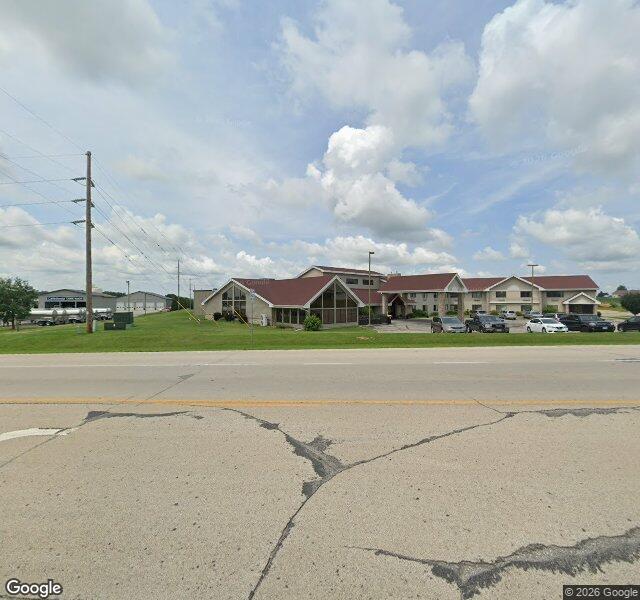
Claddagh Senior Living
508 Kruckow Avenue North, Caledonia, MN 55921View map (opens in a new tab)
Overview and key essentials
State license
Active
MN MDH
Google reviews
4.6/ 5
10 reviews
Size & payment
Ask directly
Confirm pricing & payment
Strong public signals
Rated 4.6/5 across 10 public Google reviews. Visit in person to confirm daily care and pricing.
Cost, payment & care details
Updated Nov 28, 2026| Monthly cost | Not published | Ask for the full monthly cost, including care fees and one-time charges. |
|---|---|---|
| Payment options | Ask directly | Payment details are not confirmed in our records. Ask about private pay, long-term care insurance, veterans benefits, and Medicaid waivers. |
| Size & availability | Confirm directly | We don't publish live openings. Ask about current availability, waitlist length, and move-in timing. |
| Care & support | Assisted livingMemory care certified | Usually offers housing and help with everyday tasks, such as bathing and dressing. What to confirm about care levelsThis describes the licensed category. Ask how care plans adjust if mobility, nursing, or memory needs change over time. Read the family care guide → |
State licensing
State inspection history
4inspections
24deficiencies listed
Jun 12, 2025Routine9 deficiencies reported9
9 deficiencies reported
View official state report (opens in a new tab)
tag issued pursuant to a survey completed0775
on June 10, 2025. On September 8, 2025, licensed assisted living director (LALD)-A responded with a correction plan and a signed agreement with an alarm company, dated August 28, 2025, to install a switch to deactivate the locks on the controlled egress exit doors in the dementia care unit. During an interview on September 12, 2025, at 2:30 p.m., LALD-A stated the alarm company was scheduled to complete installation of the switch and indicated this would be completed by October 3, 2025. Controlled egress locking systems are required to be provided with a switch or device located at the nurse station or other approved location to deactivate the locked STATE FORM 144G.45 Subd. 2. (a) Fire protection and physical SS=F environment Each assisted living facility must comply with the State Fire Code in Minnesota Rules, chapter 7511, and: This MN Requirement is not met as evidenced by: STATE FORM Based on observation, record review, and interview, the licensee failed to comply with Minnesota State Fire Code, under Minnesota Rules Chapter 7511. This practice resulted in a level two violation (a violation that did not harm a resident's health or safety but had the potential to have harmed a resident's health or safety, but was not likely to cause serious injury, impairment, or death), and was issued at a widespread scope (when problems are pervasive or represent a systemic failure that has affected or has potential to affect a large portion or all of the residents). The findings include: On June 10, 2025, HM-E and LALD-A provided building maintenance records and emergency procedures for the facility. On June 10, 2025, at 10:15 a.m., the surveyor toured the facility with housing manager (HM)-E. During the tour, the surveyor observed the following: LOCKING Controlled egress locking systems were installed on all exit doors in the dementia care unit and at the exit door leading out to the patio at the front of the building from the assisted living sitting room. During the facility tour interview on June 10, 2025, HM-E stated they did not know if these locks were tied into the building fire alarm system and would default to an unlocked (fail-safe) position if the fire sprinkler or smoke detection systems were actuated. HM-E stated they did not know if the locks would default to the unlocked position if there was a loss of power as there was an emergency power generator that provided power to maintain the locks. Additionally, the controlled egress door locking systems were not provided with a device capable of deactivating the egress door locking hardware to the unlocked position. Controlled egress STATE FORM locking systems are required to be provided with a switch or device located at the nurse station or other approved location to deactivate the locked egress exit doors to allow the building occupants to evacuate in the event of an emergency. During the facility tour interview on June 10, 2025, HM-E stated they were not aware of a switch or button in the building that would unlock the exit doors. Record review indicated the emergency plan did not include procedures to operate and unlock the controlled egress locking door system. During an interview on June 10, 2025, at 1:45 p.m., LALD-A stated they did not know if the controlled egress locking systems were tied into the building fire alarm and sprinkler systems. LALD-A stated they had already contacted a security company to evaluate the locking system for compliance with fire code rules....
144G.42 Subd. 10 Disaster planning and0680
SS=F emergency preparedness (a) The facility must meet the following requirements: (1) have a written emergency disaster plan that contains a plan for evacuation, addresses elements of sheltering in place, identifies temporary relocation sites, and details staff assignments in the event of a disaster or an emergency; (2) post an emergency disaster plan prominently; (3) provide building emergency exit diagrams to all residents; (4) post emergency exit diagrams on each floor; and (5) have a written policy and procedure regarding missing residents. (b) The facility must provide emergency and disaster training to all staff during the initial staff orientation and annually thereafter and must make emergency and disaster training annually available to all residents. Staff who have not received emergency and disaster training are allowed to work only when trained staff are also working on site. (c) The facility must meet any additional requirements adopted in rule. This MN Requirement is not met as evidenced by: STATE FORM
G6HL126899
{0 480} (a) Except as provided in paragraph (b), food must be prepared and served according to the Minnesota Food Code, Minnesota Rules, chapter 4626. (b) For an assisted living facility with a licensed capacity of ten or fewer residents: (1) notwithstanding Minnesota Rules, part 4626.0033, item A, the facility may share a certified food protection manager (CFPM) with one other facility located within a 60-mile radius and under common management provided the CFPM is present at each facility frequently enough to effectively administer, manage, and supervise each facility's food service operation; (2) notwithstanding Minnesota Rules, part 4626.0545, item A, kick plates that are not removable or cannot be rotated open are allowed unless the facility has been issued repeated correction orders for violations of Minnesota Rules, part 4626.1565 or 4626.1570; (3) notwithstanding Minnesota Rules, part 4626.0685, item A, the facility is not required to provide integral drainboards, utensil racks, or tables large enough to accommodate soiled and clean items that may accumulate during hours of operation provided soiled items do not contaminate clean items, surfaces, or food, and clean equipment and dishes are air dried in a manner that prevents contamination before storage; (4) notwithstanding Minnesota Rules, part 4626.1070, item A, the facility is not required to install a dedicated handwashing sink in its existing kitchen provided it designates one well of a two-compartment sink for use only as a handwashing sink; (5) notwithstanding Minnesota Rules, parts 4626.1325, 4626.1335, and 4626.1360, item A, STATE FORM G6HL12 existing floor, wall, and ceiling finishes are allowed provided the facility keeps them clean and in good condition; (6) notwithstanding Minnesota Rules, part 4626.1375, shielded or shatter-resistant lightbulbs are not required, but if a light bulb breaks, the facility must discard all exposed food and fully clean all equipment, dishes, and surfaces to remove any glass particles; and (7) notwithstanding Minnesota Rules, part 4626.1390, toilet rooms are not required to be provided with a self-closing door. This MN Requirement is not met as evidenced by: {0 485} 144G.41 Subdivision 1.a (a) Minimum SS=C requirements; required food services (a) All assisted living facilities must offer to provide or make available at least three nutritious meals daily with snacks available seven days per week, according to the recommended dietary allowances in the United States Department of Agriculture (USDA) guidelines, including seasonal fresh fruit and fresh vegetables. The menus must be prepared at least one week in advance and made available to all residents. The facility must encourage residents' involvement in menu planning. Meal substitutions must be of similar nutritional value if a resident refuses a food that is served. Residents must be informed in advance of menu changes. The facility must not require a resident to include and pay for meals in the resident's contract. STATE FORM G6HL12 {0 485} This MN Requirement is not met as evidenced by: {0 650} 144G.42 Subd. 8 (a) Staff records SS=D (a) The facility must maintain current records of each paid staff member, each regularly scheduled volunteer providing services, and each individual contractor providing services. The records must include the following infomation: (1) evidence of current professional licensure, registration, or certification if licensure, registration, or certification...
144G.45 Subd. 2 (a) (1) Fire protection and0780
SS=D physical environment (a) Each assisted living facility must comply with the State Fire Code in Minnesota Rules, chapter 7511, and: (1) for dwellings or sleeping units, as defined in the State Fire Code: STATE FORM The findings include: On June 10, 2025, at 10:15 a.m., the surveyor toured the facility with housing manager (HM)-E. During the tour of resident dwelling unit 204, the surveyor observed when the bedroom smoke alarm was tested by HM-E, the smoke alarm installed outside of this sleeping unit was not actuated. During the facility tour interview on June 10, 2025, HM-E verified the above listed smoke alarm observations. All dwelling unit smoke alarms must be interconnected so actuation of one alarm causes all alarms in the dwelling unit to operate. TIME PERIOD FOR CORRECTION: Seven (7) days
144G.45 Subd. 2 (b-f) Fire protection and0810
SS=F physical environment (b) Each assisted living facility shall develop and maintain fire safety and evacuation plans. The plans shall include but are not limited to: (1) location and number of resident sleeping rooms; (2) staff actions to be taken in the event of a fire or similar emergency; (3) fire protection procedures necessary for residents; and (4) procedures for resident movement, evacuation, or relocation during a fire or similar emergency including the identification of unique or unusual resident needs for movement or evacuation. (c) Staff of assisted living facilities shall receive training on the fire safety and evacuation plans upon hiring and at least twice per year thereafter. STATE FORM
144G.41 Subdivision 1 Subd. 1a (a-b) Minimum0480
SS=F requirements; required food services 0 480 STATE FORM
and June 2025 from LALD-A and HM-E.2024
One 2025 training record with eight resident names listed was provided. The date of this training was not recorded. The current census for the facility indicated there were 37 residents. No additional training records were provided. Record review indicated the licensee failed to provide training to employees on the FSEP upon hire and at least twice per year evident by a review of training records lacking the required frequency and documentation. A new hire training record dated May 28, 2025, from a third party online training company was provided. This new hire training did not include the site specific FSEP. FSEP training records for February and March 2025 were provided. The names of the employees who had participated in these trainings were not recorded. During an interview on June 10, 2025, at 1:45 p.m., LALD-A and HM-E verified the training frequencies and documentation were lacking. LALD-A stated eight residents were capable of STATE FORM
144G.42 Subd. 8 (a) Staff records0650
SS=D (a) The facility must maintain current records of each paid staff member, each regularly scheduled volunteer providing services, and each individual contractor providing services. The records must include the following infomation: (1) evidence of current professional licensure, registration, or certification if licensure, registration, or certification is required by this chapter or rules; (2) records of orientation, required annual training and infection control training, and competency evaluations; (3) current job description, including qualifications, responsibilities, and identification of staff persons providing supervision; (4) documentation of annual performance reviews that identify areas of improvement needed and training needs; (5) for individuals providing assisted living services, verification that required health screenings under subdivision 9 have taken place and the dates of those screenings; and (6) documentation of the background study as required under section 144.057. This MN Requirement is not met as evidenced by: STATE FORM
144G.41 Subdivision 1.a (a) Minimum0485
SS=C requirements; required food services (a) All assisted living facilities must offer to provide or make available at least three nutritious meals daily with snacks available seven days per week, according to the recommended dietary allowances in the United States Department of Agriculture (USDA) guidelines, including seasonal fresh fruit and fresh vegetables. The menus must be prepared at least one week in advance and made available to all residents. The facility must encourage residents' involvement in menu planning. Meal substitutions must be of similar nutritional value if a resident refuses a food that is served. Residents must be informed in advance of menu changes. The facility must not require a resident to include and pay for meals in the resident's contract. This MN Requirement is not met as evidenced by: Based on interview and record review, the licensee failed to ensure the assisted living contract did not require any resident to include and pay for meals as a part of their assisted living package fee. This had the potential to affect all residents of the facility. This practice resulted in a level one violation (a violation that has no potential to cause more than a minimal impact on the resident and does not affect health or safety) and was issued at a widespread scope (when problems are pervasive STATE FORM
Jan 29, 2025ComplaintNo deficiencies reportedNone
No deficiencies reported
View official state report (opens in a new tab)
No deficiencies are reported in this inspection record.
Jun 26, 2023ComplaintNo deficiencies reportedNone
No deficiencies reported
View official state report (opens in a new tab)
Inconclusive. The alleged perpetrator (AP) neglected a resident when the AP incorrectly placed an indwelling urinary catheter. The resident had bleeding from his penis, was admitted to the hospital, and developed a septic infection as a result of the incident
Dec 30, 2022Routine15 deficiencies reported15
15 deficiencies reported
View official state report (opens in a new tab)
moderate0640
reporting suspected c The facility shall support protection and safety through access to the state's systems for reporting suspected criminal activity and suspected vulnerable adult maltreatment by: (1) posting the 911 emergency number in common areas and near telephones provided by the assisted living facility; (2) posting information and the reporting number for the Minnesota Adult Abuse Reporting Center to report suspected maltreatment of a vulnerable adult under section 626.557; and (3) providing reasonable accommodations with information and notices in plain language. This MN Requirement is not met as evidenced by: Based on observation and interview, the licensee failed to support protection and safety by not posting information and phone numbers for reporting to the Minnesota Adult Abuse Reporting Center (MAARC) and failed to post the 911 emergency number in common areas and near telephones provided by the assisted living facility. This had the potential to affect all 37 residents, staff, and visitors. This practice resulted in a level two violation (a violation that did not harm a resident's health or safety but had the potential to have harmed a resident's health or safety, but was not likely to cause serious injury, impairment, or death), and was issued at a widespread scope (when problems are pervasive or represent a systemic failure that has affected or has potential to affect a large portion or all of the residents). The findings include: On December 28, 2022, at 10:19 a.m. observation of the facility with licensed assisted living director (LALD)-A identified posted 911 and MAARC information located by a phone behind the main lobby desk. No 911 emergency number or the required MAARC information was posted in common areas. LALD-A stated "yes, the only place" the information was posted in the facility building was by the phone behind the main lobby desk. No further information was provided. TIME PERIOD FOR CORRECTION: Twenty-one (21) days
minor0970
The contract must not include a waiver of facility liability for the health and safety or personal property of a resident. The contract must not include any provision that the facility knows or should know to be deceptive, unlawful, or unenforceable under state or federal law, nor include any provision that requires or implies a lesser standard of care or responsibility than is required by law. This MN Requirement is not met as evidenced by: Based on interview and record review, the licensee failed to ensure the assisted living contract did not include language waiving the facility's liability for health, safety, or personal property of a resident. This had the potential to affect all 37 residents. This practice resulted in a level one violation (a violation that has no potential to cause more than a minimal impact on the resident and does not affect health or safety) and was issued at a widespread scope (when problems are pervasive or represent a systemic failure that has affected or has potential to affect a large portion or all of the residents). The findings included: The licensee had an assisted living license with a renewal date of August 1, 2022. R1's Assisted Living Contract was signed November 22, 2021. R2's Assisted Living Contract was signed September 1, 2021. R3's Assisted Living Contract was signed September 6, 2021. The Assisted Living Contract included the following: -Page 13, number 23. Indemnification-As an occupant of [licensee name], Resident assumes the risk for Resident's own safety and for the safety of Resident's guests and agents. Resident will indemnify and hold harmless Provider, its employees, officers, managers, owners and agents from and against any and all claims, actions, damages, and liability and expense in connection with loss of life, personal injury or damage to property, arising from or out of, or caused wholly or in part by, an act or omission of Resident or Resident's guests or agents. -Page 13, number 25. Liability-Provider is not liable to Resident or Resident's guests for any injury, death or property damage occurring in the Apartment or on Provider's premises unless such injury, death or property damage occurs as the result of Provider's own negligent acts or omissions, or those of its employees, officers, managers, owners or agents. Provider is also not liable for any injury, death or damage occurring as the result of Resident's receipt of health-related, supportive or other services from third-party providers. Unless caused by one of the aforementioned excepted reasons, Resident agrees to hold Provider harmless from any and all claims for injuries, property damage or any other loss resulting from an accident or other occurrence in the Apartment or on Provider's premises. On December 29, 2022, at 12:30 p.m. licensed assistant living director (LALD)-A stated the licensee's lawyer worked closely with a state advocacy agency. LALD-A stated she was not aware this part of the contract was prohibited and stated she would contact the lawyer to let them know. No further information was provided. TIME PERIOD FOR CORRECTION: Twenty-one (21) days 01060 SS=F 144G.52 Subd. 9 Emergency relocation (a) A facility may remove a resident from the facility in an emergency if necessary due to a resident's urgent medical needs or an imminent risk the resident poses to the health or safety of another facility resident or facility staff member.
moderate0810
physical environment (b) Each assisted living facility shall develop and maintain fire safety and evacuation plans. The plans shall include but are not limited to: (1) location and number of resident sleeping rooms; (2) employee actions to be taken in the event of a fire or similar emergency; (3) fire protection procedures necessary for residents; and (4) procedures for resident movement, evacuation, or relocation during a fire or similar emergency including the identification of unique or unusual resident needs for movement or evacuation. (c) Employees of assisted living facilities shall receive training on the fire safety and evacuation plans upon hiring and at least twice per year thereafter. (d) Fire safety and evacuation plans shall be readily available at all times within the facility. (e) Residents who are capable of assisting in their own evacuation shall be trained on the proper actions to take in the event of a fire to include movement, evacuation, or relocation. The training shall be made available to residents at least once per year. (f) Evacuation drills are required for employees twice per year per shift with at least one evacuation drill every other month. Evacuation of the residents is not required. Fire alarm system activation is not required to initiate the evacuation drill. This MN Requirement is not met as evidenced by: Based on observation, and staff interview, the facility failed have detailed fire safety and evacuation plans and associated confirming documentation. This deficient condition has the ability to affect all staff and residents. This practice resulted in a level two violation (a violation that did not harm a resident's health or safety but had the potential to have harmed a resident's health or safety, but was not likely to cause serious injury, impairment, or death), and was issued at a widespread scope (when problems are pervasive or represent a systemic failure that has affected or has potential to affect a large portion or all of the residents). Findings include: On 12/19/2022 between 11:30 AM TO 02:30 PM, survey staff observed that no documentation was presented during documentation review to confirm that residents that are capable of assisting in their own evacuation are being trained on the proper actions at least once a year. MD-C verbally confirmed survey staff observations. TIME PERIOD FOR CORRECTION: Twenty-one (21) days
moderate0680
emergency preparedness (a) The facility must meet the following requirements: (1) have a written emergency disaster plan that contains a plan for evacuation, addresses elements of sheltering in place, identifies temporary relocation sites, and details staff assignments in the event of a disaster or an emergency; (2) post an emergency disaster plan prominently; (3) provide building emergency exit diagrams to all residents; (4) post emergency exit diagrams on each floor; and (5) have a written policy and procedure regarding missing tenant residents. (b) The facility must provide emergency and disaster training to all staff during the initial staff orientation and annually thereafter and must make emergency and disaster training annually available to all residents. Staff who have not received emergency and disaster training are allowed to work only when trained staff are also working on site. (c) The facility must meet any additional requirements adopted in rule. This MN Requirement is not met as evidenced by: Based on observation, interview, and record review, the licensee failed to ensure emergency exit diagrams were posted on each floor. This had the potential to affect all 37 residents, staff and any visitors. This practice resulted in a level two violation (a violation that did not harm a resident's health or safety but had the potential to have harmed a resident's health or safety, but was not likely to cause serious injury, impairment, or death), and was issued at a widespread scope (when problems are pervasive or represent a systemic failure that has affected or has potential to affect a large portion or all of the residents). The findings include: EMERGENCY EXIT DIAGRAM On December 27, 2022, at 11:02 a.m. observation of the facility with licensed assisted living director (LALD)-A revealed no emergency exit diagrams were posted on the first floor of the assisted living services area (outside of the locked memory care unit on the first floor). LALD-A verified at the time and stated "we give each resident a copy" of the emergency exit diagram. The licensee's Disaster Planning and Emergency Preparedness Policy dated August 1, 2021, indicated the license would post emergency diagrams on each floor, of the facility, and had a written policy and procedure regarding missing residents. No additional information was provided. TIME PERIOD FOR CORRECTION: Twenty-one (21) days
moderate0730
Contents of a resident record include the following for each resident: (1) identifying information, including the resident's name, date of birth, address, and telephone number; (2) the name, address, and telephone number of the resident's emergency contact, legal representatives, and designated representative; (3) names, addresses, and telephone numbers of the resident's health and medical service providers, if known; (4) health information, including medical history, allergies, and when the provider is managing medications, treatments or therapies that require documentation, and other relevant health records; (5) the resident's advance directives, if any; (6) copies of any health care directives, guardianships, powers of attorney, or conservatorships; (7) the facility's current and previous assessments and service plans; (8) all records of communications pertinent to the resident's services; (9) documentation of significant changes in the resident's status and actions taken in response to the needs of the resident, including reporting to the appropriate supervisor or health care professional; (10) documentation of incidents involving the resident and actions taken in response to the needs of the resident, including reporting to the appropriate supervisor or health care professional; (11) documentation that services have been provided as identified in the service plan; (12) documentation that the resident has received and reviewed the assisted living bill of rights; (13) documentation of complaints received and any resolution; (14) a discharge summary, including service termination notice and related documentation, when applicable; and (15) other documentation required under this chapter and relevant to the resident's services or status. This MN Requirement is not met as evidenced by: Based on observation, interview, and record review, the licensee's registered nurse (RN) failed to ensure documentation of weekly wound condition and measurements for one of one residents (R1); failed to document the services provided for one of three residents (R3) and failed to ensure the resident record included a discharge summary with the required content and provided information to the receiving facility as required for two of two discharged residents (R4, R5). This practice resulted in a level two violation (a violation that did not harm a resident's health or safety but had the potential to have harmed a resident's health or safety, but was not likely to cause serious injury, impairment, or death) and was issued at a pattern scope (when more than a limited number of residents are affected, more than a limited number of staff are involved, or the situation has occurred repeatedly; but is not found to be pervasive). The findings include: R1 R1's record lacked evidence of weekly nurse notes with wound description and wound measurements for R1's stage four coccyx wound (a wound at the base of the tailbone, with an opening that extends through the skin tissue, muscle, to the bone.) R1's diagnoses included diabetes mellitus, stage four sacral pressure injury with history of osteomyelitis (an infection/inflammation in the bone), benign prostatic hyperplasia with lower urinary tract symptoms (enlarge prostate resulting in recurrent urinary tract infections, and giant cell arthritis (inflammation of the lining of the arteries, often affecting arteries in the head which can result in blindness). R1's Service Plan Addendum dated September 14, 2022,...
moderate0470
(11) develop and implement a staffing plan for determining its staffing level that: (i) includes an evaluation, to be conducted at least twice a year, of the appropriateness of staffing levels in the facility; (ii) ensures sufficient staffing at all times to meet the scheduled and reasonably foreseeable unscheduled needs of each resident as required by the residents' assessments and service plans on a 24-hour per day basis; and (iii) ensures that the facility can respond promptly and effectively to individual resident emergencies and to emergency, life safety, and disaster situations affecting staff or residents in the facility; (12) ensure that one or more persons are available 24 hours per day, seven days per week, who are responsible for responding to the requests of residents for assistance with health or safety needs. Such persons must be: (i) awake; (ii) located in the same building, in an attached building, or on a contiguous campus with the facility in order to respond within a reasonable amount of time; (iii) capable of communicating with residents; (iv) capable of providing or summoning the appropriate assistance; and (v) capable of following directions; This MN Requirement is not met as evidenced by: Based on observation, interview, and record review, the licensee failed to ensure the 24-hour staffing schedule was posted with all required information, and a staffing plan was developed to determine staffing levels to meet the needs of all residents. This had the potential to affect all residents, staff and visitors. This practice resulted in a level two violation (a violation that did not harm a resident's health or safety but had the potential to have harmed a resident's health or safety, but was not likely to cause serious injury, impairment, or death), and was issued at a widespread scope (when problems are pervasive or represent a systemic failure that has affected or has potential to affect a large portion or all of the residents). The findings include: The licensee held an assisted living dementia facility license, and at the time of the survey had a census of 37 residents. STAFFING SCHEDULE On December 27, 2022, at 10:52 a.m. the facility posted staff schedule was observed posted on a bulletin board located on a wall near the front desk in the main lobby. The posting included "A.M. staff 3 Aides, P.M. staff 3 Aides, NOC [night] staff 2 Aides, RN [registered nurse] on call 24 hrs [hours]". On December 27, 2022, at 12:40 p.m. licensed assisted living director (LALD)-A observed the posted staff schedule with the evaluator and stated the posting was the facility's "posted staff schedule". LALD-A verified the posting did not include all required content. LALD-A stated, "We can fix that." LALD-A stated, "We don't have it posted in the memory care unit [locked unit], now that you mention that." The licensee lacked a posted daily staffing schedule developed by the clinical nurse supervisor to include: -direct-care staff work schedules for each direct-care staff member showing all work shifts, including days and hours worked; -direct-care staff member's resident assignments or work location; and -be posted after redacting direct-care staff member's resident assignments, at the beginning of each work shift in a central location in each building STAFFING PLAN The licensee failed to develop and implement a staffing plan for determining its staffing level that: -includes an evaluation, to be conducted at least twice a year, of...
STATE FORM6899
BBXB11 STATE FORM BBXB11 STATE FORM BBXB11 STATE FORM BBXB11 STATE FORM BBXB11 STATE FORM BBXB11 STATE FORM BBXB11 STATE FORM BBXB11 STATE FORM BBXB11 STATE FORM BBXB11 STATE FORM BBXB11 STATE FORM BBXB11 STATE FORM BBXB11 STATE FORM BBXB11 STATE FORM BBXB11 STATE FORM BBXB11 STATE FORM BBXB11 STATE FORM BBXB11 STATE FORM BBXB11 STATE FORM BBXB11 STATE FORM BBXB11 STATE FORM BBXB11 STATE FORM BBXB11 STATE FORM BBXB11 STATE FORM BBXB11 STATE FORM BBXB11 STATE FORM BBXB11 STATE FORM BBXB11 STATE FORM BBXB11 STATE FORM BBXB11 STATE FORM BBXB11 STATE FORM BBXB11 STATE FORM BBXB11 STATE FORM BBXB11 STATE FORM BBXB11 STATE FORM BBXB11 STATE FORM BBXB11 STATE FORM BBXB11 STATE FORM BBXB11 01060 01060 An emergency relocation is not a termination. (b) In the event of an emergency relocation, the facility must provide a written notice that contains, at a minimum: (1) the reason for the relocation; (2) the name and contact information for the location to which the resident has been relocated and any new service provider; (3) contact information for the Office of Ombudsman for Long-Term Care; (4) if known and applicable, the approximate date or range of dates within which the resident is expected to return to the facility, or a statement that a return date is not currently known; and (5) a statement that, if the facility refuses to provide housing or services after a relocation, the resident has the right to appeal under section 144G.54. The facility must provide contact information for the agency to which the resident may submit an appeal. (c) The notice required under paragraph (b) must be delivered as soon as practicable to: (1) the resident, legal representative, and designated representative; (2) for residents who receive home and community-based waiver services under chapter 256S and section 256B.49, the resident's case manager; and (3) the Office of Ombudsman for Long-Term Care if the resident has been relocated and has not returned to the facility within four days. (d) Following an emergency relocation, a facility's refusal to provide housing or services constitutes a termination and triggers the termination process in this section. This MN Requirement is not met as evidenced by: Based on interview and record review, the licensee failed to provide a written notice with STATE FORM BBXB11 01060 01060 required content for an emergency relocation for four of four residents (R1, R2, R3, R4) and failed to notify the Office of Ombudsman for Long-Term Care of the emergency relocation for three of four residents (R1, R2, R4). This practice resulted in a level two violation (a violation that did not harm a resident's health or safety but had the potential to have harmed a resident's health or safety) and was issued at a widespread scope (when problems are pervasive or represent a systemic failure that has affected or has the potential to affect a large portion or all the residents). The findings include: R1 R1 was admitted to assisted living services on November 23, 2021. R1's Service Plan dated September 14, 2022, indicated R1 received services to include medication administration, blood glucose checks, wound-care and daily safety checks. R1's progress note dated September 8, 2022, indicated the licensee sent R1 to urgent care and then to the hospital due to concerns with blood in urine and R1 complaints of burning with urination. R1 was hospitalized with a urinary tract infection and discharged back to the facility on September 12, 2022 (four...
(three days).2022
R4 R4 began receiving services on May 14, 2022, and was discharged on November 25, 2022. R4's diagnoses included congestive heart failure. R4's Service Plan dated June 23, 2022, indicated R4 received services including dressing, bathing, positioning and bed mobility, transfers, continence-assist with toileting, incontinence, cleansing and perineal area, medication administration, pharmacy coordination to fill and deliver meds, behavior monitoring or intervention, congregate meal, housekeeping and linens, personal laundry, transportation arrangement, socialization, daily 'I'm ok' checks, routine indicated "service plans, shall be revised, if needed, based on resident reassessments and monitoring". A service plan would include a description of the services that are to be provided based on the most recent assessment and resident preferences, fees for the services to be provided, the frequency of each service to be provided, a schedule and method for the next planned assessment or monitoring and how the facility will support documented resident health care directive decisions if any, including circumstances when emergency medical services are not to be summoned. Other documents such as care plan, assignment sheets or other internal documents may be used to assist staff in understanding their daily assignments and tasks, but such documents are not required and do not replace the required service plan.
minor0485
Requirements (13) offer to provide or make available at least the following services to residents: (i) at least three nutritious meals daily with snacks available seven days per week, according to the recommended dietary allowances in the United States Department of Agriculture (USDA) guidelines, including seasonal fresh fruit and fresh vegetables. The following apply: (A) menus must be prepared at least one week in advance, and made available to all residents. The facility must encourage residents' involvement in menu planning. Meal substitutions must be of similar nutritional value if a resident refuses a food that is served. Residents must be informed in advance of menu changes; (C) the facility cannot require a resident to include and pay for meals in their contract; This MN Requirement is not met as evidenced by: Based on interview, and record review, the licensee failed to ensure at least three nutritious meals daily according to the recommended dietary allowances in the United States Department of Agriculture (USDA) guidelines. This practice resulted in a level one violation (a violation that has no potential to cause more than a minimal impact on the resident and does not affect health or safety) and was issued at a widespread scope (when problems are pervasive or represent a systemic failure that has affected or has potential to affect a large portion or all of the residents). The findings include: The licensee's menu provided for the dates of December 26, 2022, through January 1, 2023, lacked evidence of fruit for "lunch" meals listed and dairy to be included on the menu to meet the USDA guidelines as required. No beverages were listed on the menu. On December 30, 2022, at 10:37 a.m. housing manager (HM)-C stated she was the certified food protection manager for the facility. HM-C reviewed the menu with the evaluator and verified the information listed above. HM-C stated, "I know they serve drinks" with meals, which included milk. HM-C stated herself and the "cook make the menus". The licensee's Food Service and Menu Planning policy dated August 9, 2021, indicated the licensee would offer to provide and make available three meals daily with snacks available seven days per week according tot he recommended dietary allowances in the USDA guidelines, including seasonal fresh fruit and fresh vegetables. No further information was provided. TIME PERIOD FOR CORRECTION: Twenty-One (21) days
moderate0550
maltreatment All facilities must post in a conspicuous place information about the facilities' grievance procedure, and the name, telephone number, and e-mail contact information for the individuals who are responsible for handling resident grievances. The notice must also have the contact information for the state and applicable regional Office of Ombudsman for Long-Term Care and the Office of Ombudsman for Mental Health and Developmental Disabilities, and must have information for reporting suspected maltreatment to the Minnesota Adult Abuse Reporting Center. This MN Requirement is not met as evidenced by: Based on observation, interview, and record review, the licensee failed to post information related to the grievance procedure. This had the potential to affect all residents, staff, and visitors. This practice resulted in a level two violation (a violation that did not harm a resident's health or safety but had the potential to have harmed a resident's health or safety, but was not likely to cause serious injury, impairment, or death), and was issued at a widespread scope (when problems are pervasive or represent a systemic failure that has affected or has potential to affect a large portion or all of the residents). The findings include: The licensee lacked postings in a conspicuous location and a disclosure of resident advocacy to include: -the e-mail contact information for the individuals who are responsible for handling resident grievances; and -the contact information for the regional Office of Ombudsman for Mental Health and Developmental Disabilities On December 27, 2022, at 12:40 p.m. licensed assisted living director (LALD)-A observed the facility posted grievance information with the evaluator and verified the posting did not include the required content listed above. LALD-A stated, "We can fix that." No further information was provided. TIME PERIOD FOR CORRECTION: Twenty-one (21) days
moderate0250
(a) The commissioner may refuse to grant a provisional license, refuse to grant a license as a result of a change in ownership, refuse to renew a license, suspend or revoke a license, or impose a conditional license if the owner, controlling individual, or employee of an assisted living facility: (1) is in violation of, or during the term of the license has violated, any of the requirements in this chapter or adopted rules; (2) permits, aids, or abets the commission of any illegal act in the provision of assisted living services; (3) performs any act detrimental to the health, safety, and welfare of a resident; (4) obtains the license by fraud or misrepresentation; (5) knowingly makes a false statement of a material fact in the application for a license or in any other record or report required by this chapter; (6) denies representatives of the department access to any part of the facility's books, records, files, or employees; (7) interferes with or impedes a representative of the department in contacting the facility's residents; (8) interferes with or impedes ombudsman access according to section 256.9742, subdivision 4; (9) interferes with or impedes a representative of the department in the enforcement of this chapter or fails to fully cooperate with an inspection, survey, or investigation by the department; (10) destroys or makes unavailable any records or other evidence relating to the assisted living facility's compliance with this chapter; (11) refuses to initiate a background study under section 144.057 or 245A.04; (12) fails to timely pay any fines assessed by the commissioner; (13) violates any local, city, or township ordinance relating to housing or assisted living services; (14) has repeated incidents of personnel performing services beyond their competency level; or (15) has operated beyond the scope of the assisted living facility's license category. (b) A violation by a contractor providing the assisted living services of the facility is a violation by the facility. This MN Requirement is not met as evidenced by: Based on interview and record review, the licensee failed to show they met the requirements of licensure, by attesting the managerial officials who oversaw the day-to-day operations understood applicable statutes and rules; nor developed and/or implemented current policies and procedures as required with records reviewed. This had the potential to affect all residents, staff, and visitors. This practice resulted in a level two violation (a violation that did not harm a resident's health or safety but had the potential to have harmed a resident's health or safety, but was not likely to cause serious injury, impairment, or death), and is issued at a widespread scope (when problems are pervasive or represent a systemic failure that has affected or has the potential to affect a large portion or all of the residents). The findings include: During the entrance conference on December 27, 2022, at 11:00 a.m., licensed assisted living director (LALD)-A stated the licensee's employees in charge of the facility were familiar with the assisted living regulations and the licensee provided medication and treatment management services. The licensee's Application for Assisted Living License, section titled Official Verification of Owner or Authorized Agent, (page four and five of the application), identified, I certify I have read and understand the following: [a check mark was placed before each of the following]: - I...
moderate0510
(a) All assisted living facilities must establish and maintain an infection control program that complies with accepted health care, medical, and nursing standards for infection control. (b)The facility's infection control program must be consistent with current guidelines from the national Centers for Disease Control and Prevention (CDC) for infection prevention and control in long-term care facilities and, as applicable, for infection prevention and control in assisted living facilities. (c) The facility must maintain written evidence of compliance with this subdivision. This MN Requirement is not met as evidenced by: Based on observation, interview, and record review, the licensee failed to establish and maintain an effective infection control program that complies with accepted health care, medical and nursing standards for infection control related to glove use and handwashing during treatment and medication administration for one of four residents (R8). This practice resulted in a level two violation (a violation that did not harm a resident's health or safety but had the potential to have harmed a resident's health or safety) and was issued at an isolated scope (when one or a limited number of residents are affected or one or a limited number of staff are involved, or the situation has occurred only occasionally). The findings include: The licensee failed to ensure gloves were worn and proper handwashing occurred during and in between the administration of R8's nasal spray and eye drops. On December 28, 2022, at 8:45 a.m. unlicensed personnel (ULP)-F was observed to administer oral medications and then administered nasal spray to R8 without glove use and proceeded without handwashing or glove use to administer R8's eye drops. On December 28, 2022, at 10:30 a.m. RN-B stated she expected gloves to be worn with the administration of nasal medications and eye drops. She expected ULP to remove gloves in between nasal medication administration with hand washing and clean gloves donned prior to the administration of eye drops. The licensee's Gloves policy dated August 1, 2021, indicated gloves must be worn whenever there may be direct contact between and employee and contaminated objects or as instructed. The licensee's Handwashing policy dated August 1, 2022, indicated hand washing would be performed by all employees as necessary, between tasks and procedures. Additionally, when conducting a procedure requiring the use of gloves, proper hand hygiene should be completed before donning and after removing gloves. No other information was provided. TIME PERIOD FOR CORRECTION: Seven (7) days
moderate0630
requirements for reporting ma (b) The facility must develop and implement an individual abuse prevention plan for each vulnerable adult. The plan shall contain an individualized review or assessment of the person's susceptibility to abuse by another individual, including other vulnerable adults; the person's risk of abusing other vulnerable adults; and statements of the specific measures to be taken to minimize the risk of abuse to that person and other vulnerable adults. For purposes of the abuse prevention plan, abuse includes self-abuse. This MN Requirement is not met as evidenced by: Based on interview and record review, the facility failed to ensure development of an individual abuse prevention plan with the required content for one of three residents (R1). This practice resulted in a level two violation (a violation that did not harm a resident's health or safety but had the potential to have harmed a resident's health or safety) and was issued at an isolated scope (when one or a limited number of residents are affected or one or a limited number of staff are involved, or the situation has occurred only occasionally). The findings include: R1's Service Plan dated September 14, 2022, indicated R1 received services to include medication administration, blood glucose checks, wound-care and daily safety checks. R1's Individual Abuse Prevention Plan (IAPP) dated September 9, 2022, indicated on page five in the section identified as "Is resident susceptible to abuse from another individual, including other vulnerable adults?" An "X" with "(no)" was entered into the column under "False". Additionally, the document lacked an approach/intervention or goal regarding R1's susceptibility to abuse by others. On December 29, 2022, at 2:30 p.m. licensed assisted living director (LALD)-A confirmed R1's IAPP lacked the indication he was susceptible to abuse by others. LALD-A stated all residents are susceptible to abuse by others. LALD-A stated she would update the information to correct it. The licensee's Vulnerable adult Maltreatment prevention and reporting policy dated August 1, 2021, indicated the licensee developed individualized vulnerable adult abuse prevention plans to identify vulnerability risks and develop measures to minimize maltreatment based on identified information. No further information was provided. TIME PERIOD FOR CORRECTION: Seven (7) days
moderate0660
control (a) The facility must establish and maintain a comprehensive tuberculosis infection control program according to the most current tuberculosis infection control guidelines issued by the United States Centers for Disease Control and Prevention (CDC), Division of Tuberculosis Elimination, as published in the CDC's Morbidity and Mortality Weekly Report. The program must include a tuberculosis infection control plan that covers all paid and unpaid employees, contractors, students, and regularly scheduled volunteers. The commissioner shall provide technical assistance regarding implementation of the guidelines. (b) The facility must maintain written evidence of compliance with this subdivision. This MN Requirement is not met as evidenced by: Based on interview and record review, the licensee failed to establish and maintain a tuberculosis (TB) prevention program, based on the most current guidelines issued by the Centers for Disease Control and Prevention (CDC) which included documentation of a completed health history and symptom screening for one of two employees (unlicensed personnel (ULP-F). This practice resulted in a level two violation (a violation that did not harm a resident's health or safety but had the potential to have harmed a resident's health or safety, but was not likely to cause serious injury, impairment, or death), and was issued at an isolated scope (when one or a limited number of residents are affected or one or a limited number of staff are involved or the situation has occurred only occasionally). The findings include: The licensee's TB facility risk assessment dated August 1, 2022, indicated they were a low risk. ULP-F's personnel file identified she was hired on May 17, 2021. ULP-F's personnel file included a record of her two step TST skin tests completed on May 20, 2021, and June 11, 2021, which were both negative for TB. On December 29, 2022, at 8:45 a.m. housing manager (HM)-C provided the evaluator with ULP-F's TB Screening Tool dated December 29, 2022. The personnel file had no evidence a TB symptom screening was completed, or within 90 days prior to the hire date. On December 30, 2022, at 9:00 a.m. licensed assisted living director (LALD)-A verified ULP-F's TB screening tool was completed and dated during the time of the survey. The licensee's Tuberculosis Screening policy dated August 1, 2021, indicated for staff screening, "Staff whose essential job functions require work within the same air space of care clients will be screened and tested for tuberculosis prior to the staff being exposed to clients. Baseline (upon hire) screening will be completed, but serial (annual) screening will only be required with increased occupational risk or exposure." Screening would be conducted as follows: 1. New staff will be screened for active signs of TB using the Baseline TB Screening Tool for HCWs 2. New staff will have an IGRA blood test or a two-step Mantoux conducted with results documented on the Baseline TB Screening Tool for HCWs. 3. No staff will be permitted to begin work where the work involves sharing the air space with residents until the negative results of the first Mantoux are read and documented or a negative IGRA blood test result is received and documented. 4. Staff TB screening results will be kept in each employee medical file. 5. Staff should be screened for signs and symptoms on an annual basis. guidelines, Regulations for Tuberculosis Control in Minnesota Health Care Settings, dated...
moderate0110
license required 0 110 Each assisted living facility must employ an assisted living director licensed or permitted by the Board of Executives for Long Term Services and Supports. This MN Requirement is not met as evidenced by: Based on observation, interview and record review, the licensee failed to ensure licensed assisted living director (LALD)-A was listed as the Director of Record for the licensee. This had the potential to affect all the licensee's residents, staff, and visitors. This practice resulted in a level two violation (a violation that did not harm a resident's health or safety but had the potential to have harmed a resident's health or safety) and was issued at a widespread scope (when problems are pervasive or represent a systemic failure that has affected or has the potential to affect a large portion or all the residents). The findings include: On December 27, 2022, at 1:00 p.m. the Minnesota Board of Executives for Long-Term Services and Support (BELTSS) website indicated LALD-A currently held a LALD license effective through October 31, 2022; however, LALD-A's license lacked an organization listed as the Director of Record for the licensee. On December 27, 2022, at 1:36 p.m. the evaluator emailed a BELTSS representative to clarify LALD-A's status as director of record for the facility. At 1:43 p.m., the BELTSS representative responded "She has not updated her Director of Record for any location. Those instructions have been sent out to the LALD several times over the course of the license renewals since July 2022-October 21, 2022. I did check and that location is in our database. There is no other LALD on record for this location. She should contact BELTSS, if she does not know how to update her license portal." On December 27, 2022, at 2:15 p.m. LALD-A stated she thought she had turned everything in to BELTSS and did not recall receiving email contact from BELTSS with additional requirements. LALD-A stated she would immediately contact the representative from BELTSS. No further information was provided. TIME PERIOD FOR CORRECTION: Two (2) days
Neighborhood & resident support
Emergency access, hazards & advocacy
Nearest hospital
Gundersen Luth Med Ctr
16.8 mi · La Crosse, WI
Emergency roomTrauma Ii
FEMA hazard risk
Very LowHouston County, MN
- Landslide
- Hail
- Cold Wave
Free resident advocacy
Minnesota Office of Ombudsman for Long-Term Care
More neighborhood context (specialists, VA, dialysis, air & affordability)
VA & dialysis access
Tomah VA Medical Center
55.6 mi · Tomah, WI
Gundersen Lutheran Renal Dialysis - La Crosse
21.6 mi · Home dialysis
Specialists within 15 mi
- Geriatricians
- 0
- Neurologists
- 0
- Palliative care
- 0
- PM&R rehab
- 1
Environment & mobility
- EPA Walkability
- 7.8/20 (Below Average)
- USDA Grocery Access
- Moderate Grocery Access
County demographics
- Age 65+ median income
- $54,556/yr
- Rent-burdened households
- 43%
- Cognitive disability (2023)
- 13.4%
- Mobility disability
- 9.8%
Call & tour checklist
Questions to ask Claddagh Senior Living
Check off questions as you call or tour. Your progress stays private in this browser.
Show 3 more suggested questions
Verification & public records
Official records & sources
Licensing & contact
- License #
- 33458
- Status
- active
- Phone
- (507) 725-5200
- Federal OIG LEIE
- Clear (2026-11-27)
Original public sources
Verify licensing, ratings, and inspection reports directly with each official source.
- MN MDH official record (opens in a new tab)MN Dept. of Health
- Google Maps (opens in a new tab)Directions, photos & neighborhood
- Google Reviews (opens in a new tab)10 public reviews
EveryPlace is an independent research directory. Information is compiled from public Medicare.gov, state licensing, Google Places, and street-level imagery sources. Some summaries, suggested questions, and pricing notes are AI-generated or AI-assisted and may contain errors or omissions. We do not accept payment for placement. Confirm all details directly with the community and official sources. Research Policy.
Keep exploring
Nearby communities to compare
- Cap. 37HUD Senior Housing< 1 miWhispering PinesCaledonia, MN
- Medicare 1/55.0(2)49 bedsMedicaidNursing Home8.2 miTweeten Lutheran Health Care CenterSpring Grove, MN
- 4.4(7)Assisted Living8.3 miSpring Grove Assisted LivingSpring Grove, MN
- Cap. 31HUD Senior Housing8.4 miSpring Grove ManorSpring Grove, MN
- Cap. 31HUD Senior Housing9.0 miValley View Manor -- Houston, MnHouston, MN
- Medicare 5/55.0(1)40 bedsMedicaidNursing Home9.1 miValley View Healthcare & RehabHouston, MN