
Loading EveryPlace content…
Strong Medicare quality ratings; public reviewers often praise highly praised activities and scheduling staff. Still worth an in-person visit.
based on 26 Google reviews
Email Christian Care Nursing Center to yourself
Get a one-time email with a link to this profile so it is easy to find and share later.
This sends one email and does not add you to a mailing list.
Christian Care Nursing Center has a strong overall Medicare rating. RN hours meet the EveryPlace reference benchmark, which is one useful staffing signal to discuss during a visit. Public reviewers frequently mention: highly praised activities and scheduling staff and effective physical and occupational therapy. Review the component ratings and current source records before deciding.
Christian Care Nursing Center receives highly polarized feedback, with some families praising the dedicated activities staff and rehab outcomes, while others report serious concerns regarding neglect and unprofessionalism. Several reviewers highlight significant issues with communication, staffing levels, and the quality of medical oversight. Families considering this facility should be aware of the stark contrast between experiences, ranging from excellent therapy to reports of poor patient safety.
Quality Themes
Tap a score for detailsStrengths
Concerns
Rating Trends
Tap a year to see what changed
Distribution · 29 analyzed
This facility responds to some reviews.
Personalized based on this facility's data
Key Review Excerpts
“Almost immediately my mom was expressing to us that she wasn't happy there, workers were mean, she wasn't feeling safe. We visited at least weekyl. By the 29th day she was in really bad shape.”
“The nursing home could and should be so much better. It is always short staffed with high turn over and alot of the nurses station staff aren't very helpful.”
This facility meets both EveryPlace staffing reference benchmarks. Higher staffing is generally associated with stronger day-to-day care.
Reference benchmarks (0.75 RN and 4.1 total nursing hours per resident/day) are comparison targets, not current federal minimum requirements.
Resident outcomes compared with national, state, and local averages · 3 measures
2
measures
1
measures
Short-stay residents vaccinated for the flu
Short-stay residents vaccinated for pneumonia
Short-stay residents newly given antipsychotics
US average from Medicare published data
Detailed Medicare record · up to 3-year lookback
Christian Care Nursing Center has 17 deficiencies across three surveys, with families filing complaints that triggered findings in safety oversight, medication management, and treatment care. The facility shows recurring problems with food safety (found in all three surveys) and fire safety systems. While all issues have correction dates, the pattern of repeat violations in basic areas like nutrition and safety infrastructure suggests ongoing operational challenges families should investigate during visits.
Administration Deficiencies
Electronically submit to CMS complete and accurate direct care staffing information, based on payroll and other verifiable and auditable data.
Egress Deficiencies
Provide rooms that can be unlocked from inside without a key.
Smoke Deficiencies
Ensure smoke barriers are constructed to a 1 hour fire resistance rating.
Nutrition and Dietary Deficiencies
Procure food from sources approved or considered satisfactory and store, prepare, distribute and serve food in accordance with professional standards.
Administration Deficiencies
Provide a neutral and fair arbitration process and agree to arbitrator and venue.
Services Deficiencies
Have properly installed electrical wiring and gas equipment.
Construction Deficiencies
Install a two-hour-resistant firewall separation.
Smoke Deficiencies
Ensure smoke barriers are constructed to a 1 hour fire resistance rating.
Nutrition and Dietary Deficiencies
Procure food from sources approved or considered satisfactory and store, prepare, distribute and serve food in accordance with professional standards.
Smoke Deficiencies
Install an approved automatic sprinkler system.
Miscellaneous Deficiencies
To conduct inspection, testing and maintenance of fire doors by qualified individuals.
Gas, Vacuum, and Electrical Systems Deficiencies
Ensure receptacles at patient bed locations and where general anesthesia is administered, are tested after initial installation, replacement or servicing.
Quality of Life and Care Deficiencies
Ensure that a nursing home area is free from accident hazards and provides adequate supervision to prevent accidents.
Pharmacy Service Deficiencies
Provide pharmaceutical services to meet the needs of each resident and employ or obtain the services of a licensed pharmacist.
Nutrition and Dietary Deficiencies
Procure food from sources approved or considered satisfactory and store, prepare, distribute and serve food in accordance with professional standards.
Quality of Life and Care Deficiencies
Provide appropriate treatment and care according to orders, resident’s preferences and goals.
Administration Deficiencies
Set up an ongoing quality assessment and assurance group to review quality deficiencies and develop corrective plans of action.
Source: AZ State Licensing Agency
Based on observation and staff interview it was determined, the facility failed to ensure a protected covering over exposed wires. Failure to have the appropriate protection around exposed wires could cause harm to staff and patients.NFPA 101, 2012 Edition Chapter 19. "19.5.1 Utilities. 19.5.1.1 Utilities shall comply with the provisions of Section 9.1" " 9.1 Utilities. 9.1.2 Electrical Systems. Electrical wiring and equipment shall be in accordance with NFPA 70, National Electrical Code, unless such installations are approved existing installations, which shall be permitted to be continued in service.NFPA 70, 2011 Edition Chapter 1 General "110.27(A) Live Parts Guarded Against Accidental Contact. Except as elsewhere required or permitted by this Code, live parts of electrical equipment operating at 50 volts or more shall be guarded against accidental contact by approved enclosures or by any of the following means: (1) By location in a room, vault, or similar enclosure that is accessible only to qualified persons. (2) By suitable permanent, substantial partitions or screens arranged so that only qualified persons have access to the space within reach of the live parts. Any openings in such partitions or screens shall be sized and located so that persons are not likely to come into accidental contact with the live parts or to bring conducting objects into contact with them. (3) By location on a suitable balcony, gallery, or platform elevated and arranged so as to exclude unqualified persons. (4) By elevation of 2.5 m (8 ft) or more above the floor or other working surface."Findings include:Observations while on tour, August 26, 2025, revealed exposed wires coming from four (1) open junction boxes above the drop ceiling by the smoke control door adjacent room 135; the J Box cover were missing its cover.The following deficiencies were cited;1. OUTSIDE ROOM 135 DOUBLE SMOKE DOORS ABOVE CEILING HAS OPEN JUNCTION BOX WITH WIRES EXPOSED.The management team confirmed the door deficiencies during the facility tour and exit conference on August 26, 2025.
Based on observation, the facility failed to maintain several doors in the building. Failing to maintain doors in the facility could allow heat and/or smoke to transfer, which will cause harm to the patients and/or staff. NFPA 101, Life Safety Code, 2012 edition, Chapter 19, Section 19.3.6.3.5. "Doors shall be provided with a means for keeping the door closed that is acceptable to the authority having jurisdiction." NFPA 80, 2010 edition, Chapter 5, Section 5.2.14 Maintenance of Closing Mechanisms. 5.2.14.1 Self-closing devices shall be kept in working condition at all times. Chapter 19, Section 19.3.6.3 Corridor Doors Section as 19.3.6.3.1* Doors protecting corridor openings in other than required enclosures of vertical openings, exits, or hazardous areas shall be substantial doors, such as those constructed of 1-3/4 inch solid-bonded core wood, or capable of resisting fire for at least 20 minutes. Doors in fully sprinklered smoke compartments are only required to resist the passage of smoke. Doors shall be provided with a means suitable for keeping the door closed. Findings include: Observations made while on tour on August 26, 2025, revealed the following: The following room doors #132, 130,128, were missing SMOKE SEAL FROM HANDLE TO TOP OF DOOR HAS 1/8" TO 1/2" GAPS The management team confirmed the door deficiencies during the facility tour and exit conference on August 26, 2025. Finding includes:During an initial kitchen observation conducted on August 26, 2025 at 7:19 a.m., with the Kitchen Manager (staff # 101), the following
Based on observation, the facility failed to fill multiple penetrations in the smoke barriers of the facility. Failing to seal the penetrations, holes, and openings in the smoke barriers will allow smoke and heat to penetrate other wings or possibly the whole facility, which could cause harm to the patients in the event of a fire. NFPA 101 Life Safety Code, 2012, Chapter 19, Section 19.3.7.3 "Any required smoke barrier shall be constructed in accordance with Section 8.5 and shall have a fire resistance rating of at least ½ hour." Chapter 8, Section 8.5.6.2 Penetrations for cables cable trays, conduits, pipes, tubes, vents wires and similar items to accommodate electrical, plumbing and communications systems that pass through a wall, floor or /ceiling assembly constructed as a smoke barrier, or through the ceiling membrane of the roof /ceiling of a smoke barrier assembly shall be protected by a system or material capable of restricting the transfer of smoke. Findings include: The following deficiencies were cited;1. AREA IS THE WEST WALL FOR PIPE PENTRATIONS AND WALL TO CEILING. 2. ON THE EXTERIOR OF THE ROOM, THE PIPE PENETRATIONS NEED TO BE SEALED.3. THE FIRE RISER ROOM HAS MULTIPLE FIRE WALL PENETRATION THAT NEEDS TO BE SEALED.The management team confirmed the door deficiencies during the facility tour and exit conference on August 26, 2025.
The State Compliance Survey was conducted on August 26, 2025 through August 27, 2025 , in conjunction with the investigation of Complaint(s) # 2268119, 2268120, 2268124, 2268123, 2268111, 2268110, 2268107, 2268115, 2268106, 2268050, 2268051. The following deficiencies were cited:
 Based on documentation, staff interview, and the facility policy and procedures, the facility failed to report accurate PBJ (Payroll Based Journal) data as per requirements.
Based on observations, staff interviews, and policy review, the facility failed to ensure that food items were not expired.  The deficient practice could increase the risk of cross-contamination and foodborne illness.
Number of residents sampled:Number of residents cited:TFFT ensure that food handling processes were properly implemented. Based on observations, staff interviews, and policy review, the facility failed to ensure that food items were not expired. The deficient practice could increase the risk of cross-contamination and foodborne illness.
Number of residents sampled:Number of residents cited:TFFT explain in a form and manner including a language that the resident or his/her representative understood  Based on documentation, staff interviews, and the facility policy and procedures, the facility failed to ensure the binding arbitration agreement provided for the selection of a neutral arbitrator agreed upon by both parties and a venue agreed upon by both parties.  Â
The complaint survey was conducted on July 21, 2025 of the following complaint #s 00137000, 00136994. There were no deficiencies cited.
The complaint survey was conducted on June 11, 2025, with the investigation of intake #: 00133163, AZ00214374, and AZ00214561. There were no deficiencies cited:
The Risk Based Complaint Survey was conducted April 23, 2025 through April 24, 2025 in conjunction with the following Complaints: AZ00169728, AZ00171743, AZ00182740, AZ00182356, AZ00178713, AZ00176178, AZ00175048, AZ00173528, AZ00173041, and AZ00171762. There were no deficiencies cited.
42 CFR 482.41 Nursing Home The facility must meet the applicable provisions of the 2012 Edition of the Life Safety Code of the National Fire Protection Association This is a recertification survey for Medicare under LSC 2012, Chapter 19, Existing Health Care Occupancies The entire facility was surveyed on September 10, 2024. The facility meets the standards, based on acceptance of a plan of correction.
Based on record review and interviews with staff, it was determined that the facility failed to have written documentation of the Annual Inspection and Testing of Door openings in accordance with NFPA 80, 2010 Edition, "Standard for Fire doors and Other Opening Protectives." Failing to inspect and test fire-rated door assemblies in accordance with NFPA 80 annually could harm patients. NFPA 101 2012 Life Safety Code Section 8.3.3. Fire door and Windows Section 8.3.3.1 "Openings required to have a fire protection rating by Table 8.3.4.2 shall be protected by approved, listed labeled fire door assemblies and fire window assemblies and their accompanying hardware, including all frames, closing devices, anchorage and sills in accordance with the requirements of NFPA 80, Standard for Fire Doors and Other Opening protective, except as otherwise specified in this code." NFPA 80 Section 5.2* Inspections Section 5.2.1*"Fire door assemblies shall be inspected and tested not less than annually, and a written record of the inspection shall be signed and kept for the AHJ. Section 5.2.3 Functional Testing. Section 5.2.3.1 Functional testing of fire door and window assemblies shall be performed by individuals with knowledge and understanding of the operating components of the type of door being subject to testing." Findings include: During a review of the facility's records on September 10, 2024, the following deficiencies were noted: 1. The facility did not have written records for the Annual Inspection and Testing of Door Openings in accordance with NFPA 80 Standards for Fire Doors and Other Opening Protectives. Facility management confirmed during the exit conference on September 10, 2024, that the facility failed to have documentation of annual door inspections.
Based on observation it was determined the facility failed to properly fill penetrations in multiple areas of the smoke barriers in the facility. Failing to seal the penetrations, holes, and openings in the smoke barriers will allow smoke and heat to penetrate other wings or possibly the whole facility which could cause harm to the patients in the time of a fire. NFPA 101 Life Safety Code, 2012, Chapter 19, Section 19.3.7.3 "Any required smoke barrier shall be constructed in accordance with Section 8.5 and shall have a fire resistance rating of at least \'bd hour." Chapter 8, Section 8.5.6.2 Penetrations for cables cable trays, conduits, pipes, tubes, vents wires and similar items to accommodate electrical, plumbing and communications systems that pass through a wall, floor or /ceiling assembly constructed as a smoke barrier, or through the ceiling membrane of the roof /ceiling of a smoke barrier assembly shall be protected by a system or material capable of restricting the transfer of smoke. Findings include: Observations made during a facility tour conducted on September 10, 2024, revealed that the facility failed to maintain the fire/ smoke barrier in the following areas: 1) Several wall patches have been made in the laundry room using drywall to cover the holes. These patches were not sealed. 2) There was a hole in the firewall above the doorway leading into the kitchen. The management team confirmed the fire/smoke wall penetrations during the facility tour and the exit conference on September 10, 2024.
Based on observations and interviews, the facility failed to provide automatic sprinkler protection for the roof overhang at the entrance to the Skilled Nursing Center on the east side of the facility. This overhang is over four feet in width. Failing to provide automatic sprinklers to all areas of the facility could cause harm to residents and/or staff in time of a fire. NFPA 101 Life Safety Code, 2012, Chapter 19, Section 19.3.5.3 Where required by 19.1.6, buildings containing hospitals or limited care facilities shall be protected throughout by an approved, supervised automatic sprinkler system in accordance with Section 9.7, unless otherwise permitted by 19.3.5.5.." Chapter 9, Section 9.7.1.1, " Each automatic sprinkler system required by another section of this Code shall be installed in accordance with NFPA 13 Standard for the Installation of Sprinkler Systems." NFPA 13, 2010 Edition. Chapter 8, Section 8.6.6.1 "The clearance between the deflector and the top of storage shall be 18 in. or greater." (1.) NFPA 13, Standard for the Installation of Sprinkler Systems" NFPA 13, Section 8.15.7 Exterior roofs, Canopies, Porte-Cochers, Balconies, Decks or Similar Projections. Section 8.15.7.1 Unless the requirements of 8.15.7.2,8.15.7.3 , or 8.15.7.4 are met sprinklers shall be installed under exterior roofs, canopies,Porte-cocheres, balconies decks, or similar projections exceeding 4 ft in width. Findings include: Observations made while on tour on September 10, 2024, revealed that the roof overhang at the entrance to the Skilled Nursing Center on the east side of the building was not sprinklered. The overhang was greater than four feet in width and appeared to be constructed on combustible materials. Management staff confirmed during the facility tour and exit conference on September 10, 2024, that the roof overhang at the entrance to the Skilled Nursing Center on the east side of the building was not sprinklered.
Based on observations the facility failed to provide adequate fire protection and separation between the skilled nursing center and assisted living facility. Failing to have properly rated systems in the facility could harm patients and staff during a fire emergency. NFPA 101 2012 Edition. 19.1.3 Multiple Occupancies. 19.1.3.3 Sections of health care facilities shall be permitted to be classified as other occupancies, provided that they meet all of the following conditions: 1. They are not intended to provide services simultaneously for four or more inpatients for purposes of housing, treatment, or customary access by inpatients incapable of self-preservation. 2. They are separated from areas of health care occupancies by construction having a minimum 2-hour fire resistance rating in accordance with Chapter 8.3. For other than previously approved occupancy separation arrangements, the entire building is protected throughout by an approved, supervised automatic sprinkler system in accordance with Section 9.7 Findings include: Observations made during the facility tour on September 10, 2024, revealed that the facility failed to provide adequate fire protection and separation between the skilled nursing center and the assisted living facility in the following areas: 1) An examination of doors and the area above the doors at the northwest junction where the skilled nursing and assisted living meet, there is no firewall. The doors did not have the required two-hour fire rating. 2) An examination of doors and the area above the doors at the northeast junction around the administration area there is no firewall. The doors did not have the required two-hour rating. The management team confirmed during the facility tour and exit conference on September 10, 2024, that there is not adequate fire protection and separation between the skilled nursing center and the assisted living facility.
Based on interview and document review the facility failed to conduct, maintain, and document electrical receptacle testing in patient care areas specifically in the patient care rooms throughout the facility. Failing to test the receptacles could lead to an ignition hazard in a patient care area resulting in fire and/or injury to the patients. NFPA 101 Life Safety Code, 2012, Chapter 4, Section 4.6.12.4 Any device, equipment, system, condition, arrangement, level of protection, fire-resistive construction, or any other feature requiring periodic testing, inspection, or operation to ensure its maintenance shall be tested, inspected or operated as specified elsewhere in the Code or as directed by the authority having jurisdiction. NFPA 99, Health Care Facilities Code, 2012, Chapter 6, Section 6.3.4.1.3 Receptacles not listed as hospital-grade, at patient bed locations and in locations where deep sedation or general anesthesia is administered, shall be tested at intervals not exceeding 12 months. Findings include: Observations made as well as interviews and records review conducted on September 10, 2024, revealed the facility failed to provide documentation on the annual receptacle testing in the patient care areas. Management staff acknowledged during the exit conference on September 10, 2024, that receptacle testing in the patient care areas was not being performed.
The State compliance survey was conducted 08/26/2024 through 08/27/2024. The following deficiency was cited:
Based on observations, staff interviews, and facility policy review, the facility failed to ensure that there were no expired food items readily available for resident use in the dining room refrigerator. Findings include: On August 26, 2024 at 10:02 a.m. an interview was conducted with the administrator (staff #10)who stated that the kitchen had not been in-use since December 2023; and that, food was brought from the neighboring assisted living facility which was considered their satellite kitchen. The administrator stated that whenever drinks or snacks were requested outside of regular meal times, the items in the dining room refrigerator were available to the residents. An observation of the refrigerator located in the dining room was conducted administrator immediately following the interview. There were five cartons of orange juice with expiration date of August 23, 2024 found inside the refrigerator. In the cabinet beside the refrigerator were twelve peanut butter sandwich crackers without any expiration date on packaging or any dates that would indicate if the crackers were old or newly opened or used by dates. The administrator stated that the dietary aides had not removed the expired juices; and that, the peanut butter sandwich cracker snacks had no used by dates. Further, the administrator said that there was a risk of residents becoming ill if they eat or drink expired items; having expired food items readily available for resident use did not meet the facility's expectations. Review of the facility's Policy titled, "Food Storage" (revised July 21, 2022) revealed all foods should be covered, labeled, and dated and routinely monitored to assure that foods (including leftovers) will be consumed by their safe use by dates, or frozen (where applicable), or discarded.
Based on personnel record review, staff interviews, and facility policy review, the facility failed to ensure that one of ten sampled staff (#7) was compliant with the fingerprint requirement. The deficient practice could result in inadequate background checks and/or potential danger to residents. Findings include: Review of personnel records for Housekeeping staff (#7) revealed hire date of June 6, 2024. The prior fingerprint clearance card application completed by staff #7 on September 22, 2023 for previous employer was rejected. Continued review of the clinical record revealed that staff #7 submitted another fingerprint application on July 10, 2024 that was also rejected on July 16, 2024. The employee record revealed that staff #7 submitted a completed Good Cause Exemption Form and notarized on August 08, 2024; however, staff #7 had not been notified of hearing date for a decision for her fingerprint card application. Further review of the personnel file revealed that staff #7 did not have a valid fingerprint clearance card while working at the facility. Review of employee punch detail revealed that the staff #7 worked as housekeeping at the facility from June 12, 2024 through August 26, 2024. An interview was conducted with Human Resource Coordinator (HR Coordinator/staff #25) on August 27, 2024 at 3:22 p.m. The HR coordinator stated that newly hired staff had 60 days to get fingerprint clearance card from the date of hire; and, staff #7 had been working approximately 65 days at the facility. On August 28, 2024 at 4:21 p.m., an interview was conducted with the Director of Nursing (DON/Staff #20) who stated that the risk of staff not having fingerprint clearance could result in a risk to the residents. Further, the DON stated that staff were expected to complete and should have a fingerprint clearance card within 60 days of DPS (Department of Public safety) approval. The facility policy titled, Fingerprint Clearance Cards revised on April 16, 2024 included a purpose to outline procedures and standards to ensure all employees who are providing direct care to the residents are in compliance with established Fingerprint Clearance Card regulations. It also included that staff will be fingerprinted at the time of hire and again it reprint requested. Within 60 days of the date of employee fingerprinting or reprinting DPS approval required. If not approved within 60 days, employee is suspended unless they provide confirmation that their application is in process or review with DPS. This confirmation must have a current date and be provided every 30 days to avoid suspension. If confirmation of application in process or review is not received and the employee is suspended, they have 30 days to resolve or employment terminated.
42 CFR483.41 (a) Nursing Home The facility must meet the applicable provisions of the 2012 Edition of the Life Safety Code of the National Fire Protection Association. This is a recertification survey for Medicare under LSC 2012, Chapter 19 existing nursing home. The entire facility was surveyed on July 25, 2023. The facility meets the standards, based upon compliance with all provisions of the standards No apparent deficiencies were found during the survey.
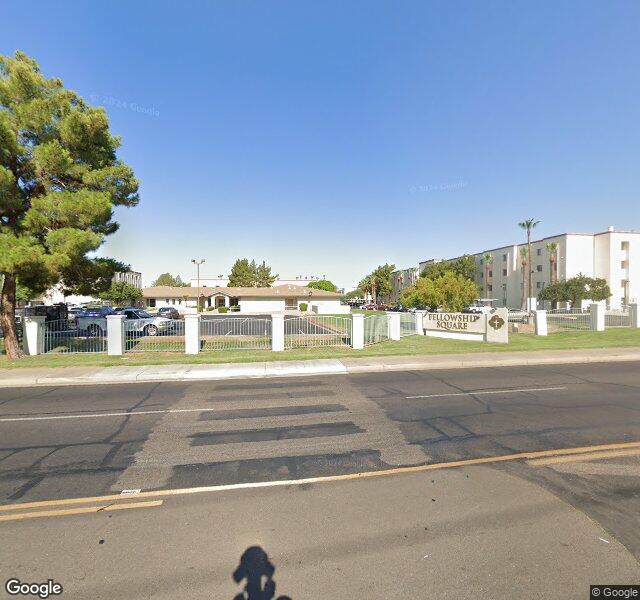
Christian Care Nursing Center
nonprofit
Key personnel
Contact this facility directly and verify the details that matter most to your family.
Medicare Care Compare
Official Medicare quality ratings, inspections & staffing data
Google Maps
Photos, directions & neighborhood info
Google Reviews
26 reviews from families & visitors
Official Website
Visit fellowshipsquareseniorliving.org
Medicare data downloads
Original nursing home datasets
EveryPlace is a research directory. Facility information is compiled from public sources — Medicare.gov, state licensing portals, Google Places, and publicly available street-level imagery. Some summaries, interpretations, suggested questions, and pricing research are AI-generated or AI-assisted and may contain errors or omit important context. Listings do not constitute endorsement, recommendation, or advertisement, and we do not accept payment for placement. Families should verify all details directly with the facility and the original sources linked above before making any care decisions. See our Research Policy for our editorial standards, correction process, and image-removal policy.
Coronado Healthcare Center
< 1 miNursing Home · Phoenix, AZ
Christian Care Manor II, INC
< 1 miAssisted Living · Phoenix, AZ
Reflections at the Oasis
< 1 miAssisted Living · Phoenix, AZ
Christian Care Assisted Living, INC - Oasis
< 1 miAssisted Living · Phoenix, AZ
Laurel Assisted Living Home LLC
< 1 miAssisted Living · Phoenix, AZ
Bloom Home Assisted Living
< 1 miAssisted Living · Phoenix, AZ