Loading EveryPlace content…
Assisted LivingActive license
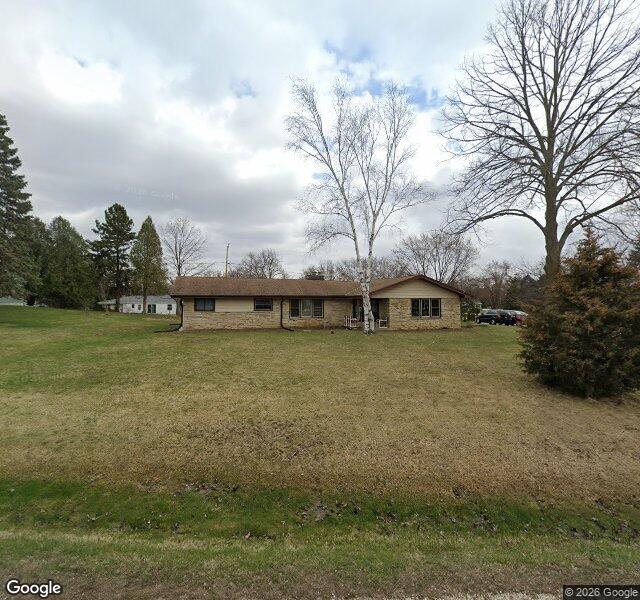
Chi Cares Muskego
S68 W12699 Bristlecone Lane, Muskego, WI 53150View map (opens in a new tab)
Overview and key essentials
State license
Active
WI DHS
Google reviews
Not available
Public reviews not linked
Monthly cost
$6,521–$7,220/ mo
AI-assisted estimate
Public records for this community are limited. Use the checklist below when you call or visit to confirm pricing, services, and openings.
Cost, payment & care details
Updated Nov 28, 2026| Monthly cost | $6,521–$7,220AI-assisted estimate | Research may contain errors. Request a current quote from the provider. Source: AI-assisted online research, Nov 2026. |
|---|---|---|
| Payment options | Medicaid | Participation is reported in our source data. Confirm eligibility, covered services, and any private-pay costs. Verified Medicaid waiver: Wisconsin Family Care / IRIS Medicaid Waiver (WI Dept. of Health Services (DHS DQA)). |
| Size & availability | Confirm directly | We don't publish live openings. Ask about current availability, waitlist length, and move-in timing. |
| Care & support | Assisted living | Usually offers housing and help with everyday tasks, such as bathing and dressing. What to confirm about care levelsThis describes the licensed category. Ask how care plans adjust if mobility, nursing, or memory needs change over time. Read the family care guide → |
Safety screening & compliance
State licensing depth & federal screening
HHS OIG LEIE: Clear (2026-11-27)OIG database ↗ (opens in a new tab)
WI DHS directory details (CBRF)
Class: CLASS ANA (NONAMBULATORY)Public Funding (Family Care / IRIS)HCBS CompliantWI DHS rates: $6,521–$7,220/mo
State licensing
State inspection history
3inspections
6deficiencies listed
Jan 15, 2026Follow-up1 deficiency reported1
Aug 11, 2025Routine5 deficiencies reported5
5 deficiencies reported
View official state report (opens in a new tab)
On 08/07/2025 to 08/11/2025, Surveyor conducted a standard survey at Chi Cares Muskego. Four deficiencies were identified. Census: 4
83.12(4)(c) Reporting incidents with serious injuryN 165
A CBRF shall send a written report to the department within 3 working days after any of the following occurs: Any incident or accident resulting in serious injury requiring hospital admission or emergency room treatment of a resident. This Rule is not met as evidenced by: Based on observation, record review and interview, the provider did not report a serious injury resulting in emergency room treatment to the Department within 3 days for Resident 1. Resident sustained a fall on 07/20/2025 resulting in him/her receiving staples to their scalp. Findings include: On 08/07/2025, Surveyor reviewed Resident 1's record and identified the following: On 08/07/2025 at 11:17 AM, Surveyor interviewed Resident 1 in their room. Resident 1 shared about a recent fall that occurred in the bathroom. Resident 1 showed Surveyor the 3 staples on the top of their scalp. Resident 1 stated they should be removed soon. Resident 1 was admitted to the facility on 12/15/2021 with diagnoses including diabetes mellitus, hypercholesterolemia, arthritis/chronic pain, amputation-multiple fingers, depression, and wheelchair bound. Resident 1 had an activated healthcare power of attorney. Resident 1's individual service plan (ISP) dated 07/30/2025 identified "Physical Disabilities: Monitor resident and document fall observation and vitals. Report the incident to the administrator immediately." Resident 1's progress notes documented: "[Resident 1] was taking a shower and lost [his/her] balance. [S/he] fell and hit the back of [his/her] head. The staff heard a bang in the other room and went to see if one of the resident had fallen and told [Resident 1] to sit on the shower chair and don't move until staff came back, [Resident 1] refused to listen and stood up anyway; by the time staff got back into the bathroom [Resident 1] was falling. [S/he] hit the back of [his/her] head when [s/he] went down. The staff checked [him/her] over and noticed that the back of [his/her] head was bleeding. Staff told [Resident 1] to sit on the floor until EMT's arrive to help [him/her] up, but [s/he] got up anyway. EMT's arrived and transported [him/her] to Waukesha Memorial. No other concerns to report." Resident 1's after visit summary dated 07/29/2025 documented: "Diagnoses: Fall-initial encounter, Injury of head-initial encounter, Laceration of scalp-initial encounter ....ED Triage HPI: The pt presents to the department via Tess Corners EMS from a group home [provider's name] with the c/o an unwitnessed ground level fall while in the shower. Pt denies LOC. The pt has a hx of a TBI which is why [s/he] lives at a group home. The pt is able to speak in full sentences and is A&Ox4 but has a hx of short term memory loss ....Procedure note: Laceration repair. This was a 2.5 cm laceration. The wound area was irrigated with sterile saline and draped in a sterile fashion by department standard ....The wound was repaired with 3 staples." On 08/07/2025, Surveyor reviewed Department records, which indicated no self-reports were submitted regarding Resident 1's laceration to his/her scalp. On 08/08/2025 at 4:27 AM, Surveyor received the following email from Licensee A: " ...Regarding [Resident 1's] fall, we completed an in-house incident report form and reported the fall to [his/her] care team members, relatives, and PCP. We could not find the injury report form online and staff assigned forgot to call DQA for assistance. I will be calling this morning for assistance to file the report." On...
83.55(6)(b) Bath and toilet areas: waterN 617
temperature The CBRF shall set the temperature of all water heaters connected to sinks, showers and tubs used by residents at a temperature of at least 140°F. The temperature of water at fixtures used by residents shall be automatically regulated by valves and may not exceed 115°F, except for CBRFs serving residents recovering from alcohol or drug dependency or clients of a government correctional agency. This Rule is not met as evidenced by: Based on observation and interview, the provider did not ensure the bath and toilet areas had a safe water temperature affecting 2 of 2 resident sinks checked. Findings include: On 08/07/2025, Surveyor toured the facility. Surveyors tested the water temperature in 2 community bathrooms. The following was found: -At 10:10 AM, the bathroom sink temperature reading was 126 degrees Fahrenheit. -At 10:15 AM, the second bathroom sink temperature reading was 126 degrees Fahrenheit. On 08/11/2025 at 10:59 AM, Surveyor interviewed Licensee A regarding the above concern. Licensee A acknowledged an understanding of the concern and stated staff had already turned the water heater down. Exposure to hot water is a potential environmental danger for residents. Elderly residents and residents with mental and physical disabilities may have neurological conditions that prevent instant recoil from hot water. Because these individuals do not instantly react to dangerous temperature levels, they are at particular risk for injury. Hot water can cause scalding, e.g., second and third degree burns in which the skin blisters and swells. In such instances, skin does not return to normal and forms scar tissue upon healing. These burns may lead to permanent disability. (DQA Publication-01942, Hot Water Temperatures in Adult Family Homes, August 2017.)
83.35(3)(d) Service plans updated annually or onN 389
changes Individual service plan review. Annually or when there is a change in a resident ' s needs, abilities or physical or mental condition, the individual service plan shall be reviewed and revised based on the assessment under sub. (1). All reviews of the individual service plan shall include input from the resident or legal representative, case manager, resident care staff, and other service providers as appropriate. The resident or resident ' s legal representative shall sign the individual service plan, acknowledging their involvement in, understanding of and agreement with the individual service plan. This Rule is not met as evidenced by: Based on observation, record review, and interview, the individual service plan (ISP) was not updated for Resident 1 when there was a change in resident needs and abilities. Resident 1's ISP was not updated to include use of bed rails. Findings include: According to the Food and Drug Administration, "National surveys of patient deaths occurring in the bed environment demonstrate the risk of entrapment when a patient slips between the mattress and bed rail or when the patient becomes entrapped in the bed rail itself. The population at risk for entrapment are patients who are frail or elderly or those who have conditions such as agitation, delirium, confusion, pain, uncontrolled body movement, hypoxia, fecal impaction, and acute urinary retention that cause them to move about the bed or try to exit from the bed. The absence of timely toileting, position change, and nursing care are factors that may also contribute to the risk of entrapment. The risk may also increase due to technical issues such as the mis-sizing of mattresses, bed rails with winged edges, loose bed rails, or design elements such as wide spaces between vertical bars in the rails themselves..." (Source: U.S. Food and Drug Administration (FDA) Hospital Bed Safety Workgroup, Clinical Guidance For the Assessment and Implementation of Bed Rails In Hospitals, Long Term Care Facilities, and Home Care Settings, April 2003, https://www.fda.gov/media/88765/download (retrieval date - June 5th, 2025).) On 08/07/2025 at 11:17 AM, Surveyor interviewed Resident 1 in their room. Surveyor observed Resident 1's hospital bed which had quarter-length bed rails up and attached to each side of the bed. Resident 1 reported s/he used the bed rails for repositioning. Resident 1 was admitted to the facility on 12/15/2021 with diagnoses including diabetes mellitus, hypercholesterolemia, arthritis/chronic pain, amputation-multiple fingers, depression, and wheelchair bound. Resident 1 had an activated healthcare power of attorney. Resident 1's individual service plan (ISP) dated 07/30/2025 documented: "Mobility and Transferring: Uses wheelchair to move around independently. Able to transfer without assistance. Physical Disabilities: Wheelchair bound, contracted hands/fingers and multiple amputated fingers." The ISP did not contain any information regarding his/her bedrails. On 08/11/2025 at 10:59 AM, Surveyor interviewed Licensee A regarding the above concern. Surveyor questioned why Resident 1's ISP did not identify the use of bed rails. Licensee A reported s/he was responsible for updating resident ISP's but was unaware Resident 1 was using bed rails. Licensee A stated s/he would assess Resident 1 and if deemed safe, would add bed rails to Resident 1's ISP.
83.59(1)(g) Proper exit locations, sidewalks,N 637
driveways. All habitable floors shall have at least 2 exits providing unobstructed travel to the outside. Small class AA CBRFs licensed on or before the effective date of this section with no more than 2 habitable floors may have one exit from the second floor. Exits, sidewalks and driveways used for exiting shall be kept free of ice, snow, and obstructions. For facilities serving only ambulatory residents, the CBRF shall maintain a cleared pathway from all exterior doors to be used in an emergency to a public way or safe distance away from the building. For facilities serving semi-ambulatory and non-ambulatory residents, a CBRF shall maintain a cleared, hard surface, barrier-free walkway to a public way or safe distance away from the building for at least 2 primary exits from the building. All other required exits shall have at least a cleared pathway maintained to a public way or safe distance from the building. An exit door or walkway to a cleared driveway leading away from the CBRF also meets this requirement. This Rule is not met as evidenced by: Based on observation and interview, the provider did not ensure 1 of 2 exits was maintained to have a cleared, hard surface, barrier-free walkway to a public way or safe distance away from the building. The facility had 2 emergency exits that were ramped to the outside. One of the 2 exits, the back ramp exit had 3 wooden sections that were loose, including handrails. Two wood boards going down the slope of the ramp were warped/peeling upwards. The transition piece from the ramp to the sidewalk was rusted and damaged. The back patio ramp exit had multiple obstructions limiting the ability to exit in an emergency to the designated safe space. Findings include: The provider is licensed as a class ANA (non-ambulatory) CBRF to provide services for up to 6 residents who may be advanced age, emotionally disturbed/mental illness, traumatic brain injury, developmentally disabled, and physically disabled. On 08/07/2025, Surveyor conducted a standard survey and identified the following: On 08/07/2025 at 10:02 AM, Surveyor exited the back door of the facility and down the ramp. Surveyor observed the following damage to the ramp: -Along the left side of the ramp exiting to a patio area, Surveyor observed a wooden section that was approximately 21 inches long and 43 inches in height, that was loose and could easily be moved side to side by the Surveyor. -At the first platform that turns behind the garage, Surveyor observed a wooden section that was approximately 80 inches long and 43 inches in height, that was loose. The Surveyor was able to move the wooden section side to side. The wooden posts appeared deteriorated. -Connected to the first platform going down the slope of the ramp, Surveyor observed a wooden section along the left side that was approximately 123 inches long and 24 inches in height, that was loose. Surveyor observed 3 spindles that were not attached to the frame of the ramp. Surveyor was able to move the wooden section side to side. -While walking down the first slope of the ramp, Surveyor observed a single wooden board that was approximately 82 inches long that was not attached to the frame. The second slope of the ramp going behind the garage, Surveyor observed a single wooden board that was approximately 62 inches long that was warped and peeling upwards. -At the bottom of the ramp, Surveyor observed a metal transition piece from the wooden frame to the concrete sidewalk, that...
STATE FORM6899
V6ET11 STATE FORM V6ET11 STATE FORM V6ET11 STATE FORM V6ET11 STATE FORM V6ET11 STATE FORM V6ET11 STATE FORM V6ET11 STATE FORM V6ET11 STATE FORM V6ET11 STATE FORM V6ET11
Aug 11, 2025EnforcementEnforcement actionPenalty
Enforcement action
View official state report (opens in a new tab)
No deficiencies are reported in this inspection record.
Neighborhood & resident support
Emergency access, hazards & advocacy
Nearest hospital
Rogers Mem Hospital Milwaukee
5.6 mi · West Allis, WI
Emergency room
FEMA hazard risk
Relatively ModerateWaukesha County, WI
- Cold Wave
- Hail
- Tornado
Free resident advocacy
Wisconsin Board on Aging & Long Term Care Ombudsman
More neighborhood context (specialists, VA, dialysis, air & affordability)
VA & dialysis access
Milwaukee VA Medical Center
8.5 mi · Milwaukee, WI · VA 3/5 ★
Fresenius Kidney Care Greenfield
5.1 mi · 1/5 ★
Specialists within 15 mi
- Geriatricians
- 68
- Neurologists
- 178
- Palliative care
- 36
- PM&R rehab
- 94
Environment & mobility
- EPA Walkability
- 8.4/20 (Below Average)
County demographics
- Age 65+ median income
- $64,740/yr
- Rent-burdened households
- 44%
- Cognitive disability (2023)
- 11.1%
- Mobility disability
- 9.1%
Call & tour checklist
Questions to ask Chi Cares Muskego
Check off questions as you call or tour. Your progress stays private in this browser.
Show 3 more suggested questions
Verification & public records
Official records & sources
Licensing & contact
- License #
- 18893
- Status
- active
Original public sources
Verify licensing, ratings, and inspection reports directly with each official source.
- WI DHS official record (opens in a new tab)WI Dept. of Health Services
- Google Maps (opens in a new tab)Directions, photos & neighborhood
- Google Reviews (opens in a new tab)Read public reviews
EveryPlace is an independent research directory. Information is compiled from public Medicare.gov, state licensing, Google Places, and street-level imagery sources. Some summaries, suggested questions, and pricing notes are AI-generated or AI-assisted and may contain errors or omissions. We do not accept payment for placement. Confirm all details directly with the community and official sources. Research Policy.
Keep exploring
Nearby communities to compare
- 3.4(34)MedicaidAssisted Living< 1 miHeritage MuskegoMuskego, WI
- 3.4(34)MedicaidAssisted Living< 1 miHeritage MuskegoMuskego, WI
- 4.0(33)MedicaidAssisted Living1.2 miTudor Oaks Windsor GardensMuskego, WI
- 4.0(33)MedicaidAssisted Living1.2 miTudor Oaks Windsor ManorMuskego, WI
- 4.0(33)Assisted Living1.2 miTudor OaksMuskego, WI
- Medicare 2/54.0(33)50 bedsMedicaidNursing Home1.2 miTudor Oaks Health CenterMuskego, WI