Loading EveryPlace content…
Assisted LivingActive licenseMemory care certified
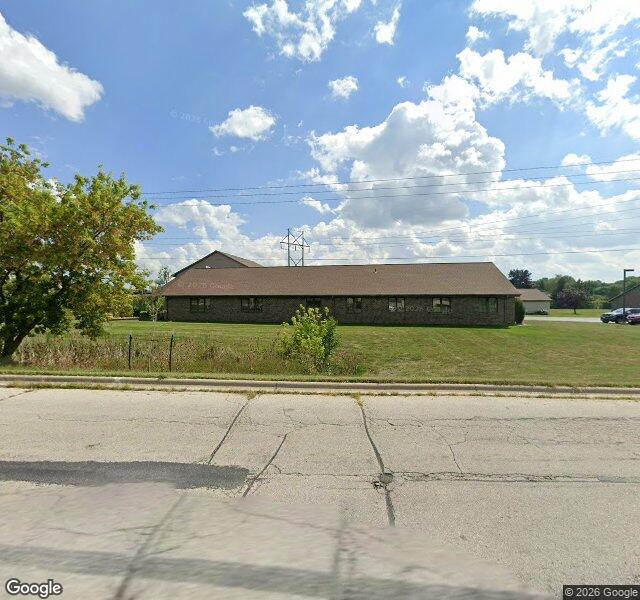
Century Ridge of Green Bay II
2510 Bluestone Pl, Green Bay, WI 54311View map (opens in a new tab)
Overview and key essentials
State license
Active
WI DHS
Google reviews
4.3/ 5
6 reviews
Monthly cost
$2,400–$3,200/ mo
AI-assisted estimate
Strong public signals
Rated 4.3/5 across 6 public Google reviews. Visit in person to confirm daily care and pricing.
Cost, payment & care details
Updated Nov 28, 2026| Monthly cost | $2,400–$3,200AI-assisted estimate | Research may contain errors. Request a current quote from the provider. Source: AI-assisted online research, Nov 2026. |
|---|---|---|
| Payment options | Medicaid | Participation is reported in our source data. Confirm eligibility, covered services, and any private-pay costs. Verified Medicaid waiver: Wisconsin Family Care / IRIS Medicaid Waiver (WI Dept. of Health Services (DHS DQA)). |
| Size & availability | Confirm directly | We don't publish live openings. Ask about current availability, waitlist length, and move-in timing. |
| Care & support | Assisted livingMemory care certified | Usually offers housing and help with everyday tasks, such as bathing and dressing. What to confirm about care levelsThis describes the licensed category. Ask how care plans adjust if mobility, nursing, or memory needs change over time. Read the family care guide → |
Safety screening & compliance
State licensing depth & federal screening
HHS OIG LEIE: Clear (2026-11-27)OIG database ↗ (opens in a new tab)
WI DHS directory details (CBRF)
Class: CLASS CNA (NONAMBULATORY)Public Funding (Family Care / IRIS)HCBS CompliantDementia approvedWI DHS rates: $2,400–$3,200/mo
State licensing
State inspection history
5inspections
12deficiencies listed
May 28, 2025Follow-up1 deficiency reported1
Oct 8, 2024Follow-up2 deficiencies reported2
2 deficiencies reported
View official state report (opens in a new tab)
STATE FORM6899
YL3J12 {N 230} {N 230} resident for whom the employee is responsible; (4) Emergency and disaster plan and evacuation procedures; (5) CBRF policies and procedures; (6) Recognizing and responding to resident changes of condition. Caregiver B did not have training in information regarding assessed needs and individual services for each resident for whom the employee is responsible. Caregiver B did not have training in emergency and disaster plan and evacuation procedures. Caregiver B did not have training in recognizing and responding to resident changes of condition. This is a repeat violation. See Statement of Deficiency (SOD) YL3J11, dated 01/29/2024. Findings include: On 10/08/2024, Surveyor conducted a review of 3 employees records to verify compliance with orientation training requirements. Surveyor requested training records from Administrator A for Caregiver B, Caregiver C and Caregiver D. On 10/08/2024 at approximately 10:45AM, Surveyor reviewed Caregiver B's employee record to verify compliance with orientation training requirements. According to the record, Caregiver B was hired on 03/13/2023. Further review of the record revealed no evidence of the following: -Assessed needs of individuals -Emergency and disaster plans and evacuation procedures -Recognizing and responding to changes of STATE FORM YL3J12 {N 230} {N 230} condition On 10/08/2024 at approximately 11:43AM, Surveyors interviewed Administrator A. Administrator A confirmed Caregiver B currently works with residents, but did not receive all orientation training prior to performing work duties. STATE FORM YL3J12 STATE FORM YL3J12 STATE FORM YL3J12 {N 243} {N 243} vocational abilities. Client group specific training shall be completed within 90 days after starting employment. Client Group. In a CBRF serving more than one client group, employees shall receive training for each client group. Recognizing, preventing, managing, and responding to challenging behaviors. Specific training topics shall include, as applicable: elopement, aggressive behaviors, destruction of property, suicide prevention, self-injurious behavior, resident supervision, and changes in condition. Challenging behaviors training shall be completed within 90 days after starting employment. This Rule is not met as evidenced by: Based on record review and interview the provider did not ensure one (1) of 3 employees reviewed, obtained all training as required within 90 days after starting employment. Caregiver B did not have training in resident rights within 90 days after starting employment. Caregiver B did not have training in recognizing, preventing, managing and responding to challenging behaviors within 90 days after starting employment. Caregiver B did not have training in required client groups within 90 days after starting employment. This is a repeat violation. See Statement of STATE FORM YL3J12 {N 243} {N 243} Deficiency (SOD) YL3J11, dated 01/29/2024. Findings include: On 10/08/2024, Surveyor conducted a review of 3 employees records to verify compliance with all employee training requirements. Surveyor requested training records from Administrator A for Caregiver B, Caregiver C and Caregiver D. Resident Rights On 10/08/2024, at approximately 11:45AM, Surveyor interviewed Administrator A. Administrator A reported s/he has difficulty with caregivers showing up to paid scheduled training. The record for Caregiver B, hired 03/13/2023, did not contain evidence of training or evidence of meeting...
83.20(2)(a)-(d) Department-approved trainingN 239
courses. Standard Precautions. All employees who may be occupationally exposed to blood, body fluids or other moist body substances, including mucous membranes, non-intact skin, secretions, and excretions except sweat, whether or not they contain visible blood shall successfully complete training in standard precautions before the employee assumes any responsibilities that may expose the employee to such material. Fire safety. Within 90 days after starting employment, all employees shall successfully complete training in fire safety. First aid and choking. Within 90 days after starting employment, all employees shall successfully complete training in first aid and procedures to alleviate choking. Medication administration and management. Any employee who manages, administers or assists residents with prescribed or over-the-counter medications shall complete training in medication administration and management prior to assuming these job duties. This Rule is not met as evidenced by: Based on record review and interview, the provider did not ensure one (1) of 3 employees obtained all department approved training as required. Caregiver B did not have training in fire safety within 90 days after starting employment. Caregiver B did not have training in first aid and choking within 90 days after starting employment. Findings include: On 10/08/2024, Surveyor conducted a review of 3 employees to verify compliance with department approved training requirements. Surveyor requested training records from Administrator A for Caregiver B, Caregiver C and Caregiver D. On 10/08/2024, at approximately 11:45AM, Surveyor interviewed Administrator A. Administrator A reported s/he was having issues with caregivers not showing up for training classes. Fire Safety The record for Caregiver B, hired 03/13/2024, did not contain evidence of training or evidence of meeting an exemption for fire safety. On 10/08/2024, at approximately 11:45AM, Surveyor interviewed Administrator A. Administrator A confirmed the provider did not have evidence Caregiver B completed or met an exemption for fire safety training. First Aid and Choking The record for Caregiver B, hired 03/13/2024, did not contain evidence of training or evidence of meeting an exemption for first aid and choking. On 10/08/2024, at approximately 11:45AM, Surveyor interviewed Administrator A. Administrator A confirmed the provider did not have evidence Caregiver B completed or met an exemption for first aid and choking training. Administrator A was given the opportunity to submit any additional evidence of training by 10/08/2024, but no additional evidence was provided. {N 243} 83.21(1)-(3) All employee training. The CBRF shall provide, obtain or otherwise ensure adequate training for all employees in all of the following: Resident rights. Training shall include general rights of residents including rights as specified under s. DHS 83.32(3). Training shall be provided as applicable under ss. 50.09 and 51.61 and chs. 54, 55, and 304, Stats., and ch. DHS 94, depending on the legal status of the resident or service the resident is receiving. Specific training topics shall include house rules, coercion, retaliation, confidentiality, restraints, self-determination, and the CBRF ' s complaint and grievance procedures. Residents ' rights training shall be completed within 90 days after starting employment. Client Group. Training shall be specific to the client group served and shall include the...
Oct 8, 2024EnforcementEnforcement actionPenalty
Enforcement action
View official state report (opens in a new tab)
No deficiencies are reported in this inspection record.
Jan 29, 2024Complaint9 deficiencies reported9
9 deficiencies reported
View official state report (opens in a new tab)
On 01/10/2024, with information gathered through 01/29/2024, Surveyors investigated one complaint and conducted a standard survey at Century Ridge of Green Bay II. The complaint was substantiated, and the standard survey resulted in seven (7) new deficiencies. Census: 18
or early November 2023 was removed at2023
the visit. Administrator A stated it was determined Resident 1 was not a good candidate for surgery. Administrator A advised Resident 1 is now using a hoyer lift. Administrator A confirmed they have now introduced a moist-minced texture for Resident 1 while they are pending a swallow study. Administrator A reported s/he updated Resident 1's ISP sometime last week. On 01/29/2024 at approximately 4:55PM, Surveyor reviewed the revised ISP. The section regarding eating, was updated to include, " ...Cut food into bite sized pieces and ensure food is soft did not indicate the total evacuation time. The provider's fire drill form had a section that stated, "Were all residents evacuated within the appropriate guidelines?" The person filling out the form checked "yes" or "no" with no indication of the exact evacuation time. On 01/10/2024 at approximately 12:13 PM, Surveyor interviewed Administrator A regarding the missing drills for 2023 and no record of the total evacuation time for 2022 and 2023 drills. Administrator A explained s/he is certain the drills were completed but did not know the documentation was not in the binder. Administrator A informed Surveyor the when the licensee created the form, they felt it would meet the requirements. Administrator A ensured Surveyor the form will be updated to include the total evacuation time moving forward.
83.19 OrientationN 230
Before an employee performs any job duties, the CBRF shall provide each employee with orientation training which shall include all of the following: (1) Job responsibilities; (2) Prevention and reporting of resident abuse, neglect and misappropriation of resident property; (3) Information regarding assessed needs and individual services for each resident for whom the employee is responsible; (4) Emergency and disaster plan and evacuation procedures under s. HFS 83.47(2); (5) CBRF policies and procedures; (6) Recognizing and responding to resident changes of condition. This Rule is not met as evidenced by: Based on record review and interview, the provider did not ensure caregivers were provided with orientation training to include job responsibilities, prevention and reporting abuse, neglect and misappropriation, assessed needs of individuals services, emergency and disaster plans and evacuation procedures, CBRF policies and procedures and recognizing and responding to changes of condition for 2 out of 2 caregivers, Caregiver C and Caregiver D. Findings include: The facility is licensed as a Class CNA (non-ambulatory) CBRF (Community-Based Residential Facility), to provide services for up to 20 residents who may be advanced aged, terminally ill and/or have irreversible dementia and/or Alzheimer's. On 01/10/2024, Surveyor conducted a review of 2 employees to verify compliance orientation training requirements. Surveyor requested training records from Administrator A for Caregiver C and Caregiver D. Review of the record for Caregiver C, hired 06/09/2022, revealed no evidence of training for orientation training. Caregiver C's record contained an undated document titled, "Employee Checklist." The following items were left blank and unchecked: -Job responsibilities. -Information regarding assessed needs and individual services. -Emergency and disaster plan and evacuation procedures -Recognizing and responding to resident changes of condition. Review of the record for Caregiver D, hired 07/28/2020, did not contain evidence of orientation training. Caregiver D's record contained an undated document titled, "Employee Checklist." The following items were left blank and unchecked: -Job responsibilities. -Prevention and reporting of resident abuse, neglect and misappropriation of resident property. -Information regarding assessed needs and individual services for each resident for whom the employee is responsible. -Emergency and disaster plan and evacuation procedures. -Recognizing and responding to resident changes of condition. On 01/17/2024 at approximately 10:30AM, Surveyor Interviewed Administrator A. Administrator A stated s/he could not locate any documentation to confirm Caregiver C and Caregiver D received orientation training.
83.22(1)-(4) Task specific training.N 247
The CBRF shall provide, obtain or otherwise ensure adequate training for employees performing job duties in all of the following: Assessment of residents. All employees responsible for resident assessment shall successfully complete training in the assessment of residents prior to assuming these job duties. Specific training topics shall include: assessment methodology, assessment of changes in condition, sources of assessment information, and documentation of the assessment. Individual service plan development. All employees responsible for service plan development shall successfully complete training in individual service plan development prior to assuming these job duties. Specific training topics shall include: identification of the resident ' s needs and desired outcomes, development of goals and interventions, service plan evaluation and review of progress. Provision of personal care. All employees responsible for providing assistance with activities of daily living shall successfully complete training prior to assuming these job duties. Specific training topics shall include, as appropriate: bathing, eating, dressing, oral hygiene, nail and foot care, toileting and incontinence care, positioning and body alignment, and mobility and transferring. Dietary training. All employees performing dietary duties shall complete dietary training within 90 days after assuming these job duties. Specific training topics shall include: determining nutritional needs, menu planning, food preparation and food sanitation. This Rule is not met as evidenced by: Based on interview and record review the provider did not ensure 2 of 2 employees obtained all task specific training. Caregiver C and Caregiver D, had responsibilities for providing assistance with activities of daily living, did not have training in the provision of personal care prior to assuming these duties. Findings include: The facility is licensed as a Class CNA (non-ambulatory) CBRF (Community-Based Residential Facility), to provide services for up to 20 residents who may be advanced aged, terminally ill and/or have irreversible dementia and/or Alzheimer's. On 01/10/2024, Surveyor conducted a review of 2 employees to verify compliance with task specific training requirements. Surveyor requested training records from Administrator A for Caregiver C and Caregiver D. PROVISIONS OF PERSONAL CARE The records for Caregiver C, hired 06/09/2022, and Caregiver D, hired 07/28/2020, did not contain evidence of training or evidence of meeting an exemption for personal care training. On 01/10/2024, at approximately 10:30AM, Surveyor interviewed Caregiver D. Caregiver D reported s/he provides personal cares for residents which included changing briefs and clothes if needed, showers and toileting. On 01/10/2024, at approximately 10:45AM, Surveyor interviewed Caregiver C. Caregiver C identified s/he is responsible for providing morning cares for residents including one resident who uses a sit-to-stand mechanical lift. On 01/10/2024, at approximately 12:20 PM, Surveyor interviewed Administrator A. Administrator A confirmed Caregiver C and Caregiver D are responsible for providing personal cares. Administrator A confirmed the provider did not have evidence Caregiver C and Caregiver D completed or met an exemption for provision of personal care training prior to assuming these job duties. On 01/17/2024 at approximately 10:30AM, Surveyor Interviewed Administrator A. Administrator A reported s/he was...
STATE FORM6899
YL3J11 STATE FORM YL3J11 STATE FORM YL3J11 STATE FORM YL3J11 STATE FORM YL3J11 STATE FORM YL3J11 STATE FORM YL3J11 STATE FORM YL3J11 STATE FORM YL3J11 STATE FORM YL3J11 STATE FORM YL3J11 STATE FORM YL3J11 STATE FORM YL3J11 STATE FORM YL3J11 STATE FORM YL3J11 STATE FORM YL3J11 STATE FORM YL3J11 STATE FORM YL3J11 STATE FORM YL3J11 STATE FORM YL3J11 STATE FORM YL3J11 STATE FORM YL3J11 STATE FORM YL3J11 STATE FORM YL3J11
83.35(3)(d) Service plans updated annually or onN 389
changes Individual service plan review. Annually or when there is a change in a resident ' s needs, abilities or physical or mental condition, the individual service plan shall be reviewed and revised based on the assessment under sub. (1). All reviews of the individual service plan shall include input from the resident or legal representative, case manager, resident care staff, and other service providers as appropriate. The resident or resident ' s legal representative shall sign the individual service plan, acknowledging their involvement in, understanding of and agreement with the individual service plan. This Rule is not met as evidenced by: Based on record review, observation and interview, the provider did not ensure Individual Support Plans (ISP) were updated upon a change in a resident's needs, abilities or physical or mental condition for Resident 1. Resident 1's ISP was not updated after a significant change of condition that affected his/her mobility, which increased skin integrity needs. The change of condition also limited Resident 1's ability to eat due to the onset of dysphagia symptoms. Resident 1's change of condition required him/her to have a catheter and no longer voided urine in the toilet. The addition of the catheter required a change to the way peri care was completed. Additionally, the change of condition included the need for pain management and administration of morphine. During the change of condition, Resident 1 experienced significant weight loss and multiple urinary tract infections (UTI). Findings Include: On 07/18/2023, the department received a complaint alleging residents were not being provided adequate cares. RECORD REVIEW: On 01/18/2023, at approximately 4:41PM, Surveyor reviewed Resident 1's Facesheet, which indicated s/he was admitted on 08/09/2019. On 01/18/2024 at approximately 4:45PM, Surveyor reviewed Resident 1's undated ISP with a print date of 01/16/2024. The ISP noted the following: EATING: "Requires no assistance with eating meals ...maintain healthy eating habits ...." TOILETING: "Provide verbal prompting as well as physical assistance as needed with toileting needs ... [Resident 1] is incontinent of urine during HS [afternoon] ..." PAIN HISTORY & MANAGEMENT: "No chronic pain issues to date. Remain free from pain ..." MOBILITY & WALKING - FULL ASSIST: "Provide full assistance to resident with walking needs .... Requires hands-on assistance with helping stand up, helping use any walking devices, and helping sit down/lay down. MOBILITY & WALKING - INDEPENDENT: "Can walk and ambulate independently ...Resident understands for safety reasons he is able to ambulate with a walker, and wheelchair for long distance and medical appointments." On 01/18/2024 at approximately 4:15PM, Surveyor reviewed the Interdisciplinary Communication from PRN Home Health and Therapy, LLC. The communication document included assessments and notes from the therapist. The information conflicted with the information in Resident 1's ISP and reflected the current needs following a change of condition. The documentation noted the following: PHYSICAL THERAPY EVALUATION on 12/20/2023: " ...Pt. (patient) currently requires sit to stand mechanical lift for all transfers and is dependent in all ADLs (activities of daily living). Per [Manager B], pt was walking independently up until 2 months ago, was completing transfers using 2WW (two wheeled walker). [Manager B] reports [his/her] pain in abdomen and bladder...
83.47(2)(d) Fire drills.N 525
Fire drills. 1. Fire evacuation drills shall be conducted at least quarterly with both employees and residents. Drills shall be limited to the employees scheduled to work at that time. Documentation shall include the date and time of the drill and the CBRF ' s total evacuation time. The CBRF shall record residents having an evacuation time greater than the time allowed under s. HFS 83.35(5) and the type of assistance needed for evacuation. Fire evacuation drills may be announced in advance. 2. At least one fire evacuation drill shall be held annually that simulates the conditions during usual sleeping hours. Fire evacuation drills may be announced in advance. Drills shall be limited to the employees scheduled to work during the residents ' normal sleeping hours. This Rule is not met as evidenced by: Based on record review and interview, the provider did not ensure quarterly fire drills (including at least one fire evacuation drill simulating the conditions during usual sleeping hours) were conducted with both employees and residents including the total evacuation time in calendar years 2022 and 2023. The facility is licensed as a Class CNA (non-ambulatory) CBRF (Community-Based Residential Facility), to provide services for up to 20 residents who may be advanced aged, terminally ill and/or have irreversible dementia and/or Alzheimer's. Findings include: On 01/10/2024 at approximately 11:45 AM, Surveyor was provided a binder with fire drills. Upon review of the binder for 2023 drills, Surveyor noted there were no drills for the 3rd and 4th and no nighttime simulated drill. Additionally, the drills documented for 2022 and
83.12(5)(a) Notification: incident, injury, changes.N 169
The CBRF shall immediately notify the resident's legal representative and the resident's physician when there is an incident or injury to the resident or a significant change in the resident's physical or mental condition. This Rule is not met as evidenced by: Based on record review and interview, the provider did not ensure immediate notification to the resident's legal representative of a physical change in condition for Resident 1. Findings Include: On 07/18/2023, the department received a complaint alleging residents were not being provided adequate cares. On 01/18/2024 at approximately 4:15PM, Surveyor reviewed the Interdisciplinary Communication from PRN Home Health and Therapy, LLC. The communication document noted the following: Surveyor interviewed Guardian F on 01/11/2024 at 11:47AM. Guardian F confirmed s/he is the guardian for Resident 1. Guardian F reported having communication issues with the provider. Guardian F explained, on 01/03/2024, s/he received a call from the home health agency. The home health nurse reported caregivers advised Resident 1 was vomiting daily for at least three weeks. Guardian F explained this was the first time s/he was notified of this change in condition. On 01/18/2024 at approximately 4:15PM, Surveyor reviewed the Interdisciplinary Communication from PRN Home Health and Therapy, LLC. The document noted the following: "01-04-2024 01:58 PM(CST) : Pt [patient] seen yesterday for scheduled visit ... Staff also notified writer that pt has been vomiting daily for 3x weeks. This has not been reported at previous visits. Patient and staff reported that [s/he] does not have nausea but every time [s/he] eats or takes medication [s/he] vomits. Facility staff reported this is due to esophagus issues ... due to these things, writer called guardian to update and to inform of writer notifying MD. Guardian not aware of vomiting ... Requested order for ...speech therapy d/t [due to] dx [diagnosis] of dysphasia and difficulty swallowing ..." On 01/17/2024 at approximately 11:00AM, Surveyor interviewed Administrator A. Administrator A explained Resident 1 has cancer on one of his/her kidneys beginning end at the end of October 2023. Administrator A reported s/he believed the pain from the kidney cancer was likely contributing to nausea, gagging and vomiting, which began shortly after the onset of the pain. The physician prescribed morphine for the pain and a medication for vomiting/nausea. On 01/29/2024, at approximately 9:00AM, Surveyor interviewed Administrator A regarding notifying the guardian of the change in condition. Administrator A confirmed the guardian was most likely notified by the home health agency. Cross Reference N0389 DHS 83.35(3)(d) Service Plans Updated Annually or On Changes
83.47(2)(e) Other evacuation drills.N 526
Other evacuation drills. Tornado, flooding, or other emergency or disaster evacuation drills shall be conducted at least semi-annually. This Rule is not met as evidenced by: Based on record review and interview, the provider did not ensure they conducted semi-annual disaster evacuation drills such as tornado, flooding or other emergencies for the calendar year 2023. The facility is licensed as a Class CNA (non-ambulatory) CBRF (Community-Based Residential Facility), to provide services for up to 20 residents who may be advanced aged, terminally ill and/or have irreversible dementia and/or Alzheimer's. Findings include: On 01/10/2024 at approximately 11:45 AM, Surveyor was provided a binder with drills. Surveyor reviewed the drills for 2022 and 2023. Surveyor noted only one disaster drill was conducted on 06/07/2023. No other drills were presented for review. On 01/10/2024 at approximately 12:13 PM, Surveyor interviewed Administrator A regarding the other disaster drills. Administrator A reported she was not aware the second drill was not documented. Administrator A informed Surveyor s/he will ensure it is completed moving forward.
83.21(1)-(3) All employee training.N 243
The CBRF shall provide, obtain or otherwise ensure adequate training for all employees in all of the following: Resident rights. Training shall include general rights of residents including rights as specified under s. DHS 83.32(3). Training shall be provided as applicable under ss. 50.09 and 51.61 and chs. 54, 55, and 304, Stats., and ch. DHS 94, depending on the legal status of the resident or service the resident is receiving. Specific training topics shall include house rules, coercion, retaliation, confidentiality, restraints, self-determination, and the CBRF ' s complaint and grievance procedures. Residents ' rights training shall be completed within 90 days after starting employment. Client Group. Training shall be specific to the client group served and shall include the physical, social and mental health needs of the client group. Specific training topics shall include, as applicable: characteristics of the client group served, activities, safety risks, environmental considerations, disease processes, communication skills, nutritional needs, and vocational abilities. Client group specific training shall be completed within 90 days after starting employment. Client Group. In a CBRF serving more than one client group, employees shall receive training for each client group. Recognizing, preventing, managing, and responding to challenging behaviors. Specific training topics shall include, as applicable: elopement, aggressive behaviors, destruction of property, suicide prevention, self-injurious behavior, resident supervision, and changes in condition. Challenging behaviors training shall be completed within 90 days after starting employment. This Rule is not met as evidenced by: Based on interview and record review the provider did not ensure 2 of 2 employees obtained all training as required within 90 days after starting employment. Caregiver C and Caregiver D did not have training in resident rights within 90 days after starting employment. Caregiver C and Caregiver D did not have training in recognizing, preventing, managing, and responding to challenging behaviors within 90 days after starting employment. Caregiver C and Caregiver D did not have training in required client groups within 90 days after starting employment. Findings include: On 01/10/2024, Surveyor conducted a review of 2 employees to verify compliance with all employee training requirements. Surveyor requested training records from Administrator A for Caregiver C and Caregiver D. RESIDENT RIGHTS The records for Caregiver C, hired 06/09/2022, and Caregiver D, hired 07/28/2020, did not contain evidence of training or evidence of meeting an exemption for resident rights. On 01/10/2024, at approximately 12:20 PM, Surveyor interviewed Administrator A. Administrator A confirmed the provider did not have evidence Caregiver C and Caregiver D completed or met an exemption for resident rights training. RECOGNIZING, PREVENTING, MANAGING AND REPSONDING TO CHALLENING BEHAVIORS: On 11/10/2024 at approximately 9:50AM, Surveyor toured the building with Manager B. During the tour, Manager B identified Resident 2 has severe dementia. Occasionally, s/he exhibits behaviors that need redirection from caregivers. The records for Caregiver C, hired 06/09/2022, and Caregiver D, hired 07/28/2020, did not contain evidence of training or evidence of meeting an exemption for challenging behaviors training. On 01/10/2024, at approximately 12:20 PM, Surveyor interviewed Administrator...
Jan 29, 2024EnforcementEnforcement actionPenalty
Enforcement action
View official state report (opens in a new tab)
No deficiencies are reported in this inspection record.
Neighborhood & resident support
Emergency access, hazards & advocacy
Nearest hospital
Aurora Baycare Med Ctr
1.1 mi · Green Bay, WI
Emergency roomTrauma Ii
FEMA hazard risk
Relatively ModerateBrown County, WI
- Cold Wave
- Hail
- Lightning
Free resident advocacy
Wisconsin Board on Aging & Long Term Care Ombudsman
More neighborhood context (specialists, VA, dialysis, air & affordability)
VA & dialysis access
Iron Mountain MI VA Medical Center
93.2 mi · Iron Mountain, MI
DaVita Green Bay Dialysis
3.1 mi · 5/5 ★ · Home dialysis
Specialists within 15 mi
- Geriatricians
- 5
- Neurologists
- 33
- Palliative care
- 7
- PM&R rehab
- 24
Environment & mobility
- EPA Walkability
- 7.1/20 (Below Average)
- Primary care access
- HRSA Shortage Area
County demographics
- Age 65+ median income
- $56,633/yr
- Rent-burdened households
- 40%
- Cognitive disability (2023)
- 13.5%
- Mobility disability
- 11.3%
Call & tour checklist
Questions to ask Century Ridge of Green Bay II
Check off questions as you call or tour. Your progress stays private in this browser.
Show 3 more suggested questions
Verification & public records
Official records & sources
Licensing & contact
- License #
- 14024
- Status
- active
Original public sources
Verify licensing, ratings, and inspection reports directly with each official source.
- WI DHS official record (opens in a new tab)WI Dept. of Health Services
- Google Maps (opens in a new tab)Directions, photos & neighborhood
- Google Reviews (opens in a new tab)6 public reviews
EveryPlace is an independent research directory. Information is compiled from public Medicare.gov, state licensing, Google Places, and street-level imagery sources. Some summaries, suggested questions, and pricing notes are AI-generated or AI-assisted and may contain errors or omissions. We do not accept payment for placement. Confirm all details directly with the community and official sources. Research Policy.
Keep exploring
Nearby communities to compare
- 4.3(6)MedicaidAssisted Living< 1 miCentury Ridge of Green Bay IGreen Bay, WI
- 4.0(12)Assisted Living< 1 miCaretta Senior Living Bellevue RcacBellevue, WI
- 4.0(12)Assisted Living< 1 miCaretta Senior Living Belluvue CbrfBellevue, WI
- MedicaidAssisted Living1.1 miVerlin RoadGreen Bay, WI
- MedicaidAssisted Living1.3 miBufflehead LaneGreen Bay, WI
- Assisted Living1.5 miLss Preble HouseGreen Bay, WI