Loading EveryPlace content…
Assisted LivingActive licenseMemory care certified
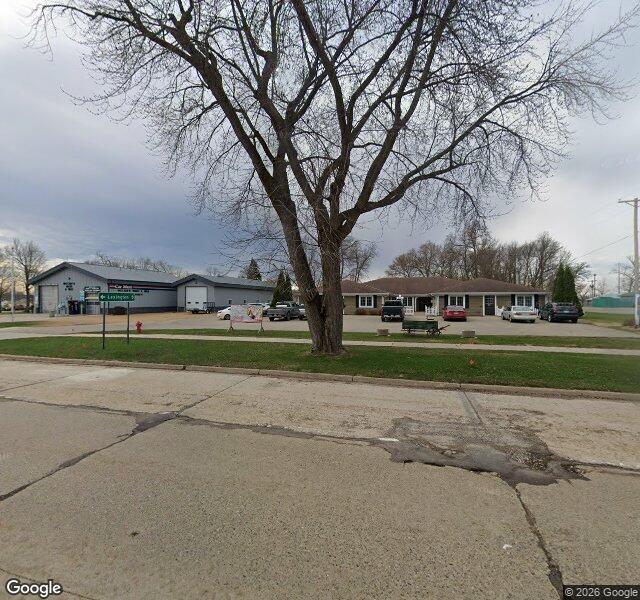
Carriage House Senior Living
175 East Derrynane Street, Le Center, MN 56057View map (opens in a new tab)
Overview and key essentials
State license
Active
MN MDH
Google reviews
Not available
Public reviews not linked
Size & payment
Ask directly
Confirm pricing & payment
Public records for this community are limited. Use the checklist below when you call or visit to confirm pricing, services, and openings.
Cost, payment & care details
Updated Nov 28, 2026| Monthly cost | Not published | Ask for the full monthly cost, including care fees and one-time charges. |
|---|---|---|
| Payment options | Ask directly | Payment details are not confirmed in our records. Ask about private pay, long-term care insurance, veterans benefits, and Medicaid waivers. |
| Size & availability | Confirm directly | We don't publish live openings. Ask about current availability, waitlist length, and move-in timing. |
| Care & support | Assisted livingMemory care certified | Usually offers housing and help with everyday tasks, such as bathing and dressing. What to confirm about care levelsThis describes the licensed category. Ask how care plans adjust if mobility, nursing, or memory needs change over time. Read the family care guide → |
State licensing
State inspection history
2inspections
16deficiencies listed
Mar 4, 2025Routine8 deficiencies reported8
8 deficiencies reported
View official state report (opens in a new tab)
144G.41 Subd. 3 Infection control program0510
SS=D (a) All assisted living facilities must establish and maintain an infection control program that complies with accepted health care, medical, and nursing standards for infection control. (b)The facility's infection control program must be consistent with current guidelines from the national Centers for Disease Control and Prevention (CDC) for infection prevention and control in long-term care facilities and, as applicable, for infection prevention and control in assisted living facilities. (c) The facility must maintain written evidence of compliance with this subdivision. This MN Requirement is not met as evidenced by: Based on observation, interview, and record review, the licensee failed to establish and maintain an effective infection control program that complies with accepted health care, medical and nursing standards for infection control related to glove use and handwashing during AM cares for one of one resident (R2). This practice resulted in a level two violation (a violation that did not harm a resident's health or safety but had the potential to have harmed a resident's health or safety, but was not likely to cause serious injury, impairment, or death), and was issued at an isolated scope (when one or a limited number of residents are affected or one or a limited number of staff are involved or the situation has occurred only occasionally). The findings include: STATE FORM R2's Service Plan signed November 7, 2024, indicated R2 received assistance with dressing, grooming, bathing, toileting/incontinence care, and applying/removing thrombo embolic deterrent (TED) stockings (compression stockings used to increase circulation and decrease swelling). On March 4, 2025, at 7:53 a.m., the surveyor observed unlicensed personnel (ULP)-D assisting R2 with morning cares. ULP-D donned gloves and assisted with transferring R2 into the bathroom onto the toilet. ULP-D asked R2 if she wanted to get dressed in the bathroom or in the bedroom; R2 opted for the bathroom. ULP-D then doffed and disposed of gloves in wastebasket, and asked R2 what she wanted to wear. ULP-D obtained R2's clothes and also made R2's bed. ULP-D then returned to the bathroom, donned clean gloves, wet a clean washcloth and handed to R2 to wash her face. When R2 was finished, ULP-D rinsed and wrung the washcloth out and thoroughly washed underneath R2's pannus stomach overhang and dried thoroughly with a clean dry towel. ULP-D changed gloves, rinsed out R2's top denture and handed to R2 to put it in. ULP-D then removed and disposed gloves, removed R2's nightgown, applied deodorant to the resident, then assisted with putting on her dress. ULP-D then applied R2's compression stockings and non-skid stockings, put on a clean incontinence brief, donned clean gloves, and assisted R2 with standing so she could perform pericare. After finishing pericare, ULP-D pulled up R2's incontinence brief, adjusted R2's dress, and assisted R2 to transfer with her walker into her wheelchair. ULP-D then doffed/disposed of gloves and moved R2 into her bedroom. ULP-D then applied R2's hearing aids, brushed her hair STATE FORM TIME PERIOD FOR CORRECTION: Seven (7) days
144G.45 Subd. 2 (a) (1) Fire protection and0780
SS=D physical environment for dwellings or sleeping units, as defined in the State Fire Code: (i) provide smoke alarms in each room used for sleeping purposes; (ii) provide smoke alarms outside each separate sleeping area in the immediate vicinity of bedrooms; (iii) provide smoke alarms on each story within a dwelling unit, including basements, but not including crawl spaces and unoccupied attics; (iv) where more than one smoke alarm is required within an individual dwelling unit or sleeping unit, interconnect all smoke alarms so that actuation of one alarm causes all alarms in the individual dwelling unit or sleeping unit to operate; and (v) ensure the power supply for existing smoke alarms complies with the State Fire Code, except STATE FORM
144G.45 Subd. 2 (b-f) Fire protection and0810
SS=F physical environment (b) Each assisted living facility shall develop and maintain fire safety and evacuation plans. The plans shall include but are not limited to: (1) location and number of resident sleeping rooms; (2) staff actions to be taken in the event of a fire or similar emergency; (3) fire protection procedures necessary for residents; and (4) procedures for resident movement, evacuation, or relocation during a fire or similar emergency including the identification of unique or unusual resident needs for movement or evacuation. (c) Staff of assisted living facilities shall receive training on the fire safety and evacuation plans upon hiring and at least twice per year thereafter. STATE FORM TIME PERIOD FOR CORRECTION: Twenty-one (21) days. 01500 144G.63 Subd. 5 Required annual training SS=D (a) All staff that perform direct services must complete at least eight hours of annual training for each 12 months of employment. The training may be obtained from the facility or another source and must include topics relevant to the provision of assisted living services. The annual training must include: (1) training on reporting of maltreatment of vulnerable adults under section 626.557; (2) review of the assisted living bill of rights and staff responsibilities related to ensuring the exercise and protection of those rights; (3) review of infection control techniques used in the home and implementation of infection control standards including a review of hand washing techniques; the need for and use of protective gloves, gowns, and masks; appropriate disposal of contaminated materials and equipment, such as dressings, needles, syringes, and razor blades; disinfecting reusable equipment; disinfecting environmental surfaces; and reporting communicable diseases; (4) effective approaches to use to problem solve when working with a resident's challenging behaviors, and how to communicate with residents who have dementia, Alzheimer's disease, or related disorders; (5) review of the facility's policies and procedures relating to the provision of assisted living services and how to implement those policies and procedures; and (6) the principles of person-centered planning and service delivery and how they apply to direct STATE FORM
37NU116899
(a) Except as provided in paragraph (b), food must be prepared and served according to the Minnesota Food Code, Minnesota Rules, chapter 4626. (b) For an assisted living facility with a licensed capacity of ten or fewer residents: (1) notwithstanding Minnesota Rules, part 4626.0033, item A, the facility may share a certified food protection manager (CFPM) with one other facility located within a 60-mile radius and under common management provided the CFPM is present at each facility frequently enough to effectively administer, manage, and supervise each facility's food service operation; (2) notwithstanding Minnesota Rules, part 4626.0545, item A, kick plates that are not removable or cannot be rotated open are allowed unless the facility has been issued repeated correction orders for violations of Minnesota Rules, part 4626.1565 or 4626.1570; (3) notwithstanding Minnesota Rules, part 4626.0685, item A, the facility is not required to provide integral drainboards, utensil racks, or tables large enough to accommodate soiled and clean items that may accumulate during hours of operation provided soiled items do not contaminate clean items, surfaces, or food, and clean equipment and dishes are air dried in a manner that prevents contamination before storage; (4) notwithstanding Minnesota Rules, part 4626.1070, item A, the facility is not required to install a dedicated handwashing sink in its existing kitchen provided it designates one well of a two-compartment sink for use only as a handwashing sink; (5) notwithstanding Minnesota Rules, parts 4626.1325, 4626.1335, and 4626.1360, item A, existing floor, wall, and ceiling finishes are STATE FORM 37NU11 allowed provided the facility keeps them clean and in good condition; (6) notwithstanding Minnesota Rules, part 4626.1375, shielded or shatter-resistant lightbulbs are not required, but if a light bulb breaks, the facility must discard all exposed food and fully clean all equipment, dishes, and surfaces to remove any glass particles; and (7) notwithstanding Minnesota Rules, part 4626.1390, toilet rooms are not required to be provided with a self-closing door. This MN Requirement is not met as evidenced by: Based on observation, interview, and record review, the licensee failed to ensure food was prepared and served according to the Minnesota Food Code. This practice resulted in a level two violation (a violation that did not harm a resident's health or safety but had the potential to have harmed a resident's health or safety, but was not likely to cause serious injury, impairment, or death), and is issued at a widespread scope (when problems are pervasive or represent a systemic failure that has affected or has the potential to affect a large portion or all of the residents). The findings include: Please refer to the document titled, Food and Beverage Establishment Inspection Report (FBEIR) dated March 4, 2025, for the specific Minnesota Food Code violations. The Inspection Report was provided to the licensee within 24 hours of the inspection. TIME PERIOD FOR CORRECTION: Please refer STATE FORM 37NU11 to the FBEIR for any compliance dates. 37NU11 37NU11 and put it into a ponytail. ULP-D then transported R2 in her wheelchair to the dining room for breakfast. After positioning R2 at the dining table, ULP-D returned to R2's room to straighten up and obtain garbage and dirty laundry. The surveyor interviewed ULP-D at that time and asked at what point she would wash her hands. ULP-D stated she...
144G.41 Subdivision 1 Subd. 1a (a-b) Minimum0480
SS=F requirements; required food services 0 480 STATE FORM
144G.45 Subd. 2 (a) (2-3) Fire protection and0790
SS=F physical environment (2) install and maintain portable fire extinguishers in accordance with the State Fire Code; (3) install portable fire extinguishers having a minimum 2-A:10-B:C rating within Group R-3 occupancies, as defined by the State Fire Code, located so that the travel distance to the nearest fire extinguisher does not exceed 75 feet, and maintained in accordance with the State Fire Code; and This MN Requirement is not met as evidenced by: Based on observation and interview, the licensee failed to provide or maintain fire extinguishers as required throughout the facility. This deficient condition had the ability to affect all staff, visitors, and residents. This practice resulted in a level two violation (a violation that did not harm a resident's health or safety but had the potential to have harmed a resident 's health or safety) and was issued at a widespread scope (when problems are pervasive or represent a systemic failure that has affected or has potential to affect a large portion or all of the residents). The findings include: STATE FORM
144G.42 Subd. 10 Disaster planning and0680
SS=F emergency preparedness (a) The facility must meet the following requirements: (1) have a written emergency disaster plan that contains a plan for evacuation, addresses elements of sheltering in place, identifies temporary relocation sites, and details staff assignments in the event of a disaster or an emergency; (2) post an emergency disaster plan prominently; (3) provide building emergency exit diagrams to all residents; (4) post emergency exit diagrams on each floor; and (5) have a written policy and procedure regarding missing residents. (b) The facility must provide emergency and disaster training to all staff during the initial staff orientation and annually thereafter and must make emergency and disaster training annually available to all residents. Staff who have not received emergency and disaster training are allowed to work only when trained staff are also working on site. (c) The facility must meet any additional requirements adopted in rule. This MN Requirement is not met as evidenced by: Based on interview and record review, the licensee failed to have a written emergency preparedness plan with all the required content as defined in Appendix Z. This had the potential STATE FORM
144G.45 Subd. 2. (a) Fire protection and physical0775
SS=F environment Each assisted living facility must comply with the State Fire Code in Minnesota Rules, chapter 7511, and: This MN Requirement is not met as evidenced by: Based on observation and interview, the licensee failed to comply with the current State Fire Code in Minnesota Rules, chapter 7511. This had the STATE FORM
Oct 12, 2022Routine8 deficiencies reported8
8 deficiencies reported
View official state report (opens in a new tab)
STATE FORM6899
1VM811 STATE FORM 1VM811 STATE FORM 1VM811 STATE FORM 1VM811 STATE FORM 1VM811 STATE FORM 1VM811 STATE FORM 1VM811 STATE FORM 1VM811 STATE FORM 1VM811 STATE FORM 1VM811 STATE FORM 1VM811 STATE FORM 1VM811 STATE FORM 1VM811 STATE FORM 1VM811 STATE FORM 1VM811 STATE FORM 1VM811 STATE FORM 1VM811 STATE FORM 1VM811 01060 01060 (4) if known and applicable, the approximate date or range of dates within which the resident is expected to return to the facility, or a statement that a return date is not currently known; and (5) a statement that, if the facility refuses to provide housing or services after a relocation, the resident has the right to appeal under section 144G.54. The facility must provide contact information for the agency to which the resident may submit an appeal. (c) The notice required under paragraph (b) must be delivered as soon as practicable to: (1) the resident, legal representative, and designated representative; (2) for residents who receive home and community-based waiver services under chapter 256S and section 256B.49, the resident's case manager; and (3) the Office of Ombudsman for Long-Term Care if the resident has been relocated and has not returned to the facility within four days. (d) Following an emergency relocation, a facility's refusal to provide housing or services constitutes a termination and triggers the termination process in this section. This MN Requirement is not met as evidenced by: Based on interview and record review, the licensee failed to provide a written notice with the required content for an emergency relocation and failed to notify the Office of Ombudsman for Long-Term Care (OOLTC) of the emergency relocation for one of one resident (R1) hospitalized. This practice resulted in a level two violation (a violation that did not harm a resident's health or safety but had the potential to have harmed a resident's health or safety, but was not likely to STATE FORM 1VM811 01060 01060 cause serious injury, impairment, or death), and was issued at an isolated scope (when one or a limited number of residents are affected or one or a limited number of staff are involved or the situation has occurred only occasionally). The findings include: R1's diagnoses included chronic systolic heart failure. R1's Resident Notes noted: - July 15, 2022, resident was sent to the emergency department via ambulance for potential stroke; - July 16, 2022, resident was admitted to the hospital; and - July 20, 2022, resident returned to the facility. R1's Service Plan dated July 29, 2022, indicated R1 received services which included assistance with bathing, dressing, and medication management. R1's record lacked evidence of a written notice provided to the resident, the resident's legal representative, and designated representative that contained, at a minimum: - the reason for the relocation; - the name and contact information for the location to which the resident had been relocated and any new service provider; - contact information for the OOLTC; - if known and applicable, the approximate date or range of dates within which the resident was expected to return to the facility, or a statement that a return date was not currently known; and - a statement that, if the facility refused to provide housing or services after a relocation, the resident had the right to appeal and the contact STATE FORM 1VM811 01060 01060 information for the agency to which the resident may submit an appeal. In addition, R1's record lacked...
minor0940
(5) a description of the facility's policies related to medical assistance waivers under chapter 256S and section 256B.49 and the housing support program under chapter 256I, including: (i) whether the facility is enrolled with the commissioner of human services to provide customized living services under medical assistance waivers; (ii) whether the facility has an agreement to provide housing support under section 256I.04, subdivision 2, paragraph (b); (iii) whether there is a limit on the number of people residing at the facility who can receive customized living services or participate in the housing support program at any point in time. If so, the limit must be provided; (iv) whether the facility requires a resident to pay privately for a period of time prior to accepting payment under medical assistance waivers or the housing support program, and if so, the length of time that private payment is required; (v) a statement that medical assistance waivers provide payment for services, but do not cover the cost of rent; (vi) a statement that residents may be eligible for assistance with rent through the housing support program; and (vii) a description of the rent requirements for people who are eligible for medical assistance waivers but who are not eligible for assistance through the housing support program; (6) the contact information to obtain long-term care consulting services under section 256B.0911; and (7) the toll-free phone number for the Minnesota Adult Abuse Reporting Center. This MN Requirement is not met as evidenced by: Based on interview and record review, the licensee failed to execute a contract with the required content for two of two residents (R1 and R2). This had the potential to affect all 19 current residents. This practice resulted in a level one violation (a violation that has no potential to cause more than a minimal impact on the resident and does not affect health or safety) and was issued at a widespread scope (when problems are pervasive or represent a systemic failure that has affected or has the potential to affect a large portion or all the residents). The findings include: The licensee failed to provide a contract to include the following required content: - whether the facility is enrolled with the commissioner of human services to provide customized living services under medical assistance waivers; - whether the facility has an agreement to provide housing support under section 256I.04, subdivision 2, paragraph (b); - whether there is a limit on the number of people residing at the facility who can receive customized living services or participate in the housing support program at any point in time. If so, the limit must be provided; - whether the facility requires a resident to pay privately for a period of time prior to accepting payment under medical assistance waivers or the housing support program, and if so, the length of time that private payment is required; - a statement that medical assistance waivers provide payment for services, but do not cover the cost of rent; - a statement that residents may be eligible for assistance with rent through the housing support program; and - a description of the rent requirements for people who are eligible for medical assistance waivers but who are not eligible for assistance through the housing support program. R1 R1's diagnoses included chronic systolic heart failure. R1's Assisted Living Resident Agreement identified as the contract, dated April 28,...
minor0970
The contract must not include a waiver of facility liability for the health and safety or personal property of a resident. The contract must not include any provision that the facility knows or should know to be deceptive, unlawful, or unenforceable under state or federal law, nor include any provision that requires or implies a lesser standard of care or responsibility than is required by law. This MN Requirement is not met as evidenced by: Based on interview and record review, the licensee failed to ensure the assisted living contract did not include language waiving the licensee's liability for health, safety or personal property of a resident. This had the potential to affect all 19 current residents. This practice resulted in a level one violation (a violation that has no potential to cause more than a minimal impact on the resident and does not affect health or safety) and was issued at a widespread scope (when problems are pervasive or represent a systemic failure that has affected or has potential to affect a large portion or all of the residents). The findings include: The licensee's assisted living contract included: - Page 12, section 29. Personal Property. "You agree that Landlord is not responsible for any loss or damage to your personal property due to theft, or damage due to fire, water, tornado or other acts of nature and events beyond Landlord's control. You are strongly encouraged to obtain renter's insurance." - Page 12, section 32. Indemnification. "Resident will indemnify and hold harmless Landlord, its employees and agents from and against any and all claims, actions, damages, and liability and expense in connection with loss of life, personal injury or damage to property, arising from or out of the use by Resident of the rented premises or any other part of Landlord's property, or caused wholly or in part by an act or omission of Resident or Resident's guests or agents." - Page 12, section 33. Insurance. "Landlord will maintain appropriate levels and types of insurance covering the building and its contents. Because Landlord does not maintain insurance covering the contents of tenants' apartment units or garages, Resident is strongly encouraged to carry appropriate levels of liability insurance covering both the contents of the Apartment Unit, as well as any injury to Resident or Resident's guests occurring within the Apartment ("renter's insurance"). Resident acknowledges and understands that the lack of such insurance coverage may result in personal loss to and/or liability of Resident. In the event Resident's property is damaged or destroyed by fire, efforts to extinguish a fire, or other causes that may be covered by standard fire and extended coverage insurance, or by other insurance coverage, you hereby waive: (a) all claims against Landlord and its representatives for any such loss or damage; and (b) all rights of subrogation of any insurance company carrying any insurance covering such damage or destruction." - Page 12 - 13, section 34. Liability. "Landlord is not liable to Resident or Resident's guests for any injury, death or property damage occurring in the Apartment Unit or on Landlord's premises unless such injury, death or property damage occurs as the result of Landlord's own negligent acts or those of its employees or agents. Landlord is also not liable for any injury, death or damage occurring as the result of Resident's receipt of health-related, supportive or other services from third party...
moderate0480
requirements (13) offer to provide or make available at least the following services to residents: (i) at least three nutritious meals daily with snacks available seven days per week, according to the recommended dietary allowances in the United States Department of Agriculture (USDA) guidelines, including seasonal fresh fruit and fresh vegetables. The following apply: (B) food must be prepared and served according to the Minnesota Food Code, Minnesota Rules, chapter 4626; and This MN Requirement is not met as evidenced by: Based on observation, interview, and record review, the licensee failed to ensure food was prepared and served according to the Minnesota Food Code. This practice resulted in a level two violation (a violation that did not harm a resident's health or safety but had the potential to have harmed a resident's health or safety) and was issued at a widespread scope (when problems are pervasive or represent a systemic failure that has affected or has the potential to affect a large portion or all the residents). The findings include: Please refer to the included document titled, Food and Beverage Establishment Inspection Report dated October 11, 2022, for the specific Minnesota Food Code deficiencies. TIME PERIOD FOR CORRECTION: Twenty-one (21) days
moderate0800
physical environment (4) keep the physical environment, including walls, floors, ceiling, all furnishings, grounds, systems, and equipment in a continuous state of good repair and operation with regard to the health, safety, comfort, and well-being of the residents in accordance with a maintenance and repair program. This MN Requirement is not met as evidenced by: Based on observation, and staff interview, the facility failed to maintain the facility in good repair in regards to resident health and safety in accordance with maintenance and repair program. This deficient condition has the ability to affect all staff and residents. This practice resulted in a level two violation (a violation that did not harm a resident's health or safety but had the potential to have harmed a resident's health or safety, but was not likely to cause serious injury, impairment, or death), and was issued at a widespread scope (when problems are pervasive or represent a systemic failure that has affected or has potential to affect a large portion or all of the residents). Findings include: 1. On 10/12/2022 between 09:00 AM to 10:30 AM, survey staff observed during the walk-through of the structure that in the NE Wing corridor there was a hole in the ceiling tile, in the Service Office there was missing ceiling tile(s), and in General Storage closet the ceiling was missing ceiling tile(s) 2. On 10/12/2022 between 09:00 AM to 10:30 AM, survey staff observed during the walk-through of the structure that in the following locations had items stacked and stored within 18 inches of the fire sprinkler head(s): Covid Storage closet; General Storage closet; and SW closets 3. On 10/12/2022 between 09:00 AM to 10:30 AM, survey staff observed during the walk-through of the structure that the in the Kitchen area - sprinkler head(s) exhibited signs of oxidation 4. On 10/12/2022 between 09:00 AM to 10:30 AM, survey staff observed during the walk-through of the structure that the Kitchen Hall emergency light did not function upon testing 5. On 10/12/2022 between 09:00 AM to 10:30 AM, survey staff observed during the walk-through of the structure observed the use of multi-tap electrical adapters in the following locations: RM 20; Directors Office; RM 16; RM 09; RM 04; and the Nurses Station 6. On 10/12/2022 between 09:00 AM to 10:30 AM, survey staff observed during the walk-through of the structure that in the Maintenance Room that combustible items were being stored less than 30 inches from the fuel fired appliance 7. On 10/12/2022 between 09:00 AM to 10:30 AM, survey staff observed during the walk-through of the structure that at the following exit points the egress to grade exceed vertical and horizontal dimensions: NE exit - ½ inch vertical, 2 inches slab-to-slab; SE exit - 1 inch vertical and 2nd slab in sidewalk having a 1 inch vertical; SW exit 1 inch vertical. (LALD)-B and (CNS)-A verbally confirmed survey staff observations. TIME PERIOD FOR CORRECTION: Twenty-one (21) days
moderate0680
emergency preparedness (a) The facility must meet the following requirements: (1) have a written emergency disaster plan that contains a plan for evacuation, addresses elements of sheltering in place, identifies temporary relocation sites, and details staff assignments in the event of a disaster or an emergency; (2) post an emergency disaster plan prominently; (3) provide building emergency exit diagrams to all residents; (4) post emergency exit diagrams on each floor; and (5) have a written policy and procedure regarding missing tenant residents. (b) The facility must provide emergency and disaster training to all staff during the initial staff orientation and annually thereafter and must make emergency and disaster training annually available to all residents. Staff who have not received emergency and disaster training are allowed to work only when trained staff are also working on site. (c) The facility must meet any additional requirements adopted in rule. This MN Requirement is not met as evidenced by: Based on interview and record review, the licensee failed to develop a written emergency preparedness plan with all the required content. This had the potential to affect all residents, staff, and visitors of the facility. This practice resulted in a level two violation (a violation that did not harm a resident's health or safety but had the potential to have harmed a resident's health or safety), and was issued at a widespread scope (when problems are pervasive or represent a systemic failure that has affected or has the potential to affect a large portion or all of the residents). The findings include: During the entrance conference on October 10, 2022, at 11:14 a.m., the surveyor asked for the licensee's emergency preparedness plan (EPP). The licensee provided an undated Hazard and Vulnerability Assessment Tool. However, they lacked an EPP to include the following: On October 12, 2022, at 2:45 p.m., the licensee's EPP was reviewed with clinical nurse supervisor (CNS)-A and licensed assisted living director (LALD)-B, who indicated the plan lacked the following required content: - identification of which staff would assume specific roles in another's absence through succession planning and delegation of authority; - a qualified person who was authorized in writing to act in the absence of the administrator; - a process for cooperation and collaboration with local, tribal, regional, State and Federal emergency preparedness to maintain integrated response; - a policy and procedure to address alternate sources of energy to maintain fire detection, extinguishing, and alarm systems; - a policy and procedure to address sewage and waste disposal; - a policy and procedure to track the location of on-duty staff and residents who are relocated, to include the specific name and location of the receiving facility or other location; - a policy and procedure to shelter in place for residents, staff and volunteers who remain in the facility; - a policy and procedure to address a system of medical documentation that preserved the resident information, protected confidentiality, and secured and maintained the availability of records; - a policy and procedure to address the use of volunteers, including the process/role for integration; - a communication plan to include: - the contact information for the Minnesota Office of Ombudsman for Long-Term Care; - primary and alternate means of communicating with the facility staff and Federal, State,...
moderate0810
physical environment (b) Each assisted living facility shall develop and maintain fire safety and evacuation plans. The plans shall include but are not limited to: (1) location and number of resident sleeping rooms; (2) employee actions to be taken in the event of a fire or similar emergency; (3) fire protection procedures necessary for residents; and (4) procedures for resident movement, evacuation, or relocation during a fire or similar emergency including the identification of unique or unusual resident needs for movement or evacuation. (c) Employees of assisted living facilities shall receive training on the fire safety and evacuation plans upon hiring and at least twice per year thereafter. (d) Fire safety and evacuation plans shall be readily available at all times within the facility. (e) Residents who are capable of assisting in their own evacuation shall be trained on the proper actions to take in the event of a fire to include movement, evacuation, or relocation. The training shall be made available to residents at least once per year. (f) Evacuation drills are required for employees twice per year per shift with at least one evacuation drill every other month. Evacuation of the residents is not required. Fire alarm system activation is not required to initiate the evacuation drill. This MN Requirement is not met as evidenced by: Based on observation, and staff interview, the facility failed have detailed fire safety and evacuation plans and associated confirming documentation. This deficient condition has the ability to affect all staff and residents. This practice resulted in a level two violation (a violation that did not harm a resident's health or safety but had the potential to have harmed a resident's health or safety, but was not likely to cause serious injury, impairment, or death), and was issued at a widespread scope (when problems are pervasive or represent a systemic failure that has affected or has potential to affect a large portion or all of the residents). Findings include: 1. On 10/12/2022 between 09:00 AM to 10:30 AM, survey staff observed that no documentation was presented to confirm that fire drills and evacuation drills are being completed 2. On 10/12/2022 between 09:00 AM to 10:30 AM, survey staff observed that no documentation was presented to confirm that annual resident training on evacuation procedures and protocols is being completed (LALD)-B and (CNS)-A verbally confirmed survey staff observations. TIME PERIOD FOR CORRECTION: Twenty-one (21) days
moderate0470
0 470 (11) develop and implement a staffing plan for determining its staffing level that: (i) includes an evaluation, to be conducted at least twice a year, of the appropriateness of staffing levels in the facility; (ii) ensures sufficient staffing at all times to meet the scheduled and reasonably foreseeable unscheduled needs of each resident as required by the residents' assessments and service plans on a 24-hour per day basis; and (iii) ensures that the facility can respond promptly and effectively to individual resident emergencies and to emergency, life safety, and disaster situations affecting staff or residents in the facility; (12) ensure that one or more persons are available 24 hours per day, seven days per week, who are responsible for responding to the requests of residents for assistance with health or safety needs. Such persons must be: (i) awake; (ii) located in the same building, in an attached building, or on a contiguous campus with the facility in order to respond within a reasonable amount of time; (iii) capable of communicating with residents; (iv) capable of providing or summoning the appropriate assistance; and (v) capable of following directions; This MN Requirement is not met as evidenced by: Based on interview and record review, the licensee failed to develop and implement a written staffing plan to determine staffing levels to meet the needs of residents. This had the potential to affect all residents, staff, and visitors. This practice resulted in a level two violation (a violation that did not harm a resident's health or safety but had the potential to have harmed a resident's health or safety, but was not likely to cause serious injury, impairment, or death), and is issued at a widespread scope (when problems are pervasive or represent a systemic failure that has affected or has the potential to affect a large portion or all of the residents). The findings include: The licensee held an assisted living with dementia care license. The facility was licensed for a capacity of 25 residents and had a current census of 19 residents. During the entrance conference on October 10, 2022, at 11:14 a.m., licensed assisted living director (LALD)-B and clinical nurse supervisor (CNS)-A stated the usual staffing schedule for the facility was as follows: - the registered nurse (RN) was on site Monday through Friday 8:00 a.m. to 4:30 p.m., and rotated the on-call schedule with the licensed practical nurse (LPN); - the day shift was staffed with three unlicensed personnel (ULP) from 6:30 a.m. to 2:30 p.m.; - the evening shift was staffed with three ULP from 2:30 p.m. to 10:30 p.m.; and - the night shift was staffed with one ULP from 10:30 p.m. to 6:30 a.m. The licensee provided an undated Long-term Care Contingency Staffing Plan template they had completed, which noted during normal conditions the number of staff required was three on the day and evening shifts and one on the night shift. However, it lacked evidence of any staffing metrics used to determine appropriate staffing levels. On October 12, 2022, at 8:58 a.m., CNS-A stated they are doing the staffing schedule and plan, but do not have a written plan. In addition, she indicated they had checked with a provider group the previous week to see if they had a template to use for the staffing plan, but none was available. No further information was provided. TIME PERIOD FOR CORRECTION: Twenty-One (21) days
Neighborhood & resident support
Emergency access, hazards & advocacy
Nearest hospital
Minnesota Valley Hlth Ctr Inc
10.4 mi · Lesueur, MN
Emergency room
FEMA hazard risk
Very LowLe Sueur County, MN
- Strong Wind
- Hail
- Landslide
Free resident advocacy
Minnesota Office of Ombudsman for Long-Term Care
More neighborhood context (specialists, VA, dialysis, air & affordability)
VA & dialysis access
Minneapolis VA Medical Center
44.1 mi · Minneapolis, MN · VA 5/5 ★
DaVita Mankato Uptown Dialysis
21.2 mi · 3/5 ★ · Home dialysis
Environment & mobility
- EPA Walkability
- 6.1/20 (Below Average)
- Primary care access
- HRSA Shortage Area
County demographics
- Age 65+ median income
- $60,657/yr
- Rent-burdened households
- 49%
- Cognitive disability (2023)
- 13.5%
- Mobility disability
- 9.8%
Call & tour checklist
Questions to ask Carriage House Senior Living
Check off questions as you call or tour. Your progress stays private in this browser.
Show 3 more suggested questions
Verification & public records
Official records & sources
Licensing & contact
- License #
- 35876
- Status
- active
- Phone
- (507) 357-0100
- Federal OIG LEIE
- Clear (2026-11-27)
Original public sources
Verify licensing, ratings, and inspection reports directly with each official source.
- MN MDH official record (opens in a new tab)MN Dept. of Health
- Google Maps (opens in a new tab)Directions, photos & neighborhood
- Google Reviews (opens in a new tab)Read public reviews
EveryPlace is an independent research directory. Information is compiled from public Medicare.gov, state licensing, Google Places, and street-level imagery sources. Some summaries, suggested questions, and pricing notes are AI-generated or AI-assisted and may contain errors or omissions. We do not accept payment for placement. Confirm all details directly with the community and official sources. Research Policy.
Keep exploring
Nearby communities to compare
- Cap. 40HUD Senior Housing< 1 miCentennial PlazaLe Center, MN
- Assisted Living< 1 miHorizon Place INCLe Center, MN
- Medicare 4/54.3(4)40 bedsMedicaidNursing Home< 1 miCentral Health Care CenterLe Center, MN
- 5.0(2)Assisted Living8.3 miTraditions of Montgomery LLCMontgomery, MN
- 3.5(20)Assisted Living9.8 miFrench Meadow PlaceLe Sueur, MN