Loading EveryPlace content…
Assisted LivingActive licenseMemory care certified
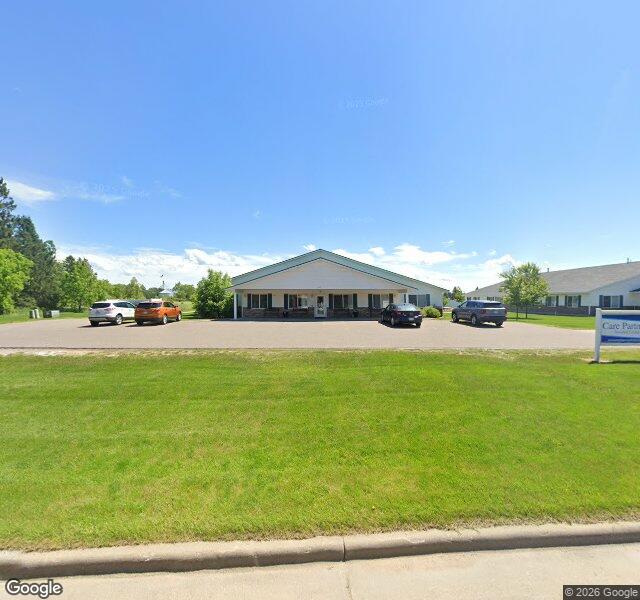
Care Partners Assisted Living Antigo II
1415 10th Ave, Antigo, WI 54409View map (opens in a new tab)
Overview and key essentials
State license
Active
WI DHS
Google reviews
5.0/ 5
2 reviews
Monthly cost
$4,200–$5,200/ mo
AI-assisted estimate
Cost, payment & care details
Updated Nov 28, 2026| Monthly cost | $4,200–$5,200AI-assisted estimate | Research may contain errors. Request a current quote from the provider. Source: AI-assisted online research, Nov 2026. |
|---|---|---|
| Payment options | Medicaid | Participation is reported in our source data. Confirm eligibility, covered services, and any private-pay costs. Verified Medicaid waiver: Wisconsin Family Care / IRIS Medicaid Waiver (WI Dept. of Health Services (DHS DQA)). |
| Size & availability | Confirm directly | We don't publish live openings. Ask about current availability, waitlist length, and move-in timing. |
| Care & support | Assisted livingMemory care certified | Usually offers housing and help with everyday tasks, such as bathing and dressing. What to confirm about care levelsThis describes the licensed category. Ask how care plans adjust if mobility, nursing, or memory needs change over time. Read the family care guide → |
Safety screening & compliance
State licensing depth & federal screening
HHS OIG LEIE: Clear (2026-11-27)OIG database ↗ (opens in a new tab)
WI DHS directory details (CBRF)
Class: CLASS CNA (NONAMBULATORY)Public Funding (Family Care / IRIS)HCBS CompliantDementia approvedWI DHS rates: $4,200–$5,200/mo
State licensing
State inspection history
8inspections
9deficiencies listed
Mar 31, 2026Complaint1 deficiency reported1
Dec 10, 2025Complaint2 deficiencies reported2
2 deficiencies reported
View official state report (opens in a new tab)
83.37(2)(e) Other administration given orN 416
delegated by RN Other administration. Injectables, nebulizers, stomal and enteral medications, and medications, treatments or preparations delivered vaginally or rectally shall be administered by a registered nurse or by a licensed practical nurse within the scope of their license. Medication administration described under sub. (2)(e) may be delegated to non-licensed employees pursuant to s. N 6.03(3). This Rule is not met as evidenced by: Based on record review and interview, the provider did not ensure medication delegation of injectables, nebulizer, stomal and enternal medications, treatments or preparations delivered vaginally or rectally for two caregivers reviewed, Caregiver B and Caregiver C. Findings include: Between 09/18/2025 and 10/10/2025, the Department received 3 complaints alleging resident care concerns (hygiene and skin breakdown), facility cleanliness and medication administration (insulin administration). The facility is licensed to serve up to 16 residents in the client groups advanced aged, irreversible dementia/Alzheimer's and terminally ill. On 12/09/2025, Surveyor reviewed Resident 1's record. Resident 1 was admitted on 05/01/2025. Resident 1 had the following diagnoses (but not limited too): Chronic airway obstruction, Diabetes with kidney complications, Heart failure. According to the medication administration record (MAR), Resident 1 was prescribed Lantus Solostar 100 units/ML [Inject 23 units under the skin daily with breakfast] and Insulin Aspart 100 unit/ML Pen [Sliding scale insulin before lunch and before dinner. 150-200 = 2U units, 201-250 = 6U, 251-300 = 8U, 301-350 = 10U, 351-400 = 12U, >400 Call MD on Call, Max Dose 24U]. Resident 1 discharged on 11/21/2025. On 12/10/2025 at approximately 10:47 AM, Surveyor interviewed Caregiver D via telephone. Surveyor asked Caregiver D about resident care and medication administration. Caregiver D expressed a concern with insulin injections. Caregiver D reported, "Resident 1 wanted things a certain way." Caregiver D stated that staff would not give Resident 1 his/her insulin in the "spot" s/he wanted, which was in the back of his/her upper left arm. Caregiver D commented, "It's been awhile - Caregiver B put insulin in [Resident 1's] elbow." On 12/10/2025 at approximately 12:33 PM, Surveyor interviewed Resident 1 via telephone. Surveyor asked Resident 1 about resident care, cleaning and medication administration when s/he had resided at the Provider's facility. Resident 1 reported, "I am doing a lot better in my new facility." Resident 1 stated that s/he had concerns about his/her safety at the Provider's facility. Resident 1 reported that Caregiver B injected insulin into his/her elbow a few weeks prior to Resident 1 moving out. Resident 1 stated, "I made a complaint to [Director A] and [Director A] told me [s/he] couldn't get rid of [Caregiver B] because [s/he] couldn't get anybody else." Resident 1 indicated that s/he wanted his insulin injected in the back of his/her upper left arm and Caregiver B had injected insulin in his/her left elbow. On 12/10/2025 at approximately 3:15 PM, Surveyor interviewed Director A via telephone. Surveyor asked Director A for Caregiver B's medication delegation/Resident Nurse (RN) delegation. Director A confirmed Caregiver B was a medication passer and had been administering insulin. Director A indicated that s/he was not sure if Caregiver B received medication/RN delegation from RN E. Director A informed Surveyor that Director...
STATE FORM6899
M9WS13 STATE FORM M9WS13 STATE FORM M9WS13 STATE FORM M9WS13 STATE FORM M9WS13
Dec 10, 2025EnforcementEnforcement actionPenalty
Enforcement action
View official state report (opens in a new tab)
No deficiencies are reported in this inspection record.
May 29, 2025EnforcementEnforcement actionPenalty
Enforcement action
View official state report (opens in a new tab)
No deficiencies are reported in this inspection record.
May 29, 2025Complaint2 deficiencies reported2
2 deficiencies reported
View official state report (opens in a new tab)
83.12(4)(c) Reporting incidents with serious injuryN 165
A CBRF shall send a written report to the department within 3 working days after any of the following occurs: Any incident or accident resulting in serious injury requiring hospital admission or emergency room treatment of a resident. This Rule is not met as evidenced by: Based on record review and interview, the provider did not report to the Department within 3 working days after Resident 1 fell and required emergency room treatment. Findings include: The facility is licensed to serve up to 16 residents in the client groups advanced aged, irreversible dementia/Alzheimer's disease, and terminally ill. On 01/13/2025, the Department received a complaint alleging Resident 1 fell in December 2024, broke a collar bone, and staff to pulled Resident 1 on the side of his/her broken collar bone. On 05/28/2025, Surveyor reviewed Resident 1's record. Resident 1 was admitted on 10/17/2013. Resident 1was discharged on 05/12/2025. A physician fax, dated 12/11/2024, noted, in part, "Resident had a fall on 12-09-2024 around 11:48 p.m. in [his/her] room. Staff called [emergency medical technicians (EMT)] for a lift assist. [S/He] has about an inch sized abrasion on [his/her] forehead. [S/He] was gotten [sic] up and put back to bed without issues. Staff to monitor abrasion. On 12/10/2024 at 8:50 a.m. resident was walking down the hallway and fell by [his/her] doorway. [S/He] was laying [sic] on [his/her] left side and it seemed swollen and bruising. [EMTs] were notified. [S/He] also stated [s/he] hit [his/her] head. [S/He] was taken to the [emergency room (ER)] and ended up with a fractured clavicle on [his/her] left side and a possible fx (fracture) with hemorrhage in left maxillary sinus-feels that it may be from chronic nasal mass. [Guardian] will set up follow up with ortho (orthopedic doctor). Staff to continue to monitor." Medical records indicated Resident 1 received treatment for a "Left clavicle fracture, [AC] separation (acromioclavicular joint separation)." Resident 1 received a sling for his/her shoulder and was instructed to have a follow-up appointment within a week with the orthopedic doctor. On 05/29/2025 at approximately 2:07 PM, Surveyor interviewed Director A via telephone. Surveyor asked Director A about Resident 1's fall on 12/10/2024. Director A verified that Resident 1 fell and was sent to the ER on 12/10/2024. Director A confirmed that Resident 1 was treated for a left shoulder fracture, was given a sling to wear, and was instructed to follow up with an orthopedic doctor within one week. Director A reported that Director A sent a self-report of Resident 1's fall to his/her regional office on 12/11/2024 and not to the Department. Director A indicated that his/her regional office should have sent the self-report to the Department. On 05/29/2025, Surveyor reviewed the provider's self-report file. The self-report file did not contain a self-report for Resident 1's fall on 12/10/2025. The provider did not report to the Department within 3 working days after Resident 1 fell and required emergency room treatment. {N 432} 83.38(1)(h) Medication administration. As appropriate, the CBRF shall teach residents the necessary skills to achieve and maintain the resident ' s highest level of functioning. In addition to the assessed needs as determined under s. DHS 83.35(1), the CBRF shall provide or arrange services adequate to meet the needs of the residents in all of the following areas: Medication administration. The CBRF shall provide...
STATE FORM6899
M9WS12 STATE FORM M9WS12 STATE FORM M9WS12 {N 432} {N 432} provider did not ensure Resident 1 was provided with medication administration appropriate to the resident's needs. This is a repeat deficiency, see Statement of Deficiency (SOD) M9WS11, dated 06/26/2024. Findings include: The facility is licensed to serve up to 16 residents in the client groups advanced aged, irreversible dementia/Alzheimer's, and terminally ill. On 05/28/2025, Surveyor reviewed Resident 1's record. Resident 1 was admitted on 10/17/2013. Resident 1 was discharged on 05/12/2025. According to nurse's notes, dated 05/12/2025, Caregiver B noted, in part, "Staff was passing out morning meds (medications) to residents this morning [sic] Staff accidentally popped out another Resident's [sic] medication and gave it to this Resident [sic] Staff did not notice Error [sic] had occurred until it was to [sic] late and Resident [sic] had taken the medication [sic] Staff immediatelly [sic] checked Resident's [sic] allergy list to make sure Resident [sic] wasn't allergic to anything [s/he] had been given, [sic] Resident [sic] was not allergic to anything given [sic] Staff took Resident's [sic] vitals and continues to monitor Resident's [sic] vitals and if any changes in Resident [sic] Staff contacted facility director and Resident's [sic] [family member]." According to a Physician Fax, dated 05/12/2025, the provider noted, "Staff had accidentally given resident another resident's medications around 7:30 a.m. Staff monitored vitals up until the time [s/he] moved to a new facility today per previous plans. [S/He] stated [s/he] felt find [sic] and was acting [his/her] normal [sic]." The provider noted STATE FORM M9WS12 {N 432} {N 432} the following medications were given in error to Resident 1 on 05/12/2025: Levothyroxine 50 mg, Allopurinol 100 mm (two tablets 200 mg), Aspirin 81 mg, Bumetanide 2 mg (two tablets 4 mg), Dilt-Xr 240 mg, Metoprolol 100 mg, Once daily [men/women] 50+, Spironolacton 25 mg, Metoclopramide 5 mg, Potassium 20 Meq, Oxybutynin 5 mg, Primidone 50 mg. On 05/29/2025 at 8:38 AM, Surveyor asked Director A via e-mail about medication administration for Resident 1. On 05/29/2025 at 10:58 AM, Director A stated via e-mail, "Yes there has been a med error for [Resident 1] on the day [s/he] moved out (5-12-25) [sic] Caregiver B had given [him/her] another resident's medications on [sic] accident. Lakeland Care, guardian, and primary doctor were notified." On 05/29/2025 at 11:55 AM, Surveyor asked Director A via e-mail, "What medication was given to [Resident 1]? Was there an adverse reaction? Was staff re-trained on medications? On 05/29/2025 at 12:14 PM, Director a reported via e-mail that Resident 1 received the following medications in error on 05/12/2025: Levothyroxine 50mg Allopurinol 100mg (2 tablets) Aspirin 81mg Bumetanide 2mg (2 tablets) Dilt-Xr 240mg Metoprolol 100mg Once daily women's vitamin Spironolactone 25mg Metoclopramide 5mg Potassium 20Meq STATE FORM M9WS12 {N 432} {N 432} Oxybutynin 5mg Primidone 50mg Director A noted via e-mail, "[S/He] did not have any reaction. [S/He] stated [s/he] felt fine. Then later on that day is when [s/he] moved to the other facility. Lakeland Care updated the new facility of [sic] mediation error before [his/her] arrival. Yes staff re-education was done." On 05/29/2025 at approximately 2:07 PM, Surveyor interviewed Director A via telephone. Surveyor asked Director A about Resident 1's medication error on 05/12/2025....
Show all 8 inspections
Jun 26, 2024EnforcementEnforcement actionPenalty
Enforcement action
View official state report (opens in a new tab)
No deficiencies are reported in this inspection record.
Jun 26, 2024Complaint3 deficiencies reported3
3 deficiencies reported
View official state report (opens in a new tab)
On 06/25/2024, Surveyor conducted a complaint Partners Assisted Living Antigo II. Data collection continued through 06/26/2024. The complaint was substantiated. Two deficiencies were identified. Census: 12
83.35(2) Temporary Service Plan.N 385
Temporary service plan. Upon admission, the CBRF shall prepare and implement a written temporary service plan to meet the immediate needs of the resident, including persons admitted for respite care, until the individual service plan under sub. (3) is developed and implemented. This Rule is not met as evidenced by: Based on record review and interview, the provider did not prepare a written temporary service plan (TSP) to meet Resident 1's needs. Resident 1 was an elopement risk. A TSP was not prepared and implemented. The TSP did not provide staff with interventions on how staff should supervise Resident 1 to prevent elopements. Findings include: On 05/06/2024, the Department received two self-reports indicating a resident eloped on 05/01/2024, 05/03/2024 and 05/05/2024. The resident was returned each time by the police. The facility is licensed to serve up to 16 residents in the client groups advanced aged, irreversible dementia/Alzheimer's and terminally ill. On 06/25/2024, Surveyor reviewed Resident 1's record. Resident 1 was admitted on 05/01/2024. Resident 1 was discharged on 05/05/2024. According to a "Step Assessment Tool," dated 04/09/2024, Resident 1 was assessed as a wanderer, fall risk and elopement risk. According to nursing notes, dated 05/01/2024 through 05/05/2024, Resident 1 eloped from the facility on 05/01/2024, 05/03/2024 and 05/05/2024, and attempted to exit the facility on numerous occasions between 05/01/2024 and 05/05/2024. Nurse's notes, dated 05/01/2024, stated Resident 1 "was trying to exit seek beginning of the shift and was redirected multiply [sic] X (times)." According to nurse's notes, dated 05/02/2024, Resident 1 "tried to elope 14 times from 2 PM - 6 PM." According to nurse's notes dated 05/05/2024, Resident 1 "was bored and kept exiting [sic] seeking x 5 (5 times)." Resident 1's record did not contain a TSP or individual service plan (ISP). According to a "Behavior Monitoring Log (BML)," dated May 2024, the following information was noted regarding Resident 1: "Targeted Behavior #1: Exit seeking, elopements, agitation, anxious, confused, repeating, verbally aggressive, hitting/grabbing staff." On 06/25/2024 at approximately 2:00 PM, Surveyor interviewed Director A. Surveyor asked Director A if Resident 1 had a TSP or ISP available. Director A reported that a TSP or ISP was not completed for Resident 1. Director A verified Resident 1 eloped on 05/01/2024, 05/03/2024 and 05/05/2024. Director A reported that each time Resident 1 left the facility, staff were present and staff accompanied Resident 1 until the police assisted with returning Resident 1 back to the facility. Director A confirmed Resident 1 was discharged on 05/05/2024. On 06/26/2024, at approximately 11:40 PM, Surveyor interviewed Director A via e-mail. Surveyor asked Director A the following question: "As discussed yesterday, in regards to [Resident 1's] elopements, a temporary service was not completed upon admission; What is the process for completing temporary service plans?" On 06/26/2024, Director A responded via e-mail, "The Kardex that I believe I copied for you for [Resident 1] is in place as the temporary ISP." On 06/26/2024, Surveyor asked Director A via e-mail, "Does the Kardex address interventions for [Resident 1's] elopement behavior?" On 06/26/2024, Director A responded via e-mail, "No it does not go into detail but does state that [s/he] is an elopement risk." On 06/26/2024, at approximately 3:00 PM, Surveyor interviewed...
83.38(1)(h) Medication administration.N 432
As appropriate, the CBRF shall teach residents the necessary skills to achieve and maintain the resident ' s highest level of functioning. In addition to the assessed needs as determined under s. DHS 83.35(1), the CBRF shall provide or arrange services adequate to meet the needs of the residents in all of the following areas: Medication administration. The CBRF shall provide medication administration appropriate to the resident ' s needs. This Rule is not met as evidenced by: Based on record review and interview, the provider did not ensure Resident 2 was provided with medication administration appropriate to his/her needs on 05/03/2024. Findings include: On 05/13/2024, the Department received a complaint alleging a resident was given another resident's medication on 05/03/2024. The facility is licensed to serve up to 16 residents in the client groups advanced aged, irreversible dementia/Alzheimer's and terminally ill. On 06/25/2024, Surveyor reviewed Resident 2's record. Resident 2 was admitted on 10/17/2013. According to nurse's notes, dated 05/03/2024, Caregiver B noted, "Staff had made the mistake of giving [Resident 2] [Resident 3's] medications. [S/He] took 2 pills that were Midodrine HCL 5 mg. and Rivastigmine 3 mg. cap [sic]. Staff immediately noticed the error and called director. Took vitals. Staff called guardian and informed [him/her] of what happened." According to a "Medication Error Report", Director A noted, "Resident was given another resident's medications on 5-3-24 at 5 PM. [S/He] was given Midodrine HCL 5 mg. and Rivastigmine 3 mg. Staff will continue to monitor [him/her] and take vitals. No concerns at this time. Primary doctor, POA (power of attorney), and Lakeland Care updated on incident. No changes from primary at this time." According to a "Medication Error Report," dated 05/14/2024, in response to "What rule was broken allowing this medication error to happen?;" Caregiver C wrote, "Staff did not do [sic] triple check." On 06/25/2024 at approximately 2:00 PM, Surveyor interviewed Director A. Director A confirmed Resident 2 was given two of Resident 3's medications (Midodrine HCL 5 mg and Rivastigmine 3 mg.) on 05/03/2024. Director A indicated that despite the medication error, Resident 3 received all of his/her prescribed medications on 05/03/2024 and Resident 2 received all of his/her prescribed medications on 05/03/2024. Director A stated that for the medication error on 05/03/2024, Caregiver B filled out a "Resident/Visitor Incident Report" and completed a "Medication Error Report." Director A reported that there had not been any further concerns with medication errors for Caregiver B.
STATE FORM6899
M9WS11 STATE FORM M9WS11 STATE FORM M9WS11 STATE FORM M9WS11 STATE FORM M9WS11
Feb 28, 2024Complaint1 deficiency reported1
Neighborhood & resident support
Emergency access, hazards & advocacy
Nearest hospital
Aspirus Langlade Hospital
1.5 mi · Antigo, WI
Emergency room
FEMA hazard risk
Relatively LowLanglade County, WI
- Cold Wave
- Lightning
- Winter Weather
Free resident advocacy
Wisconsin Board on Aging & Long Term Care Ombudsman
More neighborhood context (specialists, VA, dialysis, air & affordability)
VA & dialysis access
Iron Mountain MI VA Medical Center
71.2 mi · Iron Mountain, MI
Aspirus Langlade Hospital Kidney Care
0.7 mi · 4/5 ★
Specialists within 15 mi
- Geriatricians
- 1
- Neurologists
- 21
- Palliative care
- 0
- PM&R rehab
- 0
Environment & mobility
- EPA Walkability
- 5.6/20 (Least Walkable)
- Primary care access
- HRSA Shortage Area
County demographics
- Age 65+ median income
- $44,122/yr
- Rent-burdened households
- 39%
- Cognitive disability (2023)
- 15.6%
- Mobility disability
- 12.9%
Call & tour checklist
Questions to ask Care Partners Assisted Living Antigo II
Check off questions as you call or tour. Your progress stays private in this browser.
Show 3 more suggested questions
Verification & public records
Official records & sources
Licensing & contact
- License #
- 14663
- Status
- active
Original public sources
Verify licensing, ratings, and inspection reports directly with each official source.
- WI DHS official record (opens in a new tab)WI Dept. of Health Services
- Google Maps (opens in a new tab)Directions, photos & neighborhood
- Google Reviews (opens in a new tab)2 public reviews
EveryPlace is an independent research directory. Information is compiled from public Medicare.gov, state licensing, Google Places, and street-level imagery sources. Some summaries, suggested questions, and pricing notes are AI-generated or AI-assisted and may contain errors or omissions. We do not accept payment for placement. Confirm all details directly with the community and official sources. Research Policy.
Keep exploring
Nearby communities to compare
- 5.0(2)MedicaidAssisted Living< 1 miCare Partners Assisted Living Antigo IAntigo, WI
- Medicare 5/5MedicaidHospice Care< 1 miLe Royer HospiceAntigo, WI
- Medicare 4/5Cap. 12Dialysis Center< 1 miAspirus Langlade Hospital Kidney CareAntigo, WI
- Cap. 32HUD Senior Housing1.1 miFirst Avenue ApartmentsAntigo, WI
- Cap. 84HUD Senior Housing1.2 miPark View ApartmentsAntigo, WI
- Medicare 2/52.7(19)118 bedsMedicaidNursing Home1.7 miEastview Health and Rehabilitation CenterAntigo, WI