Loading EveryPlace content…
Assisted LivingActive licenseMemory care certified
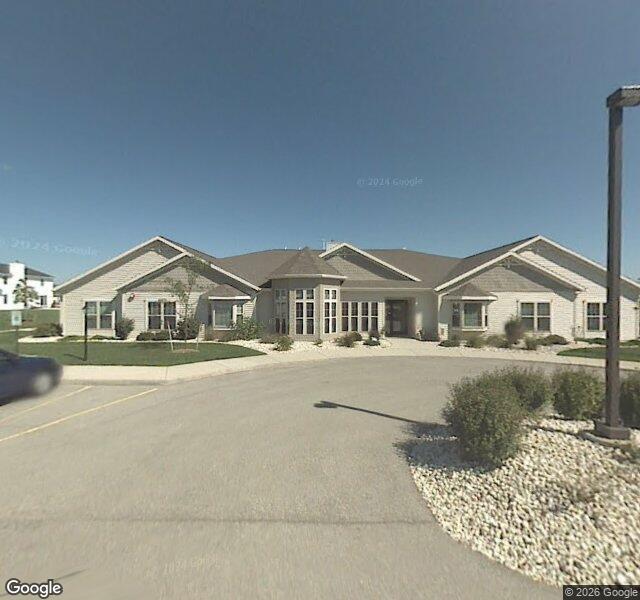
Belgium Gardens
432 S Heritage St, Belgium, WI 53004View map (opens in a new tab)
Overview and key essentials
State license
Active
WI DHS
Google reviews
4.8/ 5
4 reviews
Monthly cost
$4,550–$5,800/ mo
AI-assisted estimate
Cost, payment & care details
Updated Nov 28, 2026| Monthly cost | $4,550–$5,800AI-assisted estimate | Research may contain errors. Request a current quote from the provider. Source: AI-assisted online research, Nov 2026. |
|---|---|---|
| Payment options | Medicaid | Participation is reported in our source data. Confirm eligibility, covered services, and any private-pay costs. Verified Medicaid waiver: Wisconsin Family Care / IRIS Medicaid Waiver (WI Dept. of Health Services (DHS DQA)). |
| Size & availability | Confirm directly | We don't publish live openings. Ask about current availability, waitlist length, and move-in timing. |
| Care & support | Assisted livingMemory care certified | Usually offers housing and help with everyday tasks, such as bathing and dressing. What to confirm about care levelsThis describes the licensed category. Ask how care plans adjust if mobility, nursing, or memory needs change over time. Read the family care guide → |
Safety screening & compliance
State licensing depth & federal screening
HHS OIG LEIE: Clear (2026-11-27)OIG database ↗ (opens in a new tab)
WI DHS directory details (CBRF)
Class: CLASS CNA (NONAMBULATORY)HCBS CompliantDementia approvedWI DHS rates: $4,550–$5,800/mo
State licensing
State inspection history
4inspections
13deficiencies listed
Aug 5, 2026Complaint2 deficiencies reported2
2 deficiencies reported
View official state report (opens in a new tab)
STATE FORM6899
UHCY12 {N 220} {N 220} See statement of deficiency (SOD) PY2C11, dated 04/28/2022 and UHCY11, dated 03/19/2026. Findings include: On 08/05/2026 at approximately 10:45 AM, Surveyor requested Caregiver D's record from Manager A. Surveyor reviewed Caregiver D's employee record. Record indicated the following: - Caregiver D was hired July 2026. Caregiver D's record did not have documentation Caregiver D was screened for clinically apparent communicable disease. On 08/05/2026 at 1:05 PM, Surveyor interviewed Manager A. Manager A acknowledged s/he did not have the free of communicable disease form for Caregiver D. Manager A confirmed Caregiver D was currently on the schedule and working. Manager A was unable to provide the exact date of hire but stated that s/he started early July. The provider did not ensure that caregiver reviewed was screened for clinically apparent communicable disease, within 90 days before the start of employment. STATE FORM UHCY12 STATE FORM UHCY12 STATE FORM UHCY12 STATE FORM UHCY12 {N 491} {N 491} This is a repeat deficiency. See statement of deficiency (SOD) UHCY11, dated 03/19/2026. Findings include: On 08/05/2026 at 11:30 AM, Surveyor toured the facility with Manager A. Surveyor observed the hallway carpet to be fraying in multiple areas across the hallway and into resident rooms. Manager A acknowledged Surveyors' observations and stated the carpet was replaced not long ago and that there was a new maintenance person, but s/he wasn't sure when the carpet would be fixed. Observations: * Room 18 spots on carpet * Resident 5 wall scraped * Several areas of hallway with carpet fraying and fraying into resident rooms. The provider did not ensure every interior floor was clean and in good repair. STATE FORM UHCY12
83.43(1) Environment safe, clean, andN 481
comfortable Environment. The CBRF shall provide a living environment that is safe, clean, comfortable, and homelike. All common dining and living areas shall contain furnishings appropriate to the intended use of the room. This Rule is not met as evidenced by: Based on observation and interview, the provider did not ensure a living environment that was clean, safe, comfortable, well maintained or homelike. Findings include: On 06/05/2026, the Department received a complaint alleging concerns with the hot water heaters and water in resident areas cold. On 08/05/2026 at 10:45 AM, Surveyor reviewed the maintenance log. The log reflected: * Room 2 no hot water * Room 4 no hot water * Room 5 no hot water * Room 11 no hot water There was a note on 6/12 "no hot water" and 8/4 "hot water less than 5 min and ice cold" On 08/05/2026 at 11:30 AM, Surveyor interviewed Caregiver E. Caregiver E stated hot water hasn't been working since the beginning of year. Caregiver E stated when s/he gives Resident 10 a shower, s/he turns on the water to get Resident 10 wet, turns water off, washes Resident 10 up and shampoos hair and then turns water on to rinse. Caregiver E acknowledged s/he turns water off during shower to try to have warmer water to rinse Resident 10. Caregiver E confirmed the hot water runs out fast. On 08/05/2026 at 11:50 AM, Surveyor interviewed Caregiver F. Caregiver F stated s/he gave Resident 6 a shower. Caregiver F stated the shower was warm in the beginning and they tried to go fast but hot water runs out quickly and is cold. Caregiver F stated the water pressure isn't good either. On 08/05/2026 at 12:10 PM, Surveyor interviewed Resident 9. Resident 9 stated s/he was upset with his/her shower. Resident 9 stated the water temp is intermittent, the water is warm at best and then turns ice cold in less than 5 minutes of shower running. Resident 9 stated the facility knew about the water problem 3 months ago, and water temperature is still a problem. There is a new maintenance person, but s/he works a full-time job and isn't always available. Resident 9 confirmed s/he doesn't like taking a cold shower. On 08/05/2026 at 12:13 PM, Surveyor interviewed Resident 11. Resident 11 stated s/he takes a shower and for maybe 1 minute the water is a little hot/warm and then cold. Resident 11 stated s/he "wishes it would get warm." Resident 1 stated s/he gets up to shower at 3:00 AM, hoping for warm water, and the water is cold at 3:00 AM too. Surveyor took a water temp in Resident 11's room, and the warmest temp was 88.6 degrees and the temperature started to drop. On 08/05/2026 at 12:25 PM, Surveyor interviewed Resident 1. Resident 1 stated the water has been cold for a while. Surveyor took a water temp, and the highest temp was 88.2 degrees and water temperatur started to drop. Resident 1 stated s/he has had 2 cold showers recently. Resident 1 stated "its bad when rinsing hair and the water is ice cold hitting your head." Resident 1 stated "water just cold when washing up." Resident 1 stated s/he gets injection in his/her eye and likes to put warm compress on eyes, but the water is cold and s/he can't get a warm washcloth. Resident 1 stated s/he washes up every morning and night, and s/he will be cold in the morning but is able to put on warm clothes. Resident 1 stated at bedtime s/he has thinner pajamas and uses a heating pad to try and warm up after washing up, because the water is so cold. Resident 1 stated they moved his/her shower to the...
Aug 5, 2026EnforcementEnforcement actionPenalty
Enforcement action
View official state report (opens in a new tab)
No deficiencies are reported in this inspection record.
Mar 19, 2026EnforcementEnforcement actionPenalty
Enforcement action
View official state report (opens in a new tab)
No deficiencies are reported in this inspection record.
Mar 19, 2026Complaint11 deficiencies reported11
11 deficiencies reported
View official state report (opens in a new tab)
On 03/18/2026, Surveyor conducted an abbreviated survey and one (1) complaint investigation at Belgium Gardens. Additional information gathered through 03/19/2026. As a result of the survey eight (8) deficiencies were identified and 1 complaint was substantiated. Census:21
83.47(2)(d) Fire drills.N 525
Fire drills. 1. Fire evacuation drills shall be conducted at least quarterly with both employees and residents. Drills shall be limited to the employees scheduled to work at that time. Documentation shall include the date and time of the drill and the CBRF ' s total evacuation time. The CBRF shall record residents having an evacuation time greater than the time allowed under s. HFS 83.35(5) and the type of assistance needed for evacuation. Fire evacuation drills may be announced in advance. 2. At least one fire evacuation drill shall be held annually that simulates the conditions during usual sleeping hours. Fire evacuation drills may be announced in advance. Drills shall be limited to the employees scheduled to work during the residents ' normal sleeping hours. This Rule is not met as evidenced by: Based on record review and interview, the provider did not ensure quarterly fire drills were conducted with both employees and residents including holding one fire evacuation drill annually that simulates the conditions during usual sleeping hours in calendar years 2024 and 2025. This is a repeat deficiency. See statement of deficiency (SOD) PY2C11, dated 04/28/2022. Findings include: The provider is licensed as a Class CNA (non-ambulatory) CBRF (community based residential facility) able to serve up to 22 residents within the client groups of advanced aged, irreversible dementia/Alzheimer's, physically disabled and/or terminally ill. On 03/18/2026 at approximately 12:00 PM, Surveyor requested the fire drills that had been completed for 2024 and 2025 from Manager A. Surveyor observed fire drills were completed in 2024, but in 2025 there was no drill completed in the 2nd quarter. The notes on the fire drills reflected the NOC drill completed in 3rd quarter for 2025 was simulated with staff, residents were not evacuated. On 03/18/2026 at 1:00 PM, Surveyor interviewed Manager A. Manager A acknowledged they missed the 2nd quarter drill of 2025 and confirmed the NOC drill was a simulated drill, but stated they will ensure to conduct the drills for
and 2025 from Manager A. Surveyor2024
observed a tornado drill for 04/11/2024 and 07/05/2025. Manager A confirmed s/he did not have a 2nd half of 2024 and first half of 2025 other drill completed. On 03/18/2026 at 1:00 PM, Surveyor interviewed Manager A. Manager A acknowledged s/he missed doing the 2nd drill for 2024 and 2025.
83.22(1)-(4) Task specific training.N 247
The CBRF shall provide, obtain or otherwise ensure adequate training for employees performing job duties in all of the following: Assessment of residents. All employees responsible for resident assessment shall successfully complete training in the assessment of residents prior to assuming these job duties. Specific training topics shall include: assessment methodology, assessment of changes in condition, sources of assessment information, and documentation of the assessment. Individual service plan development. All employees responsible for service plan development shall successfully complete training in individual service plan development prior to assuming these job duties. Specific training topics shall include: identification of the resident ' s needs and desired outcomes, development of goals and interventions, service plan evaluation and review of progress. Provision of personal care. All employees responsible for providing assistance with activities of daily living shall successfully complete training prior to assuming these job duties. Specific training topics shall include, as appropriate: bathing, eating, dressing, oral hygiene, nail and foot care, toileting and incontinence care, positioning and body alignment, and mobility and transferring. Dietary training. All employees performing dietary duties shall complete dietary training within 90 days after assuming these job duties. Specific training topics shall include: determining nutritional needs, menu planning, food preparation and food sanitation. This Rule is not met as evidenced by: Based on record review and interview, the provider did not ensure 1 of 1 employee reviewed had received dietary training within 90 days of starting employment. Findings include: On 03/18/2026 at approximately 10:00 AM, Surveyor requested Cook C's record from Manager A. Manager A acknowledged Cook C was hired in the beginning of December 2025. At 10:45 AM, Manager A stated s/he thought Cook C had obtained ServSafe certification. Surveyor requested evidence of the dietary training or that s/he met the exemption requirement from Manager A. Manager A stated s/he would reach out to Cook C to obtain a copy of the ServSafe Certificate. Surveyor informed Manager A s/he could send the certificate to Surveyor by the end of the day. Cook C did not evidence s/he had met the requirement for exemption from dietary training. As of 03/19/2026 at 4:00 PM, Surveyor did not receive evidence Cook C had obtained dietary training within 90 days of starting employment.
83.21(1)-(3) All employee training.N 243
The CBRF shall provide, obtain or otherwise ensure adequate training for all employees in all of the following: Resident rights. Training shall include general rights of residents including rights as specified under s. DHS 83.32(3). Training shall be provided as applicable under ss. 50.09 and 51.61 and chs. 54, 55, and 304, Stats., and ch. DHS 94, depending on the legal status of the resident or service the resident is receiving. Specific training topics shall include house rules, coercion, retaliation, confidentiality, restraints, self-determination, and the CBRF ' s complaint and grievance procedures. Residents ' rights training shall be completed within 90 days after starting employment. Client Group. Training shall be specific to the client group served and shall include the physical, social and mental health needs of the client group. Specific training topics shall include, as applicable: characteristics of the client group served, activities, safety risks, environmental considerations, disease processes, communication skills, nutritional needs, and vocational abilities. Client group specific training shall be completed within 90 days after starting employment. Client Group. In a CBRF serving more than one client group, employees shall receive training for each client group. Recognizing, preventing, managing, and responding to challenging behaviors. Specific training topics shall include, as applicable: elopement, aggressive behaviors, destruction of property, suicide prevention, self-injurious behavior, resident supervision, and changes in condition. Challenging behaviors training shall be completed within 90 days after starting employment. This Rule is not met as evidenced by: Based on record review and interview, the provider did not ensure 1 of 3 employees reviewed, obtained training as required within 90 days after starting employment. Cook C did not have training in resident rights; recognizing, preventing, managing and responding to challenging behaviors; and required client groups within 90 days after starting employment. This is a repeat deficiency. See statement of deficiency (SOD) PY2C11, dated 04/28/2022. Findings include: The provider is licensed to provide care and services to residents within the client groups of advanced aged, irreversible dementia/Alzheimer's, physically disabled and/or terminally ill. On 03/18/2026 at approximately 10:00 AM, Surveyor requested Cook C's record from Manager A. Surveyor reviewed Cook C's employee record to verify compliance with all employee training requirements. Record indicated the following: Cook C was hired beginning of December 2025. Cook C's record did not contain evidence of training or evidence of meeting an exemption for training in resident rights; recognizing, preventing, managing and responding to challenging behaviors; and client groups. On 03/18/2026 at approximately 12:00 PM, Surveyor interviewed Manager A. Manager A acknowledged s/he did not have all employee training for Cook C. Manager A stated s/he was unaware Cook C had to have all employee training. Manager A stated s/he will talk to Cook C and see if s/he had training from previous employment. Surveyor informed Manager A s/he could send information obtained to Surveyor by the end of the day. As of 03/19/2026 at 4:00 PM, Surveyor did not receive documentation Cook C had all employee training or evidence of meeting an exemption for training in resident rights; recognizing, preventing, managing and responding...
83.44(2)(c) Interior floors, walls and ceilings.N 491
Every interior floor, wall and ceiling shall be clean and in good repair. This Rule is not met as evidenced by: Based on observation and interview, the provider did not ensure every interior floor, wall and ceiling were clean and in good repair. The carpet in the hallway was fraying in multiple areas, resident rooms with fraying/stained carpet, walls and ceiling are stained. Findings include: On 03/18/2026 at approximately 10:34 AM, Surveyor toured the facility with Manager A. Surveyor observed the hallway carpet to be fraying in multiple areas across the hallway and into resident rooms. Examples of interior floor, wall and ceilings was identified in the following areas: Resident 4's room carpet to hallway, carpet in room was bubbling, caulk missing around toilet and shower, walls scuffed with drywall missing on corner Resident 5's room carpet to hallway, walls scuffed and pieces missing on corners Resident 6's room carpet to hallway Day room outlet with plugs not covering hole in wall, flooring transition missing by patio door, transition in dayroom from laminate flooring to carpet - strip with duct tape, carpet stained (white spots) in front of recliner and a couple dark spots on carpet in day room in front of med cart approximately 1" x 1" each, Laundry room sprinkler ring missing from sprinkler Resident 7's room carpet to hallway, walls and ceiling splattered with brown substance Resident 8's room carpet in doorway was snagged approximately 3' x 4' On 03/18/2026 at 12:30 PM, Surveyor interviewed Manager A. Manager A acknowledged Surveyors' observations and stated the carpet was replaced not long ago. Manager A stated Resident 7's room looked like s/he had a soda explode on the walls and ceilings. The provider did not ensure every interior floor was clean and in good repair.
83.17(2)(a) Employees screened forN 220
communicable disease. The CBRF shall obtain documentation from a physician, physician assistant, clinical nurse practitioner or a licensed registered nurse indicating all employees have been screened for clinically apparent communicable disease including tuberculosis. Screening for tuberculosis shall be conducted using centers for disease control and prevention standards. The screening and documentation shall be completed within 90 days before the start of employment. The CBRF shall keep screening documentation confidential, except the department shall have access to the screening documentation for verification purposes. This Rule is not met as evidenced by: Based on record review and interview, the provider did not ensure 1 of 2 caregivers reviewed was screened for clinically apparent communicable disease, within 90 days before the start of employment. This is a repeat deficiency. See statement of deficiency (SOD) PY2C11, dated 04/28/2022. Findings include: On 03/18/2026 at approximately 10:00 AM, Surveyor requested Caregiver B's record from Manager A. Surveyor reviewed Caregiver B's employee record. Record indicated the following: - Caregiver B was hired on 12/02/2025. Caregiver B's record did not have documentation Caregiver B was screened for clinically apparent communicable disease. On 03/18/2026 at approximately 12:00 PM, Surveyor interviewed Manager A. Manager A stated, s/he would look for the free of communicable disease form. Surveyor informed Manager A s/he could send information to Surveyor by the end of the day. As of 03/19/2026, Surveyor did not receive documentation Caregiver B had been screened for communicable disease. The provider did not ensure that caregiver reviewed was screened for clinically apparent communicable disease, within 90 days before the start of employment.
83.47(2)(e) Other evacuation drills.N 526
Other evacuation drills. Tornado, flooding, or other emergency or disaster evacuation drills shall be conducted at least semi-annually. This Rule is not met as evidenced by: Based on record review and interview, the provider did not ensure evacuation drills, such as tornadoes, flooding or other emergency or disaster, were completed for 2024 and 2025. This is a repeat deficiency. See statement of deficiency (SOD) PY2C11, dated 04/28/2022. Findings include: The provider is licensed as a Class CNA (non-ambulatory) CBRF (community based residential facility) able to serve up to 22 residents within the client groups of advanced aged, irreversible dementia/Alzheimer's, physically disabled and/or terminally ill. On 03/18/2026, at approximately 12:00 PM, Surveyor requested the other evacuation drills for
83.37(3)(c) Medication storage: locked cabinet.N 419
Administered by facility. The CBRF shall keep medicine cabinets locked and the key available only to personnel identified by the CBRF. This Rule is not met as evidenced by: Based on observation, staff interview and record review the provider did not establish an effective procedure for the proper destruction and disposal of unused, discontinued, or outdated medications. The medication cart contained opened insulin pens for Resident 1, 2 and 3, with no dates the pens were started to determine the specific expiration date of the medication. Findings include: Division of Quality Assurance Insulin Storage Guide publication dated 11/2016 indicated, "...Insulin is available from the drug manufacturers in two basic packages-vials and pens. General insulin storage requirements are as follows: ...5. Check Storage guideline specific to the insulin formulation. This is usually in the product package insert...The following tables address specific expiration or beyond-use dating guidelines that apply to insulin products...Pens...Lantus Pen: label expiration date 28 days when seal is punctured...Tresiba Pen: label expiration date up to 56 days when seal is punctured ..." On 03/18/2026 at approximately 10:00 AM, Surveyor and Manager A observed the facility's medication cart. The med cart contained the following: * 1 open Tresiba insulin pen without a date or resident name * 1 Lantus insulin pen for Resident 2 without a date opened * 1 Lantus insulin pen for Resident 3 without a date opened Surveyor shared findings with Manager A. Manager A pointed to Resident 1's name on the slot the Tresiba insulin pen was located but confirmed 3 of 3 pens were not dated when staff had started using them. Manager A confirmed staff should ensure the pens are labeled with the resident name and all pens should be dated when the pen was opened or when the pen would expire.
83.55(6)(b) Bath and toilet areas: waterN 617
temperature The CBRF shall set the temperature of all water heaters connected to sinks, showers and tubs used by residents at a temperature of at least 140°F. The temperature of water at fixtures used by residents shall be automatically regulated by valves and may not exceed 115°F, except for CBRFs serving residents recovering from alcohol or drug dependency or clients of a government correctional agency. This Rule is not met as evidenced by: Based on interview and observation, the provider did not ensure 2 of 2 hot water heaters connected to sinks, showers and tubs used by residents, was set to 140 degrees Fahrenheit. Findings include: On 03/18/2026 at 10:39 AM, Surveyor toured the facility with Manager A. Surveyor observed 2 water heaters with temperatures of 136 on the left hot water heater and 130 on the right hot water heater in the mechanical room. Surveyor asked Manager A if the 136 and 130 reflected the temperature of the water in the hot water heater. Manager A stated s/he was unsure and reached out to maintenance. Manager A confirmed the hot water heaters were 136 and 130 and they had a mixing valve that adjusted the temperature before reaching the residents rooms to not exceed 115 degrees Fahrenheit. At 11:51 AM, Surveyor and Manager A went to the mechanical room and observed the left hot water heater to be 133 and the right hot water heater to be 130. Manager A stated s/he was unaware the hot water heaters were not set to at least 140 degrees Fahrenheit. Manager A stated s/he would reach out to maintenance and have the water adjusted to be at least 140 degrees Fahrenheit in the hot water heater. The American Society of Sanitary Engineering, (https://homeguides.sfgate.com/turning-water-he ater-up-kill-bacteria-54596.html), recommends hot water heaters to be set between 135- and 140-degrees Fahrenheit to kill Legionella bacteria. Community Based Residential Facilities are required to have hot water heaters set at least 140 degrees Fahrenheit. The provider did not ensure the temperature of all hot heaters connected to sinks, showers and tubs used by residents maintained a temperature of at least 140 degrees Fahrenheit.
including the NOC shift drill.2026
including the NOC shift drill.
STATE FORM6899
UHCY11 STATE FORM UHCY11 STATE FORM UHCY11 STATE FORM UHCY11 STATE FORM UHCY11 STATE FORM UHCY11 STATE FORM UHCY11 STATE FORM UHCY11 STATE FORM UHCY11 STATE FORM UHCY11 STATE FORM UHCY11 STATE FORM UHCY11 STATE FORM UHCY11
Neighborhood & resident support
Emergency access, hazards & advocacy
Nearest hospital
Aurora Medical Center
12.5 mi · Grafton, WI · Medicare 5/5 ★
Emergency room
Free resident advocacy
Wisconsin Board on Aging & Long Term Care Ombudsman
More neighborhood context (specialists, VA, dialysis, air & affordability)
VA & dialysis access
Milwaukee VA Medical Center
33.3 mi · Milwaukee, WI · VA 3/5 ★
DaVita Cedarburg Dialysis
15.7 mi · 2/5 ★
Specialists within 15 mi
- Geriatricians
- 2
- Neurologists
- 5
- Palliative care
- 3
- PM&R rehab
- 0
Call & tour checklist
Questions to ask Belgium Gardens
Check off questions as you call or tour. Your progress stays private in this browser.
Show 3 more suggested questions
Verification & public records
Official records & sources
Licensing & contact
- License #
- 12459
- Status
- active
Original public sources
Verify licensing, ratings, and inspection reports directly with each official source.
- WI DHS official record (opens in a new tab)WI Dept. of Health Services
- Google Maps (opens in a new tab)Directions, photos & neighborhood
- Google Reviews (opens in a new tab)4 public reviews
EveryPlace is an independent research directory. Information is compiled from public Medicare.gov, state licensing, Google Places, and street-level imagery sources. Some summaries, suggested questions, and pricing notes are AI-generated or AI-assisted and may contain errors or omissions. We do not accept payment for placement. Confirm all details directly with the community and official sources. Research Policy.
Keep exploring
Nearby communities to compare
- Assisted Living4.9 miHighlandPort Washington, WI
- 3.3(4)MedicaidAssisted Living5.5 miCedar Grove Gardens IICedar Grove, WI
- 3.3(4)MedicaidAssisted Living5.5 miCedar Grove Gardens ICedar Grove, WI
- 3.4(5)MedicaidAssisted Living5.8 miForest HavenFredonia, WI
- MedicaidAssisted Living5.9 miWoodland View EstateFredonia, WI
- MedicaidAssisted Living6.0 miEvelyns CbrfPort Washington, WI