Loading EveryPlace content…
Memory CareActive license
Ascot Park Senior Living
2730 Bailey Lane, Eugene, OR 97401View map (opens in a new tab)
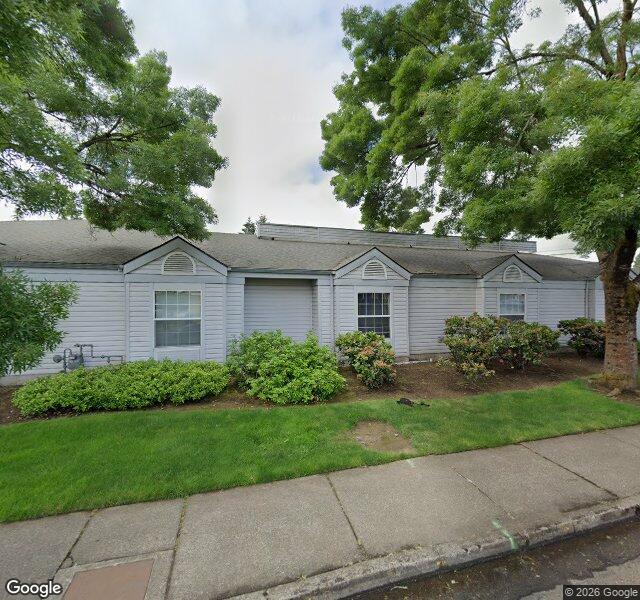
Overview and key essentials
State license
Active
OR ODHS
Google reviews
3.9/ 5
26 reviews
Size & payment
66 residents
Medicaid listed
Mixed signals — tour closely
Public Google reviews reflect mixed experiences (3.9/5). Compare recent reviews and tour in person.
Cost, payment & care details
Updated Nov 28, 2026| Monthly cost | Not published | Ask for the full monthly cost, including care fees and one-time charges. |
|---|---|---|
| Payment options | Medicaid | Participation is reported in our source data. Confirm eligibility, covered services, and any private-pay costs. Verified Medicaid waiver: Oregon Medicaid APD Long-Term Services (Oregon Dept. of Human Services (ODHS)). |
| Size & availability | 66 residents | We don't publish live openings. Ask about current availability, waitlist length, and move-in timing. |
| Care & support | Memory care | Designed for people living with dementia who need a supported daily routine. What to confirm about care levelsThis describes the licensed category. Ask how care plans adjust if mobility, nursing, or memory needs change over time. Read the family care guide → |
State licensing
State inspection history
13inspections
68deficiencies listed
Oct 1, 2026Routine12 deficiencies reported12
12 deficiencies reported
View official state report (opens in a new tab)
Re-Licensure
moderateC0310
OAR 411-054-0055 (2) Systems: Medication Administration (2) MEDICATION ADMINISTRATION. An accurate Medication Administration Record (MAR) must be kept of all medications, including over-the-counter medications that are ordered by a legally recognized prescriber and are administered by the facility.(a) Documentation of the MAR must be completed using one of the following processes. An alternative process may be used only with a written exception from the Department.(A) The MAR may be signed as the medications are set-up or poured. Medications must not be set-up in advance for more than one administration time. If a medicine cup or other individual container is used to set-up the medications, it must be placed in a closed compartment labeled with the resident's name. Changes to the MAR that occur after the medication is delivered, must be documented by the same staff person who administered the medication.(B) The facility may choose to sign the MAR after the medication is administered to a specific resident and prior to the next resident-specific medication or treatment.(b) MEDICATION RECORD. At minimum, the medication record for each resident that the facility administers medications to, must include:(A) Current month, day and year.(B) Name of medications, reason for use, dosage, route and date and time given.(C) Any medication specific instructions, if applicable (e.g., significant side effects, time sensitive dosage, when to call the prescriber or nurse).(D) Resident allergies and sensitivities, if any.(E) Resident specific parameters and instructions for p.r.n. medications.(F) Initials of the person administering the medication. This Rule is not met as evidenced by: Based on interview and record review, it was determined the facility failed to ensure residents' MARs were accurate regarding reasons for use and/or any resident-specific parameters and instructions for PRN medications for 2 of 2 sampled residents (#s 1 and 2) whose MARs were reviewed. Findings include, but are not limited to: 1. Resident 2 was admitted to the facility in 06/2026 with diagnoses including hypertension. The resident’s 09/01/26 through 09/28/26 MAR and current physician orders were reviewed, and the following was identified: a. The following medications lacked reasons for use on the MAR: * Acetaminophen 1000mg three times a day; and * Lorazepam 1mg twice daily. b. The following PRN pain medications lacked parameters for order of administration: *Fever: - Acetaminophen 650mg tablet every 6 hours as needed; and - Acetaminophen 650mg suppository every 4 hours as needed. *Pain: - Acetaminophen PM 500-25mg as needed every 4 hours; and - Hydromorphone 2mg/ml every hour as need every hour as needed. *Constipation: - Bisacodyl 10mg once a day as needed; and - Senna 17.2mg at bedtime as needed. On 10/02/26 at approximately 11:15 am, the need to ensure all medications had reasons for use and clear parameters was discussed with Staff 1 (ED). She acknowledged the findings. 2. Resident 1 was admitted to the facility in 12/2025 with diagnoses including Alzheimer’s disease, hypertension, and chronic kidney disease. Review of Resident 1’s MAR, dated 09/01/26 through 09/28/26, identified the following: * The MAR lacked reasons for use for tizanidine 4 mg and ramelteon 8 mg; and * The MAR listed two PRN medications for constipation, bisacodyl 5 mg tablets and polyethylene glycol 3350 powder. There were no parameters for the sequential order of administration of these...
moderateC0200
OAR 411-054-0027 (1) Resident Rights and Protection - General (1) GENERAL RIGHTS. The facility must implement a residents' Bill of Rights. Each resident and the resident's designated representative, if appropriate, must be given a copy of the resident's rights and responsibilities before moving into the facility. The Bill of Rights must state that residents have the right: (a) To be treated with dignity and respect. (b) To be given informed choice and opportunity to select or refuse service and to accept responsibility for the consequences. (c) To be given informed consent before any nontherapeutic examination, observation or treatment is provided. (d) To participate in the development of their initial service plan and any revisions or updates at the time those changes are made. (e) To receive information about the method for evaluating their service needs and assessing costs for the services provided. (f) To exercise individual rights that do not infringe upon the rights or safety of others. (g) To be free from neglect, financial exploitation, verbal, mental, physical, or sexual abuse. (h) To receive services in a manner that protects privacy and dignity. (i) To have prompt access to review all of their records and to purchase photocopies. Photocopied records must be promptly provided, but in no case require more than two business days (excluding Saturday, Sunday, and holidays). (j) To have medical and other records kept confidential except as otherwise provided by law. (k) To associate and communicate privately with any individual of choice, to send and receive personal mail unopened, and to have reasonable access to the private use of a telephone. (l) To be free from physical restraints and inappropriate use of psychoactive medications. (m) To manage personal financial affairs unless legally restricted. (n) To have access to, and participate in, social activities. (o) To be encouraged and assisted to exercise rights as a citizen. (p) To be free of any written contract or agreement language with the facility that purports to waive their rights or the facility's liability for negligence. (q) To voice grievances and suggest changes in policies and services to either staff or outside representatives without fear of retaliation. (r) To be free of retaliation after they have exercised their rights provided by law or rule. (s) To have a safe and homelike environment. (t) To be free of discrimination in regard to race, color, national origin, gender, sexual orientation, or religion. (u) To receive proper notification if requested to move-out of the facility, and to be required to move-out only for reasons stated in OAR 411-054-0080 (Involuntary Move-out Criteria) and have the opportunity for an administrative hearing, if applicable. This Rule is not met as evidenced by: Based on observation and interview, it was determined the facility failed to create an environment in which residents received services in a manner that protected privacy and dignity for 1 of 2 sampled residents (#1). Findings include, but are not limited to: Resident 1 was admitted to the facility in 12/2025, with diagnoses including Alzheimer’s Disease, hypertension, and chronic kidney disease. Observations of Resident 1’s room on 09/29/26 revealed s/he lived in a shared double-occupancy room. The room lacked a divider to ensure Resident 1 and his/her roommate received services in a manner that protected privacy and dignity. During an interview on 09/29/26, Staff 6...
moderateZ0155
OAR 411-057-0155(1-6) Staff Training Requirements (1) A memory care community must ensure staff who provide support to residents with dementia have a basic understanding and fundamental knowledge of the residents' emotional and unique health care needs prior to providing services to residents. The training requirements for staff who work in memory care communities are described in the following sections. (2) ALL STAFF TRAINING REQUIREMENTS. All staff who work in memory care communities licensed as residential care facilities or assisted living facilities must complete the following: (a) Orientation as required in OAR 411-054-0070(3) before performing any job duties. (b) Pre-service dementia care training as required before independently providing personal care or other services. The dementia care training must address these topics: (A) Education on the dementia disease process, including the progression of the disease, memory loss and psychiatric and behavioral symptoms. (B) Techniques for understanding, communicating and responding to distressful behavioral symptoms; including but not limited to, reducing the use of antipsychotic medications for non-standard uses when responding to distressful behavioral symptoms. (C) Strategies for addressing social needs of persons with dementia and engaging them with meaningful activities; (D) Information concerning specific aspects of dementia care and ensuring safety of residents with dementia including, but not limited to, how to: (i) Identify and address pain; (ii) Provide food and fluid; (iii) Prevent wandering and elopement; (iv) Use a person-centered approach. (c) Additional pre-service training topics that must be completed before independently providing personal care to residents: (A) Environmental factors that are important to resident ' s well-being (e.g. noise, staff interactions, lighting, room temperature, etc.); (B) Family support and the role the family may have in the care of the resident; (C) How to recognize behaviors that indicate a change in the resident ' s condition and report behaviors that require on-going assessment. (3) DIRECT CARE STAFF TRAINING REQUIREMENTS. Direct care staff must be directly supervised by a qualified staff person until they have successfully demonstrated satisfactory performance in any task assigned in the provision of individualized resident services. In addition to training required for all staff as described in paragraph (2): (a) Before independently providing personal care or other services to residents, direct care staff must complete training on: (A) How to provide personal care to a resident with dementia, including an orientation to the resident and the resident ' s service plan, as required in OAR 411-054-0070(4). (B) The use of supportive devices with restraining qualities in memory care communities. (b) Within 30 days after hire, direct care staff must complete training as outlined in OAR 411-054-0070(5). (c) Direct care staff who work in memory care communities licensed as residential care facilities or assisted living facilities must complete a total of 16 hours of in-service training annually. The six hours of annual dementia care training required pursuant to OAR 411-054-0070(6) may be included in the 16 hours of in-service training. Annual in-service hours required of each staff are due by the anniversary date of that person ' s hire. All completed trainings must be documented by the facility. (4) NURSING FACILITY STAFF. Staff who...
moderateZ0162
OAR 411-057-0160(2b) Compliance with Rules Health Care (b) Health care services provided in accordance with the licensing rules of the facility. This Rule is not met as evidenced by: Based on observation, interview and record review, it was determined the facility failed to provide health care services in accordance with the licensing rules for Residential Care and Assisted Living Facilities. Findings include, but are not limited to: Refer to C260, C270, and C310.
moderateC0362
OAR 411-054-0037 (1)(b-g) Acuity Based Staffing Tool - ABST Time (1) DEVELOP AND MAINTAIN ACUITY-BASED STAFFING (b) Accurately capture care time and care elements that staff are providing to each resident as outlined in each individual service plan. Established care time for each care element must be resident specific, rather than a predetermined average. (c) Develop a staffing plan for each shift, that meets the scheduled and unscheduled needs of all residents. (d) Develop ABST reports and posted staffing plans that reflect distinct and segregated areas as outlined in OAR 411-054-0070(1). (e) If applicable, determine ABST time for residents on a Specific Needs Settings Contract and residents not on a Specific Needs Setting Contract to build posted staffing plan as outlined in this rule. (f) Develop written policies and procedures to accurately and consistently implement the ABST. The policy must explain how a facility evaluates and accounts for both scheduled and unscheduled resident needs. (g) Provide the relevant ABST information for a specific resident if requested by the Department, that specific resident, that specific resident?s legal representative, or the Long-Term Care Ombudsman. This Rule is not met as evidenced by: Based on observation, interview, and record review, it was determined the facility failed to ensure the ABST accurately captured care time and care elements staff were providing to residents for 1 of 2 sampled residents (#1) whose ABST was reviewed. Findings include, but are not limited to: Resident 1 was admitted to the facility in 12/2025 with diagnoses including Alzheimer’s disease, hypertension, and chronic kidney disease. The resident’s ABST data was reviewed on 09/30/26. Resident 1's care time and care elements were not reflective in the following areas: * Safety checks/fall prevention; * Monitoring behavioral conditions or symptoms; * Assisting with leisure activities; * Ensuring non-drug interventions for behaviors; * Ambulation, escorting to and from meals or activities; and * Repositioning in bed or chair. The ABST showed “0 minutes” of staff time for each of these elements. Review of Resident 1’s clinical record, interviews with staff, and observations during the survey revealed the following: * Regular safety checks were being performed for resident 1; * Resident 1 occasionally displayed symptoms of feeling anxious, frustrated, or overwhelmed. * Behavioral non-drug interventions included: giving resident time to process, initiating a group or one-on-one activity, or allowing the resident alone time; * The resident required escort by wheelchair to all meals and activities; and * Resident 1 required assistance with repositioning in bed. On 10/01/26 at 10:40 am, the need to ensure the ABST accurately captured care time and care elements staff were providing to residents was discussed with Staff 1 (ED). She acknowledged the findings.
moderateC0513
OAR 411-054-0200 (4)(d-i) Doors, Walls, Elevators, Odors (d) INTERIOR DOORS. Lever-type door handles must be provided on all doors used by residents.(e) EXIT DOORS. Exit doors may not include locks that delay evacuation except as specified by the building codes. Such locks may not be installed except with written approval of the Department.(A) Exit doors may not include locks that prevent evacuation.(B) If an electronic code must be entered to use an exit door that code must be clearly posted for residents, visitors, and staff use.(f) WALLS AND CEILINGS. Walls and ceilings must be cleanable in kitchen, laundry, and bathing areas. Kitchen walls must be finished smooth per OAR 333-150-0000 (Food Sanitation Rules).(g) ELEVATORS. A RCF with residents on more than one floor must provide at least one elevator that meets Oregon Elevator Specialty Code (OESC) requirements.(h) The interior of the facility must be free from unpleasant odors.(i) All interior and exterior materials and surfaces (e.g., floors, walls, roofs, ceilings, windows, and furniture) and all equipment necessary for the health, safety, and comfort of the resident will be kept clean and in good repair. This Rule is not met as evidenced by: Based on observation and interview, it was?determined?the facility?failed to?ensure the environment was kept in clean and good repair. Findings include, but are not limited to: Observations of the MCC facility were made from 09/28/26 through 10/01/26. The following was identified: a. Cottage B: * Two brown recliners in common area were worn and not in good repair; * Multiple doors and/or door frames were observed with damage, scratches, dings, and marks; and * Flooring in multiple areas had scratches and deep gouge marks in the surfaces. b. Cottage C: * Multiple doors and/or door frames were observed with damage, scratches, dings, and marks; and * Flooring in multiple areas had scratches and deep gouge marks in the surfaces. On 09/30/26 at approximately 11:15am, the areas in need of cleaning and repair were discussed with Staff 1 (ED) and Staff 5. They acknowledged the findings. 2. Cottage A was toured on 09/28/26 at 11:05 am. The following areas needed cleaning or repair: * Scratches, marks, and gouges were observed on wood doors or frames of the kitchen entrance, utility room, laundry room, exit door to courtyard, and resident rooms 6, 7, and 8; * Paint chips and damage to the plaster walls in the dining room, piano room, and in multiple areas in hallway; * Wooden handrails in the hallway showed paint chips and scrapes in multiple areas; * Deep scratches were observed on wood furniture legs in several common areas; * Scrapes and damage to wood cabinet fronts in TV area; and * Deep black scratches and grooves in several areas of panel floor. On 10/01/26 at 10:40 am, the need to keep all interior surfaces and all equipment necessary for the health, safety, and comfort of residents clean and in good repair was discussed with Staff 1. She acknowledged the findings.
moderateH1510
OAR411-004-0020(1)(c) Individual Rights Settings: Privacy, Dignity (1) Residential and non-residential HCB settings must have all of the following qualities: (c) The setting ensures individual rights of privacy, dignity, respect, and freedom from coercion and restraint. This Rule is not met as evidenced by: Based on observation and interview, it was determined the facility failed to have a setting that ensured individual rights of privacy and dignity. Findings include, but are not limited to: Refer to C200.
moderateZ0163
OAR 411-057-0160(2)(c)(A)(B) Nutrition and Hydration (c) A daily meal program for nutrition and hydration must be provided based upon the resident ' s preferences and needs available throughout each resident ' s waking hours. The individualized nutritional plan for each resident must be documented in the resident ' s service or care plan. In addition, the memory care community must provide: (A) Visual contrast between plates, eating utensils, and the table to maximize the independence of each resident; and (B) Adaptive eating utensils for those residents who have been evaluated as needing them to maintain their eating skills. This Rule is not met as evidenced by: Based on interview and record review, it was determined the facility failed to ensure an individualized nutrition and hydration plan was developed for each resident and was included in the service plan for 2 of 2 sampled residents (#s 1 and 2) whose nutrition and hydration plans were reviewed. Findings include, but are not limited to: Residents 1 and 2’s current service plans were reviewed during the survey. Each service plan lacked information and/or staff instructions related to the individualized nutrition and hydration status, preferences, and needs of the resident. On 10/01/26, the need to develop a nutrition and hydration plan based on the resident's preferences and needs that was individualized and documented in the resident's service plan was discussed with Staff 1 (ED. She acknowledged the findings.
moderateC0270
OAR 411-054-0040 (1-2) Change of Condition and Monitoring (1) CHANGE OF CONDITION. These rules define a resident's change of condition as either short term or significant with the following meanings: (a) Short term change of condition means a change in the resident's health or functioning that is expected to resolve or be reversed with minimal intervention or is an established, predictable, cyclical pattern associated with a previously diagnosed condition. (b) Significant change of condition means a major deviation from the most recent evaluation that may affect multiple areas of functioning or health that is not expected to be short term and imposes significant risk to the resident.(c) If a resident experiences a significant change of condition that is a major deviation in the resident's health or functional abilities, the facility must evaluate the resident, refer to the facility nurse, document the change, and update the service plan as needed. (d) If a resident experiences a short-term change of condition that is expected to resolve or reverse with minimal intervention, the facility must determine and document what action or intervention is needed for the resident. (A) The determined action or intervention must be communicated to staff on each shift. (B) The documentation of staff instructions or interventions must be resident specific and made part of the resident record with weekly progress noted until the condition resolves. (2) MONITORING. The facility must have written policies to ensure a resident monitoring and reporting system is implemented 24-hours a day. The policies must specify staff responsibilities and identify criteria for notifying the administrator, registered nurse, or healthcare provider. The facility must: (a) Monitor each resident consistent with his or her evaluated needs and service plan; (b) Train staff to identify changes in the resident's physical, emotional and mental functioning and document and report on the resident's changes of condition; (c) Have a reporting protocol with access to a designated staff person, 24-hours a day, seven days a week, who can determine if a change in the resident's condition requires further action; and (d) Provide written communication of a resident's change of condition, and any required interventions, for caregivers on each shift. This Rule is not met as evidenced by: Based on observation, interview, and record review, it was determined the facility failed to determine resident-specific interventions and to monitor the resident consistent with evaluated needs and service plan following short-term changes of condition for 1 of 1 sampled resident (# 1) who experienced multiple falls. Findings include, but are not limited to: Resident 1 was admitted to the memory care community in 12/2025 with diagnoses including Alzheimer’s disease, hypertension, and chronic kidney disease. In the acuity interview on 09/28/26 at approximately 9:45 am, Resident 1 was identified as experiencing multiple falls, including two falls with fractures, in the last 90 days. Review of Resident 1’s 06/28/26 through 09/28/26 clinical record revealed the following: In a progress note on 09/25/26, Staff 3 (Health Services Director) documented the resident had experienced 20 falls since 01/20/26, both injury and non-injury. At the time of the injury fall on 08/21/26, the resident’s service plan included the following interventions: * Remind resident to use his/her walker any time s/he was walking; *...
moderateC0260
OAR 411-054-0036 (1-4) Service Plan: General (1) If the resident has a Person-Centered Service Plan pursuant to 411- 004-0030, the facility must incorporate all elements identified in the person centered service plan into the resident's service plan. (2) SERVICE PLAN. The service plan must reflect the resident's needs as identified in the evaluation and include resident preferences that support the principles of dignity, privacy, choice, individuality, and independence. (a) The service plan must be completed: (A) Before resident move-in, with updates and changes as appropriate within the first 30-days; and (B) Following quarterly evaluations. (b) The service plan must be readily available to staff and provide clear direction regarding the delivery of services. (c) The service plan must include a written description of who shall provide the services and what, when, how, and how often the services shall be provided. (d) Changes and entries made to the service plan must be dated and initialed. (e) When the resident experiences a significant change of condition the service plan must be reviewed and updated as needed. (f) A copy of the service plan, including each update, must be offered to the resident or to the resident's legal representative. (g) The facility administrator is responsible for ensuring the implementation of services. (h) Changes to the service plan, including updates due to a significant change of condition and quarterly updates must be reflected in the facility?s ABST care elements. (3) SERVICE PLAN REQUIREMENTS BEFORE MOVE-IN. (a) Based on the resident evaluation performed before move-in, an initial service plan must be developed before move-in that reflects the identified needs and preferences of the resident. (b) The initial service plan must be reviewed within 30-days of movein to ensure that any changes made to the plan during the initial 30- days, accurately reflect the resident's needs and preferences. (c) Staff must document and date adjustments or changes as applicable. (4) QUARTERLY SERVICE PLAN REQUIREMENTS. (a) Service plans must be completed quarterly after the resident moves into the facility. (b) The quarterly evaluation is the basis of the resident's quarterly service plan. (c) If the resident's service plan is revised and updated at the quarterly review, changes must be dated and initialed, and prior historical information must be maintained. This Rule is not met as evidenced by: Based on observation, interview, and record review, it was determined the facility failed to ensure service plans were reflective of residents' care needs and provided clear direction regarding the delivery of services for 1 of 2 sampled residents (#1) whose records were reviewed. Findings include, but are not limited to: Resident 1 was admitted to the facility in 12/2025 with diagnoses including Alzheimer’s disease, hypertension, and cerebral infarction. Review of Resident 1’s 06/28/26 through 09/28/26 clinical record, including the 09/21/26 service plan, and interviews with staff showed the service plan was not reflective or did not provide clear instructions in the following areas: * Ambulatory status; * Behaviors and related interventions; * Activities; and * Fall prevention. The service plan instructed that “[Resident 1] uses [his/her] walker any time [he/she] is walking”. Observations made from 09/28/26 through 10/01/26 showed Resident 1 using a wheelchair for mobility and needing total assistance from staff for...
moderateC0363
OAR 411-054-0037 (4-7) Acuity Based Staffing Tool - Updates & Staffing Plan (4) FREQUENCY OF UPDATES. Facilities must complete, update, review, and document the ABST evaluation for each resident according to the following schedule. (a) Before a resident moves in. (b) Whenever there is a significant change of condition as defined in OAR 411-054-0040(1)(b). (c) No less than quarterly and corresponding with resident service plan updates, updating as required by OAR 411-054-0034. (5) DEVELOP AND MAINTAIN UPDATED POSTED STAFFING PLAN. Each facility should use the results of an ABST to develop and update the facility’s posted staffing plan. The staffing plan must outline the staffing numbers required to meet the scheduled and unscheduled needs of all residents in the facility, for each shift. The ABST and staffing plan must be reviewed at the frequency required in paragraph (4) of this rule. (a) The posted staffing plan must incorporate: (A) The total ABST care time in minutes per shift, per day. If a proprietary ABST does not have this functionality, at a minimum the ABST total time must be shown in daily minutes as referenced in paragraph (2) of this rule. (B) The unscheduled care needs of residents. (C) The staffing requirements outlined in OAR 411-054- 0070(1). (D) Any other applicable factors to be considered. (e.g., disruptions to normal facility operations.) (E) The time for paid or unpaid staff meal breaks must be accounted for and should not be included in the total scheduled staff time per shift. (F) The facility’s distinct and segregated areas as outlined in OAR 411-054-0070(1) to meet the scheduled and unscheduled needs of residents who reside in each segregated area. Each distinct and segregated area must have a posted staffing plan. (G) The staffing needs required under the Specific Needs Contracts, if applicable. (b) The facility must maintain staffing documentation to show consistent staffing to meet or exceed the posted staffing plan 24 hours a day, seven days a week. (c) The facility must maintain historical posted staffing plans. The posted staffing plan must contain the date(s) it was effective. Records must be kept for a minimum of three years. (6) CONSISTENTLY MEETING NEEDS. The facility must consistently meet the scheduled and unscheduled needs of all residents, 24 hours a day, seven days a week. (7) ABST REPORTING OF SPECIFIC NEEDS CONTRACTS AND EXCEPTIONAL PAYMENTS. Staffing required by a Specific Needs Contract (Contract), as described in OAR chapter 411, division 027, must be included in a facility’s ABST. (a) If all residents within the facility are receiving service through a Contract: (A) The facility’s staffing plan must include the number of staff required by the Contract and additional staff time, if required to meet the scheduled and unscheduled needs of the residents. (B) If the ABST staffing analysis indicates numbers higher than the Contract, the facility must staff to the numbers indicated by the ABST. (b) If certain residents within the facility are served under a Contract, and other residents are not served by a Contract: (A) The facility must maintain a posted staffing plan that includes the staffing required for residents served by the Contract as well as the staffing required for residents not served by the Contract. (B) The facility must prepare two distinct ABST reports: one for residents served by the Contract and the other for residents not served by the Contract. (C) If the ABST indicates...
moderateZ0142
OAR 411-057-0140(2) Administration Compliance (2) The licensee of a memory care community must comply with both the licensing rules for the facility and Chapter 411, Division 57. This Rule is not met as evidenced by: Based on observation, interview, and record review, it was determined the facility failed to follow licensing rules for Residential Care and Assisted Living Facilities. Findings include, but are not limited to: Refer to C200, C362, C363, and C513.
Aug 31, 2026Inspection2 deficiencies reported2
2 deficiencies reported
View official state report (opens in a new tab)
Kitchen
moderateZ0142
OAR 411-057-0140(2) Administration Compliance (2) The licensee of a memory care community must comply with both the licensing rules for the facility and Chapter 411, Division 57. This Rule is not met as evidenced by: Based on observations and interviews, it was determined the facility failed to follow licensing rules for Residential Care and Assisted Living Facilities. Findings include, but are not limited to: Refer to C240.
moderateC0240
OAR 411-054-0030 (1)(a) Resident Services Meals, Food Sanitation Rule (1) The residential care or assisted living facility must provide a minimum scope of services as follows: (a) Three daily nutritious, palatable meals with snacks available seven days a week, in accordance with the recommended dietary allowances found in the United States Department of Agriculture (USDA) guidelines, including seasonal fresh fruit and fresh vegetables; (A) Modified special diets that are appropriate to residents' needs and choices. The facility must encourage residents' involvement in developing menus. (B) Menus must be prepared at least one week in advance, and must be made available to all residents. Meal substitutions must be of similar nutritional value if a resident refuses a food that is served. Residents must be informed in advance of menu changes. (C) Food must be prepared and served in accordance with OAR 333-150-0000 (Food Sanitation Rules). This Rule is not met as evidenced by: ain the kitchen in good repair and in a sanitary manner and to ensure meals were served at appropriate temperatures and were palatable, in accordance with the Food Sanitation Rules, OAR 333-150-000. include, but are not limited to: Observation of the three cottage kitchens and facility food storage areas on 08/31/26, from 10:45 am through 1:30 pm, revealed the following: 1. Cottage C a. The kitchen had an accumulation of food spills, splatters, loose food and trash debris, dirt, dust, black matter, and grease which was visible on, underneath, or between the following: * Interior of reach-in refrigerators and freezers, including seals; * Stainless steel shelving in dry storage; * Range top; * Grill top; * Drip pan under stove top; * Countertop next to stove had a large amount of oil/grease residue build-up from piping above area; * Walls beside the cooking equipment and hood; * Floors behind and underneath ovens/range; * Stainless steel shelving storing pots/pans; * Juice machine where nozzles rest; * White bulk food bins/buckets and lids; * Floors by dish machine area; * Knife holder; * Industrial can opener and housing; * Light fixtures; * Ceiling vents; and * Black utility cart. b. The following items were noted to need repair; * Two light fixtures were out, leaving only 1 one operational light for food preparation and service area; and * The shelving in the dry storage area was broken. c. Multiple food items were stored in reach-in coolers or freezers that were not properly closed/sealed or covered after they were opened/prepared to prevent potential contamination during storage. d. Multiple food items were observed stored in reach-in coolers without open and/or prepared dates. Some items were found past seven days from preparation date and needed to be discarded. e. A staff drink was noted to be stored next to the food preparation area and was not covered as required. f. Multiple dishes were stored uncovered next to food preparation area, and the food contact surfaces of these dishes were exposed to contamination from meal preparation tasks. g. Staff 2 (Cook/Dedicated Person in Charge) was observed to handle ready-to-eat foods with gloves that were contaminated from touching unclean surfaces, such as the cooler door handles and items taken from the refrigerator. h. Multiple plates of pureed food products were sitting on the countertop uncovered from 11:18 am through 11:32 am, allowing hot food items to cool. The items were covered at 11:32 am and then set into...
Sep 22, 2025Inspection2 deficiencies reported2
2 deficiencies reported
View official state report (opens in a new tab)
Kitchen
moderateZ0142
OAR 411-057-0140(2) Administration Compliance (2) The licensee of a memory care community must comply with both the licensing rules for the facility and Chapter 411, Division 57. This Rule is not met as evidenced by:
moderateC0240
OAR 411-054-0030 (1)(a) Resident Services Meals, Food Sanitation Rule (1) The residential care or assisted living facility must provide a minimum scope of services as follows: (a) Three daily nutritious, palatable meals with snacks available seven days a week, in accordance with the recommended dietary allowances found in the United States Department of Agriculture (USDA) guidelines, including seasonal fresh fruit and fresh vegetables; (A) Modified special diets that are appropriate to residents' needs and choices. The facility must encourage residents' involvement in developing menus. (B) Menus must be prepared at least one week in advance, and must be made available to all residents. Meal substitutions must be of similar nutritional value if a resident refuses a food that is served. Residents must be informed in advance of menu changes. (C) Food must be prepared and served in accordance with OAR 333-150-0000 (Food Sanitation Rules). This Rule is not met as evidenced by:
Jan 30, 2025Inspection21 deficiencies reported21
21 deficiencies reported
View official state report (opens in a new tab)
Change of Owner
moderateC0231
OAR 411-054-0028 (1-3) Reporting & Investigating Abuse-Other Action (Amended 12/15/21)(1) The facility must have policies and procedures in place to assure the prevention and appropriate response to any incident. In the case of incidents of abuse, suspected abuse, or injury of unknown cause, policies and procedures must follow the requirements outlined below. In the case of incidents that are not abuse or injuries of unknown cause where abuse has been ruled out, the facility must have policies and procedures in place to respond appropriately, which may include such things as re-assessment, monitoring, or medication review. (2) ABUSE REPORTING. Abuse is prohibited. The facility employees, agents and licensee must not permit, aid, or engage in abuse of residents who are under their care. (a) STAFF REPORTING. All facility employees are required to immediately report abuse and suspected abuse to the local SPD office, or the local AAA, the facility administrator, or to the facility administrator's designee. (b) FACILITY REPORTING. The facility administrator, or designee, must immediately notify the local SPD office, or the local AAA, of any incident of abuse or suspected abuse, including events overheard or witnessed by observation. (c) LAW ENFORCEMENT AGENCY. The local law enforcement agency must be called first when the suspected abuse is believed to be a crime (e.g., rape, murder, assault, burglary, kidnapping, theft of controlled substances, etc.). (d) INJURY OF UNKNOWN CAUSE. Physical injury of unknown cause must be reported to the local SPD office, or the local AAA, as suspected abuse, unless an immediate facility investigation reasonably concludes and documents that the physical injury is not the result of abuse. (3) FACILITY INVESTIGATION. In addition to immediately reporting abuse or suspected abuse to SPD, AAA, or the law enforcement agency, the facility must promptly investigate all reports of abuse and suspected abuse and take measures necessary to protect residents and prevent the reoccurrence of abuse. Investigation of suspected abuse must document: (a) Time, date, place and individuals present; (b) Description of the event as reported; (c) Response of staff at the time of the event; (d) Follow-up action; and (e) Administrator's review. This Rule is not met as evidenced by:
moderateC0154
OAR 411-054-0025 (7) Facility Administration: Policy & Procedure (7) POLICIES AND PROCEDURES. The facility must develop and implement written policies and procedures that promote high quality services, health and safety for residents, and incorporate the community based care principles of individuality, independence, dignity, privacy, choice, and a homelike environment. The facility must develop and implement: (a) A policy on the possession of firearms and ammunition within the facility. The policy must be disclosed in writing and by one other means of communication commonly used by the resident or potential resident in his or her daily living. (b) A written policy that prohibits sexual relations between any facility employee and a resident who did not have a pre-existing relationship. (c) Effective methods of responding to and resolving resident complaints. (d) All additional requirements for written policies and procedures as established in OAR 411-054-0012 (Requirements for New Construction or Initial Licensure), OAR 411-054-0040 (Change of Condition and Monitoring), OAR 411-054-0045 (Resident Health Services), and OAR 411-054-0085 (Refunds and Financial Management). (e) A policy on smoking. (A) The smoking policy must be in accordance with: (i) The Oregon Indoor Clean Air Act, ORS 433.835 to 433.875; (ii) The rules in OAR chapter 333, division 015; and (iii) Any other applicable state and local laws. (B) The facility may designate itself as non-smoking. (f) A policy for the referral of residents who may be victims of acute sexual assault to the nearest trained sexual assault examiner. The policy must include information regarding the collection of medical and forensic evidence that must be obtained within 86 hours of the incident. (g) A policy on facility employees not receiving gifts or money from residents. (h) Protocols for preventing and controlling infection, as described in OAR 411-054-0050. (i) LGBTQIA2S+ Nondiscrimination Notice: “(Name of care facility) does not discriminate and does not permit discrimination, including but not limited to bullying, abuse or harassment, based on an individual’s actual or perceived sexual orientation, gender identity, gender expression or human immunodeficiency virus status, or based on an individual’s association with another individual on account of the other individual’s actual or perceived sexual orientation, gender identity, gender expression or human immunodeficiency virus status. If you believe you have experienced this kind of discrimination, you may file a complaint with the Oregon Department of Human Services at (provide current contact information).” (j) ABST Policy for accurate and consistent implementation of the ABST. The policy must explain how a facility evaluates and accounts for both scheduled and unscheduled resident needs. This Rule is not met as evidenced by:
moderateC0330
OAR 411-054-0055 (6) Systems: Psychotropic Medication (6) PSYCHOTROPIC MEDICATION. Psychotropic medications may be used only pursuant to a prescription that specifies the circumstances, dosage and duration of use.(a) Facility administered psychotropic medications may be used only when required to treat a resident's medical symptoms or to maximize a resident's functioning.(b) The facility must not request psychotropic medication to treat a resident's behavioral symptoms without a consultation from a physician, nurse practitioner, registered nurse, or mental health professional. This does not apply when a resident is enrolled in a hospice program as defined in OAR 333-035-0050.(c) Prior to requesting a psychotropic medication, the facility must demonstrate through the evaluation and service planning process that non-pharmacological interventions have been attempted.(d) Prior to administering any psychotropic medications to treat a resident's behavior, all direct care staff administering medications for the resident must know:(A) The specific reasons for the use of the psychotropic medication for that resident.(B) The common side effects of the medications.(C) When to contact a health professional regarding side effects.(e) When a psychotropic medication is ordered by a health care practitioner other than the resident's primary care provider, the facility is responsible for notifying the resident's primary care provider of that medication order within 72 hours of when the facility was notified of the order. This includes weekends and holidays. Notification may be either by telephone or electronic submission and should be documented by the facility.(f) Medications that are administered p.r.n. that are given to treat a resident's behavior must have written, resident-specific parameters.(A) These p.r.n. medications may be used only after documented; non-pharmacological interventions have been tried with ineffective results.(B) All direct care staff must have knowledge of non-pharmacological interventions.(g) Psychotropic medications must not be given to discipline a resident, or for the convenience of the facility. This Rule is not met as evidenced by:
moderateZ0162
OAR 411-057-0160(2b) Compliance with Rules Health Care (b) Health care services provided in accordance with the licensing rules of the facility. This Rule is not met as evidenced by:
immediate_jeopardyC0555
OAR 411-054-0200 (11-13) Call Sys, Exit Dr Alarm, Phones, TV, or Cable (11) CALL SYSTEM. A RCF must provide a call system that connects resident units to the care staff center or staff pagers. Wireless call systems are allowed.(a) A manually operated emergency call system must be provided in each toilet and bathing facility used by residents and visitors.(b) EXIT DOOR ALARMS. An exit door alarm or other acceptable system must be provided for security purposes and to alert staff when residents exit the RCF. The door alarm system may be integrated with the call system.(c) Security devices intended to alert staff of an individual resident's potential elopement may include, but not be limited to, electronic pendants, bracelets, pins.(12) TELEPHONES. Adequate telephones must be available for resident, staff, and visitor use, including those individuals who have physical disabilities. If the only telephone is located in a staff area, it must be posted that the telephone is available for normal resident-use at any time and that staff shall ensure the resident's uninterrupted privacy. Staff may provide assistance when necessary or requested.(13) TELEVISION ANTENNA OR CABLE SYSTEM. A RCF must provide a television antenna or cable system with an outlet in each resident unit. This Rule is not met as evidenced by:
moderateC0242
OAR 411-054-0030 (1)(c-d) Resident Services: Activities (c) A daily program of social and recreational activities that are based upon individual and group interests, physical, mental, and psychosocial needs, and creates opportunities for active participation in the community at large; (d) Equipment, supplies and space to meet individual and group activity needs; This Rule is not met as evidenced by:
moderateZ0164
OAR 411-057-0160(2d) Activities (d) Meaningful activities that promote or help sustain the physical and emotional well-being of residents. The activities must be person centered and available during residents ' waking hours. (A) Each resident must be evaluated for activities according to the licensing rules of the facility. In addition, the evaluation must address the following: (i) Past and current interests; (ii) Current abilities and skills; (iii) Emotional and social needs and patterns; (iv) Physical abilities and limitations; (v) Adaptations necessary for the resident to participate; and (vi) Identification of activities for behavioral interventions. (B) An individualized activity plan must be developed for each resident based on their activity evaluation. The plan must reflect the resident ' s activity preferences and needs. (C) A selection of daily structured and non-structured activities must be provided and included on the resident ' s activity service or care plan as appropriate. Daily activity options based on resident evaluation may include but are not limited to: (i) Occupation or chore related tasks; (ii) Scheduled and planned events (e.g. entertainment, outings); (iii) Spontaneous activities for enjoyment or those that may help diffuse a behavior; (iv) One to one activities that encourage positive relationships between residents and staff (e.g. life story, reminiscing, music); (v) Spiritual, creative, and intellectual activities; (vi) Sensory stimulation activities; (vii) Physical activities that enhance or maintain a resident ' s ability to ambulate or move; and (viii) Outdoor activities. This Rule is not met as evidenced by:
moderateZ0165
OAR 411-057-0160(e) Behavior (e) Behavioral symptoms which negatively impact the resident and others in the community must be evaluated and included on the service or care plan. The memory care community must initiate and coordinate outside consultation or acute care when indicated. This Rule is not met as evidenced by:
moderateH1517
OAR411-004-0020(2)(d) Individual Privacy: Own Unit (2) Provider owned, controlled, or operated residential settings must have all of the following qualities: (d) Each individual has privacy in his or her own unit. This Rule is not met as evidenced by:
moderateC0540
OAR 411-054-0200 (8) Heating and Ventilation (8) HEATING AND VENTILATION SYSTEMS. A RCF must have heating and ventilation systems that comply with the building codes in effect at the time of facility construction. (a) TEMPERATURE. For all areas occupied by residents, design temperature for construction must be 75 degrees Fahrenheit. (A) A RCF must provide heating systems capable of maintaining 70 degrees Fahrenheit in resident areas. Required minimum temperatures are no less than 70 degrees Fahrenheit during the day and 60 degrees Fahrenheit during sleeping hours. (B) During times of extreme summer heat, fans must be made available when air conditioning is not provided. (b) EXHAUST SYSTEMS. All toilet and shower rooms must be equipped with a mechanical exhaust fan or central exhaust system that discharges to the outside. (c) FIREPLACES, FURNACES, WOODSTOVES, AND BOILERS. Where used, installation must meet standards of the building codes in effect at the time of construction. The glass and area surrounding the fireplace must not exceed 120 degrees Fahrenheit. (d) WALL HEATERS. Covers, grates, or screens of wall heaters and associated heating elements may not exceed 120 degrees Fahrenheit when they are installed in locations that are subject to incidental contact by people or with combustible material. Effective 01/15/2015, wall heaters are not acceptable in new construction or remodeling. This Rule is not met as evidenced by:
moderateC0260
OAR 411-054-0036 (1-4) Service Plan: General (1) If the resident has a Person-Centered Service Plan pursuant to 411- 004-0030, the facility must incorporate all elements identified in the person centered service plan into the resident's service plan. (2) SERVICE PLAN. The service plan must reflect the resident's needs as identified in the evaluation and include resident preferences that support the principles of dignity, privacy, choice, individuality, and independence. (a) The service plan must be completed: (A) Before resident move-in, with updates and changes as appropriate within the first 30-days; and (B) Following quarterly evaluations. (b) The service plan must be readily available to staff and provide clear direction regarding the delivery of services. (c) The service plan must include a written description of who shall provide the services and what, when, how, and how often the services shall be provided. (d) Changes and entries made to the service plan must be dated and initialed. (e) When the resident experiences a significant change of condition the service plan must be reviewed and updated as needed. (f) A copy of the service plan, including each update, must be offered to the resident or to the resident's legal representative. (g) The facility administrator is responsible for ensuring the implementation of services. (h) Changes to the service plan, including updates due to a significant change of condition and quarterly updates must be reflected in the facility’s ABST care elements. (3) SERVICE PLAN REQUIREMENTS BEFORE MOVE-IN. (a) Based on the resident evaluation performed before move-in, an initial service plan must be developed before move-in that reflects the identified needs and preferences of the resident. (b) The initial service plan must be reviewed within 30-days of movein to ensure that any changes made to the plan during the initial 30- days, accurately reflect the resident's needs and preferences. (c) Staff must document and date adjustments or changes as applicable. (4) QUARTERLY SERVICE PLAN REQUIREMENTS. (a) Service plans must be completed quarterly after the resident moves into the facility. (b) The quarterly evaluation is the basis of the resident's quarterly service plan. (c) If the resident's service plan is revised and updated at the quarterly review, changes must be dated and initialed, and prior historical information must be maintained. This Rule is not met as evidenced by:
moderateC0270
OAR 411-054-0040 (1-2) Change of Condition and Monitoring (1) CHANGE OF CONDITION. These rules define a resident's change of condition as either short term or significant with the following meanings: (a) Short term change of condition means a change in the resident's health or functioning that is expected to resolve or be reversed with minimal intervention or is an established, predictable, cyclical pattern associated with a previously diagnosed condition. (b) Significant change of condition means a major deviation from the most recent evaluation that may affect multiple areas of functioning or health that is not expected to be short term and imposes significant risk to the resident.(c) If a resident experiences a significant change of condition that is a major deviation in the resident's health or functional abilities, the facility must evaluate the resident, refer to the facility nurse, document the change, and update the service plan as needed. (d) If a resident experiences a short-term change of condition that is expected to resolve or reverse with minimal intervention, the facility must determine and document what action or intervention is needed for the resident. (A) The determined action or intervention must be communicated to staff on each shift. (B) The documentation of staff instructions or interventions must be resident specific and made part of the resident record with weekly progress noted until the condition resolves. (2) MONITORING. The facility must have written policies to ensure a resident monitoring and reporting system is implemented 24-hours a day. The policies must specify staff responsibilities and identify criteria for notifying the administrator, registered nurse, or healthcare provider. The facility must: (a) Monitor each resident consistent with his or her evaluated needs and service plan; (b) Train staff to identify changes in the resident's physical, emotional and mental functioning and document and report on the resident's changes of condition; (c) Have a reporting protocol with access to a designated staff person, 24-hours a day, seven days a week, who can determine if a change in the resident's condition requires further action; and (d) Provide written communication of a resident's change of condition, and any required interventions, for caregivers on each shift. This Rule is not met as evidenced by:
immediate_jeopardyC0150
OAR 411-054-0025 (1) Facility Administration: Operation (1) FACILITY OPERATION. (a) The licensee is responsible for the operation of the facility and the quality of services rendered in the facility. (b) The licensee is responsible for the supervision, training, and overall conduct of staff when staff are acting within the scope of their his or her employment duties.(c) The licensee is responsible for ensuring that the facility complies with the tuberculosis screening recommendations in OAR 333-019-0041.(d) The licensee is responsible for obtaining background checks on all subject individuals. This Rule is not met as evidenced by:
moderateZ0163
OAR 411-057-0160(2)(c)(A)(B) Nutrition and Hydration (c) A daily meal program for nutrition and hydration must be provided based upon the resident ' s preferences and needs available throughout each resident ' s waking hours. The individualized nutritional plan for each resident must be documented in the resident ' s service or care plan. In addition, the memory care community must provide: (A) Visual contrast between plates, eating utensils, and the table to maximize the independence of each resident; and (B) Adaptive eating utensils for those residents who have been evaluated as needing them to maintain their eating skills. This Rule is not met as evidenced by:
moderateC0363
OAR 411-054-0037 (4-6) Acuity Based Staffing Tool - Updates & Staffing Plan (4) FREQUENCY OF UPDATES. Facilities must complete or update and review the ABST evaluation for each resident according to the following schedule. (a) Before a resident moves in. (b) Whenever there is a significant change of condition as defined in OAR 411-054-0040(1)(b). (c) No less than quarterly at the same time the resident’s service plan is updated as required by OAR 411-054-0034. (5) DEVELOP AND MAINTAIN UPDATED POSTED STAFFING PLAN. Each facility should use the results of an ABST to develop and routinely update the facility’s posted staffing plan. The staffing plan must outline the staffing numbers required to meet the scheduled and unscheduled needs of all residents in the facility, for each shift. The ABST and staffing plan must be reviewed at the frequency required in paragraph (4) of this rule. The facility must review the following and ensure accuracy between the posted staffing plan and ABST: (a) The total ABST care time required for the individual care elements as referenced in paragraph (3) of this rule. (b) Staffing plan must account for unscheduled care needs. (c) Documentation of consistently staffing to meet or exceed the posted staffing plan 24 hours a day, seven days a week. (d) The staffing requirements outlined in OAR 411-054-0070(1). (e) Any other applicable factors to be considered. (e.g., disruptions to normal facility operations.) (f) Time for paid or unpaid staff meal breaks must be accounted for and should not be included in the total scheduled staff time per shift. (g) Distinct posted staffing plans for segregated areas as outlined in OAR 411-054-0070(1) to meet the scheduled and unscheduled needs of residents who reside in each segregated area. (h) The staffing needs required under the Specific Needs Contracts, if applicable. (6) ABST REPORTING OF SPECIFIC NEEDS CONTRACTS AND EXCEPTIONAL PAYMENTS. Staffing required by a Specific Needs Contract (Contract), as described in OAR chapter 411, division 027, must be included in a facility’s ABST. (a) If all residents within the facility are receiving service through a Contract: (A) The facility’s staffing plan must include the number of staff required by the Contract and additional staff time, if required to meet the scheduled and unscheduled needs of the residents. (B) If the ABST staffing analysis indicates numbers higher than the Contract, the facility must staff to the numbers indicated by the ABST. (b) If certain residents within the facility are served under Contract, and other residents are not served by a Contract: (A) The facility must maintain a posted staffing plan that includes the staffing required for residents served by the Contract as well as the staffing required for residents not served by the Contract. (B) The facility must prepare two distinct ABST reports: one for residents served by the Contract and the other for residents not served by the Contract. (C) If the ABST indicates higher staffing numbers than the Contract for residents who are served by the Contract, the facility must staff to numbers indicated by the ABST. (c) If the facility has any residents funded by an exceptional payment, as provided in OAR 411-027-0050, that must be included in the ABST and the facility must staff to the greater of the exception or the ABST. This Rule is not met as evidenced by:
moderateC0360
OAR 411-054-0070 (1) Staffing Requirements and Training: Staffing (Amended 6/9/21)(1) STAFFING REQUIREMENTS. Facilities must have qualified awake direct care staff, sufficient in number to meet the 24-hour scheduled and unscheduled needs of each resident. Direct care staff provide services for residents that include assistance with activities of daily living, medication administration, resident-focused activities, supervision, and support.(a) If a facility employs universal workers whose duties include other tasks (e.g., housekeeping, laundry, food service), in addition to direct resident care, staffing must be increased to maintain adequate resident care and services.(b) Prior to providing care and services to residents, direct care staff must be trained as required in sections (2) - (4) of this rule.(c) The following facility employees are ancillary to the caregiver requirements in this section:(A) Individuals whose duties are exclusively housekeeping, building maintenance, clerical, administrative, or food preparation.(B) Licensed nurses who provide services as specified in OAR 411-054-0045 (Resident Health Services).(C) Administrators.(d) The Department retains the right to require minimum staffing standards based on acuity, complaint investigation or survey inspection.(e) Based on resident acuity and facility structural design there must be adequate direct care staff present at all times, to meet the fire safety evacuation standards as required by the fire authority or the Department.(f) The licensee is responsible for assuring that staffing is increased to compensate for the evaluated care and service needs of residents at move-in and for the changing physical or mental needs of the residents.(g) A minimum of two direct care staff must be scheduled and available at all times whenever a resident requires the assistance of two direct care staff for scheduled and unscheduled needs.(h) In facilities where residents are hosed in two or more detached buildings, or if a building has distinct and segregated areas, a designated caregiver must be awake and available in each building and each segregated area at all times.(i) Facilities must have a written, defined system to determine appropriate numbers of direct care staff and general staffing based on resident acuity and service needs. Such systems may be either manual or electronic.(A) Guidelines for systems must also consider physical elements of a building, use of technology if applicable and staff experience.(B) Facilities must be able to demonstrate how their staffing systems work. This Rule is not met as evidenced by:
moderateC0362
OAR 411-054-0037 (1)(b-g) Acuity Based Staffing Tool - ABST Time (1) DEVELOP AND MAINTAIN ACUITY-BASED STAFFING (b) Accurately capture care time and care elements that staff are providing to each resident as outlined in each individual service plan. Established care time must be resident specific, rather than a predetermined average. (c) Develop a staffing plan for each shift, that meets the scheduled and unscheduled needs of all residents. (d) Develop ABST reports and posted staffing plans that reflect distinct and segregated areas as outlined in OAR 411-054-0070(1). (e) If applicable, determine ABST time for residents on a Specific Needs Settings Contract and residents not on a Specific Needs Setting Contract to build posted staffing plan as outlined in this rule. (f) Develop written policies and procedures to accurately and consistently implement the ABST. The policy must explain how a facility evaluates and accounts for both scheduled and unscheduled resident needs. (g) Provide the relevant ABST information for a specific resident if requested by the Department, that specific resident, that specific resident’s legal representative, or the Long-Term Care Ombudsman. This Rule is not met as evidenced by:
immediate_jeopardyZ0142
OAR 411-057-0140(2) Administration Compliance (2) The licensee of a memory care community must comply with both the licensing rules for the facility and Chapter 411, Division 57. This Rule is not met as evidenced by:
moderateC0252
OAR 411-054-0034 (1-6) Resident Move-in & Evaluation: Res Evaluation (1) INITIAL SCREENING AND MOVE-IN. (a) The facility must determine whether a potential resident meets the facility's admission requirements. (b) Before the resident moving in, the facility must conduct an initial screening to determine the prospective resident's service needs and preferences. The screening must determine the ability of the facility to meet the potential resident's needs and preferences, while considering the needs of the other residents and the facility's overall service capability. (c) Each resident record must, before move-in and when updated, include the following information: (A) Legal name for billing purposes. (B) To promote person-centered care, any variance from legal records, as indicated by the resident, regarding: (i) Name. (ii) Pronouns. (iii) Gender identity. (C) Prior living arrangements; (D) Emergency contacts; (E) Service plan involvement - resident, family, and social supports; (F) Financial and other legal relationships, if applicable, including, but not limited to: (i) Advance directives; (ii) Guardianship; (iii) Conservatorship; and (iv) Power of attorney. (G) Primary language; (H) Community connections; and (I) Health and social service providers. (2) RESIDENT EVALUATION - GENERAL. The resident evaluation identifies the resident's preferences, strengths, and relationships, as well as activities that are meaningful to the individual. The evaluation describes the resident's physical health status, mental status, and the environmental factors that help the individual function at their optimal level. The evaluation is the foundation that a facility uses to develop the resident's service plan. The evaluation information may be collected using tools and protocols established by the facility, but must contain the elements stated in this rule. (a) Resident evaluations must be: (A) Performed before the resident moves into the facility, with updates and changes as appropriate within the first 30 days; and (B) Performed at least quarterly, to correspond with the quarterly service plan updates. (C) Reviewed and any updates must be documented each time a resident has a significant change in condition. (D) Done in person and the facility must gather data that is relevant to the needs and current condition of the resident. (E) Documented, dated, and indicate who was involved in the evaluation process. (b) 24 months of past evaluations must be kept in the resident's files in an accessible, on-site location. (c) The facility administrator is responsible for assuring only trained and experienced staff perform resident evaluations. (3) EVALUATION REQUIREMENTS AT MOVE-IN. (a) The resident evaluation must be completed before the resident moves into the facility. This evaluation provides baseline information of the resident's physical and mental condition at move-in. (b) If there is an urgent need and the evaluation is not completed before move-in, the facility must document the reasons and complete the evaluation within eight hours of move-in. (c) The initial evaluation must contain the elements specified in section (5) of this rule and address sufficient information to develop an initial service plan to meet the resident's needs. (d) The initial evaluation must be updated and modified as needed during the 30 days following the resident's move into the facility. (e) After the initial 30 day move-in period, the initial evaluation must be retained in...
moderateZ0176
OAR 411-057-0170(9) Resident Rooms (9) RESIDENT ROOMS. (a) Residents may not be locked out of or inside of their rooms at any time. (b) Residents must be encouraged to decorate and furnish their rooms with personal items and furnishings based on the resident's needs, preferences, and appropriateness. (c) The memory care community must individually identify residents' rooms to assist residents in recognizing their room. This Rule is not met as evidenced by:
moderateC0420
OAR 411-054-0090 (1-2) Fire and Life Safety: Safety (1) FIRE DRILLS. All fire drills shall be conducted according to the Oregon Fire Code (OFC). (a) Unannounced fire drills must be conducted and recorded every other month at different times of the day, evening, and night shifts. (b) Fire and life safety instruction to staff must be provided on alternate months. (c) The Fire Authority may develop an alternative fire drill plan for the facility. Any such plan must be submitted to the Department. (d) A written fire drill record must be kept to document fire drills that include: (A) Date and time of day; (B) Location of simulated fire origin; (C) The escape route used; (D) Problems encountered and comments relating to residents who resisted or failed to participate in the drills; (E) Evacuation time period needed; (F) Staff members on duty and participating; and (G) Number of occupants evacuated. (e) Alternate exit routes must be used during fire drills to react to varying potential fire origin points. (f) The evacuation capability of the residents and staff is a function of both the ability of the residents to evacuate and the assistance provided by the staff. (g) Staff must provide fire evacuation assistance to residents from the building to a designated point of safety as determined by the Fire Authority having jurisdiction. Points of safety may include, outside the building, through a horizontal exit, or other areas as determined by the Fire Authority having jurisdiction. (h) The fire alarm system shall be activated during each fire drill, unless otherwise directed by the Fire Authority having jurisdiction. (2) If the facility is unable to meet the applicable evacuation level, the facility must make an immediate effort to make changes to ensure the evacuation standard is met. Changes must include, but not be limited to: (a) Increasing staff levels, (b) Changing staff assignments, (c) Requesting change in resident rooms, and (d) Arranging for special equipment. After making necessary changes, if the facility fails to meet the applicable evacuation level, the facility must issue an involuntary move-out notice to the residents in accordance with OAR 411-054-0080. This Rule is not met as evidenced by:
Oct 10, 2024Complaint1 deficiency reported1
1 deficiency reported
View official state report (opens in a new tab)
Complaint Investig.
moderateC0303
Systems: Treatment Orders
Show all 13 inspections
Oct 10, 2024Complaint3 deficiencies reported3
3 deficiencies reported
View official state report (opens in a new tab)
Complaint Investig.
moderateC0300
Based on interview and record review, conducted during a site visit on 10/10/24, it was determined the facility failed to have a safe medication and treatment system in place for 1 of 3 sampled residents (#1). Findings include, but are not limited to: A review of Resident 1's August 2024 MAR and progress notes, and physician orders indicated the following: · Docusate Sodium 100 MG softgel to be given 1 capsule by mouth twice daily for constipation was not administered on 08/12/24 at 8:00 PM or on 08/13/24 at 8:00 AM due to "Med not on hand". · Hydroxychloroquine 200 MG tab to be given 1 tablet by mouth twice daily for inflammatory polyarthropathy. Resident missed 4 doses between 08/12/24-08/14/24 due to "Med not on hand". · Memantine HCL 5 MG tablet to be given 1 tablet by mouth once a day for Alzheimer's disease was not administered on 08/13/24 at 7:00 AM due to medication not available. A review of Resident 2 and Resident 3's August 2024 MAR and progress notes did not indicate any discrepancies. In an interview, Staff 1 (Executive Director) stated "missed meds, historically, were a problem and are decreasing" . S/He stated the process was getting better. The findings were reviewed with and acknowledged by Staff 1 on 10/10/24. It was confirmed the facility failed to carry out medication and treatment orders as prescribed. Plan of correction: Daily clinicals are in place to audit alert charting, missed medications, medication errors, and change of condition. Weekly re-education by the nurse and management for MTs regarding medication administration, orders, and re-fills. Facility is also sending out quarterly renewal letters to physicians.
moderateC0303
Based on interview and record review, conducted during a site visit on 10/10/24, it was confirmed the facility failed to carry out medication and treatment orders as prescribed for 1 of 1 sampled resident (# 1). Findings include, but are not limited to: A review of Resident 1's August 2024 MAR and progress notes, and physician orders indicated the following: · Docusate Sodium 100 MG softgel to be given 1 capsule by mouth twice daily for constipation was not administered on 08/12/24 at 8:00 PM or on 08/13/24 at 8:00 AM due to "Med not on hand". · Hydroxychloroquine 200 MG tab to be given 1 tablet by mouth twice daily for inflammatory polyarthropathy. Resident missed 4 doses between 08/12/24-08/14/24 due to "Med not on hand". · Memantine HCL 5 MG tablet to be given 1 tablet by mouth once a day for Alzheimer's disease was not administered on 08/13/24 at 7:00 AM due to medication not available. In an interview, Staff 1 (Executive Director) stated "missed meds, historically, were a problem and are decreasing" . S/He stated the process was getting better. The findings were reviewed with and acknowledged by Staff 1 on 10/10/24. It was confirmed the facility failed to carry out medication and treatment orders as prescribed. Plan of correction: Daily clinicals are in place to audit alert charting, missed medications, medication errors, and change of condition. Weekly re-education by the nurse and management for MTs regarding medication administration, orders, and re-fills. Facility is also sending out quarterly renewal letters to physicians.
moderateC0270
Based on interview and record review, conducted during a site visit on 10/10/24, it was determined the facility failed to determine and document what action or intervention is needed if a resident experiences a short-term change of condition for 1 of 1 sampled resident (#1). Findings include, but are not limited to: A review of the facility's policy and procedures for change of condition, indicated the following: · The licensed nurse will determine the type of intervention and follow-up that is indicated, including appropriate notification of the Resident's family or responsible party and physician. Notifications to the Residents' responsible party and primary provider will be noted in the Resident health Record. · The resident will be place on alert charting. A review of Resident 1's February-March 2024 progress notes indicated the following: · 02/21/24 at 3:55 AM "resident is on alert for skin issue. Resident was asleep this shift, will continue to monitor " · 02/21/24 at 1:06 PM "Resident received new orders for script for shingles" · 02/22/24 at 6:14 PM Nursing note "Resident is on alert for new shingles diagnosis. MT came to me and notified me of redness and blisters below right breast that followed the nerve line. This was report to NP [in house provider] on 02/21/24 and resident was diagnosed with Shingles." "Add resident to alert charting and ISP to monitor shingles". In an interview on 10/10/24, Staff 1 (Executive Director) and Staff 2 (Regional Nurse) stated the following: · Staff 1 was unaware of the situation as s/he started working at the facility on 08/20/24. · Short term change of conditions was to be reported to the nurse, and then the doctor and family should have been notified. · They would use a TSP or ISP for initial notification to staff and put it in the binder. · The med tech should document every shift when on alert. Compliance specialist requested Interim Service Plan from facility, however, they were unable to provide them. There was no documentation regarding what actions or interventions were needed or what staff was to monitor and report. Witness 1 reported on 03/07/24, Resident 1 was at the doctor's office with Shingles around his/her torso on 02/22/24 and there had been no communication to him/her from the facility prior. Findings were reviewed with and acknowledged by Staff 1 on 10/10/24. It was determined the facility failed to determine and document what action or intervention is needed if a resident experiences a short-term change of condition.
Mar 11, 2024Complaint3 deficiencies reported3
3 deficiencies reported
View official state report (opens in a new tab)
Complaint Investig.
moderateC0158
Based on interview and record review, conducted during a site visit on 03/11/24, it was confirmed the facility failed to immediately notify the Department's Central Office of severe interruption of physical plant services. Findings include, but are not limited to: Compliance Specialist (CS) reviewed an email sent to Staff 1 (ED) dated 01/25/24 notifying him/her that the fire panel in Cottage C suffered a complete failure. Reviewed another email from the Department dated 02/23/24 notifying the facility that they had just become aware of the situation and the facility had failed to notify the Department immediately. In an interview on 03/11/24, Staff 1 (ED) stated the fire panel had been reported to him/her from maintenance, however, s/he was not aware that was something s/he needed to report to the Department. On 03/11/24, findings were reviewed with and acknowledged by Staff 1. The facility failed to immediately notify the Department's Central Office of severe interruption of physical plant services. Verbal plan of correction: Supervisor went over the reporting requirements with the ED so that s/he knows what and when to report to the Department in the future.
moderateC0421
Based on interview and record review, conducted during a site visit on 03/11/24, it was confirmed the facility failed to maintain their fire detection and protection equipment. Findings include, but are not limited to: Compliance Specialist (CS) reviewed an email sent to Staff 1 (ED) dated 01/25/24 notifying him/her that the fire panel in Cottage C suffered a complete failure. In an interview on 03/11/24, Staff 1 (ED) stated the company requires 3 quotes before approving a purchase. S/He stated the part had been ordered and should be arriving on 03/22/24. Staff 1 also stated fire watch was being done every 15 minutes. On 03/11/24, findings were reviewed with and acknowledged by Staff 1. It was confirmed the facility failed to maintain their fire detection and protection equipment. Verbal plan of correction: The facility has ordered the part needed to fix the system which will arrive on 3/22/24. The repair is scheduled for 3/25/24. In the meantime, they have a safety plan in place. Fire watch is on every 15 minutes and is being reported to the Fire Marshall.
moderateC0303
Based on interview and record review, conducted during a site visit on 03/11/24, it was confirmed the facility failed to carry out medication and treatment orders as prescribed for 1 of 1 sampled resident (#1). Findings include, but not limited to: Resident 1's medication error report dated 01/15/24, January 2023 Medication Administration Record (MAR), progress notes, and physician orders, indicated that on 01/15/24, s/he was given another resident's insulin dose in error. Resident 1's order was for 0.5 ml (3 mg) Sub-Q once every week on Monday, however, s/he was given another resident's Trulicity dose of 1.5 ml in error. During an interview, Staff 1 (ED) stated there were portable lights in the med room during a power outage and the MT reported the wrong dose was given because s/he couldn't see. The findings were reviewed with and acknowledged by Staff 1 on 03/11/24. It was confirmed the facility failed to carry out medication and treatment orders as prescribed. Verbal plan of correction: Better lighting was provided to the med techs during the power outage. The Director of Nursing and the ED have been working on trainings with staff on policy and procedures as things come up, including ensuring the right medication before administering to the residents.
Nov 28, 2023Complaint5 deficiencies reported5
5 deficiencies reported
View official state report (opens in a new tab)
Complaint Investig.
moderateC0260
Based on interview and record review, conducted during a site visit on 11/28/23, it was confirmed the facility failed to ensure service plans were updated quarterly and readily available to staff for 2 of 2 sampled residents (#s 1 and 2) and several unsampled residents. Findings include, but are not limited to: A review of the facility's service plan binders indicated eight residents service plans had not been updated quarterly. Resident 1's service plan was dated 08/24/23 and Resident 2's service plan was dated 07/27/23. During separate interviews on 11/28/23, Staff 1 (Regional Cooperate Nurse) stated, "There are only four service plans that are out of date, the other four have been completed. The service plans just have not been added into the binders for staff to view." Staff 2 (RN) stated, "No service plans have gotten completed since the old LPN quit around the end of October." It was confirmed the facility failed to ensure service plans were updated quarterly and readily available to staff. On 11/28/23, the findings were reviewed with and acknowledged by Staff 1 (Regional Corporate Nurse). Verbal plan of correction: Acting ED and new HSD will audit service plan binders to ensure service plans are all up to date.
moderateC0303
I. Based on interview and record review, conducted during a site visit on 11/28/23, it was confirmed the facility failed to carry out medication and treatment orders as prescribed for 1 of 1 sampled resident (# 1). Findings include, but are not limited to: A review of Resident 1's medication administration records (MARs) indicated the following medications not provided due to medication not on hand at the facility: ·Travoprost for Glaucoma- one drop dose in each eye daily at bedtime was not given from 10/15/23 through 01/25/23. ·Temazepam for insomnia, 15MG capsule was not given on 10/04/23. ·Systane nighttime eye ointment was not given from 10/12/23 though 10/15/23. ·Levothyroxine for hypothyroidism, 88MCG tablet one daily was not given on 10/27/23. During an interview on 11/28/23, Resident 1 stated, "I have not received some medications and/or have received my medication late on several occasions." During an interview on 11/28/23, Staff 2 (RN) acknowledge when s/he has run medication audit reports there have been several occasions where medication had been administered late or not have been administered. It was confirmed the facility failed to carry out medication and treatment orders as prescribed. On 11/28/23, the findings were reviewed with and acknowledged by Staff 1 (Regional Cooperate Nurse). Verbal plan of correction: Retrain staff, disciplinary action if required. II. Based on interview and record review, conducted during a site visit on 11/28/23, it was determined the facility failed to carry out medication orders as prescribed for 4 of 4 sampled residents (#1, 5, 6, 7) whose records were reviewed. Findings include, but are not limited to: In an interview, Staff 2 (RN) stated eight residents missed their 7:00 pm medications on 11/08/23 in Cottage C after an "agency [staff member] popped meds for 7 pm, and another agency [staff member] was supposed to complete the pass but didn't." a. A review of Resident 7's records including, medication administration record (MAR), dated November 2023, and progress notes, dated 12/2022 - 11/2023, indicated the following: * On 11/09/23 at 10:32 am, a progress note stated in the "[morning] medication technician (MT) observed a stack of medication cups with pills in them on top of the med cart this morning. Individual resident name was written on the cups. [S/He] called over RCC and RN. RCC contacted the agency MT who worked that shift and asked what happened. [S/he] stated that the agency MT asked [him/her] to pop all the 7pm medications before [s/he] left and [s/he] would come over and give them later. The agency MT who popped the medications also documented them as 'given' in the eMAR. The 2nd MT did not come pass them, as the pills were observed in the med cart this morning. No concerns with resident at this time...." * On 11/14/23 at 5:33 pm, a progress note stated "received fax from PCP regarding med error on 11/07/23..... [Resident 7's] trazodone was missed." * A facility incident report, dated 11/09/23 indicated on 11/08/23 at 7:00 pm, "agency med techs preparing medications" led to this med error. [Resident 7] was identified as having missed 1 medication. b. A review of Resident 5's records including medication administration record (MAR), dated November 2023, and progress notes, dated 12/2022 - 11/2023, indicated the following: * "Carbamide Peroxide 6.5% Ear DP, instill 5 drops in the right ear twice daily for 5 days for impacted cerumen" was started on 11/15/23. This medication...
moderateC0231
Based on interview and record review, conducted during a site visit on 11/28/23, it was confirmed the facility failed to notify the Department of any incident of abuse or suspected abuse for 1 of 3 sampled residents (#1). Findings include, but are not limited to: A review of Resident 1's records including Medication Administration Record (MAR), dated 11/2023, and progress notes, dated 10/2023 through 11/2023, indicated the following: * On 11/16/23 at 9:24 pm, a progress note entered stated: "Resident on alert for missed dental med. Resident [showed] no [complaints] of any this shift. Will continue to monitor." * On 11/22/23 at 9:45 pm, a progress note entered stated: "Resident on alert for missed dental medication. Zero [complaint] side effects of missing [antibiotic] before dental visit...." * On 01/05/23, "Cephlexin 500 mg capsule" was ordered to "give four capsules (2000 mg) by mouth 30 minutes prior to dental visit". There was no evidence this medication was provided. * The Compliance Specialist requested the records related to this incident. At 12:30 pm, a document containing only the name of the Resident 1 was provided. * At approximately 2:30 pm, an incident report was provided and stated "the medication had not been checked to verify it being here and available until after the [actual] dental appointment. It did get order and was administered as soon as it came to the facility." * At 5:20pm, a incident summary, dated 11/15/23, stated: "Date of Incident 11/14/23 at 2:32 pm; Resident did have a dental appointment scheduled for yesterday and per doctor's orders should of had an antibiotic administered to [him/her] before the scheduled appointment. The medication had not been properly ordered and was not available till 7:00 am this morning....." In an interview, Staff 1 (RN) stated Resident 1 had a dentist appointment on 11/13/23 and was prescribed an antibiotic to be given before his/her dentist appointment but he/she did not receive it. The incident report is incomplete and requested the involved staff member to complete the report. A review of facility's records, including policy and procedures, and documented investigations, indicated the following: * The "Accidents, Incidents, and Unusual Occurrences" policy and procedure, dated 11/01/2014, indicated medications errors are considered an 'accident or incident' and 'whenever a accident or incident occurs: follow state and local laws regarding notification to authorities or agencies." * A review of 10 separate incident reports, dated 11/2023, lacked evidence of administrator's review. On 01/10/24, via telephone, these findings were reviewed with and acknowledged by Staff 16 (Administrator) who stated s/he started in the role on 12/04/23 and did not have access to the incident reporting system to review incident report but that has been corrected. Verbal Plan of Correction: Since these incidents, the facility has hired a new Director of Health Services Nurse and has been focusing on staff training and will provide staff training on abuse reporting.
moderateC0372
Based on interview and record review, during a site visit conducted on 11/28/23, it was confirmed the facility failed to verify that direct care staff had demonstrated satisfactory performance in any duty they were assigned. Findings include, but are not limited to: A review of Staff 13 (Caregiver), Staff 14 (Caregiver), and Staff 15 ' s (Caregiver) competency training checklists indicated each staff had not completed the necessary training. Staff 13 hired on 10/19/23, Staff 14 hired on 10/21/23, and Staff 15 hired on 10/24/23. In looking at Staff 14 and Staff 15's training records, training in lifting and transferring had not been completed. During separate interviews on 11/28/23, Staff 1 (Regional Corporate Nurse) acknowledged the facility had staff that had not completed all necessary training required. Staff 3 (MT) stated, "I did not believe caregivers nor med techs have received proper training." It was confirmed the facility failed to verify that direct care staff had demonstrated satisfactory performance in any duty they were assigned. On 11/28/23, the findings were reviewed with and acknowledged by Staff 1. Verbal plan of correction: The new HSD and RCC will audit staff to see who has received training and who has not and have those staff complete the necessary training.
moderateC0360
Based on interview and record review, during a site visit conducted on 11/28/23, it was confirmed the facility failed to provide qualified awake direct care staff sufficient in number to meet the 24-hour scheduled and unscheduled needs of each resident, 3 of 3 sampled residents (#1, 2, 3). Findings include, but are not limited to: During an interview on 11/28/23, Resident 1 stated the following: ·"I have received medications late due to lack of staff." ·"The staff take a long time to respond to call lights." ·"I went 11 days without a shower." During an interview on 11/28/23, Staff 3 (MT) stated the following, ·"I had to clock in early today because the night staff were sitting on their phones and residents were yelling for assistance." ·"It is often that residents left soiled." ·"I feel the facility is short staffed during swing and night shift, not typically during the day." ·"If staff are assigned to a building they shouldn't need to go to another building unless covering for breaks." A review of the posted staffing plan showed the following, ·Building A oDay, swing, and night: one MT and one CG ·Building B oDay and swing: one MT and one CG oNOC: zero MT and one CG ·Building C oDay and swing: one MT and two CG oNOC: one MT and one CG A review of the shower schedule for Resident 1 and Resident 3 were scheduled to receive two showers a week. Resident 1 was to receive showers on Monday and Fridays. Resident 1's September through November 2023 shower sheets indicated 12 of 26 showers were not provided. Resident 3 was to receive showers on Wednesday and Fridays. Resident 3s shower sheets for November 2023 indicated the resident received three of nine showers on 11/01/23, 11/15/23, and 11/24/23. A review of the call lights response log dated 11/05/23 and 11/28/23, indicated 39 call light response times that exceeded 15 minutes, 31 of which exceeded 20 minutes. It was confirmed the facility failed to provide qualified awake direct care staff sufficient in number to meet the 24-hour scheduled and unscheduled needs of each resident. On 11/28/23, the findings were reviewed with and acknowledged by Staff 1 (Regional Corporate Nurse). Verbal plan of correction: None was provided.
Oct 13, 2023Complaint5 deficiencies reported5
5 deficiencies reported
View official state report (opens in a new tab)
Complaint Investig.
moderateC0010
The findings of the on-site investigation, conducted on 10/13/23, are documented in this report. The investigation was conducted to determine compliance with the OARs 411 Division 54 for Residential Care and Assisted Living Facilities, OARs 411 Division 57 for Memory Care Communities. Abbreviations possibly used in this document: ADL: activities of daily living CBG: capillary blood glucose or blood sugar CG: caregiver CS: Compliance Specialist cm: centimeter ED: Executive Director F: Fahrenheit HH: Home Health LPN: Licensed Practical Nurse MT: Medication Tech MAR: Medication Administration Record MCC: Memory Care Community OT: Occupational Therapist PT: Physical Therapist PRN: as needed RCC: Resident Care Coordinator RN: Registered Nurse
moderateC0240
Based on interview and record review, conducted during a site visit on 10/13/23, it was confirmed the facility failed to provide three daily nutritious meals and snacks for the residents. Findings include, but are not limited to: In an interview on 10/13/23, Staff 4 (MT) stated Resident 1 gets fed in his/her room after the dining room is served first, and s/he was forgotten. S/he stated it was not something that occurred frequently, just the one time. Resident 1's service plan dated 07/27/23 revealed the resident was nonverbal and was a total assist for eating. An incident report dated 09/26/23 indicated that Resident 1's dinner tray was found in the microwave between 8:30 pm-9:00 pm, and it wasn't until 9:45 pm that someone was able to feed him/her dinner. The above information was shared with Staff 1 (Business Office Manager) on 10/13/23. S/he acknowledged the findings. It was confirmed that the facility failed to provide three daily nutritious meals and snacks for the residents. Verbal POC: The facility implemented meal attendance logs in order to ensure residents are getting their meals and snacks.
moderateC0260
Based on interview and record review, conducted during a site visit on 10/13/23, it was confirmed the facility failed to ensure service plans were updated quarterly for 1 of 1 sampled resident (#4), whose service plans were reviewed. Findings include, but are not limited to: Compliance Specialist reviewed Resident 4's service plans dated 05/18/22 and 02/20/23. There was no indication the facility had completed any other service plans between the two dates. During an interview on 10/13/23 Staff 4 (MT) stated the RCC's did the quarterly updates. S/he stated they were not getting done in the past, but they are beginning to do them better. The findings were shared with Staff 1 via email on 10/18/23. It was confirmed the facility failed to ensure service plans were updated quarterly. Verbal POC: Facility has been working on getting service plans updated with change of management/staff. RCC's and RN are making sure they are being updated quarterly.
moderateC0231
Based on interview and record review, conducted during a site visit on 10/13/23, it was confirmed the facility failed to immediately notify the local APD office, or the local AAA, of any incident of abuse or suspected abuse. Findings include, but are not limited to: A review of 18 suspected abuse or unexplained injury reporting forms with an incident date of 01/22/23 revealed the missed medications were discovered on 01/24/23 and reported to APS on 01/30/23. In an interview on 10/13/23, Staff 2 (RN) stated when the incidents occurred, s/he was new to the community and out in training for the week. S/he stated, "the med tech decided not to pass meds" and "I initiated the report". Staff 2 also stated that it took awhile to get ahold of the med tech and gather all the information once s/he had been informed of it. The findings were reviewed and acknowledged with Staff 1 (Business Office Manager) and Staff 2 on 10/13/23. It was determined the facility failed to immediately notify the local APD office, or the local AAA, of any incident of abuse or suspected abuse. Verbal pan of correction: Facility had an all-staff meeting after the incident and informed staff. MT training was done by RN on what and when to report. Initiating chain of command with new management so staff are aware of who to report to. They also have an RCC designated to each cottage now.
moderateC0361
Based on interview and record review, conducted during a site visit on 10/13/23, it was confirmed the facility failed to fully implement and update an Acuity Based Staffing Tool (ABST) for 2 of 3 sampled residents (#s 1 and 2). Findings include, but are not limited to: In review of the facility's ABST and resident roster on 10/13/23, all 42 residents were listed on the ABST. The facility was using the ODHS tool and the posted staffing plan matched the ABST generated staffing. Resident 1's last edit date was on 03/07/23 and Resident 2's last edit date was on 03/29/23. In a phone interview on 10/13/23, Staff 2 (RN) stated the prior ED was mostly responsible for updating the ABST, along with the RN and RCC. S/he stated they are working with the regional nurse to get that going. On 10/18/23, findings were reviewed via email with Staff 1 (Business office Manager). The facility failed to fully implement and update an ABST.
Jul 11, 2023Inspection4 deficiencies reported4
4 deficiencies reported
View official state report (opens in a new tab)
State Licensure
moderateZ0142Corrected Nov 20, 2023
There are no detail notes for this visit.
CommentC0000
The findings of the revisit to the kitchen inspection of 07/11/23, conducted 12/27/23, are documented in this report. It was determined the facility was in substantial compliance with the OARs 411-054-0030 for Residential Care and Assisted Living Facilities for Resident Services- Meals, and Oregon Health Service Food Sanitation Rules OARs 333-150-0000.
moderateC0240Corrected Nov 20, 2023
Based on observation, interview, and record review, it was determined the facility failed to maintain the kitchen in good repair and in a sanitary manner, and to ensure meals were served at appropriate temperatures and were palatable, in accordance with the Food Sanitation Rules, OAR 333-150-000. This is a repeat citation. Findings include, but are not limited to: Observation of the three cottage kitchens and food storage areas on 10/19/23 at 12:15 am through 1:15 pm revealed the following: a. An accumulation of food spills, splatters, loose food and trash debris, dirt, dust, black matter and grease was visible on or underneath the following: * Ceiling vents, light fixtures, smoke detectors; * Industrial can openers and housings; * Interior of ovens; * Range top and grills; and * Interior of microwaves. b. The following areas were found in need of repair: * Bottom shelves of metal tables rusted and corroded; and * Floor seam in Cottage C split/gapped. Food particles and debris observed accumulating. Surveyor reviewed above areas with Staff 2 (Dining Services Manager) and s/he acknowledged the identified areas. At approximately 1:15 pm the surveyor reviewed the areas in need of cleaning, repair and practices with Staff 1 (Executive Director). S/he acknowledged the areas.
moderateC0455Corrected Nov 20, 2023
Based on interview, observation, and review of documentation, it was determined the facility failed to ensure their kitchen survey plan of correction was implemented and satisfied the Department. Findings include, but are not limited to: Refer to C240.
Dec 27, 2022Complaint5 deficiencies reported5
5 deficiencies reported
View official state report (opens in a new tab)
Complaint Investig.
moderateC0361
Based on interview, observation and record review, it was confirmed that the facility failed to fully implement and update an acuity-based staffing tool (ABST). Findings include: In an interview on 12/27/22, Staff #1 stated that the facility has changed ownership on 12/01/22 and they are now using the state ABST. Their current census is 44, however, they do need to make some updates with recent changes. CS observed that the facility is staffing per their current staffing plan and ABST during walkthrough on 12/27/22. CS reviewed staffing schedules for December 2022, posted staffing plan, and service plans for Residents #1-3. CS determined that there are a total of 43 residents listed on the ABST with 3 residents that have incomplete information filled out and 1 resident that didn't have any information filled out at all. The above information was shared with Staff #1 on 12/27/22, who acknowledged the findings. Plan of correction: Facility to finish updating the ABST and update their posted staffing plan with any changes. Admin has an ABST call on 12/28/22 regarding their ABST.
moderateC0010
Assisted Living and Residential Care Facilities must operate and provide services in compliance with all applicable State and local laws, regulations and codes. This report reflects the findings of the complaint investigation conducted 12/27/2022. The facility was evaluated for compliance with Oregon Administrative Rule 411, Division 54 and if applicable, Oregon Administrative Rule 411, Division 57. The following deficiencies were identified: Abbreviations possibly used in this document: ADL: activities of daily living bid: twice a day CBG: capillary blood glucose or blood sugar cc: cubic centimeter CG: caregiver cm: centimeter F: Fahrenheit HH: Home Health HS or hs: hour of sleep LPN: Licensed Practical Nurse MA: Medication Aide MAR: Medication Administration Record MCC Memory Care Community mg: milligram ml: milliliter O2 sats: oxygen saturation in the blood OT: Occupational Therapist PT: Physical Therapist PRN: as needed qd: every day or daily qid: four times a day RN: Registered Nurse SP: service plan TAR: Treatment Administration Record tid: three times a day
moderateC0270
Based on interview and record review, it was confirmed that the facility must have written policies to ensure a resident monitoring and reporting system is implemented 24-hours a day. The policies must specify staff responsibilities and identify criteria for notifying the administrator, registered nurse, or healthcare provider. Findings include: In separate interviews on 12/27/22, Staff # 2-4 stated that if a resident had orders to monitor meals, they would document that on the MAR. They do not have any concerns about this. Staff #5 stated that if there is a fall or an incident, an incident report would be filled out, it would be documented in the progress notes, the nurse would need to evaluate the resident for changes and alert charting would be done. CS reviewed Resident #1-3s service plans, progress notes for December 2023, medication administration records (MAR) for January 2023, incident reports for December 2022, and policy and procedures for incident reports and change of condition and monitoring. Resident #1 and Resident #2 both had falls document in incident reports for December 2022, without any assessments documented, interventions put in place, or alert charting in the progress notes. No temporary or permanent updates to the service plans were made. Resident #2 has notes in the incident reports about a bed alarm but nothing documented in the service plan or progress notes about when this was implemented. The above information was shared with Staff #1 on 01/09/22 via email.
moderateC0231
Based on interview and record review, it was confirmed that the facility failed to immediately notify the local Department office, or the local AAA, of any incident of abuse or suspected abuse, including events overheard or witnessed by observation. Findings include: In interviews on 12/27/22, Staff #2-4 stated that paper incident reports are being filled out for staff as an incident occurs. Staff will then send it to the administrator who will report abuse or neglect. Staff #1 stated that staff will call and let them know about incidents and they will tell them if it is reportable. Staff #5 stated that if there is a fall, it is documented in the progress notes, incident report and family and physician will be informed. Higher up staff will call APS. CS reviewed of the facility's policy and procedures for incident reports, reporting abuse and neglect, and Resident #1-3s service plans, completed incident reports and progress notes for December 2023. Resident #1 has an incident report dated 12/16/22 that reports an unwitnessed fall involving another resident (both are memory care residents). Incident report states that the Resident #1 was sitting in their wheelchair when the other resident was trying to get the resident out of the chair. Resident #1 slipped onto the floor. No other documentation or follow up regarding how abuse or neglect was ruled out or whether or not this was reported to APS. Incident Report has a status of incomplete with no review or updated of service plan. Resident #2 (memory care resident) has 6 incident reports for December 2022 reporting unwitnessed falls and all of the statuses are documented as " incomplete " with no review and update to resident's care plan as needed by the HSD. An incident report on 12/15/22 reported that resident "complaints that only his/her bottom hurt because of his/her sores. They had reopened " . No detailed investigation done to rule out abuse or neglect and nothing documented about reporting to APS. Another incident on 12/15/22, Resident #2 was found on the floor and was yelling " the other guy left him/her " Resident was agitated and refused vitals to be checked. No other documentation regarding investigation to rule out abuse or neglect or reporting to APS. The above information was shared with Staff #1 on 01/09/23 via email.
moderateC0450
Based on interview and record review, it was confirmed that the facility failed to provide records to the Department upon request. Findings include: CS requested documents from the facility for an investigation on 12/27/22 and did not receive them. Reviewed emailed requests dated 12/30/22, 01/06/23, and 01/09/23 following up on the requests for documentation still needed. The facility is not providing documentation timely upon request. Per phone conversation with Staff #1 on 01/03/23, they stated they would get the documents sent right away and did not see the email from 12/30/22 with the deadline of 01/02/23. On 01/04/23 Staff #2 called CS to ask what documents were requested again and stated they would have them ready for pickup ASAP. On 01/06/22, CS emailed and called the facility and was told the documents would be available for pickup before 3:30pm. Documents were again not ready. The above information was shared with Staff #1 via email on 01/09/23.
Oct 7, 2022Complaint2 deficiencies reported2
2 deficiencies reported
View official state report (opens in a new tab)
Complaint Investig.
moderateC0361
Based on interview, observation and record review, it was confirmed that the facility failed to fully implement and update an acuity-based staffing tool (ABST). Findings include: CS reviewed the posted staffing plan, staff schedules for September 2022, and service plan for Resident #1. The ABST was not reviewed as it has not been implemented. CS observed that the facility is staffed per the schedule, and staffing plan on 10/07/22. The above information was shared with Staff #1 on 10/07/22 and via email on 10/17/22, who aknowledged that they do not have an ABST. In an email response on 10/17/22, Staff #1 reported that they do not have a completed ABST, but will be working on it right away. Plan of correction: The wellness team will get started on completing/updating the ABST.
moderateC0010
Assisted Living and Residential Care Facilities must operate and provide services in compliance with all applicable State and local laws, regulations and codes. This report reflects the findings of the complaint investigation conducted 10/7/2022. The facility was evaluated for compliance with Oregon Administrative Rule 411, Division 54 and if applicable, Oregon Administrative Rule 411, Division 57. The following deficiencies were identified: Abbreviations possibly used in this document: ADL: activities of daily living bid: twice a day CBG: capillary blood glucose or blood sugar cc: cubic centimeter CG: caregiver cm: centimeter F: Fahrenheit HH: Home Health HS or hs: hour of sleep LPN: Licensed Practical Nurse MA: Medication Aide MAR: Medication Administration Record MCC Memory Care Community mg: milligram ml: milliliter O2 sats: oxygen saturation in the blood OT: Occupational Therapist PT: Physical Therapist PRN: as needed qd: every day or daily qid: four times a day RN: Registered Nurse SP: service plan TAR: Treatment Administration Record tid: three times a day
Aug 15, 2022Inspection3 deficiencies reported3
3 deficiencies reported
View official state report (opens in a new tab)
State Licensure
CommentC0000
The findings of the revisit to the kitchen inspection of 08/15/22, conducted 11/02/22, are documented in this report. It was determined the facility was in substantial compliance with the OARs 411-054-0030 for Residential Care and Assisted Living Facilities for Resident Services- Meals, and Oregon Health Service Food Sanitation Rules OARs 333-150-0000.
moderateC0240Corrected Nov 2, 2022
There are no detail notes for this visit.
moderateZ0142Corrected Nov 2, 2022
There are no detail notes for this visit.
Neighborhood & resident support
Emergency access, hazards & advocacy
Nearest hospital
Sacred Heart Medical Center Riverbend
2.1 mi · Springfield, OR · Medicare 4/5 ★
Emergency roomTrauma Ii
FEMA hazard risk
Relatively HighLane County, OR
- Earthquake
- Inland Flooding
- Heat Wave
Free resident advocacy
Oregon Office of the Long-Term Care Ombudsman
More neighborhood context (specialists, VA, dialysis, air & affordability)
VA & dialysis access
VA Roseburg Healthcare System
60.4 mi · Roseburg, OR
Qualicenters - Eugene-Springfield Ltd
3.1 mi · 3/5 ★
Specialists within 15 mi
- Geriatricians
- 9
- Neurologists
- 35
- Palliative care
- 4
- PM&R rehab
- 13
Environment & mobility
- EPA Air (2025)
- 56% good days · AQI 46
- EPA Walkability
- 11.5/20 (Above Average)
- USDA Grocery Access
- Moderate Grocery Access
- Primary care access
- HRSA Shortage Area
County demographics
- Age 65+ median income
- $57,916/yr
- Rent-burdened households
- 54%
- Cognitive disability (2023)
- 16.0%
- Mobility disability
- 11.9%
Call & tour checklist
Questions to ask Ascot Park Senior Living
Check off questions as you call or tour. Your progress stays private in this browser.
Show 3 more suggested questions
Verification & public records
Official records & sources
Licensing & contact
- License #
- 50A149
- Status
- active
- Phone
- (541) 344-7902
- Federal OIG LEIE
- Clear (2026-11-27)
Original public sources
Verify licensing, ratings, and inspection reports directly with each official source.
- OR ODHS official record (opens in a new tab)OR Dept. of Human Services
- Google Maps (opens in a new tab)Directions, photos & neighborhood
- Google Reviews (opens in a new tab)26 public reviews
EveryPlace is an independent research directory. Information is compiled from public Medicare.gov, state licensing, Google Places, and street-level imagery sources. Some summaries, suggested questions, and pricing notes are AI-generated or AI-assisted and may contain errors or omissions. We do not accept payment for placement. Confirm all details directly with the community and official sources. Research Policy.
Keep exploring
Nearby communities to compare
- 4.6(29)Cap. 21Assisted Living< 1 miGrace Manor Residential Care CommunityEugene, OR
- Cap. 21HUD Senior Housing< 1 miCountry Club ManorEugene, OR
- Cap. 36HUD Senior Housing< 1 miCapital ManorEugene, OR
- 4.6(71)Cap. 108Assisted Living< 1 miMerrill Gardens at Sheldon ParkEugene, OR
- 4.6(71)Cap. 32Memory Care< 1 miMerrill Gardens at EugeneEugene, OR
- Medicare 1/53.1(114)110 bedsMedicaidNursing Home< 1 miGreen Valley Rehabilitation Health CenterEugene, OR