Loading EveryPlace content…
Assisted LivingActive license
Asbury Village
3800 Asbury Dr, Coffeyville, KS 67337View map (opens in a new tab)
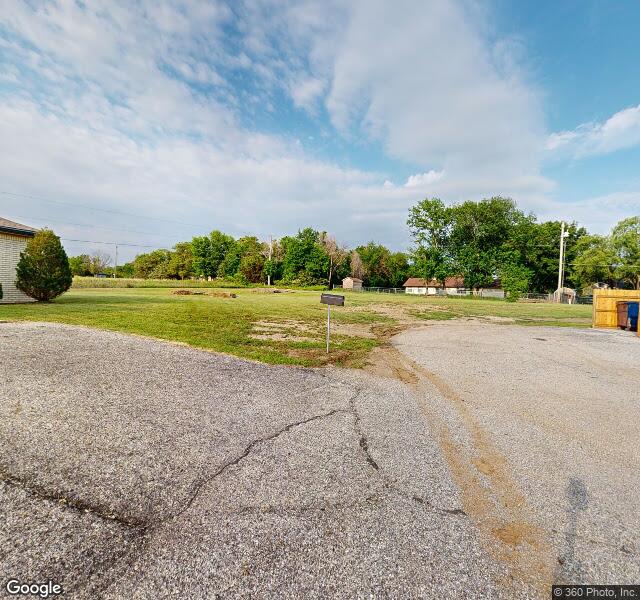
Overview and key essentials
State license
Active
KS KDADS
Google reviews
Not available
Public reviews not linked
Size & payment
Ask directly
Confirm pricing & payment
Public records for this community are limited. Use the checklist below when you call or visit to confirm pricing, services, and openings.
Cost, payment & care details
Updated Nov 28, 2026| Monthly cost | Not published | Ask for the full monthly cost, including care fees and one-time charges. |
|---|---|---|
| Payment options | Ask directly | Payment details are not confirmed in our records. Ask about private pay, long-term care insurance, veterans benefits, and Medicaid waivers. |
| Size & availability | Confirm directly | We don't publish live openings. Ask about current availability, waitlist length, and move-in timing. |
| Care & support | Assisted living | Usually offers housing and help with everyday tasks, such as bathing and dressing. What to confirm about care levelsThis describes the licensed category. Ask how care plans adjust if mobility, nursing, or memory needs change over time. Read the family care guide → |
State licensing
State inspection history
12inspections
10deficiencies listed
Feb 4, 2026RoutineNo deficiencies reportedNone
No deficiencies reported
View official state report (opens in a new tab)
INITIAL COMMENTS The licensure resurvey with attached complaint number 197540, conducted on 02/04/26 at the above named assisted living facility resulted in a finding of no deficiency citations. If deficiencies are cited, an approved plan of correction is requisite to continued program participation.
Sep 3, 2024Complaint3 deficiencies reported3
3 deficiencies reported
View official state report (opens in a new tab)
The following citations represent the findings of an abbreviated survey for complaints # 190122 of the above named facility conducted on 09/03/24.
STATE FORM6899
SLZY11 STATE FORM SLZY11 STATE FORM SLZY11 STATE FORM SLZY11 STATE FORM SLZY11 STATE FORM SLZY11 STATE FORM SLZY11 STATE FORM SLZY11
moderateS 3092
Revisions (d) Each administrator or operator shall ensure the review and, if necessary, revision of each negotiated service agreement according to the following requirements:(1) At least once every 365 days; (2) following any significant change in condition, as defined in K.A.R. 26-39-100; (3) at least quarterly, if the resident receives assistance with eating from a paid nutrition assistant; and (4) if requested by the resident or the resident ' s legal representative, facility staff, the case manager, or, if agreed to by the resident or the resident ' s legal representative, the resident ' s family. This REQUIREMENT is not met as evidenced by: K.A.R. 26-41-202 (d) (2) The facility reported a census of 20 residents. The sample included one "Resident" (R). Based on interview and record review the operator failed to ensure the Negotiated Service Agreement (NSA) for R1 was reviewed and if necessary revised when R1 scored as a moderate elopement risk on the facility's "Elopement Risk Assessment" on 10/31/23, and the Operator further failed to review and revise if necessary, R1's NSA when she experienced a change in her behavior and experienced a physical decline. Findings included: - Record review for R1 revealed an admission date of 04/13/22 with diagnoses of anxiety, dementia, anemia, and hypothyroidism. Review of R1's "Functional Capacity Screen" (FCS) dated 09/20/23 revealed R1 required supervision with bathing and dressing. R1 was scored with impaired short-term memory, long-term memory, memory recall, and decision making. She was usually able to make herself understood and she usually understood others. R1 was identified as having impaired hearing and inappropriate behavior. The FCS did not identify R1 as having wandering behavior. Review of R1's combined "Negotiated Service Agreement / Health Service Plan" (NSA/HSP) dated 09/20/23 identified facility staff would provide supervision for bathing and prompts for dressing. In the section titled "Mentation" facility staff were instructed to provide prompts and reminders to complete task due to "forgetfulness and confusion." In the section titled "Behavior" it identified R1 as having confusion and forgetfulness being noted at times. Staff were instructed to provide one-on-one for reassurance due to anxiety. Review of the facility's "Elopement Risk Assessment" dated 10/31/23 revealed R1 had a history of dementia, and she became confused outside the facility. She wandered within the facility but did not "Exit seek", and she lived in the assisted living and was a moderate risk for elopement. The combined NSA/HSP did not identify health services for wandering behaviors. Review of R1's "Resident Notes" dated 10/26/23 to 09/03/24 revealed the following entries: On 01/10/23 (entry not timed) R1's daughter told the facility nurse she spoke to R1's provider about R1 having increased confusion when returning to the facility after going on an outing. The decision was made to change to a provider that would see the resident in the facility. On 03/06/24 (entry not timed) The facility nurse reported to the provider R1 was having ear pain, she was having increased behaviors, episodes of crying, becoming frustrated, showing agitation towards staff and she was refusing to eat meals. Order for a urinalysis obtained. On 06/06/24 (entry not timed) The facility nurse reported to the provider R1 was having mood swings, decreased appetite and refusing meals. The order to discontinue R1's Paxil was...
moderateS 3081
Reassessment (c) Designated facility staff shall conduct a screening to determine each resident ' s functional capacity according to the following requirements: (1) At least once every 365 days; (2) following any significant change in condition as defined in K.A.R. 26-39-100; and (3) at least quarterly if the resident receives assistance with eating from a paid nutrition assistant. This REQUIREMENT is not met as evidenced by: K.A.R. 26-41-201 (c) (2) The facility reported a census of 20 residents. The sample included one "Resident" (R). Based on interview and record review the operator failed to ensure a screening was performed determining the functional capacity for R1 when she experienced a change of condition. Findings included: - Record review for R1 revealed an admission date of 04/13/22 with diagnoses of anxiety, dementia, anemia, and hypothyroidism. Review of R1's "Functional Capacity Screen" (FCS) dated 09/20/23 revealed R1 required supervision with bathing and dressing. R1 was scored with impaired short-term memory, long-term memory, memory recall, and decision making. She was usually able to make herself understood and she usually understood others. R1 was identified as having impaired hearing and inappropriate behavior. The FCS did not identify R1 as having wandering behavior. Review of R1's combined "Negotiated Service Agreement / Health Service Plan" (NSA/HSP) dated 09/20/23 identified facility staff would provide supervision for bathing and prompts for dressing. In the section titled "Mentation" facility staff were instructed to provide prompts and reminders to complete task due to "forgetfulness and confusion." In the section titled "Behavior" it identified R1 as having confusion and forgetfulness being noted at times. Staff were instructed to provide one-on-one for reassurance due to anxiety. Review of the facility's "Elopement Risk Assessment" revealed R1 had a history of dementia, and she became confused outside the facility. She wandered within the facility but did not "Exit seek", and she lived in the assisted living and was a moderate risk for elopement. The combined NSA/HSP did not identify health services for wandering behaviors. Review of R1's "Resident Notes" dated 10/26/23 to 09/03/24 revealed the following entries: On 01/10/23 (entry not timed) R1's daughter told the facility nurse she spoke to R1's provider about R1 having increased confusion when returning to the facility after going on an outing. The decision was made to change to a provider that would see the resident in the facility. On 03/06/24 (entry not timed) The facility nurse reported to the provider R1 was having ear pain, she was having increased behaviors, episodes of crying, becoming frustrated, showing agitation towards staff and she was refusing to eat meals. Order for a urinalysis obtained. On 06/06/24 (entry not timed) The facility nurse reported to the provider R1 was having mood swings, decreased appetite and refusing meals. The order to discontinue R1's Paxil was obtained. The order to change R1's Lorazepam anti-anxiety medication to be administered every afternoon and as needed twice if needed every eight hours obtained. On 07/10/24 (entry not timed) The facility nurse reported to the provider an overall decline in R1's cognition and physical abilities. An order for an incontinent products provided due to R1's increased incontinence. On 08/22/24 at 04:42 PM The facility nurse received a phone call that R1 had left the facility and...
Jun 27, 2024Routine4 deficiencies reported4
4 deficiencies reported
View official state report (opens in a new tab)
The following citations represent the findings of the licensure resurvey for the above named facility conducted on 06/26/24 and 06/27/24.
STATE FORM6899
O74111 STATE FORM O74111 STATE FORM O74111 STATE FORM O74111 STATE FORM O74111 STATE FORM O74111 STATE FORM O74111 STATE FORM O74111
moderateS 3215
(h) Storage. Licensed nurses and medication aides shall ensure that all medications and biologicals are securely and properly stored in accordance with each manufacturer ' s recommendations or those of the pharmacy provider and with federal and state laws and regulations. (1) Licensed nurses or medication aides shall store non-controlled medications and biologicals managed by the facility in a locked medication room, cabinet, or medication cart. Licensed nurses and medication aides shall store controlled medications managed by the facility in separately locked compartments within a locked medication room, cabinet, or medication cart. Only licensed nurses and medication aides shall have access to the stored medications and biologicals. (2) Each resident managing and self-administering medication shall store medications in a place that is accessible only to the resident, licensed nurses, and medication aides. (3) Any resident who self-administers medication and is unable to provide proper storage as recommended by the manufacturer or pharmacy provider may request that the medication be stored by the facility. (4) A licensed nurse or medication aide shall not administer medication beyond the manufacturer ' s or pharmacy provider ' s recommended date of expiration. This REQUIREMENT is not met as evidenced by: K.A.R. 26-41-205 (h) (4) The facility reported a census of 18 residents. The sample included 3 "Residents'" (R)'s. Based on observation and interview the operator failed to ensure the facility nurse did not use Tubersol testing solution beyond its date of expiration and further failed to ensure all "Over the Counter" (OTC) Medications were stored in a locked medication room for R1. Findings included: - Observation on 06/26/24 at approximately 03:00 PM during the facility tour with Operator A revealed in the medication refrigerator an opened bottle of Tubersol testing solution which lacked the date opened or a beyond use date. Interview on 06/26/24 at approximately 04:15 PM with operator A confirmed the Bottle of Tubersol lacked the date written on the bottle of when the solution was opened or the expiration date. She stated the bottle was opened approximately 05/24/24. Record review of the manufacturer package insert for Tubersol revealed the following: "A vial of Tubersol which has been entered and in use for 30 days should be discarded." The operator failed to ensure the facility nurse did not use Tubersol testing solution beyond its date of expiration. - Observation on 06/27/24 at approx 11:00 AM of R1's bathroom shelf behind the toilet revealed 2 tubes of Triple Antibiotic ointment, 1 tube of Hydrocortisone cream 1% and a bottle of Pataday eye drops. Interview on 06/27/24 with operator A confirmed R1 did not administer her own OTC medications and all OTC medications should be secured in the facility's locked medication room. The operator failed to ensure the facility nurse did not use Tubersol testing solution beyond its date of expiration and further failed to ensure all "Over the Counter" (OTC) Medications were stored in a locked medication room for R1.
moderateS 3280
Preparedness (d) Each administrator or operator shall ensure disaster and emergency preparedness by ensuring the performance of the following: (1) Orientation of new employees at the time of employment to the facility ' s emergency management plan; (2) education of each resident upon admission to the facility regarding emergency procedures; (3) quarterly review of the facility ' s emergency management plan with employees and residents; and (4) an emergency drill, which shall be conducted at least annually with staff and residents. This drill shall include evacuation of the residents to a secure location. This REQUIREMENT is not met as evidenced by: K.A.R. 26-41-104(d) (3) The facility reported a census of 18 residents. Based on record review and interview the Operator failed to ensure the emergency preparedness management plan was reviewed at least quarterly with all staff and residents included fire, flood, severe weather, tornado, explosion, natural gas leak, lack of electrical or water services, missing residents, and any other potential emergency situations. Findings included: - Record review of the facility provided documents titled "Emergency Preparedness & Response Training" revealed the following training dates: 06/16/23 08/29/23 and handwritten at the top of the document was "Fire Drill and Active Shooter." 12/19/23 and had handwritten at the top of the document "Elopement Disaster Drill." 03/06/24 04/05/24 and had handwritten at the top of the document "Full Evacuation." Review of the document titled "Fire Safety Inservice" dated 10/19/23, had handwritten at the top of the document "Fire Safety and Evacuation Inservice." Review of the document titled "Logbook Documentation" dated 03/21/23, revealed that a tornado drill was performed. Review of the facility provided policy titled "Associate Training-Emergency Preparedness" revised on 04/30/2019 revealed the following: "Associates shall receive training in the contents of fire safety and evacuation plans and their duties as part of new associate training and at least annually thereafter." "Residents should review their fire safety and evacuation plan with their local fire authority. Evidence of implementation could include a review of the fire drill and associate training records as well as associate and resident interviews." Interview on 06/27/24 at approximately 12:00 PM with operator A confirmed the facility was not reviewing fire, flood, sever weather, tornado, explosion, natural gas leak, lack of electrical or water services, missing residents, and any other potential emergency situations every quarter with all staff and all residents. The Operator failed to ensure the emergency preparedness management plan was reviewed at least quarterly with all staff and residents included fire, flood, sever weather, tornado, explosion, natural gas leak, lack of electrical or water services, missing residents, and any other potential emergency situations.
moderateS 3186
Medications (b) Administration of select medications. Any resident who self-administers medication may select some medications to be administered by a licensed nurse or medication aide. The negotiated service agreement shall reflect this service and identify who is responsible for the administration and management of selected medications. This REQUIREMENT is not met as evidenced by: K.A.R. 26-41-205 (b) The facility reported a census of 18 residents. The sample included 3 "Residents'" (R)'s. Based on record review and interview the Operator failed to ensure the "Negotiated Service Agreement" (NSA) for R2 identified who was responsible for the administration of selected medications. Findings included: - Record review for R2 revealed an admission date of 12/01/23 with diagnoses of allergies, diabetes, hypertension, atrial fibrillation, congestive heart failure and hypothyroidism. Review of R2's "Functional Capacity Screen" (FCS) dated 05/30/24 revealed R2 required supervision with bathing, and physical assistance with dressing. He was marked with a history of falls, and he used a walker mobility device. He was able to make himself understood and he understood others. He had no cognitive impairment. Review of R2's NSA dated 05/30/24 revealed the facility would provide the following health services: facility staff were to provide one staff stand by assist for bathing, and one staff to assist with putting on R2's shoes and socks. Under the section titled "Health Supplies" it stated staff would administer R2's medications per the provider orders, and re-order his medications. R2 had orders for a "few select medications to be kept at his bedside" and R2 was able to self-administer "medications". Under the section Titled "Medication Management" it stated, "Resident does have orders for a few select medications to be kept in room, and resident is able to self-administer medications safely." The NSA lacked the identification of the select medications R2 was able to keep at his "bedside" and self-administer. Review of R2's current physician's orders as of 06/26/24 revealed the following orders: Biotin 5000 "micrograms" (mcg) capsules; give two capsules by mouth daily in the morning. "May Keep at Bedside" Levothyroxine Sodium 75 mcg capsules; give one tab by mouth daily "Self administers at 05:00 am" and may keep at bedside. Pantoprazole Sodium 40 "milligram" (mg); give one tab by mouth daily before breakfast "Self administers may keep at bedside" Vitamin B12 TR 2000 mcg; give one tab by mouth daily "Self administers may keep at bedside" Vitamin C Gummies 125 mg Chew; Give 2 gummies by mouth daily "Self administers may keep at bedside" Allegra Allergy 180 mg; give 1 tab by mouth daily as needed "self administers may keep at bedside" Nitroglycerin 0.5 mg sublingual; give 1 tablet placed under the tongue. 1 tablet may be used every 5 minutes as needed for up to 15 minutes. Do not take more than 3 tablets in 15 minutes. "Self administers may keep at bedside". Interview on 06/27/24 at approximately 12:00 PM with Operator A confirmed the NSA for R2 did not identify the selected medications he self-administered. The Operator failed to ensure the "Negotiated Service Agreement" (NSA) for R2 identified who was responsible for the administration of selected medications.
Jan 25, 2023Routine3 deficiencies reported3
3 deficiencies reported
View official state report (opens in a new tab)
The following citations represent the findings of the licensure resurvey for the above named facility conducted on 01/23/23, 01/24/23 and 01/25/23.
STATE FORM6899
D0Y011 STATE FORM D0Y011 STATE FORM D0Y011 STATE FORM D0Y011 STATE FORM D0Y011 STATE FORM D0Y011 STATE FORM D0Y011
moderateS 3085
(a) The administrator or operator of each assisted living facility or residential health care facility shall ensure the development of a written negotiated service agreement for each resident, based on the resident ' s functional capacity screening, service needs, and preferences, in collaboration with the resident or the resident ' s legal representative, the case manager, and, if agreed to by the resident or the resident ' s legal representative, the resident ' s family. The negotiated service agreement shall provide the following information: (1) A description of the services the resident will receive; (2) identification of the provider of each service; and (3) identification of each party responsible for payment if outside resources provide a service. This REQUIREMENT is not met as evidenced by: K.A.R. 26-41-202 (a) (1)(2)(3) The facility reported a census of twenty-one residents. The sample included three "Residents" (R). Based on record review and interview the operator failed to ensure the "Negotiated Service Agreement" (NSA), contained a description of all services, the provider of the services and the payor source for services, for R2's physical therapy and occupational therapy services. Findings included: - Record review on 01/24/23 for R2 revealed an admission date of 09/30/2016 with diagnoses of chronic back pain (greater than 3 months), degenerative disc disease, hypertension, multiple sclerosis, and overactive bladder. Record review on 01/24/23 of R2 "Functional Capacity Screen" (FCS) revealed R2 required assist and applying compression stockings, and physical assist with walking/mobility. Her cognition was intact, she was able to make herself understood and she understood others, she managed her own medications, was marked with falls and unsteadiness, and used a four wheeled walker for short distances and a wheelchair for long distances. Record review on 01/24/23 of the combined NSA/ "Health Service Plan" (HSP) identified/instructed staff to provide the following health care services: Staff to assist with one person for bathing, staff to assist with application of compression stockings, staff to escort to dining room to reduce risk for falls. The NSA/HSP lacked a description of physical therapy or occupational therapy services to be provided, who would provide the services and who would pay for the services. Record review on 01/24/23 of the "Resident Notes" dated 11/04/22 thru 01/16/23 revealed the following entries: 11/04/22 Registered Nurse from Home health came to assess resident and admit resident to home health services for therapy services. 11/08/22 Physical therapy assistant in community this date to see resident for physical therapy services. 11/08/22 Occupational therapy in community this date to see resident and perform assessment for occupational therapy services. 11/09/22 Occupational therapist in community this date to see resident. 11/09/22 Physical therapy assistant in community this date to see resident. 11/10/22 Physical therapy assistant in community this date to see resident. 11/16/22 Physical therapy assistant in community this date to see resident. 11/16/22 Occupational therapist in community this date to see resident. 11/17/22 Occupational therapist in community this date to see resident. 11/18/22 Physical therapy assistant in community this date to see resident. 11/18/22 Occupational therapist in community this date to see resident. 11/21/22 Physical therapy assistant in community this date to...
moderateS 3298
(d) Food preparation. Food shall be prepared using safe methods that conserve the nutritive value, flavor, and appearance and shall be served at the proper temperature. (1) Food used by facility staff to serve to the residents, including donated food, shall meet all applicable federal, state, and local laws and regulations. (2) Food in cans that have significant defects, including swelling, leakage, punctures, holes, fractures, pitted rust, or denting severe enough to prevent normal stacking or opening with a manual, wheel-type can opener, shall not be used. (3) Food provided by a resident ' s family or friends for individual residents shall not be required to meet federal, state, and local laws and regulations. This REQUIREMENT is not met as evidenced by: K.A.R. 26-41-206 (d) The facility reported a census of 21 residents. The sample included 3 "Residents" (R). Based on observation and interview the operator failed to ensure the food served to all residents was served at the proper temperature after it was transported from a satellite kitchen to the assisted living facility. Findings included: - Observation on 01/23/23 at 04:48 PM with operator A revealed the kitchen doors have the following posted on the door "NO ENTRY". Interview on 01/23/23 at 04:48 PM with Operator A revealed the kitchen is being remodeled, the project started approximately two weeks ago, and it is anticipated the project will last six to eight more weeks. Operator A revealed the facility meals are made in a satellite kitchen 600 feet from the assisted living facility. She continued that the dietary staff drive the prepared food the 600 feet from the kitchen, bring it into the serving area in the assisted living dining room and set the food on warmers prior to serving the food to the residents. She stated the food temperatures are obtained at the satellite kitchen prior to transport. She confirmed that the food temperatures are not obtained after transport prior to being served to the residents. The operator failed to ensure the food served to all residents was served at the proper temperature after it was transported from a satellite kitchen to the assisted living facility.
Jul 14, 2020RoutineNo deficiencies reportedNone
No deficiencies reported
View official state report (opens in a new tab)
asbury village covid 7.14.2020
Show all 12 inspections
Apr 15, 2019RoutineNo deficiencies reportedNone
Feb 27, 2019RoutineNo deficiencies reportedNone
Apr 11, 2017RoutineNo deficiencies reportedNone
Apr 3, 2017RoutineNo deficiencies reportedNone
May 21, 2015RoutineNo deficiencies reportedNone
Mar 11, 2014RoutineNo deficiencies reportedNone
Jun 12, 2012RoutineNo deficiencies reportedNone
Neighborhood & resident support
Emergency access, hazards & advocacy
Nearest hospital
Coffeyville Regional Medical Center
1.8 mi · Coffeyville, KS
Emergency room
FEMA hazard risk
Relatively LowMontgomery County, KS
- Tornado
- Cold Wave
- Winter Weather
Free resident advocacy
Kansas Office of the State Long-Term Care Ombudsman
More neighborhood context (specialists, VA, dialysis, air & affordability)
VA & dialysis access
Muskogee VA Medical Center
89.7 mi · Muskogee, OK · VA 5/5 ★
DaVita Independence Dialysis Center
12.1 mi · 2/5 ★
Environment & mobility
- EPA Walkability
- 6.6/20 (Below Average)
- USDA Grocery Access
- Moderate Grocery Access
- Primary care access
- HRSA Shortage Area
County demographics
- Age 65+ median income
- $44,888/yr
- Rent-burdened households
- 45%
- Cognitive disability (2023)
- 17.6%
- Mobility disability
- 14.3%
Call & tour checklist
Questions to ask Asbury Village
Check off questions as you call or tour. Your progress stays private in this browser.
Show 3 more suggested questions
Verification & public records
Official records & sources
Licensing & contact
- License #
- N063012
- Status
- active
- Phone
- (620) 251-6270
- Federal OIG LEIE
- Clear (2026-11-27)
Original public sources
Verify licensing, ratings, and inspection reports directly with each official source.
- KS KDADS official record (opens in a new tab)Kansas Dept. for Aging & Disability Services
- Google Maps (opens in a new tab)Directions, photos & neighborhood
- Google Reviews (opens in a new tab)Read public reviews
EveryPlace is an independent research directory. Information is compiled from public Medicare.gov, state licensing, Google Places, and street-level imagery sources. Some summaries, suggested questions, and pricing notes are AI-generated or AI-assisted and may contain errors or omissions. We do not accept payment for placement. Confirm all details directly with the community and official sources. Research Policy.
Keep exploring
Nearby communities to compare
- Medicare 3/54.3(25)100 bedsMedicaidNursing Home< 1 miMedicalodges Coffeyville on MidlandCoffeyville, KS
- Assisted Living< 1 miGran Villas Coffeyville on TylerCoffeyville, KS
- Assisted Living< 1 miGran Villas Coffeyville on 8thCoffeyville, KS
- Cap. 60HUD Senior Housing3.0 miPickwick PlaceCoffeyville, KS
- Cap. 47HUD Senior Housing3.1 miDale ApartmentsCoffeyville, KS
- Cap. 51HUD Senior Housing3.2 miManor House CooperativeCoffeyville, KS