Loading EveryPlace content…
Assisted LivingActive licenseMemory care certified
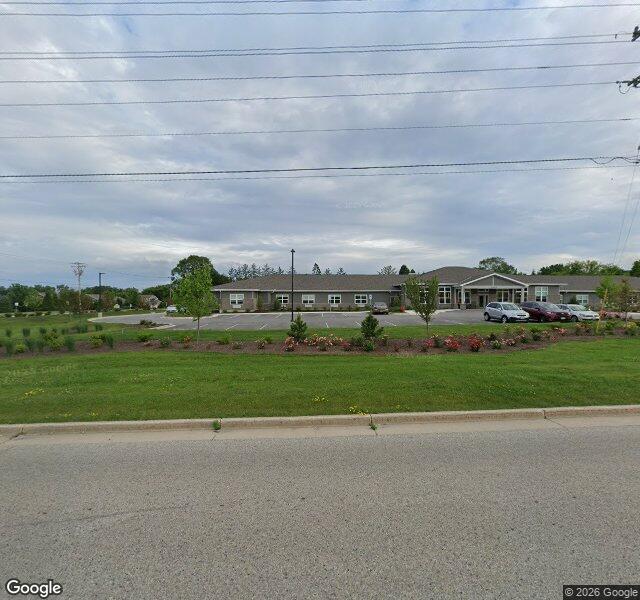
Anitas Gardens of Brookfield
15735 W Lisbon Rd, Brookfield, WI 53005View map (opens in a new tab)
Overview and key essentials
State license
Active
WI DHS
Monthly cost
$5,400–$9,400/ mo
AI-assisted estimate
Mixed signals — tour closely
Public Google reviews reflect mixed experiences (3.8/5). Compare recent reviews and tour in person.
Families praise: Beautiful, modern, and well-maintained building
Worth asking: Poor communication between administration and care staff (mentioned by 3 reviewers)
Cost, payment & care details
Updated Nov 28, 2026| Monthly cost | $5,400–$9,400AI-assisted estimate | Research may contain errors. Request a current quote from the provider. Source: AI-assisted online research, Nov 2026. |
|---|---|---|
| Payment options | Medicaid | Participation is reported in our source data. Confirm eligibility, covered services, and any private-pay costs. Verified Medicaid waiver: Wisconsin Family Care / IRIS Medicaid Waiver (WI Dept. of Health Services (DHS DQA)). |
| Size & availability | Confirm directly | We don't publish live openings. Ask about current availability, waitlist length, and move-in timing. |
| Care & support | Assisted livingMemory care certified | Usually offers housing and help with everyday tasks, such as bathing and dressing. What to confirm about care levelsThis describes the licensed category. Ask how care plans adjust if mobility, nursing, or memory needs change over time. Read the family care guide → |
Safety screening & compliance
State licensing depth & federal screening
HHS OIG LEIE: Clear (2026-11-27)OIG database ↗ (opens in a new tab)
WI DHS directory details (CBRF)
Class: CLASS CNA (NONAMBULATORY)Public Funding (Family Care / IRIS)HCBS CompliantDementia approvedWI DHS rates: $5,400–$9,400/mo
Public Google reviews
What families say
Families may find a beautiful, modern facility with a warm atmosphere and engaging activities for residents. However, there are significant, polarizing reports regarding the quality of care, with some families praising the compassionate staff while others report severe negligence, poor medication management, and communication breakdowns between administration and caregivers.
What families praise
- Beautiful, modern, and well-maintained building
- Engaging and abundant resident activities
- Compassionate and friendly frontline caregivers
- Welcoming and warm atmosphere
Concerns to ask about
- Poor communication between administration and care staff (mentioned by 3 reviewers)
- Inadequate staffing for high-needs or dementia care (mentioned by 2 reviewers)
- Neglect regarding basic cleanliness and maintenance (laundry, trash, dishes) (mentioned by 2 reviewers)
- Inconsistent medication management (mentioned by 2 reviewers)
Topics families mention
0–10 review sentiment · tap to readStaff warmth & care4.0
While many praise the kindness of caregivers, multiple reviews highlight severe issues with nursing leadership and neglect.
Communication2.0
Several reviewers noted significant failures in communication between administration and the care team.
Cleanliness6.0
The building is described as beautiful and clean, but some residents' rooms have issues with trash and dishes.
Food & dining8.0
Reviewers specifically praised the quality of meals, including a standout corned beef and cabbage.
Daily activities9.0
Multiple reviewers highlight the wonderful, bustling, and engaging activities available to residents.
Medication support2.0
At least two reviewers raised serious concerns regarding poor medication management and care plan adherence.
Memory care3.0
Opinions are split between high praise for compassion and warnings about a lack of specialized dementia expertise.
Cost & value3.0
One reviewer explicitly described the facility as being 'very cold and costly'.
Star breakdown
21 analyzed5 stars14 (67%)
4 stars0 (0%)
3 stars0 (0%)
2 stars2 (10%)
1 star5 (24%)
Mixed experiences: Both 5-star praise and 1–2 star warnings appear regularly.
State licensing
State inspection history
8inspections
12deficiencies listed
May 5, 2026ComplaintNo deficiencies reportedNone
No deficiencies reported
View official state report (opens in a new tab)
No deficiencies are reported in this inspection record.
Apr 9, 2026ComplaintNo deficiencies reportedNone
No deficiencies reported
View official state report (opens in a new tab)
No deficiencies are reported in this inspection record.
Apr 9, 2026EnforcementEnforcement actionPenalty
Enforcement action
View official state report (opens in a new tab)
No deficiencies are reported in this inspection record.
Aug 21, 2025Follow-up1 deficiency reported1
Jun 25, 2025EnforcementEnforcement actionPenalty
Enforcement action
View official state report (opens in a new tab)
No deficiencies are reported in this inspection record.
Show all 8 inspections
Jun 25, 2025ComplaintNo deficiencies reportedNone
No deficiencies reported
View official state report (opens in a new tab)
No deficiencies are reported in this inspection record.
Mar 20, 2025Complaint11 deficiencies reported11
11 deficiencies reported
View official state report (opens in a new tab)
On 02/18/2025 with information gathered through 03/30/2025 Surveyor conducted a standard survey and 2 complaint investigations, and on 03/19/2025, Surveyors conducted 1 complaint investigation at Anita's Garden Brookfield. Six deficiencies were identified. Three complaints were unsubstantiated. Census: 37 on 02/18/2025 37 on 03/19/2025
STATE FORM6899
OS1E11 STATE FORM OS1E11 STATE FORM OS1E11 STATE FORM OS1E11 STATE FORM OS1E11 STATE FORM OS1E11 STATE FORM OS1E11 STATE FORM OS1E11 STATE FORM OS1E11 STATE FORM OS1E11 STATE FORM OS1E11 STATE FORM OS1E11 STATE FORM OS1E11 STATE FORM OS1E11 STATE FORM OS1E11 STATE FORM OS1E11 STATE FORM OS1E11 STATE FORM OS1E11 STATE FORM OS1E11 STATE FORM OS1E11 STATE FORM OS1E11 STATE FORM OS1E11 STATE FORM OS1E11 STATE FORM OS1E11 STATE FORM OS1E11 STATE FORM OS1E11 STATE FORM OS1E11 STATE FORM OS1E11 STATE FORM OS1E11 STATE FORM OS1E11 STATE FORM OS1E11 STATE FORM OS1E11 STATE FORM OS1E11 STATE FORM OS1E11 STATE FORM OS1E11 STATE FORM OS1E11 STATE FORM OS1E11 STATE FORM OS1E11 STATE FORM OS1E11 STATE FORM OS1E11 STATE FORM OS1E11 STATE FORM OS1E11 STATE FORM OS1E11 STATE FORM OS1E11 STATE FORM OS1E11 STATE FORM OS1E11 STATE FORM OS1E11 STATE FORM OS1E11 STATE FORM OS1E11 STATE FORM OS1E11 STATE FORM OS1E11 STATE FORM OS1E11 STATE FORM OS1E11
83.37(1)(i) PRN psychotropic medication.N 408
As needed (PRN) psychotropic medication. When a psychotropic medication is prescribed on an as needed basis for a resident, the CBRF shall do all of the following: 1. The resident ' s individual service plan shall include the rationale for use and a detailed description of the behaviors which indicate the need for administration of PRN psychotropic medication. 2. The administrator or qualified designee shall monitor at least monthly for the inappropriate use of PRN psychotropic medication, including but not limited to, use contrary to the individual service plan, presence of significant adverse side effects, use for discipline or staff convenience, or contrary to the intended use. 3. Documentation in the resident ' s record shall include the rationale for use, description of behaviors requiring the PRN psychotropic medication, the effectiveness of the medication, the presence of any side effects, and monitoring for inappropriate use for each PRN psychotropic medication given. This Rule is not met as evidenced by: Based on record review and interview, the provider did not ensure when a psychotropic medication was prescribed on an as needed (PRN) basis, the resident's individual service plan (ISP) included the rationale for use and a detailed description of the behaviors indicating the need for PRN medication administration. Resident 1's ISP did not include the rationale for use and detailed description of the behaviors indicating the need for administration of PRN quetiapine (Seroquel). Findings include: Per 83.02(41) "Psychotropic medication means a prescription drug, as given in s. 450.01 (20), Stats., that is used to treat or manage a psychiatric symptom or challenging behavior". On 02/18/2025 with information gathered through 03/26/2025, Surveyor reviewed Resident 1's record. S/he was admitted 11/27/2024. Diagnoses included dementia in other diseases classified elsewhere, moderate, with agitation. 02/04/2025 12:15 PM (observation note by RN B)- Signed hospital discharge summary received from [name of hospital]. [New orders] noted for ...Seroquel ..." MD order dated 02/03/2025- quetiapine 25 MG 1 tablet every evening and 4 tablets (=100 MG) nightly at 8:00 PM; and quetiapine 25 MG 1 tablet every 4 hours as needed. February 2025 medication administration record (MAR): Staff documented administration of PRN quetiapine 02/05/2025, 02/08/2025, 02/09/2025, 02/10/2025, 02/12/2025 and 02/13/2025. ISP dated 02/04/2025: In the area of anti-psychotic medication information: " ...Quetiapine Fumarate 25 Mg (Seroquel 25 Mg) [name of physician] Side Effects: Immediately Report to Md [sic] Any Thoughts of Suicide, may Cause Drowsiness/dizZiness [sic], drive With Caution avoid Alcohol/other Drugs That Make You Sleepy [sic] drink Fluids and Try to Avoid Getting Too Hot [sic] Route: Oral (by mouth) ..." In the area or Medication Management: " ...RESIDENTS NEEDS/[REFERENCES [List PRN psychotropic medications, rationale for use, and a detailed description of the behaviors which indicate the need for administration] FREQUENCY OF SERVICE AND SERVICE PERFORMED Medication Management-Staff Administer PRN Psychotropic Medication RESIDENT'S DESIRED GOALS AND OUTCOMES SERVICE PROVDER RESPONSIBILITIES Resident will be safe and comfortable within [his/her] environment x's 6 months MEASURABLE GOALS, OUTCOMES AND REVIEW ... Trained staff will administer all residents [sic] scheduled and as needed medications per MD orders. All residents' [sic] medications will...
DHS 83.32(3)(g) Rights of Residents:N 0352
Physical Restraints DHS 83.32(3)(h) Rights of Residents Receive Medication DHS 83.32(3)(g) Rights of Residents: Physical Restraints
DHS 83.37(1)(i) PRN PsychotropicN 0408
Medication
DHS 83.35(3)(d) Service Plans UpdatedN 0389
Annually Or On Changes DHS 83.35(3)(d) Service Plans Updated Annually Or On Changes DHS 83.35(3)(d) Service Plans Updated Annually Or On Changes
83.35(3)(d) Service plans updated annually or onN 389
changes Individual service plan review. Annually or when there is a change in a resident ' s needs, abilities or physical or mental condition, the individual service plan shall be reviewed and revised based on the assessment under sub. (1). All reviews of the individual service plan shall include input from the resident or legal representative, case manager, resident care staff, and other service providers as appropriate. The resident or resident ' s legal representative shall sign the individual service plan, acknowledging their involvement in, understanding of and agreement with the individual service plan. This Rule is not met as evidenced by: Based on record review and interview, the provider did not ensure the individual service plan was revised when there was a change in resident's needs or the resident's legal representative signed the individual service plan acknowledging their involvement in, understanding of, and agreement with the individual service plan. Resident 1's individual service plan (ISP) did not identify need or interventions for back brace and was not updated with all interventions utilized to prevent falls, monitoring for urinary tract infection or management of Foley catheter. Findings include: On 02/18/2025 with information gathered through 03/31/2025, Surveyor reviewed Resident 1's record. S/he was admitted 11/27/2024 with an activated Power of Attorney (POA) for Health Care document due to inability to make own health care decisions related to dementia. Family Member P served as POA agent (legal representative). Diagnoses included: Alzheimer's disease with late onset. Preadmission Assessment (not signed or dated) identified need for back brace (on in AM and off at bedtime), frequent self-transferring behavior, and high risk for falls. Observation notes and incident reports included (summarized): 11/30/2024 9:30 AM (Incident report)- Resident 1 stated s/he fell, complained of right hip pain, sent to ER. 11/30/2024- 9:30 AM (observation note)- Complained of left hip pain, educated on importance of utilizing pendant for assistance. 11/30/2024 12:00 PM (observation note)- Admitted to hospital for closed pelvis ring fracture. 12/12/2024 10:30 AM (observation note)- Self-transferring, reeducated to use pendant, bed alarm initiated. 12/17/2024 12:00 PM- (observation note)- Found on floor, no injuries, educated to use call light. 12/19/2024 12:45 PM (observation note)- unwitnessed fall in bathroom when staff turned around to get gloves, resident attempted to transfer self from wheelchair to toilet. Wheelchair brakes were unlocked at time of fall. Educated resident to wait for staff due to decreased strength. 12/19/2024 12:54 PM (incident report)- Witnessed fall. Resident 1 transferred self from wheelchair to toilet as staff turned his/her back to Resident 1 to get gloves. No injury. Prior to fall, fall risk checks completed on 12/19/2024 at 2:19 AM, 4:08 AM, and 5:17 AM 12/19/2024 4:20 PM (incident report)- Staff heard Resident 1 yelling for help, found him/her sitting in recliner holding tissue on right side of head with active bleeding from a small laceration. Resident 1 stated s/he was walking to the door, fell and crawled back to chair. Ems transferred to ER. 12/19/2024 4:45 PM (observation note)- Unwitnessed fall, active bleeding right side of head. Pressure applied. Neuro checks negative, PROM no s/s of pain. EMS transported ER. 12/20/2024 2:15 PM (observation note) Follow-up ER visit post unwitnessed fall,...
83.12(2)(a) Caregiver: Investigating abuse &N 158
neglect Investigating and reporting abuse, neglect, or misappropriation of property. Caregiver. 1. When a CBRF receives a report of an allegation of abuse or neglect of a resident, or misappropriation of property, the CBRF shall take immediate steps to ensure the safety of all residents. 2. The CBRF shall investigate and document any allegation of abuse or neglect of a resident, or misappropriation of property by a caregiver. If the CBRF ' s investigation concludes that the alleged abuse, or neglect of a resident or misappropriation of property meets the definition of abuse or neglect of a resident, or of misappropriation of property, the CBRF shall report the incident to the department on a form provided by the department, within 7 calendar days from the date the CBRF knew or should have known about the abuse, neglect, or misappropriation of property. The CBRF shall maintain documentation of any investigation. This Rule is not met as evidenced by: Based on record review and interview, the provider did not ensure an investigation was completed to determine if an incident involving Resident 1 met the definition of abuse or neglect, and if determined to be abuse or neglect report the incident to the Department within 7 calendar days from the date the CBRF knew or should have known about the abuse or neglect. The provider did not investigate possible abuse by a 1:1 outside caregiver when Resident 1 was restrained in his/her wheelchair with a gait belt and sustained injury trying to escape it. By not reporting the incident/investigation to the Department, the provider did not take steps to prevent further incidents of abuse by the caregiver. Findings include: The facility is licensed as a Class CNA (nonambulatory) CBRF able to serve up to up to 70 residents within the client groups of advanced aged and irreversible dementia/Alzheimer's, physically disabled, traumatic brain injury and terminally ill. DHS 83.02(39) defines physical restraint as "any manual method, article, device, or garment interfering with the free movement of the resident or the normal functioning of a portion of the resident's body or normal access to a portion of the resident's body, and which the resident is unable to remove easily, or confinement of a resident in a locked room." A gait belt is a sturdy belt used to assist with resident transfers. On 02/18/2025 at approximately 10:45 AM, Surveyor requested Resident 1's record including all incident reports and investigations dated 11/27/2024 - 02/16/2025. On 02/18/2025 with information gathered through 03/26/2025, Surveyor reviewed Resident 1's record and documentation obtained from hospital. S/he was admitted 11/27/2024 with an activated Power of Attorney (POA) for Health Care document with Family Member P serving as agent (legal representative). Diagnoses included: Alzheimer's disease with late onset; dementia in other diseases classified elsewhere, moderate, with agitation; anxiety disorder, unspecified; cognitive communication deficit; unsteadiness on feet; other abnormalities of gait and mobility; and weakness. Incident report dated 02/13/2025 4:30 PM by Executive Director A: " ...Resident was strapped into his/her wheelchair by a 1:1 outside agency caregiver with a gait belt. The resident tried to remove the gait belt and got [his/her] hand caught in the belt tearing [his/her] skin ...Skin tear right hand ...Transported by EMS to ER ..." (Note: hospital documentation identified skin tear was on left...
83.32(3)(h) Rights of Residents: ReceiveN 352
medication In addition to the rights under s. 50.09, Stats., each resident shall have all of the following rights: Receive medication. Receive all prescribed medications in the dosage and at intervals prescribed by a practitioner. The resident has the right to refuse medication unless the medication is court ordered. This Rule is not met as evidenced by: Based on record review and interview, the provider did not ensure the resident right to receive medication as ordered by the physician. Resident 1 was admitted to provider with a right foot 3rd toe wound and physician orders for scheduled and as needed (PRN) antibiotic ointment and bandage changes. Because the physician order was incorrectly transcribed onto the medication administration record (MAR) the scheduled twice daily orders were not followed and provider produced no documentation the wound was treated twice daily. Findings include: On 02/18/2025 with information gathered through 03/26/2025, Surveyor reviewed Resident 1's record. S/he was admitted 11/27/2024 with an activated Power of Attorney (POA) for Health Care document due to inability to make own health care decisions related to dementia. Family Member P served as POA agent (legal representative). Diagnoses included Alzheimer's disease with late onset. Admission physician orders dated 11/26/2024 included: "Triple antibiotic external ointment- apply [sic] 3rd toe right foot topically as needed (remove bandage, wash with soap and water, dry well, apply TAO to top and side next to second toe, cover with band aid or gauze [sic] 2 times a day and as needed" Medication Administration Record (MAR) dated 11/27/2024-02/16/2025 (January and February MAR received 02/18/2024, November 2024 and December 2024 MAR received 03/19/2024): The order for triple antibiotic ointment on 11/27/2024-02/04/2025 (stop date) MAR stated, "TRIPLE ANTIBIOTIC 3.5 MG - 400 UNIT- 5,000 UNIT/GRAM (NEOMYCIN/BACITRACIN/POLYMYXINB 3.5 mg-400 unit-5 [sic] Apply Topically to 3rd Right Toe as Directed as Needed up to 3 Times a Day Recommended, Including Scheduled Dose". The order was listed on the MAR only as PRN instead of scheduled twice daily and PRN. There was no order for bandage change on November 2024 MAR. From 12/01/2024-01/31/2025, the MAR included an order for bandage stating "BAND-AID FLEXIBLE FABRIC 1 Apply Topically to Affected Toes as Directed 2 Times a Day and as Needed (wound care)" From 11/27/2024-01/31/2025, the bandage was listed on the MAR only as PRN instead of scheduled twice daily and PRN. From 11/27/2024-01/18/2025 (Resident 1 was hospitalized 01/18/2025-02/04/2025), staff did not document administration of triple antibiotic ointment or bandage changes to 3rd toe right foot. Observation notes dated 11/27/2024-01/18/2025 did not address 3rd toe right foot wound or treatment of it. Temporary ISP (individual service plan) dated 11/27/2024: In the area of Skin/Treatments: Multiple choice list included: -no concerns, -non-medicated treatment -requires medicated treatment, and -wound treatment. "No concerns" was checked. In the area of Medication Management: "Dependent" ISP dated 01/16/2025: In the area of Medication Management: " ...Trained staff will administer all residents [sic] scheduled and as needed medications per MD orders ..." The ISP did not address right foot 3rd toe wound. On 03/19/2025 at approximately 9:15 AM, Surveyor interviewed RN K who stated skin assessments and shower skin evaluations were implemented after Surveyor's...
DHS 83.35(1)(a) Pre-Admission AndN 0381
Ongoing Assessments DHS 83.35(1)(a) Pre-Admission And Ongoing Assessments DHS 83.35(1)(a) Pre-Admission And Ongoing Assessments DHS 83.35(1)(a) Pre-Admission And Ongoing Assessments
83.35(1)(a) Pre-admission and ongoingN 381
assessments. Scope. The CBRF shall assess each resident ' s needs, abilities, and physical and mental condition before admitting the person to the CBRF, when there is a change in needs, abilities or condition, and at least annually. The assessment shall include all areas listed under par. (c). This requirement includes individuals receiving respite care in the CBRF. For emergency admissions the CBRF shall conduct the assessment within 5 days after admission. This Rule is not met as evidenced by: Based on record review and interview, the provider did not ensure each resident's needs, abilities, and physical and mental condition were assessed before admitting the person to the CBRF and when there was a change in condition. Resident 1's preadmission assessment identified s/he required encouragement to use call pendant and wait for assistance to transfer due to frequent self-transfers resulting in falls with injuries. The assessment did not address decreased cognition due to Alzheimer's dementia despite admission to the memory care unit. A change of condition assessment was not completed when: s/he developed skin wounds on sacrum; fell multiple times sustaining injuries due poor safety awareness, decreased memory, and dementia related behaviors; had a history of and experienced urinary tract infections (UTI); required a Foley catheter and cognition decreased and behaviors increased. Example 1- Skin Resident 1 was at risk for skin breakdown (Photos 1, 2, and 3 from hospital record). His/her facility record contained no skin assessments completed to identify risks, existing skin issues and preventative measures. -On 11/27/2024, Resident 1 was admitted to provider with a wound on his/her 3rd toe on right foot and physician order for antibiotic ointment and wound care to treat it. Other than physician order, the provider produced no documentation regarding toe wound. -On 01/18/2024 when Resident 1 was admitted to the hospital, a (4.3 cm length by 5 cm width, and 0.1 cm depth) deep pressure tissue injury on right sacrum (triangular shaped bony structure at base of spine connected to pelvis) was discovered by hospital staff. The provider produced no documentation regarding sacrum wounds. -On 01/27/2025, 8 days prior to Resident 1's discharged from hospital back to provider on 02/04/2025, hospital staff documented reassessment of right sacrum pressure injury and a new stage 3 left sacrum pressure injury. Because the facility did not provide wound care, a referral to home health was required. The referral was not faxed until 02/11/2025, and home health was further delayed because additional physician documentation was required. Other than 02/09/2025 advanced practice nurse prescriber (APNP) note followed by the 02/11/2025 referral to home health, the provider produced no documentation regarding the sacrum wounds. -On 02/13/2024, Resident 1 was seen in ER for a skin tear to dorsum (top) of left hand, requiring 5 stitches. Other than provider's incident report and hospital After Visit Summary both dated 02/13/2025, provider produced no documentation regarding the skin tear. Example 2- Falls -From 11/27/2024-02/16/2025, staff documented 11 falls, including 6 with injuries, and 4 of the 6 injuries required emergency room treatment and/or hospitalization. The provider produced no documentation that fall assessments were completed to identify precipitating fall factors or interventions to prevent falls. Example 3- Cognition, Mood and Behaviors On...
83.29(2) Admission agreement include services,N 310
charges The admission agreement shall be given in writing and explained orally in the language of the prospective resident or legal representative. Admission is contingent on a person or that person ' s legal representative signing and dating an admission agreement. The admission agreement shall include all of the following: (a) An accurate description of the basic services provided, the rate charged for those services and the method of payment; (b) Information about all additional services offered, but not included in the basic services. The CBRF shall provide a written statement of the fees charged for each of these services; (c) The method for notifying residents of a change in charges for services; (d) Terms for resident notification to the CBRF of voluntary discharge. This paragraph does not apply to a resident in the custody of a government correctional agency; (e) Terms for refunding charges for services paid in advance, entrance fees, or security deposits in the case of transfer, death or voluntary or involuntary discharge; (f) A statement that the amount of the security deposit may not exceed one month ' s fees for services, if security deposit is collected; (g) Terms for holding and charging for a resident ' s room during a resident ' s temporary absence. This paragraph does not apply to a resident in the custody of a government correctional agency; (h) Reasons and notice requirements for involuntary discharge or transfer, including transfers within the CBRF. This paragraph does not apply to a resident in the custody of a government correctional agency. This Rule is not met as evidenced by: Based on record review and interview, the provider did not ensure all resident's admission agreements were signed by the resident or the resident's legal representative prior to or at the time of admission. Resident 1's admission agreement was not signed by his/her Power of Attorney for Health Care agent (legal representative) until 20 days after admission. Findings include: On 02/18/2025 with information gathered through 03/26/2025, Surveyor reviewed Resident 1's record. S/he was admitted 11/27/2024 with an activated Power of Attorney for Health Care document (Note: per hospital Social Work note dated 01/20/2025, received 03/10/2025 via fax from hospital, Family Member R rescinded primary POA-HC agent role to Family Member P on 01/20/2025). On 03/26/2025 at 4:04 PM, Surveyor received Resident 1's admission agreement via email from Executive Director A. The admission agreement was signed by Family Member R on 12/17/2024. On 03/30/2025 2:55 PM, Surveyor received an email from Executive Director A stating, " ...What I recall as far as getting the lease signed is [Family Member R] was POA, and [s/he] was also sick and hospitalized around the time [Resident 1] moved in. It was hard to pin down a date and time to have [him/her] come prior to [Resident 1] being released from the hospital to sign the lease ..."
Mar 20, 2025EnforcementEnforcement actionPenalty
Enforcement action
View official state report (opens in a new tab)
No deficiencies are reported in this inspection record.
Neighborhood & resident support
Emergency access, hazards & advocacy
Nearest hospital
Wheaton Franciscan Healthcare - Elmbrook Memorial
3.9 mi · Brookfield, WI
Emergency room
FEMA hazard risk
Relatively ModerateWaukesha County, WI
- Cold Wave
- Hail
- Tornado
Free resident advocacy
Wisconsin Board on Aging & Long Term Care Ombudsman
More neighborhood context (specialists, VA, dialysis, air & affordability)
VA & dialysis access
Milwaukee VA Medical Center
8.9 mi · Milwaukee, WI · VA 3/5 ★
Concerto Wisconsin LLC
2.9 mi · Home dialysis
Specialists within 15 mi
- Geriatricians
- 70
- Neurologists
- 221
- Palliative care
- 39
- PM&R rehab
- 105
Environment & mobility
- EPA Walkability
- 8.4/20 (Below Average)
County demographics
- Age 65+ median income
- $64,740/yr
- Rent-burdened households
- 44%
- Cognitive disability (2023)
- 11.1%
- Mobility disability
- 9.1%
Call & tour checklist
Questions to ask Anitas Gardens of Brookfield
Check off questions as you call or tour. Your progress stays private in this browser.
Show 3 more suggested questions
Verification & public records
Official records & sources
Licensing & contact
- License #
- 20307
- Status
- active
Original public sources
Verify licensing, ratings, and inspection reports directly with each official source.
- WI DHS official record (opens in a new tab)WI Dept. of Health Services
- Google Maps (opens in a new tab)Directions, photos & neighborhood
- Google Reviews (opens in a new tab)21 public reviews
EveryPlace is an independent research directory. Information is compiled from public Medicare.gov, state licensing, Google Places, and street-level imagery sources. Some summaries, suggested questions, and pricing notes are AI-generated or AI-assisted and may contain errors or omissions. We do not accept payment for placement. Confirm all details directly with the community and official sources. Research Policy.
Keep exploring
Nearby communities to compare
- 4.6(49)MedicaidAssisted Living< 1 miDickson HollowMenomonee Falls, WI
- 4.6(49)MedicaidAssisted Living< 1 miDickson HollowMenomonee Falls, WI
- 3.9(13)MedicaidAssisted Living< 1 miHeritage CourtMenomonee Falls, WI
- 4.4(56)MedicaidAssisted Living< 1 miAzura at Mierow Farm Brookfield Building B-ElmbrooBrookfield, WI
- 4.3(55)MedicaidAssisted Living< 1 miAzura at Mierow Farm Brookfield Building D-WirthBrookfield, WI
- 4.3(55)MedicaidAssisted Living< 1 miAzura at Mierow Farm Brookfield Building A-MierowBrookfield, WI